



Tours in Vancouver British Columbia


Cruising to Vancouver British Columbia in a group?
Skip the crowded ship excursion bus. One dedicated planner will design a private shore experience around exactly what your group wants — coordinated from first enquiry to the moment you're back on board. More memorable, more flexible, and more affordable than you might expect. Spend less time organising, more time enjoying.
Explore Group Travel →Cruising to Vancouver British Columbia
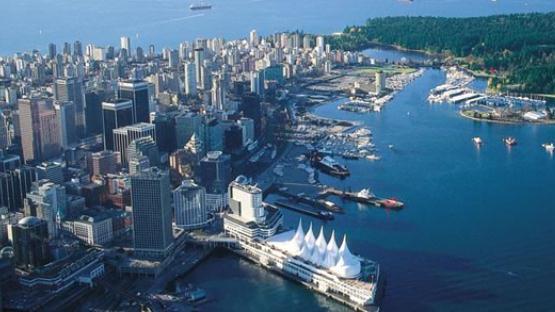
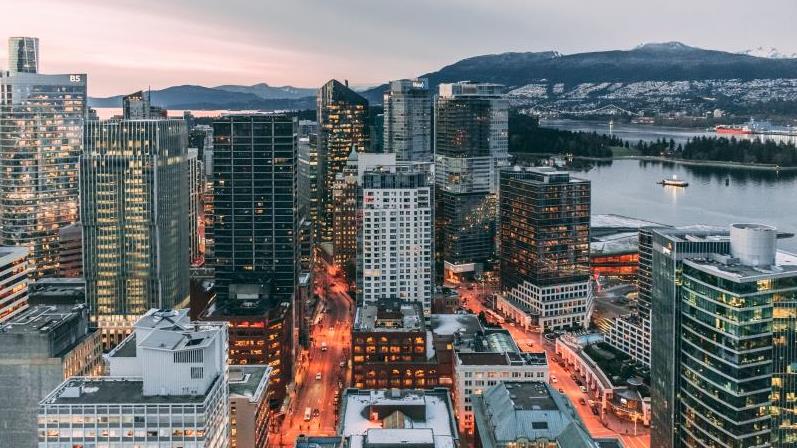
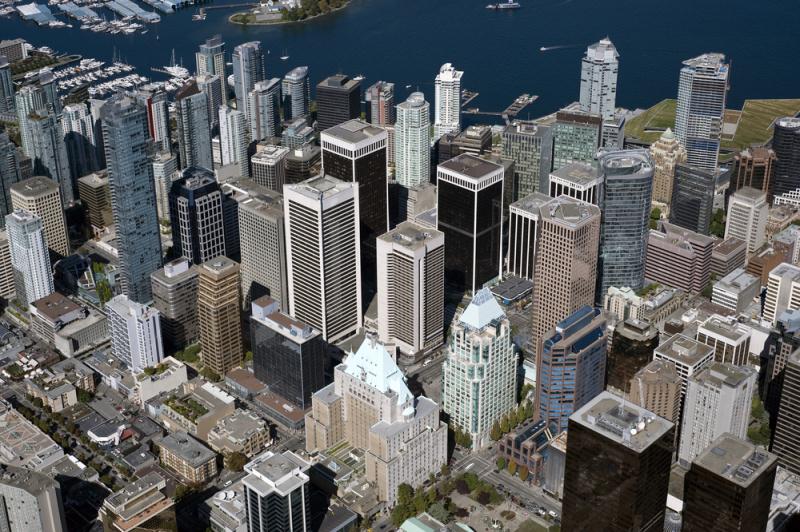
Vancouver arrives like a postcard brought to life. The Canada Place cruise terminal deposits you at the very heart of the city, with the North Shore mountains rising dramatically behind the downtown towers and the harbor glittering in front. Few port cities in the world offer this kind of immediate, effortless access to both urban sophistication and raw natural grandeur — and with six to ten hours ashore, you have just enough time to taste both.
The city's DNA is decidedly multicultural, and nowhere is that more evident than at the table. Vancouver's food scene draws heavily on its large Chinese, Japanese, Korean, and South Asian communities, producing some of the finest Asian cuisine found anywhere outside Asia itself. The neighborhoods surrounding the waterfront — Gastown with its Victorian brick lanes, Yaletown with its converted warehouse bistros, and the West End bordering Stanley Park — each carry their own distinct personality, making even an unhurried stroll through the downtown core feel genuinely rewarding.
For those willing to venture slightly further, Granville Island's covered public market buzzes with local produce, artisan cheeses, fresh-caught seafood, and the kind of unhurried energy that invites lingering over a flat white. Stanley Park, a remarkable thousand-acre peninsula of old-growth rainforest just minutes from Canada Place, offers seawall cycling, forest trails, and sweeping views of the Lions Gate Bridge that feel entirely improbable given how close they sit to the city center. Vancouver, in short, is a port that punishes no ambition and rewards every curiosity.
Top things to do in Vancouver British Columbia on a cruise stopover
Stanley Park: A Rainforest at the Edge of Downtown
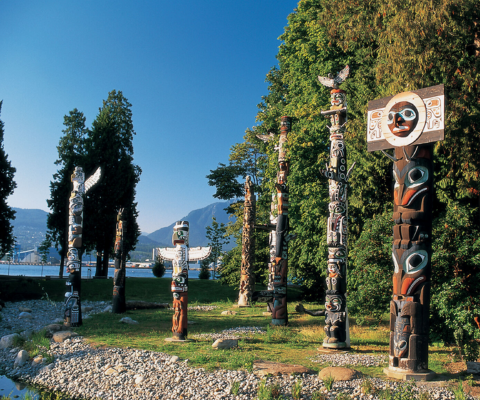
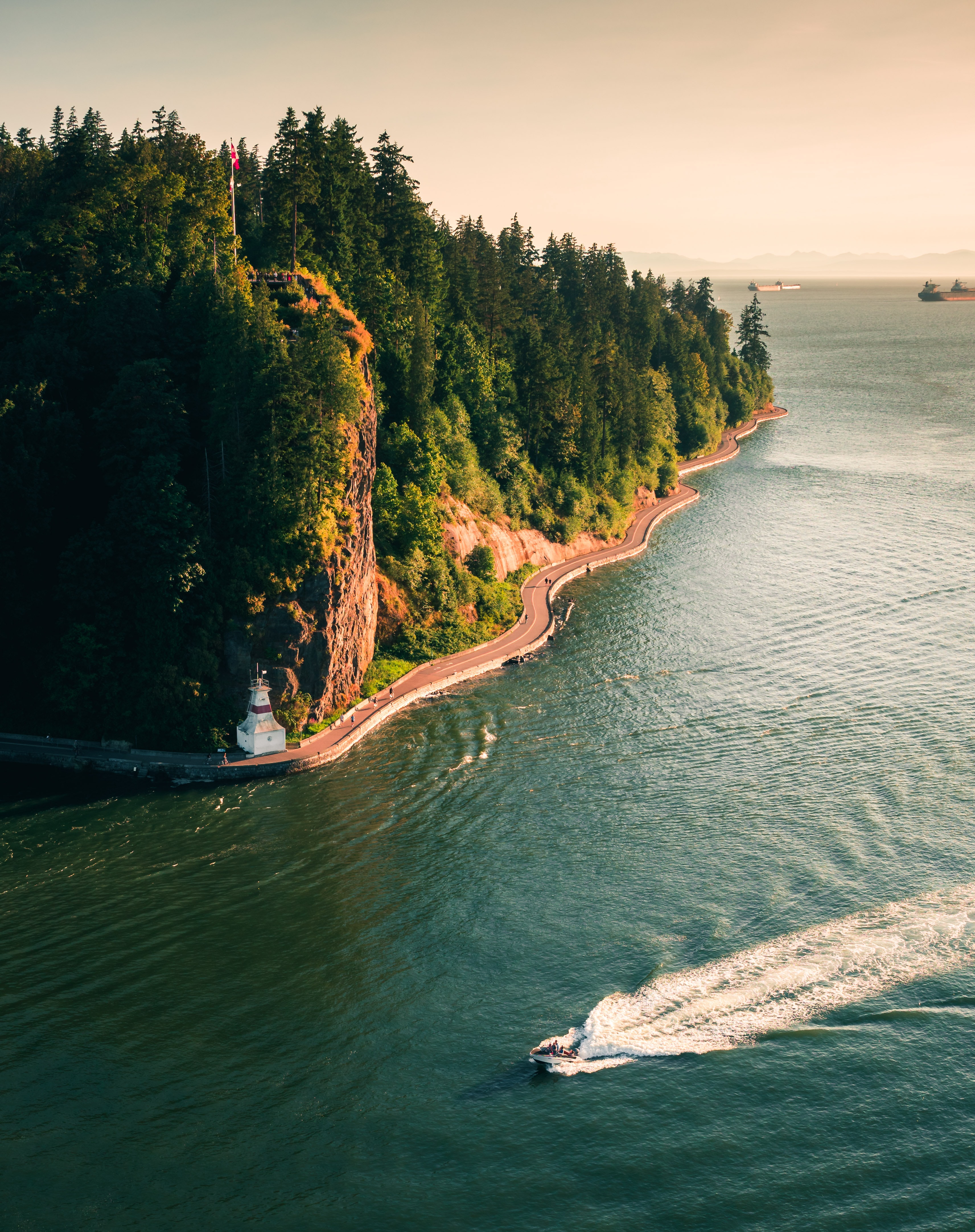
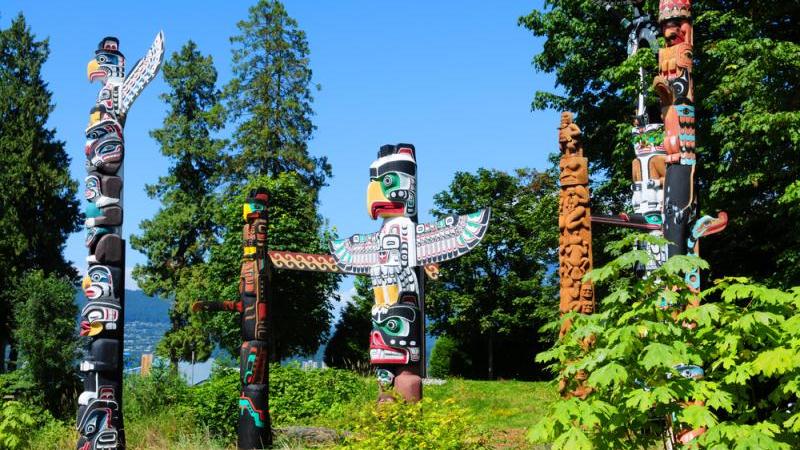
One of the great urban parks in the world, Stanley Park covers a thousand acres of old-growth Douglas fir and cedar on a peninsula jutting into Burrard Inlet. The famous seawall — a paved path ringing the park's perimeter — stretches nearly nine kilometers and delivers continuous views of the North Shore mountains, the Lions Gate Bridge, and English Bay. Rent a bicycle near the park entrance and you can complete the full loop in under two hours, stopping at Prospect Point overlook and the totem poles of Brockton Point along the way. Those who prefer to stay on foot can dip into the interior forest trails, where the tree canopy closes over entirely and the sound of the city disappears. The park also houses a saltwater swimming pool, a pitch-and-putt golf course, and the Vancouver Aquarium — making it one of the easiest half-day decisions a visitor can make.
Granville Island Public Market: The City's Edible Heart
Tucked beneath the Granville Bridge on the south shore of False Creek, Granville Island's covered public market is the kind of place that makes you wish you had a kitchen nearby. Vendors sell Okanagan peaches, local honey, fresh-baked sourdough, smoked salmon, artisan cheeses, and handmade pierogies from stalls that have been fixtures for decades. The surrounding island hosts galleries, craft breweries, independent boutiques, and working artists' studios — a creative community that grew up around a former industrial site. Getting there is part of the experience: a small Aquabus ferry runs from the waterfront near Canada Place, offering a brief and scenic water-level crossing of False Creek. Allow at least two hours to explore properly, and arrive hungry.
Gastown: Vancouver's Victorian Soul
Vancouver's oldest neighborhood sits minutes from Canada Place, its cobblestone streets and Victorian-era brick buildings forming a striking counterpoint to the glass towers that surround it. Named for 'Gassy Jack' Deighton, a loquacious saloon keeper who helped found the settlement in the 1860s, Gastown today is home to independent boutiques, design studios, gastropubs, and coffee roasters that have moved in alongside the historic facades. The steam-powered clock at the corner of Water and Cambie streets — a well-known landmark that actually draws on underground steam lines — chimes on the quarter hour and reliably draws a small crowd. The neighborhood's compact scale makes it easy to explore on foot in an hour or two, with enough cafés and restaurants to justify a leisurely stop.
The Vancouver Food Scene: Asia Pacific on a Plate
Vancouver's proximity to Asia and its large, multigenerational Chinese and Japanese communities have produced a food culture that is genuinely unlike anywhere else in North America. Cantonese dim sum here is considered by many food writers to rival Hong Kong; the ramen shops, Japanese izakayas, and sushi counters maintain similarly high standards. Richmond, the suburban city immediately south of Vancouver, is home to one of the most concentrated and acclaimed clusters of Chinese restaurants on the continent — accessible by SkyTrain if time permits. Closer to the pier, Gastown and Yaletown offer elevated Pacific Northwest dining where locally landed seafood — Dungeness crab, spot prawns, line-caught salmon — is treated with simplicity and respect.
Robson Street and the West End: Shopping and Street Life
Robson Street cuts through the West End neighborhood and serves as Vancouver's main retail promenade — a lively stretch of international brands, independent shops, bubble tea counters, and sidewalk patios that is best experienced mid-morning before the lunch crowds gather. The surrounding West End is one of Canada's most densely populated and walkable neighborhoods, its tree-lined residential blocks opening onto Davie Village and, eventually, the long crescent of English Bay beach. On warm summer days, English Bay is where Vancouverites congregate at the end of the afternoon — and with the mountains reflecting in the water, it's easy to understand why. The entire corridor from Robson to the beach is eminently walkable from Canada Place in under thirty minutes.
North Shore Mountains: Grouse and Capilano
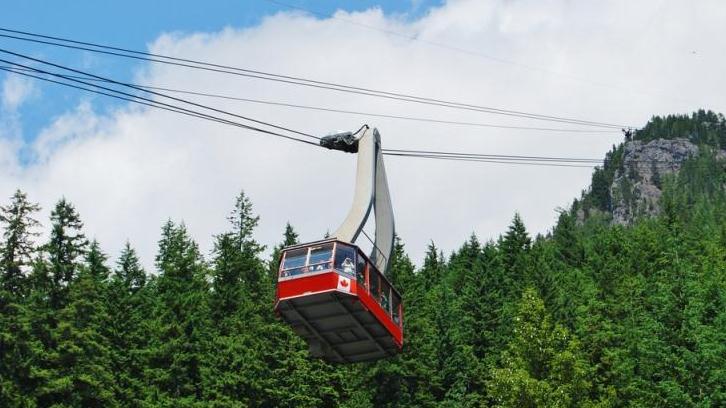
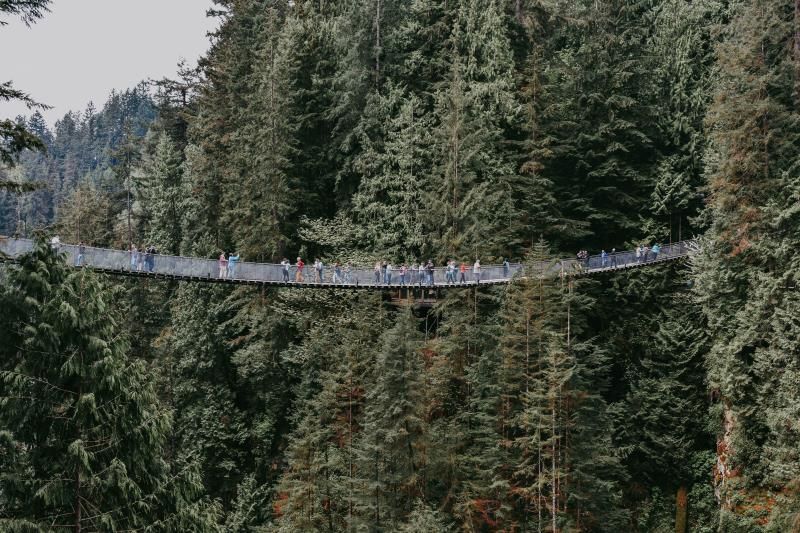
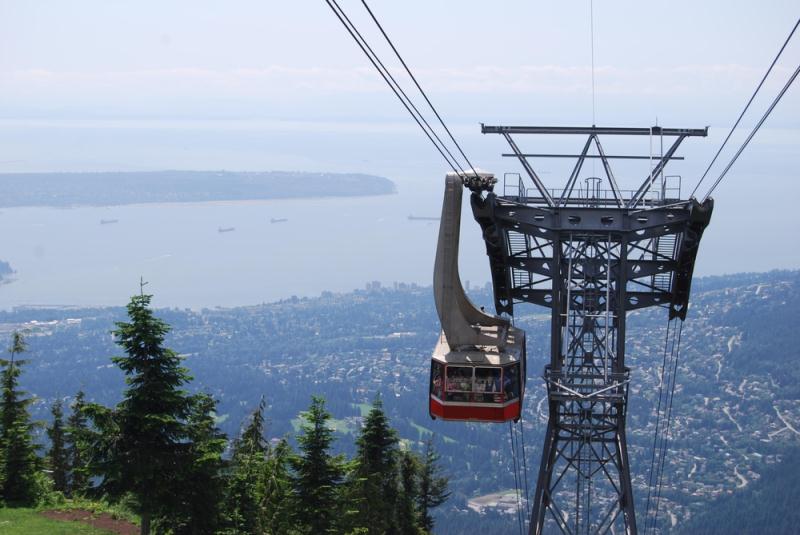
For those willing to cross Burrard Inlet via the SeaBus ferry — a scenic fifteen-minute crossing from Waterfront Station adjacent to Canada Place — the North Shore opens up a different dimension of Vancouver. The Capilano Suspension Bridge stretches 140 meters across a canyon 70 meters deep, surrounded by centuries-old rainforest and enhanced by a network of elevated cliff-walk platforms. A short taxi or bus ride further up brings you to Grouse Mountain, where a gondola ascends to a plateau with sweeping views over the city and harbor. Both sites are fully developed for day visitors and require no advance wilderness experience. Budget roughly half a day for a North Shore excursion, including transit time.
Vancouver British Columbia travel tips
Your Ship Docks Right Downtown — Use That Advantage. Canada Place is genuinely central. Gastown is a five-minute walk east. The West End and Stanley Park are accessible on foot or by a brief cab ride. The SkyTrain's Waterfront Station is adjacent to the terminal. This means you can cover multiple neighborhoods without losing significant time to transit — plan your day accordingly and resist the urge to book transportation for everything.
Rent a Bike for Stanley Park. Several rental shops operate near the Stanley Park entrance at the foot of Denman Street, roughly a 20-minute walk from Canada Place. Cycling the seawall loop takes 60–90 minutes at a comfortable pace and provides a far richer experience than walking sections of it. Helmets are mandatory by law in British Columbia and are included with rentals. Go early — the seawall gets busy by late morning in summer.
Take the Aquabus to Granville Island. A small passenger ferry called the Aquabus runs between several False Creek stops, including a dock near the Vancouver Convention Centre (close to Canada Place) and Granville Island. The ride takes about 15 minutes and costs a few dollars. It is far more pleasant than driving or taking the bus, and the water-level view of the city from False Creek is excellent. Check the Aquabus schedule before heading out — boats run frequently but not on a fixed minute-by-minute schedule.
Exchange Currency Before You Arrive, or Use a Card. US dollars are technically accepted at many Vancouver shops and restaurants but almost always at a poor exchange rate that effectively adds a premium to every purchase. Drawing Canadian dollars from an ATM (there are several near Canada Place) or simply paying by credit card — tap payments are universal — will save you money. Avoid the currency exchange kiosks directly at the pier, which typically offer the least favorable rates.
The Weather Is Mild but Layers Are Wise. Vancouver's summer climate is temperate and relatively dry by Pacific Northwest standards, but mornings near the harbor can be cool and foggy even in July. A light packable jacket and comfortable walking shoes are more useful than an umbrella in most cases. If the forecast shows any uncertainty, one thin extra layer is the difference between a pleasant morning seawall walk and a miserable one.
Mind the All-Aboard Time — Traffic Can Be Unpredictable. Downtown Vancouver traffic, particularly around the cruise terminal area on embarkation days, can move slowly. If you travel to the North Shore, Granville Island, or any destination requiring a bridge crossing, build a buffer of at least 45 minutes into your return time. Waterfront Station's SeaBus to the North Shore runs on a fixed schedule — check the return departure times before you cross so you are not caught waiting.
Port Facts Every Cruiser Needs To Know
Vancouver British Columbia shore excursion FAQs
US citizens do not need a visa to visit Canada, but you will need a valid US passport (or NEXUS card) to re-board your ship and to pass through any Canadian border checkpoint. If you are not a US citizen, check Canadian entry requirements for your nationality well in advance of the sailing, as some nationalities require an Electronic Travel Authorization (eTA) or full visa.
Canada Place, where most cruise ships dock, is located at the foot of the downtown core. Gastown is a 5-minute walk east. The main shopping on Robson Street is about a 15-minute walk west. Stanley Park's entrance is roughly 20 minutes on foot or a short cab ride. Most of central Vancouver is genuinely walkable from the pier without needing any transit.
The Canadian dollar (CAD) is the official currency. Credit and debit cards are accepted virtually everywhere, including food trucks and farmers' market stalls, so carrying large amounts of cash is unnecessary. US dollars are accepted at some businesses but at poor exchange rates. If you want cash, ATMs near the terminal dispense Canadian dollars and typically offer better rates than currency exchange booths.
Yes — both Uber and Lyft operate in Vancouver and are reliable options for getting around the city. Taxis are also plentiful and can be hailed on the street or found at taxi stands near Canada Place. The SkyTrain rapid transit system is another efficient option for reaching destinations like Richmond or further parts of the city.
Granville Island makes an excellent half-day outing. Plan for at least 90 minutes to two hours to explore the public market and browse the surrounding arts district. Combined with transit time (Aquabus from near Canada Place takes about 15 minutes each way), a Granville Island visit fits comfortably into a morning or early afternoon without consuming your entire port day.
Stanley Park is about a 20-minute walk from Canada Place along the Coal Harbour seawall — a scenic route in itself. Alternatively, taxis and rideshares can reach the park entrance in under 10 minutes. Once there, renting a bicycle at one of the shops on Denman Street is the most efficient and enjoyable way to see the park's highlights. The seawall loop is approximately nine kilometers and takes 60–90 minutes to cycle.
Yes — Gastown, a five-minute walk from Canada Place, has a strong concentration of restaurants, cafés, and bars ranging from casual to upscale. The Coal Harbour neighbourhood immediately surrounding the terminal also has several waterfront restaurants. For the best dim sum, Chinatown (10-15 minutes by cab) or Richmond (20 minutes by SkyTrain) offer more authentic and better-value options.
Very much so. Stanley Park alone offers activities for all ages — the seawall, the Vancouver Aquarium, the miniature railway, and multiple playgrounds. Granville Island has a dedicated Kids Market with indoor play and craft shops. The Science World museum near False Creek is another popular family stop. Most attractions are accessible by public transit or short cab rides from Canada Place.
Tipping is expected and culturally standard in Vancouver. At restaurants, 15–20% of the pre-tax bill is typical; 20% is becoming more common for good service. Taxi and rideshare drivers appreciate 10–15%. At coffee shops and café counters, a tip is appreciated but not required. Most point-of-sale terminals will prompt you for a tip amount — it is acceptable to select 'no tip' or enter a custom amount.
Canadian customs rules apply when you go ashore and return. Fresh fruits, vegetables, and meats purchased in Canada can generally be brought back aboard for personal consumption, but US passengers should be aware that those items cannot be brought back into the United States without declaration. Check with your ship's onboard team about specific policies — most cruise lines circulate guidelines for each port of call. Duty-free purchases from Canada have per-person limits for US customs purposes.
Filters
Select a filter to refine results.
Tour Type
Tour Activity
 Cart
Cart
 USD
USD GBP
GBP AUD
AUD EUR
EUR CAD
CAD