



Tours in Curacao (Willemstad)


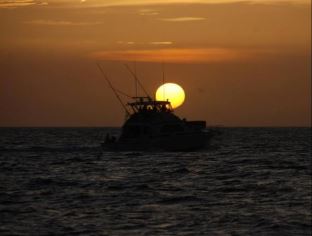
Cruising to Curacao (Willemstad) in a group?
Skip the crowded ship excursion bus. One dedicated planner will design a private shore experience around exactly what your group wants — coordinated from first enquiry to the moment you're back on board. More memorable, more flexible, and more affordable than you might expect. Spend less time organising, more time enjoying.
Explore Group Travel →Cruising to Curacao (Willemstad)
There is a moment unique to Curaçao that no other Caribbean port can offer: stepping off the ship, crossing the swaying planks of the Queen Emma pontoon bridge, and arriving in a UNESCO World Heritage city where Dutch gabled architecture blooms in sherbet yellows, terracotta oranges, and powder blues — all of it reflected in the glassy water of the Sint Annabaai channel. Willemstad is not a port you visit; it is a place you inhabit, at least for the hours you have ashore.
The island belongs geographically to the ABC islands — Aruba, Bonaire, Curaçao — tucked safely south of the hurricane belt, which gives it an extraordinary consistency of weather and a clarity of water that has made it one of the Caribbean's premier dive destinations. The reefs here are in remarkable health: vibrant coral walls dropping into the deep blue just meters from shore, populated by hawksbill turtles, French angelfish, and rainbow-colored reef communities that reward even the most casual snorkeler. Inland, the landscape turns rugged and almost otherworldly — a semi-arid plateau of cacti, divi-divi trees, and weathered limestone ravines called kunukus, punctuated by 17th-century landhuizen (plantation estates) that speak to a complicated and fascinating colonial history.
What distinguishes Curaçao from its neighbors is cultural texture. The island is home to Papiamentu — a uniquely Caribbean Creole language blending Portuguese, Spanish, Dutch, West African, and Arawak elements — and a population whose heritage draws from over 50 nationalities. The result is a cuisine, an artistic tradition, and a social warmth that feels genuinely its own, neither Dutch nor South American nor traditionally Caribbean, but something altogether original and worth seeking out.
Top things to do in Curacao (Willemstad) on a cruise stopover
Handelskade & the UNESCO World Heritage Waterfront
The image that defines Curaçao worldwide — a long arc of tall, narrow Dutch colonial merchant houses painted in every shade of the spectrum, reflected in the still water of the Sint Annabaai — is called Handelskade, and it is even more arresting in person than in photographs. Built predominantly in the 17th and 18th centuries by Dutch merchants who discovered that dark colors made the tropical heat more oppressive (a possibly apocryphal story, but widely beloved), the buildings now house restaurants, galleries, and boutiques at street level while their distinctive Dutch-stepped gables and clay-tiled roofs catch every angle of Caribbean light. Together with the Otrobanda district across the water, Handelskade forms the core of Willemstad's UNESCO World Heritage Site designation, recognized for its extraordinary example of Dutch colonial urban planning adapted to a Caribbean climate.
Queen Emma Pontoon Bridge: Curaçao's Floating Icon
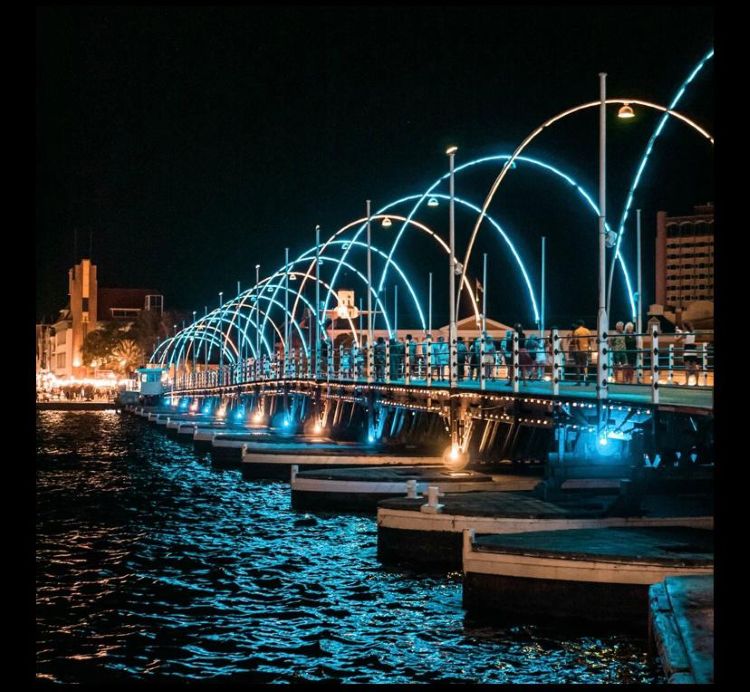
Few bridges in the world have quite the same theatrical quality as the Queen Emma. Built in 1888 and named after the Dutch queen regent of the time, this 168-meter pedestrian pontoon bridge connects the Punda and Otrobanda districts by floating on a series of pontoons moored to the channel floor. When large vessels need to pass through the Sint Annabaai waterway, the entire bridge swings open on its pivot point — a slow, balletic maneuver that draws crowds of onlookers and leaves pedestrians temporarily stranded on either bank. A free passenger ferry runs during these openings. Crossing the Queen Emma is one of those simple travel pleasures that lingers in memory: the slight give beneath your feet, the smell of salt water, the painted houses glowing on both banks, and occasionally the sight of a massive cruise ship or cargo vessel gliding through the gap.
Diving & Snorkeling on Curaçao's Pristine Reef Wall
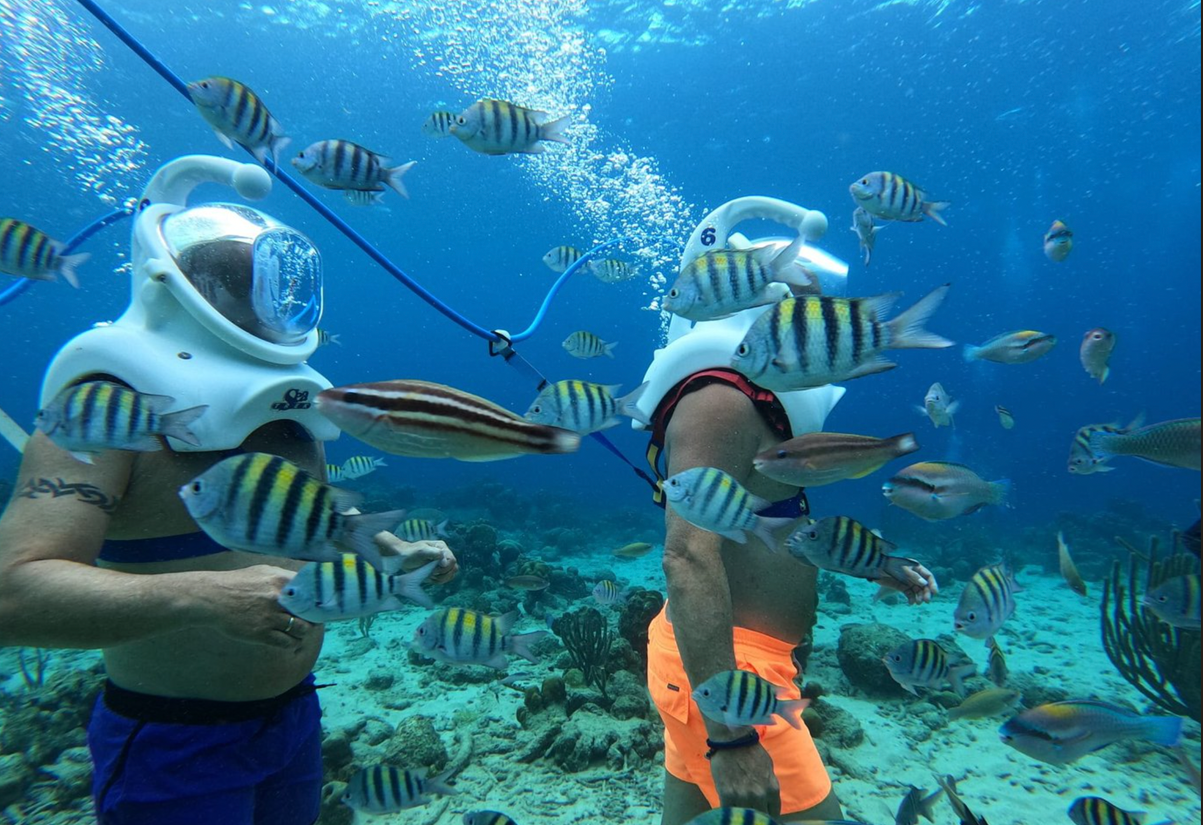
Curaçao's underwater world is among the healthiest and most accessible in the entire Caribbean. The island's leeward coast features a continuous reef system with a dramatic wall that begins in shallow water — sometimes just 10 meters from shore — and drops vertically into the deep blue. Unlike reefs in heavily touristed areas that have suffered from anchor damage, runoff, and overcrowding, Curaçao's marine parks are well managed and the coral coverage is genuinely impressive: brain corals the size of small cars, towering sea fans, and sponges in improbable yellows and purples. Dive sites like Mushroom Forest, Blue Room (a cavern filled with eerie bioluminescent blue light), and the WWII-era wreck of the Superior Producer attract underwater photographers from around the world. Shore dives directly from the beach at Playa Lagun or Cas Abao make expert-level reef access possible without a boat.
Rif Fort & the Otrobanda District
Anchoring the western side of the Sint Annabaai entrance, the Rif Fort is a meticulously restored 19th-century defensive fortification that now houses a boutique shopping and dining complex within its thick yellow walls. The fort's breezy ramparts offer excellent views across the channel to Handelskade and are a popular perch for watching the Queen Emma bridge swing open. Adjacent to the fort, the Otrobanda ('the other side') district is a UNESCO-listed neighborhood of historic buildings, vibrant street art, and neighborhood restaurants that feel considerably less touristed than Punda across the water. Explore the side streets here for a more authentic slice of Willemstad life — small rum shops, local bakeries selling piska ku funchi (fish with cornmeal), and the occasional workshop of a local artisan.
Playa Kenepa (Knip Beach): Curaçao's Most Beautiful Beach
At the far northwestern tip of the island, Grote Kenepa — known locally as Playa Kenepa or Knip Beach — consistently ranks among the finest beaches in the entire Caribbean. A sheltered horseshoe bay of powdery white sand backed by steep golden limestone cliffs, its water is a vivid, almost luminescent turquoise that photographers struggle to convince viewers is unedited. The bay's calm, protected water makes it ideal for swimming, snorkeling over nearby coral patches, and simply floating while the cliffs catch the afternoon light. A small beach bar provides refreshments and snorkel rentals. The drive from Willemstad takes approximately 30–35 minutes, making it perfectly achievable on a cruise day — hire a taxi for a round trip, or join an organized beach excursion. Arrive before midday for the best light and fewer crowds.
Senhor Curacao & the Landhuis Plantation Houses
Scattered across Curaçao's semi-arid interior are the remains of the landhuis system — Dutch plantation estates built from the 17th century onward, whose history is inseparable from the island's role in the transatlantic slave trade. Several have been restored as cultural centers or restaurants, offering a sobering and historically significant counterpoint to the waterfront glamour of Willemstad. Landhuis Bloemhof houses a gallery of local art; Landhuis Chobolobo, set in a 17th-century estate, is the home of the original Senior & Co. Blue Curaçao liqueur distillery, where free tours explain how the dried peel of the bitter laraha orange — a mutation of Valencia oranges that thrived only on this island's poor soil — became one of the Caribbean's most famous flavors. Tasting the fresh-made liqueur in its birthplace, surrounded by copper stills and the scent of citrus, is a genuinely memorable shore excursion.
Curacao (Willemstad) travel tips
Walk the Historic Districts First — Beaches Require a Taxi. The single most important logistical fact about a Curaçao cruise day is this: the UNESCO-listed Punda and Otrobanda districts of Willemstad are steps from the ship, while the island's best beaches — Playa Kenepa, Cas Abao, Playa Lagun — are 25–40 minutes west by taxi. This means structuring your day requires a decision: spend the morning exploring the city on foot, then take a taxi to the beach for the afternoon? Or head directly to the beach and return to town for the final hours? The latter often works well for families with children. Whatever you choose, negotiate round-trip taxi fares at the pier and confirm pick-up time — taxis do not operate on a frequent circuit to remote beaches, and a missed pick-up could create real anxiety.
The Queen Emma Bridge Swings Open — Plan Around It. The Queen Emma floating bridge is charming and iconic, but it swings open for vessel traffic with no fixed schedule and can remain open for 15–30 minutes at a time. During an opening, a small free passenger ferry shuttles pedestrians across the channel. This is a minor inconvenience for sightseers, but if you are running close to ship departure time, allow extra buffer when crossing from Otrobanda back to the Punda/pier side. The bridge is particularly likely to open when the large tankers and container ships that serve Curaçao's oil terminal are moving. Watching it swing is genuinely entertaining — just not when you are in a hurry.
Papiamentu Phrasebook: A Little Goes a Long Way. Curaçao's local language — Papiamentu — is entirely distinct from Dutch, Spanish, or English, though it contains elements of all three plus West African languages and indigenous Arawak. Locals light up visibly when visitors make any effort with the language. A handful of phrases will earn genuine warmth throughout your day: 'Bon dia' (good morning), 'Bon tarde' (good afternoon), 'Danki' (thank you), 'Por fabor' (please), 'Kuanto ta kosta?' (how much does it cost?), and 'Tur kos ta bon' (everything is good / I'm fine) will take you further than you might expect. The language sounds melodic and warm in the mouths of native speakers — ask someone to teach you the pronunciation and you will have an instant conversation.
Try Keshi Yena and Blue Curaçao in Their Homeland. Two culinary experiences are unique to Curaçao and worth prioritizing on a shore day. Keshi yena — a whole hollowed-out wheel of aged Gouda stuffed with a savory-sweet mixture of spiced meat, olives, raisins, capers, and peppers, then baked until the cheese melts into a golden shell — is the island's national dish and available at nearly every traditional restaurant in Willemstad. It is unlike anything else in the Caribbean. Blue Curaçao liqueur, made exclusively from the dried peel of the island's bitter laraha orange, is the other essential taste: try it at the Senior & Co. distillery in Landhuis Chobolobo (about 10 minutes from the waterfront) where free tours are offered and the product is available in many non-blue flavors alongside the famous azure original.
Diving Novices: Shore Dives Are a Curaçao Specialty. Curaçao has a long tradition of shore diving — entering the water directly from a beach rather than from a boat — that makes it unusually accessible for newer divers and those without boat-dive budgets. Several dive operators are located beachside at sites like Playa Lagun and Westpunt, and the reefs are healthy within swimming distance of the sand. Snorkelers find equally rewarding conditions: the water clarity and coral health in the shallows are exceptional, and green and hawksbill sea turtles are frequently encountered at sites like Playa Grandi (also known informally as 'Turtle Beach'). For certified divers on a shore day, a two-tank shore dive at a managed site gives access to Curaçao's famous wall diving without the logistical complexity of a full boat charter.
Shop Thoughtfully: Local Arts, Rum, and Blue Curaçao. Willemstad's shopping scene is anchored by the Renaissance Mall and Rif Fort complex near the cruise terminal, which carry international brands and duty-free liquor. For more interesting and locally meaningful purchases, explore the boutiques along Handelskade and the side streets of Punda: locally designed jewelry incorporating the island's geological materials, original artwork by Curaçaoan artists, hand-woven baskets in the Surinamese-Dutch tradition, and bottles of Senior's Blue Curaçao (in blue or the more nuanced original clear version). Rum distilled on the island makes a distinctive gift. The Floating Market — a row of Venezuelan trading boats moored along Sha Caprileskade in Punda — sells fresh tropical produce, fish, and occasionally crafts in a scene unchanged for generations.
Port Facts Every Cruiser Needs To Know
Curacao (Willemstad) shore excursion FAQs
Cruise ships dock directly in Willemstad — no tendering is required. Ships berth at the Mega Pier or the Rif Fort terminal, both located on the Sint Annabaai waterway within easy walking distance of the historic city center. The Queen Emma pontoon bridge connects the terminal area to the Punda district, placing the famous Handelskade waterfront within a 5–10 minute walk of the gangway. This is one of the most conveniently situated cruise piers in the Caribbean for independent exploration on foot.
Willemstad is exceptionally well-suited to independent exploration. The UNESCO-listed Punda and Otrobanda districts are compact, flat, and walkable, with the Queen Emma bridge connecting the two neighborhoods. Highlights including Handelskade, Fort Amsterdam, the Floating Market, Rif Fort, and the Mikvé Israel-Emanuel Synagogue (the oldest synagogue in continuous use in the Western Hemisphere) are all within comfortable walking distance. English is widely spoken, the city is generally safe for tourists, and the layout is easy to navigate intuitively. Beaches require a taxi, and the Senior distillery benefits from a short organized visit, but the core of Willemstad requires no guide.
The most celebrated beach is Grote Kenepa (Playa Kenepa/Knip Beach) in the northwest — a stunning sheltered bay with turquoise water and limestone cliffs, approximately 35 minutes from Willemstad. Cas Abao, slightly closer, offers a managed beach with facilities, a beach bar, and excellent snorkeling. Playa Lagun is a small, intimate cove famous for sea turtle encounters and outstanding shore diving. Playa Grandi (Fishermen's Wharf) near Westpunt is informal and beloved by locals, with turtles visible from the dock itself. All require a taxi from the cruise terminal; negotiate round-trip fares and a specific pick-up time before departure.
Curaçao is one of the finest dive destinations in the Caribbean, and a cruise day is sufficient time for a meaningful dive experience. The island's leeward shore features a continuous healthy reef with a dramatic wall beginning in shallow water, exceptional visibility, and abundant marine life including turtles, eagle rays, and diverse reef fish. Shore diving — entering directly from the beach — is a Curaçao tradition and particularly practical for cruise visitors, eliminating the need to wait for boat schedules. Several dive operators cater specifically to cruise guests with shore dives at sites like Playa Lagun. Novice and non-certified divers can arrange introductory dives with PADI instructors at most dive centers.
Papiamentu (also spelled Papiamento) is a Creole language unique to the ABC islands — Aruba, Bonaire, and Curaçao — combining elements of Portuguese, Spanish, Dutch, West African languages, and indigenous Arawak. It is the first language of the vast majority of Curaçaoan people and the island's true cultural heart. However, you will not need it to navigate a shore day: English is widely spoken throughout the tourist areas, restaurants, shops, and dive operators in Willemstad, and Spanish speakers will find significant comprehension overlap with Papiamentu. That said, a few words — 'Danki' (thank you), 'Bon dia' (good morning) — earn immediate warmth from locals and are highly recommended.
The official currency is the Netherlands Antillean Guilder (ANG or NAf), but US dollars are accepted virtually everywhere in the tourist areas of Willemstad without issue. You will typically receive change in guilders when paying with dollars. Credit cards are widely accepted at restaurants, shops, and larger establishments. For the Floating Market, street vendors, small rum shops, and any informal purchases, carrying some cash — either dollars or guilders — is advisable. ATMs dispensing guilders are available in the city center. The exchange rate between ANG and USD has been fixed at approximately 1.79 guilders per dollar for decades.
Quite possibly, yes. If your ship docks at the Mega Pier or Rif Fort terminal, you will have a direct view of the Sint Annabaai channel and the Queen Emma bridge from the deck. The bridge swings open whenever commercial vessel traffic needs to pass through the channel — cargo ships, tankers, and other cruise vessels all trigger an opening. There is no fixed schedule, but openings are frequent enough that many cruise visitors witness at least one during a port day. From the bridge itself or the waterfront promenade, watching the entire pontoon structure slowly rotate on its pivot while pedestrians wait on both banks is one of those small, delightful travel moments that stays with you.
The Mikvé Israel-Emanuel Synagogue in Willemstad's Punda district, consecrated in 1732, is recognized as the oldest synagogue in continuous use in the Western Hemisphere. It is a remarkable and moving place — a serene, whitewashed Dutch colonial building whose interior features a floor of white sand, believed to symbolize the desert wanderings of the Israelites or, in some accounts, to muffle sounds of worship during periods of persecution. The congregation traces its origins to Sephardic Jews who arrived in Curaçao from Amsterdam and Brazil in the 1650s. The synagogue is open to visitors during daytime hours (a small entry fee applies) and includes a museum of Curaçaoan Jewish history. Modest dress is required.
For those with any interest in the history of this famous liqueur, the Senior & Co. distillery at Landhuis Chobolobo is a genuinely engaging stop. Set in a beautifully restored 17th-century plantation house about 10 minutes from the Willemstad waterfront, the distillery offers free guided tours explaining how the bitter laraha orange — a variety of Valencia orange that adapted to Curaçao's poor, arid soil over centuries and became inedible fresh but extraordinarily fragrant when dried — became the base for one of the world's most recognized cocktail ingredients. The tasting room lets visitors sample multiple expressions, including the clear original (more nuanced than the famous blue), an aged rum, and various Ponche Kuba cream liqueurs. The gift shop stocks products unavailable outside the island.
A well-paced Curaçao day might look something like this: spend the first 2–3 hours exploring Willemstad on foot — cross the Queen Emma bridge to Punda, walk Handelskade, visit Fort Amsterdam or the synagogue, browse the Floating Market, and cross back through Otrobanda toward the Rif Fort shops. Then take a pre-negotiated taxi (30–35 minutes) to Playa Kenepa or Cas Abao for 2–3 hours of swimming and snorkeling, with lunch at the beach bar. Return to Willemstad by mid-afternoon with an hour to spare for shopping and a meal before the ship's departure. Alternatively, replace the beach stop with the Senior distillery and a longer city walk. Always confirm the ship's all-aboard time and build in 30–45 minutes of buffer for the return taxi.
Filters
Select a filter to refine results.
Tour Type
Tour Activity
 Cart
Cart
 USD
USD GBP
GBP AUD
AUD EUR
EUR CAD
CAD