



Tours in Isafjordur


Cruising to Isafjordur in a group?
Skip the crowded ship excursion bus. One dedicated planner will design a private shore experience around exactly what your group wants — coordinated from first enquiry to the moment you're back on board. More memorable, more flexible, and more affordable than you might expect. Spend less time organising, more time enjoying.
Explore Group Travel →Cruising to Isafjordur
Isafjordur is the largest town in Iceland's Westfjords — which, given that it has a population of around 2,600, speaks to just how remote this region truly is. Tucked onto a curved sandbank on the Skutulsfjordur fjord, the town is a study in contrasts: brightly painted corrugated-iron houses from the 19th and early 20th centuries line streets that feel simultaneously end-of-the-world and unexpectedly cosmopolitan. Isafjordur hosts a celebrated music festival, has a vibrant cafe culture for its size, and sits surrounded by some of the most dramatic natural scenery in Iceland.
The Westfjords peninsula — the oldest part of Iceland geologically — is defined by its layers. Flat-topped basalt mountains rise steeply from the water's edge, their flanks streaked with seasonal waterfalls. The fjords cut deep inland between them, creating a labyrinth of waterways that makes road distances far longer than straight-line geography suggests. This remoteness is precisely why the Westfjords remain Iceland's least-visited region, and why they reward those who arrive with a genuine sense of discovery.
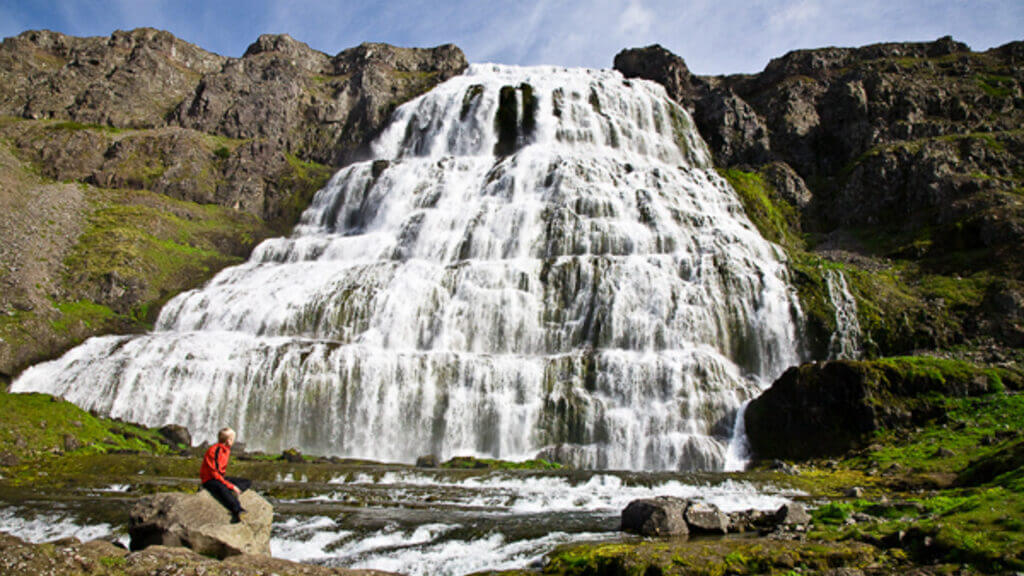
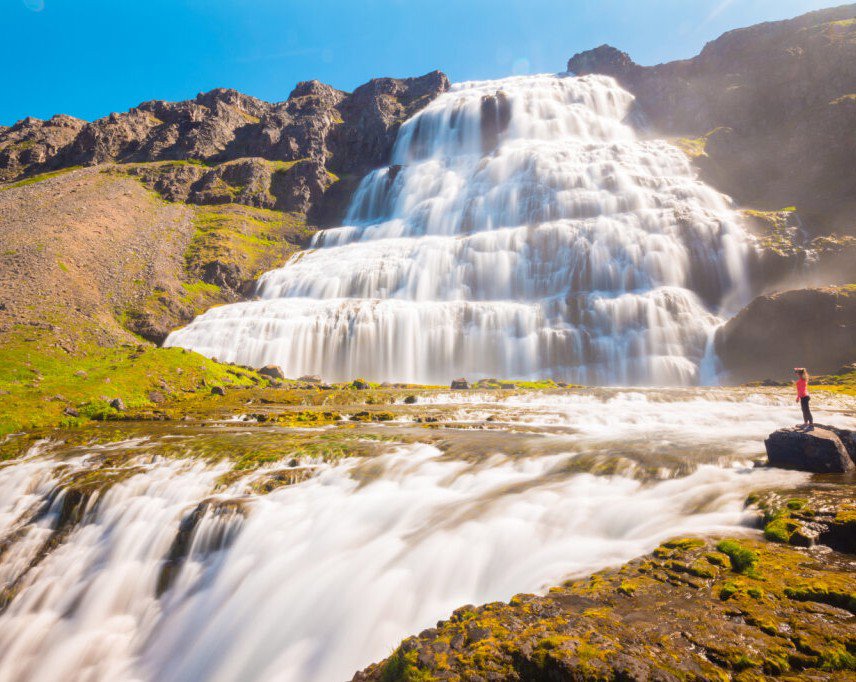
The undisputed centrepiece of any Westfjords visit is Dynjandi, Iceland's most celebrated waterfall outside the south coast. Its name means 'thundering' in Icelandic, and the sound justifies it entirely: the main fall cascades 100 metres in an ever-widening bridal veil before passing through a series of smaller named falls on its way to the fjord. The drive to reach it — along coastal fjord roads with vertiginous drops to the water below — is itself an experience that prepares you fully for the spectacle at the end.
For cruise visitors, Isafjordur offers a rare combination: a genuine town with history and character at the pier, and some of Iceland's most dramatic natural wonders within a day's reach. The surrounding villages — each adapted to conditions of isolation and beauty in its own way — add human texture to a landscape that might otherwise seem purely geological. Whether chasing waterfalls, exploring fishing heritage, or absorbing the silence of the fjords, Isafjordur delivers an experience found almost nowhere else in Europe.
Top things to do in Isafjordur on a cruise stopover
Dynjandi Waterfall: Iceland's Most Dramatic Cascade
Dynjandi is Iceland's best-kept secret — less internationally famous than Skogafoss or Seljalandsfoss on the tourist-saturated south coast, but arguably more magnificent. The main fall descends 100 metres from a plateau edge, widening from 30 metres at its crest to 60 metres at its base in a perfect bridal veil shape that fills the visual field entirely as you approach. Below it, a staircase of seven smaller named waterfalls carries the water down to the fjord in a sequence of cascades that would each be noteworthy on their own. The walking trail from the road to the base of the main fall takes around 20 minutes uphill over uneven ground, and the sound builds with every step. Few natural experiences in Europe match the moment Dynjandi comes fully into view.
The Westfjords Drive: Fjords Within Fjords
The journey to Dynjandi is itself a defining part of the Westfjords experience. Roads cling to the sides of fjords, dropping sharply to mirror-calm water below while flat-topped basalt mountains rise steeply above. The geometry of the landscape — successive fjords cutting inland, each framing the next — creates a sense of penetrating deeper into something ancient and primordial. Roadside waterfalls appear frequently, particularly after rain, threading down cliff faces directly into the sea. An occasional Arctic tern or white-tailed eagle overhead completes the scene. Iceland's south coast gets the crowds; the Westfjords receive those lucky enough to have sought them out.
Flateyri Village: Where Iceland's Past Endures
Flateyri is a small settlement on the Onundarfjordur fjord, reached on the road toward Dynjandi. It numbers only around 200 residents but carries considerable historical weight as one of the Westfjords' original trading posts from the Danish colonial period. Traditional Icelandic wooden buildings, a small harbour, and the quiet daily rhythm of a functioning fishing community give Flateyri an authenticity that more visited destinations rarely achieve. A protective avalanche barrier above the village — built after a devastating 1995 disaster — is a visible reminder of how seriously these communities reckon with the natural forces surrounding them. Hidden within an old fish factory is a vast second-hand bookshop claimed to be Iceland's largest by volume.
The Surrounding Villages of the Westfjords
Beyond Flateyri, the Westfjords contain a scattering of small communities adapted to one of Iceland's most demanding environments. Villages along the fjord roads offer glimpses of traditional fishing heritage: old wooden boat sheds, colourful houses built low against the wind, and the particular self-reliance that comes from living where the next town is an hour's drive on gravel roads. These are working communities, not tourist villages, and encountering them on the way to Dynjandi adds the human dimension to a landscape that might otherwise feel purely elemental. Local residents often stop to assist visitors, combining Icelandic reserve with genuine warmth.
Isafjordur Town: An Arctic Settlement with Character
The town of Isafjordur rewards those who spend time at the pier before or after excursions. The old harbour quarter contains Iceland's oldest preserved buildings — brightly painted wooden warehouses and trading houses from the 18th and 19th centuries that now house a folk museum telling the story of Westfjords settlement. The main street runs past independent shops, a bakery, and cafes where locally roasted coffee and Icelandic pastries provide a welcome warm interlude after fjord breezes. Isafjordur punches well above its size in cultural terms; a celebrated music festival and an active local arts scene reflect a community that takes creative life seriously despite — or perhaps because of — its remoteness.
Westfjords Wildlife: Arctic Nature at Close Range
The Westfjords and the waters around Isafjordur support a rich concentration of Arctic wildlife that reveals itself throughout the drive to Dynjandi and surrounding villages. Arctic foxes — Iceland's only native land mammal — are occasionally spotted in upland areas, particularly in summer when they venture more openly. Humpback whales and harbour porpoises use the fjords as feeding grounds, and sightings from the road or harbour are not uncommon during cruise season. Seabirds are omnipresent: Arctic terns, fulmars, and puffins colonise coastal cliffs from May to August. White-tailed eagles, successfully reintroduced in Iceland, have also been recorded in the region. The silence of the Westfjords, punctuated only by wind and birdsong, is itself a kind of wildlife encounter.
Isafjordur travel tips
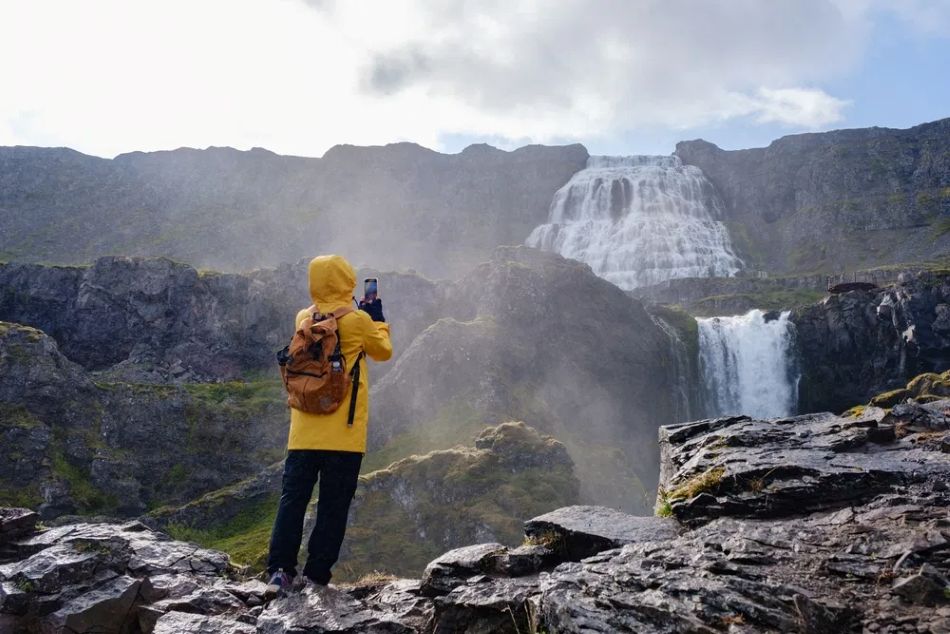
Waterproof Everything — Including Your Camera. The Westfjords receive more rain than most of Iceland, and the weather at Dynjandi adds a further layer of moisture: spray from the main fall reaches far enough to dampen anyone within photography range. A proper waterproof jacket with a hood is essential, not optional. Waterproof trousers are worthwhile if you plan to walk close to the falls. Protect camera equipment with a bag cover or dry bag, and keep a lens cloth accessible for clearing spray. In light rain, the experience can actually be more dramatic than in sunshine — the falls carry greater force and the fjords take on an atmosphere that clear weather rarely provides.
Take Your Time on the Dynjandi Trail. The walking trail from the road to the base of Dynjandi's main fall climbs approximately 100 metres of elevation over around 600 metres of path — not strenuous, but uneven and rocky underfoot. The route passes through all seven of the lower named falls en route, and each is worth pausing at rather than rushing past. The sound of the cascade builds progressively as you ascend, making the final reveal of the main fall all the more powerful. Allow at least 45 minutes for the round trip, more if you want meaningful time at the top. Sturdy footwear with grip is essential; rocks become slippery near the falls.
Photograph the Falls at Multiple Distances. Dynjandi looks entirely different depending on where you stand. From the road far below, the full bridal veil shape is visible against the mountain backdrop — this is the classic wide view and best captured with a wide-angle lens. From halfway up the trail, the lower falls come into intimate focus and frame well independently. At the base of the main fall, spray fills the air and the cascade occupies your entire field of view — this is where many photographers simply put the camera away and absorb the experience instead. Budget time and memory for all three vantage points.
Stop in Flateyri for the Unexpected Bookshop. Hidden inside an old fish factory in Flateyri is one of Iceland's most charming unexpected discoveries: a vast second-hand bookshop claimed to be the largest in Iceland by volume. Thousands of books in Icelandic, Danish, and English fill the shelves of a former industrial building — a surreal and delightful contrast to the fishing village outside. The shop operates partly on the honour system, with a collection box rather than a staffed till. Even if luggage space rules out purchasing, it is worth five minutes of wandering simply to appreciate the improbability of finding it here.
Embrace the Remoteness — This Is the Point. The Westfjords receive only a fraction of Iceland's total tourist traffic, and part of what makes them extraordinary is precisely that so few people make it this far. Resist the impulse to fill every moment with activity; some of the most memorable experiences here come from simply stopping beside a fjord, stepping into the silence, and registering where you are. The quality of light in summer — low-angled even at midday, diffused through cloud or filtered through brief sunshine — is unlike anything in more southerly Europe. This landscape rewards stillness as much as movement.
Card Payments Work Everywhere — No Need to Stress About Cash. Iceland has one of the highest rates of cashless payment in the world, and the Westfjords are no exception. Credit and debit cards — Visa, Mastercard, and American Express — are accepted in virtually every shop, cafe, museum, and attraction in and around Isafjordur. An ATM is available in town if needed, but you are unlikely to require it. This cashless convenience extends to small establishments; even remote farm cafes often have card readers. Notify your bank of travel to Iceland before departing to avoid any security blocks on your cards during the day.
Port Facts Every Cruiser Needs To Know
Isafjordur shore excursion FAQs
Ships typically dock directly at Isafjordur harbour, within easy walking distance of the town centre. Tendering arrangements can occasionally vary by vessel size and harbour conditions — confirm with your cruise line for the specific arrangements for your sailing. When docked, the town's main street, cafes, and folk museum are all a short walk from the gangway.
Dynjandi is approximately 90 to 120 kilometres from Isafjordur by road — a journey of 1.5 to 2 hours each way. The route follows fjord roads that are scenic but not fast: winding coastal sections, occasional gravel stretches, and the sheer drama of the landscape all slow progress in the most rewarding possible way. A full Dynjandi excursion, including the trail walk and time to absorb the falls, typically requires 4 to 5 hours return.
Dynjandi is technically accessible by rental car, but renting a vehicle in Isafjordur on a cruise day is logistically challenging and subject to availability. The roads include gravel sections and require careful navigation. Pre-arranged group excursions cover the distance efficiently and include local knowledge about road conditions, wildlife, and photography positions. Visitors with Icelandic driving experience and suitable vehicles can self-drive, but this requires significant advance planning.
Flateyri is a small fishing community of around 200 residents on the Onundarfjordur fjord, typically passed on the road to Dynjandi. It is worth a stop for its authentic character, traditional wooden architecture, and the unexpected presence of a vast second-hand bookshop in a former fish factory. Visible avalanche barriers above the village, erected after a devastating 1995 disaster, contextualise the forces these communities live alongside. Flateyri adds human depth to the Westfjords experience without requiring significant additional time.
The Westfjords cruise season runs June to August, with July typically the warmest month — average temperatures hover between 10 and 15°C. Rain is frequent; the Westfjords receive considerable precipitation year-round, and even a clear morning can give way to rain by afternoon. Wind is a consistent presence, particularly on open fjord sections. The falls at Dynjandi are actually more dramatic after rain, when water volume increases. A waterproof jacket, warm layers, and sturdy footwear are essential regardless of forecast.
Yes — Isafjordur is small but genuinely engaging. The old harbour quarter contains Iceland's oldest surviving wooden buildings, now housing a folk and maritime museum tracing Westfjords settlement from the 18th century. The main street has independent shops, a bakery, and cafes serving Icelandic pastries and locally roasted coffee. The town's seafood restaurants offer some of the freshest fish in Iceland. For visitors with limited mobility or who prefer not to make the long drive to Dynjandi, Isafjordur itself provides a worthwhile and atmospheric few hours ashore.
The Westfjords offer some of Iceland's best wildlife encounters. Arctic foxes — Iceland's only native land mammal — inhabit upland areas and are occasionally spotted from roads, especially in summer. Humpback whales and harbour porpoises feed in the fjords, and sightings from the harbour or coastal roads are not uncommon during cruise season. Seabirds are abundant: puffins nest in coastal cliffs from May to August, Arctic terns are vocal near nesting grounds, and white-tailed eagles have been reintroduced and occasionally appear. Harbour seals haul out on rocky shores along the fjord roads.
Main roads in the Westfjords are paved but narrow, with no barriers in many dramatic fjord-side sections. Secondary roads and stretches closer to Dynjandi include gravel that requires slower driving. Road conditions change rapidly with weather, and the Westfjords receive more rain than much of Iceland. Visitors considering self-driving should have experience with rural mountain roads, ensure appropriate vehicle clearance, and check conditions at road.is before setting out. Those unfamiliar with Icelandic driving conditions will find the experience considerably less stressful with pre-arranged transport.
Almost certainly not. Iceland has one of the highest rates of cashless payment in the world, and Isafjordur is no exception. Credit and debit cards — Visa, Mastercard, and American Express — are accepted virtually everywhere, including small cafes, shops, and museums. An ATM is available in town if needed, but most visitors complete the entire day without touching cash. Notify your bank of travel to Iceland before departing to prevent any security holds on your card.
The lower viewpoint of Dynjandi — offering clear views of the main fall from road level — is accessible without walking the trail, as the waterfall is visible from the parking area. The trail to the base of the main fall involves approximately 100 metres of elevation gain over uneven, rocky ground and is not suitable for wheelchairs or those with significant mobility limitations. Visitors who cannot walk the full trail can still experience Dynjandi from below and capture the distinctive bridal veil shape from the valley floor. The lower named falls are also visible near the start of the trail before the gradient steepens.
Filters
Select a filter to refine results.
Tour Type
Tour Activity
 Cart
Cart
 USD
USD GBP
GBP AUD
AUD EUR
EUR CAD
CAD