



Tours in Cadiz



Cruising to Cadiz in a group?
Skip the crowded ship excursion bus. One dedicated planner will design a private shore experience around exactly what your group wants — coordinated from first enquiry to the moment you're back on board. More memorable, more flexible, and more affordable than you might expect. Spend less time organising, more time enjoying.
Explore Group Travel →Cruising to Cadiz
Cadiz claims more than 3,000 years of continuous settlement, making it one of the Iberian Peninsula's oldest cities. Founded by Phoenician traders and later shaped by Romans, Moors, and Spanish explorers, it carries its layered history lightly — most of it readable in the golden limestone facades and narrow alleys of its compact old town. The city sits on a sliver of land almost entirely surrounded by the Atlantic, giving it a particular quality of light and a seafaring identity that permeates its food, culture, and character. For cruise visitors, Cadiz offers two distinct experiences: the old town itself, walkable and rich with detail, and the option to venture inland to Seville, Andalusia's grand historic capital just over an hour away. The hop-on hop-off bus circuit covers the key city landmarks efficiently, while private touring unlocks both the city's quieter corners and Seville's iconic monuments in a single well-paced day.
Top things to do in Cadiz on a cruise stopover
Cadiz Cathedral and Its Famous Golden Dome
The Cathedral of Cadiz, completed in 1838 after more than a century of construction, is the city's most recognisable landmark. Its distinctive dome clad in yellow glazed tiles catches the light in a way that made it a navigation point for sailors approaching the Atlantic coast. The interior blends baroque and neoclassical styles with notable sculptural work and a crypt holding the tomb of composer Manuel de Falla. The cathedral tower is open for climbs that reward visitors with panoramic views over the old town rooftops and the surrounding sea.
The Old Town: Centuries of Layers in a Compact Peninsula
Cadiz's old town is genuinely ancient — its street plan follows foundations laid over successive civilisations. The Barrio del Pópulo, the medieval core, contains Roman theatre ruins, the old city gates, and churches built over Moorish structures. Plaza de las Flores, the main flower market square, and Plaza de Mina, home to the Museo de Cadiz, form natural gathering points. The seafront promenade along the Alameda Apodaca offers views across the Bay of Cadiz and a pleasant route connecting the old town's northern edge. A city sightseeing tour ties these threads together with useful historical context at each stop.
Mercado Central: Andalusian Market Culture at Its Finest
Built in the early 20th century on the site of a former convent, the Mercado Central de Abastos de Cadiz is housed in a striking neo-Moorish building in the heart of the old town. Inside, stalls overflow with Atlantic seafood, Iberian charcuterie, Andalusian cheeses, and produce from the surrounding countryside. The market is at its liveliest in the morning hours, when local chefs and residents shop alongside visitors. Sampling tortillitas de camarones from a vendor here offers a more authentic version of the city's signature dish than most restaurants provide.
Seville: A Grand Andalusian Capital Within Reach
For cruise visitors with a full day ashore, the road inland to Seville opens access to one of Europe's most architecturally magnificent cities. Seville's historic core is compact enough to absorb in a focused 5-hour visit: the vast Gothic cathedral, the Moorish Alcazar palace complex (a UNESCO World Heritage site), and the narrow lanes of the Santa Cruz neighbourhood form the essential itinerary. The Plaza de España, built for the 1929 Ibero-American Exposition, is among Spain's most photogenic civic spaces. A private sightseeing tour from Cadiz allows guests to navigate this efficiently without the pressure of public transport schedules.
The Seville Alcazar and Cathedral Complex
Together, the Seville Cathedral and the Royal Alcazar represent the most concentrated collection of World Heritage architecture in Andalusia. The cathedral — the largest Gothic church in the world — contains the claimed tomb of Christopher Columbus and the soaring Giralda bell tower, a former minaret converted after the Reconquista. The adjacent Alcazar, still used as a royal residence, is a layered complex of Moorish, Gothic, and Renaissance palaces set within elaborate gardens. Long entry queues are standard in peak season; those on organised excursions benefit from pre-booked access and a guide to contextualise the interiors.
Atlantic Waterfronts and the City's Sea-Wall Promenades
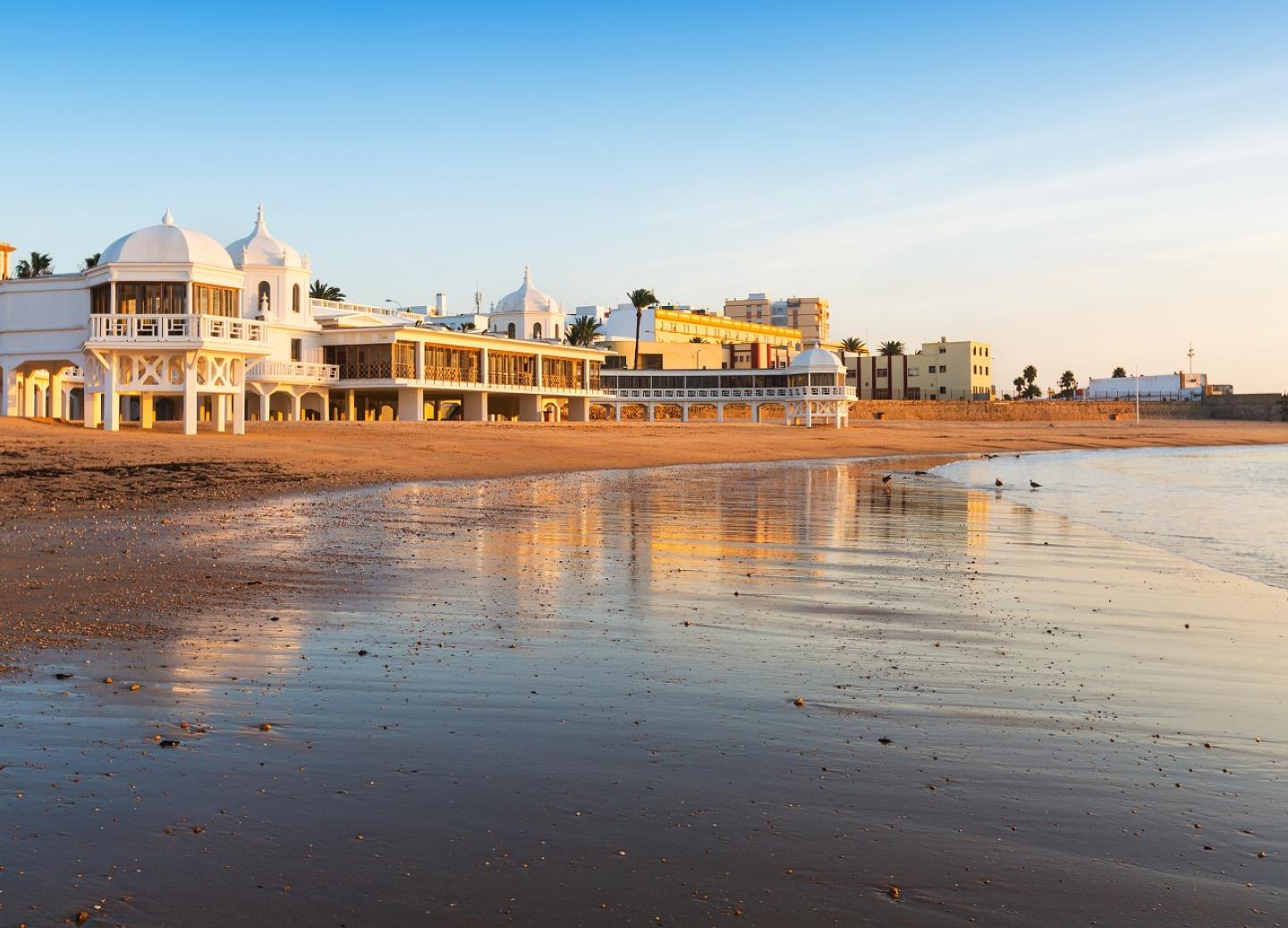
Cadiz's geography as a near-island means the sea is rarely more than a few minutes' walk from anywhere in the old town. The Paseo Fernando Quiñones and the Alameda de Apodaca follow the northern shore, offering benches, sea views, and the city's characteristic Atlantic light. La Caleta, the small beach tucked between two 18th-century castle fortifications at the western tip of the peninsula, is the city's oldest and most storied swimming spot. The hop-on hop-off bus route traces much of the waterfront, making it practical to take in the coastal setting even with limited time ashore.
Cadiz travel tips
Walk the Old Town Before the Heat Builds. Cadiz's old town is at its most atmospheric in the morning hours, when the light is golden and the streets are still relatively quiet. Setting out shortly after docking allows a relaxed circuit of the cathedral, the market, and the historic plazas before the midday heat and tour groups arrive simultaneously. Most of the key landmarks are within a 20-minute walk of each other.
The Cathedral Tower Climb Is Worth the Effort. The cathedral's tower is open for visits and offers some of the best rooftop views in southern Spain — the combination of terracotta rooflines, the Atlantic horizon, and the harbour makes for an exceptional panorama. The climb involves stairs and can be warm in summer; comfortable footwear and a bottle of water are advisable. Entry to the tower is separate from the main cathedral ticket.
Plan Seville Trips for Early Departures. Seville is approximately 1 hour 45 minutes from Cadiz by train and somewhat longer by road depending on traffic. To make a Seville visit genuinely worthwhile, departing by 9am allows 5–6 hours in the city before a comfortable return. The Alcazar and cathedral both have significant queues in peak season — pre-booked tickets save considerable time and reduce stress on a tight schedule.
Sun Protection Is Non-Negotiable in Summer. Cadiz sits at a latitude equivalent to northern Africa, and summer sun is intense. Temperatures above 35°C are common July through August, and the Atlantic sea breeze — while refreshing — can create a false sense of coolness that masks UV exposure. A high-SPF sunscreen, a hat, and light breathable clothing are essential for comfortable outdoor exploration throughout the warmer months.
Mercado Central Is a Morning-Only Experience. The Mercado Central operates primarily in the morning and begins winding down by early afternoon. Most stalls are at full capacity and freshest before noon. The fish and seafood section is particularly notable — a visit before 11am captures the best variety and activity. The market is also a useful place to pick up provisions or edible souvenirs before returning to the ship.
Carnival Dates Bring Crowds but Exceptional Atmosphere. Cadiz Carnival, held in February, is one of Spain's most celebrated and genuinely local festivals — characterised by sharp satirical song groups (chirigotas) rather than the parade-heavy format of other carnivals. If a ship calls during Carnival, the city is festive and extraordinarily lively, but streets become very crowded and restaurants fill early. Comfortable shoes and patience are essential; the reward is a deeply authentic slice of gaditano culture.
Port Facts Every Cruiser Needs To Know
Cadiz shore excursion FAQs
The Cadiz cruise terminal is located near the historic city walls, and the old town's main attractions are reachable on foot in 10–15 minutes. The cathedral, Mercado Central, and main plazas are all within comfortable walking distance of the dock.
Yes, but it requires planning. Seville is approximately 1 hour 45 minutes from Cadiz by train and requires an early start to allow meaningful time in the city. A full day ashore with departure by 9am gives a workable 5–6 hours in Seville. Those with half-day calls are better served staying in Cadiz itself.
Cadiz is one of the oldest continuously inhabited cities in Western Europe, founded by Phoenician traders around 1100 BC. It was a departure point for Columbus's Atlantic voyages, a major hub of the Spanish colonial trade network, and the site where Spain's first liberal constitution was drafted in 1812.
La Caleta beach is within walking distance of the old town — approximately 20–25 minutes from the port. Playa de la Victoria, the city's longer main beach, is on the Atlantic-facing side of the peninsula and further on foot, though accessible by local bus. Both beaches are public and free to use.
Tortillitas de camarones — crispy battered shrimp fritters — are the city's signature snack and best sampled at the Mercado Central or traditional tapas bars. Bluefin tuna (atún rojo) is a regional speciality, as are chipirones (baby squid). Manzanilla sherry from Sanlúcar de Barrameda is the classic local drink.
Very much so. The old town sits on a compact peninsula and most major landmarks are within easy walking distance of each other and the port. The terrain is largely flat, making it accessible for most fitness levels. The main challenge in summer is heat rather than distance.
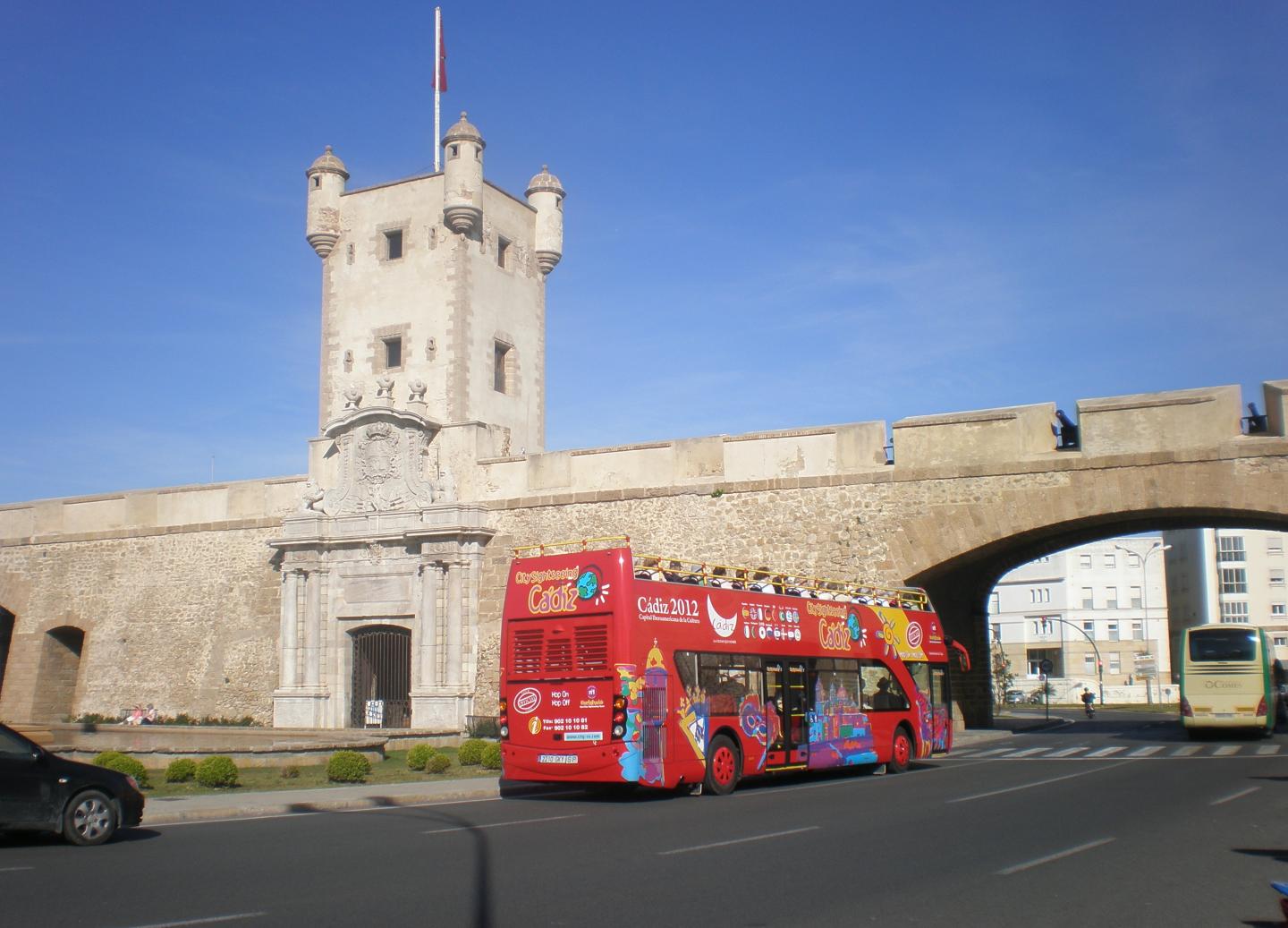
The Cadiz hop-on hop-off circuit covers the city's main landmarks including the cathedral, the Mercado Central, the Atlantic waterfront, and the seafront castles. It is a practical option for first-time visitors wanting orientation quickly, or for those who prefer not to walk in summer heat. The full circuit takes approximately 90 minutes without stops.
July and August bring the hottest weather and the highest tourist numbers, with temperatures regularly exceeding 35°C. February Carnival is extremely busy for a short, intense period. Spring (April–May) and early autumn (September–October) are widely considered the best times to visit — pleasant temperatures and manageable crowds.
Spain uses the euro (EUR). Cards are accepted at most restaurants, shops, and tourist sites. Cash is still preferred at market stalls and some smaller tapas bars. ATMs are widely available throughout the old town. Carrying a small amount of cash for market visits and traditional bars is worthwhile.
Yes — the Alcazar is one of Spain's most visited monuments and entry queues in peak season can exceed an hour for walk-in visitors. Pre-booked timed tickets significantly reduce waiting time and are strongly recommended for cruise visitors working within a fixed return schedule. The site requires 1.5–2 hours to explore properly.
Filters
Select a filter to refine results.
Tour Type
Tour Activity
 Cart
Cart
 USD
USD GBP
GBP AUD
AUD EUR
EUR CAD
CAD