



Tours in Ibiza


Cruising to Ibiza in a group?
Skip the crowded ship excursion bus. One dedicated planner will design a private shore experience around exactly what your group wants — coordinated from first enquiry to the moment you're back on board. More memorable, more flexible, and more affordable than you might expect. Spend less time organising, more time enjoying.
Explore Group Travel →Cruising to Ibiza
Ibiza may be famous worldwide for its nightlife, but the island that cruise visitors encounter during daylight hours tells a far older, richer, and more complex story. The island has been inhabited since at least the 7th century BC, when Phoenician traders established a settlement here, and the layered history that followed — Carthaginian, Roman, Moorish, Aragonese — is preserved in extraordinary detail within the walls of Dalt Vila, the island's fortified hilltop old town, now a UNESCO World Heritage Site.
Ships dock at the Port of Ibiza (known locally as Eivissa), and the spectacular silhouette of Dalt Vila's Renaissance ramparts rises immediately above the harbour. The walled city was substantially rebuilt in the 16th century under the orders of Holy Roman Emperor Charles V, and its massive bastions, golden stone streets, and cathedral-capped summit remain one of the most dramatic examples of Renaissance military architecture in the entire Mediterranean. Walking through its gates and climbing its cobblestone lanes is like stepping through centuries in a matter of minutes.
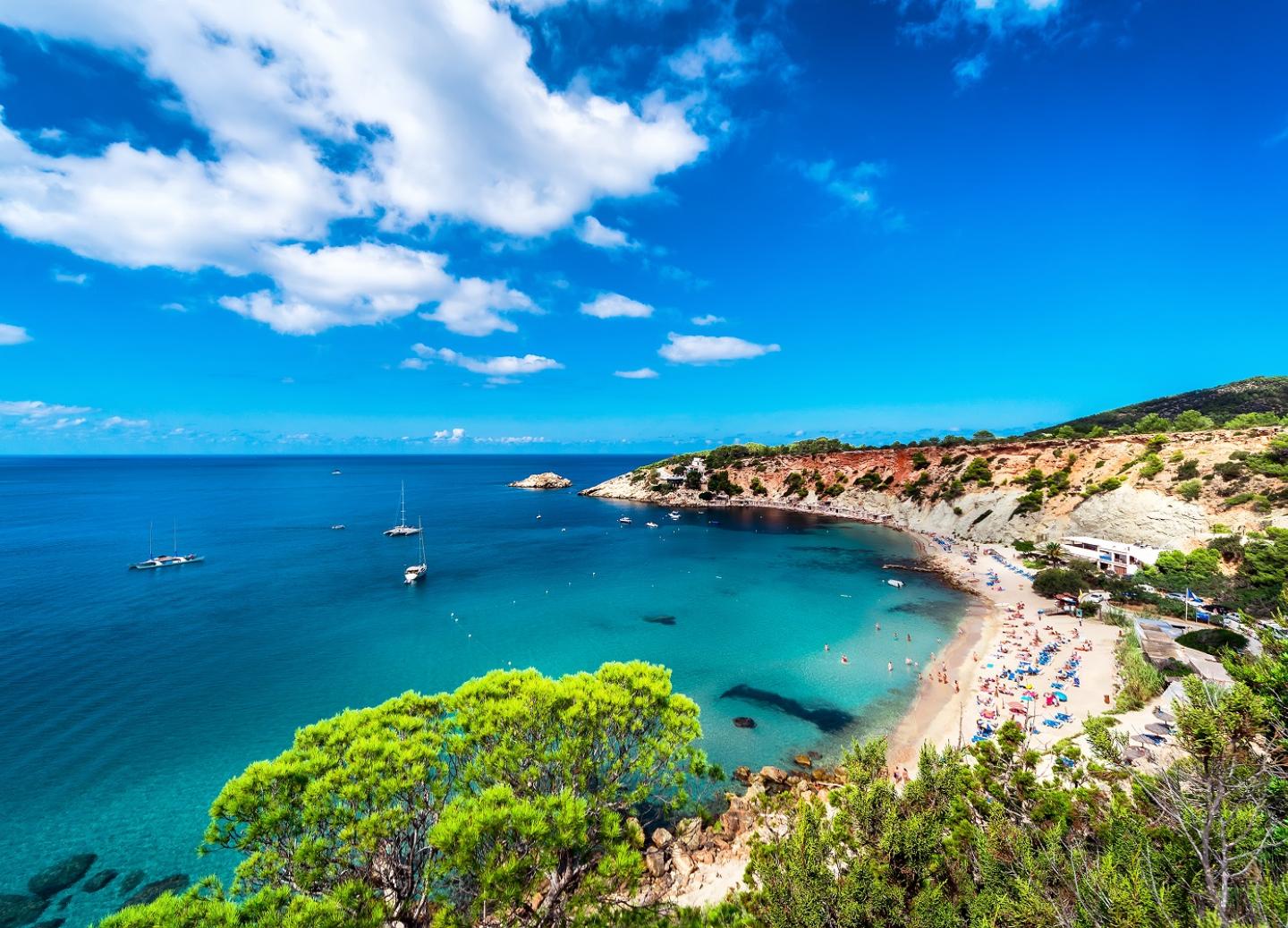
Beyond the old town, Ibiza offers a landscape of remarkable variety — whitewashed villages set among fig and almond trees, red-earth cliffs dropping to turquoise coves, the iconic silhouette of the rock islet Es Vedrà rising offshore, and flat salt pans that have been harvested since antiquity. The island's cuisine reflects its layered past, drawing on Ibizan, Moorish, and broader Mediterranean influences to produce dishes that feel both rootedly local and deeply satisfying.
For cruise visitors spending a half-day or full day ashore, Ibiza rewards both the culturally curious and those simply seeking Mediterranean beauty. Dalt Vila alone justifies a visit of several hours; the surrounding port neighbourhood of Sa Penya adds colour and character; and a short journey beyond town reveals an island that has been drawing travellers for millennia — long before the first DJ set foot on its shores.
Top things to do in Ibiza on a cruise stopover
Dalt Vila: A UNESCO World Heritage Walled City
Rising dramatically above the harbour on a fortified hilltop, Dalt Vila (literally 'Upper Town') is the historic heart of Ibiza and one of the best-preserved examples of Renaissance military architecture in Europe. Recognised as a UNESCO World Heritage Site in 1999, the walled city's massive bastions, designed by the Italian engineer Giovan Battista Calvi in the mid-16th century, remain almost entirely intact. Entering through the Portal de ses Taules — an imposing Renaissance gateway flanked by Roman statues — and climbing through the golden stone streets to the cathedral at the summit is one of the most rewarding urban walks anywhere in the western Mediterranean. The views from the ramparts at the top, sweeping over the port, the flat plain of the island, and the open sea, are genuinely spectacular. A half-day tour of Ibiza invariably places Dalt Vila at its centre — and rightly so.
Puig des Molins: Where Phoenician History Lives
Just below the walls of Dalt Vila lies one of the most significant Phoenician and Punic archaeological sites in the Mediterranean: Puig des Molins (Hill of the Windmills), also designated as part of Ibiza's UNESCO World Heritage listing. The site contains thousands of hypogea — underground burial chambers cut directly into the soft limestone — dating primarily from the 7th to 2nd centuries BC, when Ibiza (then known as Ebusus) was a major Carthaginian trading hub. The attached museum displays extraordinary grave goods: terracotta figurines, alabaster vessels, amulets, and ceramic lamps that paint a vivid picture of ancient Mediterranean life and belief. A visit here adds a layer of historical depth to the Ibiza experience that comes as a genuine surprise to many visitors expecting only beaches and nightlife.
Ibiza Cathedral and the Views from the Summit
At the very top of Dalt Vila stands the Cathedral of Our Lady of the Snows, a structure that reflects the island's layered history in its very fabric. Originally the site of a mosque during the Moorish period, it was converted into a Gothic church after the Christian reconquest in 1235 and subsequently modified in baroque style during the 18th century. The cathedral houses a small diocesan museum with Ibizan religious art and artefacts. But it is the terrace immediately outside that draws most visitors — the panoramic view from this hilltop encompasses the entire port, the long sweep of the island's southern coastline, the salt flats in the distance, and on clear days the outline of the mainland Spanish coast. It is the natural high point of any walking tour through the old town.
Sa Penya: The Port Quarter's Bohemian Character
At the foot of Dalt Vila, the neighbourhood of Sa Penya sprawls along the waterfront in vivid contrast to the quiet solemnity of the walled city above. This is the original working harbour district, a dense web of narrow streets and whitewashed buildings where fishermen's houses have given way to independent boutiques, craft workshops, market stalls, and small restaurants. The area has a bohemian, slightly ramshackle quality that feels authentically separate from the resort zones elsewhere on the island. The local market, the eclectic shop fronts, and the casual waterfront café culture make Sa Penya an enjoyable and atmospheric place to wander before or after the climb into Dalt Vila. It represents the island at a human, neighbourhood scale that many visitors do not expect to find.
The Island's Landscapes: Salt Pans, Red Cliffs, and Wild Herbs
Beyond Ibiza Town, the island reveals a landscape shaped as much by agriculture and geology as by the sea. The salt pans of Ses Salines in the south, harvested continuously since Phoenician times, are now a protected natural park and a haven for flamingos and wading birds. The island's red-earth cliffs, draped with rosemary, thyme, and wild lavender, drop to some of the clearest water in the western Mediterranean. The rural interior is dotted with ancient fincas (farmhouses), old wells, and terraced almond groves that bear almost no resemblance to the Ibiza of international imagination. A half-day tour that ventures beyond the town gates captures this entirely different, deeply serene face of the island.
Ibizan Cuisine: Ancient Flavours, Simple Ingredients
Ibizan cooking is rooted in the island's agricultural and fishing traditions rather than imported influences, and it produces dishes of genuine character and simplicity. Bullit de peix — a two-course fish stew in which the broth is served first over saffron rice, followed by the poached fish with aioli — is the definitive island dish, found at traditional restaurants throughout Ibiza Town. Sofrit pagès, a slow-cooked meat stew flavoured with sobrassada and spices, reflects the rural interior. Local cheeses, sun-dried figs, and pastries made with almonds and anise are found at markets. To drink, hierbas ibicencas — a herbal liqueur made from wild island plants — is offered at the end of most traditional meals as a digestif and makes for a distinctly local souvenir.
Ibiza travel tips
Wear Proper Footwear for Dalt Vila. The cobblestone streets inside Dalt Vila are steep, uneven, and can be slippery — particularly after rain or in the shade of narrow lanes where moisture lingers. Sandals with grip or walking shoes are strongly recommended. Smooth-soled shoes, flip-flops, and high heels make the climb genuinely uncomfortable and increase the risk of a fall on the steeper sections near the top of the town.
Start with Dalt Vila, Finish at the Waterfront. Climb into the walled city first, when energy levels are high and the morning air is cooler. Work your way up to the cathedral terrace for the panoramic views, then descend gradually through the streets, stopping at the Puig des Molins museum if time permits. Finish in the Sa Penya neighbourhood or along the harbour promenade for a relaxed café stop — this sequence works with both the terrain and the natural rhythm of the day.
The Midday Heat Inside the Old Town is Intense. Between noon and 3pm in summer, Dalt Vila's narrow upper streets trap heat and offer limited shade. Temperatures inside the walled city can feel noticeably higher than on the open waterfront. If possible, complete the climb before midday, or time a museum visit (Puig des Molins has air-conditioned gallery spaces) to coincide with the hottest part of the afternoon. Carry water — drinking fountains are not always easy to find inside the old walls.
Photography: The Ramparts at Golden Hour. The outer ramparts of Dalt Vila offer exceptional photography opportunities, particularly on the western side where the late afternoon sun catches the golden stone of the bastions and casts long shadows over the harbour below. If your ship is in port through the afternoon, a second visit to the ramparts as the sun drops toward the horizon rewards with entirely different light and far fewer fellow visitors than the morning rush. The view of the harbour from the fortifications is one of the most striking in the Mediterranean.
Learn a Few Words of Catalan-Ibizan. While Spanish is universally understood, locals in Ibiza Town and especially in the interior villages often speak Ibizan — a dialect of Catalan — as their first language. A simple greeting (bon dia for good morning, gràcies for thank you) is warmly received and signals genuine respect for local culture. Many residents take quiet pride in the island's distinct linguistic and cultural identity, which sets it apart from the mainland Spanish experience that many international visitors expect.
The Necropolis Museum is Genuinely Unmissable. The Puig des Molins Archaeological Museum is one of the most significant Phoenician and Punic sites in the western Mediterranean and is consistently undervisited relative to its importance. The permanent collection of grave goods — terracotta figurines, amulets, ceramics, and alabaster vessels — is beautifully displayed and tells the story of ancient Ibiza with real depth. Entry is inexpensive, the museum is air-conditioned, and a visit takes 45–60 minutes. It lies just below Dalt Vila and is an easy addition to any walking itinerary through the old town area.
Port Facts Every Cruiser Needs To Know
Ibiza shore excursion FAQs
Cruise ships dock at the Port of Ibiza (Port d'Eivissa), located at the foot of Dalt Vila's ramparts. The position varies by berth, but in most cases Dalt Vila's main gate is within a 5–15 minute walk of the ship. The port is well-signposted and the walled city is visible from virtually everywhere along the waterfront.
Dalt Vila presents real challenges for visitors with limited mobility. The streets are steep, cobbled, and uneven throughout — there are no elevators or escalators to the upper sections. The lower portions of the old town, around the main gate and the first level of streets, are more manageable. The Puig des Molins Museum below the walls is relatively flat and accessible. Visitors who cannot manage steep hills comfortably will find the waterfront promenade and Sa Penya neighbourhood much more navigable.
Puig des Molins is a UNESCO-listed Phoenician and Punic necropolis located just below Dalt Vila — one of the most important archaeological sites of its kind in the Mediterranean. It contains thousands of burial chambers carved into the rock, dating from the 7th to 2nd centuries BC. The attached museum displays exceptional grave goods including terracotta figurines and ancient ceramics. It is absolutely worth visiting; entry is inexpensive and the experience adds genuine historical depth to the Ibiza visit.
Yes, though it requires transport beyond the immediate port area. Public buses from Ibiza Town serve several beaches including Platja d'en Bossa (roughly 15 minutes) and Ses Salines (around 30 minutes). Bus stops and schedules are available at the port bus station. Allow sufficient time to travel, enjoy the beach, and return before your ship's all-aboard time — beach visits work best for cruise passengers with a full day in port.
Bullit de peix — the traditional Ibizan fish stew served in two courses with saffron rice — is the definitive local dish and available at traditional restaurants throughout Ibiza Town. Sofrit pagès (slow-cooked meat stew) and greixonera (a sweet bread pudding) are other authentic choices. For drinks, try hierbas ibicencas, a locally produced herbal liqueur made from wild island plants, offered as a digestif at most traditional restaurants.
Ibiza Town — including Dalt Vila, Sa Penya, and the waterfront — is safe for tourists during the day. Standard urban common sense applies: keep valuables secure and be aware of your surroundings in busier areas. The old town and port neighbourhood are well-frequented during the day and present no particular concerns for cruise visitors exploring on foot.
A leisurely walk through Dalt Vila from the main gate to the cathedral terrace at the top takes approximately 30–45 minutes without stopping. Allowing time to explore the streets, visit a church or two, and spend time at the cathedral viewpoint, a proper visit takes 1.5 to 2 hours. Adding the Puig des Molins Museum nearby brings the total to 3 hours for a thorough exploration of Ibiza's historic core.
Spanish is the official administrative language, and Ibizan (a dialect of Catalan) is the traditional local language spoken by many residents. In tourist areas, restaurants, and shops throughout Ibiza Town, English is very widely understood and spoken. German and French are also commonly heard given the island's international visitor profile. Communication in English presents no difficulty in the port and old town area.
The area around Sa Penya (the port quarter below Dalt Vila) hosts craft and artisan market activity, particularly during the summer months. The market at La Mola in the northeast of the island is famous but too far for most cruise day visits. In Ibiza Town itself, the streets of Sa Penya contain independent boutiques and stalls selling locally made jewellery, clothing, and crafts that reflect the island's longstanding bohemian creative culture. The main market at Sant Jordi (antiques and local goods) requires transport but is lively on Saturdays.
May, June, and September are the optimal months for a cruise call to Ibiza. The weather is warm and reliably sunny, the sea is pleasant for swimming if beach time is planned, and the crowds are significantly thinner than in July and August — when both the beaches and Dalt Vila can become very congested. Late September and early October also offer excellent conditions with a quieter, more local atmosphere as the summer tourist season winds down.
Filters
Select a filter to refine results.
Tour Type
Tour Activity
 Cart
Cart
 USD
USD GBP
GBP AUD
AUD EUR
EUR CAD
CAD