



Tours in San Sebastian La Gomera Canary Islands


Cruising to San Sebastian La Gomera Canary Islands in a group?
Skip the crowded ship excursion bus. One dedicated planner will design a private shore experience around exactly what your group wants — coordinated from first enquiry to the moment you're back on board. More memorable, more flexible, and more affordable than you might expect. Spend less time organising, more time enjoying.
Explore Group Travel →Cruising to San Sebastian La Gomera Canary Islands
La Gomera is the island that Columbus chose for his final preparation before the most consequential voyage in the history of exploration. In September 1492, his three caravels — the Niña, Pinta and Santa María — anchored in the harbour at San Sebastian de La Gomera for the last time before sailing westward into the unknown Atlantic. That harbour is the same one where cruise ships call today, and the small colonial town around it has preserved enough of its sixteenth-century character to make the connection to that moment feel remarkably tangible.
Beyond its historical significance, La Gomera is a place of exceptional natural beauty. The island's dramatic topography — deep ravines (barrancos) radiating from a central plateau, green valleys where banana and citrus plantations climb the lower slopes, and rugged volcanic cliffs dropping to the sea — creates landscapes of extraordinary variety within a very compact area. The island measures just 370 square kilometres, yet contains micro-climates ranging from arid coastal zones to misty cloud forest at its summit.
At that summit sits Garajonay National Park, a UNESCO World Heritage Site that protects one of the world's last extensive stands of laurisilva — the ancient laurel forest that once covered much of southern Europe and the Mediterranean basin before the ice ages. Walking through Garajonay is a journey into deep time: gnarled laurel trees draped in moss and fern, a permanent mist filtering the light, silence broken only by birdsong and the drip of water from leaves. The contrast between this primeval forest and the sun-scorched coast below is one of the most startling ecological transitions available to any cruise passenger ashore.
La Gomera also carries a remarkable cultural distinction in El Silbo Gomero — a whistled language that substitutes for spoken Gomero Spanish across distances and through valleys that voice alone cannot carry. This unique communication system, declared a UNESCO Intangible Cultural Heritage, is still taught in schools and used in daily life. Hearing it demonstrated by a local is one of those travel experiences that stays with you long after the island has disappeared over the horizon.
Top things to do in San Sebastian La Gomera Canary Islands on a cruise stopover
San Sebastian de La Gomera: Columbus's Atlantic Gateway
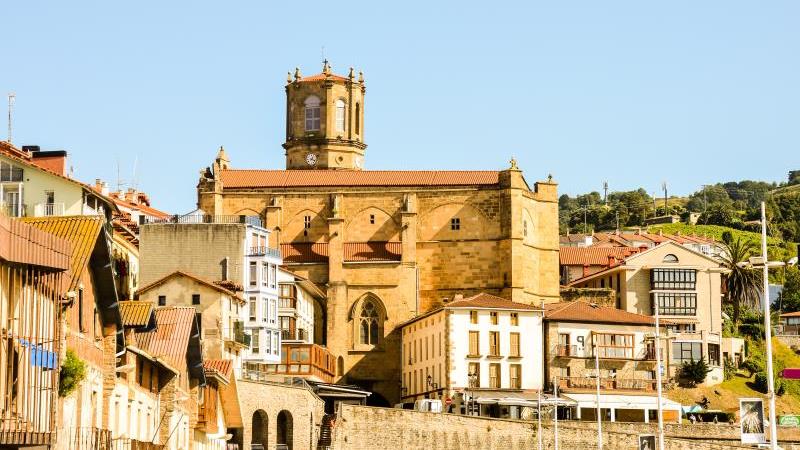
The small capital of La Gomera holds a place in history entirely disproportionate to its modest size. It was here, in September 1492, that Christopher Columbus provisioned his fleet for the last time before sailing west into waters no European had charted. The Torre del Conde — a fifteenth-century defensive tower that still stands intact in the centre of town — was already old when Columbus arrived, and it remains the oldest surviving colonial-era structure in the Canary Islands. The church of La Asunción, where Columbus reportedly attended Mass before his departure, stands nearby. The harbour promenade, the fishing boats, the low colonial architecture and the particular quality of Atlantic light make San Sebastian feel like a genuine living connection to one of history's defining moments.
Garajonay National Park: The Ancient Laurel Forest
Rising to 1,487 metres at the island's crown, Garajonay National Park protects one of the world's last large expanses of laurisilva — the laurel forest ecosystem that blanketed much of Europe and North Africa before the Pleistocene ice ages drove it to extinction everywhere except the Macaronesian islands. Walking beneath these ancient trees, their trunks twisted with age and wrapped in mosses and ferns, while cool mist drifts between the branches, is one of the most atmospheric natural experiences in the entire Atlantic. The park covers roughly ten percent of the island's total area, is a UNESCO World Heritage Site, and contains hundreds of kilometres of walking trails through landscapes that have changed little in millions of years.
The Valley of Hermigua: La Gomera's Green Heart
The Valley of Hermigua, winding down from the northern highlands to a black-sand beach on the island's northern coast, is La Gomera at its most lush and fertile. Banana plantations fill the valley floor, their deep green punctuated by the silver-grey of ancient dragon trees and the white of traditional Canarian farmhouses clinging to the valley walls. The road descending from the central plateau offers some of the island's most dramatic viewpoints — successive ridges dropping to the sea, with Tenerife's Mount Teide rising like a white pyramid on the horizon on clear days. The village of Hermigua itself is a quiet, traditional settlement where agricultural life continues at a pace that the twenty-first century has not yet entirely reached.
El Silbo Gomero: The Whistled Language of the Valleys
La Gomera's most extraordinary cultural distinction is El Silbo Gomero — a whistled language in which the sounds of spoken Spanish are transposed into a system of modulated whistles that can carry up to two kilometres through the island's deep ravines. Developed centuries ago by the island's original Guanche inhabitants and adopted by Spanish settlers, El Silbo was the ideal solution to the problem of communicating across a deeply dissected volcanic landscape where voice alone would be lost in the barranco walls. Declared a UNESCO Intangible Cultural Heritage in 2009, El Silbo is still taught in Gomeran schools and used in daily life. Demonstrations given by local speakers are a genuine revelation — a complete conversation conducted in whistles that conveys meaning as clearly as speech.
La Gomera's Volcanic Coastline and Mirador Viewpoints
The island's coastline is formed entirely from ancient volcanic rock — black basalt cliffs, boulder beaches, sea arches and rocky coves that the Atlantic has been sculpting for millions of years. The interior roads that traverse the island pass through a succession of mirador (viewpoint) platforms where the full drama of La Gomera's topography becomes apparent: deep barrancos cutting from the central plateau to the sea, the terraced cultivation of the valley slopes, and on exceptionally clear days, the outlines of all six neighbouring Canary Islands visible on the horizon. The mirador above San Sebastian, looking east toward Tenerife with Mount Teide floating above the clouds, is one of the Atlantic's great views.
The Historic Town Centre: Torre del Conde and Colonial Architecture
Within a short walk of the cruise terminal, San Sebastian de La Gomera's compact historic centre offers a morning's worth of genuine discovery. The Torre del Conde (Tower of the Count), built in 1447, is the island's most important historical monument — a squat, square fortified tower that once guarded the town against pirate raids and now stands in a small garden near the seafront as the oldest surviving example of Canarian military architecture. The Casa de Colón (Columbus House), a reconstruction of the building where Columbus allegedly rested before his voyage, houses a small museum dedicated to the explorer's Gomeran connections. The waterfront promenade, the Plaza de las Américas and the old town streets behind the harbour form a pleasant circuit that can be completed comfortably on foot.
San Sebastian La Gomera Canary Islands travel tips
Dress in Layers — the Forest is Cool Even in Summer. The contrast between the warm, sunny coast and the cloud-wrapped summit of Garajonay is dramatic. Temperatures in the national park can be 8–12°C cooler than in San Sebastian town, and the persistent mist means surfaces are often damp. A light waterproof jacket and closed shoes are essential if you plan to explore the forest, even on a day that looks perfectly clear from the port. The coastal sunshine gives no indication of conditions at altitude — check local weather for the park before you go.
Try Gofio and Almogrote Before You Leave. La Gomera's two most distinctive food products — gofio (roasted grain flour) and almogrote (sharp cheese pâté) — are the authentic tastes of the island and make excellent gifts or souvenirs. Both are widely available in the market and shops near the port. Almogrote in particular is almost impossible to find outside the Canaries and has an intense, savoury flavour that accompanies bread magnificently. The market near the port also sells local palm honey (miel de palma), another Gomeran speciality with a complex, caramel-like taste quite different from conventional honey.
The Mountain Roads Demand More Time Than You Expect. La Gomera is small in area but its roads are relentlessly winding. The journey from San Sebastian to Garajonay or Hermigua involves continuous hairpin bends through the barrancos, with stretches where average speeds are well below 40 kilometres per hour. What looks like a 15-kilometre drive on a map may take 45 minutes or more. Always build generous time buffers into any inland itinerary and start your return journey earlier than you think necessary — missing the ship's departure because of mountain road conditions is a real risk if timing is misjudged.
Visit the Torre del Conde First Thing. The Torre del Conde, La Gomera's fifteenth-century defensive tower, is the most historically significant building in the Canary Islands and is a five-minute walk from the cruise terminal. It opens early and is often quieter in the morning before tour groups arrive. The small garden surrounding it is peaceful and the tower itself — compact, austere and genuinely medieval — is a moving connection to the pre-colonial Atlantic world. Combining it with the nearby waterfront promenade and a walk past the Church of La Asunción takes about forty-five minutes and sets the historical context for everything else the island has to offer.
Ask About El Silbo Demonstrations. El Silbo Gomero — the island's unique whistled language — is one of the world's genuinely unusual cultural experiences and is something no visitor to La Gomera should miss if at all possible. Demonstrations by local practitioners convey the full communicative power of the system in a way that simply reading about it does not. Local cultural organisations and guides who include a demonstration in their programmes offer the most context-rich introduction. The experience is brief — typically fifteen to twenty minutes — but utterly memorable.
Tenerife May Be Visible — But It Cannot Be Visited in a Day. On clear days, the massive cone of Mount Teide on Tenerife is visible from La Gomera's mirador viewpoints and even from the port — a spectacular sight, floating at over 3,700 metres above the horizon. Some visitors arrive hoping to visit Tenerife during their La Gomera stop. This is not practical: the ferry crossing to Tenerife takes approximately 35–50 minutes each way, and arriving on Tenerife without pre-arranged onward transport leaves almost no usable shore time. Enjoy the views of Teide from the Gomeran highlands — that horizon panorama, with the volcano rising above a layer of cloud, is itself one of the Atlantic's great sights.
Port Facts Every Cruiser Needs To Know
San Sebastian La Gomera Canary Islands shore excursion FAQs
Cruise ships dock at the main harbour terminal in San Sebastian de La Gomera, right in the town centre. The port is extremely convenient — the historic town, shops, restaurants and the Torre del Conde are all within five minutes' walk of the quayside. No shuttle bus or tender transfer is required.
La Gomera was Columbus's final port of call before his 1492 voyage to the Americas. His three caravels — the Niña, Pinta and Santa María — anchored in San Sebastian harbour for water, food and repairs before sailing west into uncharted waters. Columbus reportedly attended Mass at the Church of La Asunción and provisioned his fleet at the town's wells. The town has several sites commemorating this connection, including the Casa de Colón museum and the still-standing Torre del Conde, which predates Columbus's visit by several decades.
Garajonay National Park covers the central highland plateau of La Gomera and protects a UNESCO World Heritage laurisilva (laurel forest) — a relic ecosystem that once covered much of southern Europe before the ice ages. It is reached by road from San Sebastian, a journey of roughly 45–60 minutes by the winding mountain roads. The park contains excellent walking trails of varying difficulty, a visitor centre, and viewpoints over the forest canopy. The temperature in the park is considerably cooler than at the coast and the air is frequently misty.
El Silbo Gomero is a whistled language unique to La Gomera in which the sounds of spoken Spanish are transposed into a system of modulated whistles. It was developed to allow communication across the island's deep ravines, where whistles carry far better than voice. Recognised by UNESCO as an Intangible Cultural Heritage in 2009, El Silbo is still taught in Gomeran schools and used in daily life. The whistled conversations carry real semantic meaning — it is a genuine language, not a code — and hearing a demonstration is one of the most memorable experiences available on the island.
Hermigua is the largest and most fertile valley in La Gomera, running from the central highlands down to the northern coast. Its valley floor is planted with banana and tropical fruit cultivation, its walls are terraced with traditional Canarian agriculture, and the villages of the valley maintain a rural character little changed by tourism. The road descending into Hermigua from the mountain pass offers some of the island's most dramatic views. The valley was specifically mentioned in Venture Ashore's La Gomera highlights tour itinerary as a key destination on the island.
Yes, on clear days La Gomera offers one of the finest inter-island panoramas in the Canaries. From the island's higher mirador viewpoints, it is possible to see Tenerife (with Mount Teide rising dramatically above the cloud layer), El Hierro, La Palma, and Gran Canaria. Even from San Sebastian harbour, Mount Teide is often visible on the horizon. Morning hours before any afternoon haze develops tend to offer the clearest views.
La Gomera is one of the Canary Islands' premier hiking destinations. Garajonay National Park alone has hundreds of kilometres of marked trails, ranging from easy forest walks on flat paths to more demanding routes along the barranco edges. The GR132 long-distance trail circumnavigates the entire island and passes through all the major ecological zones. Day hikers visiting from a cruise should stick to well-marked routes within the national park and allow plenty of time for the return journey to the port. Proper footwear and layers for the cooler highland conditions are essential.
Gofio is a roasted grain flour — typically made from wheat, maize or a mixture — that forms the backbone of Canarian and particularly Gomeran cuisine. It can appear in many forms: mixed into soup as a thickener, served as a porridge-like side dish, incorporated into desserts with honey and nuts, or simply eaten as a bread substitute. It has a distinctive toasted, nutty flavour quite unlike regular flour. Most restaurants in San Sebastian de La Gomera serve dishes featuring gofio, and it is available to buy as a souvenir at the market and shops near the port.
La Gomera uses the Euro (€) as its currency. As part of the Canary Islands, which are an autonomous community of Spain, it follows standard Spanish and EU currency and banking arrangements. Credit cards are widely accepted in San Sebastian town, in restaurants, and at the main tourist sites. Smaller businesses in the interior villages and at rural market stalls may prefer cash, so it is advisable to carry some Euros for purchases away from the capital.
San Sebastian de La Gomera town is accessible for passengers with limited mobility — the port is flat, the waterfront promenade is paved, and the main historic sites including the Torre del Conde and Casa de Colón are reachable without significant inclines. The interior of the island presents more challenges: Garajonay National Park's forest trails involve uneven surfaces and gradients, and the island's mountain roads involve considerable movement in vehicles. Passengers with mobility considerations should focus on the town itself, which offers genuine historical and cultural interest within a very compact, accessible area.
Filters
Select a filter to refine results.
Tour Type
Tour Activity
 Cart
Cart
 USD
USD GBP
GBP AUD
AUD EUR
EUR CAD
CAD