



Tours in Palma De Mallorca


Cruising to Palma De Mallorca in a group?
Skip the crowded ship excursion bus. One dedicated planner will design a private shore experience around exactly what your group wants — coordinated from first enquiry to the moment you're back on board. More memorable, more flexible, and more affordable than you might expect. Spend less time organising, more time enjoying.
Explore Group Travel →Cruising to Palma De Mallorca
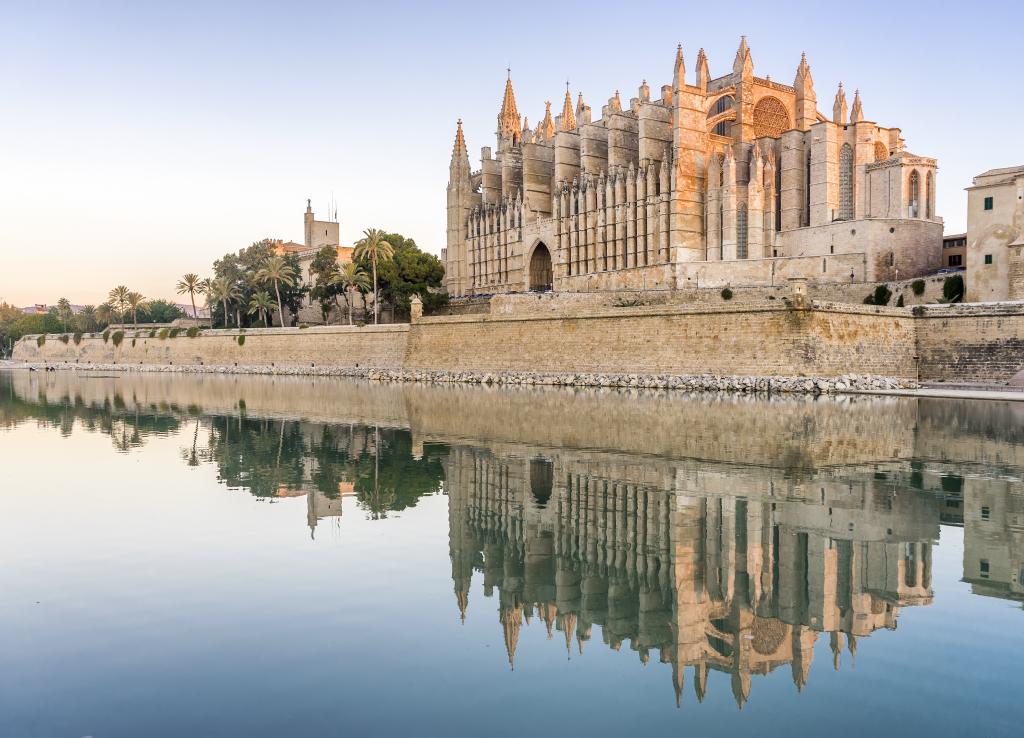
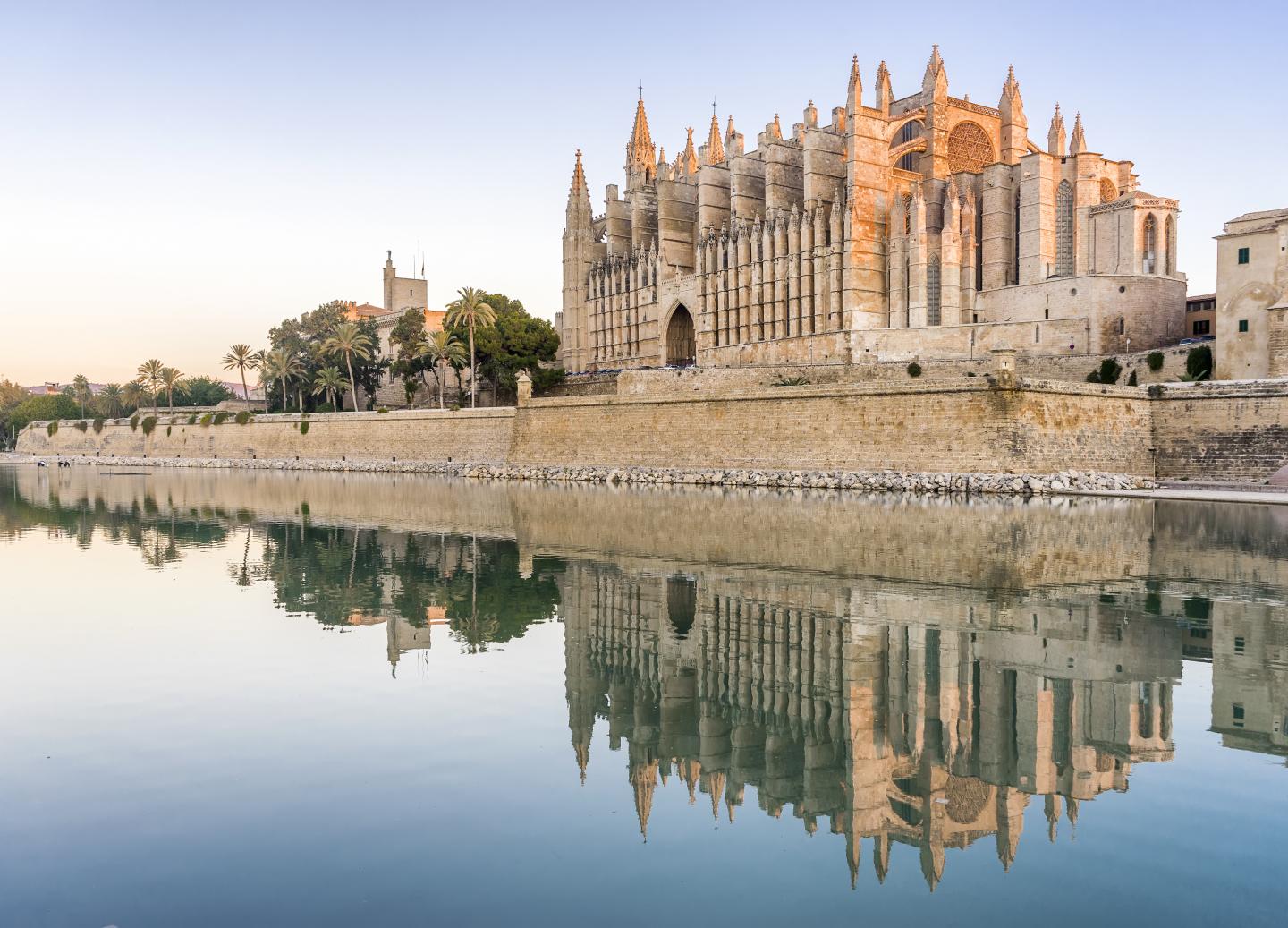
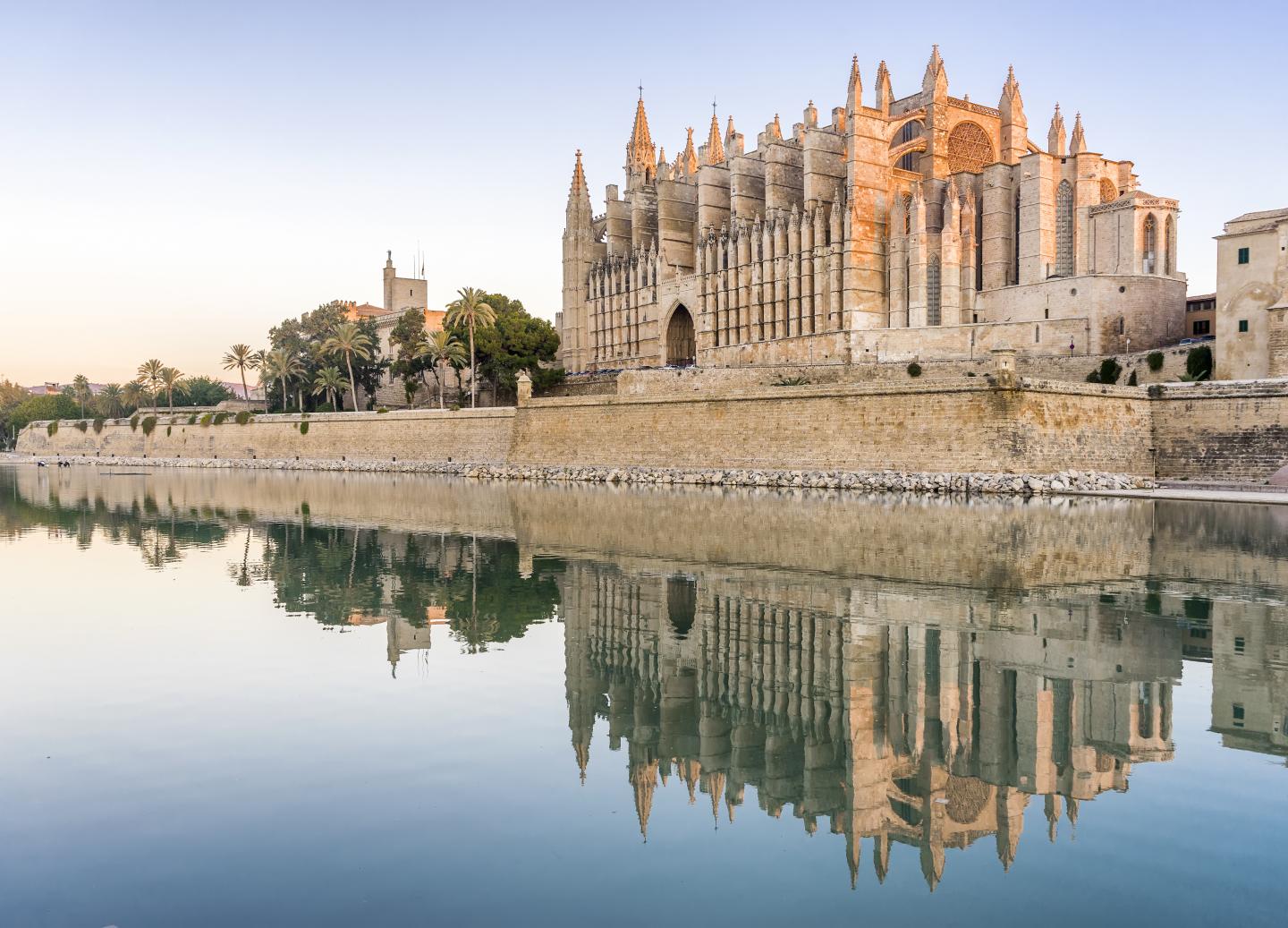
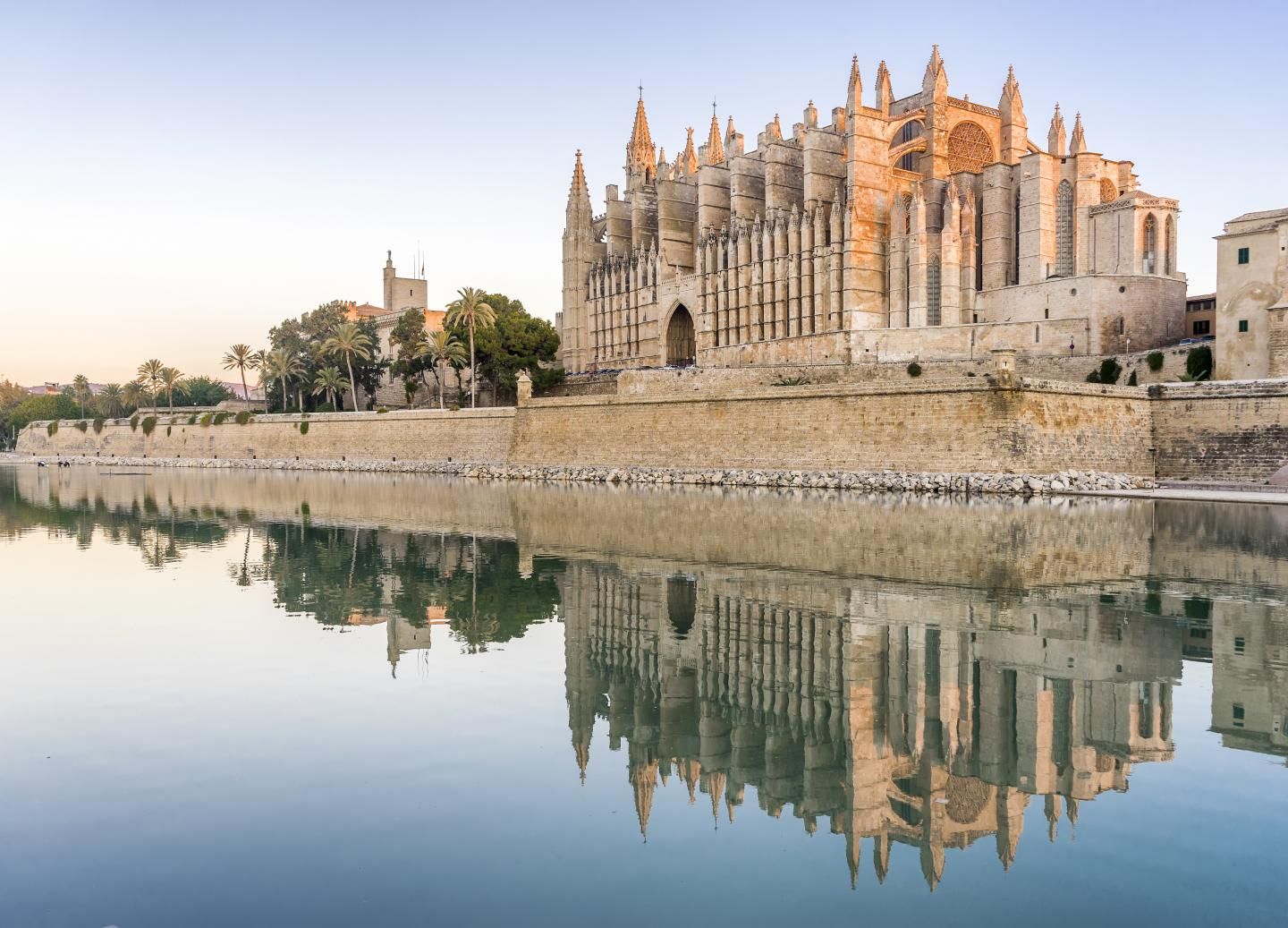
Palma de Mallorca occupies the southern sweep of Spain's largest Mediterranean island, and its skyline — dominated by the great sandstone bulk of La Seu Cathedral — has welcomed seafarers for centuries. Founded by the Romans, shaped decisively by the Moors, and reconquered in 1229 by King Jaume I of Aragon, the city layers its histories with the easy confidence of a place that has always known it sits somewhere extraordinary. The Old Town's Gothic Quarter conceals medieval palaces turned into contemporary art galleries, shaded courtyards draped in bougainvillea, and Arab baths that predate the Christian conquest by several centuries.
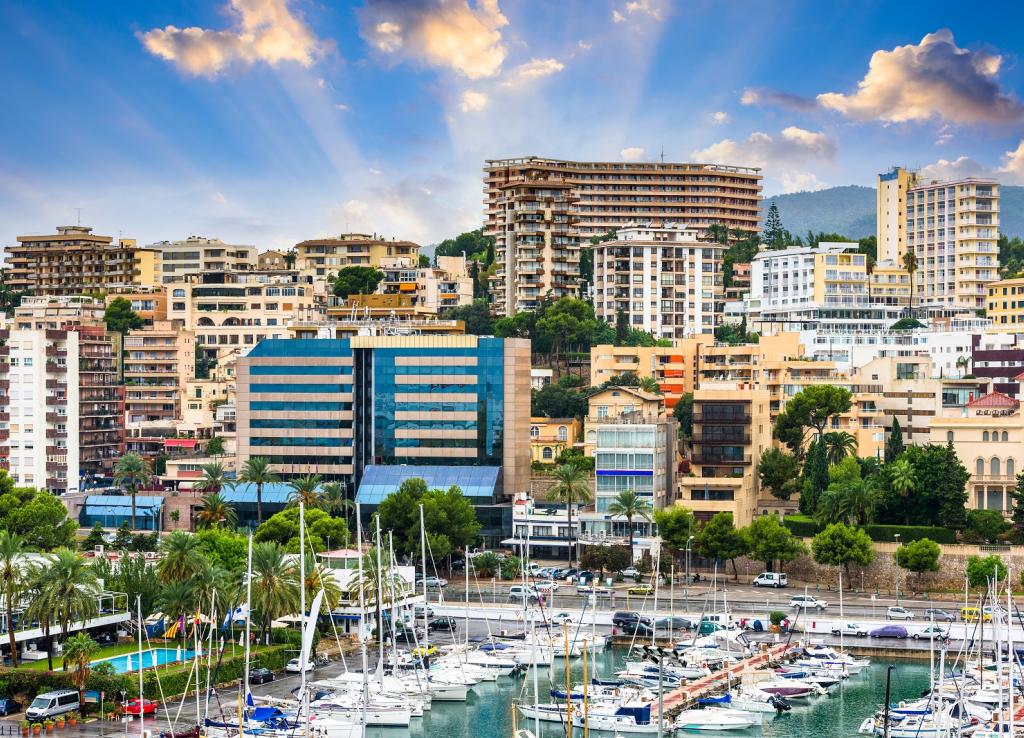
Beyond the cathedral and the narrow historic lanes, Palma is a genuinely cosmopolitan city with a celebrated restaurant scene, boutique shops in the quarter around Carrer de Sant Feliu, and a waterfront promenade — the Passeig Marítim — that sweeps elegantly past the pleasure harbour toward the pine-covered hill where Bellver Castle stands alone, its distinctive circular form unique among Spanish medieval fortifications. The terraces of Bellver offer what many consider the finest view of the bay.
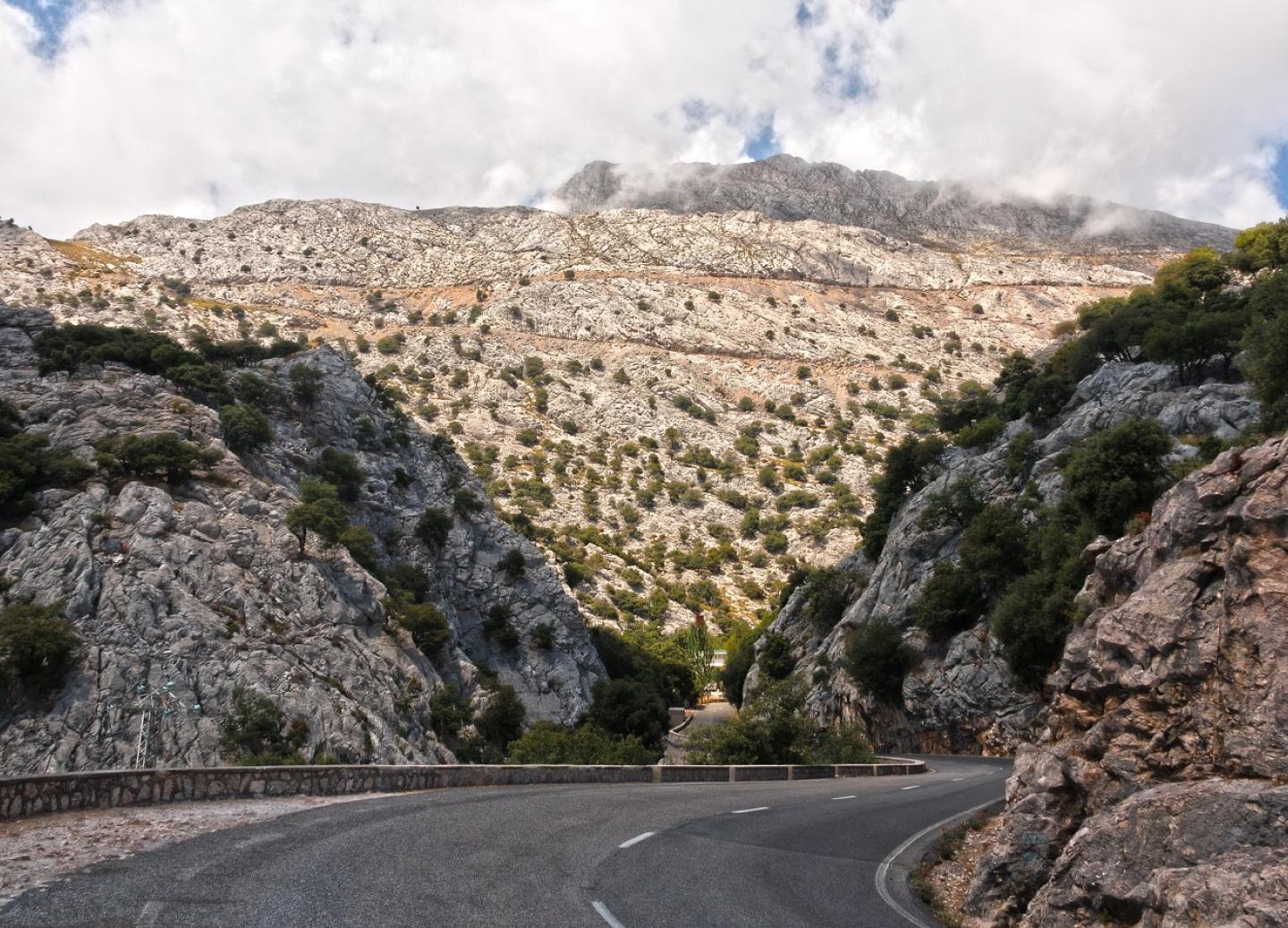
The island's interior is where Mallorca's most enduring romance lives. The Serra de Tramuntana range — inscribed as a UNESCO World Heritage cultural landscape — rises behind the city in a succession of limestone peaks, terraced olive groves, and cork oaks. The winding mountain road links a sequence of remarkable villages: Valldemossa, where Frédéric Chopin spent a winter composing his Preludes in a converted monastery; Deia, the sun-bleached clifftop retreat where Robert Graves wrote and is buried; and Soller, a prosperous citrus town still served by a vintage electric tram that has rattled down to its harbour since 1913. On the island's eastern coast, an hour from Palma, the Caves of Drach contain one of the world's largest underground lakes.
Cruise ships dock immediately adjacent to Palma's Old Town, making this one of the Mediterranean's most accessible ports. The cathedral and historic centre are a short walk from the terminal, while the island's legendary mountain villages and coastal caves require a short journey outward. A day ashore in Palma can be as gentle or as ambitious as you choose — a leisurely walk through Gothic streets and a long lunch, or a morning in the Tramuntana followed by an afternoon exploring the waterfront — and it will almost certainly leave you wanting more of this endlessly rewarding island.
Top things to do in Palma De Mallorca on a cruise stopover
La Seu — Palma's Magnificent Gothic Cathedral
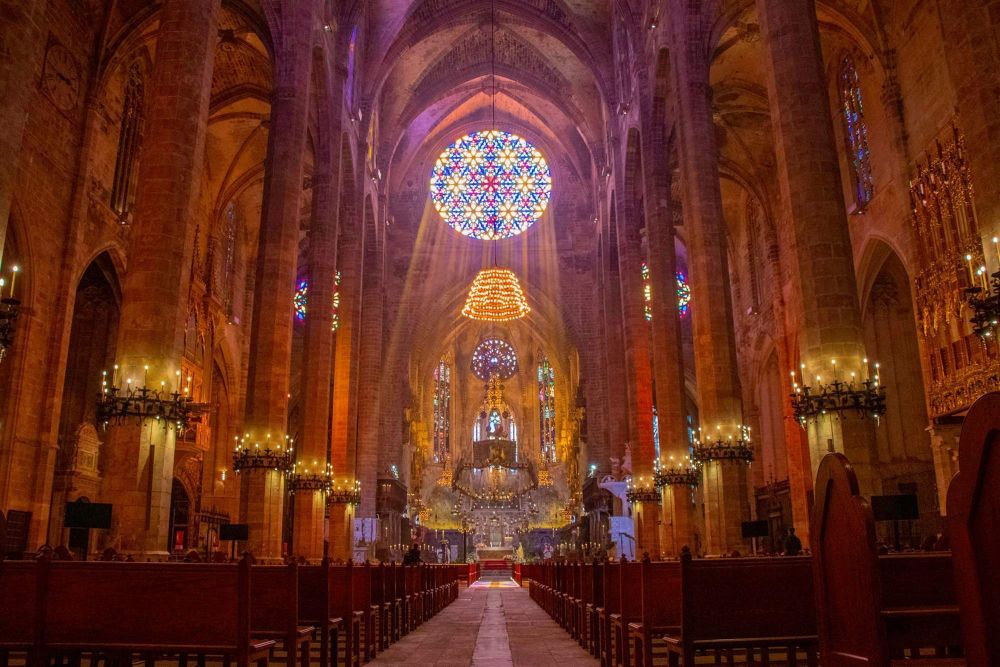
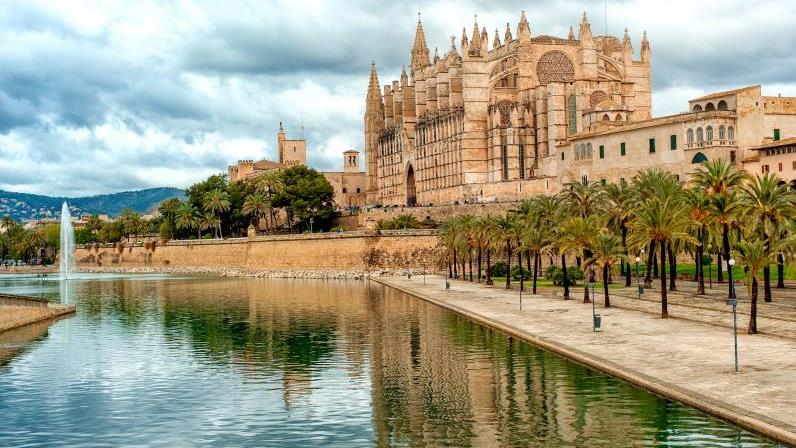
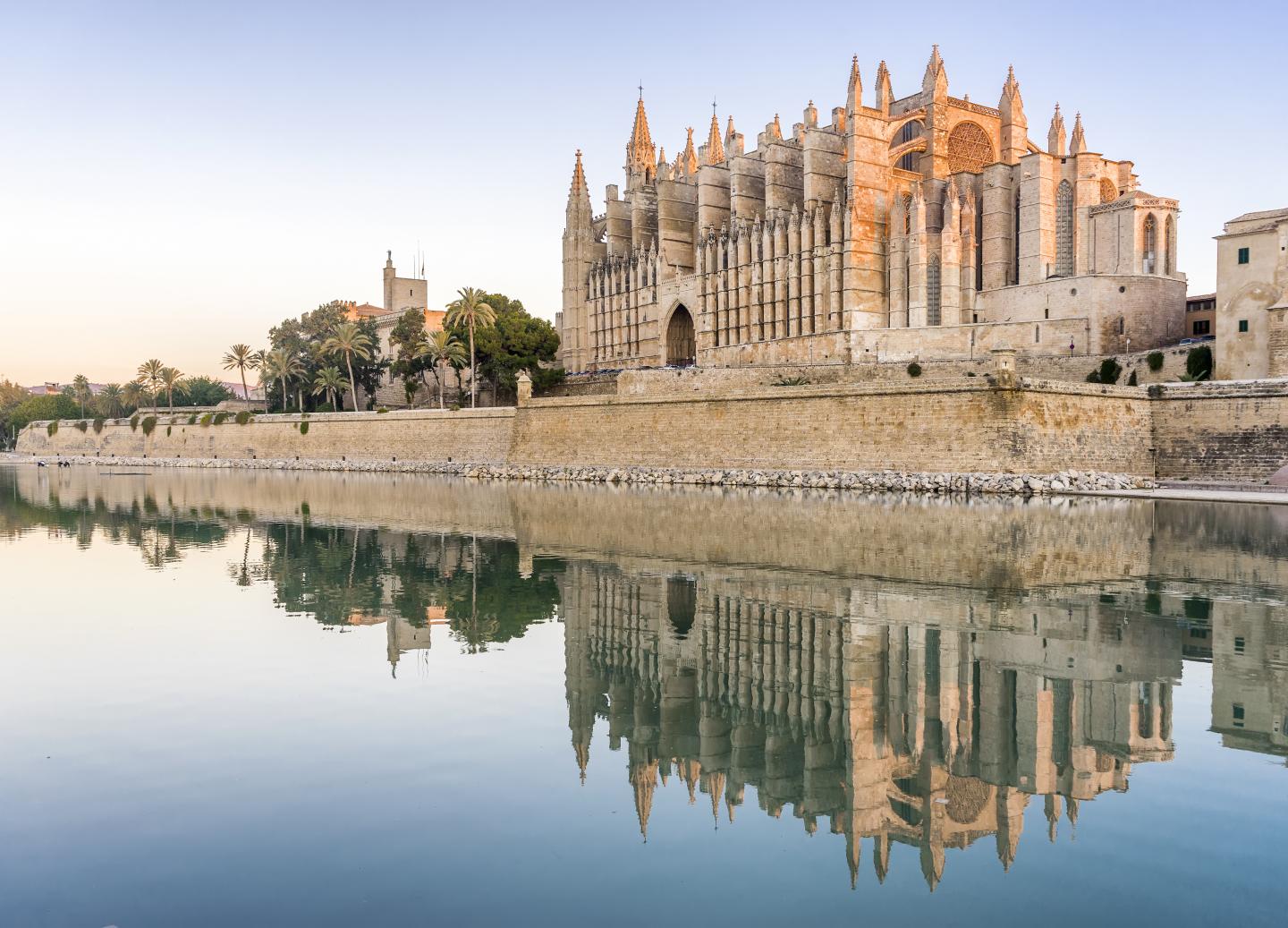
The Cathedral of Santa Maria of Palma, known universally as La Seu, is among the finest Gothic cathedrals in Europe and the defining image of the city's waterfront. Construction began in 1229 after the Christian reconquest and continued for nearly four centuries, producing a nave of audacious height that floods with coloured light from the world's largest rose window — 12 metres in diameter and composed of over a thousand pieces of stained glass. Antoni Gaudí oversaw a partial interior renovation between 1904 and 1914, adding his characteristically organic ironwork canopy over the high altar and repositioning the medieval choir stalls. The cathedral sits directly above the sea, and the play of Mediterranean light across its warm stone buttresses changes through the course of a day. Entrance is well-managed with timed ticketing; advance booking is strongly recommended during summer.
Bellver Castle — A Circular Crown Above the Bay
Bellver is that rarest of medieval structures: a genuinely circular castle, and one of the best-preserved Gothic fortifications anywhere in Spain. Built in the early 14th century as a royal residence for the Kings of Mallorca, it stands on a pine-wooded hill roughly three kilometres west of the city centre, its terraces commanding a sweeping panorama of the entire bay and the Serra de Tramuntana mountains beyond. The castle served as a royal prison for centuries — the Spanish statesman Gaspar Melchor de Jovellanos, incarcerated here from 1802 to 1808, famously used his captivity to write a detailed history of the building itself. Today it houses a municipal history museum. The walk up through the fragrant pine forest is a pleasure, and the views from the battlements justify the excursion even on their own.
Valldemossa: The Village Where Chopin Composed
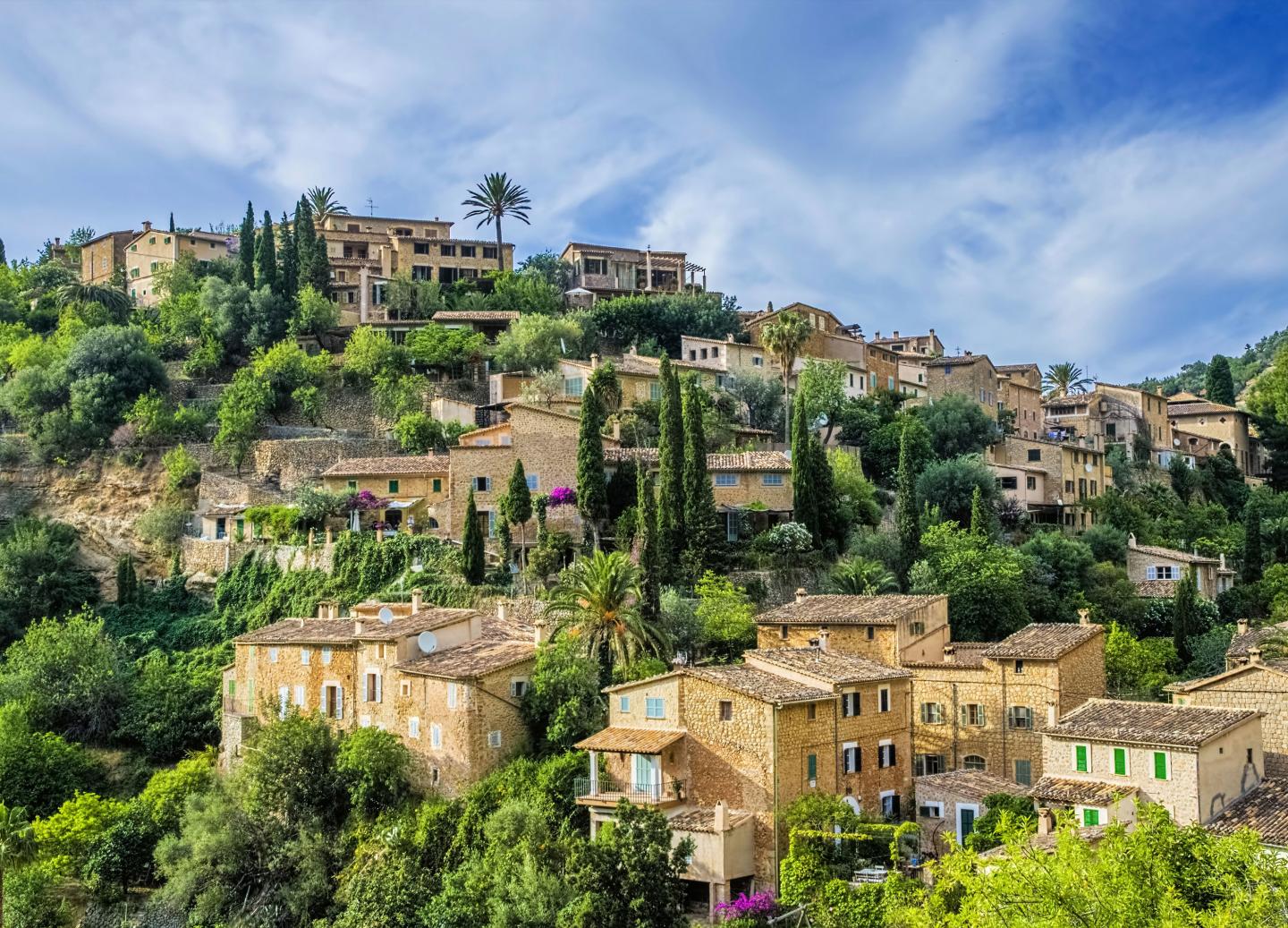
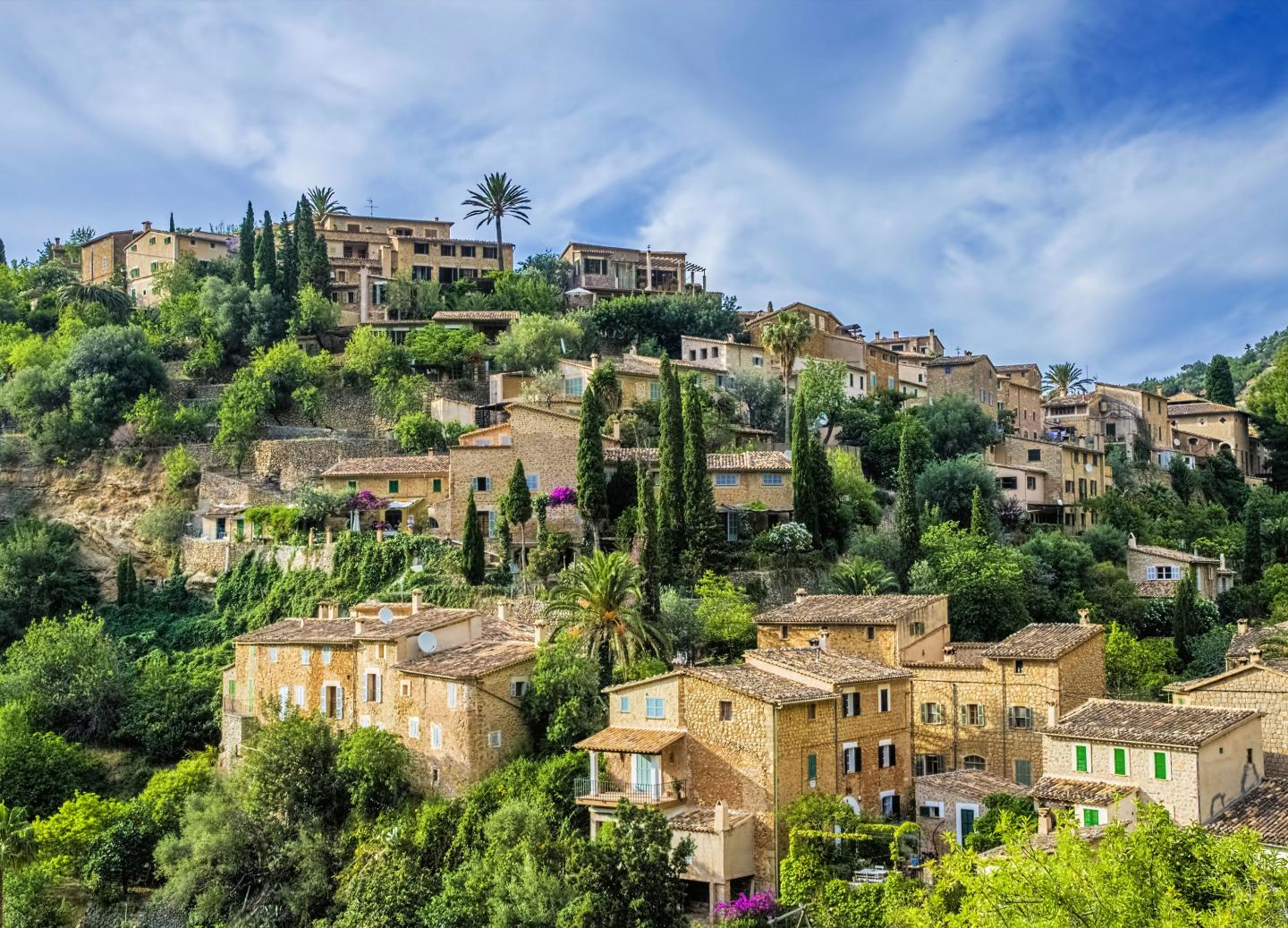
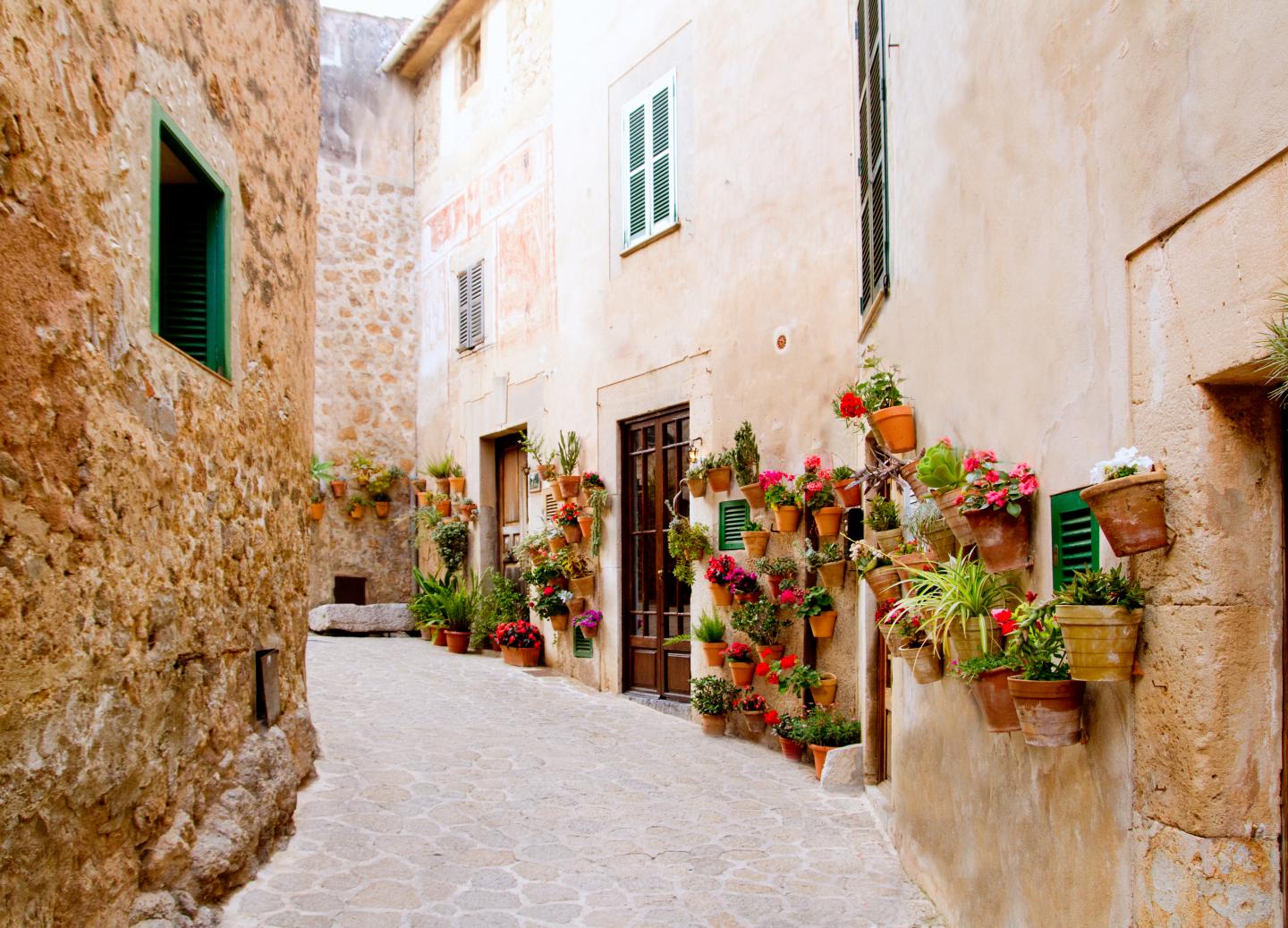
Perched at 400 metres above sea level in the heart of the Serra de Tramuntana, Valldemossa is one of the most photographed and historically resonant villages in all of Spain. Its cobbled lanes, honey-coloured stone houses hung with flower baskets, and venerable Carthusian monastery feel barely changed from the winter of 1838–39, when Frédéric Chopin and writer George Sand rented cells in the recently secularised monastery. Chopin composed 24 of his Preludes during that stormy Mallorcan winter, and the monastic pharmacy, royal palace, and Chopin's original piano remain on display. The village itself is a pleasure to explore at any pace, and the mountain road approaching it through terraced olive groves and with sea views far below ranks among the most scenic drives in the western Mediterranean.
Deia and Soller: Twin Gems of the Tramuntana
Deia clings to a dramatic clifftop above the sea, its honey-stone houses cascading down terraced hillsides among ancient olive trees — a landscape that drew poet and novelist Robert Graves here in 1929 and kept him for the remainder of his long life. His house is now a small museum. The village has attracted writers, artists, and musicians ever since, and its tiny cala (cove) rewards the steep descent with crystalline water. Soller lies a few kilometres north in a bowl of orange and lemon groves, its elegant Modernista architecture — much of it financed by emigrants who prospered in France — giving the central plaza a graceful, surprising air. From Soller, the vintage wooden electric tram, running since 1913, trundles through orchards to the picture-perfect harbour of Port de Soller.
The Caves of Drach — Underground Splendour
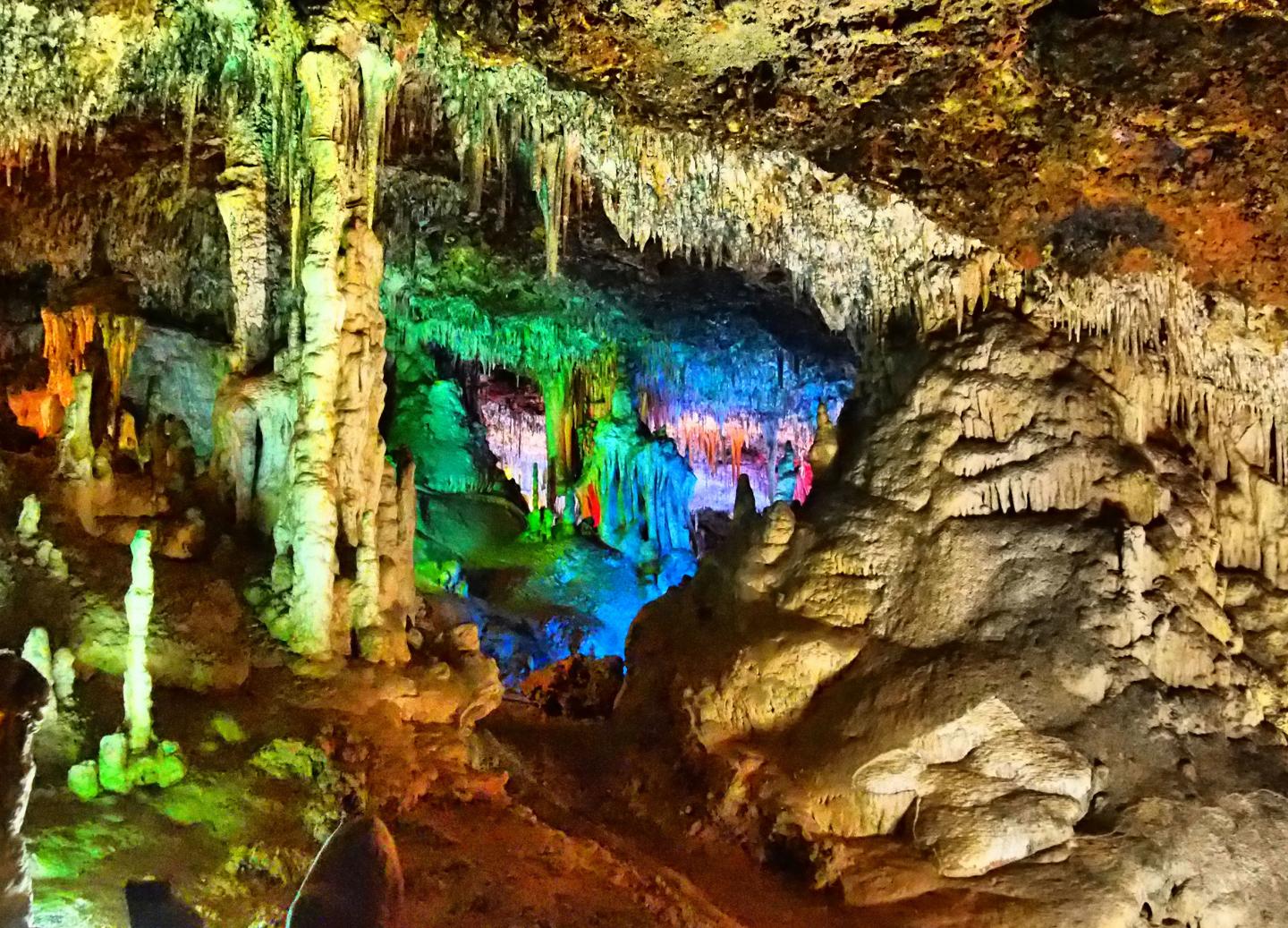
On Mallorca's eastern coast, roughly an hour from Palma, the Caves of Drach (Coves del Drac) rank among the most spectacular cave systems in Europe. Four vast interconnected caverns contain extraordinary stalactite and stalagmite formations accumulated over millions of years, but the centrepiece is Lake Martel — at 177 metres in length, one of the world's largest underground lakes. Visitors walk through progressively illuminated chambers before taking their seats for a short classical music concert performed by musicians floating on the lake in traditional gondolas — a theatrical touch that sounds improbable and lands memorably. The adjacent harbour town of Porto Cristo, with its fishing boats and medieval towers, is worth a walk before or after the cave visit.
The Flavours of Mallorca: A Culinary Journey
Mallorcan cuisine is rooted in peasant ingenuity and exceptional local produce — and a walking food tour through Palma's markets and Old Town bars reveals its remarkable depth. Mercat de l'Olivar, the city's main covered market, displays the full range: olive oils, aged cheeses, sobrassada sausages in every grade, fresh almonds, and the island's excellent wines from the Binissalem DO. Pa amb oli — bread rubbed with ripe tomato and drizzled with local olive oil — is the everyday staple, elevated by quality ingredients. Tumbet, a layered vegetable dish of aubergine, potatoes, and peppers in tomato sauce, reflects the island's Moorish agricultural inheritance. A glass of red from Binissalem and a plate of local cheese in one of Palma's shaded Gothic courtyard restaurants is as good an introduction to Mallorca as any view.
Palma De Mallorca travel tips
Book Cathedral Entry in Advance. La Seu operates timed entry tickets, and during peak summer months the queues for walk-in entry can be considerable. Pre-booking online secures your preferred slot and avoids a long wait at the door — particularly important if your day combines the Cathedral with Bellver Castle in the same morning. The cathedral website sells tickets directly and the process is straightforward.
Visit the Old Town Early or Late in the Day. Palma's Gothic Quarter is at its most atmospheric in the early morning before the cruise crowds arrive, or from mid-afternoon when many day-trippers have returned to their ships. The Arab Baths, the Almudaina Royal Palace, and the narrow lanes of the historic quarter all reward a slower, quieter pace. The late afternoon light on the Cathedral's sandstone facade is particularly beautiful.
Prepare for the Mountain Road. The coastal road through the Serra de Tramuntana to Valldemossa, Deia, and Soller is spectacularly beautiful but involves continuous tight bends and steep gradients. Anyone prone to motion sickness should take appropriate precautions before heading into the mountains. The road is well-maintained and perfectly safe, but it is undeniably winding, and the journey takes longer than the distances on a map suggest.
Pack a Layer for the Caves of Drach. The Caves of Drach maintain a constant internal temperature of around 18°C throughout the year. On a hot summer day when the exterior temperature may exceed 30°C, the transition into the caves can feel dramatically cool. A light cardigan or jacket tucked into a bag makes the underground visit considerably more comfortable without adding bulk to your day.
Cover Up for Religious Sites. La Seu Cathedral and the monastery at Valldemossa both require shoulders and knees to be covered for entry — this is enforced at the door, not merely requested. In summer, many visitors carry a lightweight scarf or cover-up specifically for these visits. Sandals are generally acceptable. The rule applies equally to all visitors regardless of the season or temperature outside.
Seek Out a Proper Bakery for Ensaimada. An ensaimada from a genuine Palma pastry shop bears little resemblance to the vacuum-packed versions sold at airports and tourist shops. The pastry is at its best fresh-baked: light, airy, faintly sweet, and dusted with powdered sugar. Paired with a café amb llet (coffee with warm milk) in one of the Old Town's shaded squares, it constitutes an entirely satisfying introduction to Mallorcan daily life.
Port Facts Every Cruiser Needs To Know
Palma De Mallorca shore excursion FAQs
The Port of Palma is immediately adjacent to the Old Town and seafront. La Seu Cathedral, the Passeig Marítim, and the entrance to the Gothic Quarter are all within a 10–15 minute walk of the cruise terminal gates. The hop-on hop-off bus stop is also very close to the port entrance.
Yes — the Old Town, Cathedral, Arab Baths, Almudaina Palace, and the waterfront promenade are all comfortably walkable from the port. Bellver Castle is about 3 kilometres from the terminal and typically requires a bus or organised excursion. The mountain villages of Valldemossa, Deia, and Soller are 20–30 kilometres from Palma and require transport.
A tour covering all three villages typically takes around 4 hours and can be combined with Palma city highlights on a full-day itinerary of 7–8 hours. The mountain road between the villages is scenic but winding, and driving times between stops are noticeably longer than the distances on a map suggest. A morning departure from the port is recommended to make the most of the day.
Yes, though it requires dedicated planning. The caves are on Mallorca's east coast, roughly 60 kilometres from Palma, making the round trip approximately 2 hours of driving. A tour that includes Porto Cristo and the caves typically runs for 5 hours and is most feasible if your ship is in port for a full day. Combining the caves with city sightseeing on the same day is ambitious but achievable.
The cathedral's great rose window faces east, so morning light floods the interior most dramatically. Arriving at opening time on a weekday is typically quietest. The building is open Monday to Saturday, with restricted visiting hours on Sundays due to religious services. Timed entry tickets should be booked in advance throughout the summer cruise season.
Both Spanish (Castilian) and Mallorquí — a local variety of Catalan — are official languages. Many islanders speak Mallorquí as their first language and use Spanish and Mallorquí interchangeably. English is widely spoken in Palma city, less so in the interior villages. French and German are also understood in tourist areas given Mallorca's long history with northern European visitors.
The currency is the Euro. Card payments are accepted in the vast majority of restaurants, shops, and tourist sites in Palma. In smaller villages, at market stalls, and in some traditional bars, cash is preferred or required. An ATM near the port or within the Old Town is a sensible precaution if you plan to venture beyond the city centre.
The waterfront promenade and the main boulevards of Palma are flat and largely accessible. The Old Town includes some cobbled streets and uneven medieval surfaces that can be challenging for wheelchairs or walking frames. The mountain villages have significant gradients throughout. Wheelchair-adapted vehicle tours are available for those wishing to experience the island's highlights in accessible comfort.
The Gothic Quarter (Barri Gòtic) is the oldest part of Palma, centred on the area behind the Cathedral. It contains the Arab Baths (Banys Arabs) — the best-preserved Moorish remains in Mallorca — the Almudaina Royal Palace, several Baroque churches, and numerous medieval palaces converted to art museums. The streets here are narrow, shaded, and atmospheric, with a concentration of independent cafes and boutique shops.
May to June and September to October are widely considered the most pleasant months — warm and sunny with manageable crowds. July and August are extremely hot and busy, with all major sites at maximum capacity. Spring is especially beautiful in the Serra de Tramuntana when the almond trees blossom across the hillsides. Winter cruise calls are possible and the city remains lovely, though some mountain attractions operate reduced hours.
Filters
Select a filter to refine results.
Tour Type
Tour Activity
 Cart
Cart
 USD
USD GBP
GBP AUD
AUD EUR
EUR CAD
CAD