



Tours in Valencia


Cruising to Valencia in a group?
Skip the crowded ship excursion bus. One dedicated planner will design a private shore experience around exactly what your group wants — coordinated from first enquiry to the moment you're back on board. More memorable, more flexible, and more affordable than you might expect. Spend less time organising, more time enjoying.
Explore Group Travel →Cruising to Valencia
Valencia is one of those cities that rewards the traveler who looks past the obvious. Spain's third-largest metropolis sits on the Mediterranean coast between Barcelona and Alicante, blessed with an extraordinary climate, a food culture of genuine global significance, and an architectural range spanning Roman foundations, Islamic street patterns, Gothic silk exchanges, and a futuristic cultural quarter that stands among the boldest civic projects built anywhere in Europe since the turn of the century.
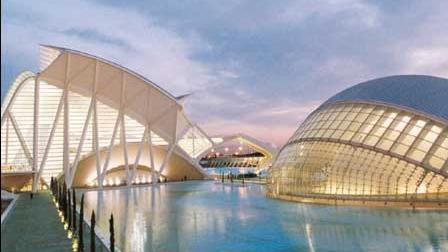
The City of Arts and Sciences defines Valencia's contemporary ambition. Designed primarily by native son Santiago Calatrava, this complex of interlocking buildings stretches for nearly two kilometers along the former course of the Turia River — a river diverted after catastrophic flooding in 1957. Where engineers initially proposed a motorway, Valencians instead created the Jardins del Turia, a 9km linear park that threads through the heart of the city. At its far end, Calatrava's white curves and reflecting pools contain a science museum, an IMAX cinema, Europe's largest aquarium, a botanical conservatory, and an opera house of startling ambition.
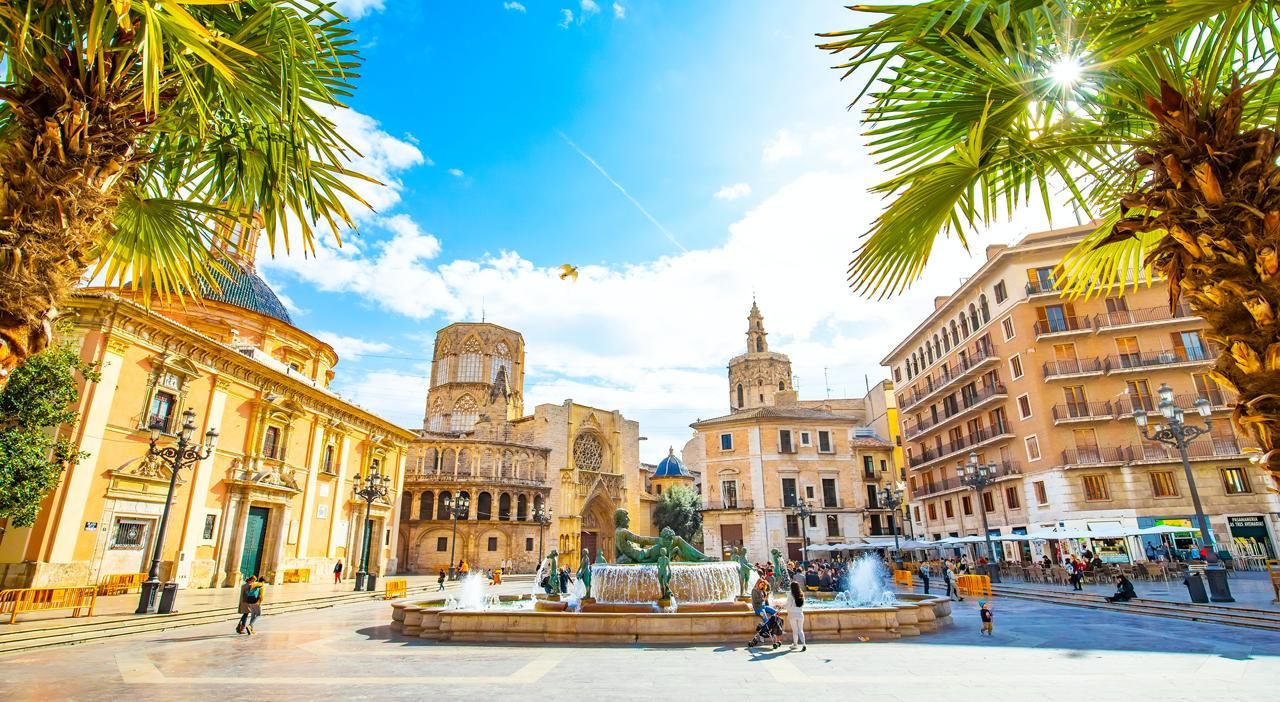
The old city offers an entirely different experience. The Mercat Central, completed in 1928, is among the finest surviving covered market halls in Europe — its art nouveau ironwork sheltering over a thousand stalls heaped with tomatoes, almonds, fresh fish, cured meats, and the remarkable variety of local produce that makes Valencian cooking what it is. The Barrio del Carmen — the historic heart — contains Roman ruins, Moorish street plans, Gothic churches, and one of Spain's most vibrant street art scenes in the same few hectares. The cathedral houses a chalice identified since the medieval period as the Holy Grail.
For cruise passengers, Valencia combines extremely well with itself: the old town and the City of Arts and Sciences are about 3km apart — connected by the riverbed park — and together fill a day of sightseeing without overlap or repetition. Those who venture further inland discover dramatic limestone canyons and thermal springs within an hour of the port.
Top things to do in Valencia on a cruise stopover
City of Arts and Sciences
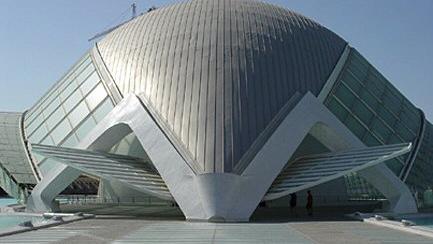
The single most visually striking architectural ensemble built in Spain in the 21st century sits in the dry bed of the diverted Turia River at Valencia's southeastern edge. Designed primarily by Santiago Calatrava — born in Valencia — the complex comprises L'Hemisfèric (an IMAX cinema shaped like a giant eye reflected in its surrounding pool), the Museu de les Ciències Príncep Felip (a science museum of spectacular structural engineering), the Palau de les Arts Reina Sofia (an opera house capped by an extraordinary shell-like roof), L'Oceanogràfic (Europe's largest aquarium, designed by Félix Candela), and the Umbracle (a walkable botanical promenade framing the entire complex). The exterior spaces alone — white concrete, titanium, and vast reflecting pools — constitute one of the most photographed urban landscapes in contemporary Europe.
Barrio del Carmen and the Old Town
Valencia's historic heart occupies a compact area defined by the ancient city walls — layers of Roman, Moorish, and medieval Christian history compressed into streets that have changed direction more than once over two thousand years. The Barrio del Carmen is the most atmospheric quarter: narrow lanes hung with laundry, Romanesque and Gothic church facades, and some of Spain's most unexpected street art on building-scale walls. The Torres de Serranos (14th-century city gate towers) and Torres de Quart frame the northern approaches. The Lonja de la Seda — the Gothic silk exchange, a UNESCO World Heritage site — stands as one of the finest examples of civil Gothic architecture in Europe, its twisted stone columns rising to a remarkable vaulted ceiling.
Mercat Central
Opened in 1928 after 35 years of construction, Valencia's central market is both a working food hall and a masterpiece of Valencian art nouveau design. The main dome — mosaic-tiled, supported on elaborate iron columns — covers the largest market floor of its kind in Europe, with over a thousand vendor stalls selling produce from the huerta (Valencia's agricultural hinterland), fresh fish from the Mediterranean, cured meats, cheeses, spices, nuts, and the city's famous citrus. The market operates at its atmospheric best between 8am and noon, when vendors are fully stocked and the floor hums with genuine commercial energy. It closes at 2:30pm and is closed on Sundays.
Valencia Cathedral and the Santo Cáliz
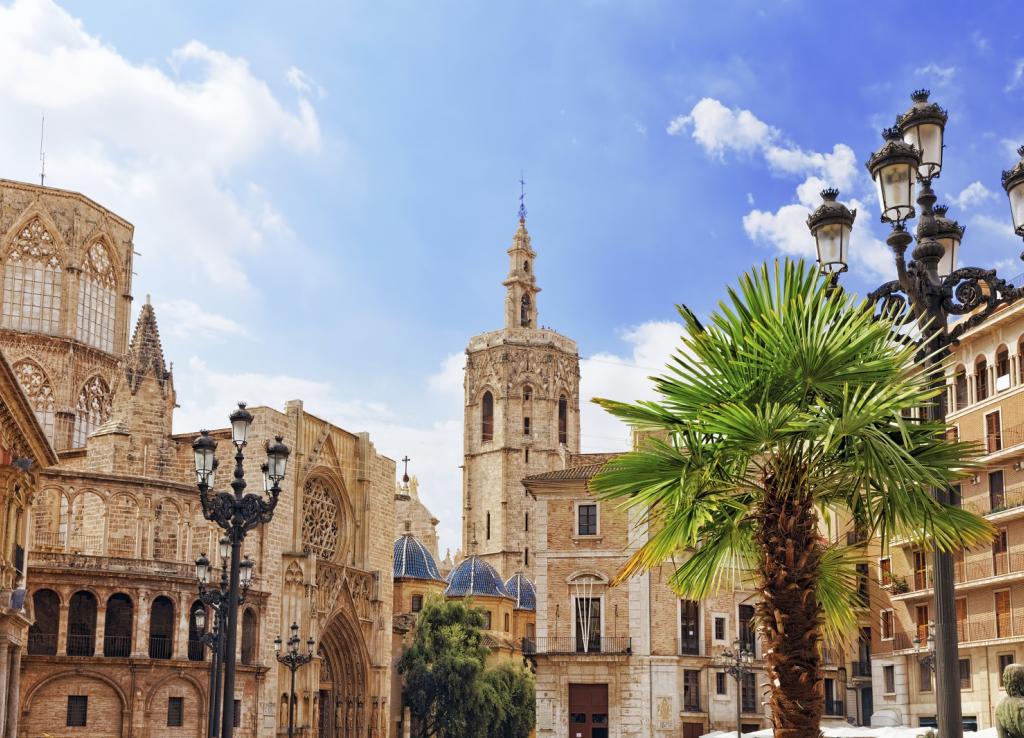
Valencia's cathedral, begun in the 13th century on the site of a former mosque, synthesizes Romanesque, Gothic, and Baroque architectural phases into a building that rewards close attention. The Miguelete — its octagonal bell tower, which can be climbed for panoramic views over the old city rooftops — has become a symbol of the city. Inside, a small chapel to the left of the main altar houses the Santo Cáliz: a 1st-century agate cup, mounted on a medieval gold stem and handles, which Church tradition has identified since the 14th century as the chalice used by Christ at the Last Supper. Whether one approaches this as history, faith, or medieval legend, the object itself is genuinely ancient, and its setting in this complex cathedral adds a layer of atmosphere that is difficult to manufacture.
Jardins del Turia
When the Turia River was diverted following devastating floods in 1957, the city faced a choice about what to do with the dry riverbed running through its center. Against a proposal to build a motorway, Valencian citizens campaigned successfully for a park. The result — 9km of gardens, sports facilities, children's playgrounds, cycle paths, and walking routes — is one of the most successful urban reuse projects in Europe. The riverbed park connects the historic city to the City of Arts and Sciences in a continuous green corridor free of road traffic. Walking or cycling its length provides both a practical route between major sights and a genuine experience of how the city uses its own public space.
Chulilla Canyon and Inland Valencia
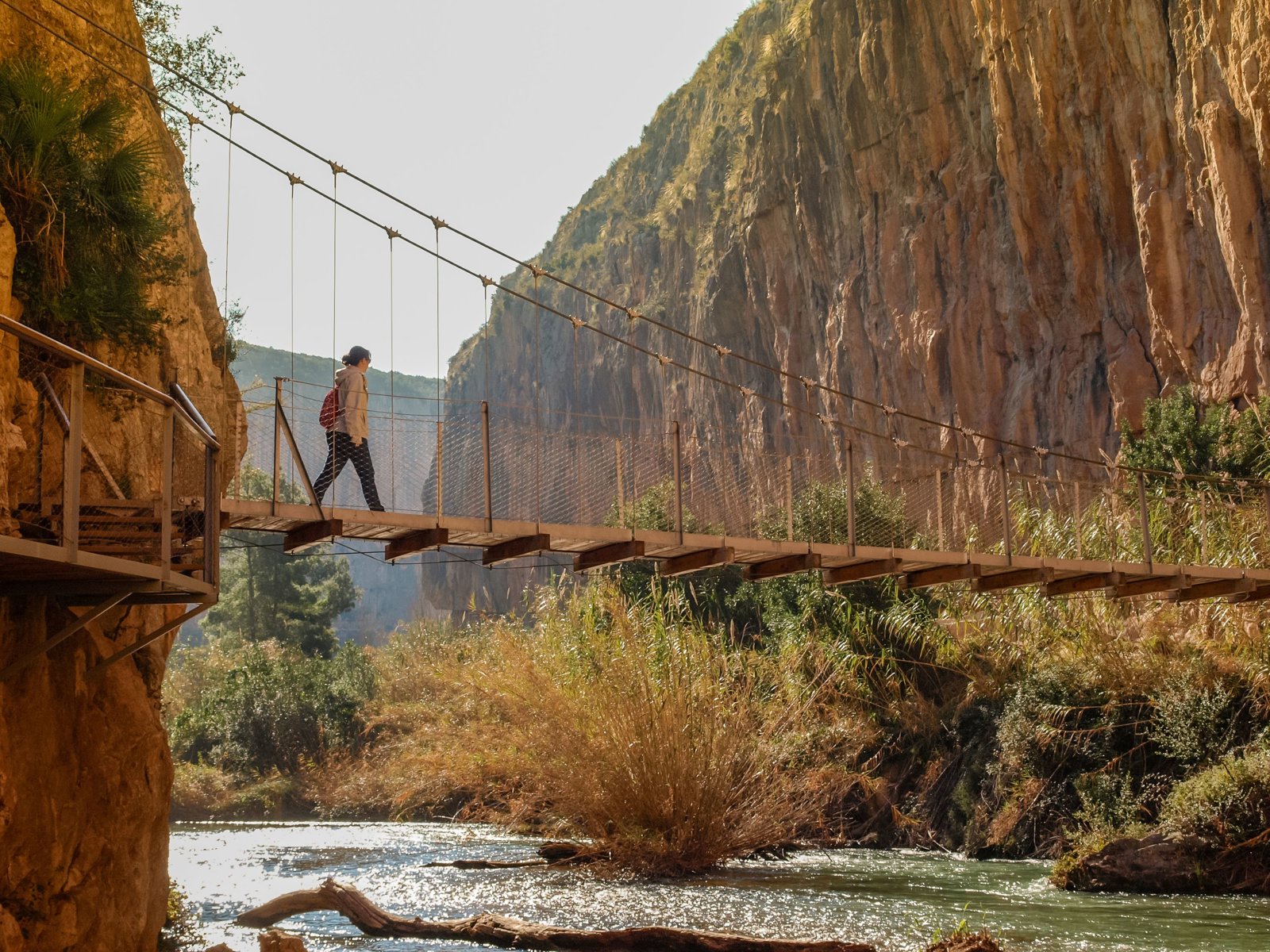
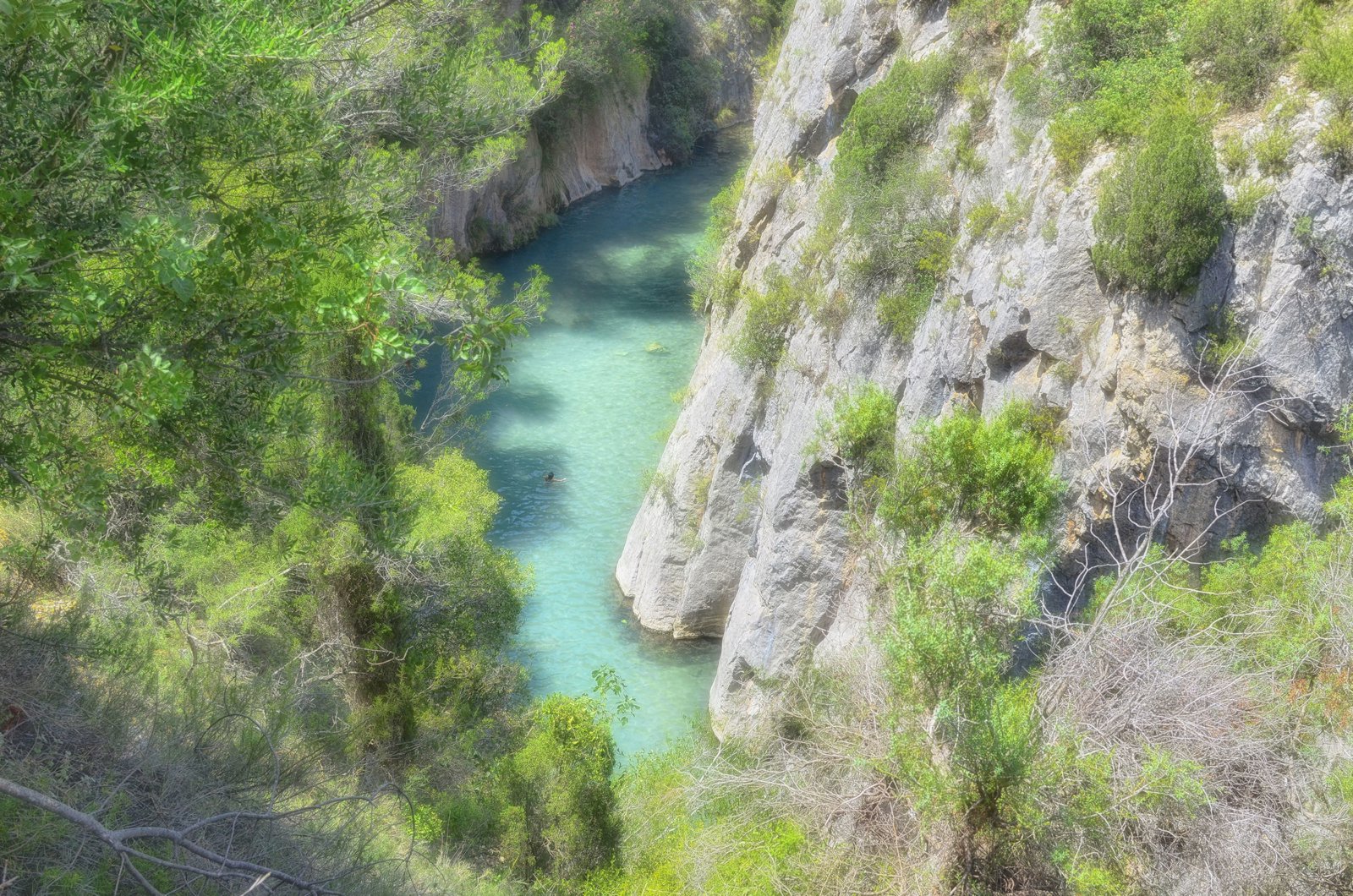
Approximately 70km northwest of the city, the limestone gorge of Chulilla offers a dramatic contrast to the Mediterranean coast. The canyon walls rise steeply from the Turia River (here in its upper reaches, well before its urban diversion), and the village of Chulilla sits on the rim above dramatic drops. The site is famous for its hanging suspension bridges spanning the gorge — a via ferrata and hiking circuit that takes visitors through one of the most spectacular karst landscapes in the Valencia region. The surrounding countryside includes thermal springs, making it possible to combine active hiking with warm-water relaxation in a single excursion day.
Valencia travel tips
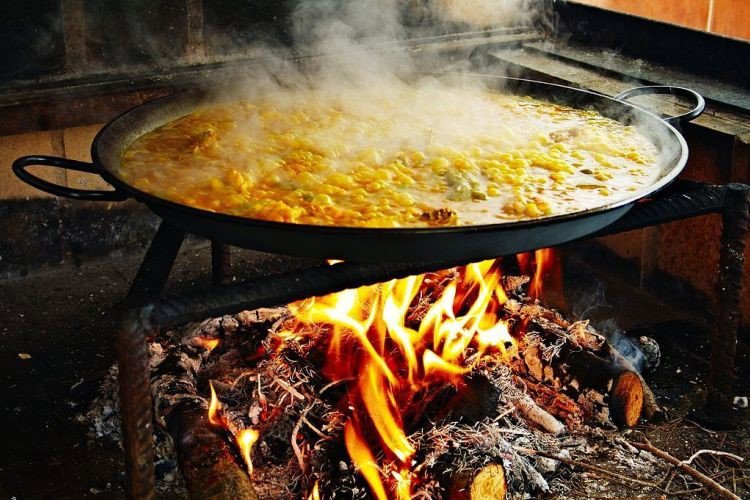
Understand the Paella Rules. Authentic Valencian paella is strictly a lunchtime dish — served between roughly 1pm and 4pm — not dinner. The correct version uses chicken, rabbit, flat green beans (bajoqueta), white butter beans (garrofó), saffron, and short-grain rice, cooked over a wood fire in a wide shallow pan. Establishments in the immediate vicinity of the cathedral and Mercat Central cater heavily to tourists and offer variable quality. The neighborhoods of Ruzafa and Russafa, and the beachfront restaurants at La Malvarrosa, tend to offer more consistently authentic versions.
Time the Mercat Central Visit. The market operates Monday to Saturday, roughly 7:30am to 2:30pm. It is closed Sundays. The most atmospheric — and most photogenic — period is between 8am and noon, when all stalls are stocked and the full range of produce is visible. Arriving after noon means some vendors are already packing up. Even if you are not buying, the sheer visual abundance of the market floor under its tiled dome is worth 20 minutes of unhurried exploration.
The City of Arts and Sciences is Free to Walk. Entering the individual attractions (aquarium, science museum, IMAX cinema) requires tickets. But the architectural complex itself — the Umbracle promenade, the plazas between buildings, the reflecting pool terraces — is entirely free to walk through and photograph. The exterior spaces alone, particularly in the low light of early morning or late afternoon, deliver some of the most memorable architectural photography in Spain without spending a euro.
Climb the Miguelete Tower. The Miguelete, Valencia Cathedral's octagonal bell tower, can be climbed via 207 steps for panoramic views over the old city rooftops, the surrounding plain, and on clear days the distant sea. The view is more rewarding than the climb is demanding. Tickets are inexpensive and sold at the cathedral entrance. Go in the morning before haze reduces visibility, and before the staircase becomes congested with descending visitors.
Try Horchata at a Proper Horchatería. Horchata (orxata in Valencian) is made from tiger nuts (chufas) grown in the local huerta and served ice-cold, traditionally alongside fartons — long, doughy pastries for dipping. It is quite unlike any commercially produced version found outside Spain. The Horchatería de Santa Catalina near the cathedral has been operating since 1836 and remains one of the city's most authentic places to try it. Horchata is served from late spring through autumn; it is best drunk fresh and very cold.
Dress Appropriately for Religious Sites. Valencia Cathedral and several churches in the historic center require covered shoulders and knees for entry. This applies equally to all visitors regardless of nationality or faith. The rule is enforced at the door, and visitors who arrive inappropriately dressed may be denied entry or asked to wait while purchasing a cover-up. Carrying a light scarf or pashmina — easily tucked into a bag — resolves the issue entirely without limiting your wardrobe choices for the rest of the day.
Port Facts Every Cruiser Needs To Know
Valencia shore excursion FAQs
The Port of Valencia cruise terminal is approximately 4km south of the historic city center. A shuttle bus service typically operates between the port and the city on days when cruise ships are docked. The Metro system (lines 5 and 7) also provides connections between the port area and central Valencia. Journey time by shuttle or Metro to the edge of the old town is generally 15–25 minutes depending on traffic and connections.
It is a cultural and architectural complex built in the former Turia riverbed at the eastern end of the Jardins del Turia park. Designed primarily by Valencian architect Santiago Calatrava, the complex includes: L'Hemisfèric (IMAX cinema and planetarium), Museu de les Ciències (interactive science museum), L'Oceanogràfic (Europe's largest aquarium, designed by Félix Candela), Palau de les Arts Reina Sofia (opera house and performance venue), and the Umbracle (a landscaped botanical promenade). The exterior spaces and reflecting pools are free to access.
The Santo Cáliz housed in Valencia Cathedral is a 1st-century agate cup mounted on a medieval gold stem and handles. Church tradition since at least the 14th century has identified it as the chalice used by Christ at the Last Supper. Several other vessels around Europe make similar claims, but Valencia's has been endorsed by multiple popes and is considered by many Catholic scholars to have among the strongest historical and material evidence of any contender. Whether approached as an article of faith or a fascinating medieval artefact with ancient origins, the object is genuinely old and the setting is compelling.
After catastrophic floods in 1957 killed hundreds of people, the Turia River was diverted around Valencia. The vacated riverbed — running for 9km through the heart of the city — became the subject of a famous civic debate. When the government proposed a motorway, Valencian citizens campaigned successfully for a park instead. The result is a continuous green corridor connecting the historic center to the City of Arts and Sciences, containing sports pitches, playgrounds, cycling paths, gardens, and the Gulliver Park children's sculpture installation. It remains one of the most beloved urban spaces in Spain.
Las Fallas is Valencia's most spectacular annual festival, centered on March 19 (the feast of Saint Joseph) with major celebrations from March 15–19. During this period, elaborate papier-mâché sculptures — some reaching several storeys high — are constructed throughout the city neighborhoods, displayed for public viewing, then ceremonially burned on the final night in the Cremà. The festival also features daily fireworks displays (the Mascletà) at 2pm in the Plaça de l'Ajuntament. It is a UNESCO Intangible Cultural Heritage event. Visiting during Fallas means extraordinary spectacle but also extreme crowds, elevated prices, and disrupted transport.
Authentic Valencian paella is traditionally a midday dish, served at lunch (approximately 1pm–4pm). Many restaurants catering to tourists serve it throughout the day, but the traditional version — over wood fire, with the correct ingredients — is a lunchtime experience. The restaurants of the Ruzafa neighborhood and the beachfront area of La Malvarrosa tend to offer more authentic preparations than those immediately surrounding the main tourist sites in the old town.
Yes — Chulilla is approximately 70km northwest of Valencia city, roughly an hour's drive. The canyon offers dramatic limestone gorge scenery, hanging suspension bridges, and hiking circuits along the upper Turia River. The surrounding area also contains thermal springs. It is a full-day excursion, and the hiking terrain requires appropriate footwear and moderate physical fitness. Combining Chulilla with significant city sightseeing on the same day is not realistic.
Horchata (orxata in Valencian) is a cold, sweet, milky-white drink made from tiger nuts (chufas) — a small tuber cultivated in the Valencian huerta since at least the 13th century. It is served very cold, traditionally alongside fartons (elongated pastry strips for dipping). Nothing commercially sold outside Valencia approximates the fresh-made version. The Horchatería de Santa Catalina, operating since 1836 near the old town, and Horchatería El Siglo are among the most established venues. Horchata is best in summer and autumn when chufas are freshest.
The historic center is very walkable — largely flat, with a compact area containing the major sights. The main attractions (Mercat Central, Lonja de la Seda, the cathedral and Miguelete Tower, Torres de Serranos, Barrio del Carmen) are all within about 20 minutes' walking distance of each other. The cobblestone streets and some narrow lanes are easier in comfortable flat shoes. The 3km to the City of Arts and Sciences is also walkable along the Turia Gardens, though cycling the same route is faster and more enjoyable.
The Lonja de la Seda (Silk Exchange) is a UNESCO World Heritage Site built between 1482 and 1548 as Valencia's commercial trading hall during the height of its silk trade prosperity. The main Sala de Contratación (trading hall) features fifteen twisted helical stone columns rising to an ornate Gothic vaulted ceiling — one of the finest examples of civil Gothic architecture in the world. The complex also includes an orange garden, a tower, and a consular chapel. Entry is inexpensive and visits take 30–45 minutes. It is one of the must-see buildings in the old city.
Filters
Select a filter to refine results.
Tour Type
Tour Activity
 Cart
Cart
 USD
USD GBP
GBP AUD
AUD EUR
EUR CAD
CAD