



Tours in Benoa (Bali)


Cruising to Benoa (Bali) in a group?
Skip the crowded ship excursion bus. One dedicated planner will design a private shore experience around exactly what your group wants — coordinated from first enquiry to the moment you're back on board. More memorable, more flexible, and more affordable than you might expect. Spend less time organising, more time enjoying.
Explore Group Travel →Cruising to Benoa (Bali)
Benoa Harbour sits on the southern tip of Bali's Bukit Peninsula, roughly eight kilometres from Kuta and twelve from Denpasar, the provincial capital. It is a working port — fishing boats, cargo vessels, and the fast ferries connecting Bali to the Gili Islands and Lombok all share the water — and the approach by ship through the strait between Bali and the small island of Serangan offers one of the more atmospheric arrivals in Southeast Asian cruising. The smudge of volcanic peaks inland, the green intensity of the southern foothills, and the Hindu temple flags visible from the water all signal that what lies ahead is genuinely different.
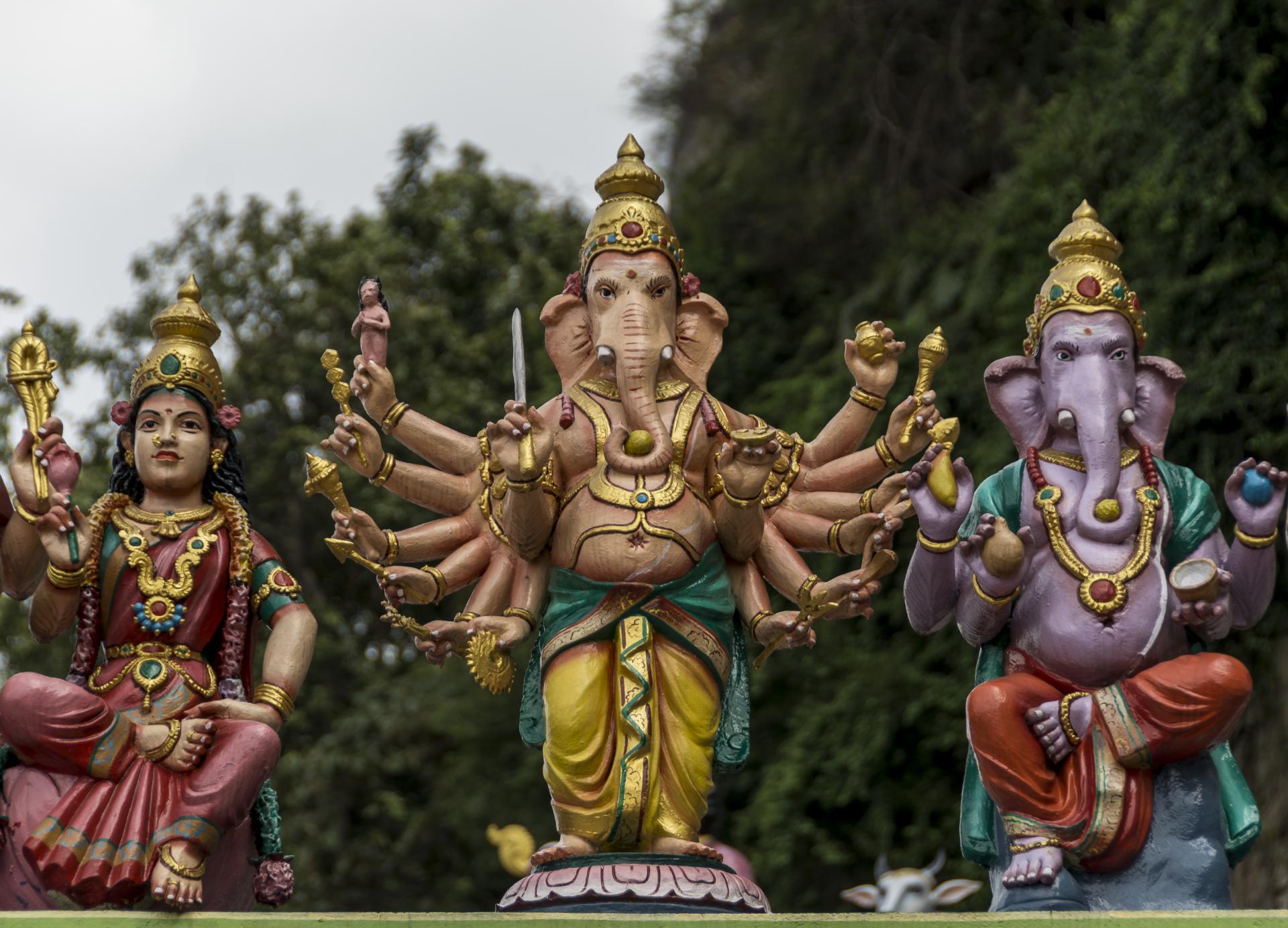
Bali is a Hindu island in the world's largest Muslim-majority nation, and the spiritual texture of daily life here is unlike anywhere else in Southeast Asia. Offerings — small woven palm-leaf trays of rice, flowers, and incense — appear on doorsteps, at shop entrances, at road intersections, and at the bases of trees every morning. Ceremonies involving entire village communities occur on a calendar that runs simultaneously with the Gregorian one; on a given port day, you may encounter a cremation procession, a temple odalan (anniversary festival), or a tooth-filing rite that has brought three generations of a family together. These are not performances for tourists — they are the rhythm of life — and approaching them with quiet respect and genuine curiosity is almost always welcomed.
The island's most visited areas — Ubud in the central highlands, the temple of Tanah Lot on the west coast, and the terraces around Tegallalang north of Ubud — are genuinely worth the journey, though each now attracts tourist volumes that require a degree of patience. The less obvious choice, and sometimes the more rewarding one, is to spend time in Bali's south — the Bukit Peninsula — exploring the clifftop temples of Uluwatu and the surf culture of Uluwatu and Padang Padang, or heading northeast toward the cooler air and quieter roads around Sidemen and Klungkung, far from the resort corridor.
Bali rewards specificity over comprehensiveness. The island is large enough that attempting to see Ubud, Tanah Lot, and a rice terrace in a single day produces a journey of several hundred kilometres on roads that are frequently congested. A more satisfying approach: pick one region, engage a local driver for the day, and let the itinerary breathe.
Top things to do in Benoa (Bali) on a cruise stopover
Denpasar: Bali's Capital and Cultural Heartland
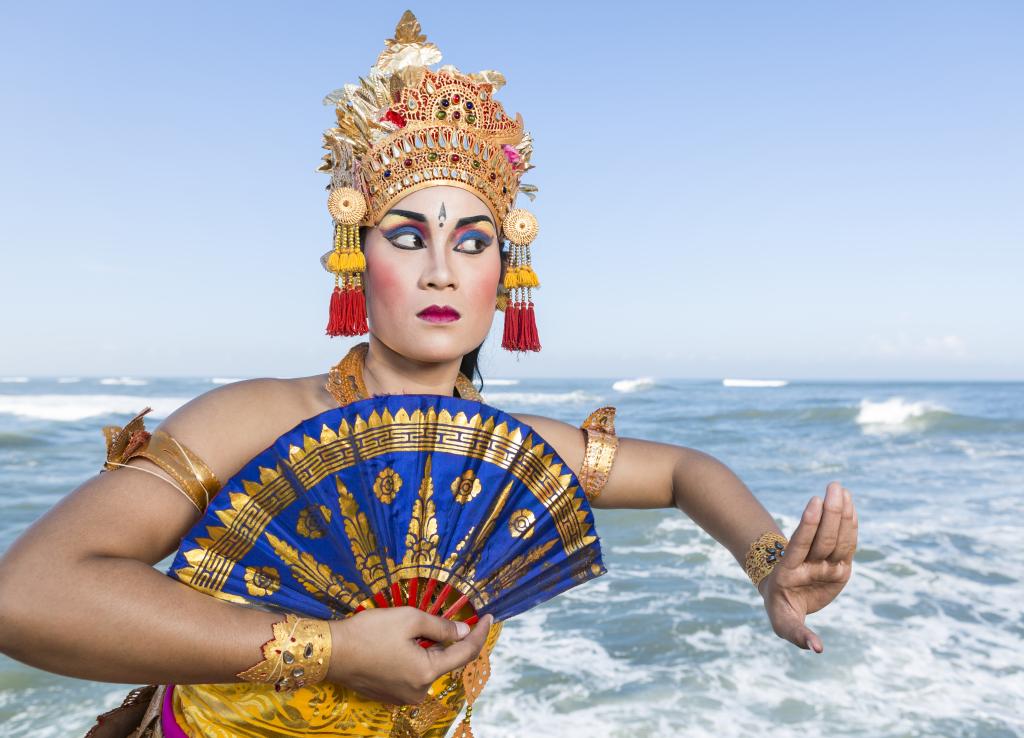
Denpasar is Bali's largest city and its administrative, commercial, and cultural centre — a working Indonesian city rather than a tourist destination in itself, which gives it an authenticity that the beach resort strips lack. The Bali Museum (Museum Bali) on Puputan Square holds an excellent collection of traditional Balinese artefacts, ceremonial objects, and historic photographs tracing the island's Hindu kingdom traditions. The adjoining Jagatnatha Temple, dedicated to the supreme deity Sangyang Widi, is one of the island's most important state temples and demonstrates classic Balinese temple architecture in an active ceremonial context. Kumbasari Market offers four floors of Balinese crafts, textiles, silver, and food at local prices. The Werdi Budaya Arts Centre hosts regular performances of legong, barong, and kecak dance. Denpasar is 15–25 minutes from Benoa Harbour by road — among the most accessible destinations from the port.
Pura Luhur Uluwatu
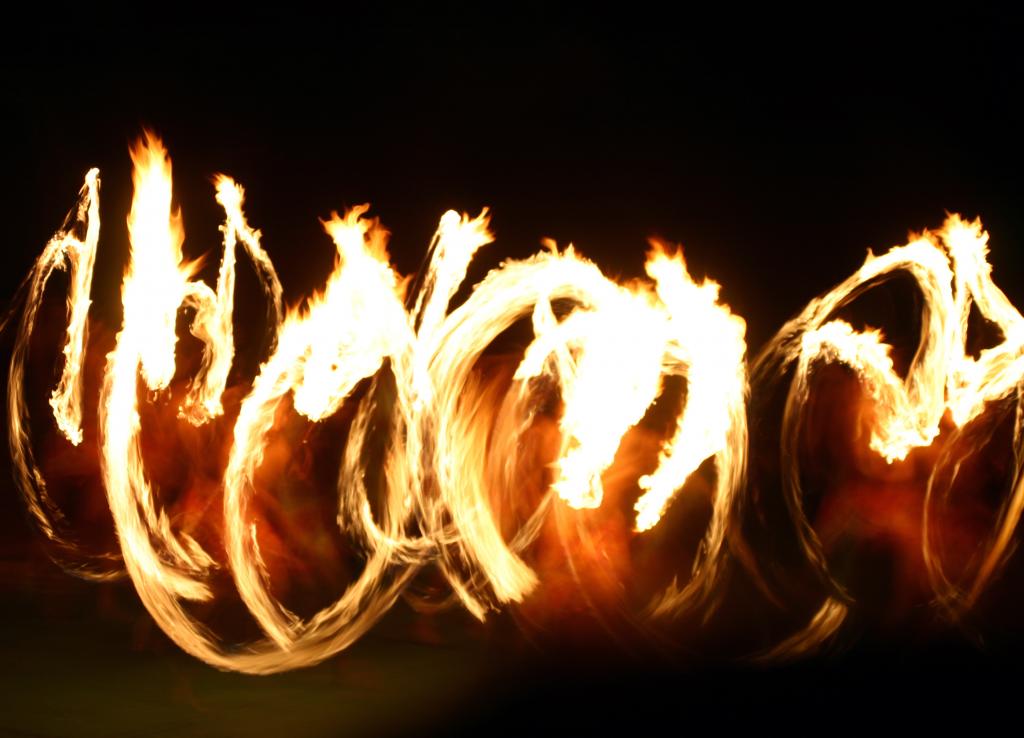
Perched on a 70-metre sea cliff at the southwestern tip of the Bukit Peninsula, Uluwatu is one of Bali's six directional temples — spiritual anchors placed at cardinal and intercardinal points of the island to protect it from evil spirits entering from the sea. The cliff-edge setting is genuinely dramatic; the Indian Ocean stretches unbroken to the horizon below. Entry requires a sarong (provided at the gate) and modest dress. The temple's resident macaque population is notorious for theft — keep cameras strapped close and remove dangling jewellery. An evening Kecak fire dance performance on the cliff's purpose-built stage is atmospheric, though it draws large crowds; the temple itself in the morning is far quieter.
Kintamani and the Batur Volcanic Landscape
The Kintamani highlands in central Bali sit at 1,500 metres above sea level and offer one of the island's most dramatic landscapes: a vast caldera containing the active Mount Batur volcano and the dark waters of Lake Batur below. The viewpoint village of Penelokan lines the caldera rim and provides sweeping views across the volcanic terrain to Mounts Abang and Agung beyond. Mount Batur last erupted significantly in 1994, and its slopes still show volcanic rock amid recovering vegetation. The caldera was designated a UNESCO Global Geopark in 2012. Below the rim, the lakeside village of Trunyan is home to the Bali Aga — the pre-Hindu indigenous Balinese — whose burial customs differ entirely from the rest of the island. The drive up to Kintamani passes through clove and coffee plantations and the craft-weaving village of Ubud's outskirts. The temperature at the rim is noticeably cooler than the coast — bring a light layer.
Tanah Lot Sea Temple
Tanah Lot sits on a rock formation in the sea just off Bali's southwest coast, accessible on foot at low tide and island-bound at high — a design that makes the temple appear to float. It is Bali's most visited single sight and by mid-morning can feel more like a theme park than a temple, with souvenir stalls stretching hundreds of metres from the entrance. The solution is timing: arrive before 09:00 and the vendors are still setting up, the light is better, and the crowd is a fraction of what it becomes by noon. The drive from Benoa is about 45 minutes on a clear road. Photography of the temple from the clifftop viewpoint opposite is excellent; the temple precinct itself is closed to non-worshippers.
Bedugul and Pura Ulun Danu Bratan: Bali's Highland Lake Temple
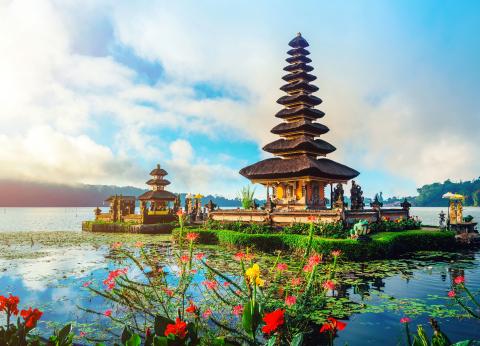
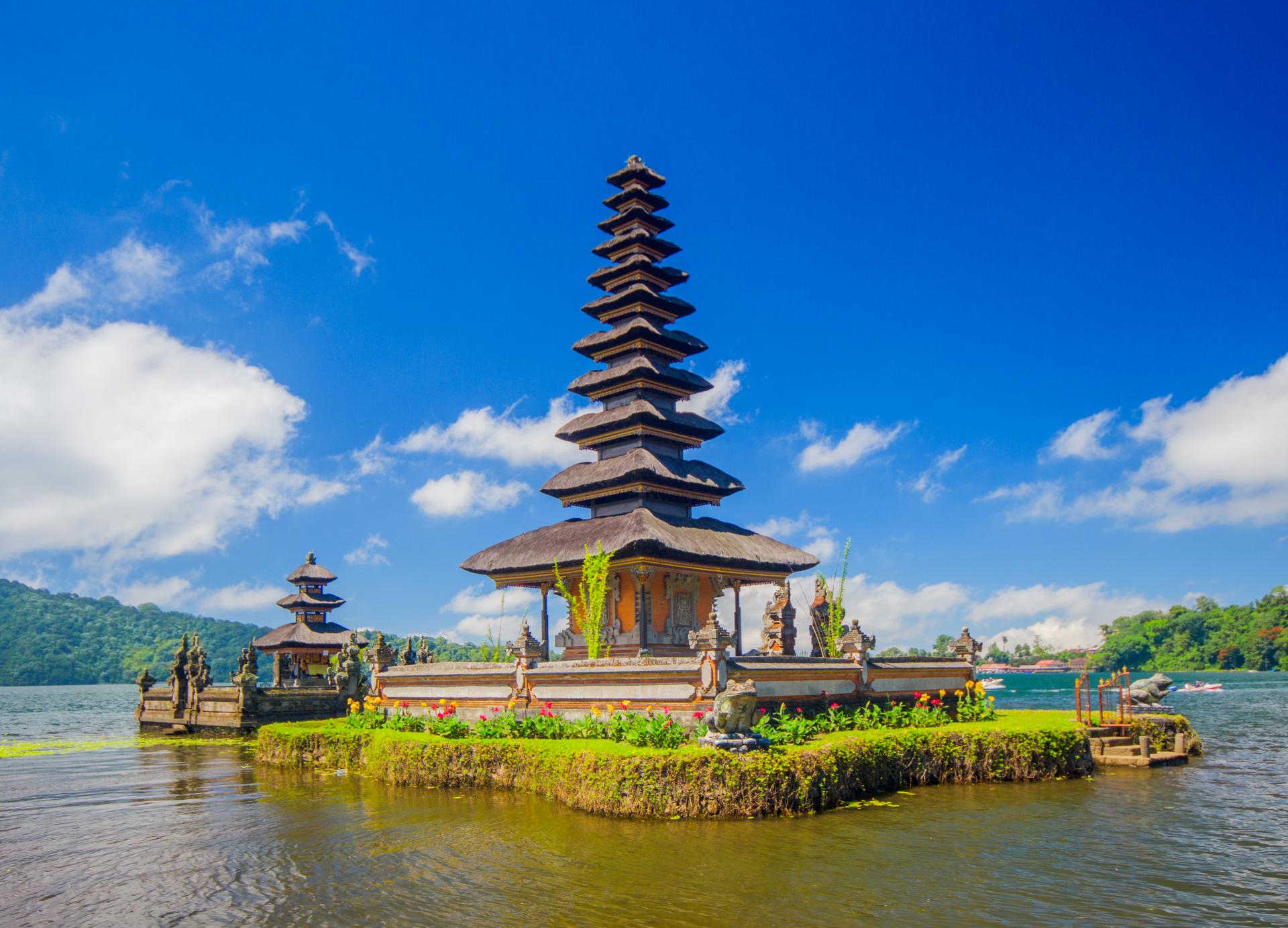
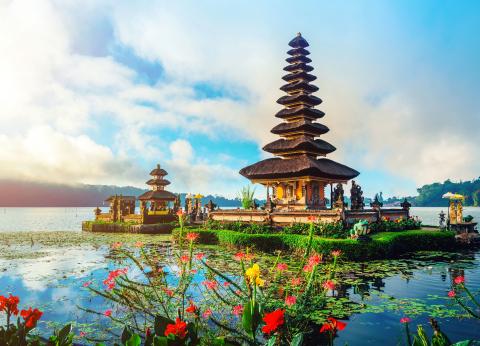
The Bedugul highland area in north-central Bali sits at 1,200 metres and offers a dramatically different landscape from coastal Bali — cooler temperatures, mist-draped hillsides, and the calm waters of Lake Bratan. The principal attraction is Pura Ulun Danu Bratan, an 11-tiered pagoda temple built on a small promontory extending into the lake, dedicated to Dewi Danu, goddess of water. The temple appears to float when water levels are high and is one of the most photographed structures in Indonesia. The surrounding botanical gardens (Bali Botanic Garden, established 1959) cover 157 hectares and contain over 2,000 plant species — one of the most important plant collections in Southeast Asia. Nearby Bedugul market sells local highland produce: passionfruit, strawberries, and vegetables grown in the fertile volcanic soil. The drive from Benoa takes approximately 90 minutes; the altitude brings genuine relief from coastal heat.
Sidemen Valley & Eastern Bali
East of Ubud, the road to Sidemen climbs into a quieter Bali — narrower terraces, thatch-roofed villages, and the southern flank of Gunung Agung (Bali's sacred volcano and highest peak at 3,031 metres) visible on clear mornings. Sidemen itself is a village of weavers; the traditional geringsing double-ikat cloth produced nearby in Tenganan is among the most technically complex textiles in the world and takes years to complete. The valley road between Sidemen and Klungkung (Semarapura) passes water temples, rice paddies, and virtually no other tourists — a circuit that most cruise passengers never discover.
Benoa (Bali) travel tips
Canang Sari: Understanding Bali's Daily Temple Offerings. Scattered on pavements, doorsteps, and temple platforms throughout Bali you will find canang sari — small woven palm-leaf trays holding flowers, rice, and incense. These are daily offerings made by Balinese Hindu families and should never be stepped on or moved, even if they appear to block a pathway. Fresh offerings placed in the morning carry particular significance. When visiting temples, walk around them rather than through them when possible, and never position yourself higher than a priest during a ceremony. Photography during active worship should be done quietly and from a respectful distance — ask permission before photographing worshippers. Menstruating women are traditionally asked not to enter the inner sanctums of temples; signs at major sites explain this. These customs are taken seriously and respectful behaviour from visitors is deeply appreciated.
Dress Modestly for Temples — and Carry a Scarf. Bali's Hindu temples require shoulders and knees to be covered, and most provide sarongs for hire or as included entry. However, carrying your own lightweight scarf or sarong saves time and the awkwardness of ill-fitting borrowed wraps. Shoulders do not need to be covered for street walking or market browsing — the dress code applies specifically to entering temple precincts. As a practical guide: anything you would wear comfortably on a moderate hike is appropriate for most of the island's outdoor sights.
The Traffic Is Real — Build It Into Your Plan. Bali's road network was not designed for the volume of vehicles now using it, and the Kuta–Seminyak–Canggu corridor can be stationary during morning and evening peaks. If your itinerary takes you through southern Bali, plan to clear this corridor before 09:00 or after 11:00. The road to Ubud via Batubulan and Celuk is generally faster than the direct route through Denpasar. Your driver will know the current conditions; ask their advice on routing each morning rather than imposing a fixed route.
Eat at a Warung at Least Once. Bali's warungs — small family-run eateries, often no more than a few tables under a corrugated roof — serve some of the most satisfying food on the island at a fraction of the price of tourist restaurants. Nasi campur (a plate of rice surrounded by small portions of various dishes — vegetables, tempeh, chicken, sambal) is the standard warung order and changes daily based on what was cooked that morning. A full meal costs IDR 25,000–50,000 (roughly USD 1.50–3). Ask your driver to recommend where they eat lunch; this is usually a more reliable indicator of quality than any online guide.
Avoid the Obvious Money Changers. Street-level money changers near Kuta Beach and tourist areas commonly advertise rates significantly better than bank rates — which should itself be a warning. The most frequently reported scam involves fast counting, distracting conversation, and the customer leaving with substantially less than they handed over. Use ATMs at reputable banks (BNI, BCA, Mandiri have reliable machines), or exchange money at the port's official exchange desk. The rate will be slightly less favourable; the count will be accurate.
Time Uluwatu for Morning Rather Than Sunset. The Kecak sunset performance at Uluwatu has made the temple synonymous with late-afternoon visits, which means it is crowded by 16:00 and packed by 17:30. For cruise passengers, timing a sunset visit is typically impossible anyway — you need to be back aboard before that. But the less-discussed reality is that Uluwatu in the morning (09:00–11:00) is notably quieter, the light on the cliff faces is excellent, the macaques are more active, and the temple itself is more accessible. It pairs well with a mid-morning swim at Suluban or Padang Padang beach below, before heading north toward Ubud.
Port Facts Every Cruiser Needs To Know
Benoa (Bali) shore excursion FAQs
Benoa Harbour is approximately 8 kilometres from Kuta Beach (20–30 minutes by taxi or private car under normal traffic conditions) and around 35 kilometres from Ubud (60–90 minutes depending on traffic, time of day, and route taken). The road to Ubud passes through Denpasar and the southern resort corridor, which can be congested during morning hours. Hiring a private driver for the day is the most practical approach; they will navigate the most efficient route based on current conditions.
Indonesia offers visa-free entry to passport holders of many countries for stays of up to 30 days, including single-day port visits. Eligible nationalities include citizens of most European countries, Australia, New Zealand, Japan, South Korea, and others — a comprehensive list is maintained by the Indonesian Directorate General of Immigration. Passport holders from countries not on the visa-free list can typically obtain a Visa on Arrival (VoA) at international entry points, including cruise passenger terminals. Verify your specific passport's requirements before sailing, as the list is updated periodically.
Most of Bali's major temples welcome respectful non-Hindu visitors to their outer courtyards — the areas accessible to the general public. Inner sanctuaries are typically reserved for worshippers. Entry requires wearing a sarong and sash (available at the gate, usually included in the entry fee or available for a small hire charge), keeping voices low, and observing the activity with respect rather than treating it as a photo opportunity. During active religious ceremonies, photography may be restricted or feel intrusive — read the situation and follow the lead of those around you. Visitors who are menstruating are asked by Balinese tradition not to enter temple precincts; this is noted at most major temple entrances.
The Indonesian Rupiah (IDR) is the currency. Exchange rates mean that amounts quickly reach into the hundreds of thousands — a taxi from the port to Kuta costs roughly IDR 80,000–120,000, a sit-down lunch IDR 60,000–150,000, and temple entry fees IDR 30,000–50,000 per site. For a full day ashore including transport, meals, entry fees, and some shopping, budget approximately IDR 500,000–1,500,000 per person (USD 30–100) depending on your choices. ATMs at Tiara Dewata supermarket, BCA banks, and international hotel lobbies are reliable. Carry a mix of denominations; IDR 50,000 and IDR 100,000 notes are most useful.
Bali operates on two parallel calendrical systems: the Gregorian calendar and the Balinese Pawukon calendar of 210 days, which determines the timing of countless ceremonies and temple festivals. On any given port day, you may encounter a cremation procession (ngaben) crossing the road — a colourful, noisy, celebratory affair that is not a sombre event in the Western sense but a joyful release of the soul — or a village odalan (temple anniversary) with elaborately dressed participants carrying offerings on their heads. The appropriate response to encountering any ceremony is to stop, observe quietly, avoid walking through a procession, and not photograph participants at close range without at minimum a nod of acknowledgment. Most Balinese are genuinely pleased when visitors show respectful interest.
Yes, though the beaches closest to Benoa Harbour (the Sanur and Nusa Dua strips, 15–25 minutes by taxi) are calmer and more suited to swimming than the surf beaches of Kuta and Seminyak, which have stronger shore breaks and rip currents that catch unprepared swimmers. Sanur Beach — a quiet, shaded strip with calm water and a long esplanade — is an easy destination for passengers wanting a low-key beach morning. Nusa Dua has protected lagoon-like conditions and several beach clubs with day-pass access. The Bukit Peninsula's surf beaches (Uluwatu, Padang Padang) are spectacular to watch but technically challenging to swim at.
Bali has a genuine craft tradition that predates tourism. Celuk, on the road to Ubud, is the silver and gold jewellery district — family workshops produce filigree work of real quality alongside tourist-grade pieces; knowing the difference requires looking carefully at the finish. Mas village specialises in woodcarving. Ubud's market and the surrounding street stalls sell textiles, carved masks, and decorative items across a wide quality range; prices are negotiable. For serious textile shopping, the traditional endek (Balinese ikat) and songket (gold-thread weave) cloth is best sourced at dedicated fabric shops in Denpasar's Jalan Sulawesi textile district. Avoid purchasing anything made from coral, turtle shell, or protected animal products — Indonesia is a signatory to CITES and enforcement at customs is genuine.
Bali's macaques are opportunistic and have learned, through years of tourist interaction, that bags, sunglasses, cameras, hats, and water bottles are negotiable. At Uluwatu, the monkeys along the cliff path are bold and quick; at the Monkey Forest in Ubud they are habituated to humans but still essentially wild animals. Specific precautions: remove sunglasses and secure them in a bag before entering; do not carry open food or visible water bottles; wear a camera strap around your neck rather than carrying a camera loosely; keep zip-up bags and do not leave anything valuable in an open tote. If a monkey grabs something, do not attempt to retrieve it by force — the site attendants carry sticks and can usually negotiate a return using a food trade.
Bali has a well-developed food scene, and eating at local warungs and street stalls is generally safe for travellers who observe a few basic precautions. Stick to cooked food served hot; avoid raw salads washed in tap water at lower-end establishments; stick to bottled or filtered water. Fruit is safe when you peel it yourself. The risk of stomach upset is real but manageable — most experienced Asia travellers take a few days to adjust. Higher-end restaurants in Ubud and Seminyak operate to reliable hygiene standards. Bali Belly (traveller's stomach) is common enough to have a colloquial name; carrying basic rehydration salts is sensible preparation.
Your ship's all-aboard time is typically 30–60 minutes before the scheduled departure. Check the daily programme carefully and photograph it or note the time before disembarking. Bali traffic is genuinely unpredictable — the southern corridor can be slow at any time of day, and an accident or ceremony can double a journey's duration without warning. Allow a comfortable buffer: if you are coming from Ubud (60–90 minutes in normal traffic), plan to depart Ubud no later than three hours before all-aboard. If you miss the ship in Benoa, the port agent will assist in connecting you with the next port of call, but the cost and logistics are your responsibility; travel insurance with missed ship coverage is relevant here.
Filters
Select a filter to refine results.
Tour Type
Tour Activity
 Cart
Cart
 USD
USD GBP
GBP AUD
AUD EUR
EUR CAD
CAD