



Tours in Chan May (Hue, Da Nang, Hoi An)


Cruising to Chan May (Hue, Da Nang, Hoi An) in a group?
Skip the crowded ship excursion bus. One dedicated planner will design a private shore experience around exactly what your group wants — coordinated from first enquiry to the moment you're back on board. More memorable, more flexible, and more affordable than you might expect. Spend less time organising, more time enjoying.
Explore Group Travel →Cruising to Chan May (Hue, Da Nang, Hoi An)
Chan May is the kind of port that exists entirely in service of somewhere else, and this is not a criticism. The terminal sits in a quiet bay backed by forested hills in Thua Thien Hue province, roughly equidistant between three of Vietnam's most compelling destinations: Hue to the north, Da Nang to the south, and Hoi An beyond it. Together, they contain two UNESCO World Heritage Sites (Hue's Imperial City and Hoi An Ancient Town), one of the world's most dramatically positioned mountain passes, and a beach city that has transformed itself over two decades into a sophisticated urban destination without entirely losing its earlier identity. For cruise passengers, the challenge at Chan May is not what to do but what to choose — and how to move efficiently between options with limited time.
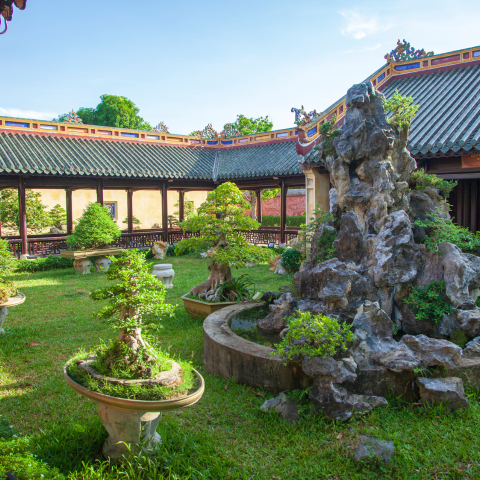
Hue was the imperial capital of unified Vietnam from 1802 until 1945, when the last Nguyen emperor abdicated under pressure from Ho Chi Minh's revolutionary government. What remains is an extraordinary complex of walls, gates, ceremonial halls, royal tombs, and garden pavilions spread across several square kilometres of the Perfume River's northern bank. The citadel has been damaged by successive conflicts — most severely during the 1968 Tet Offensive, when US and North Vietnamese forces fought house-to-house through its precincts for 26 days — and restoration has proceeded carefully and partially. The incompleteness is part of the experience: Hue reads as a living document of Vietnamese history rather than a restored museum piece.
Hoi An, 30 kilometres south of Da Nang, occupies the opposite end of the preservation spectrum. Its ancient town — a compact grid of 15th to 19th-century merchant houses, clan temples, Japanese-built bridges, and colonial-era shopfronts — is among the best-preserved historic trading ports in Southeast Asia. Tailors, ceramicists, and lantern makers still operate from the same street fronts where their predecessors traded with Japanese, Chinese, Dutch, and Portuguese merchants. The town fills with visitors in the afternoon and empties comparatively at night; arriving before midday gives you the narrow alleyways in something closer to their working state.
Da Nang sits between the two ancient capitals, young and confident, its skyline changing with each visit. The city is worth at least a morning for the Cham Museum — the world's largest collection of Cham sculpture, housed in a low French colonial building near the Han River — and the walk or taxi ride up Son Tra Peninsula for the Linh Ung Pagoda's enormous standing Buddha, which looks out over the bay from a forested hillside. For passengers who've already experienced Hue and Hoi An on previous voyages, Da Nang alone rewards a day's exploration.
Top things to do in Chan May (Hue, Da Nang, Hoi An) on a cruise stopover
Hue Imperial Citadel: The Architecture of Vietnamese Imperial Power
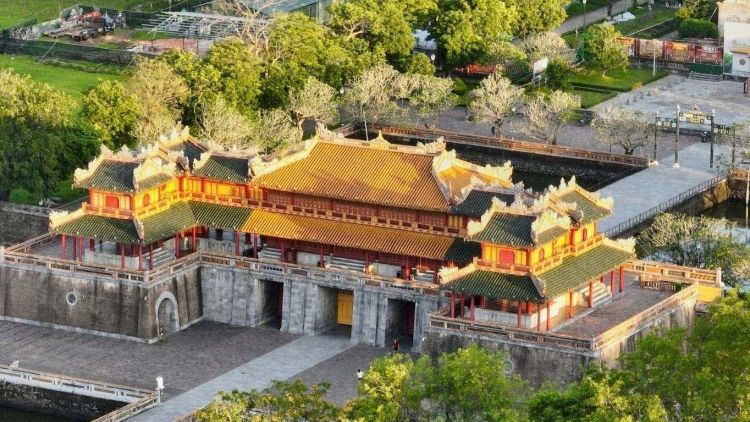
Built between 1804 and 1833 on the model of Beijing's Forbidden City — though distinctly Vietnamese in its proportions and ornamentation — the Hue Imperial Citadel is enclosed within a moated rectangular wall measuring 2.5 kilometres on each side. At its centre stands the Purple Forbidden City, once accessible only to the emperor and his household, now a partially restored complex of ceremonial halls, royal gardens, and roofless ruins. The Thai Hoa Palace, with its lacquered columns and ornate ceiling, gives the clearest sense of the original grandeur. Come early: the citadel opens at 7am and the first two hours, before tour groups arrive in number, allow a quality of attention the site deserves. Budget two to three hours minimum.
Da Nang and the Lady Buddha: Vietnam's Coastal Gateway
Da Nang is central Vietnam's largest city and a natural endpoint for the scenic coastal journey south from Hue across the Hai Van Pass. The city's seafront — Han River lined with modern bridges, each lit differently at night — reflects how rapidly Da Nang has developed into one of Vietnam's most liveable cities. The Lady Buddha statue on the Son Tra Peninsula rises 67 metres above the coastal hillside and can be seen from the beach districts below; the marble pagoda complex surrounding her is an active place of worship offering views across Da Nang Bay and the East Sea. Son Tra Peninsula itself is a protected nature reserve with wild red-shanked douc langurs (an endangered primate) visible in the forest canopy. My Khe Beach, consistently ranked among Asia's finest urban beaches, runs for 30 kilometres directly adjacent to the city. Da Nang is 30 kilometres south of Chan May Port, making it an efficient stop on any itinerary that also includes Hue.
Hai Van Pass: The Mountain Road Between Two Climatic Zones
The Hai Van Pass (literally 'Ocean Cloud Pass') crosses the Truong Son mountain range at 496 metres as the range meets the sea, marking the historical boundary between the former kingdoms of Dai Viet and Champa, and today the climatic divide between central and southern Vietnam. The road, constructed by the French and rebuilt multiple times since, curves along the clifftop for 21 kilometres between the towns of Lang Co and Da Nang, with views down to both coastlines simultaneously. An abandoned French bunker and later American fire base sit at the summit, now occupied by souvenir sellers. If your day plan routes you between Hue and Da Nang (or vice versa), the mountain road adds 30–45 minutes versus the tunnel — an easy trade for a journey that remains one of the most dramatic coastal drives in Southeast Asia.
Da Nang Museum of Cham Sculpture: An Unparalleled Collection
Opened by the French in 1919 to house sculptures collected from Cham sites across central Vietnam, the Museum of Cham Sculpture in Da Nang contains the world's largest and finest collection of Cham art — some 300 original stone works ranging from 7th to 15th century CE. The collection includes architectural friezes, deity figures, ceremonial pedestals, and the ornate Tra Kieu altar base, considered among the most refined examples of Cham craftsmanship. The building itself — a single-storey French colonial structure with open pavilions — was designed specifically for the sculptures. Allow 90 minutes to move through the galleries properly; the quality of individual pieces rewards close attention rather than a rapid circuit.
Hue Royal Tombs: Imperial Memorials on the Perfume River
Seven Nguyen emperors are buried in elaborately designed tomb complexes spread across the pine-covered hills south of Hue, each reflecting the personality and aesthetic preferences of the emperor who commissioned it. The tomb of Minh Mang (1840) is considered the most architecturally harmonious — a sequence of lakes, gates, pavilions, and the burial mound itself, arranged on a single axis. Tu Duc's tomb (1867) is more garden-like and romantic, built by an emperor-poet who spent years composing verse in its pavilions before his death. Most day-visitors choose one or two tombs rather than attempting all seven. From the city, the tombs are reached by boat along the Perfume River (slower, more atmospheric) or by taxi/Grab (faster, more practical for limited time ashore).
Hue's Royal Court Cuisine: Vietnam's Most Refined Regional Kitchen
Hue was the seat of the Nguyen emperors for over a century, and the culinary tradition that developed in the imperial city is considered Vietnam's most sophisticated regional cooking. Court cuisine was designed to please the emperor — dishes were smaller, more ornate, and more layered in spice and flavour than peasant or merchant food. That tradition persists in the city's restaurants and street stalls today. Bun bo Hue — a spicy, lemongrass-rich beef and pork noodle soup — is the city's signature breakfast dish, notably different from the pho of Hanoi or the mi quang of the south. Com hen (tiny Perfume River clams on rice with crispy pork fat and a dozen condiments) is a locally beloved dish rarely found outside Hue. Banh khoai, a crispy turmeric pancake filled with pork, prawn, and bean sprouts, is served with a distinctive peanut and fermented shrimp dipping sauce. Eating in Hue is not incidental to visiting the city — it is part of understanding the culture.
Chan May (Hue, Da Nang, Hoi An) travel tips
Decide Your Priority Before the Ship Docks. The single most useful thing you can do before arriving at Chan May is to commit to a primary destination and build your day around it rather than attempting to see Hue, Da Nang, and Hoi An in a single excursion. Each of these places rewards a slower pace than a three-destination itinerary allows. Hue's citadel and one royal tomb makes a satisfying full morning and early afternoon; Hoi An ancient town with a proper lunch and time to browse deserves at least three unrushed hours; Da Nang's Cham Museum and Son Tra Peninsula fills a morning comfortably. Passengers who try to combine Hue and Hoi An in one day often feel they've done justice to neither.
Hue's Royal Court Cuisine: Vietnam's Most Refined Regional Kitchen. Hue was the seat of the Nguyen emperors for 143 years, and its cuisine reflects a kitchen tradition designed to impress and satisfy imperial palates. The city's food is considered the most sophisticated regional cooking in Vietnam: dishes are smaller, more intricate, and more layered in spice than either Hanoi or Ho Chi Minh City cooking. Bun bo Hue — a spicy, lemongrass-infused beef noodle soup — is the city's signature dish and quite different from Hanoi's pho. Com hen (rice with tiny clams from the Perfume River) and banh khoai (crispy rice flour pancakes with prawns and pork) are equally distinctive. Imperial-style set meals are served at heritage restaurants and feature multiple small dishes presented with ceremonial care — if your itinerary includes Hue, this is worth experiencing. Budget 150,000–300,000 VND per person for a proper sit-down meal at a recommended local restaurant.
In Hoi An, Buy Your Ticket Before Entering the Historic Core. The Hoi An Ancient Town boundary is managed and an entry ticket is required to access individual heritage sites within it. Tickets (currently around 120,000 VND) are sold at booths on the main approaches to the historic area and include five site entries from a list of roughly 20 options — Japanese bridge, clan houses, museums, traditional houses, and performing arts spaces. You don't need to use all five and the ticket is valid for the day. Arriving without one doesn't prevent you from walking the streets or dining at restaurants, but it does bar you from the principal architectural sites. Note that ticket booths close in the early evening.
Dress for Temple Visits from the Start of Your Day. Both Hue's imperial complex and the Hoi An ancient town include active religious sites where covered shoulders and knees are required. Rather than carrying and changing into wraps at each location, simply wear appropriate clothing from the ship — lightweight long trousers and a short-sleeved shirt covering the shoulders work for the climate and satisfy the dress requirements everywhere in the region. Breathable linen or technical fabric is more comfortable than cotton in central Vietnam's heat and humidity. Many sites sell sarongs at the entrance for those who arrive underdressed, but the transaction wastes time.
The Hai Van Pass Road Is Worth the Extra Time If You're Routing That Way. If your day plan takes you between Hue (north) and Da Nang/Hoi An (south), you have two options: the 6.2-kilometre tunnel under the Hai Van range, which takes 10 minutes, or the mountain road over the pass, which takes 35–45 minutes. The tunnel makes sense if you're pressed for time; the mountain road makes sense for almost any other reason. The views from the summit — both coastlines simultaneously, a working French-era bunker, the geometry of Lang Co beach below — are exceptional. Most private drivers will take the pass as the default if you ask or will suggest it; be explicit about which you prefer.
Hue Is Best in the Morning; Hoi An Is Best Before Noon. Both cities have daily rhythms that reward early arrival. Hue's imperial citadel opens at 7am and the first two hours, before group tours arrive, allow unhurried movement through the main halls. The royal tombs are equally better before 10am. Hoi An's ancient town becomes significantly more crowded after midday as day-trippers from Da Nang arrive in volume; the narrow lanes of the Japanese quarter and the clan houses feel quite different at 9am versus 2pm. If you're combining Hue in the morning and Hoi An in the afternoon, the afternoon timing at Hoi An is less than ideal — but even a crowded Hoi An is worthwhile. Reverse the order only if your ship arrives after noon.
Port Facts Every Cruiser Needs To Know
Chan May (Hue, Da Nang, Hoi An) shore excursion FAQs
Chan May cruise terminal is located approximately 50 kilometres south of Hue (roughly 60–75 minutes by road, depending on traffic and whether you take the Hai Van Pass or tunnel), 30 kilometres north of Da Nang city centre (35–45 minutes), and 70 kilometres north of Hoi An (75–90 minutes). These are approximate times under normal conditions; allow extra buffer during peak hours (7–9am, 5–7pm) or during heavy rain when road speeds drop. A full day ashore of 8–10 hours is sufficient to reach any one of these destinations comfortably; combining two requires efficient planning and, ideally, a private vehicle.
The answer depends on your travel priorities. Choose Hue if you're interested in Vietnamese history, imperial architecture, and religious heritage — the citadel and royal tombs represent a depth of cultural experience unavailable elsewhere on the Vietnam cruise circuit. Choose Hoi An if you want a beautifully preserved historic streetscape, exceptional food culture, the possibility of custom clothing, and a compact experience that rewards wandering without a fixed itinerary. Choose Da Nang if you've already visited Hue and Hoi An on previous voyages, or if you're interested in Cham art history (the museum there is genuinely exceptional) and want a more contemporary Vietnamese city experience. For first-time visitors to central Vietnam, Hoi An edges ahead on sheer immediate impact, but Hue is the more intellectually substantial experience.
Having clothes made in Hoi An in a single day is possible but requires realistic expectations and advance preparation. Simple items — a linen shirt, a pair of trousers, a basic dress — can be measured, cut, and ready for a final fitting within 4–6 hours at established tailors who explicitly offer same-day service. Complex garments (suits, fitted dresses, structured jackets) genuinely require 2–3 days for proper fittings and adjustments. To maximise your chances: research tailors before arrival (An Bespoke and Yaly Couture are long-established operations with good reputations), arrive at the tailor first thing in the morning, bring reference images or a garment you want copied, and be clear that you need same-day completion. Confirm the pickup time and get a receipt before leaving.
Two UNESCO World Heritage Sites are directly accessible from Chan May. The Complex of Hue Monuments, inscribed in 1993, encompasses the imperial citadel, royal tombs, temples, and associated structures spread across the city and surrounding hills — representing the architectural and cultural legacy of the Nguyen dynasty. The Hoi An Ancient Town, inscribed in 1999, preserves an exceptionally well-maintained Southeast Asian trading port from the 15th to 19th centuries, notable for its architectural synthesis of Vietnamese, Chinese, Japanese, and European colonial influences. A third World Heritage Site, the My Son Sanctuary (Cham temple complex), is technically accessible from Hoi An (roughly 40 km away) but the travel time required makes it difficult to combine with either Hue or Hoi An in a single port day.
Hue's cuisine reflects its identity as an imperial capital: small dishes in number rather than large portions, intense flavours, elaborate presentation, and a strong tradition of vegetarian cooking tied to the Buddhist monasteries that ring the city. Bun bo Hue is the signature dish — a spicy, lemongrass-infused beef and pork noodle soup considerably more complex than the pho familiar from southern Vietnam. Banh khoai is a crispy yellow pancake filled with shrimp, pork, and bean sprouts, eaten wrapped in rice paper with herbs and a thick fermented shrimp dipping sauce. Com hen is a bowl of tiny clams from the Perfume River served over cold rice with herbs, peanuts, sesame, and a broth on the side — a breakfast dish that reads as deceptively simple. Seek out the stretch of small restaurants along Nguyen Dinh Chieu or Bach Dang streets for genuine local versions rather than the tourist-facing restaurants around the citadel gates.
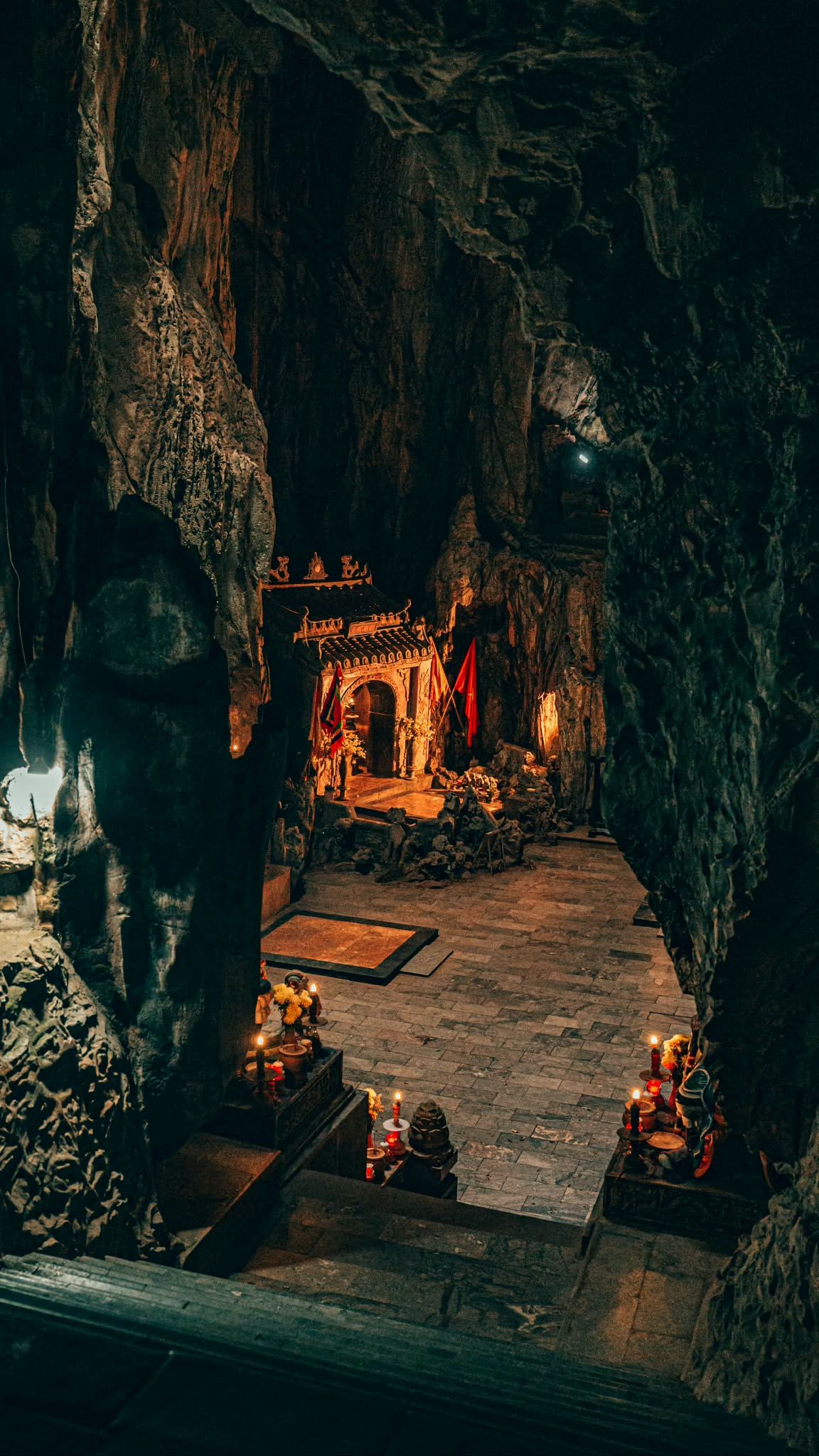
The Marble Mountains (Ngu Hanh Son) — a cluster of five marble and limestone outcrops rising from a coastal plain 9 kilometres south of Da Nang — are a practical addition to a Da Nang-focused day. The largest formation, Thuy Son, contains Buddhist shrines, Hindu temple remnants, cave sanctuaries illuminated by natural skylights, and a lookout platform with views over the coastline. The site is accessible by stairs or (easier going up) by lift. A visit of 90 minutes allows you to see the main caves, temples, and viewpoints without rushing. The Marble Mountains are en route between Da Nang and Hoi An, making them a natural stop if you're combining both — add approximately 90 minutes to your itinerary.
The Hue Imperial Citadel was significantly damaged in 1968 during the battle that accompanied the Tet Offensive, and additional structures had already been lost to earlier 20th-century conflicts. UNESCO and the Vietnamese government have been funding restoration work since the 1990s, and the process is ongoing and deliberate. What this means in practice: some areas within the citadel walls are fully restored and immaculately presented; others are atmospheric ruins with surviving structural elements but missing roofs and interiors; a few areas remain closed to visitors pending future work. This is not a disappointment — the combination of restored grandeur and honest ruin is more historically truthful than a wholesale reconstruction would be. The Thai Hoa Palace (throne hall), Ngo Mon Gate, and the Can Chanh Palace area are the strongest sections; the inner Purple Forbidden City is largely ruined but powerfully evocative.
The Japanese Covered Bridge (Chua Cau, literally 'Pagoda Bridge') was built by the Japanese merchant community in Hoi An in the early 17th century as a link between their residential quarter and the Chinese quarter across a small canal. It is one of the very few surviving examples of Japanese-built architecture in Vietnam, a reminder that Hoi An was an active centre of Japanese trade before the Tokugawa shogunate's 1635 ban on overseas commerce effectively ended Japanese merchant activity here. The bridge is small — about 18 metres long — with a wooden temple structure built into its centre section housing deities associated with protection from floods and earthquakes. It appears on the 20,000 VND banknote and has become the visual shorthand for Hoi An internationally; visit early in the morning to see it without significant crowds.
Central Vietnam has excellent beaches, though reaching them from Chan May requires some transit. Lang Co Beach — a narrow peninsula between a lagoon and the sea, directly north of the Hai Van Pass — is approximately 20 kilometres from the terminal (30 minutes by car) and offers a long, clean stretch of sand that sees relatively few tourists. The beach at My Khe (Da Nang) is closer to 40 kilometres away but is a well-maintained urban beach with sunbeds and restaurants available. An Bang Beach, 4 kilometres from Hoi An Ancient Town, is increasingly popular with an international crowd and has a string of beach bars and restaurants. For passengers who want both culture and beach time, combining a morning in Hoi An Ancient Town with an afternoon at An Bang Beach works logistically and gives the day a satisfying rhythm.
Hoi An sits on a low-lying floodplain and the ancient town does flood seasonally, most commonly in October and November when the Thu Bon River rises after sustained inland rainfall. During these months, sections of the historic core can be under 20–50 centimetres of water; local shopkeepers have adapted to this with raised floors and stored stock, and the town remains functional (and genuinely interesting to observe) even partially flooded. Ship itineraries during the rainy season usually account for weather risk, and cruise lines monitor conditions. Outside of October–November, flooding is uncommon. If your itinerary passes through Chan May during these months, check current conditions before going ashore and have a backup plan (Da Nang's Cham Museum is entirely unaffected by coastal flooding).
Filters
Select a filter to refine results.
Tour Type
Tour Activity
 Cart
Cart
 USD
USD GBP
GBP AUD
AUD EUR
EUR CAD
CAD