



Tours in Cam Ranh
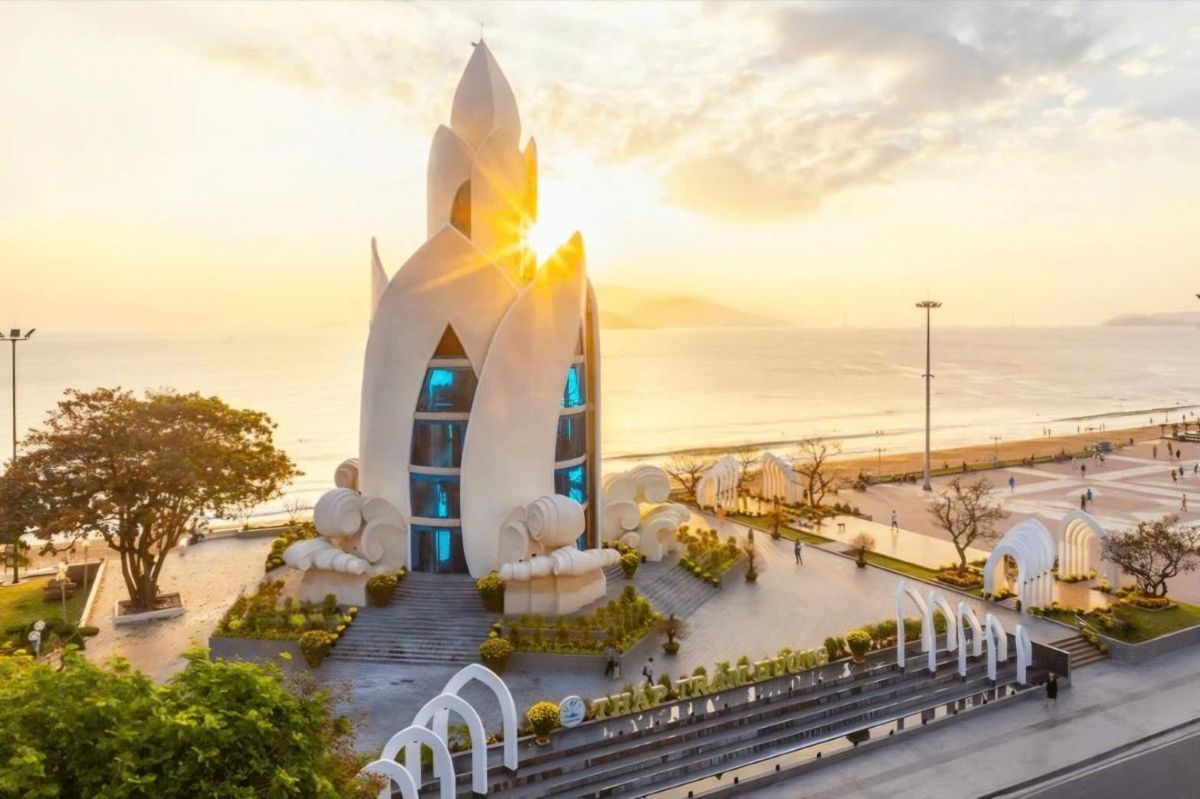


Cruising to Cam Ranh in a group?
Skip the crowded ship excursion bus. One dedicated planner will design a private shore experience around exactly what your group wants — coordinated from first enquiry to the moment you're back on board. More memorable, more flexible, and more affordable than you might expect. Spend less time organising, more time enjoying.
Explore Group Travel →Cruising to Cam Ranh
Cam Ranh Bay occupies a rare geographic category: a deep-water harbour so naturally protected that every significant naval power of the modern era sought to control it. The French fortified it, the Americans expanded it into one of Southeast Asia's largest military installations, and the Russians quietly maintained a presence here until 2002. Today, that strategic past has been repurposed into a civilian cruise terminal, and the bay's extraordinary clarity of water and absence of mass tourism make it one of the more compelling new ports on the Asia circuit.
The bay sits roughly 35 kilometres south of Nha Trang, the nearest major city, and the two should be treated as distinct experiences rather than interchangeable. Nha Trang offers urban energy, a long developed beach promenade, and excellent markets; Cam Ranh itself remains calmer, its peninsula home to resort hotels spread thin along stretches of beach that see relatively few day visitors. For cruise passengers with a morning and afternoon ashore, this divide is actually an asset — you can choose your pace rather than have it chosen for you.
The surrounding landscape rewards those who look beyond the beach. Inland, low granite hills dotted with Buddhist pagodas and small farming villages give the peninsula a character distinct from the resort zones along the coast. Local fishing communities still haul in catches each morning in traditional wooden boats, and the seafood markets that result are among the most authentic in the region. Squid, barracuda, and the locally prized one-stripe snapper arrive before 7am and are gone by mid-morning.
Travellers familiar with Vietnam's more celebrated coastal destinations — Ha Long Bay, Hoi An, Phu Quoc — will find Cam Ranh a useful counterpoint: fewer crowds, a rawer sense of place, and the particular pleasure of a destination that hasn't yet decided exactly what it wants to be. The cruise terminal is modern and efficient; everything beyond the gate is still in the process of becoming.
Top things to do in Cam Ranh on a cruise stopover
The Bay Itself: Swimming and Snorkelling in Exceptional Clarity
Cam Ranh Bay's deep, sheltered waters offer some of the clearest conditions on the south-central coast. The coral reefs fringing the bay's eastern islands are accessible by short boat trips organised from the terminal or from beach operators along the peninsula. Visibility frequently exceeds 15 metres, and the reef ecosystems here receive far less pressure than those around the more touristed islands to the south. For passengers who simply want to swim, the northern beaches of the peninsula offer calm, clean water with minimal wave action and, outside of peak domestic holiday periods, genuine quiet.
Nha Trang's Po Nagar Cham Towers
Dating from the 7th to 12th centuries, the Cham towers at Po Nagar sit on a granite promontory above the Cai River estuary at the northern edge of Nha Trang. The complex was a centre of Hindu worship for the Cham people, who dominated this coastline for centuries before Vietnamese expansion southward. Four towers survive, dedicated to the goddess Yan Po Nagar, and the principal tower still serves as an active place of worship — incense burns, offerings accumulate, and local devotees arrive throughout the day alongside tourists. The setting, with river and city views below, is among the more atmospheric ancient sites in southern Vietnam.
Long Son Pagoda and the Reclining Buddha
Nha Trang's most prominent Buddhist complex sits against a low hillside in the city's western quarter. The pagoda grounds are layered — a main hall filled with intricate mosaic dragon columns at street level, a series of terraces climbing to a large seated white Buddha at the summit, and off to one side, a newer reclining Buddha completed in the early 2000s. The climb to the upper terraces takes about ten minutes and delivers a panoramic view over the city and the coast. Monks live and study on-site; the atmosphere in the main hall during morning prayers is genuinely contemplative. Appropriate dress (covered shoulders and knees) is required.
Dam Market: Nha Trang's Daily Commercial Engine
The covered market at Dam, a short walk from Nha Trang's central beach, operates across multiple floors and represents the city's commercial pulse rather than a tourist construct. Ground level handles fresh produce, live seafood, and meat; upper floors carry dry goods, fabric, clothing, and household items. Vendors are accustomed to cruise passengers but the market remains primarily local in character — prices are low, bargaining is expected on non-food items, and the density of activity in the fish section on a weekday morning is its own kind of spectacle. Come hungry: small food stalls on the upper level prepare banh mi, bun bo, and fresh sugar cane juice.
Alexandre Yersin Museum: Science at the Edge of Empire
The Swiss-French bacteriologist Alexandre Yersin arrived in Nha Trang in 1891 and effectively never left. He identified the plague bacillus, introduced quinine-producing trees to Vietnam, founded the Pasteur Institute here, and spent decades conducting meteorological and agricultural research from a hillside observatory he built himself. The museum occupying his former laboratory is small but genuinely unusual — his original instruments, microscopes, and correspondence fill the display cases, and the story it tells of a 19th-century scientist who chose rootedness in rural Vietnam over European acclaim is quietly remarkable. Allow 45 minutes.
Peninsula Seafood Lunch: From the Boats to the Table
Cam Ranh's fishing communities maintain a supply chain that most coastal restaurants only approximate. Along the inner shore of the peninsula, a cluster of simple open-air restaurants source their catch directly from boats returning to the nearby harbour. The format is consistent: a glass-fronted display of the morning's catch, a pointing negotiation with the cook, and 20 minutes later, grilled fish with turmeric and dill, steamed clams with lemongrass, or fresh squid in a light chilli sauce arrives at a plastic table set directly on a concrete dock. Total cost for two, including rice, vegetables, and Vietnamese iced coffee, rarely exceeds the equivalent of ten euros.
Cam Ranh travel tips
The Countryside Around Cam Ranh: Vietnam Beyond the Tourist Trail. The area between Cam Ranh port and Nha Trang is less visited than the city's beaches but contains some of the region's most interesting rural scenery: salt harvesting flats, lagoons populated by fishing boats, and small villages where the rhythms of coastal Vietnamese life play out largely undisturbed. The Po Nagar Cham Towers, among the oldest standing structures in Vietnam, sit just north of the port zone and represent a thousand years of continuous religious practice. This coastal hinterland is the focus of Venture Ashore's excursion from Cam Ranh.
The Sun Is Serious: Plan Shade Into Your Day. At this latitude, the midday sun between 11am and 2pm is intense in a way that surprises visitors accustomed to European or North American summers. Schedule outdoor sightseeing (Cham towers, hillside pagoda, market visits) for the morning or late afternoon. The midday hours work well for an indoor lunch, a museum visit, or simply sitting in the shade by the water. High-SPF sunscreen, a wide-brimmed hat, and a lightweight long-sleeved shirt will serve you better than factor 15 applied once at breakfast.
Carry Small Denomination Notes for Markets and Temples. ATMs in Nha Trang dispense 500,000 VND notes (roughly 20 euros), which are difficult to break at small stalls and temple donation boxes. Before leaving any ATM, ask a nearby shop or café to change a large note into smaller denominations — 10,000, 20,000, and 50,000 VND notes are the practical currency of daily life. At Dam Market, having correct change speeds transactions considerably and earns visible goodwill from vendors managing a busy morning.
Respect Active Worship Spaces. Both Po Nagar Cham Towers and Long Son Pagoda remain active religious sites, not historical monuments. Photography inside the main prayer halls should be done discreetly and never during moments of active prayer. At Po Nagar, a small admission fee includes a sarong if your clothing is deemed insufficiently modest — it's worth wearing appropriate clothing from the ship to avoid this transaction. Shoes are removed before entering temple interiors; this will be clearly indicated at the entrance.
Vietnamese Coffee Culture: What to Order and Where. Vietnam produces some of the world's most distinctive coffee — robusta-heavy blends with an intensity that surprises visitors accustomed to arabica. In Nha Trang, ca phe sua da (iced coffee with sweetened condensed milk) is the essential local experience: strong, slightly bitter, and sweet in a balance unlike anything found elsewhere. Coffee arrives in a small metal drip filter (phin) balanced over the glass — it takes 5–8 minutes to brew, which is the correct pace for drinking it. Ca phe trung (egg coffee) — a Hanoi invention now available in most cities — is a whipped egg yolk and sugar foam on espresso, served warm or iced. Local cafés charge 20,000–40,000 VND (less than two euros); tourist-facing spots may charge three times that for the same quality. Look for small stools and low tables on the pavement, or open-fronted shops with Vietnamese signage — these are almost always better than the air-conditioned alternatives.
The Military History Is Understated but Present. Cam Ranh's role in 20th-century conflicts — as a supply base during the American War, then briefly as a Soviet naval facility — is not widely commemorated at public sites, but the scale of the infrastructure it left behind is visible to observant visitors: runway lengths, bunker outlines, the geometry of roads built for heavy military traffic. If this history interests you, the War Remnants Museum in Ho Chi Minh City is the definitive regional institution; locally, the Khanh Hoa Museum in Nha Trang offers provincial context without the graphic intensity of its Ho Chi Minh City counterpart.
Port Facts Every Cruiser Needs To Know
Cam Ranh shore excursion FAQs
The Cam Ranh International Cruise Port sits approximately 35 kilometres south of Nha Trang city centre, making it a 40–50-minute drive depending on traffic. The most reliable options are Grab (ride-hailing app, fixed price, recommended), metered taxis from Vinasun or Mai Linh (reliable and metered; avoid unmarked taxis), or organised ship excursion coaches. Expect to pay the equivalent of 8–12 euros one way by taxi or Grab. Public buses exist but involve multiple transfers and are not practical for a day visit with limited time ashore.
Yes — for passengers whose priority is swimming and beach time rather than cultural sightseeing, Cam Ranh is arguably better suited than Nha Trang city's main beach, which can be crowded and is fronted by a busy promenade. The northern beaches of the Cam Ranh peninsula are clean, calm, and significantly quieter, accessible within 10–20 minutes from the terminal. Several resort hotels along this strip welcome day visitors (for a fee) with access to their beach facilities, sunbeds, and pools — a worthwhile option if you want umbrellas and a decent lunch. The water quality in the bay is consistently good.
The south-central coast has a distinct culinary identity. Banh canh cha ca is a thick noodle soup made with fish paste cakes — a Nha Trang signature. Nem nuong Ninh Hoa refers to grilled pork rolls from the nearby town of Ninh Hoa, usually eaten wrapped in rice paper with fresh herbs. Bo la lot (minced beef grilled in betel leaves) appears at many casual restaurants. For seafood, the local one-stripe snapper (ca hong) and the morning's squid catch are worth ordering wherever you see them freshest. Finish with ca phe trung — egg coffee, thick and sweet — which has spread from Hanoi but is now found across the country.
Cam Ranh Bay's underwater conditions are genuinely good — clear water, moderate currents, and reef ecosystems that see less diver pressure than the more famous Hon Mun Marine Protected Area near Nha Trang. Day trips to snorkelling sites within the bay can be arranged through terminal operators and take 15–30 minutes by speedboat. For scuba diving, the Hon Mun area near Nha Trang offers more developed dive infrastructure with certified operators; this requires factoring in the 40–50-minute transit each way. Snorkelling without a boat trip is possible from some beach sections on the peninsula, though a short boat journey typically reaches better reef coverage.
Vietnam offers visa-free entry to citizens of many countries for stays of up to 45 days (or 90 days for some nationalities under bilateral agreements). Eligible nationalities include most EU member states, the UK, South Korea, Japan, Australia, and others — the list has expanded significantly in recent years. Citizens of the United States are eligible for 45-day visa-free entry. However, visa policies change and individual circumstances vary; confirm your specific nationality's current status through Vietnam's official immigration authority or your country's foreign affairs ministry before sailing. Your cruise line will also advise on documentation requirements.
The Cham civilisation dominated coastal south-central Vietnam for roughly a thousand years, reaching its peak between the 4th and 10th centuries CE. They were Hindu (later partially Islamicised in the south), spoke an Austronesian language related to Malay, and built a series of brick temple towers along the coast, several of which survive in various states of preservation. The Cam Ranh and Nha Trang region was part of the Cham kingdom of Kauthara; the Po Nagar towers in Nha Trang represent the most accessible and complete surviving example of Cham sacred architecture in the region. Vietnamese military expansion southward between the 11th and 17th centuries gradually absorbed Cham territory, but a Cham minority community still lives in Vietnam today, primarily in Ninh Thuan province south of Nha Trang.
Tap water throughout Vietnam is not reliably safe to drink and bottled water is the standard — available everywhere for pennies. Ice in tourist-oriented restaurants is typically made from purified water; at very local establishments, it may not be. Street food in Nha Trang is generally safe when stalls are visibly busy with local custom (high turnover means fresh food), when ingredients are cooked to order in front of you, and when you avoid raw vegetables that may have been washed in tap water. Freshly cooked dishes, soups, grilled meats, and packaged snacks carry minimal risk for most travellers. As general principle: if the stall is empty at lunchtime, move on.
The Pasteur Institute Museum in Nha Trang is small — a single room of Yersin's preserved laboratory and personal effects — but occupies a remarkable building on the institute's working campus, which still conducts medical research. Opening hours are limited (typically 8–11am and 2–4:30pm on weekdays; check before going), and the entrance fee is nominal. The museum is not a polished international institution; the displays are modest and some labelling is in Vietnamese only. What makes it worthwhile is the specificity of the collection — Yersin's actual microscopes, his correspondence with Louis Pasteur, his meteorological instruments, photographs of his life in the highlands — and the strangeness of finding it here at all. Allow 30–45 minutes.
Licensed guides and tour operators are typically present at the Cam Ranh cruise terminal on ship days, offering half-day packages to Nha Trang's main sights (Cham towers, Long Son Pagoda, Dam Market) and beach transfers on the peninsula. For independent travellers who prefer some structure, hiring a private guide with a car for a half-day (typically 30–50 euros total for the vehicle and guide, split among a small group) is efficient and gives you flexibility that group tours don't. Verify that guides carry official Vietnamese tourism authority licensing — a laminated photo ID card issued by the provincial tourism department. Your ship's excursions desk can recommend vetted operators if you prefer to book before arrival.
Each of Vietnam's cruise ports offers a distinct register. Ho Chi Minh City (via Phu My terminal) delivers urban intensity — French colonial architecture, the Reunification Palace, extraordinary street food density, and a city of 9 million people in motion. Chan May (serving Da Nang, Hue, and Hoi An) offers the country's most concentrated cultural layer cake: a World Heritage ancient town, an imperial capital, and a modern beach city within a two-hour arc. Cam Ranh occupies different territory: fewer marquee monuments, more natural setting, a quieter pace. It suits passengers who've already seen the main historical sites elsewhere on a Vietnam itinerary, or those for whom a morning at a calm bay followed by a genuine local seafood lunch represents exactly the right calibration of exploration and rest.
Filters
Select a filter to refine results.
Tour Type
Tour Activity
 Cart
Cart
 USD
USD GBP
GBP AUD
AUD EUR
EUR CAD
CAD