



Tours in Hakata (Fukuoka)


Cruising to Hakata (Fukuoka) in a group?
Skip the crowded ship excursion bus. One dedicated planner will design a private shore experience around exactly what your group wants — coordinated from first enquiry to the moment you're back on board. More memorable, more flexible, and more affordable than you might expect. Spend less time organising, more time enjoying.
Explore Group Travel →Cruising to Hakata (Fukuoka)
Hakata is not merely Fukuoka's port — it is its oldest quarter, the commercial and culinary engine that has driven this city's outsized reputation since merchants first crossed the Korea Strait here in antiquity. While Tokyo and Osaka absorb most of Japan's international attention, Fukuoka gets on with the business of being quietly excellent: the food sharper, the crowds thinner, the pace more liveable. Arriving by sea puts you at the threshold of that world within walking distance of the canal-laced Nakasu entertainment district and the city's famous yatai stalls.
The ramen here is a serious matter. Hakata-style tonkotsu — a rich pork-bone broth that simmers for twelve hours or more, served with thin straight noodles and a ritual of kaedama (ordering extra noodles for the remaining broth) — was born in this neighbourhood and is still practised with genuine craft in dozens of small counters within a few minutes of the port. Eating at a yatai, the open-air wooden food stalls that line the Nakasu canal and Tenjin district each evening, is one of Fukuoka's genuinely distinctive pleasures: these are not tourist attractions but working neighbourhood institutions, each with its regulars.
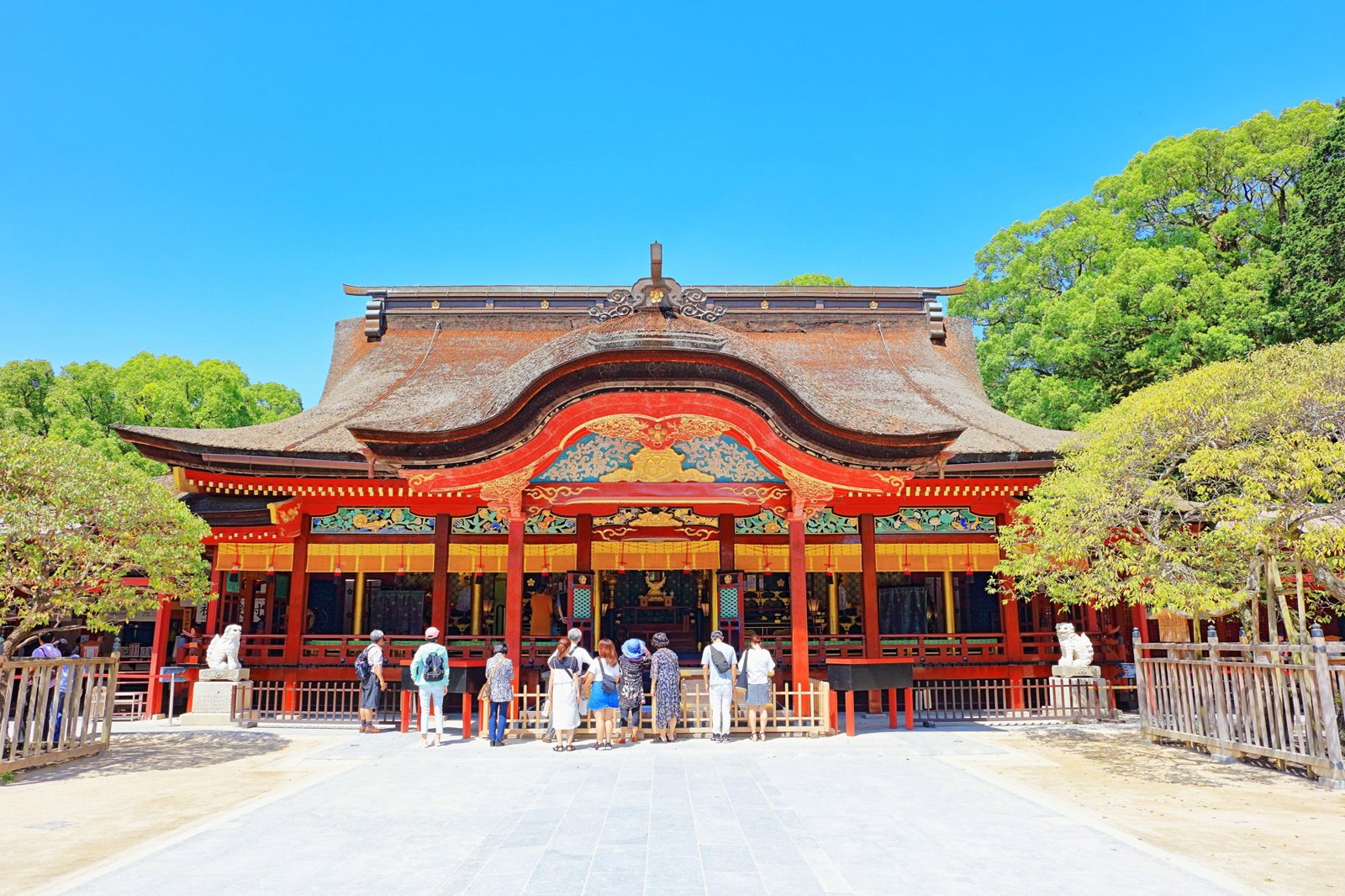
Beyond the food, Fukuoka holds real historical weight. Dazaifu Tenmangu, the plum-blossom shrine dedicated to the scholar-deity Sugawara no Michizane, sits twenty minutes from the port by rail and draws pilgrims year-round for reasons that have nothing to do with cruise itineraries. The approach through camphor forests, the arched bridges over carp ponds, and the main hall hung with ema wooden plaques constitute a visit that rewards unhurried attention. Nearby, the Kyushu National Museum provides exceptional context for the region's role as Japan's ancient gateway to continental Asia.
For those willing to range further, Hakata's position at the top of the Shinkansen network means Hiroshima is ninety minutes west and Nagasaki roughly two hours by limited express — genuinely manageable on a long port day, though each deserves more time than a day allows. The smarter approach is to use Hakata as the focused destination it already is: eat well, walk the Ohori Park circuit, stand in the ancient gate precincts of Fukuoka Castle, and return to the ship having experienced one of Japan's most self-assured cities on its own terms.
Top things to do in Hakata (Fukuoka) on a cruise stopover
Dazaifu Tenmangu Shrine
Twenty minutes southeast of the port by rail, Dazaifu Tenmangu is one of Kyushu's most significant Shinto shrines — a place of genuine pilgrimage rather than staged spectacle. The stone-paved approach crosses three arched bridges said to represent past, present, and future, passing over koi ponds fringed with plum trees that bloom extravagantly in February. The main hall, rebuilt in its current form in 1591, is dedicated to Sugawara no Michizane, the 9th-century scholar-statesman who was exiled here and later deified as patron of learning. Students bring ema plaques with examination wishes; the air carries incense and quiet devotion. Immediately behind the shrine, connected by a covered escalator tunnel through the hillside, the Kyushu National Museum documents Japan's cultural exchange with continental Asia. Allow two to three hours for both sites together.
Yatai Food Stalls of Nakasu and Tenjin
Fukuoka's yatai are open-air wooden stalls, traditionally set up on wheels each evening along the canal banks of Nakasu island and beneath the trees of Tenjin. Each seats a handful of customers at a counter, run typically by a single proprietor who cooks ramen, yakitori, gyoza, and local specialities to order. The tradition dates to the post-war period when street vendors fed a rebuilding city; Fukuoka now protects its remaining hundred-odd yatai as cultural assets. Most open from early evening, making them impractical for ships departing at sundown — but several lunch-focused ramen and gyoza counters in the Hakata and Tenjin districts replicate the spirit of that close-counter, cook-in-front-of-you experience through the day. The local ramen is tonkotsu: opaque, rich, porky broth, barely-firm noodles, seasoned egg, and sliced chashu pork — order noodle refills (kaedama) when your bowl is almost finished.
Ohori Park and Fukuoka Castle Ruins
Ohori Park occupies a large artificial lake in the western part of central Fukuoka, its three islands connected by zigzagging wooden bridges in the manner of classical Japanese garden design. The circuit path around the lake — about 2 km — is one of the city's great daily rituals, populated by joggers, families, and elderly residents feeding the ducks. On the park's eastern edge, the elevated ruins of Fukuoka Castle (Maizuru Castle) provide a grassy plateau with city views and reconstruction models that convey the original scale of what was once one of Kyushu's largest fortifications. The Maizuru Park that surrounds it is one of the city's premier cherry blossom destinations in spring. The combination of park walk, castle ruins, and the adjacent Fukuoka Art Museum makes for a satisfying two-hour excursion that requires no train travel — a 20-minute subway ride from Hakata Station.
Kyushu National Museum: Japan's Gateway to Continental Asia
Opened in 2005 and connected to Dazaifu Tenmangu by a covered escalator tunnel through the wooded hillside, the Kyushu National Museum carries a mandate unlike any of Japan's other national museums: to document four thousand years of cultural exchange between Japan and continental Asia. The building — a sweeping reflective titanium structure — is striking in its hillside setting. Inside, the fourth-floor cultural exchange hall presents rotating exhibitions on objects, technologies, religions, and artistic traditions that crossed the East China Sea through this very port across two millennia — Tang dynasty ceramics, Korean celadon, Buddhist sculpture. The museum is consistently undervisited by cruise passengers who run short of time at the shrine; factor in at least 90 minutes and treat it as the essential companion to the Tenmangu visit directly next door. English-language audio guides and exhibit labels are available throughout.
Tochoji Temple: Japan's Largest Seated Wooden Buddha
In the old Hakata merchant quarter, Tochoji Temple is among Kyushu's oldest Zen Buddhist sites — founded in the 9th century. Its most striking feature is a five-metre seated wooden Buddha, the largest of its kind in Japan, housed in a hall at the rear of the temple. Visitors may pass behind the statue through a darkened corridor representing the path through the underworld — a quiet and memorable experience that takes only a few minutes but leaves a strong impression. The five-storey wooden pagoda alongside it, one of the tallest in western Japan, was completed in 1992. Temple grounds are free to enter; the Buddha hall requires a modest admission. Located in the Gion area of central Hakata, Tochoji combines naturally with Kushida Shrine into a 90-minute walking circuit that covers the heart of old Hakata with almost no other cruise passengers.
Kushida Shrine and the Hakata Gion Yamakasa Festival
Kushida Shrine has served as Hakata's spiritual anchor since the 8th century. Year-round, its most striking feature is a permanent display of an elaborate Yamakasa festival float — a multi-storey construction of ornate figures and decorative craft — kept in a glass-walled shed at the shrine entrance. These floats are purpose-built each year for the Hakata Gion Yamakasa festival, in which teams of Hakata men race through pre-dawn streets carrying weighted mikoshi at a run — a tradition continuous since 1241 and now a UNESCO-recognised Intangible Cultural Heritage. Even outside festival season, the display float conveys the craft and civic pride the Yamakasa represents. The precinct also holds ancient ginkgo trees, a sumo ring used for ritual bouts, and ema plaques from worshippers — a living neighbourhood shrine, not a monument.
Hakata (Fukuoka) travel tips
Carry Yen in Small Denominations from the Start. Japan's cash culture is not a rumour. Many of Fukuoka's best ramen shops, neighbourhood izakayas, shrine vendors, and yatai operators do not accept credit or debit cards — and a surprising number also decline IC transit cards for purchases. Withdraw yen as soon as you clear the port gate; 7-Eleven stores are located near Hakata Port International Terminal and have reliable international ATMs. Breaking a 10,000-yen note at a convenience store (buy a small item) before heading into restaurants avoids awkward payment moments.
Take the Train to Dazaifu, Not a Taxi. Taxis to Dazaifu cost several thousand yen each way and navigate traffic unpredictably. The correct route is subway from Hakata Station to Nishitetsu-Fukuoka (Tenjin) Station, then Nishitetsu Omuta Line to Futsukaichi, transferring to the Dazaifu Line for one stop — total journey about 30 minutes, total cost under 400 yen each way. Purchase an IC card (Nimoca or Suica) at Hakata Station for seamless transfers. The train approach through suburban Fukuoka also gives a useful sense of the city's everyday texture.
Eat Ramen Before Noon for the Best Experience. The most respected tonkotsu ramen counters in Hakata — places like Shin-Shin in Tenjin or the counters around Hakata Station — see their longest queues between noon and 1:30pm. Arriving at 11am or 11:30am means a seat at the counter almost immediately, full broth quality (broths deteriorate slightly as the day progresses in high-volume shops), and unhurried eating. The Ramen Stadium on the fifth floor of Canal City Hakata provides eight regional styles under one roof — useful for groups with varied preferences, though individual street shops deliver a more authentic experience.
Allow Time for the Kyushu National Museum. Most visitors to Dazaifu spend all their time at the shrine and miss the Kyushu National Museum immediately behind it — connected by a covered escalator tunnel through the hillside. This is a significant oversight. The museum's permanent collection on Asian-Japan cultural exchange is genuinely exceptional, with objects ranging from Tang dynasty ceramics to Edo-period trade documents, many of which passed through Hakata Port itself. Special exhibitions rotate regularly and are often remarkable. Budget at least 45 minutes; serious museum visitors will want 90.
The Port's Own Terminal Has Limited Services — Head into Town. Hakata Port International Terminal has a tourist information counter, basic food services, and bus connections, but it is not a destination in itself. The cruise berth sits in a functional container port area. Taxis queue reliably outside the terminal; the journey to Hakata Station or Tenjin takes 10–15 minutes depending on traffic. If you prefer public transport, a port bus (Marizon line) connects to central Fukuoka, though frequency varies by season — check the timetable at the terminal information desk before counting on it.
Kushida Shrine's Yamakasa Floats Are Year-Round. The Hakata Gion Yamakasa festival — one of Japan's great summer celebrations — takes place each July, but Kushida Shrine in central Hakata displays one of the elaborate multi-story festival floats (kazariyama) permanently in a covered hall beside the main shrine buildings. The floats are extraordinary objects: up to 15 metres tall, densely decorated with historical and mythological scenes rendered in lacquered wood, fabric, and painted figures. Entry to the display hall costs a few hundred yen and takes about 20 minutes. It is one of Fukuoka's most overlooked sights for visitors arriving outside festival season.
Port Facts Every Cruiser Needs To Know
Hakata (Fukuoka) shore excursion FAQs
Hakata Port International Terminal sits approximately 2–3 km from the Hakata Station area and central Nakasu district. A taxi from the terminal takes 10–15 minutes and costs around 800–1,200 yen depending on traffic. There is also a shuttle bus (Marizon line) connecting the port to central Fukuoka, but frequency is limited — confirm the schedule at the terminal information desk. Many passengers find that walking to the nearest main road and hailing a taxi is faster than waiting for the bus. Once in central Fukuoka, the subway system handles most onward connections efficiently.
Technically feasible but genuinely rushed. Nagasaki is approximately 2 hours from Hakata by limited express train (the Kamome service), meaning 4 hours of travel for perhaps 3–4 hours on the ground — barely enough to reach the Peace Park and Atomic Bomb Museum before returning. Hiroshima is 90 minutes by Shinkansen but requires getting to Hakata Station first. Both cities are deeply significant and deserve more time than a port day allows. If your ship calls at Hakata with a very long port day (10 hours or more) and you are already familiar with Fukuoka, Nagasaki becomes defensible. Otherwise, Fukuoka itself offers a full and rewarding day without leaving city limits.
Yamakasa is one of Japan's most celebrated summer festivals, held each July in the Hakata district. Teams of men in traditional dress race through the pre-dawn streets carrying enormous decorated floats called kakiyama. The event draws massive crowds and represents Hakata's deepest civic identity. If your ship calls outside July, you can still experience the festival's legacy: Kushida Shrine displays a full-size ornamental float (kazariyama) year-round in a covered hall beside the main shrine buildings, and the Hakata Machiya Folk Museum documents the festival's history and social significance in detail. The floats are extraordinary objects in their own right — up to 15 metres tall and dense with sculptural detail.
Hakata tonkotsu is distinguished by its broth: long-simmered pork bones produce a milky-white, intensely savoury soup that is richer than most other Japanese ramen styles but lighter than it appears. Noodles are thin and straight, cooked firm (kata-men is the standard local preference). The custom of kaedama — ordering an additional serve of noodles to finish remaining broth — is unique to this style. For straightforward quality near the station, Shin-Shin (multiple locations in Tenjin and Hakata) and Ippudo (originating in Fukuoka despite its international presence) are reliable. For a more local experience, the counter shops around Gion and Nakasu serve the same basics with less tourist traffic. Canal City's Ramen Stadium offers eight regional styles if your group wants to compare.
The Kyushu National Museum (Kyuhaku) opened in 2005 as Japan's fourth national museum and the only one with a specific cultural exchange focus — its permanent galleries trace the movement of objects, ideas, and people between Japan and continental Asia from prehistory through the Edo period. The building itself is an architectural statement: a sweeping titanium structure that descends into a hillside behind Dazaifu Tenmangu, connected to the shrine by a covered moving walkway. The collection includes exceptional Tang dynasty ceramics, Buddhist sculpture, and trade artefacts that entered Japan through Hakata Port. A dedicated visit (without the shrine) is possible but unusual; most visitors combine both in a 2–3 hour excursion. Budget 45–90 minutes for the museum depending on your interest in the subject matter.
English signage in Fukuoka is better than in many Japanese cities of similar size, particularly around Hakata Station, the subway system, and major tourist sites like Dazaifu and Canal City. At neighbourhood restaurants, many menus now include photographs (point confidently), and Google Translate's camera function handles Japanese text effectively on most modern phones — download the Japanese language pack for offline use before disembarking. Staff at major hotels speak functional English; staff at small ramen shops generally manage basic transactions without it. Learning a handful of phrases — sumimasen (excuse me), kore wo hitotsu kudasai (one of this, please), okaikei wo onegaishimasu (the bill, please) — earns genuine appreciation.
Hakata-ori silk fabric is the city's most distinctive craft — a stiff, densely woven textile traditionally used for obi belt sashes, now adapted into wallets, ties, and decorative items. Look for it at the Hakata Machiya Folk Museum shop or specialist weavers in the old town. Mentaiko (spicy marinated pollock roe) is Fukuoka's most famous edible souvenir — purchased vacuum-packed at department store basement food halls (Iwataya or Daimaru in Tenjin are both reliable) for transport without smell. Hakata doll ceramics and nishiki-ori textiles are available at craft shops near Kushida Shrine. The Tenjin underground shopping arcade offers mainstream Japanese retail in a climate-controlled environment useful in summer heat.
Cash remains essential in Fukuoka. A significant portion of the city's most characterful eating and drinking establishments — yatai stalls, neighbourhood ramen counters, small izakayas, shrine vendors, and many craft shops — operate cash-only. Even some mid-range restaurants do not accept international cards. The most reliable ATMs for foreign cards are at Japan Post offices and 7-Eleven convenience stores, both of which are present near Hakata Port International Terminal and throughout central Fukuoka. Withdraw a useful amount (10,000–20,000 yen per person is reasonable for a day that includes transport, meals, and some shopping) before venturing away from the station area, where ATM access is more straightforward.
Ohori Park is a large public park in central Fukuoka built around an artificial lake, with three small islands connected by traditional wooden bridges. The circuit path around the lake is approximately 2 km and takes 30–40 minutes at a comfortable pace. The park connects directly to the ruined earthworks of Fukuoka Castle (Maizuru Castle), where reconstructed towers and surviving stone walls give a sense of the original 17th-century fortification; the elevated plateau provides views across the city. The adjacent Fukuoka Art Museum holds a permanent collection including works by Dalí, Warhol, and significant Japanese modern artists. From Hakata Station, the park is two stops on the Kuko subway line to Ohorikoen Station. It works well as a morning start before heading to Dazaifu, or as a final afternoon destination before returning to the ship.
Hakata Port International Terminal is a functional modern cruise facility on the western side of Hakata Bay. The terminal building has a tourist information counter, currency exchange (rates are generally less favourable than bank ATMs), basic café services, and souvenir shops. Taxi ranks are directly outside the main exit; drivers are metered, honest, and do not expect tips. A free port shuttle sometimes operates during large ship visits — check the notice board inside the terminal. The port area itself has no significant attractions within walking distance; proceed into the city as your first priority. Confirm your ship's departure time before leaving the terminal, and allow 30 minutes to return to the gate from central Fukuoka to account for traffic variability.
Filters
Select a filter to refine results.
Tour Type
Tour Activity
 Cart
Cart
 USD
USD GBP
GBP AUD
AUD EUR
EUR CAD
CAD