



Tours in Hambantota


Cruising to Hambantota in a group?
Skip the crowded ship excursion bus. One dedicated planner will design a private shore experience around exactly what your group wants — coordinated from first enquiry to the moment you're back on board. More memorable, more flexible, and more affordable than you might expect. Spend less time organising, more time enjoying.
Explore Group Travel →Cruising to Hambantota
Hambantota sits at the southern extremity of Sri Lanka, a port city that has grown rapidly in the 21st century into one of the island's major deep-water facilities. For cruise passengers, this geography is an asset: the port places you within practical range of some of the most ecologically and historically significant sites on the island, including Yala National Park — one of Asia's densest leopard habitats — the Bundala wetlands that shelter migratory birds from the Palearctic, and the UNESCO-listed city of Galle, whose Dutch-built ramparts enclose a living historic district unlike anything else in South Asia.
The landscape around Hambantota is markedly drier than the island's lush west coast or verdant hill country. The southern coastal zone receives far less monsoon rainfall, and the resulting scrub forest and saltpan environment supports wildlife that has adapted to seasonally harsh conditions. Elephants move through the region, particularly toward Udawalawe National Park to the northwest. Crocodiles patrol the lagoon systems. Painted storks and flamingos gather at Bundala in extraordinary numbers during the northern winter. This is not the tropical jungle of tourist brochure imagination — it is something sparer and in many ways more interesting.
Galle, 100 kilometres west along the coastal highway, is the cultural counterweight to the wildlife country. The Dutch fortified this trading city in the 17th century over an earlier Portuguese foundation, and the resulting streetscape — coral-stone walls, Dutch Reformed church, warehouses converted to boutique hotels — is preserved in a condition rare for a living city of its size. The fort is walkable, the restaurants inside the walls are genuinely good, and the rampart walk at any time of day offers views over the Indian Ocean that justify the journey from Hambantota alone.
For passengers with specific interests — birdwatching, wildlife photography, architectural history, or Sri Lankan cuisine — Hambantota is one of the most rewarding port days on any Indian Ocean itinerary. The distances require planning and an early start, but the southern coast rewards those who approach it with intention rather than improvisation.
Top things to do in Hambantota on a cruise stopover
Yala National Park: Leopard Country
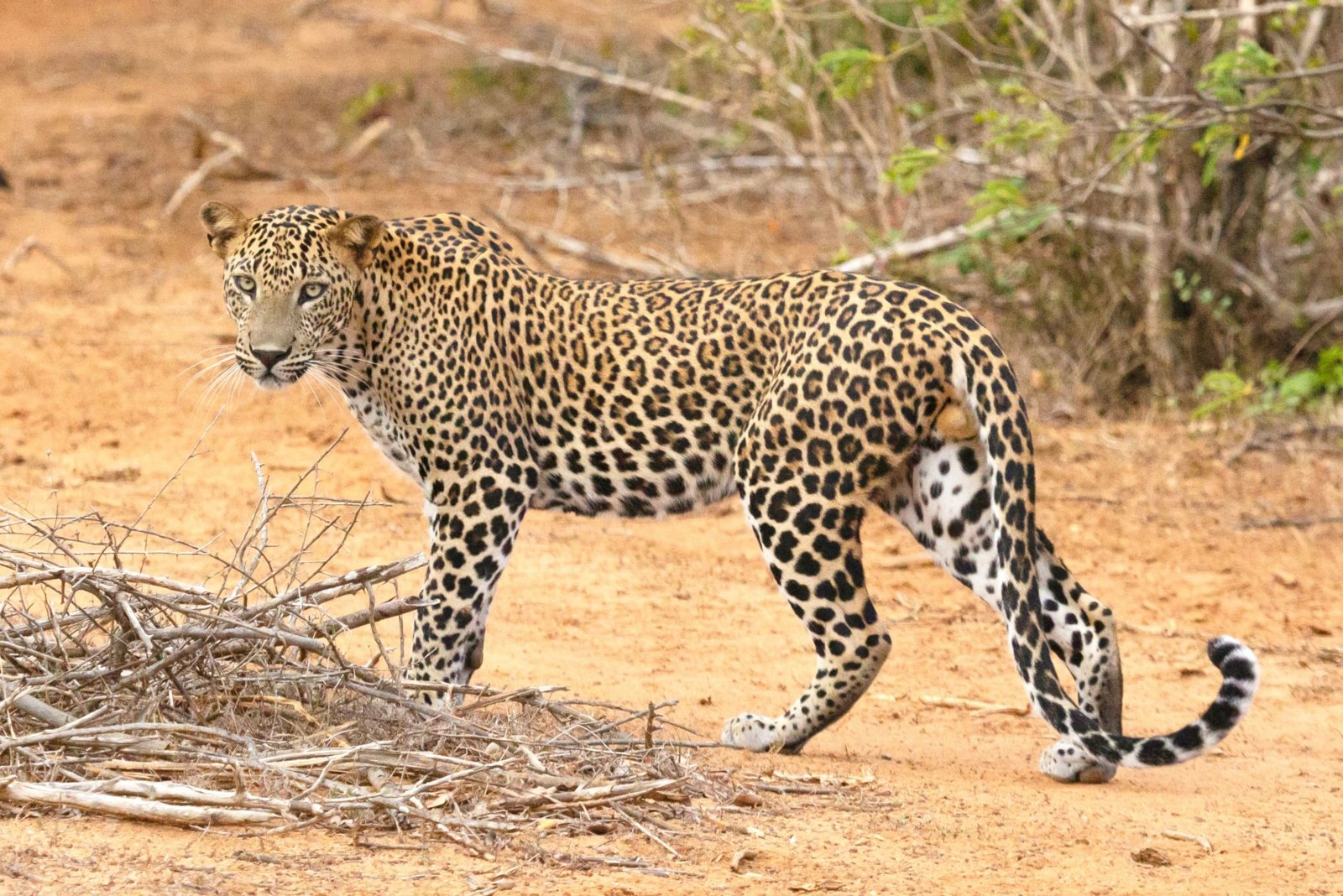
Yala's Block 1 — the section open to visitors — holds one of the highest densities of wild leopards anywhere in the world. These cats are less secretive here than in many other habitats, partly because prey is abundant and partly because they have adapted to the presence of safari vehicles over decades. A three-to-four-hour morning drive through Yala's mix of scrub forest, open grassland, and lagoon margin typically yields sightings of elephants, water buffalo, crocodiles, peacocks, and spotted deer. Leopard sightings are not guaranteed but are far more probable here than at most safari destinations. Entrance is through Palatupana gate; only licensed jeeps with trained guides may enter. Book both vehicle and guide in advance, particularly during December-to-March peak season.
Kataragama: Sacred Pilgrimage Site of the Southern Interior
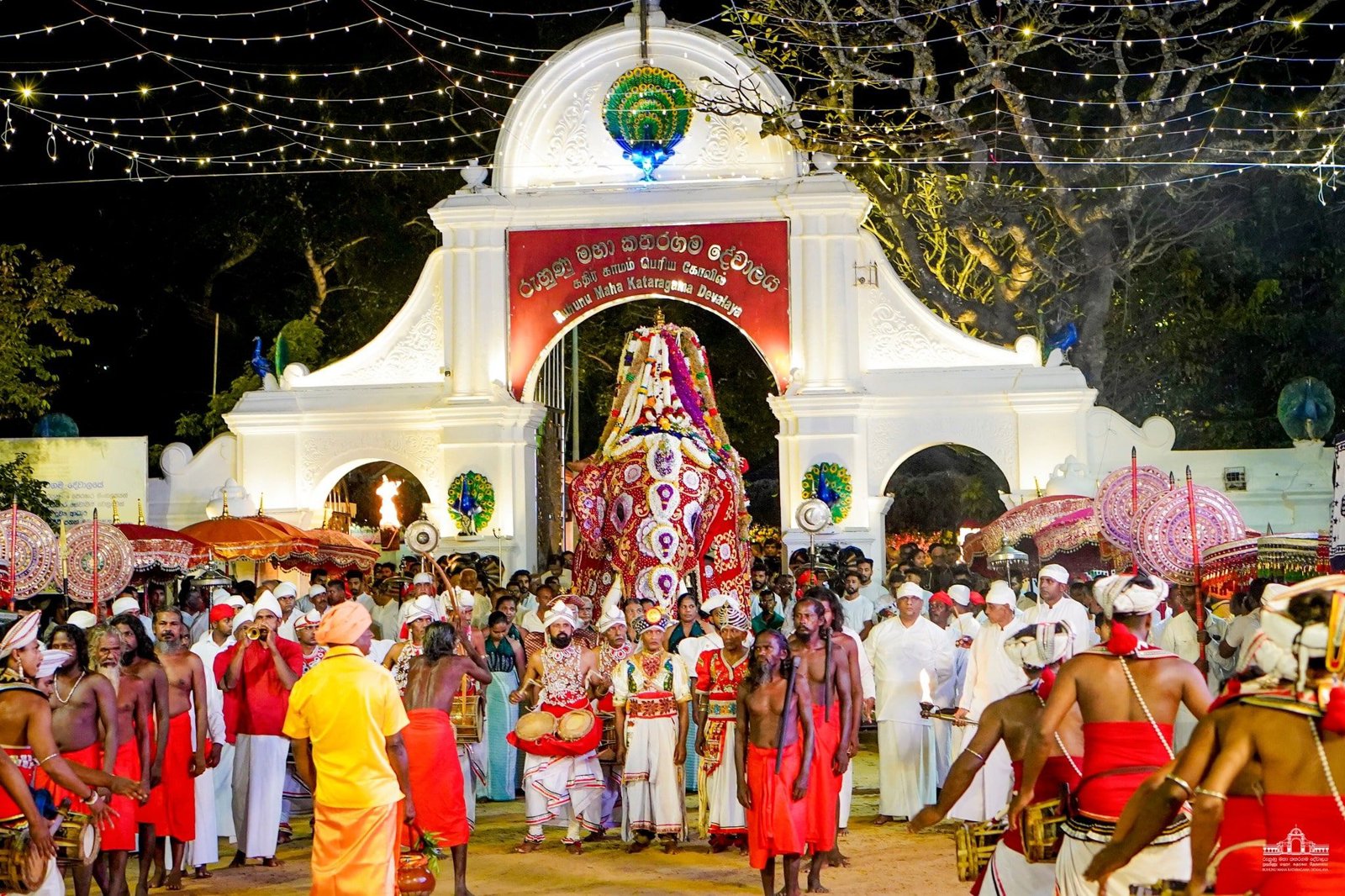
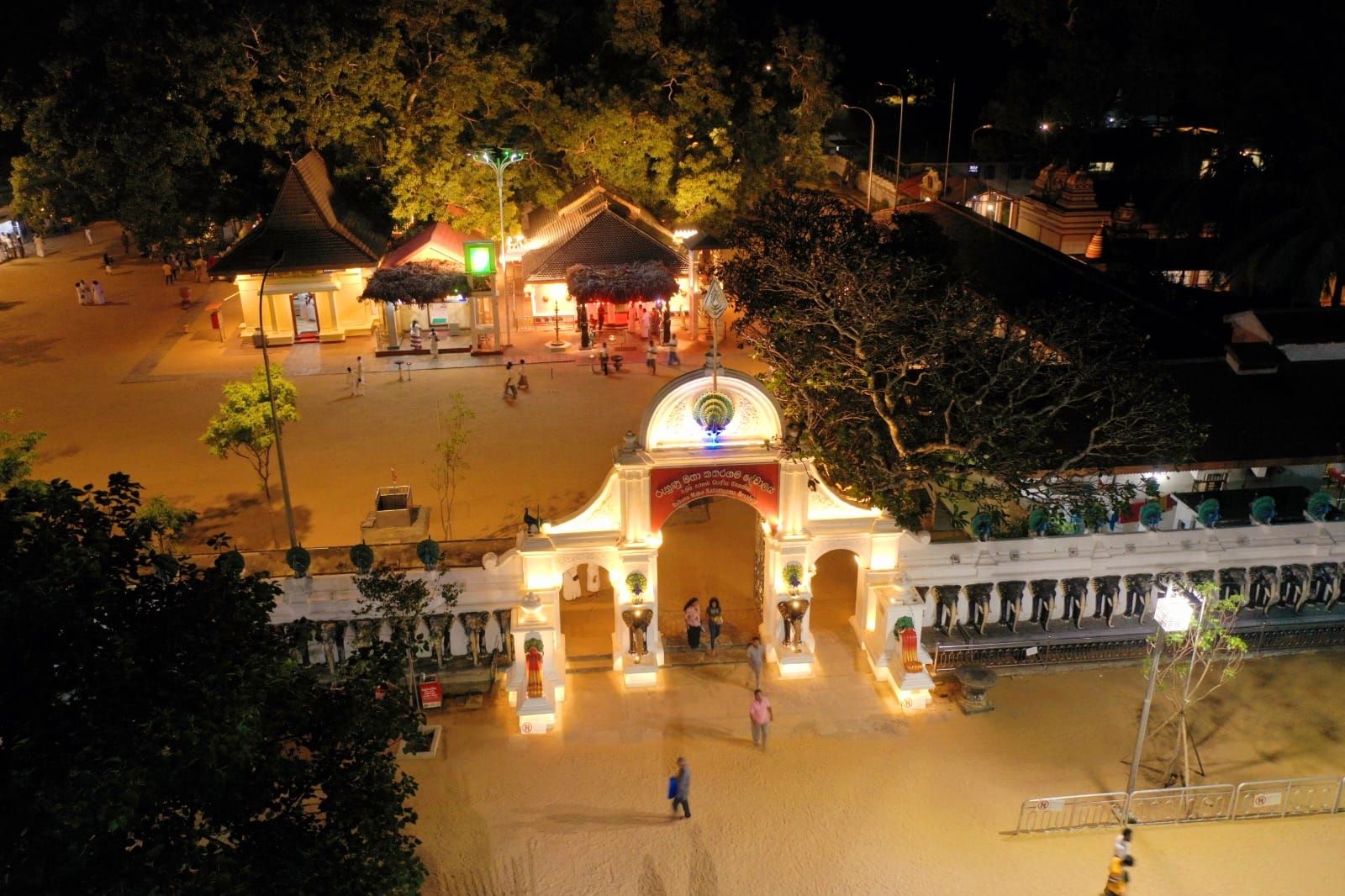
Sixty kilometres inland from Hambantota, Kataragama is one of Sri Lanka's most significant religious sites — venerated simultaneously by Buddhists, Hindus, and indigenous Vedda communities in a form of multi-faith coexistence that is genuinely unusual. The Kataragama Devalaya shrine complex is dedicated to the deity Skanda-Murugan and draws pilgrims year-round, some carrying elaborate kavadi shoulder frames during the July–August Esala festival. The complex sits beside the Menik Ganga river, where pilgrims bathe before worship. Non-Hindu visitors may enter the courtyard precinct and observe ritual offerings of flowers, incense, and oil lamps, though inner sanctuaries are for worshippers only. In the late afternoon, as hundreds of pilgrims move through the complex at dusk with lamps and offerings, the atmosphere is among the most moving religious encounters available from any Sri Lankan port day. The site pairs naturally with Yala, both lying along the same road east of Hambantota.
Bundala National Park: Wetland and Migratory Birds
Bundala is Sri Lanka's first Ramsar-listed wetland, a coastal lagoon system 30 kilometres east of Hambantota that shelters extraordinary concentrations of waterbirds, particularly from October to March when Palearctic migrants arrive from Central Asia and the Russian steppe. Greater flamingos feed in the shallows; painted storks and open-billed storks wade in the lagoon margins; lesser adjutants and black-necked storks stalk the reed edges. The park is also elephant habitat — small herds move through the scrub forest between the wetlands. Bundala sees far fewer visitors than Yala and offers a quieter, more contemplative safari experience. Morning drives in open jeeps are the standard format; the light on the lagoons in the first hour after sunrise is exceptional for photography.
Udawalawe National Park: Sri Lanka's Elephant Sanctuary
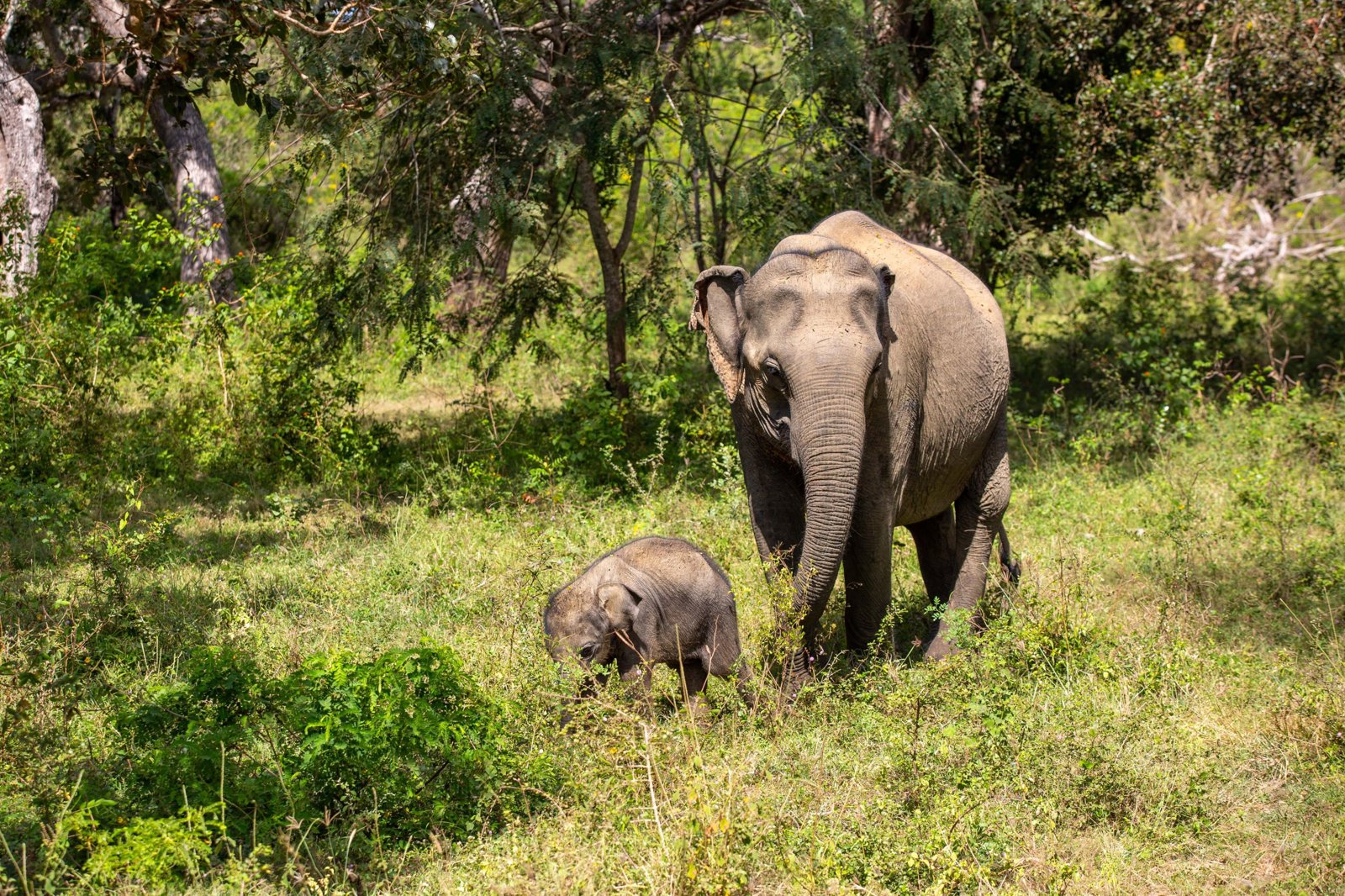
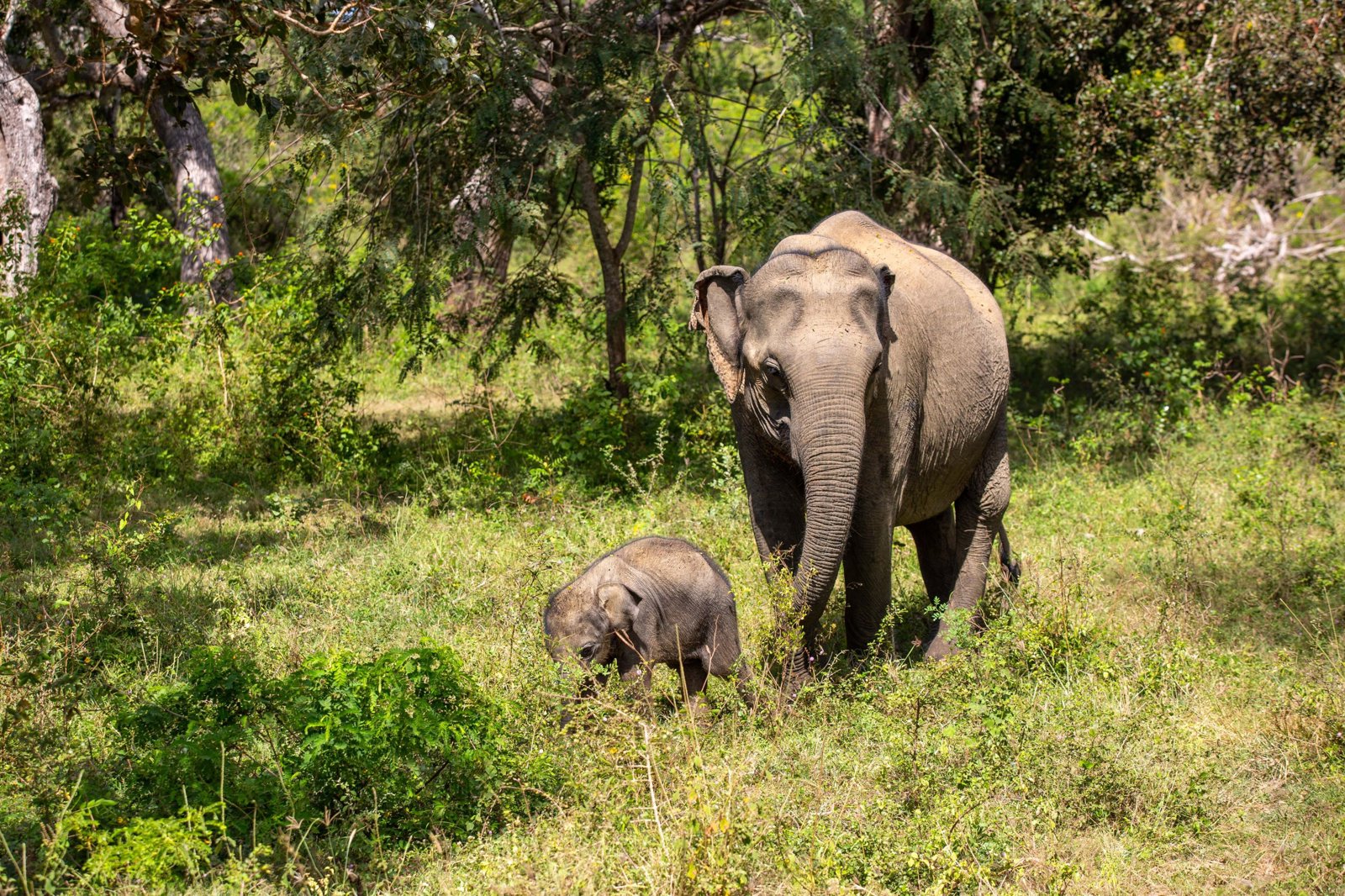
Where Yala is famous for leopards, Udawalawe — a national park around a large reservoir in the dry zone — is the island's pre-eminent destination for elephant sightings. Several hundred wild elephants congregate at the Udawalawe Reservoir year-round, and morning game drives routinely encounter herds of twenty to fifty animals at close range. Young calves are frequently visible; bull elephants in musth are given wide berth by experienced drivers. The open scrubland and grassland landscape means elephants are visible from a distance — less patience is required than in denser jungle habitats. The park also supports water buffalo, sambar deer, crocodile, and over two hundred bird species, including painted storks wading the reservoir margins. The Elephant Transit Home adjacent to the park rehabilitates orphaned calves before their return to the wild; a scheduled feeding session is open to visitors and provides close encounters very different from the wild-herd experience in the reserve.
Kirinda Temple and the Sacred Southern Shore
Perched on a rocky promontory above the Indian Ocean at the southernmost edge of Yala's coastal zone, Kirinda is one of Sri Lanka's most dramatically sited Buddhist temples. The white stupa and shrine buildings sit on wave-worn boulders above the surf — visible from distance as a landmark on an otherwise low coastline. The site is associated with Queen Viharamahadevi, who according to the chronicles was set adrift at sea as a religious offering and arrived safely here — an event interpreted as divine favour. Pilgrims visit throughout the year, and the platform above the surf, with its views along the coast toward Yala's reserve boundary, offers a perspective on Sri Lanka's southern shore that is unlike anything elsewhere on the coast. Kirinda is a natural stop on the route between Hambantota and Yala — it adds 30 minutes without requiring a detour — and at high tide, waves break against the boulders the stupa stands on, a sight that is genuinely difficult to forget.
Sri Lanka's Southern Wildlife Corridor: A Landscape of Reserves
Hambantota port sits at the centre of Sri Lanka's most concentrated wildlife zone — three national parks and a biosphere reserve within 90 kilometres of the dock. Yala's Block 1 lies 40 kilometres east; Bundala wetland reserve begins 10 kilometres from the port; Udawalawe's elephant herds roam the reservoir basin 75 kilometres north. The dry-zone ecology of southern Sri Lanka — thorny scrub, seasonal rivers, coastal lagoons — supports high densities of prey, which in turn sustain the leopard, elephant, sloth bear, and crocodile populations that draw wildlife visitors. The coastal road between Hambantota and Yala passes through open savannah where elephants are frequently spotted from the vehicle en route — the landscape itself is part of the wildlife experience. No other cruise port in Asia places passengers within reach of this range of safari environments within a single port day.
Hambantota travel tips
Understanding Sri Lanka's Safari Parks: What to Expect. Sri Lanka's southern safari parks — Yala, Bundala, and Udawalawe — operate differently from African reserves, and knowing each park's strengths shapes a more satisfying port day. Yala's Block 1 holds one of the world's highest densities of wild leopards; December through March is peak season, when animals concentrate around shrinking water sources. Bundala is a coastal wetland most rewarding from October to March, when Palearctic migrants from Central Asia arrive in extraordinary numbers. Udawalawe, further inland, offers the most reliable elephant sightings year-round, with herds of twenty to fifty animals at the reservoir. All parks require open-top vehicles; elevation above the scrub is essential for spotting animals. Morning departures before 6:30 am consistently outperform afternoon drives in both sighting frequency and photographic light quality — the golden hour after dawn in the dry-zone scrub is when the landscape and its wildlife are at their most spectacular.
Start With Yala, Not Galle, If You Are Choosing One. Wildlife sightings are most productive in the early morning hours when animals are active and light is favourable for photography. A 7–8 am departure from the port for Yala maximises your time in the park during the best conditions. Galle, by contrast, is a town — its streets and ramparts are equally rewarding at midday and in the afternoon, when the light on the Indian Ocean is still attractive and the heat is offset by sea breeze on the fort walls. If your ship's schedule allows, consider an early Yala safari followed by an afternoon in Galle for a full southern coast day.
Dress for Heat and Wildlife Terrain. The southern coast of Sri Lanka is consistently hot, with temperatures between 28–35°C for most of the cruise season. Safari environments in Yala are dusty; neutral or muted clothing colours (khaki, olive, tan) are preferred over bright hues that can disturb wildlife. Full-length lightweight trousers protect against scrub and insects. Sun hat, reef-safe sunscreen, and insect repellent are essential for park visits. In Galle, the fort is walkable in lighter clothing; the pavement radiates heat in the middle of the day, making early arrival preferable.
Carry LKR Cash for Park Fees and Small Purchases. National park entrance fees are payable in Sri Lankan Rupees at the gate. The fee structure for foreign visitors is higher than for Sri Lankan nationals — confirm current rates with your guide before arrival, as fees have changed periodically. There is no ATM at park entrances. Keep a reserve of LKR equivalent to at least USD 50 per person for fees, tips, and incidentals. In Galle's fort district, card payments are widely accepted at restaurants and shops, but street vendors and smaller establishments prefer cash.
Allow More Return Travel Time Than You Think Necessary. The coastal highway between Galle and Hambantota, and the road from Yala to the port, can experience significant traffic slowdowns — particularly on weekends, around school-dismissal hours in the late afternoon, and near market towns. A journey that took 90 minutes in the morning may take 2.5 hours returning in the afternoon. Build at least a 90-minute buffer between your planned departure from the last site and the ship's all-aboard time. Communicate this buffer clearly to your driver at the start of the day and confirm the ship's departure with the port agent.
Sri Lankan Food in Galle Is Worth Planning a Meal Around. Galle Fort has a small but genuinely impressive restaurant scene concentrated within the historic walls. Sri Lankan rice and curry — typically a selection of vegetable, fish, and lentil preparations with coconut sambol and papadum — is available at local eateries that cater to a mix of tourists and fort residents. The hoppers (bowl-shaped fermented rice-flour pancakes, served with egg or plain) at breakfast-leaning cafés are worth seeking if your timing allows. Avoid the most tourist-facing establishments near the main gate and walk deeper into the fort for better quality at lower prices. Book ahead at the better-known restaurants if visiting on a weekend.
Port Facts Every Cruiser Needs To Know
Hambantota shore excursion FAQs
Hambantota has a purpose-built deep-water cruise terminal that accommodates large vessels at the dock. No tender service is required — passengers disembark directly onto the pier. The terminal has basic facilities including an information desk, currency exchange, and a small taxi and tuk-tuk rank. It is not a particularly large or elaborate terminal, so most passengers move through quickly and head directly to pre-arranged transport. Confirm docking details with your cruise line, as berth assignments at newer ports can occasionally change.
Yala National Park's main visitor entrance at Palatupana Gate is approximately 40 kilometres east of Hambantota port, a journey of roughly 45–60 minutes by car or jeep depending on road conditions and traffic. The road passes through coastal scrubland and small towns; it is generally in reasonable condition. Most tours begin at the port and drive directly to the park, spending two to four hours inside on a safari circuit before returning. A morning departure between 6 and 8 am is strongly recommended to maximise both wildlife activity and available time.
No wildlife sighting can ever be guaranteed, but Yala's Block 1 has a remarkably high encounter probability by global safari standards. Estimates of leopard density in the accessible area range up to one individual per few square kilometres, and experienced local guides track individual cats by territory and recent sighting reports shared among drivers. December through March, when low water concentrates animals at waterholes and vegetation is less dense, offers the best conditions. Sightings are reported on the majority of morning drives during peak season. Even drives without a leopard sighting typically encounter elephants, sloth bears, saltwater crocodiles, and a wide range of birds.
Galle is approximately 100 kilometres west of Hambantota port, connected by the coastal A2 highway. The journey takes between 90 minutes and two hours by private car, depending on traffic — coastal road traffic can be slow through towns like Matara and Weligama, particularly on weekends. A private car or minivan with a driver is the practical option for cruise passengers; public bus services exist but do not run on schedules that work around ship departure times. Confirm your driver's return route and timing at the start of the day and allow generous buffer time for the return journey.
Technically possible, but genuinely rushed. Yala is 40 kilometres east of Hambantota; Galle is 100 kilometres west. Combining them requires a morning safari (3–4 hours) and then a two-hour-plus drive west to Galle for an afternoon visit, followed by a 90-minute return to the port — leaving minimal time in Galle and creating a very long travel day with limited margin for delays. Most experienced travellers to this port choose one priority: a full morning safari with time to explore Hambantota town in the afternoon, or a full day in the Galle direction (including the folk museum at Koggala and the stilt-fishing coast). Either approach is more satisfying than a rushed attempt at both.
Bundala National Park is a coastal wetland reserve 15–20 kilometres east of Hambantota, considerably closer to the port than Yala. It is designated a UNESCO Biosphere Reserve and a Ramsar Wetland of International Importance, primarily for its role as wintering habitat for migratory birds from Eurasia. Between October and March, Bundala shelters flamingos, painted storks, black-necked storks, and numerous wader species in concentrations that attract serious birdwatchers from across the world. Unlike Yala, Bundala is quiet — fewer vehicles, lower entrance fees, and a more contemplative atmosphere. It also harbours elephants and crocodiles. Passengers with a specific interest in birds or those who prefer a shorter drive and less-crowded environment often find Bundala more rewarding than Yala for their particular interests.
The southern coast of Sri Lanka is hot throughout the cruise season, with daytime temperatures typically between 28 and 35 degrees Celsius and humidity that is noticeable but less oppressive than the island's west or north. In safari vehicles, movement creates a breeze that makes the heat tolerable; stationary waits at sighting points can be warm. In Galle Fort, the sea ramparts catch reliable ocean breezes, making the rampart walk pleasantly cooler than the interior streets. The hottest part of the day is noon to 3 pm; planning intensive outdoor activity for the morning and early evening hours, with a shaded lunch break in the middle, is the practical approach. Carry water; dehydration in the heat is a real concern.
Sri Lankan cuisine has a strong vegetarian tradition rooted in Buddhist dietary practices, and the southern coastal region is no exception. Dal (lentil curry), several varieties of vegetable curry, coconut sambol, and string hoppers or rice as a base are reliably available at most local restaurants. Fish and seafood feature heavily in coastal cooking; shellfish is common. Galle Fort's restaurant scene is experienced at accommodating international dietary preferences including gluten-free, vegan, and allergy-aware requests — communicate specific requirements when booking or ordering. At national park entrance areas, food options are limited; carry snacks if you have specific dietary needs.
The Galle Fort district has a concentrated collection of reputable craft and artisan shops within a short walking radius. Ceylon tea purchased from established vendors (rather than pier-side kiosks) is a reliable quality purchase — look for estate-branded tins or vacuum-sealed packages. Traditional Sri Lankan masks, particularly those from the southern mask-carving tradition centred around Ambalangoda (roughly between Galle and Colombo), are available in Galle at fair prices. Handloom textiles and batik are widely available; quality varies significantly. Cinnamon — the fine, brittle 'true cinnamon' (Cinnamomum verum) that originated in Sri Lanka — is sold in various grades at spice shops throughout the Galle district and makes a compact, genuinely distinctive purchase.
Hambantota town itself is safe for independent exploration; Sri Lanka generally has a low rate of violent crime toward visitors. The port area is functional rather than scenic — a working harbour town with a market, salt flats, and a modest commercial centre accessible by a short tuk-tuk ride. Walking the immediate port perimeter is straightforward. Independent exploration beyond Hambantota town without a guide or driver is not recommended for a port day simply because of distance: the significant attractions (Yala, Bundala, Galle) are all too far to reach except by vehicle. For passengers who prefer not to book a guided excursion, a tuk-tuk to the town market and salt flats provides a manageable and genuinely local experience within a few kilometres of the pier.
Filters
Select a filter to refine results.
Tour Type
Tour Activity
 Cart
Cart
 USD
USD GBP
GBP AUD
AUD EUR
EUR CAD
CAD