



Tours in Kagoshima


Cruising to Kagoshima in a group?
Skip the crowded ship excursion bus. One dedicated planner will design a private shore experience around exactly what your group wants — coordinated from first enquiry to the moment you're back on board. More memorable, more flexible, and more affordable than you might expect. Spend less time organising, more time enjoying.
Explore Group Travel →Cruising to Kagoshima
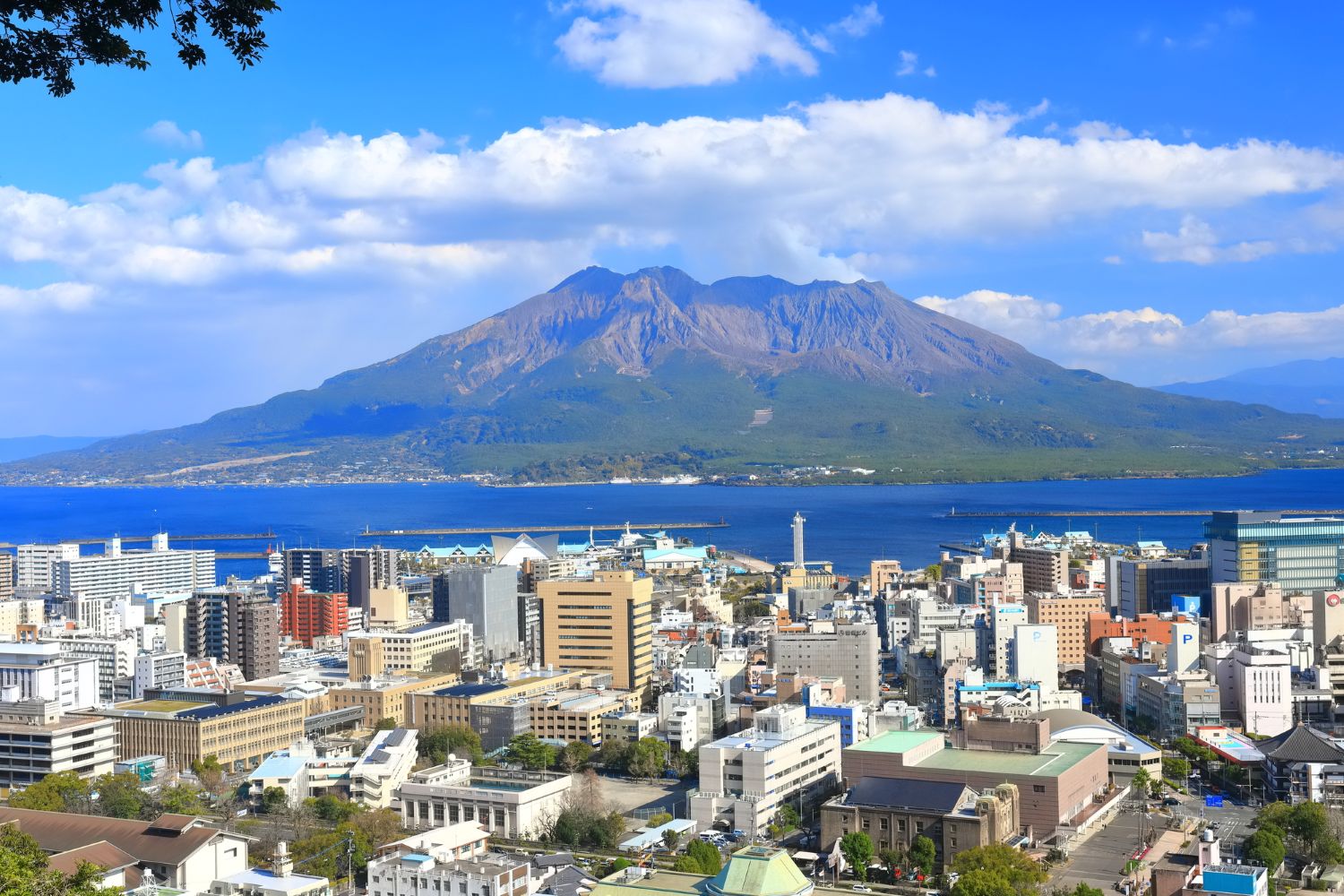
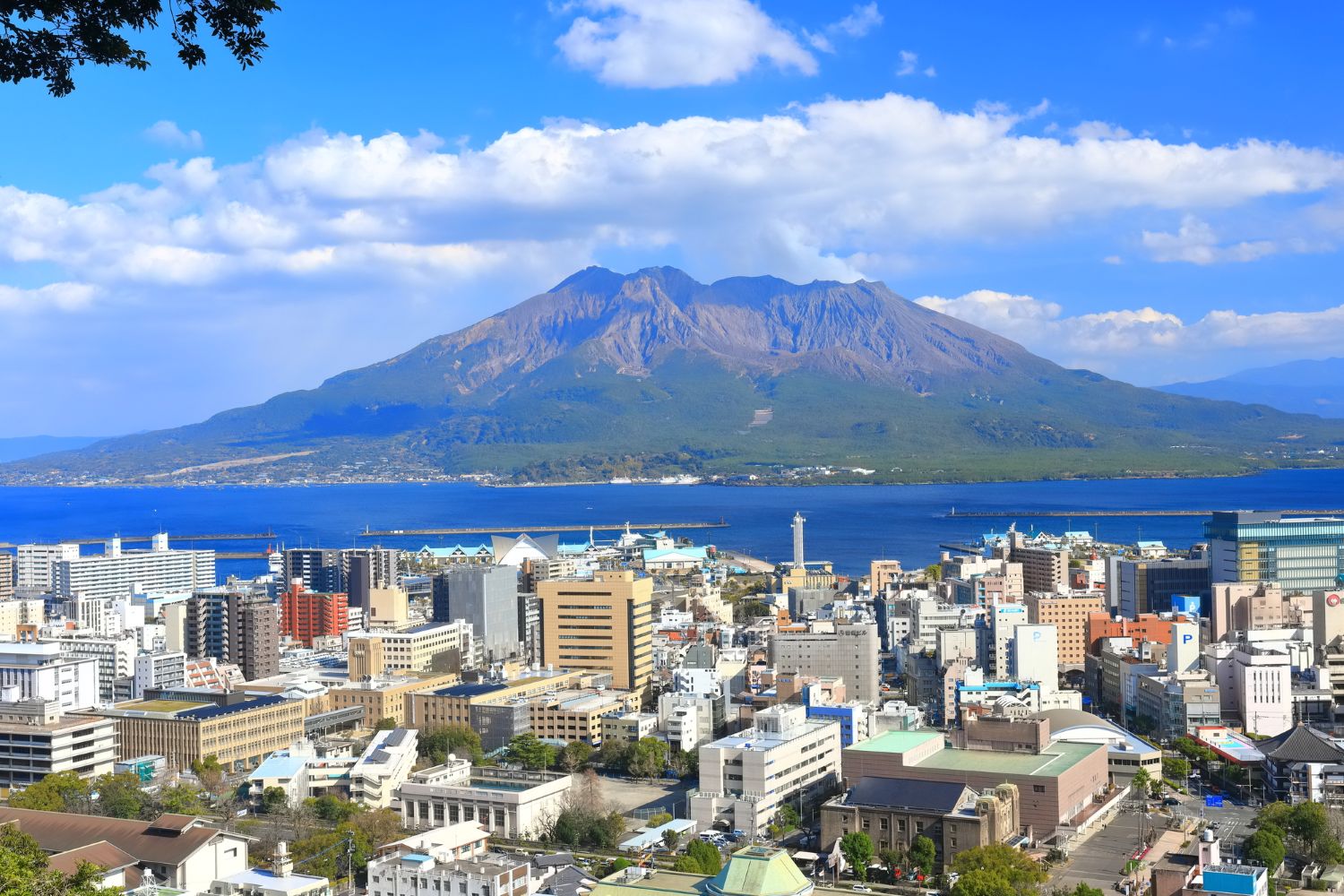
Kagoshima wears its drama on its sleeve. Sakurajima — one of the world's most persistently active volcanoes — rises directly across the bay, dusting the city with fine ash on an almost daily basis and lending every photograph a slightly otherworldly haze. Locals have made their peace with this geological neighbor over centuries, planting vegetables in the fertile volcanic soil and treating the occasional eruption as background noise. For a visitor arriving by sea, the sight is arresting: a perfectly conical peak mirrored in still water, smoke curling from its caldera while the city hums quietly beneath.
The city's character was shaped by the Shimazu clan, who ruled the Satsuma domain for seven centuries and maintained an unusual degree of independence from the Tokugawa shogunate in Edo. That stubborn autonomy bred a culture of ambition — it was Satsuma samurai who sent the first Japanese students to study in Britain and who played a decisive role in the Meiji Restoration of 1868. The Reimeikan Museum and the remains of Tsurumaru Castle fill in the historical detail, but the pride of that era is still legible in the way Kagoshima carries itself: confident, a little apart from the Japanese mainstream.
The city's culinary identity is equally singular. Kurobuta pork — from Berkshire pigs raised in the region — appears on menus across town, valued for its marbling and depth of flavour. Kagoshima is also Japan's leading producer of shochu, the sweet-potato distillate that is the drink of choice here far ahead of sake. A single evening exploring the izakayas around Tenmonkan shopping arcade introduces both properly: grilled pork belly with a tumbler of imo-jochu, served with the unhurried ease that defines southern Japanese hospitality.
For cruise visitors, Kagoshima rewards those who resist the urge to cover everything. The ferry to Sakurajima takes fifteen minutes and lands you in a landscape of black lava fields, steaming fumaroles, and extraordinary viewpoints over the bay. The onsen scene — from the elaborate resort baths of Ibusuki to the free foot-baths dotted around the city itself — offers a different kind of immersion. Between the volcano, the history, the food, and the thermal waters, a day here rarely feels long enough.
Top things to do in Kagoshima on a cruise stopover
Sakurajima: Walking a Living Volcano
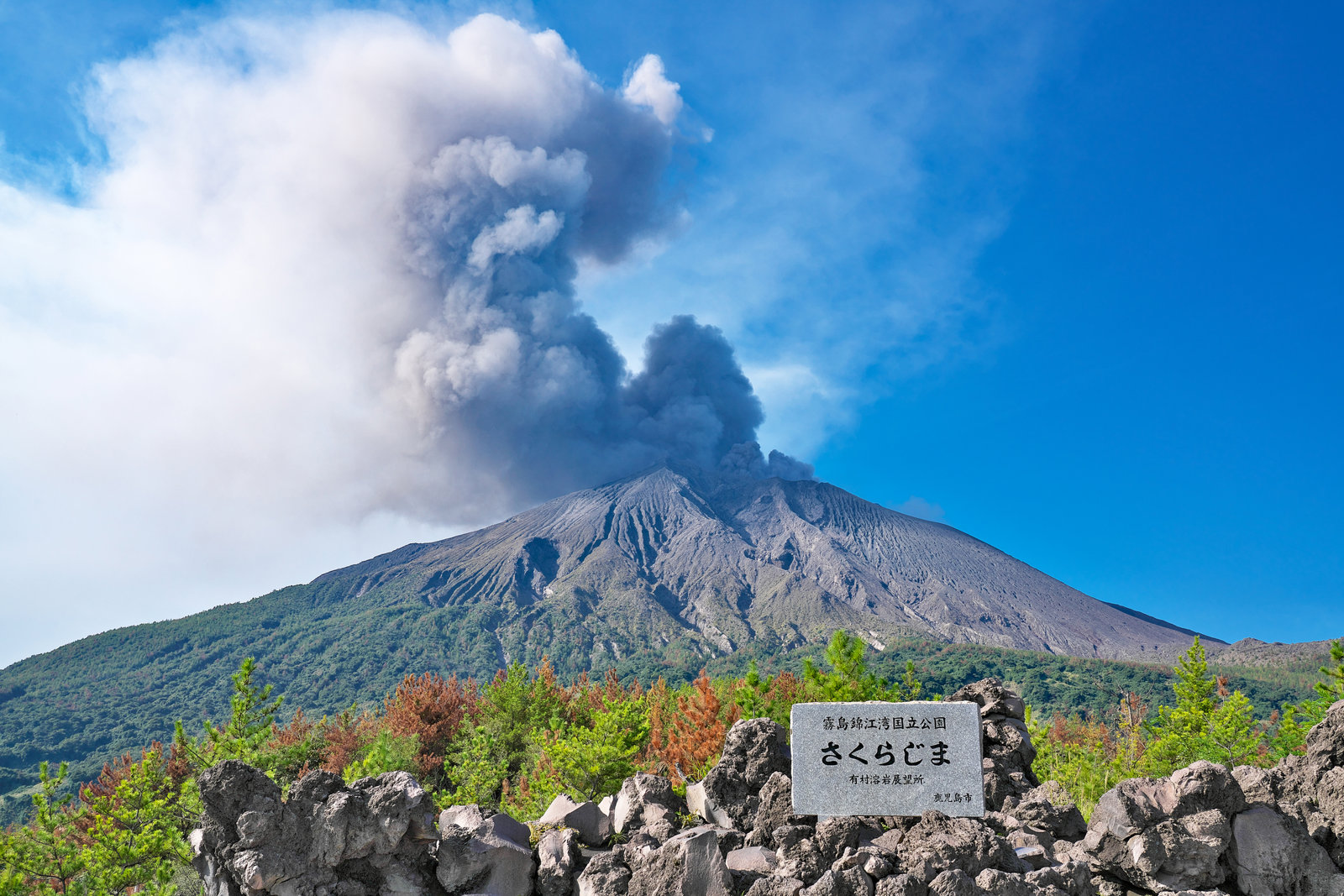
The ferry crossing to Sakurajima is itself a spectacle — fifteen minutes of open water with the volcano growing larger until it fills the sky. On the island, the Arimura Lava Viewpoint offers the best panorama of both the caldera and the bay below, accessible by a short walk across cooled black lava that crunches underfoot. The Yunosato foot-bath near the ferry terminal lets you soak in geothermally heated water while watching for plumes from the summit. Eruptions are frequent but typically distant from visitor areas; the island's evacuation shelters — concrete domes scattered along the roads — are a frank reminder that this is not a dormant landscape. The contrast between the lava fields and the green citrus groves growing in volcanic soil just metres away is one of the more quietly astonishing sights in southern Japan.
Sengan-en: A Garden Built for a Volcano View
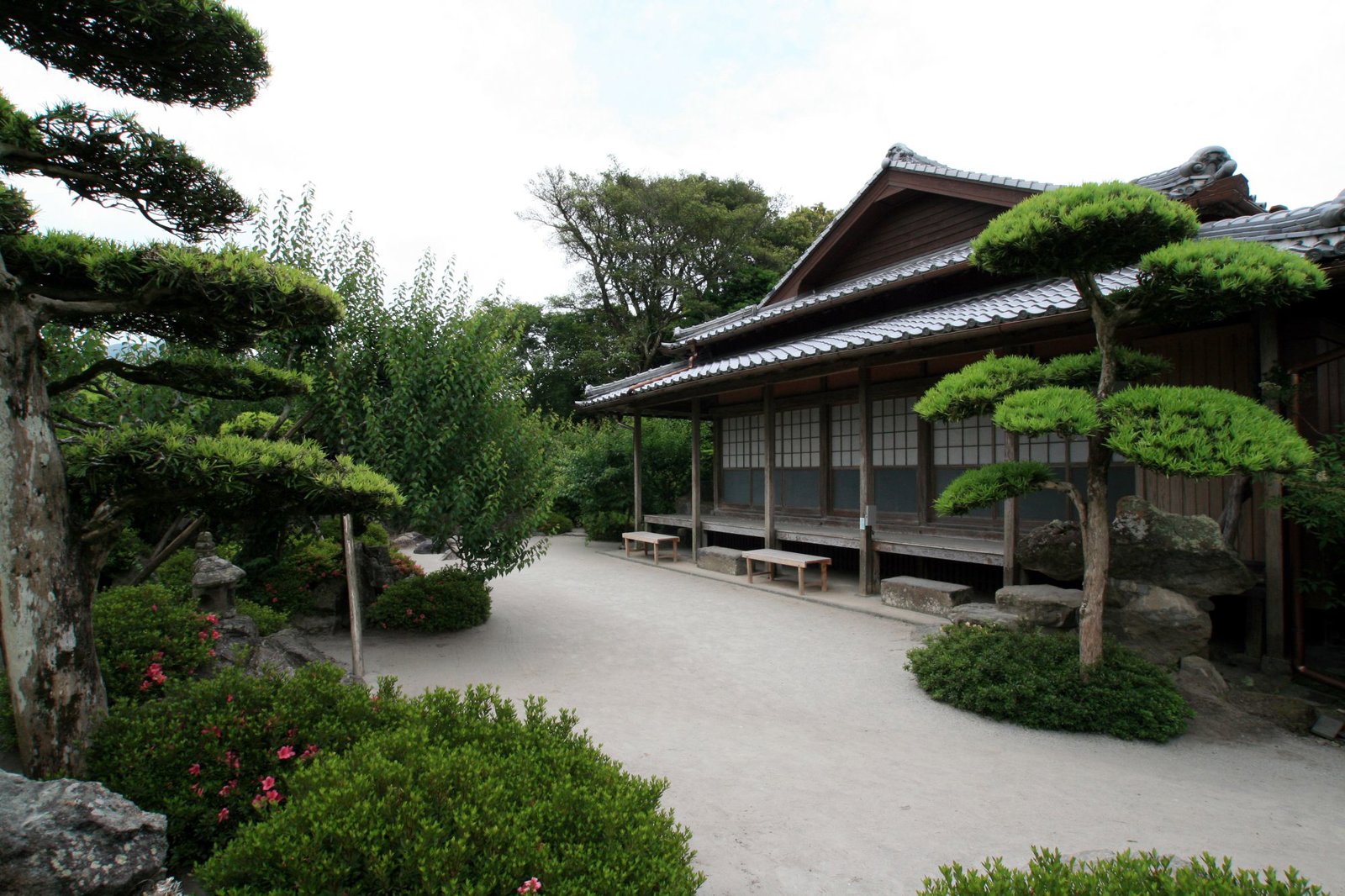
The Shimazu clan's 17th-century villa garden was positioned with deliberate theatrical intent: the design borrows Sakurajima as its 'borrowed scenery' (shakkei), making the volcano function as the garden's centrepiece backdrop. The grounds contain stone lanterns, koi ponds, traditional tea houses, and a bamboo grove, all arranged to frame views of the bay. Adjacent is the Shoko Shuseikan, a museum in what was once Japan's first modern factory — built by the Shimazu in 1851 using Western industrial techniques, now a Unesco World Heritage site. Allow at least 90 minutes. The on-site restaurant serves kurobuta pork dishes worth planning around.
Shochu Culture: Japan's Southern Spirit
While the rest of Japan reaches for sake, Kagoshima pours shochu — specifically imo-jochu, distilled from the sweet potatoes grown in the volcanic soil of Kagoshima and the surrounding islands. The spirit ranges from rough and earthy to remarkably smooth depending on the producer and ageing method. The Meiji-era distillery Satsuma Shuzo offers tours and tastings in nearby Makurazaki, though for those staying in the city, the liquor shops around Tenmonkan stock an overwhelming array of local labels. Many izakayas serve shochu mizuwari (diluted with water) or oyuwari (with hot water) — the latter a warming winter option that opens up the aroma considerably.
Kurobuta Pork: The Signature Table
Kagoshima's Berkshire pigs — known locally as kurobuta, or 'black pig' — have been raised here since the Edo period, when they were brought from Ryukyu (Okinawa). The breed is prized for fat that distributes evenly through the meat, producing a richness that ordinary pork doesn't approach. It appears across forms: shabu-shabu hot pot, tonkatsu (crumbed cutlet), grilled skewers, and slow-braised kakuni pork belly. The Kurobuta-no-Sato restaurant near the castle ruins is a reliable destination; the basement food halls of the Amu Plaza shopping complex near Kagoshima-Chuo Station offer a more affordable introduction through ready-prepared dishes.
Reimeikan and the Satsuma Story
Housed in the grounds of the old Tsurumaru Castle — whose moat and stone walls still stand — the Reimeikan prefectural museum tells the story of the Shimazu clan's domain with considerable depth. The Satsuma samurai who dominated this region for 700 years were among the most consequential figures of Japan's 19th-century transformation: they sent young men secretly to study in Britain in 1865 (when travel abroad was still illegal), fought the British at the Battle of Kagoshima in 1863, and then — within years — became enthusiastic adopters of Western technology. The museum handles these reversals with nuance. English captions are adequate; the scale models of castle town life are engaging without requiring any Japanese.
Kagoshima's Samurai Quarter: The Shimazu Domain Legacy
The Shimazu clan ruled Satsuma domain for seven unbroken centuries — an extraordinary continuity that shaped every aspect of Kagoshima's character. The samurai residential quarter, centred around the streets behind Tsurumaru Castle's remains, preserves the grid of stone walls, gateways, and traditional residences that once housed the warrior class. The Reimeikan Museum, set within the castle grounds, traces this history through armour, weapons, calligraphy, and Shimazu genealogy. The clan's legacy extends beyond swords: it was Satsuma samurai who secretly dispatched students to study in Britain in 1865, defying Tokugawa isolation policy and helping trigger the Meiji Restoration. The city's confident, slightly independent civic character — still legible today — is a direct inheritance of that tradition. Walking these streets places you inside a story of ambition and transformation that shaped the entire arc of modern Japan.
Kagoshima travel tips
Pick Up an Ash-Proof Bag at the Port. Sakurajima's ash is fine, slightly acidic, and gets into everything — cameras, bags, shoes. The tourist information offices near the Sakurajima ferry terminal and the Kagoshima Port distribute small plastic bags for covering camera equipment. Bring a light scarf or neck gaiter if you're sensitive to air quality; winds can shift, and a minor eruption during your visit may push ash toward the viewing areas. It washes out of clothing easily and is not harmful in normal exposure, but it will scratch camera lenses if you try to wipe it off dry.
The City Tram Is Your Best Friend. Kagoshima's streetcar network covers the primary sightseeing corridor efficiently, running from near the port to Kagoshima-Chuo Station and beyond toward Sengan-en. The ¥600 day pass (ichinin-mae ichi-nichi joshaken) is available from the tram driver and saves money compared to paying per ride. Trams run every 5–10 minutes during the day. The network map printed in English is available at the port information centre — pick one up on arrival rather than attempting to navigate by phone, as the system is simple once you have the map in hand.
Time the Ferry Crossing for Afternoon Light. The view of Sakurajima from the city is best in the morning, but the view back toward Kagoshima from the island — particularly from the Arimura viewpoint — is at its most photogenic in the early afternoon when the sun is behind you. If you can arrange your schedule to cross to the island around 11am and return by 1:30pm, you capture both the volcano from the city side in the morning and the city-bay panorama from the island before heading back for lunch. The ferry runs every 15 minutes, so there is no need to rush.
Foot-Baths Are Free and Everywhere. Kagoshima has installed free ashiyu (foot-bath) facilities at multiple locations around the city, including near the port area and in Tenmonkan. These public soaking spots use the same geothermal water as paid onsen facilities and offer a genuine, unhurried Kagoshima experience without the time or cost of a full bath visit. Bring a small towel from your cabin (or buy a ¥100 one at a convenience store) and dry socks — the experience is markedly better when you're not wrestling with damp footwear for the rest of the afternoon.
Eat Lunch Before 12:30. Popular lunch spots near Tenmonkan and around Kagoshima-Chuo Station queue quickly between 12:30 and 1:30pm. If you arrive at a kurobuta restaurant after 12:15, expect a wait of 20–30 minutes that can knock a meaningful dent in a short day ashore. Arriving at 11:45am gets you seated immediately at most places. Alternatively, the basement food halls of Amu Plaza (connected to Kagoshima-Chuo Station) offer high-quality ready-prepared dishes — including kurobuta options — with no waiting.
Buy Shochu at the Source, Not the Airport. Duty-free shops at Fukuoka Airport stock a limited, tourist-facing selection of Kagoshima shochu at inflated prices. The liquor shops in Tenmonkan and the basement of Yamakataya department store carry far broader ranges — including small-batch single-distillery bottles unavailable outside Kagoshima — at standard retail prices. Most bottles are under ¥2,000 and pack flat in luggage. Ask staff for imo-jochu (sweet potato) specifically; they may otherwise show you barley or rice variants, which are easier to find elsewhere in Japan.
Port Facts Every Cruiser Needs To Know
Kagoshima shore excursion FAQs
Sakurajima is one of the world's most closely monitored volcanoes, and the Japan Meteorological Agency maintains a continuous alert system with five levels. At the standard Level 2 (which applies most of the time), visitors are prohibited only from approaching the summit crater zone — tourist areas including the lava viewpoints, the ferry terminal, and the foot-bath facilities are all well outside restricted zones. Minor eruptions producing ash columns are common and generally pose no danger to visitors at the standard viewing areas. In the unlikely event of a more significant eruption during your visit, the island's concrete evacuation shelters are positioned at regular intervals and the ferry service would be managed by authorities. Locals regard the situation with calm pragmatism developed over generations; the emergency infrastructure is genuinely well-developed.
Kagoshima Port is approximately 1.5 km from the Tenmonkan shopping and restaurant district — walkable in 20–25 minutes along the waterfront, or a short tram ride. The Sakurajima Ferry Terminal is about 1 km from the main cruise berth (10–15 minutes on foot). The city tram stop closest to the port is Suizokukan-guchi, with service running toward Tenmonkan and Kagoshima-Chuo Station. No advance transport booking is necessary for independent travellers — trams, the Sakurajima ferry, and taxis are all available on arrival. If you want to visit Ibusuki for the sand baths, the train runs from Kagoshima-Chuo Station and no reservation is required, though the round trip takes around 90 minutes of travel time.
Kurobuta refers to pork from Berkshire-breed pigs raised in Kagoshima prefecture, a tradition dating to the Edo period. The breed produces meat with more intramuscular fat than standard commercial pork, resulting in a richer, more complex flavour and a softer texture. In Kagoshima it appears in numerous forms: tonkatsu (panko-crumbed cutlet), shabu-shabu (hot pot), grilled skewers (kushiyaki), and kakuni (soy-braised pork belly). Dedicated restaurants clustered around Tenmonkan and near Kagoshima-Chuo Station serve it as a centrepiece. Look for restaurants displaying '黒豚' (kurobuta) signage. For a quick, affordable introduction without committing to a sit-down meal, the basement food halls of Amu Plaza at Kagoshima-Chuo Station offer prepared kurobuta dishes from around ¥500–800.
Shochu is a distilled spirit (typically 25–37% ABV), while sake is a fermented rice wine (typically 15–16% ABV). The key distinction is production method: sake is brewed, shochu is distilled — placing it closer in character to spirits like vodka or grappa than to wine. Kagoshima produces imo-jochu, made from sweet potatoes grown in the prefecture's volcanic soil, which gives it a distinctive earthy, slightly sweet character quite unlike the cleaner grain-based shochu produced elsewhere in Japan. It is most commonly drunk diluted with water (mizuwari) or warm water (oyuwari), or on the rocks. The alcohol content is lower than most Western spirits and the flavour is less aggressive — it pairs naturally with grilled pork and fried dishes. You do not need to be a spirits enthusiast to enjoy it; most visitors find it approachable and interesting.
Yes, meaningfully so. The Sakurajima ferry (¥160 each way) is itself an experience and offers access to the lava trail viewpoints and the free foot-bath at Yunosato near the terminal. The foot-bath facilities around the city — at several Tenmonkan locations and near the port area — are free. The grounds around Tsurumaru Castle ruins adjacent to the Reimeikan Museum are freely accessible. Walking the waterfront promenade with views of Sakurajima costs nothing. The Reimeikan itself charges a modest entrance fee (around ¥300). Sengan-en garden charges ¥1,000 (garden only) or ¥1,500 including the Shoko Shuseikan museum. A day combining the ferry crossing, the lava viewpoint, a free foot-bath, and a walk through the castle grounds requires very little expenditure beyond lunch.
Yes, comfortably for the main tourist circuit. The Sakurajima ferry terminal, Sengan-en garden, and the Reimeikan museum all have adequate English signage and some English-speaking staff. The city tram system has announcements and displays in English and the route is simple enough to follow from a printed map. At restaurants, picture menus are common, and Google Translate's camera function handles Japanese menus reliably. The main challenge is ordering at traditional izakayas, where menus may be handwritten and staff may have limited English — pointing at a neighbouring table's dish, or using a translation app, is a completely acceptable approach. The tourist information centre near the port and at Kagoshima-Chuo Station has English-speaking staff who can answer specific questions.
Ash fall is a regular feature of life in Kagoshima — the city averages around 100 ash-fall days per year. In practice, most ash events are light, producing a fine grey dust on surfaces but causing no health risk in brief outdoor exposure. You may notice locals carrying small umbrellas on ash-fall days (the same umbrellas serve for rain). If you are sensitive to air quality or wear contact lenses, consider sunglasses and carrying a light mask or scarf for your face during your Sakurajima visit. Ash will settle on clothing and camera equipment — a dry brush makes things worse; rinse with water when you return to the ship. The city's residents have adapted entirely and the infrastructure (drainage systems, car washing stations) is designed around the reality. The tourism experience is not meaningfully disrupted by normal ash events.
The Satsuma domain was the feudal territory controlled by the Shimazu clan, covering what is now Kagoshima prefecture and parts of Miyazaki. The Shimazu ruled continuously for approximately 700 years — one of the longest-running dynastic controls in Japanese history — and maintained unusual autonomy from the Tokugawa shogunate that governed most of Japan from 1603 to 1868. Satsuma's geographic remoteness and powerful samurai class allowed it to pursue policies the central government opposed, including trading relationships with Ryukyu (Okinawa) and, secretly, with China. In the 1860s, Satsuma was among the domains that drove the Meiji Restoration — the political revolution that ended the shogunate and modernised Japan with remarkable speed. Satsuma samurai simultaneously fought British naval forces in 1863 and within years were sending students to study in Britain — a pragmatic reversal that exemplifies the era. The Reimeikan museum and Sengan-en together tell this story in depth.
For temples and shrines: no specific dress code applies to most outdoor sacred sites in Kagoshima, though modest clothing (shoulders and knees covered) is appreciated if entering an inner hall for worship. Remove shoes when entering any building where floor mats are present — look for the transition from outdoor to indoor flooring as a cue. For onsen and foot-baths: the public foot-baths around the city require only that you remove shoes and socks and rinse your feet briefly before immersing them. Full onsen baths require complete removal of clothing; tattoos may be prohibited at some facilities (Ibusuki's Yumedoi accepts tattooed guests in its private bath rooms, but not the main communal facility). For the Sakurajima ferry and tourist sites: no special dress is required. General Japanese etiquette applies: quiet in public transport, no eating while walking, and handling business cards (if exchanged) with two hands.
Kagoshima has a subtropical climate — warm and humid in summer (June–September, often exceeding 30°C), mild and pleasant in autumn and spring (15–25°C), and occasionally cold in winter (January average around 8°C), though snow is rare. Rainfall is significant year-round but heaviest in June–July (rainy season) and during typhoon season (August–October). For a day ashore, pack: comfortable walking shoes suitable for uneven lava surfaces if visiting Sakurajima; a light raincoat or packable umbrella year-round; a small towel if you plan to use foot-baths; sun protection in summer; and a light layer for air-conditioned interiors even in warm months (Japanese indoor cooling is often vigorous). A small day bag is useful; large backpacks attract unwanted attention in restaurants and narrow shop aisles.
Filters
Select a filter to refine results.
Tour Type
Tour Activity
 Cart
Cart
 USD
USD GBP
GBP AUD
AUD EUR
EUR CAD
CAD