



Tours in Kochi (Cochin)


Cruising to Kochi (Cochin) in a group?
Skip the crowded ship excursion bus. One dedicated planner will design a private shore experience around exactly what your group wants — coordinated from first enquiry to the moment you're back on board. More memorable, more flexible, and more affordable than you might expect. Spend less time organising, more time enjoying.
Explore Group Travel →Cruising to Kochi (Cochin)
Kochi sits at the point where Kerala's backwaters open into the Arabian Sea, and the city has always known it occupies a pivotal position. Long before cruise ships anchored off the Malabar Coast, Arab dhows, Chinese junks, and Portuguese caravels converged here for pepper, cardamom, and cinnamon. That mercantile past is written into the city's very geography: Fort Kochi, the narrow peninsula facing the harbour, is a living archive of colonial-era bungalows, Dutch-tiled churches, and whitewashed warehouses now repurposed as galleries and boutique hotels.
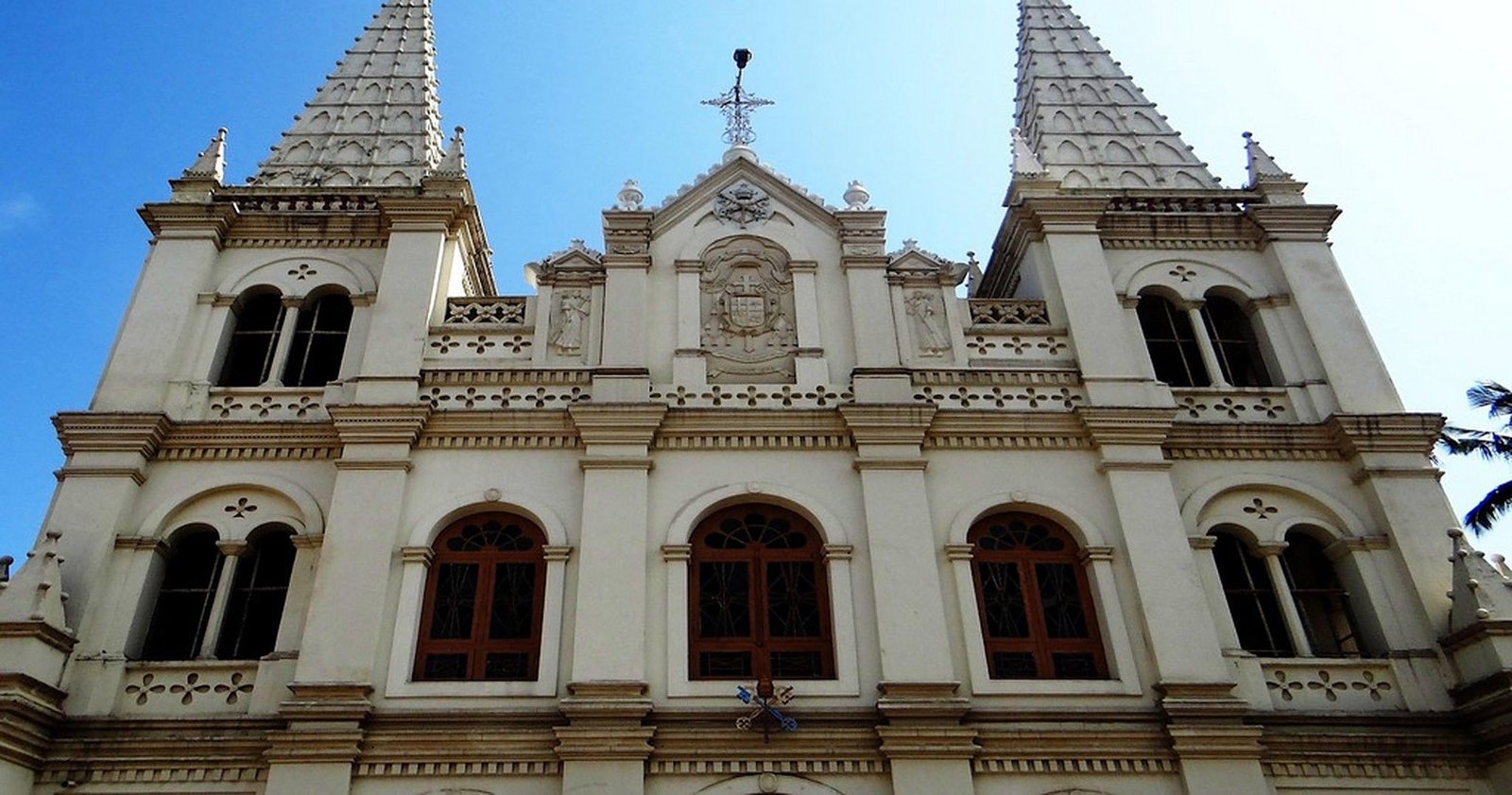
The most photographed sight in Kerala is arguably the row of Chinese fishing nets (cheena vala) that line the harbour at Fort Kochi. Introduced, according to local lore, by traders from the court of Kublai Khan in the 14th century, these massive cantilevered structures are still operated by fishermen each morning and evening, the nets dipping into the water with slow, balletic precision. Nearby, the Portuguese-built Santa Cruz Basilica glows in pastel yellow, while the Dutch-period Mattancherry Palace — more commonly called the Dutch Palace — preserves a remarkable suite of Kerala murals depicting scenes from the Ramayana.
Just a short walk from the palace, Jew Town's narrow lane leads to the Paradesi Synagogue, built in 1568 and still in use, its floor paved with hand-painted Chinese tiles, each one unique. The surrounding street is lined with antique dealers and spice merchants, the air thick with cloves and turmeric. This quarter encapsulates Kochi's defining quality: the willingness of different cultures to coexist in close quarters, trading not just goods but ideas and aesthetics.
Modern Ernakulam, the mainland city visible across the harbour, offers a contrasting energy — shopping streets, the main railway terminus, and the contemporary face of a fast-growing Indian metropolis. For cruise passengers, however, the real reward lies in spending most of the day on the Fort Kochi peninsula and in Mattancherry, where the pace is slower, the streets are walkable, and an evening Kathakali performance provides a fitting conclusion before the ferry ride back to the ship.
Top things to do in Kochi (Cochin) on a cruise stopover
Chinese Fishing Nets at Sunrise
The cantilevered fishing nets that line Fort Kochi's harbour front are one of those rare sights that actually exceed expectation. Arriving early — ideally by 7am — you can watch the crews work the counterweighted poles, lowering the wide nets into the water and hauling up catches of silver fish in a rhythm unchanged for centuries. The light at this hour is extraordinary, painting the wood and rope contraptions amber against the harbour. Fishmongers set up on the adjacent quay and will cook your purchase on the spot. This is not a reconstructed attraction but a working livelihood; observe respectfully and leave the nets and their operators space to do their job.
Mattancherry Palace and Kerala Murals
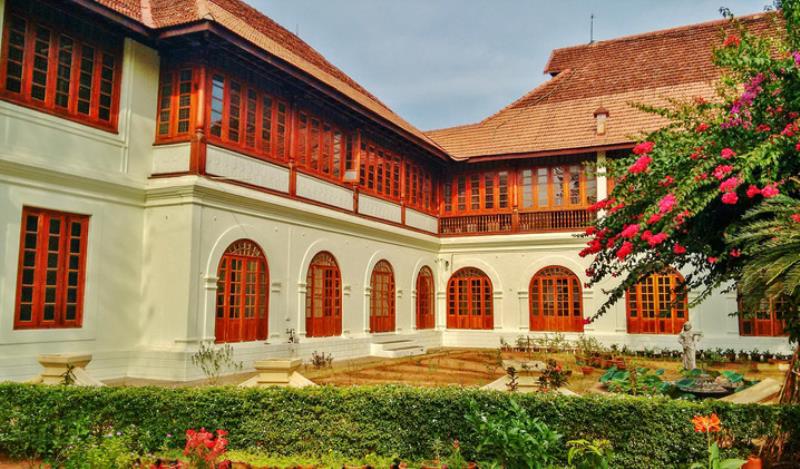
Despite its common name, the Dutch Palace was originally built by the Portuguese in 1555 and presented to the Cochin Raja as a diplomatic gesture. The Dutch later renovated it in 1663, lending it the name that stuck. What makes the palace remarkable is inside: a series of Kerala mural paintings considered among the finest examples of the style, depicting episodes from the Ramayana and Mahabharata in vivid, flat planes of red, yellow, and black pigment. The central hall — the coronation hall — retains an intimate scale that lets you stand close to the paintings without crowds pressing in. Photography is not permitted inside, which keeps the experience focused and unhurried. Entry is a nominal fee; allow 45–60 minutes.
Paradesi Synagogue and Jew Town
At the far end of Mattancherry's main lane, the Paradesi Synagogue was built in 1568 by Sephardic Jews who had fled the Inquisition in Iberia. The interior is a quietly extraordinary space: a ceiling hung with Belgian glass chandeliers and Chinese lanterns, and a floor tiled in hand-painted Chinese blue-and-white porcelain, each tile slightly different from its neighbour. The congregation today is vanishingly small, but the synagogue remains an active place of worship; dress modestly (shoulders and knees covered) and remove footwear at the entrance. The surrounding street, known as Jew Town, is lined with antique dealers, bronze merchants, and spice warehouses — the scent of cardamom intensifies as you approach the older godowns.
Kerala's Backwaters: A Parallel World of Canals and Village Life
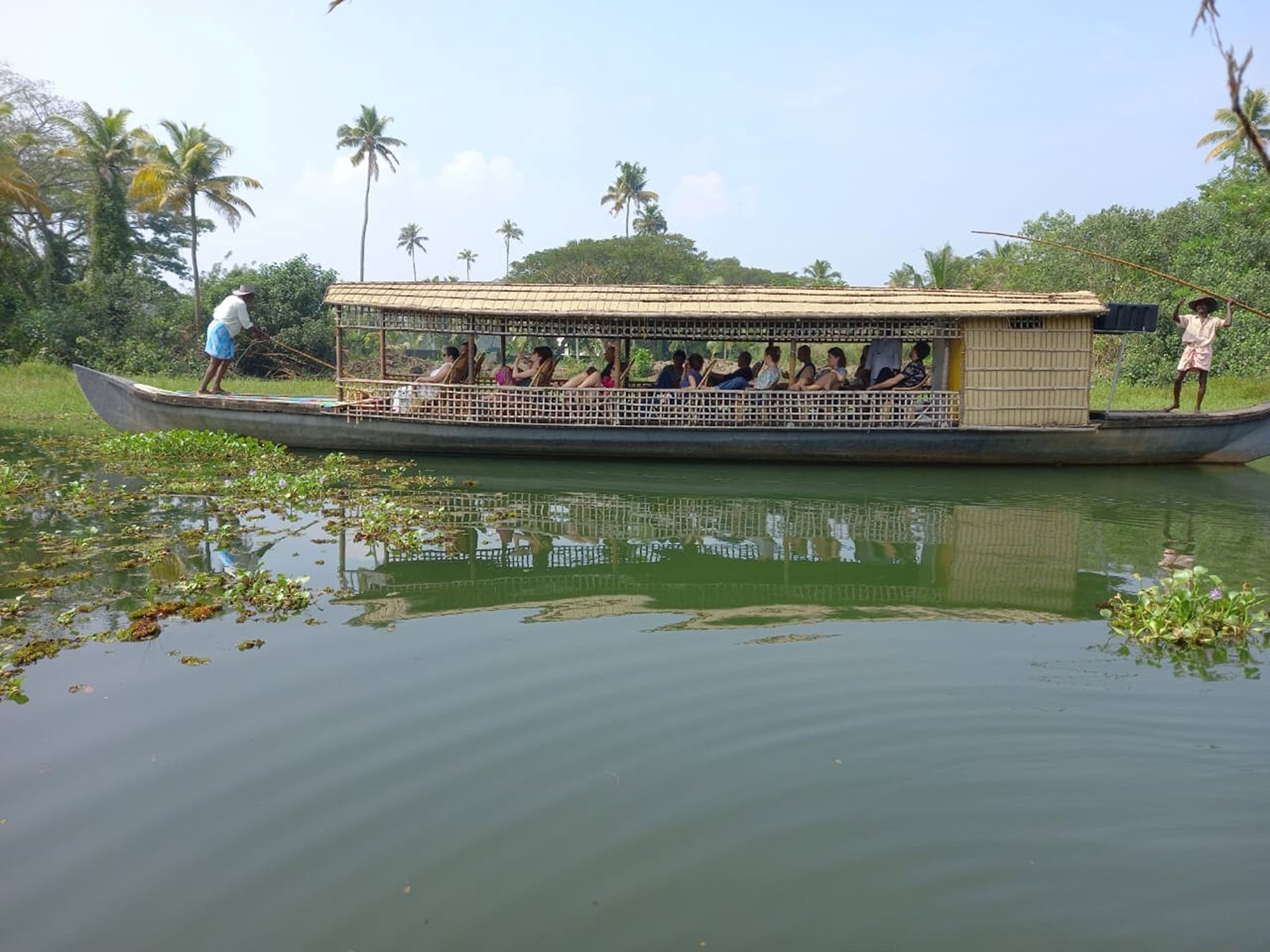
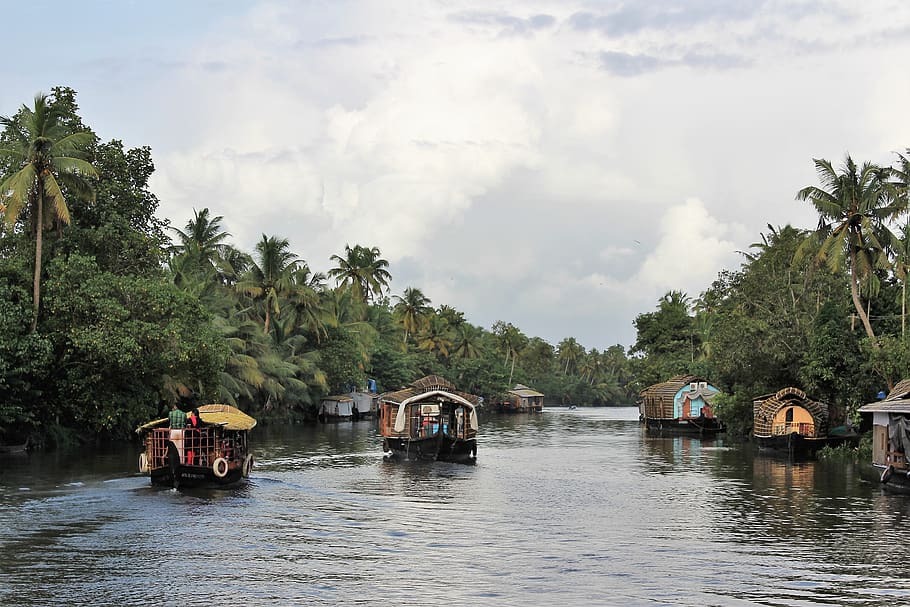
The Kerala backwaters — an interconnected network of lagoons, lakes, rivers, and canals running parallel to the Arabian Sea coast — constitute one of India's most distinctive landscapes. Travelling by boat through this system reveals a way of life organised entirely around water: children paddle to school in canoes, fishermen work standing in narrow craft, and village markets are accessible only by waterway. The vegetation is intensely lush — coconut palms lean over the channels, water hyacinth mats drift at the edges, and paddy fields extend from the banks in vivid green rectangles. The humidity is high and the pace is genuinely slow. The stretch between Kochi and Alleppey is the most accessible section of the backwater system, combining the wider open lagoons with narrower village canals that carry the most authentic daily life of Kerala's waterborne communities.
Alleppey: Houseboats and the Venice of the East
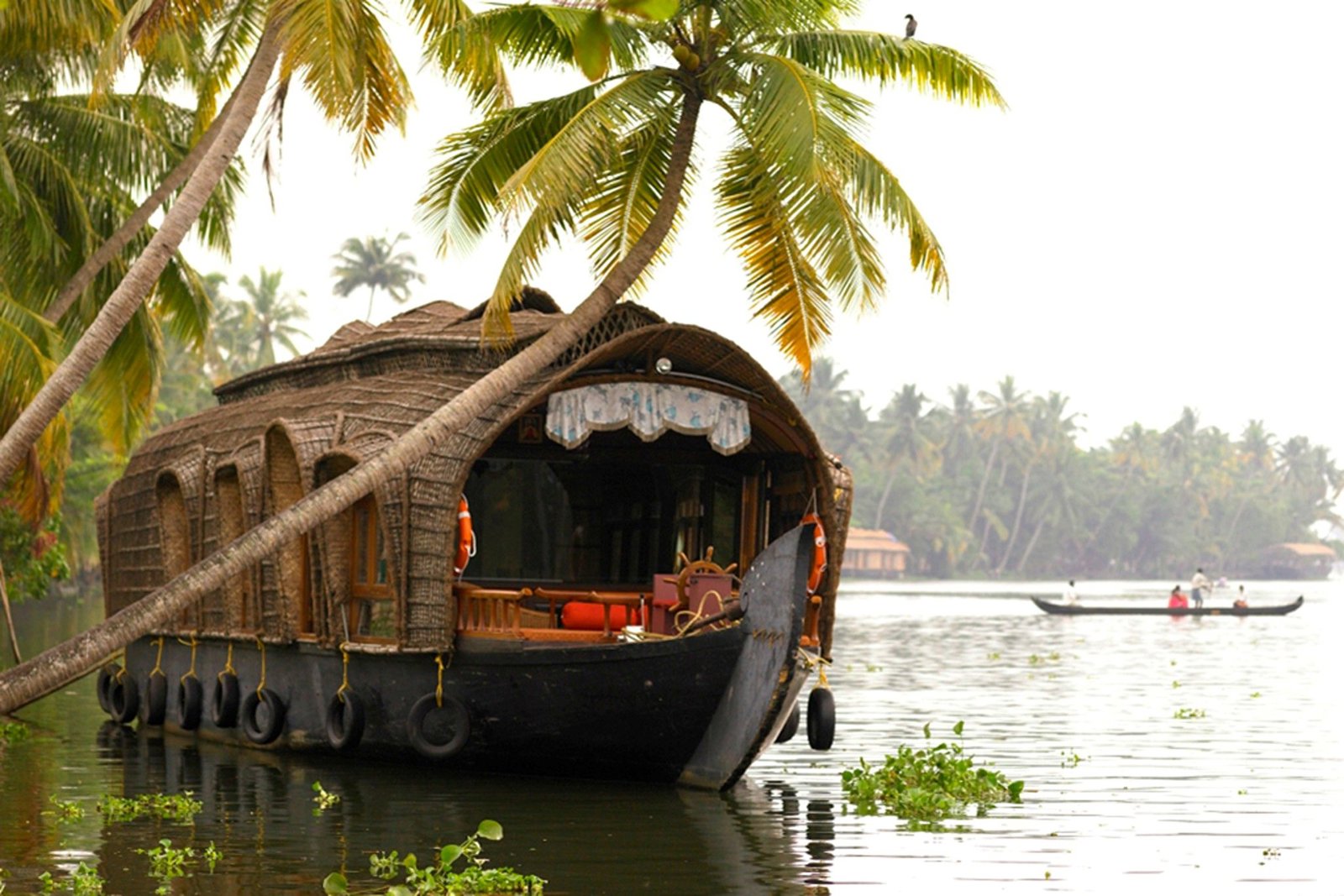
Alleppey (Alappuzha), roughly 60 kilometres south of Kochi, is the gateway to Kerala's most evocative backwater scenery and home to the region's famous kettuvallam houseboats. These converted traditional rice barges — built from anjili wood stitched with coconut fibre and caulked with cashew resin, without a single nail — were once the freight carriers of the backwater economy and now provide an unhurried way to experience the waterways. Even a shorter cruise along the major canals passes through a landscape of remarkable stillness: paddy fields, toddy-tapper palms, village bathing ghats, and the occasional kingfisher perched on a punt pole. Meals on board are prepared fresh using local ingredients — Kerala fish curry, appam, and coconut-based vegetable dishes served as the banks drift slowly past. The transition between the busy harbour town of Alleppey and the silence of the backwater channels takes less than ten minutes by boat.
Kumbalangi and Vaikom: Kerala's Living Village Culture
Beyond Fort Kochi's well-documented heritage lies a Kerala of rice paddies, backwater fishing communities, and temple-town life. Kumbalangi, designated India's first model tourism village, is a backwater island where integrated traditional life — crab farming, coir weaving, duck farming, and Chinese net fishing — continues around a network of canals and coconut groves. A visit reveals the working reality behind the picturesque images. Vaikom, north of Kochi, is home to the Vaikom Mahadeva Temple — one of Kerala's most venerated Shiva shrines — and carries historical significance as the site of the Vaikom Satyagraha of 1924, a landmark civil rights movement that preceded Gandhi's broader campaigns. Both destinations offer an encounter with Kerala as it functions away from tourist infrastructure: generous, self-contained, and quietly proud of its own traditions.
Kochi (Cochin) travel tips
Take the Passenger Ferry, Not a Taxi. The public passenger ferry from Willingdon Island (or Ernakulam) to Fort Kochi is cheap (₹5–₹10), takes 15 minutes, and delivers you directly to the fishing nets jetty with no traffic delays. It also offers the best view of the harbour and Chinese fishing nets from the water. Many visitors instinctively book taxis from the terminal; the ferry is almost always faster and more atmospheric. The main ferry jetty at Willingdon Island is a short walk from the cruise terminal; check the posted timetable on arrival and note the last departure time for your return.
Kerala's Ancient Spice Trade and Its Global Legacy. Fort Kochi's colonial layering — Portuguese churches, a Dutch palace, a 16th-century synagogue, British bungalows — exists because of spice. Black pepper, cardamom, cinnamon, and ginger from Kerala's Western Ghats made this coast one of the most coveted trading destinations in the pre-industrial world. Arab traders arrived first; the Portuguese Vasco da Gama reached Calicut in 1498 specifically to break the Arab monopoly; the Dutch displaced the Portuguese in 1663; and the British eventually absorbed the whole. Walking the Mattancherry lanes today, you pass wholesale spice warehouses still operating much as they have for centuries — the scent of cardamom and cloves drifting from open sacks is as much a part of the neighbourhood as its architecture. Kerala's spice legacy is not a museum piece; it remains the engine of the region's agricultural economy.
Dress Modestly for Religious Sites. The Paradesi Synagogue, Mattancherry Palace, and Fort Kochi's churches all require respectful dress: shoulders covered, knees covered, and shoes removed at certain thresholds. Carrying a light scarf or sarong solves the problem regardless of what you wear for the rest of the day. Note also that the Paradesi Synagogue is closed on Fridays, Saturdays (Shabbat), and Jewish holidays — check the date before planning your visit around it.
Eat Kerala Food, Not the Tourist Menu. Fort Kochi has many cafés catering to foreign visitors with generic menus. Walk slightly off the main tourist lane to find the real Kerala kitchen: appam (lacy fermented rice pancakes) with stew, fish curry on banana leaf, and Kerala prawn moilee. The tiffin counters near the ferry jetty serve breakfast-style food — idli, puttu, kadala curry — that is fresh, cheap, and genuinely local. For a proper sit-down meal, look for restaurants advertising a Kerala sadhya (a multi-dish vegetarian meal served on banana leaf) — an experience in itself.
Photography at the Chinese Fishing Nets: Timing and Technique. The cantilevered Chinese fishing nets are among the most photographed subjects in southern India, and the difference between a striking image and a flat one comes down almost entirely to timing. Sunrise (around 6:30am) and the hour before sunset produce warm directional light that gives the nets depth and silhouettes the counterweight poles against the sky. Midday light is harsh and flat. The fisherfolk lower the nets into the water roughly every fifteen minutes and haul them up for thirty seconds — position yourself to catch the moment the net rises with the catch. Wide-angle shots capture the full sweep of nets along the waterfront; a longer lens isolates individual net frames against the estuary. Respectfully ask permission before photographing the workers at close range — a small gratuity is appreciated and invariably welcomed with genuine warmth.
Allow Extra Time Returning to the Ship. Ferry services run reliably but can have short queues during peak afternoon hours. Road traffic between Fort Kochi and the cruise terminal via the bridge can slow significantly in the late afternoon. Build in at least 90 minutes between leaving Fort Kochi and your ship's all-aboard time. If your ship departs before sunset, plan your Kathakali or last activities to finish by 4pm at the latest. The terminal itself has a security process; do not assume you can dash from the ferry to the gangway in ten minutes.
Port Facts Every Cruiser Needs To Know
Kochi (Cochin) shore excursion FAQs
Most cruise ships dock at the International Cruise Terminal at Willingdon Island, managed by Cochin Port Trust. A few vessels use the older Ernakulam Wharf on the mainland. From Willingdon Island, the simplest route to Fort Kochi is the public passenger ferry: a short walk from the terminal to the Willingdon Island ferry jetty, then a 15-minute crossing to Fort Kochi (Customs Jetty). Ferries run roughly every 20–30 minutes. The road route via taxi crosses the bridges and takes 30–45 minutes depending on traffic. From Ernakulam Wharf, ferries to Fort Kochi depart from the High Court Jetty or Ernakulam Main Jetty, both a short walk or taxi ride from the pier.
Yes, Kochi is one of the more straightforward Indian ports for independent exploration. Fort Kochi and Mattancherry form a compact, walkable area where the main sights are within 1–2 kilometres of the ferry landing. Street signs are in English, most businesses dealing with visitors speak English, and the neighbourhood is generally safe for solo travellers. The ferry system is simple and inexpensive. For the mainland (Ernakulam), app-based taxis via Ola or Uber are reliable alternatives to negotiating with metered auto-rickshaws. A basic self-guided itinerary — Chinese fishing nets, St Francis Church, Mattancherry Palace, Jew Town, spice market — is achievable in 4–5 hours without a guide.
Start early to catch the Chinese fishing nets in use (they are most active in the morning). Take the ferry to Fort Kochi, walk the harbour front to the nets, then continue to St Francis Church (10 minutes) and along Burgher Street to absorb the colonial architecture. From Fort Kochi, take an auto-rickshaw to Mattancherry Palace (10 minutes, ₹50–80), spend 45–60 minutes with the murals, then walk to Jew Town and the Paradesi Synagogue. Browse the spice market lane, have lunch at a local restaurant near Mattancherry, and return by rickshaw to Fort Kochi by 3pm. Attend an afternoon Kathakali performance (book in advance) from 4–6pm, then take the ferry back. This fills 7–8 hours comfortably without rushing.
The Chinese fishing nets (cheena vala) are still functional fishing equipment, though the economics have shifted: the catches have declined over decades due to harbour traffic and overfishing, and some of the net stations now supplement their income with tourism — visitors can pay a small amount to help operate the counterweights and receive a share of the catch. The nets are most active in the early morning (6–8am) and again in the late afternoon (4–6pm). The tradition is maintained by families who have worked these nets for generations, and the structures themselves require significant ongoing maintenance. The full operation — lowering and raising the net — takes about 15 minutes per cycle.
Kathakali is Kerala's classical performing art, blending dance, mime, music, and elaborate costuming to enact stories from Hindu epics, primarily the Ramayana and Mahabharata. The preparation alone — building the intricate face makeup from natural pigments — is a meditative, two-hour process that performers begin hours before the performance. Dedicated venues in Fort Kochi run visitor-oriented sessions that include an abbreviated makeup demonstration followed by a 45–60-minute performance. For curious travellers with an interest in performance art, mythology, or craft, it is absolutely worth 2 hours of a port day. It is not a passive spectator event: good venues explain the gesture language and story in advance, making the stylised movements comprehensible. Bring a cushion if available — the seating can be basic.
Spices are the obvious and genuinely rewarding purchase: Malabar black pepper, green and black cardamom, long pepper, Kerala cinnamon, and dried kokum are all well-priced and excellent quality when bought from established merchants in Mattancherry's spice district rather than from tourist-facing souvenir shops in Fort Kochi. Jew Town also has excellent antique dealers carrying vintage brass lamps, carved wooden panels, colonial-era furniture, and bronze figurines — prices are negotiable and the quality is generally reliable. Kasavu sarees (off-white cotton with gold borders, the traditional Kerala weave) and Kerala handicrafts can be found in Ernakulam's main shopping streets. Avoid buying 'antiques' that look suspiciously uniform in quality.
Kochi, and Fort Kochi in particular, has a reputation as one of the more relaxed and foreigner-friendly destinations in India. Harassment is less common here than in many other Indian tourist destinations, and the area around Fort Kochi is well-trafficked throughout the day. Standard precautions apply: keep valuables in a front bag or money belt, be alert in crowded ferry terminals, and dress modestly (which also helps with temple and synagogue entry). Women travelling solo are advised to use app-based taxis (Ola, Uber) rather than unlicensed auto-rickshaws for longer journeys. The ferry is generally safe and has a mix of locals and tourists. After dark, which will not apply to most cruise passengers on a day call, the calculus changes — stick to well-lit, populated areas.
Kerala cuisine is one of India's most distinctive regional traditions, shaped by coastal geography and centuries of trade. Priority dishes: appam with stew (fermented rice pancake with a coconut milk-based vegetable or meat stew), karimeen pollichathu (pearl spot fish marinated and baked in banana leaf), Kerala prawn curry, and puttu with kadala (steamed rice cylinders with black chickpea curry, a classic breakfast). The harbour front in Fort Kochi has mid-range cafés; better authentic food is found a block or two inland or near the Mattancherry ferry stop. For those who want a set meal experience, a Kerala sadhya — a full vegetarian feast served on banana leaf with rice, curries, pickles, and desserts — is available at several restaurants and offers exceptional variety. Coconut is present in most dishes; flag any allergies in advance.
Yes. India requires a valid visa for almost all nationalities, and a cruise transit does not exempt passengers from this requirement. Most nationalities can apply for an India e-Tourist Visa (eTV) online before departure — the process is completed on the Indian government's official visa portal, takes 4–7 business days, and is valid for 30–90 days depending on the type chosen. Citizens of a small number of countries (Pakistan, Afghanistan, and a few others) face additional restrictions and should consult their cruise line well in advance. Your ship's destination services team will confirm the visa requirement when you board and will typically have submitted a passenger list to port authorities. Do not assume a shore excursion booking exempts you from individual visa requirements.
They are the same city. 'Cochin' is the anglicised name used during the colonial period, still seen on airport codes (COK), older maps, and some official contexts. 'Kochi' is the Malayalam name and the official city name since the post-independence standardisation of Indian place names. Both are in common use: you will see 'Cochin' on older signage and in contexts oriented toward international business and aviation, and 'Kochi' on government documents, local signage, and newer tourism materials. When asking directions or talking to locals, either name is understood perfectly. This guide uses 'Kochi' as the primary name while acknowledging the Cochin variant where relevant — particularly for the airport code and the historical spice-trade context.
Filters
Select a filter to refine results.
Tour Type
Tour Activity
 Cart
Cart
 USD
USD GBP
GBP AUD
AUD EUR
EUR CAD
CAD