



Tours in Langkawi


Cruising to Langkawi in a group?
Skip the crowded ship excursion bus. One dedicated planner will design a private shore experience around exactly what your group wants — coordinated from first enquiry to the moment you're back on board. More memorable, more flexible, and more affordable than you might expect. Spend less time organising, more time enjoying.
Explore Group Travel →Cruising to Langkawi
Langkawi occupies a singular position among Malaysia's island destinations: it is simultaneously a UNESCO Global Geopark, a duty-free zone, and a place where the geology itself tells stories 550 million years old. The main island, Pulau Langkawi, is the largest of the archipelago and sits close enough to the Thai border that the limestone karst formations rising from the sea feel continuous with those of Phang Nga Bay to the north. Yet Langkawi has developed its own distinct character — unhurried, lush, and quietly confident.
The island's Geopark designation is more than an honorific. At Kilim Karst Geoforest Park, mangrove channels thread between fossil-embedded limestone walls, and boat guides point out hornbills perched in the canopy and monitor lizards slipping into dark water. The mangroves here perform genuine ecological work — nursery grounds for fish, storm buffers for the coastline — and paddling through them by kayak brings a different quality of encounter than the motorized tour boats, though both have their place depending on the time you have.
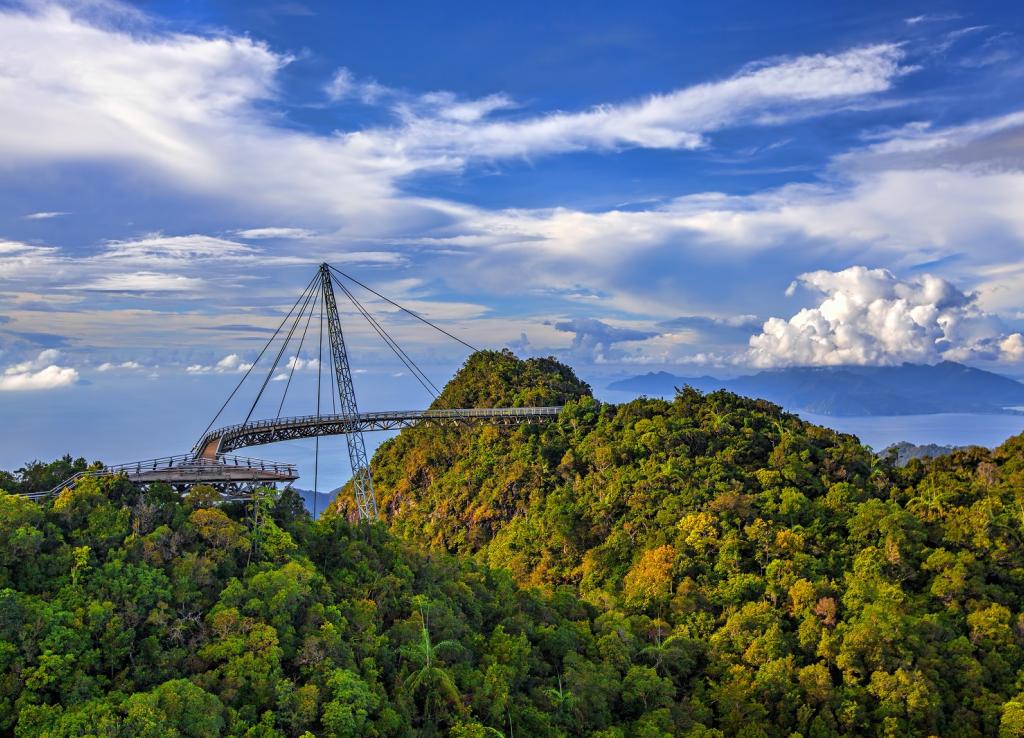
Above the jungle, the Langkawi Cable Car climbs to the ridge of Gunung Mat Cincang, the second-oldest rock formation in Southeast Asia. The SkyBridge that extends from the upper station — a curved pedestrian span suspended over a valley of treetops — tends to appear on shortlists of engineering spectacles, though its real value is the view it offers: a panorama of the archipelago's islands scattered across water that shifts from green to deep blue depending on depth and cloud cover.
The beaches of Pantai Cenang and Pantai Tengah are the island's social hubs, lined with restaurants serving fresh seafood, shops selling duty-free chocolate and spirits, and rental operations offering jet skis and paddleboards. Tanjung Rhu in the north is the quieter counterpoint — a longer, less-visited stretch where the water is calmer and the sunsets arrive without an audience.
Top things to do in Langkawi on a cruise stopover
Langkawi Cable Car and SkyBridge
The gondola ride to the upper station of Gunung Mat Cincang is steep enough to feel like an achievement — the final section climbs at a gradient that tilts the cabin noticeably. At the top, the SkyBridge extends 125 metres in a gentle curve from the ridge, supported by a single pylon, with the rainforest canopy hundreds of metres below and the Andaman islands arranged across the water to the horizon. On clear mornings — which are most common before 11am — the view extends to Tarutao Island in Thailand. Cloud cover rolls in by early afternoon, so an early start matters here. The lower station has a gondola ride down to the Middle Station, which has a small restaurant and observation area.
Langkawi Heritage Trail: Folklore, History and Island Identity
Langkawi's UNESCO Geopark designation — awarded in 2007 and covering almost the entire island — reflects geology spanning 550 million years, from the ancient limestone of Gunung Machinchang (one of Southeast Asia's oldest rock formations) to younger volcanic layers visible in its sea stacks and caves. But the island's heritage is equally cultural. The Mahsuri legend gives Langkawi a melancholy mythological depth; the Seven Wells waterfall features in local folklore about fairies descending from the hills; and the island's trade-route history — positioned between the Malacca Strait's main shipping lanes — left it open to Thai, Indian, Portuguese, and Siamese influences. Understanding this layered identity transforms Langkawi from a duty-free beach island into a destination with genuine historical texture and a community whose stories stretch back long before the first resort was built.
Langkawi Island Tour: Paddy Fields, Lakes and Local Traditions
Away from the beachfront, Langkawi's interior reveals an agricultural and cultural landscape worth exploring in its own right. Laman Padi — the Living Rice Museum — demonstrates the full cycle of paddy cultivation that sustained the island's communities for generations, set within working fields where different rice varieties grow alongside heritage agricultural tools. The Dayang Bunting Marble Geoforest Park to the south encloses a freshwater lake (Lake of the Pregnant Maiden) within a karst limestone island, associated with fertility folklore and accessible by boat. The island's craft villages, concentrated in the interior and around Kuah's periphery, produce batik, hand-woven textiles, and traditional Malay woodwork. A full island tour connects these threads into a coherent picture of Langkawi beyond its resort identity — a community with deep agricultural roots and a living craft tradition.
Eagle Square and Kuah Town
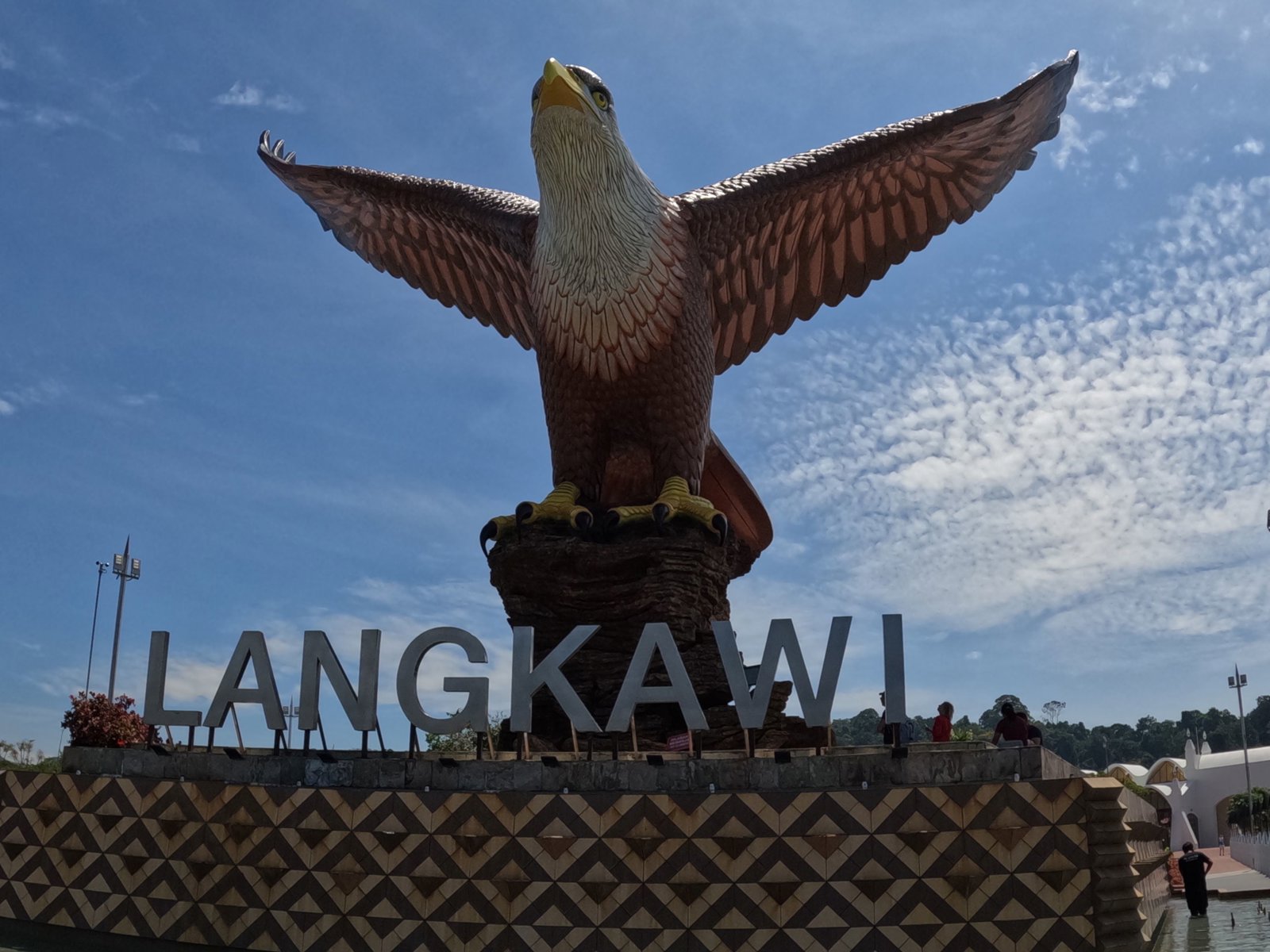
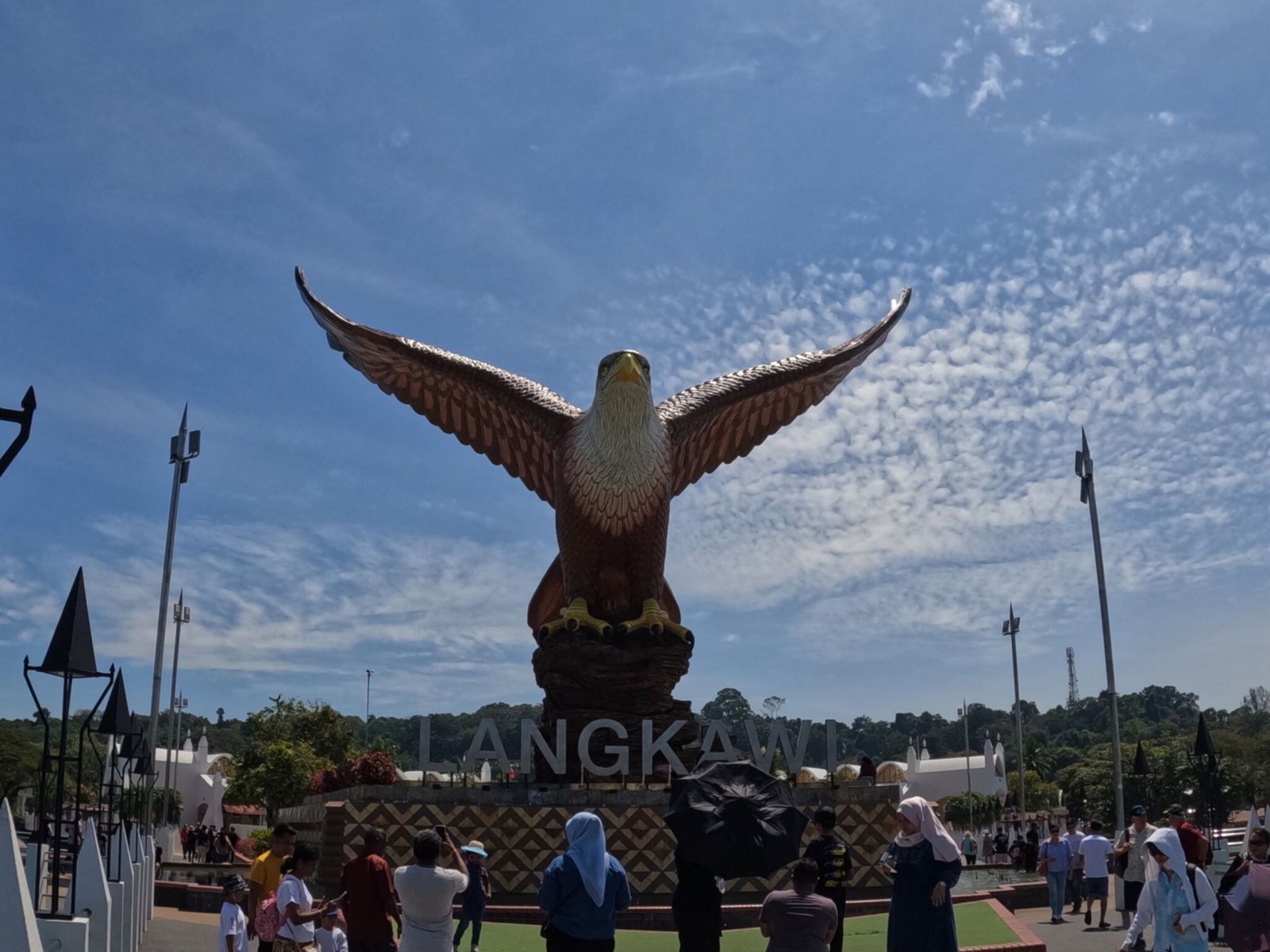
Kuah town surrounds the port and functions as Langkawi's commercial centre — it is the place most cruise passengers see first and, often, most thoroughly. The giant eagle sculpture at Dataran Lang (Eagle Square) that gives the town part of its visual identity sits on a jetty promontory with a garden and fountain. The surrounding area is dense with duty-free shops selling chocolates, spirits, and cosmetics at prices that justify the scrutiny. The Saga Mall and surrounding shophouses offer more local character than the purpose-built tourist retail. The town mosque is a ten-minute walk from the jetty and is open to respectful visitors outside prayer times.
Pantai Cenang Beach and Seafood
Pantai Cenang is Langkawi at its most social: a two-kilometre beach lined with restaurants, beach bars, rental operations, and the duty-free shops that define the island's economic identity. The water is warm and calm enough for swimming through most of the year, and jet ski operators work the shallower sections. What Cenang does particularly well is seafood eaten outdoors — fresh catch displayed on ice outside restaurants, grilled and served with sambal, rice, and cold Malaysian beer at prices that reflect the duty-free environment. Sunset here draws a crowd, which is both its appeal and its limitation.
Langkawi's Craft Traditions: Batik, Weaving and Local Artisans
Langkawi's craft heritage draws on Malay textile and woodworking traditions that predate the island's tourism identity by centuries. Batik — fabric decorated by wax-resist dyeing — is produced in small workshops using both traditional hand-block printing and the more painterly hand-drawn batik tulis technique. Weaving (songket, with gold or silver thread patterns woven into silk) requires months of work per piece and represents one of the Malay world's most technically demanding textile arts. Craft centres around Kuah and in the island's interior offer demonstrations and direct purchase from makers — a meaningful alternative to the duty-free consumer goods that dominate Kuah's main shopping streets. A piece of locally made batik or a hand-woven textile carries a different order of meaning than a purchase made for its price rather than its provenance, and supports the artisan families who maintain these skills.
Langkawi travel tips
The Legend of Mahsuri: Langkawi's Founding Myth. Langkawi's most enduring legend concerns Mahsuri, a young woman of extraordinary beauty falsely accused of adultery and condemned to death in the 18th century. As she died, white blood flowed from her wounds — proof of her innocence — and she cursed the island to seven generations of misfortune. The island's poverty and vulnerability to raiding over the following century are attributed locally to this curse; Langkawi's transformation into a prosperous duty-free destination from the 1980s onward is taken by many as the curse's end. The Mahsuri Mausoleum, a short distance from Kuah, preserves the site of her execution and includes a small museum tracing the legend's history and cultural resonance. Whether you take the story literally or as allegory, it gives the island's identity a depth and melancholy that beach resorts and duty-free shops alone cannot supply.
Go to the Cable Car Before 10am. The SkyBridge and upper cable car station offer their best views in the morning before cloud builds on the ridge. By midday, mist frequently obscures the island panorama that makes the ascent worthwhile. Queues at the lower gondola station also lengthen after tour buses arrive around 10–11am. If your ship docks early, heading directly to the cable car before any other stop makes practical sense.
Duty-Free Allowances Apply on Departure. Langkawi's duty-free status means alcohol, chocolate, and cigarettes are significantly cheaper than on the Malaysian mainland or in neighbouring countries. However, your home country's customs allowance applies when you disembark the cruise — not Langkawi's local rules. Check your allowance before loading up on spirits. Chocolate and confectionery face lower duties in most countries and represent better value without the customs complexity.
Carry Cash for Markets and Small Vendors. The Cenang night market (Pasar Malam) operates on certain evenings and the Kuah central market is active in the mornings — both deal almost exclusively in cash. Even at restaurants that accept cards, some add a surcharge for card payments. Having MYR 200–300 in small denominations covers most day-trip expenses comfortably and avoids ATM queues at the end of the day.
Dress for Mosque and Temple Visits. Langkawi is predominantly Muslim and religious sites require covered shoulders and legs for both men and women. Lightweight linen or cotton is comfortable in the humidity and dries quickly. The Kuah mosque provides coverings at the entrance if needed, but having your own is more convenient. Beach attire is appropriate on the beach itself but not in Kuah town shops or markets.
Check Tender or Dock Status Before Planning. Most cruise ships berth directly at Kuah Jetty rather than tendering, which simplifies departure timing. Confirm this with your ship's daily programme the evening before — tender operations add 20–30 minutes to each shore excursion departure and return, which compresses the effective time ashore meaningfully when calculating whether the cable car plus beach combination is feasible.
Port Facts Every Cruiser Needs To Know
Langkawi shore excursion FAQs
Malaysia offers visa-free entry to citizens of most countries for stays up to 90 days (EU, UK, Australia, New Zealand, most of Asia) or 30 days (some others). As a cruise passenger you will clear Malaysian immigration at Kuah Jetty. Your passport must be valid for at least six months beyond your travel date. Check the Malaysian Immigration Department website for your specific nationality, as rules change periodically.
Langkawi has a low crime rate and is considered one of Malaysia's safest tourist destinations. Solo travellers, couples, and families all move around independently without significant concern. Standard precautions apply: do not leave valuables visible in rental cars, be aware of surroundings at night in less-populated areas, and keep copies of your passport. The island has a functioning tourist police presence.
The most practical options are: (1) Taxi — fixed zone rates, approximately MYR 25–35 one way to Cenang; negotiate before entering the vehicle. (2) Rental car or motorbike from operators at the jetty — cheapest if you plan to cover multiple areas. (3) Grab ride-hailing app — generally works in Langkawi and shows the price upfront. There is no reliable public bus service between Kuah and the beach areas.
The Malaysian Ringgit (MYR) is the only currency used in transactions. Some duty-free shops near the jetty accept major foreign currencies at unfavourable rates, but you will get significantly better value exchanging at money changers in Kuah town or withdrawing from ATMs. Money changers typically offer better rates than banks.
Tap water in Langkawi is treated but most travellers and residents choose to drink filtered or bottled water. Bottled water is inexpensive and available everywhere. Ice in established restaurants is generally made from filtered water. For a short port call, drinking only bottled beverages is the simplest approach.
Light, breathable clothing is essential — humidity is high year-round and temperatures sit between 27–33°C. Swimwear is appropriate on beaches but not in town. Covered shoulders and long trousers or skirts are required for mosque visits (coverings are available at mosque entrances). Comfortable walking shoes or sandals are adequate for most sites; sturdy footwear is helpful for the Telaga Tujuh waterfall trail. Bring a light rain layer during the wetter months.
Yes, Pantai Cenang and Pantai Tengah have calm conditions suitable for swimming through most of the year. The water is warm (typically 28–30°C) and visibility is moderate. Tanjung Rhu in the north also offers calm swimming. Some beaches may have jellyfish during certain seasons — ask locally before entering the water. There are no designated lifeguard stations at public beaches.
The archipelago contains 99 islands, of which the vast majority are uninhabited. Pulau Dayang Bunting (the Island of the Pregnant Maiden Lake) is a popular half-day boat excursion featuring a freshwater lake within a limestone massif where swimming is possible. Pulau Beras Basah has a popular beach. Island-hopping boats depart from Kuah and Cenang jetties and typically visit 3–4 islands in 3–4 hours.
Langkawi's food reflects its multicultural Malaysian, Malay, Thai, and Chinese heritage. Nasi lemak (coconut rice with sambal, anchovies, and egg) is the archetypal Malaysian breakfast. Fresh seafood — grilled fish, prawns, squid — is excellent and relatively affordable, particularly at the open-fronted restaurants along Cenang. Char kway teow (stir-fried flat noodles) and laksa (spiced noodle soup) appear at local coffee shops. Teh tarik (pulled milk tea) is the national drink and is made theatrically at most food stalls.
Your ship's all-aboard time is listed in the daily programme — typically 30–60 minutes before departure. Langkawi traffic is generally light, but leave enough buffer from wherever you are on the island. From Pantai Cenang to Kuah Jetty, allow 30–40 minutes in normal conditions. From the cable car area (northwest), allow 45–60 minutes. Missing the ship is your financial responsibility for independent travellers; the ship will not wait.
Filters
Select a filter to refine results.
Tour Type
Tour Activity
 Cart
Cart
 USD
USD GBP
GBP AUD
AUD EUR
EUR CAD
CAD