



Tours in Mangalore


Cruising to Mangalore in a group?
Skip the crowded ship excursion bus. One dedicated planner will design a private shore experience around exactly what your group wants — coordinated from first enquiry to the moment you're back on board. More memorable, more flexible, and more affordable than you might expect. Spend less time organising, more time enjoying.
Explore Group Travel →Cruising to Mangalore
Mangalore — formally Mangaluru since 2014 — sits at the confluence of two rivers, the Netravati and the Gurpur, where the forested ridges of the Western Ghats descend sharply to the Arabian Sea. The city has been a working port since at least the 14th century, trading in spices, cashews, and tiles, and that mercantile history has layered the place with a cultural complexity that rewards the curious traveller willing to look beyond its industrial waterfront.
The region belongs culturally to Tulu Nadu, a linguistic and cultural zone that predates the modern state of Karnataka. Tulu speakers, who make up the majority of the population, follow customs and celebrate festivals — particularly Kambala buffalo racing and the elaborate Bhuta Kola spirit-worship rituals — that are distinct from the broader Kannada mainstream. This sense of particular identity gives Mangalore a character that feels local rather than generic, even as the city has grown into a significant commercial hub.
The food alone justifies a day ashore. Tulu coastal cuisine is one of India's most distinctive regional cooking traditions: fish curries built on freshly grated coconut and long red chillies rather than cream or tomato, kori rotti (dried rice wafers soaked in chicken curry until they absorb every drop), and neer dosa, the gossamer-thin rice crepe served with chutney or curry. The city's Catholic community — a legacy of Portuguese contact — has added its own thread to the culinary fabric, with dishes like pork bafat that belong to no other cuisine in the world.
For cruise visitors with a single day, Mangalore offers a manageable circuit: the ancient Kadri Manjunath Temple with its rare Lokeshvara bronze, the sea-facing St. Aloysius Chapel whose interior is entirely painted in trompe-l'oeil frescoes, the beach at Panambur near the port, and — if time allows — the 60-kilometre drive north to Udupi, home of the temple that gave its name to a style of vegetarian cooking now found across India and abroad.
Top things to do in Mangalore on a cruise stopover
Kadri Manjunath Temple
One of the oldest active temples on the Karnataka coast, Kadri Manjunath dates its origins to at least the 10th century and houses what scholars consider the finest early medieval bronze sculptures in the region. The centrepiece is a seated Lokeshvara (Avalokitesvara) cast in the Pala style, dated to 968 CE by inscription — a remarkable object that speaks to this coast's historical connections with Buddhist and early Hindu traditions. The temple complex is terraced into a hillside, with tanks, subsidiary shrines, and a resident population of peacocks. Non-Hindu visitors are welcome in the outer precincts and, at many times of day, into the main sanctum as well. Remove footwear before entering and dress modestly (shoulders and knees covered). The walk up through the forested hill grounds takes about 20 minutes and offers views across the city.
St. Aloysius Chapel
Built by the Jesuit order in 1880 and elevated to a minor basilica in 2016, St. Aloysius Chapel is Mangalore's most visually arresting interior. Italian-trained Jesuit brother Antonio Moscheni spent years between 1899 and 1900 covering every surface of the nave with trompe-l'oeil frescoes depicting biblical scenes, allegorical figures, and decorative architectural elements — a technique that transforms the modest colonial building into something that reads, improbably, like a provincial Italian church. The effect is both technically accomplished and deeply strange in its South Indian context, which is precisely what makes it worth visiting. The chapel sits within the Loyola campus in the Lalbagh area, a short auto-ride from the city centre. Entry is free; a small museum with Jesuit-era artefacts adjoins the chapel.
Tulu Coastal Cuisine
No visit to Mangalore is complete without sitting down to a proper Tulu meal. The defining flavours are coconut, dried red chillies (particularly the Byadagi variety, prized for colour over heat), and fresh river and sea fish. Kori rotti — brittle dried rice wafers served alongside a rich chicken curry, which you break into pieces and let soak — is the signature dish, available at specialist restaurants like Janatha Deluxe or Shetty's Lunch Home. Neer dosa, made from a thin batter of soaked rice ground with coconut water, is the local answer to the crepe: delicate, slightly translucent, and eaten with coconut chutney or a small bowl of mutton sukka (dry-spiced meat). The city's Catholic community has preserved the separate tradition of Mangalorean Catholic cuisine: pork bafat, a spiced vinegar-marinated pork dish, and sorpotel (offal curry with vinegar) are found in homes and a handful of dedicated restaurants.
Artisan Village Traditions of Tulu Nadu
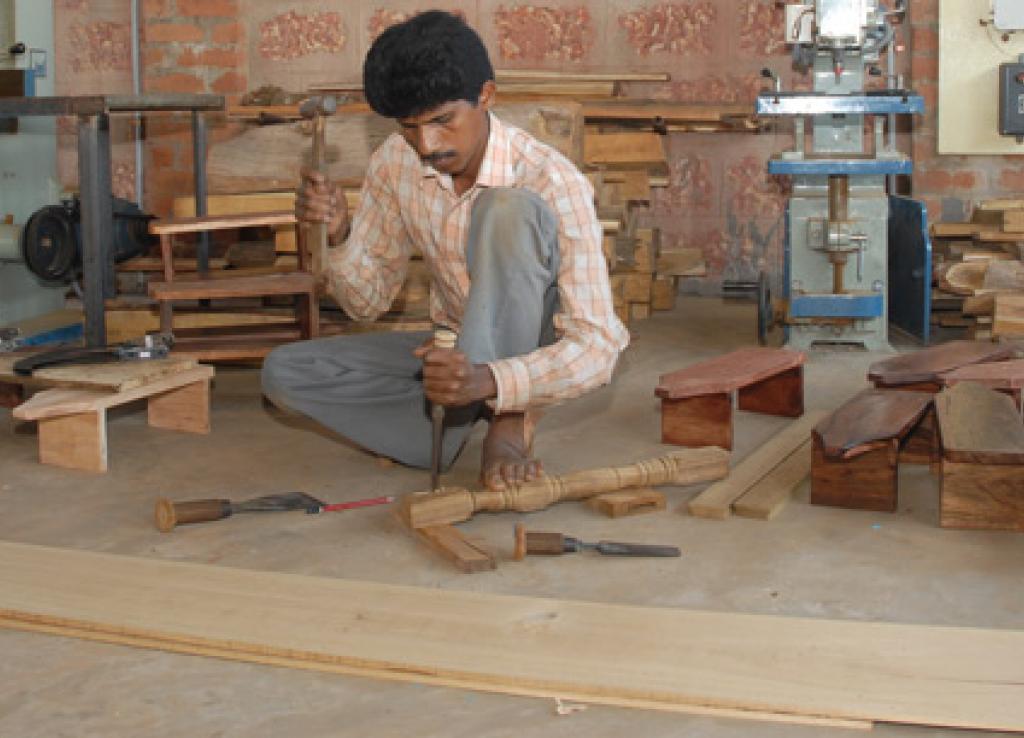
The villages in the hinterland of Mangalore preserve craft traditions that have sustained local communities for generations. Coir weaving — using fibres from the abundant coconut husks of the coastal strip — produces mats, ropes, and household textiles in village workshops where the looms are simple, manual, and operated by families who learned the trade from their parents. Pottery in the traditional red laterite-clay style is another living tradition, with kilns operating in villages along the river plains. The region's brasswork and bronze casting — a specialty connected to temple practice — continues at workshops that supply the numerous Hindu shrines along the Karnataka coast. These artisan communities represent the material culture of Tulu Nadu in its most direct form: goods made by hand, shaped by the specific materials and aesthetic preferences of the region, and sold locally at prices that reflect the labour involved.
Panambur Beach
Panambur is the most accessible of Mangalore's beaches for cruise visitors, sitting roughly midway between the New Mangalore Port and the city centre. It is a long arc of dark sand backed by casuarina trees, with reliable surf and a water-sports facility that operates jet-ski and banana-boat concessions on weekends. On weekday mornings it is quiet enough to walk for an hour without particular interruption. The beach is cleanest at its northern end, near the New Mangalore Port Road turn-off. Weekday visits are preferable; weekend afternoons bring considerable local crowds. Facilities include basic changing rooms and food stalls serving fried fish and corn.
Mangalore's Market District and Old Port Area
The old town around Bunder and the historic port area preserves the grain of Mangalore's trading history in its lane networks, warehouse architecture, and the mix of communities — Muslim, Hindu, and Catholic — who have shared this quarter for generations. The fish market at Bunder is most active in the early morning and worth visiting purely as spectacle: the sheer variety of catch from the Arabian Sea, auctioned by the basketful, offers a fast education in the local marine larder. Nearby, the old tile-roofed shops around Hampankatta sell everything from jasmine garlands to cashew varieties that don't travel internationally. The Mangaladevi Temple, said to have given the city its name, stands in this district and is one of the quieter, older religious sites in the city.
Mangalore travel tips
A Few Kannada and Tulu Phrases Go a Long Way. Mangalore sits in Tulu Nadu — a distinct cultural zone where the local language, Tulu, is spoken at home, while Kannada is used more formally and in signage. English is widely understood in shops and restaurants, but a handful of words in the local tongue unlock genuine warmth. 'Dhanyavadagalu' (thank you in Kannada) and 'Naman' (a Tulu greeting) are appreciated by shopkeepers and stall owners. At temples and cultural sites, a respectful 'Namaskara' (the pan-Indian greeting with folded hands) signals awareness and is received warmly. Menus at small lunch homes are often written only in Kannada — pointing and asking 'Idu yenu?' (What is this?) is a perfectly acceptable way to navigate, and staff will usually mime or gesture the answer helpfully.
Eat Where Locals Eat. The best Tulu food is not found in hotel restaurants. Look for lunch homes — informal canteens that open from around 11am and often close once the food runs out (usually by 2pm). These establishments typically display their offerings on a board; point and pay. Janatha Deluxe, Shetty's Lunch Home, and the various Gajalee branches are reliable. If you are uncertain, ask your driver — they eat at these places themselves and will recommend accordingly.
Dress Appropriately for Temples. Several of Mangalore's key sites are active places of worship. Kadri Manjunath Temple and the Mangaladevi Temple require that shoulders and knees are covered; remove footwear before entering temple precincts. Carrying a light scarf or sarong in your bag solves the problem instantly. Photography restrictions vary by shrine — ask before pointing a camera.
Plan Around the Monsoon Gap. If your cruise calls at Mangalore between June and September, expect heavy rain and the possibility of rough conditions at the port. Some shore excursions — particularly beach visits and the Malpe boat trip to St. Mary's Island — are not possible during the monsoon. Focus on temples, the chapel, and covered market areas, which remain accessible year-round.
The Udupi Decision. Udupi deserves a full day in its own right. If your ship arrives early (by 7am) and departs at 6pm or later, the round trip is manageable — but only just. Factor in port formalities, the 90-minute drive each way (longer in traffic), and time at the destination: you will have perhaps two to three hours in Udupi itself. If your time ashore is shorter than 10 hours, stay closer to Mangalore and do the city properly rather than rushing to Udupi and back.
Carry Small Denomination Notes. Transactions at street stalls, auto-rickshaws, temple donation boxes, and small restaurants work best with INR 10, 20, and 50 notes. Larger currency (INR 500 notes) can be difficult to change at markets and small vendors. Withdraw a mix of denominations at the port ATM before heading into the city.
Port Facts Every Cruiser Needs To Know
Mangalore shore excursion FAQs
Cruise vessels dock at New Mangalore Port, located approximately 10 kilometres north of the city centre in Panambur. The port is a working commercial facility rather than a dedicated cruise terminal. Travel time to the city centre by taxi or auto-rickshaw is typically 20-35 minutes, depending on traffic. A taxi to the city should cost INR 300-500 one-way; negotiate or confirm the meter before departing.
Mangalore is generally safe for independent travellers. The city has a low rate of tourist-targeting crime. Standard precautions apply: keep valuables out of sight in crowded areas, use reputable taxis or app-based services for longer journeys, and be aware of traffic when crossing roads (traffic moves on the left, but road discipline is informal). Solo women travellers report few issues in the city centre during daytime hours.
Kori rotti is the non-negotiable local dish: a curry of free-range chicken slow-cooked in a coconut and chilli gravy, served alongside crisp dried rice wafers that you break and soak in the sauce. Equally essential is neer dosa — a soft, thin rice crepe eaten with coconut chutney and a small meat or vegetable accompaniment. For those interested in Mangalorean Catholic cuisine, pork bafat (pork cooked with a blend of vinegar and dried spices) is found at speciality restaurants and represents a distinct culinary tradition found nowhere else in quite the same form.
Yes, but it requires careful planning. Udupi is roughly 60 kilometres north of Mangalore; the drive takes 90 minutes to 2 hours depending on traffic. To do the trip comfortably, you should be off the ship by 7:30-8am and need to be back at the port by 5:30pm at the latest. This gives you roughly 3 hours in Udupi — enough for the Krishna Temple complex, a meal, and a brief walk around town, but not enough to add Malpe or St. Mary's Island. Hire a car and driver for the day rather than attempting public transport.
The Indian Rupee (INR) is the only currency. ATMs are available at the port and throughout the city centre; Visa and Mastercard are reliably accepted. Credit cards work at hotels, mid-range and upmarket restaurants, and retail shops in malls. However, auto-rickshaws, street food vendors, market stalls, temple donation counters, and most local lunch homes operate on cash only. Carry INR 2,000-3,000 in small denominations for a comfortable day.
Panambur Beach is the closest, roughly 2 kilometres from the port gate, and is a reasonable choice for a beach stop — particularly on a weekday morning when it is uncrowded. The sand is dark and the surf is moderate; swimming is possible but there are no lifeguards, so exercise judgement. Tannirbhavi Beach, across the Gurupur River (reachable by boat from Panambur), is less developed and quieter. Surathkal Beach, 10 km north, is popular with students from the IIT campus there but is accessible only by road.
Kadri Manjunath is one of the most historically significant temples on the Karnataka coast, housing a bronze Lokeshvara image dated by inscription to 968 CE — one of the finest early medieval bronzes in South India. The temple is set on a forested hillside with ponds, subsidiary shrines, and peacocks roaming the grounds. Non-Hindu visitors are welcomed in the outer compound and typically in the main hall as well, though access to the innermost sanctum may be restricted during puja times. Dress modestly (covered shoulders and knees), remove footwear before entering, and photography is generally permitted in the grounds but not inside the main shrine.
The local language is Tulu, which is distinct from Kannada (the state official language) and from Hindi. In practice, English is widely understood in Mangalore's city centre, at hotels, restaurants, shops, and among taxi drivers who work with visitors. You will not need Hindi. Basic politeness in Kannada is appreciated: 'dhanyavadagalu' (thank you) and 'namaskara' (greeting) go down well. Menus at tourist-frequented restaurants are typically in English.
Mangalore has a tropical climate. During the main cruise season (October-February), expect temperatures of 24-32C with low humidity and dry, sunny days. Lightweight cotton or linen clothing is appropriate. A light layer is useful for air-conditioned restaurants and vehicles. In March-May, temperatures and humidity both rise significantly. The monsoon (June-September) brings heavy rainfall; a compact umbrella or light rain jacket is essential. For temple visits at any time of year, carry a scarf or sarong to cover shoulders and knees.
Mangalore is not primarily a shopping destination in the tourist sense, but there are worthwhile purchases for those interested in local products. The city is India's largest producer of cashews, and vacuum-sealed cashew varieties (plain, spiced, or coated) from local brands make excellent, compact gifts. Handloom cotton sarees and traditional Kasuti embroidery (a Karnataka needlework style) are available at the Karnataka Handloom showroom in the city centre. The old market lanes around Hampankatta have shops selling spices, dried fish, and the Byadagi chillies central to coastal cooking. For general retail, Forum Fiza Mall and City Centre Mall have international brands alongside Indian chains.
Filters
Select a filter to refine results.
Tour Type
Tour Activity
 Cart
Cart
 USD
USD GBP
GBP AUD
AUD EUR
EUR CAD
CAD