



Tours in Nha Trang


Cruising to Nha Trang in a group?
Skip the crowded ship excursion bus. One dedicated planner will design a private shore experience around exactly what your group wants — coordinated from first enquiry to the moment you're back on board. More memorable, more flexible, and more affordable than you might expect. Spend less time organising, more time enjoying.
Explore Group Travel →Cruising to Nha Trang
Nha Trang sits in one of Southeast Asia's most naturally gifted settings — a long arc of white sand backed by a low coastal range, with a scatter of islands dotting an intensely blue bay. The city has been a resort destination since the French colonial era, and while the seafront promenade has grown considerably since then, the underlying appeal remains intact: warm water, reliable sunshine, and a depth of history that rewards the curious traveler who ventures beyond the beach.
The bay's ecological significance is anchored by Hon Mun Marine Protected Area, one of Vietnam's most important coral reef systems. Glass-bottom boats and snorkeling trips make the reefs accessible, and the visibility on calm days is remarkable. The islands themselves vary in character — some host fishing communities, others fishing restaurants perched over the water, and Hon Tre holds a large resort complex that can be visited independently by cable car for the views alone.
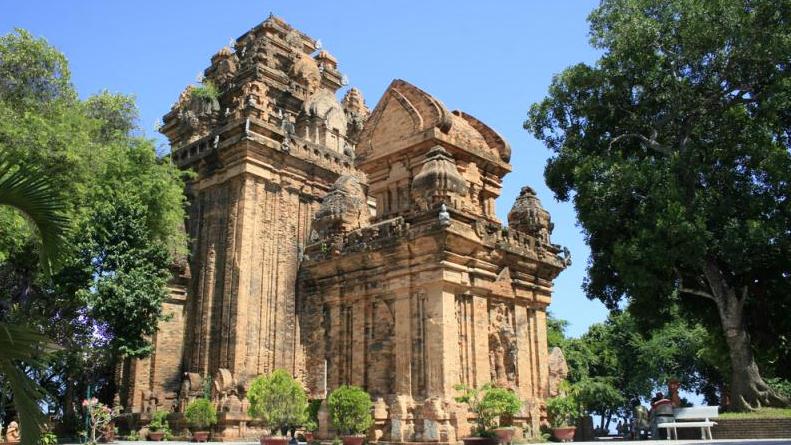
On the hillside above the city, the Po Nagar Cham Towers stand as one of the finest surviving examples of Cham architecture in Vietnam. Built between the 7th and 12th centuries, the complex served as a religious center for the ancient Champa kingdom, and the main tower still hosts active worship. The atmosphere is genuinely devotional rather than purely touristic, and the hilltop position offers good views across the mouth of the Cai River and out to sea.
Nha Trang's culinary identity is shaped by its fishing port, which supplies the city's many seafood restaurants with catches landed each morning. Bun ca — fish noodle soup — is the local breakfast staple, distinct from versions served elsewhere in Vietnam. The night market along Tran Phu Boulevard draws locals and visitors alike to charcoal grills loaded with prawns, squid, and clams priced by weight. Eating here is noisy, chaotic, and entirely excellent.
Top things to do in Nha Trang on a cruise stopover
Po Nagar Cham Towers: A Thousand Years on the Cai River
Standing on a granite promontory above the Cai River mouth, two kilometres north of the city centre, the Po Nagar complex is one of the most significant surviving examples of Cham architecture on the Vietnamese coast. Built and extended between the 7th and 12th centuries by the Hindu-influenced Cham civilisation that preceded Vietnamese settlement of this coast, the towers are dedicated to the Cham goddess Yan Po Nagar, still actively worshipped here by both Cham and Vietnamese devotees — making this a living religious site rather than purely an archaeological one. The main tower stands over 23 metres tall and preserves its original brick corbelling, ornamental niches, and a lingam inscribed with Sanskrit verses. The complex rewards early morning visits: mist hangs over the river below, the incense smoke from morning ceremonies drifts through the brick passageways, and the crowds of later hours have not yet arrived.
The Rural Countryside of Khanh Hoa Province
Beyond Nha Trang's beach promenade, the province's interior reveals a slower, agricultural Vietnam of paddy fields, pepper vines, and fruit orchards threaded by the Cai River and its tributaries. Villages in this hinterland — within 20 to 40 kilometres of the port — operate on rhythms tied to the harvest calendar: banana and coconut groves produce for local markets, small-scale fish ponds dot the flatlands near the river, and roadside stalls sell seasonal produce by the kilogram with no tourist pricing in evidence. The landscape shifts noticeably as you move inland: the flat coastal strip gives way to low hills covered in cashew and mango trees, and the cooking smells change from salt-and-seafood to charcoal and fermented shrimp paste used in inland dishes. Encounters with local family life — washing done at riverside, children cycling home from school, elders playing chess under banyan trees — are unrehearsed and genuinely representative of daily Vietnamese provincial existence.
Long Son Pagoda and the White Buddha of the Hill
Set against the rocky outcrop of Trai Thuy Hill on the western edge of the city, Long Son Pagoda is the largest Buddhist temple complex in Nha Trang and the religious centre of the province. Founded in the late 19th century and rebuilt several times following storm damage, the current structures date largely from the 1940s and are decorated with mosaics of glass and ceramic shards — a Vietnamese Buddhist decorative tradition found elsewhere but rarely executed with such scale. The centrepiece is the giant white Reclining Buddha at the hill's summit, reached by 152 steps flanked by dragon balustrades; from the top, the city, bay, and coastal mountains are visible in a single panorama. The pagoda is active — monks live in residence, bells ring at dawn and dusk, and the covered courtyards function as meeting places for worshippers from surrounding neighbourhoods. Entry is free; modest dress is required.
Village Life Along the Cai River Valley
The Cai River, which enters the sea at Nha Trang, drains a catchment that extends north into the hills of Khanh Hoa and Ninh Thuan provinces. Along its banks, villages of the Raglai and Ede ethnic minority communities maintain traditions of weaving, pottery, and community longhouse architecture that are distinct from Vietnamese lowland culture. Closer to the coast, Kinh Vietnamese fishing villages depend on the river's lower reaches for freshwater fish farming — tilapia, catfish, and snakehead are raised in net cages anchored in the slow-moving water. Market mornings in the valley settlements (typically 5–8am) bring produce from upland gardens: wild greens, forest mushrooms, and the small, intensely flavoured bananas grown without irrigation in the hillside plots. The rhythm of the valley is agricultural and unhurried — the antithesis of the beachfront, and all the more memorable for it.
Hon Mun Bay: Coastal Scenery from the Water
The bay framing Nha Trang — with its arc of pale beach, low green islands, and the limestone outcrops of Hon Chong to the north — is one of the most picturesque natural settings on the South China Sea coast of Vietnam. Hon Mun, the largest of the offshore islands, anchors the southern end of the bay and gives the marine protected area its name. The view of the bay from the beach promenade — particularly in the early morning before the sun rises high and bleaches the colours from the water — shows the islands as silhouettes against the open sea, a scene that has drawn artists and photographers since French colonial times. The cable car crossing to Hon Tre island (one of Southeast Asia's longest over-water cable car runs) provides aerial perspectives across the full bay panorama, with the city visible along the coastal strip and the outer islands receding into haze on clear days.
Nha Trang's Local Food Culture: From Sea to Table
The cooking of Khanh Hoa province draws on both the sea and the agricultural hinterland with equal fluency. Bun ca — the city's signature breakfast soup of rice vermicelli, fish stock, fried fish cakes, and fresh herbs — is as central to local identity as pho is to Hanoi. Nem nuong Nha Trang (grilled pork skewers wrapped in rice paper with vermicelli and herbs) is found at specialist restaurants open only for lunch, where the grill smoke serves as the sign above the door. The night market on Tran Phu Street consolidates the city's street food tradition in one location from early evening: grilled corn, bao buns, fresh coconut, and the fried dough fritters (banh tieu) that are the local late-night snack. Markets along the Cai River sell dried seafood — shrimp, squid, and anchovy paste — that represents the preserved food tradition of a coast where the catch has always exceeded what fresh consumption requires.
Nha Trang travel tips
Cam Ranh Is Not Nha Trang — Know the Distance. Cruise ships calling 'Nha Trang' typically dock at Cam Ranh International Cruise Terminal, which sits roughly 40–50 km south of Nha Trang city and its main beaches. This distance is significant and determines what is realistically achievable in a port day. The countryside between the terminal and the city — with its salt flats, fishing hamlets, and coastal lagoons — is increasingly recognised as a destination in its own right and is the focus of Venture Ashore's offering from this port.
Visit Po Nagar Early and Dress Appropriately. Po Nagar is an active religious site, not solely a tourist attraction. Shoulders and knees should be covered — sarongs are available for loan at the entrance, but bringing your own light scarf or layer is more comfortable. Arrive before 9 a.m. to beat tour group traffic and to catch the morning light on the brick towers, which is significantly better than the harsh midday illumination. Remove footwear before entering the main tower, and observe quietly if a ceremony is in progress.
The Rural Hinterland: What Lies Beyond the Beach. Nha Trang's reputation as a beach resort town obscures the fact that its hinterland — the river valleys, paddy fields, fruit orchards, and hill villages within 20–40 kilometres of the coast — preserves a very different face of Vietnamese life. The area around the Cai River upstream from the city gives way to agricultural landscapes of banana groves, pepper vines, and cashew trees worked by families whose routines have changed little in a generation. Roadside stalls in these villages sell fresh coconut water, grilled corn, and steamed sticky rice wrapped in banana leaf — food produced within sight of where it is sold. The contrast with the beachfront promenade is sharp and instructive: Nha Trang province is simultaneously a fishing and farming economy, and the countryside makes that dual identity visible in ways the city centre does not.
Eat Bun Ca for Breakfast. Nha Trang's local fish noodle soup, bun ca, is distinct from pho and bun bo Hue — it uses a lighter, slightly sweet broth made from fish stock, served with rice vermicelli, fried fish cakes, fresh herbs, and a squeeze of lime. Several small shops near the Xom Moi market open from around 6 a.m. A bowl costs 30,000-50,000 VND (roughly USD 1.25-2). Eating a proper local breakfast before touring costs almost nothing and is one of the more authentic experiences the city offers to visitors who make the effort.
Vietnamese Food Culture in Khanh Hoa Province. The cooking of Nha Trang and Khanh Hoa province sits between the rich, spice-heavy cuisine of the south and the more restrained flavours of central Vietnam. Bun ca — a fish noodle soup built on a sweet, clear stock — is the local morning staple: lighter than pho, served with vermicelli, fried fish cakes, fresh herbs, and a squeeze of calamansi. Banh canh cha ca (thick udon-style noodles in fish broth) is a heartier alternative found at market breakfast stalls from 6am onwards. Fresh spring rolls (goi cuon) filled with shrimp, herbs, and pork are found at almost every sit-down restaurant and can be safely eaten without concern. The Vietnamese habit of adding fresh herbs directly to soup at the table — basil, coriander, bean sprouts — is not garnish but an integral part of the dish: always add before eating. Green tea arrives automatically and is free; bottled water is always safer than tap.
Check the Weather Window for Water Activities. Even during Nha Trang's generally dry season, swells from passing weather systems can temporarily reduce visibility around Hon Mun or make the cable car crossing choppy. Check wind and sea conditions the morning of your port call — local dive and snorkel operators post current conditions on their Facebook pages, which are often more accurate than general weather apps. If sea conditions are marginal, the city's land-based sights are substantial enough to fill a full day without feeling like a compromise.
Port Facts Every Cruiser Needs To Know
Nha Trang shore excursion FAQs
Cruise ships dock at Nha Trang Port (Cang Nha Trang), located approximately 1 kilometer south of the main beach promenade. The port is in the southern part of the city near Cau Da pier, which also serves as the departure point for boat trips to the islands. A Grab car or taxi to the central beach area costs around 50,000-70,000 VND and takes five to ten minutes. Po Nagar Cham Towers are about 2 km north of the port — also a short ride. The city is compact enough that most key attractions are within a 5 km radius of the dock.
Nha Trang is generally safe for independent travelers. The main concerns are common to busy tourist areas anywhere: keep an eye on bags in crowded markets, be cautious with street-facing cafe tables where bag snatching from passing motorbikes has been reported, and agree on prices before engaging transport or services. Walking the promenade and visiting temples and pagodas independently is straightforward. The tourist police maintain a visible presence along Tran Phu Boulevard. Using Grab rather than negotiating with individual taxi or xe om drivers removes most pricing disputes.
Hon Mun Island, within the marine protected area, offers the best coral reef snorkeling accessible by boat from Cau Da pier. The journey takes 30-45 minutes by motorboat. Bai Tranh on Hon Mun's southeastern side has gentle conditions and good coral coverage. Hon Mot and Hon Tam are closer and shallower, suitable for beginners and children. Most organized half-day snorkeling trips visit two or three spots; a morning departure from port allows return by early afternoon. Visibility is typically best February through May.
Bun ca (fish noodle soup) is Nha Trang's morning staple and distinctly local. Banh canh cha ca is a thicker noodle soup with fish cake, popular for lunch. Nem nuong Ninh Hoa — grilled pork skewers from the neighboring district — appears on many restaurant menus and is excellent wrapped in rice paper with herbs. Banh mi thit from street stalls makes a quick, inexpensive snack. For seafood specifically, the Cho Dam market in the city center has cooked seafood stalls during the day that offer good value compared to tourist-facing beachfront restaurants.
Budget 45 minutes to one hour for a thorough visit to Po Nagar. That allows time to walk the full hilltop complex, read the interpretive information about Cham history and architecture, watch worshippers making offerings at the main tower shrine, and enjoy the river and bay views from the hilltop. Entrance fee is 22,000 VND per person (under USD 1). The site is compact, so it pairs naturally with Long Son Pagoda — the two together fill a comfortable morning with transport between them costing very little.
Yes, the thermal mud baths (most notably Thap Ba and 100 Egg Mud Bath) are a popular half-day excursion located around 5 km north of the city center. The experience involves soaking in warm, mineral-rich mud believed to have therapeutic properties, followed by a rinse in thermal spring pools. It is best treated as either a morning or afternoon activity rather than combined with a full itinerary. Facilities include changing rooms, lockers, and restaurants. Entrance is around USD 10-15 for the basic package. Book through the resort directly or arrange transport through your ship.
Vietnamese Dong (VND) is the only legal tender for most transactions. While some tourist-facing businesses and larger restaurants display prices in USD and accept it, the exchange rate offered is typically unfavorable compared to withdrawing dong from an ATM. ATMs are plentiful near the port, along Tran Phu Boulevard, and near the main market. Withdraw a sufficient amount at the start of the day — small restaurants, market stalls, and transport require cash. Credit cards are accepted at hotels, higher-end restaurants, and shops, but not universally.
The cable car crossing to Hon Tre is worth considering if you have more than 7 hours ashore and have already covered the city's main sights. The 10-minute crossing offers exceptional bay views and the kind of elevated perspective that photographs well. Once on the island, the Vinpearl resort complex is extensive but may feel out of keeping with a cultural itinerary. The round-trip cable car ticket allows you to walk along the island's coastal paths without entering the theme park. Factor in approximately 2-3 hours for the full excursion including waits. It is less rewarding than Po Nagar or Hon Mun for first-time visitors to Nha Trang.
Lightweight, breathable clothing is appropriate for Nha Trang's tropical climate. For visits to Po Nagar Cham Towers and Long Son Pagoda, shoulders and knees should be covered — a light sarong or scarf carried in a bag is sufficient. Modest dress is expected inside the main worship halls. For beach and island activities, standard swimwear is appropriate. Sun protection is essential; the tropical sun is intense even on overcast days. Comfortable walking shoes or sandals handle the city's paved streets well; reef-safe sandals or water shoes are useful for boat trips.
Start with land-based sights in the cooler morning hours — Po Nagar and Long Son Pagoda both benefit from early arrival before tour groups peak around 10 a.m. Mid-morning, move toward the waterfront for a seafood lunch at one of the market stalls or a restaurant near Cau Da pier. Afternoon is well suited to beach time or a boat trip to a nearby island, as the light is better for photography and the sun is past its harshest point. Allow 30-45 minutes to return to port before your ship's all-aboard time; traffic near the port can slow on busy days when multiple ships are in port simultaneously.
Filters
Select a filter to refine results.
Tour Type
Tour Activity
 Cart
Cart
 USD
USD GBP
GBP AUD
AUD EUR
EUR CAD
CAD