



Tours in Singapore


Cruising to Singapore in a group?
Skip the crowded ship excursion bus. One dedicated planner will design a private shore experience around exactly what your group wants — coordinated from first enquiry to the moment you're back on board. More memorable, more flexible, and more affordable than you might expect. Spend less time organising, more time enjoying.
Explore Group Travel →Cruising to Singapore
Singapore rewards the attentive traveller more than almost any other port in Asia. In a single day ashore, you can move from the solemn, incense-thick lanes of Sri Mariamman Temple to a glass-and-steel garden planted with forty-metre supertrees, then share a marble-topped table in a Michelin-starred hawker stall with a retired civil servant who orders in three languages without thinking about it. The city-state's particular genius is compression: centuries of Chinese, Malay, Indian, and colonial British history packed into 733 square kilometres, all of it extraordinarily easy to navigate.
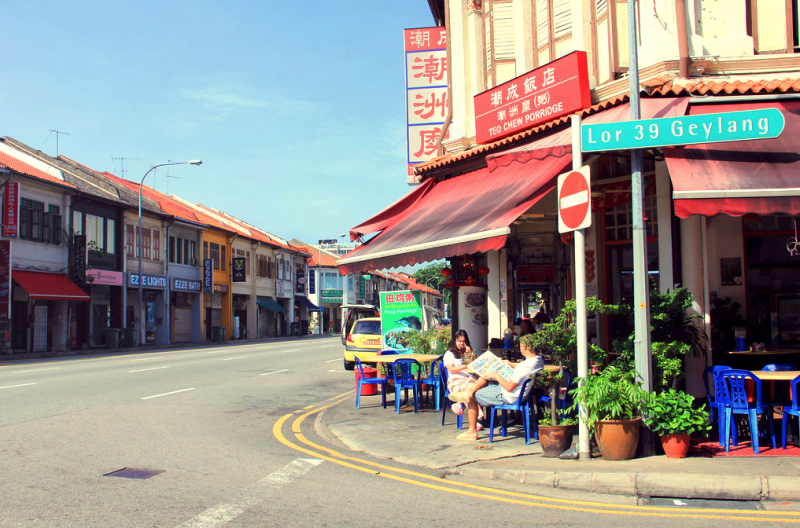
The island's ethnic quarters — Chinatown, Little India, Kampong Glam, and Katong — are not heritage parks but living neighbourhoods where the architecture of the colonial era shelters contemporary galleries, independent coffee roasters, and family-run provision shops that have occupied the same shophouse for four generations. Walking between them, even in the equatorial heat, is one of the most rewarding things you can do in any Asian city.
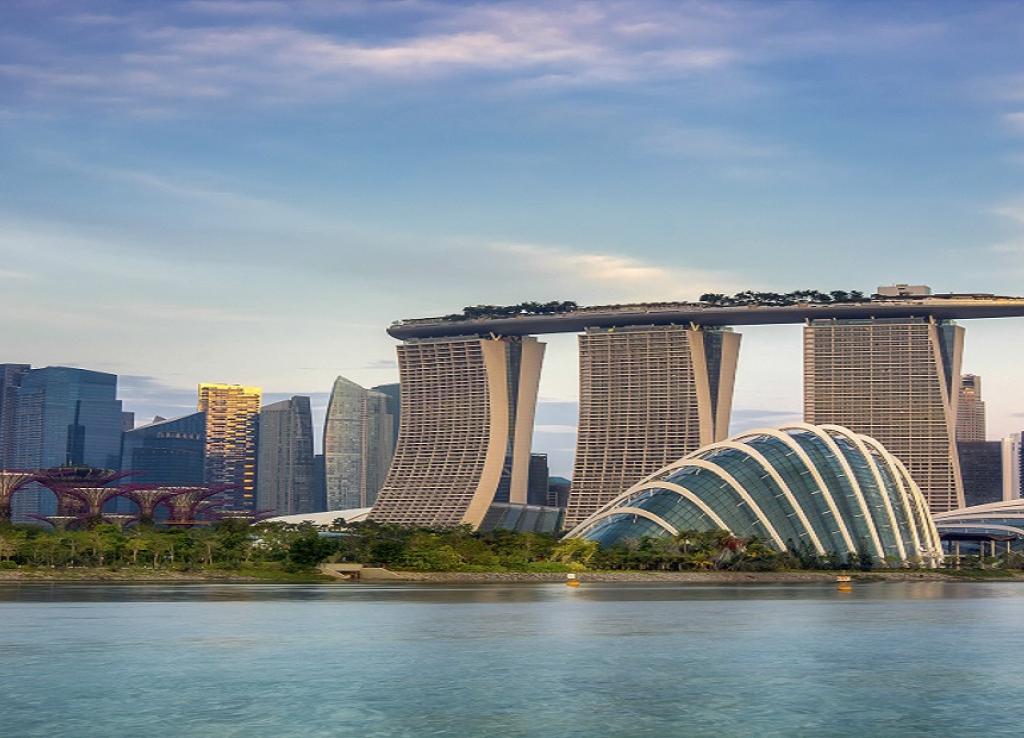
Gardens by the Bay reshaped what a public garden could be. The Supertree Grove, the cooled Cloud Forest and Flower Dome conservatories, and the OCBC Skyway offer a vision of urban ecology that feels genuinely utopian rather than merely decorative. Combine it with a stroll along Marina Bay waterfront as the towers of the financial district reflect in the water and you have a portrait of Singapore at its most itself: engineered to a very high standard, and quietly breathtaking.
Food is the city's most democratic pleasure and its most reliable common ground. The hawker centres — Newton, Lau Pa Sat, Maxwell, Old Airport Road — operate as open-air canteens where a flawlessly executed plate of Hainanese chicken rice costs two or three Singapore dollars. Eating here is not a concession to budget; it is what Singaporeans actually do, and it is the most direct line into the texture of daily life the city offers any visitor.
Top things to do in Singapore on a cruise stopover
Marina Bay & the Skyline Walk
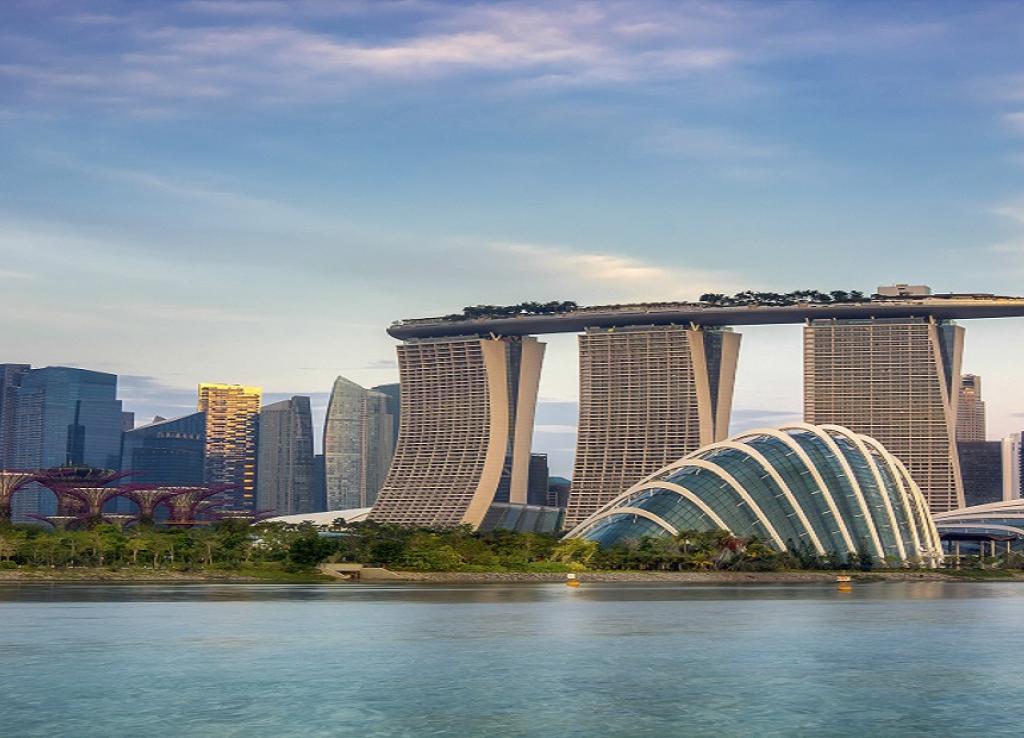
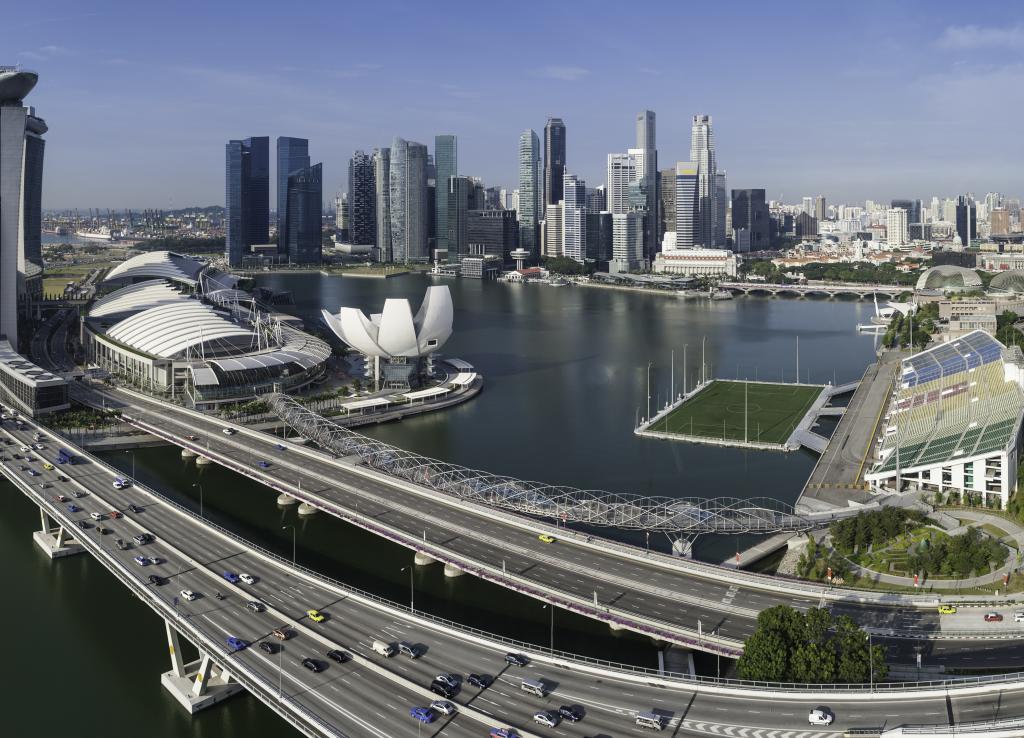
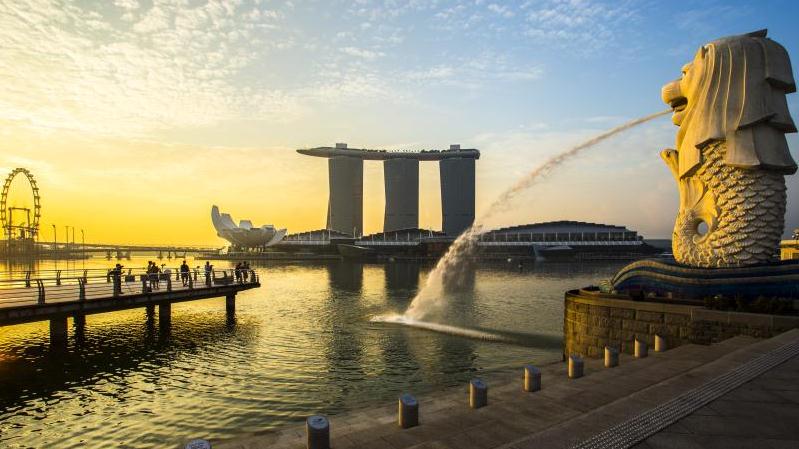
The promenade encircling Marina Bay is Singapore's great public stage. Walk the waterfront from Merlion Park past the Esplanade — the durian-shaped arts complex — to the ArtScience Museum, and the city unfolds at eye level and above simultaneously. The view of Marina Bay Sands from the helix bridge is one of the genuinely arresting sights of contemporary architecture. The observation deck on the MBS SkyPark (Level 57) offers a panorama that makes the island's geography — the port, the Southern Islands, Sentosa, the financial towers — suddenly legible. Entry to the SkyPark is ticketed and worth booking ahead for afternoon visits.
Gardens by the Bay
The 101-hectare Gardens by the Bay is the most ambitious public garden project in Asia in a generation. The Supertree Grove — eighteen tree-like structures between 25 and 50 metres tall, draped in living plants and lit after dark — is simultaneously alien and beautiful. The two conservatories are the real draw: the Cloud Forest encloses a 35-metre indoor waterfall inside a mountain of orchids and pitcher plants; the Flower Dome replicates a cool Mediterranean climate. Budget two to three hours for both conservatories and the outdoor gardens. Book conservatory tickets online — day-of queues can be long.
Hawker Centre Culture
UNESCO added Singapore's hawker culture to its Intangible Cultural Heritage list in 2020, a recognition of what the city already knew: these open-air food complexes are the social and culinary heart of the nation. Maxwell Food Centre in Chinatown is a reliable starting point — Tian Tian Hainanese Chicken Rice has a permanent queue for good reason, but the surrounding stalls offer laksa, char kway teow, and roti prata of equal quality with shorter waits. Old Airport Road Food Centre in Kallang is beloved by locals and less visited by cruise-day tourists. A full meal with a cold drink rarely exceeds SGD 10.
Chinatown and the Cultural Quarter
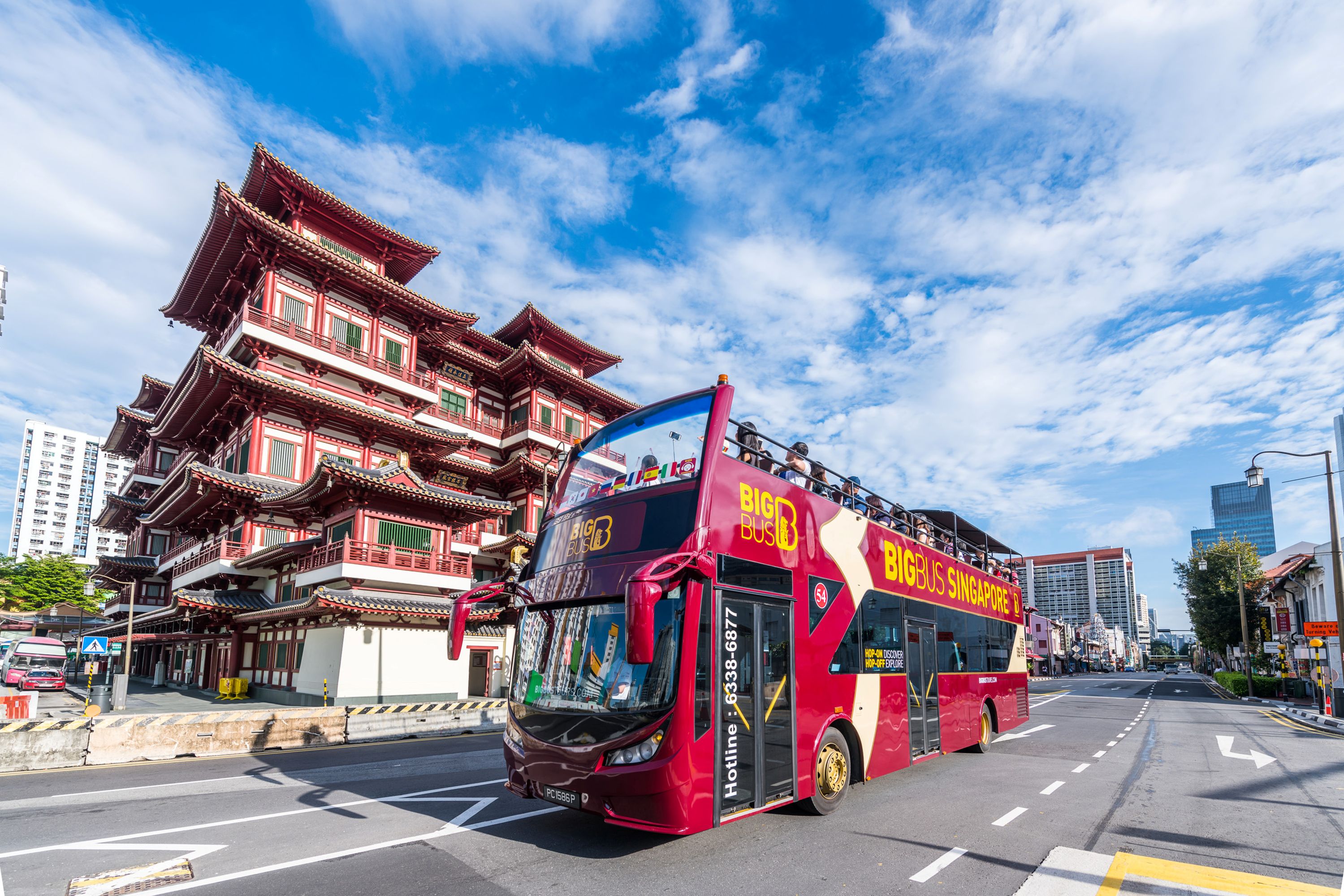
Singapore's Chinatown is denser with history than its shophouse facades suggest. The Buddha Tooth Relic Temple on South Bridge Road is an active place of worship housing a relic attributed to the historical Buddha, displayed in an extraordinary jewelled stupa on the fourth floor. Opposite it, Sri Mariamman Temple — the city's oldest Hindu temple, built in 1827 — draws Tamil worshippers through a gopuram covered in painted deities. The surrounding streets, particularly Teck Chye Terrace and Ann Siang Hill, have been colonised by independent bars and restaurants that co-exist easily with traditional medicine halls and family-run provision shops.
Little India: Serangoon Road and Beyond
Little India operates on its own rhythm, louder and more fragrant than the rest of Singapore. Serangoon Road, the main artery, is lined with textile merchants, gold jewellers, flower-garland sellers, and restaurants serving South Indian thali on banana leaves. Tekka Centre is the neighbourhood's anchor: a wet market on the ground floor and a hawker centre above it, where the fish-head curry and roti prata are as good as any in the city. Sri Veeramakaliamman Temple on Serangoon Road is one of the most ornate in Singapore, its facade covered in hundreds of sculpted deities. The adjacent Jalan Besar neighbourhood offers craft coffee shops and vintage clothing stores.
Kampong Glam: The Malay Quarter
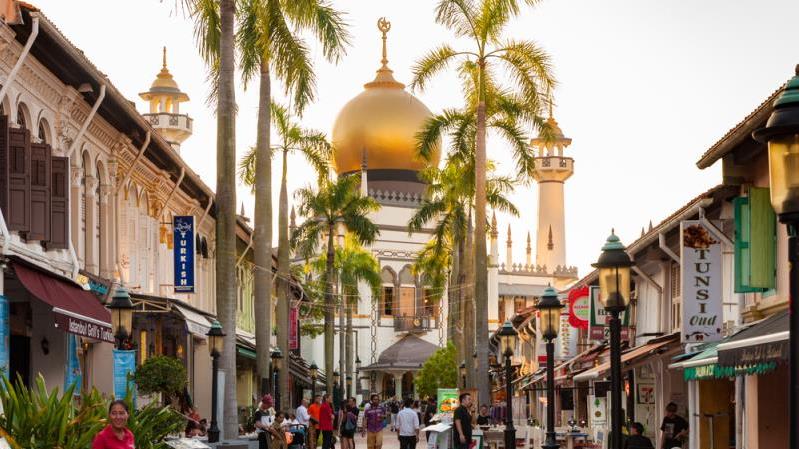
Kampong Glam, Singapore's Malay-Arab quarter, centres on the golden-domed Sultan Mosque (1932) and the pedestrianised Haji Lane behind it. The mosque is open to non-Muslim visitors outside prayer times — modest dress and a sense of quiet are expected. Haji Lane has become one of Singapore's most characterful shopping streets: independent boutiques, vintage stores, and narrow cafés occupy two-storey shophouses painted in pastels. Arab Street, running parallel, sells textiles, perfume oils, and Middle Eastern food. The quarter is most atmospheric on Friday mornings, when the area around the mosque fills with worshippers.
Singapore travel tips
Singapore's MRT: The Most Visitor-Friendly Metro in the Region. Singapore's Mass Rapid Transit is genuinely one of the easiest metro systems in the world to use as a visitor. English is the primary language of all signage, announcements, and maps. Trains run every 2–5 minutes during the day. A Singapore Tourist Pass, available from station kiosks near the cruise terminals, covers unlimited MRT, LRT, and bus travel for a set period. For those spending the day independently, the MRT connects Harbourfront (nearest to the cruise terminals) directly to Chinatown, the CBD, Orchard Road, Little India, and Bugis — the main visitor precincts.
Time Your Outdoor Walking for Morning or Late Afternoon. Singapore's equatorial climate peaks between noon and 3pm, when humidity and heat become genuinely uncomfortable for extended walking. Plan outdoor activities — the Marina Bay waterfront, Gardens by the Bay exterior, the cultural quarter walks — for before 11am or after 4pm. The middle of the day is ideal for air-conditioned conservatories, the National Museum, or a hawker centre lunch.
Pre-Book Marina Bay Sands SkyPark and Conservatories. The two most popular paid attractions — the Gardens by the Bay conservatories and the MBS SkyPark observation deck — sell out on busy port days. Book both online before departure; the conservatories in particular fill by mid-morning on weekends and public holidays. The SkyPark is non-hotel-guests only until a certain allocation is reached, and that cutoff can arrive early.
The MRT is Faster Than a Taxi for Cross-City Journeys. While app-based rides are convenient for short hops, the MRT is faster for longer cross-city journeys — from Harbour Front to Little India, for instance, or from the CBD to Kampong Glam. Trains run every 2–3 minutes during the day, the network is well-signed in English, and the Singapore Tourist Pass (available from station kiosks) gives unlimited travel for a flat daily fee. Air-conditioning on the trains is aggressive — carry a light layer.
Dress Modestly for Temple Visits. Both Sultan Mosque in Kampong Glam and Sri Veeramakaliamman Temple in Little India require covered shoulders and knees for entry. The Buddha Tooth Relic Temple in Chinatown has the same expectation. Most temples keep sarongs or cover-ups at the entrance for visitors who arrive unprepared, but bringing a light scarf or overshirt is simpler. Shoes are removed before entering Hindu and Buddhist temples.
Durian: Know Before You Try. Singapore's most discussed fruit is banned in the MRT, many taxis, and most hotel lobbies due to its powerful smell. If you want to try it — and the experience is genuinely distinctive — the durian stalls along Geylang Road are the serious enthusiast's destination. The flesh is custard-rich, complex, and deeply divisive. Eat it on-site rather than attempting to transport it. Outside Geylang, durian-flavoured derivatives (ice cream, mochi, pastries) are available everywhere and considerably less confrontational.
Port Facts Every Cruiser Needs To Know
Singapore shore excursion FAQs
Singapore has two cruise facilities. Marina Bay Cruise Centre Singapore (MBCCS) is located at Marina South, within easy reach of the CBD — a taxi or Grab to Marina Bay waterfront takes around 10 minutes and costs SGD 8–12. Singapore Cruise Centre (SCC) is at Harbour Front/VivoCity, adjacent to the HarbourFront MRT station (Circle and North-East lines), which connects directly to Chinatown, Little India, and the Orchard Road area in under 20 minutes. Confirm your terminal with the ship before arrival, as the two are on opposite sides of the harbour.
Singapore is consistently ranked among the safest cities in Asia, with very low rates of street crime, excellent public infrastructure, and English used universally in signage and public services. Independent exploration is not only possible but preferable for most travellers — the MRT and Grab together put every neighbourhood within easy, inexpensive reach. The city is also exceptionally navigable on foot in the cultural quarters, with pedestrian infrastructure that actually works.
Singapore is perhaps the most food-serious city in Southeast Asia, and hawker centres are where that seriousness is most honestly expressed. Maxwell Food Centre (Chinatown), Lau Pa Sat (CBD), Newton Food Centre, and Old Airport Road Food Centre are all within easy reach of the cruise terminals. Hainanese chicken rice, laksa, char kway teow, roti prata, bak kut teh, and chilli crab are the canonical dishes. Chilli crab — typically Sri Lankan mud crab in a sweet-savoury tomato and egg sauce — is the dish most associated with Singapore internationally; expect SGD 50–80 per crab at a seafood restaurant. Everything else at hawker centres costs SGD 3–10.
Singapore is one of the easiest destinations in Asia for cashless payment. NETS contactless and major international credit/debit cards are accepted at supermarkets, most restaurants, taxis, Grab, and retail stores. The MRT now accepts contactless bank cards directly at the gate, eliminating the need for an EZ-Link transit card for many visitors. Cash remains useful at older hawker stalls and small provision shops — SGD 50–100 is a comfortable amount to have on hand. Money changers in Lucky Plaza, People's Park Complex, and Chinatown give better exchange rates than airport kiosks.
Budget a minimum of two hours for the two conservatories (Cloud Forest and Flower Dome) and a further 30–45 minutes for the Supertree Grove exterior. The full garden — including the Heritage Gardens, Sun Pavilion, and waterfront areas — could absorb an entire half-day. For a single cruise day, the conservatories plus the Supertree Grove and a brief Marina Bay waterfront walk is a logical circuit, comfortably done in three hours. Buy conservatory tickets online to avoid the ticket queue, which can add 30–45 minutes on busy days.
Singapore enforces civic regulations more actively than most countries, and the fines are not nominal. Eating or drinking on the MRT is prohibited (fine: SGD 500). Chewing gum is not sold in Singapore, though bringing a small personal quantity is technically permitted. Smoking is restricted to designated outdoor areas — smoking on the street, in covered walkways, or near building entrances carries a heavy fine. Jaywalking is technically illegal within 50 metres of a pedestrian crossing. None of these rules are difficult to follow, and enforcement is consistent rather than capricious.
Sentosa — the resort island connected to the mainland by causeway and cable car — is accessible from Harbour Front in under 20 minutes and hosts Universal Studios Singapore, the S.E.A. Aquarium, Adventure Cove Waterpark, and the beach areas of Siloso, Palawan, and Tanjong. It is absolutely possible to visit in a cruise day, but combining Sentosa with central Singapore sightseeing is ambitious. Travellers who prioritise Sentosa's theme parks or beaches should plan it as the main destination rather than an add-on. The island suits families and those seeking entertainment; the city centre suits travellers interested in culture, architecture, and food.
The most efficient route through Singapore's cultural geography runs: Chinatown (Buddha Tooth Relic Temple, Maxwell hawker centre, shophouse streets) → Little India (Serangoon Road, Tekka Centre, Sri Veeramakaliamman Temple) → Kampong Glam (Sultan Mosque, Haji Lane, Arab Street). These three quarters are all within 3–4 kilometres of one another and connect by MRT. The walk between Chinatown and Little India passes through the CBD and takes around 25 minutes on foot, or a few minutes by train. Allow 60–90 minutes per quarter to move at a comfortable pace.
Singapore's reputation as an expensive city applies primarily to hotels, upscale restaurants, and alcohol. For a cruise visitor eating at hawker centres, using the MRT or Grab, and visiting public parks, a day ashore can be extremely affordable — SGD 30–50 covers transport, two full meals, and incidentals. Paid attractions add cost: Gardens by the Bay conservatories are around SGD 28–53 per adult; the MBS SkyPark is SGD 26–32. Shopping along Orchard Road and at the Marina Bay Sands mall sits at the premium end; the weekend markets in Chinatown and Bugis Street offer more accessible pricing.
Singapore is equatorial: expect temperatures of 28–33°C and high humidity year-round, with afternoon rain showers that typically last 20–40 minutes before clearing. Lightweight, breathable clothing is essential — linen, technical fabrics, or natural fibres rather than synthetics. A compact umbrella is more practical than a rain jacket. Comfortable walking shoes matter: the cultural quarters involve uneven pavements and occasional steps. For temple visits, carry a light scarf or overshirt to cover shoulders and knees. Sunscreen is important if you plan time outdoors during the middle of the day.
Filters
Select a filter to refine results.
Tour Type
Tour Activity
 Cart
Cart
 USD
USD GBP
GBP AUD
AUD EUR
EUR CAD
CAD