



Tours in Beijing (Tianjin)



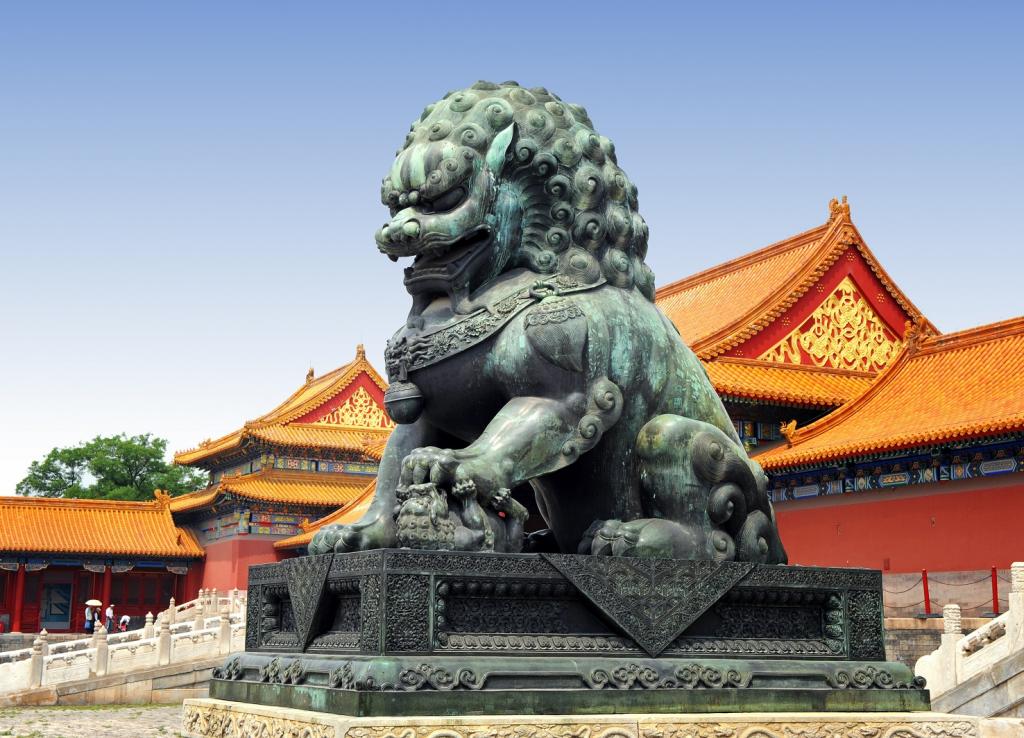
Cruising to Beijing (Tianjin) in a group?
Skip the crowded ship excursion bus. One dedicated planner will design a private shore experience around exactly what your group wants — coordinated from first enquiry to the moment you're back on board. More memorable, more flexible, and more affordable than you might expect. Spend less time organising, more time enjoying.
Explore Group Travel →Cruising to Beijing (Tianjin)
Cruise ships dock at Tianjin International Cruise Home Port, one of the largest purpose-built cruise terminals in Asia, situated on the Bohai Sea roughly 150 kilometres southeast of Beijing. The port itself is modern and efficiently run, but it is merely the gateway: the real destination lies inland, where Beijing's extraordinary concentration of dynastic heritage awaits passengers willing to make the journey.
The fastest connection between Tianjin and Beijing is the intercity high-speed rail, which covers the distance in approximately 30 to 35 minutes and departs frequently from Tianjin Railway Station, a short taxi or shuttle ride from the cruise terminal. The trains are comfortable, punctual, and remarkably affordable by international standards. Road transfers — taxis, private cars, or organised coach excursions — take considerably longer, often 90 minutes to two hours each way depending on traffic, which can be significant on weekdays.
Beijing itself demands choices. The Forbidden City alone could absorb an entire day; the Great Wall at Mutianyu, the nearest reasonably accessible section, requires at least three hours of round-trip travel from the city centre. Passengers who attempt both in a single port day often find themselves rushing through one of the great cultural experiences of the world. The wiser approach is to select one centrepiece and pair it with a neighbourhood walk — the hutong lanes of Nanluoguxiang or the quieter Shichahai lakeside district — rather than ticking monuments off a list.
Timu matters here more than almost anywhere else on the cruise circuit. Factor in the rail journey each way, Beijing traffic between sights, entry queuing at major sites, and the return to the ship, and a 10-hour port call can shrink to six productive hours on the ground. Go in knowing the arithmetic, and Beijing becomes one of the most rewarding single-day destinations in Asia.
Top things to do in Beijing (Tianjin) on a cruise stopover
The Forbidden City (Palace Museum)
The largest surviving palace complex on earth covers 72 hectares and contains 980 buildings arranged along a precise north-south axis. What photographs rarely convey is the scale: walking from the Meridian Gate to the Gate of Divine Might takes 15 minutes at a stroll, and that is without entering a single hall. The central ceremonial route through the Three Great Halls is always crowded; the less-visited western and eastern wings — the Workshop of the Imperial Household, the Clock and Watch Gallery, the Treasure Gallery — offer more breathing room and extraordinary craftsmanship. Book timed entry tickets online well in advance; same-day tickets at the gate are no longer reliably available for international visitors.
Mutianyu Great Wall
Of the restored Great Wall sections accessible from Beijing, Mutianyu strikes the best balance between accessibility and atmosphere. It sits about 70 kilometres north of the city centre (roughly 90 minutes by private transfer), features well-preserved Ming-dynasty watchtowers along a ridge with genuine elevation changes, and is considerably less crowded than Badaling. A cable car ascends from the valley floor; a toboggan run descends — absurd but genuinely enjoyable. Allow at least two hours on the wall itself. The realistic total commitment from Beijing city centre is five to six hours including transport, which effectively fills the Beijing portion of your port day entirely.
Temple of Heaven
Built in the 15th century as the site where the emperor performed annual rites to ensure a good harvest, the Temple of Heaven complex spreads across a 267-hectare park in southern Beijing. The circular Hall of Prayer for Good Harvests — its triple-eaved blue-tile roof assembled without a single nail — is one of the most photographed structures in China, and rightly so. Arrive early: the surrounding park fills through the morning with elderly residents practising tai chi, playing erhu, or engaged in communal card games — a slice of Beijing daily life that is as compelling as the monuments themselves.
Nanluoguxiang & the Hutong Lanes
Nanluoguxiang is the most visited of Beijing's preserved hutong alleys — and unavoidably commercial — but the network of lanes branching east and west from its main spine preserves genuine residential character. Rent a bicycle (several shops on the main street offer hourly hire) and navigate the grid of narrow lanes around Shichahai Lake, where courtyard houses sit behind heavy wooden gates and local life carries on largely indifferent to tourism. This neighbourhood rewards wandering rather than itinerary-following, and sits within comfortable subway distance of both the Forbidden City and the Drum and Bell Towers.
Summer Palace
The imperial retreat on the shores of Kunming Lake occupies a 290-hectare site in Beijing's northwest, anchored by Longevity Hill and connected by the extraordinary Long Corridor — a 728-metre covered walkway painted with over 14,000 individual scenes. The lake itself, partially artificial, was enlarged during the reign of the Qianlong Emperor using soil excavated to deepen it. Rowing boats can be hired on the water; the lake's scale only becomes apparent from mid-water, looking back toward the Marble Boat and the Seventeen-Arch Bridge. Less central than the Forbidden City and therefore slightly less rushed.
Tianjin's Italian Concession Quarter
For passengers who prefer to stay closer to the ship, Tianjin itself contains a remarkable colonial-era district built by Italian, French, British, and German concessions in the late 19th and early 20th centuries. The Italian Concession along Marco Polo Square — formally Piazza Dante — is the most architecturally coherent, with Romanesque and Baroque buildings now housing cafés, boutiques, and small museums. It is a genuinely odd and absorbing place: European townscape architecture on the banks of the Hai River, populated by Chinese families on weekend outings. Twenty minutes from the cruise port by taxi.
Beijing (Tianjin) travel tips
Book Forbidden City Tickets Before You Sail. The Palace Museum has implemented a timed-entry ticket system that sells out days or weeks in advance during peak season. International visitors can book through the official Palace Museum website (pm.com.cn) using a passport number. Tickets purchased on the day — if available at all — require arriving at the gate very early. If you are on an independently organised day ashore and the Forbidden City is your priority, treat ticket booking as a pre-trip task, not an afterthought.
Carry the Ship's Port Agent Card. Your cruise line's port agent in Tianjin will have a Chinese-language contact card with the ship's berth details. Carry this card in your wallet throughout the day. If you need to communicate your destination to a driver who does not speak English, showing the card ensures you can always get back to the correct terminal. Most ships distribute these at the gangway; if yours does not, ask at the shore excursions desk the evening before.
Download Maps Offline Before You Lose Your VPN. Google Maps does not function properly in China. Apple Maps has reasonable coverage in major cities but can be inconsistent. The most reliable alternative is Amap (高德地图, Gaode), which works on international phones and has an English-language interface. Download the relevant map tiles while you are still aboard — or via your VPN — before disembarking. Baidu Maps is comprehensive but predominantly Chinese-language.
The High-Speed Train Is Worth the Extra Step. Many passengers default to coach transfers because they are sold at the pier and require no navigation. The high-speed rail is faster (30–35 minutes versus 90–120 minutes by road), significantly more comfortable, and runs so frequently that there is rarely a wait. The one complication: getting from the cruise terminal to Tianjin Railway Station requires a taxi or organised transfer (20–30 minutes, straightforward). The net time saving compared to a direct coach is typically 60–90 minutes each way — over the course of a day, that is two to three more hours in Beijing.
Lunch Strategy: Sit Down Early. Beijing's popular lunch restaurants fill rapidly between 12:00 and 13:00. If you are targeting a specific restaurant — Siji Minfu for Peking duck, King's Joy for upscale vegetarian cuisine in a converted courtyard, or any well-reviewed spot in the hutongs — either book in advance or plan to arrive before noon. Asking hotel concierges for reservations works even for non-guests at most establishments, particularly if you call the morning of your visit.
Set a Hard Departure Time and Stick to It. Beijing's sights are absorbing enough that time evaporates. Set a phone alarm for your firm departure time from the city — typically 15:30 to 16:00 for a ship with an 18:00 departure — and treat it as non-negotiable. The rail journey back to Tianjin plus the taxi to the terminal takes at least 75 minutes under good conditions, and traffic on the Tianjin ring roads can add unpredictable delays. Missing a ship in a Chinese port is an expensive and logistically complicated problem.
Port Facts Every Cruiser Needs To Know
Beijing (Tianjin) shore excursion FAQs
Tianjin International Cruise Home Port (Dongjiang Port, Binhai district) is approximately 150 kilometres from central Beijing. The fastest practical option is high-speed rail: a taxi from the cruise terminal to Tianjin Railway Station takes 20–30 minutes, and G or C trains then reach Beijing South Station in 30–35 minutes. From Beijing South, the subway or a taxi takes another 20–45 minutes to major sights. Total journey time from ship to central Beijing is typically 80–110 minutes by rail. Coach transfers sold pier-side take 90–120 minutes each way by road, often more in traffic.
In theory, yes; in practice, it produces a deeply unsatisfying experience of both. The Great Wall at Mutianyu is 70 kilometres from central Beijing — around 90 minutes by private car each way — and deserves at least two hours on the wall itself. The Forbidden City's central route alone takes 90 minutes at a brisk pace, and the complex rewards several hours of exploration. Attempting both means one becomes a brief photo stop. Most seasoned travellers choose one and spend the remaining time in a Beijing neighbourhood, which proves far more rewarding than rushing between monuments.
China offers a 72-hour or 144-hour visa-free transit policy to passport holders of many countries when arriving and departing via specific ports, including Tianjin. This policy applies to cruise passengers transiting through China to a third destination. However, eligibility depends on your nationality and specific itinerary, and the rules are subject to change. Verify your eligibility with the Chinese consulate or your cruise line's pre-departure documentation well before sailing; do not rely on informal information. Passengers requiring a standard tourist visa must apply in advance.
Yes, and for many travellers it is the preferable option. Beijing's major tourist sites are well-signposted (often in English), the subway is safe and navigable, and taxis are metered and generally honest. The main challenges for independent travellers are the language barrier in non-tourist areas, the need to book Forbidden City tickets in advance, and internet restrictions affecting Google Maps and translation apps. Preparing offline maps, downloading a translation app, and carrying your destination written in Chinese characters goes a long way. The independence allows you to set your own pace, eat where locals eat, and spend time in the areas that interest you most.
China operates what is commonly called the Great Firewall — a system of internet restrictions that blocks Google (Search, Maps, Gmail, Translate), Facebook, Instagram, WhatsApp, and many Western news sites. A VPN (Virtual Private Network) allows access to blocked services but must be downloaded and configured before arriving in China; downloading VPN apps from within China is itself restricted. Some cruise lines offer connectivity solutions aboard the ship. Local SIM cards work without a VPN for Chinese apps and websites. If you rely on WhatsApp for family communication or Google Maps for navigation, prepare alternatives before disembarking.
Mutianyu is the most appropriate for cruise passengers: it is well-restored, has a cable car that avoids the steep initial climb, and is less crowded than Badaling (the nearest section, which receives overwhelming tourist volumes). Jinshanling is more spectacular scenically but requires a longer drive. Simatai, partially unrestored and genuinely dramatic, is the furthest practical option and better suited to overnight trips. For a single port day, Mutianyu is the consensus choice. Arrange a private car transfer through your ship, a reputable Beijing tour operator, or a hotel in Beijing; negotiate the price and waiting time clearly before departing.
Yes, particularly for passengers who want a lower-intensity day. Tianjin's Italian Concession (Yidali Fengqing Qu) is a preserved early 20th-century European-style district with handsome architecture, cafés, and small museums, about 20 minutes from the cruise terminal by taxi. The Five Great Avenues area (Wudadao) preserves colonial villas from British, French, and American concession areas in a walkable neighbourhood. The Ancient Culture Street (Guwenhua Jie) is a pedestrianised lane lined with traditional architecture and craft shops selling Tianjin's famous clay figurines (Clay Figurine Zhang) and kites. The city also has excellent local cuisine — Goubuli steamed dumplings (baozi) are a Tianjin institution dating to the Qing dynasty.
Chinese Yuan (CNY, also called RMB — Renminbi) is the currency. Most major tourist sites, hotel restaurants, and upscale establishments accept international Visa and Mastercard; however, China's domestic payment ecosystem runs almost entirely on WeChat Pay and Alipay, which require a Chinese bank account or, in some cases, a linked international card (Alipay has expanded international card support in recent years — check current eligibility before sailing). ATMs in Tianjin Railway Station and at Beijing's main hubs dispense yuan against international cards reliably. Carry sufficient cash for meals at local restaurants, small shops, and any admission fees paid on the day.
Avoid overly ambitious itineraries — the transit time each way is significant, and underestimating it causes passengers to rush or, occasionally, miss their ship. Avoid tea house invitations from strangers near tourist sites — a long-running scam in which friendly 'English students' lead tourists to establishments charging hundreds of dollars for ordinary tea. Avoid unlicensed taxis (hei che) that approach at the station or cruise terminal; use metered taxis from official ranks, the DiDi app, or your ship's recommended transfer. Avoid visiting major sites on Chinese national public holidays (particularly Golden Week, 1–7 October), when crowds at the Forbidden City and Great Wall can make them genuinely unpleasant.
Beijing's culinary identity is distinct from the spicy cuisines of Sichuan or Hunan. Peking duck (Beijing kaoya) — roasted in a wood-fired oven and served with thin pancakes, spring onion, cucumber, and hoisin sauce — is the dish to seek out; Siji Minfu and Dadong are well-regarded choices. Zhajiangmian (noodles with fermented soybean paste, cucumber, and minced pork) is a Beijing staple available everywhere. Jianbing — a savoury buckwheat crêpe filled with egg, crispy wonton, and sauce — is the canonical Beijing street breakfast, bought from roadside carts in the morning. In Tianjin, Goubuli baozi (steamed dumplings) have been a local speciality since 1858; the original restaurant in the city centre is a tourist attraction in its own right.
Filters
Select a filter to refine results.
Tour Type
Tour Activity
 Cart
Cart
 USD
USD GBP
GBP AUD
AUD EUR
EUR CAD
CAD