



Tours in New York City (Manhattan)


Cruising to New York City (Manhattan) in a group?
Skip the crowded ship excursion bus. One dedicated planner will design a private shore experience around exactly what your group wants — coordinated from first enquiry to the moment you're back on board. More memorable, more flexible, and more affordable than you might expect. Spend less time organising, more time enjoying.
Explore Group Travel →Cruising to New York City (Manhattan)
New York does not ease you in gently. From the moment your ship rounds the Verrazano-Narrows and the skyline asserts itself across the harbor, the city is already making its case. Manhattan is a borough of neighborhoods stacked improbably close together — Midtown's glass-and-steel ambition giving way, block by block, to the brownstone calm of the Upper West Side, or the cobblestone energy of the Meatpacking District. Every direction holds a worthy destination: the reflective pools of the 9/11 Memorial, the rambling green of Central Park, the industrial poetry of the High Line. For cruise travelers with six to ten hours ashore, the city rewards decisive movement and happy detours in equal measure. Eat a bagel. Ride the subway. Stand on the Brooklyn Bridge at midday and understand, in a single glance, why this place occupies the imagination of the entire world.
Top things to do in New York City (Manhattan) on a cruise stopover
Hop-On Hop-Off: The Full City Panorama
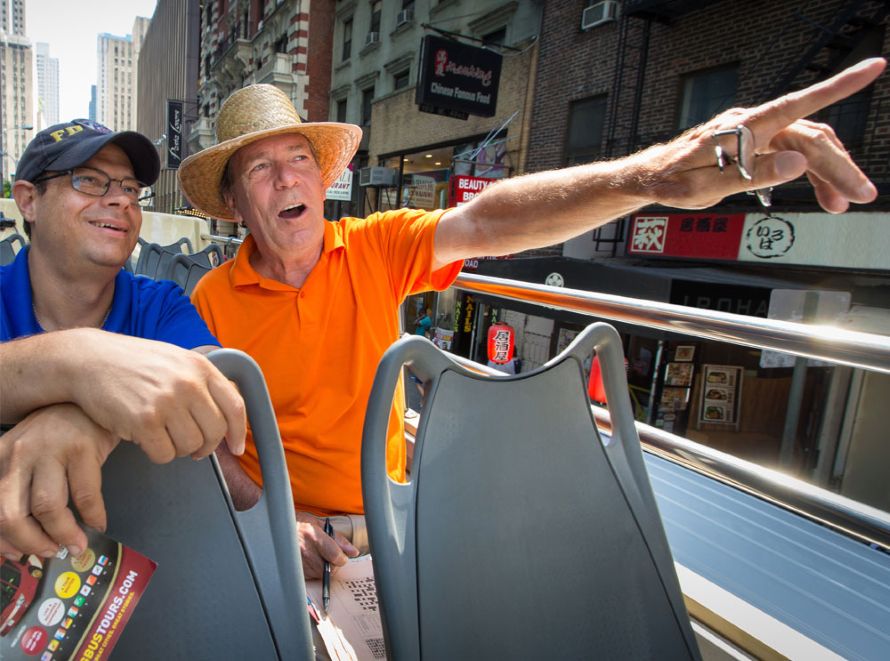
A double-decker bus circuit is one of the most efficient ways to take a city this size by storm when time is finite. Multiple routes thread through Midtown, Lower Manhattan, the Upper West Side, and across to Brooklyn, with narrated commentary filling in the history between stops. Riders can disembark at landmarks like the 9/11 Memorial, Central Park, or the High Line and rejoin a later bus — a genuine advantage when the city is new to you and the map is still being decoded. On clear days, the open top deck delivers unobstructed views of the skyline that no photograph has ever quite managed to replicate.
Central Park: 843 Acres at the Heart of Everything
Frederick Law Olmsted's masterpiece sits at the geographic and emotional center of Manhattan, and spending even 90 minutes here reframes how you understand the city around it. The Bethesda Fountain, Strawberry Fields, Sheep Meadow, and the Jacqueline Kennedy Onassis Reservoir are each worth a detour on their own terms. The park also holds two world-class institutions along its eastern edge — the Metropolitan Museum of Art and the American Museum of Natural History — for visitors who prefer art or science to open air. A morning in the park before the afternoon crowds build is a decision rarely regretted.
Midtown Manhattan: The City in Concentrated Form
Times Square, Rockefeller Center, Grand Central Terminal, and the Chrysler Building occupy a roughly ten-block radius, making Midtown both the most visited and most logistically efficient neighborhood for a short port call. Grand Central's main concourse — with its famous celestial ceiling mural and the constant theater of commuter movement — is free to enter and genuinely worth the detour. The Rockefeller Center observation deck offers arguably the best city panorama available: Central Park stretching north, the World Trade Center complex anchoring the south, and the bridges of the East River clearly visible on a fine day.
Lower Manhattan and the 9/11 Memorial
The southernmost tip of Manhattan carries the full weight of American history — Dutch colonial origins at Bowling Green, the first steps of American finance along Wall Street, and the Statue of Liberty visible across the water from Battery Park. The 9/11 Memorial's twin reflecting pools, set in the footprints of the original towers, demand unhurried, contemplative time. The adjacent museum is comprehensive and moving; allow at least 90 minutes if you intend to experience it properly. The free Staten Island Ferry departs from nearby Whitehall Terminal and passes close enough to the Statue of Liberty for a clear view.
The High Line: An Elevated Garden Above the West Side
What began as a 1930s freight rail line above the streets of Chelsea and the Meatpacking District is now one of the most distinctive urban parks in the world: 1.45 miles of elevated walkway planted with wild grasses, seasonal flowers, and rotating public art installations. The views change constantly — Hudson Yards to the north, the Hudson River to the west, and the rooftops of old industrial buildings below. Chelsea Market, accessible at street level beneath the High Line at 15th Street, offers a concentrated version of New York's extraordinary food culture under one roof.
Brooklyn Bridge and the DUMBO Neighborhood
Walking the Brooklyn Bridge pedestrian promenade — roughly 20 minutes from Manhattan to Brooklyn — is one of the great short walks in American travel, with the East River below and the full skyline unfolding at every step. DUMBO (Down Under the Manhattan Bridge Overpass) on the Brooklyn side has evolved into a neighborhood of cobblestoned streets, independent galleries, and some of the most photographed views of the Manhattan Bridge and skyline available anywhere in the city. The subway return from Jay Street-MetroTech or High Street stations to Midtown takes under ten minutes.
New York City (Manhattan) travel tips
Navigate the Subway Like a Local. The NYC Subway is the fastest way to cover distance in Manhattan, and the learning curve is shorter than it appears. Download the MTA app or Google Maps before arrival — both provide real-time service alerts and step-by-step directions. Tap your contactless credit card or phone directly to the turnstile reader (OMNY system) for the simplest entry; a single ride costs $2.90 as of 2025, with no separate MetroCard required.
Free New York Is Extraordinary New York. Some of the city's most memorable experiences cost nothing. The Staten Island Ferry offers Statue of Liberty views at no charge. Walking the Brooklyn Bridge is free. Central Park requires only your time. The lobby of Grand Central Terminal, the Oculus at the World Trade Center, and the public plazas of Rockefeller Center are all open without a ticket. Budget your paid admissions — museum entry, observation decks — selectively given the time you have.
Eat Where the Neighborhood Eats. New York's food culture is one of its deepest pleasures, and the best versions rarely announce themselves with prominent signage. Chelsea Market concentrates a remarkable range of vendors under one roof near the High Line. The streets of the Lower East Side, Chinatown, and Koreatown in Midtown each represent culinary traditions that predate most restaurants in any visitor's home city. A classic New York bagel — from a shop that still boils before baking — is worth tracking down regardless of your broader itinerary.
Time Your Museum Visits Carefully. The Metropolitan Museum of Art, the American Museum of Natural History, and the Museum of Modern Art are each world-class institutions, but each also requires a realistic time commitment — two hours is a minimum, three is more honest. If your itinerary is time-compressed, the 9/11 Memorial's outdoor reflecting pools, the High Line, and Central Park offer substantial experiences without timed-entry queues or admission decisions.
Weather Moves Fast — Dress in Layers. New York weather is famously variable, particularly in spring and fall when cruise season peaks. A morning that begins cool can turn warm by midday, and afternoon rain is common without much warning. Comfortable, broken-in walking shoes are non-negotiable — expect to cover five to eight miles on foot without noticing. A compact umbrella and a light layer solve most meteorological surprises without adding significant bag weight.
Build Buffer Time Into Your Return. Traffic between Midtown and the cruise terminals can be unpredictable, particularly during afternoon rush hour and near major events. The walk from Times Square to the Manhattan Cruise Terminal takes approximately 20 to 25 minutes on foot — a reliable fallback when traffic is heavy. Leave yourself a minimum of 60 to 90 minutes before all-aboard, and do not schedule anything requiring exact timing in the final two hours of your time ashore.
Port Facts Every Cruiser Needs To Know
New York City (Manhattan) shore excursion FAQs
Most large cruise ships use the Manhattan Cruise Terminal on Piers 88, 90, and 92 along the Hudson River on the west side of Midtown, roughly at 50th Street. Some sailings — particularly repositioning or turnaround voyages — use the Brooklyn Cruise Terminal at Red Hook in Brooklyn. Your cruise line will specify your pier in your port documents. Confirm this before arrival, as the two terminals require entirely different onward logistics.
From the Manhattan Cruise Terminal, Times Square is a 10–15 minute walk east. Central Park's southwest entrance at Columbus Circle is roughly 20 minutes on foot. The terminal is well-positioned for Midtown exploration, though Lower Manhattan, the High Line, and Brooklyn are more sensibly covered by subway. From Brooklyn Cruise Terminal, a subway or bus ride into Manhattan is necessary — the walk to the nearest neighborhood takes 20–30 minutes.
For a one-day visit, advance booking is strongly recommended for the most popular paid attractions. The 9/11 Memorial Museum, Top of the Rock at Rockefeller Center, and One World Observatory all operate on timed-entry tickets that sell out, particularly in summer and on weekends. The Metropolitan Museum of Art and the American Museum of Natural History are generally walkable, but online purchase saves time at the admissions desk.
Yes, but it requires advance planning. Ferries to Liberty Island and Ellis Island depart from Battery Park in Lower Manhattan. Access to the crown requires tickets booked months ahead. Pedestal access also sells out — occasional last-minute slots appear online, but it is not reliable. The Staten Island Ferry, which is free, passes the statue closely enough for a clear photograph and is the most practical option for time-constrained cruise visitors.
For a compressed visit, Midtown offers the densest concentration of recognizable landmarks within close range of the Manhattan Cruise Terminal: Times Square, Grand Central Terminal, the Chrysler Building, and Rockefeller Center are all within a 15-minute walk of each other. Visitors with more time might add Lower Manhattan and the 9/11 Memorial, or push up into the Upper West Side along Central Park's western edge.
The New York City Subway is one of the most extensive transit systems in the world, and the vast majority of visitors navigate it without difficulty. Tap your contactless bank card or phone to the turnstile reader — no separate ticket needed. Google Maps and Apple Maps both provide real-time subway directions. Avoid the subway during peak rush hours (8–9am, 5–6:30pm) if you prefer a more comfortable experience, particularly on the most crowded lines.
New York's food culture is one of its defining characteristics. A bagel with lox from a traditional shop, a slice of New York-style pizza from a neighborhood counter, and a pastrami sandwich on rye from a Lower East Side deli are each experiences that have no meaningful equivalent elsewhere. Chelsea Market aggregates a range of independent food vendors under one roof and makes an efficient stop for cruise visitors covering the west side of Midtown.
The Brooklyn Cruise Terminal in Red Hook is approximately 3.5 miles from Lower Manhattan by road. The nearest subway stations are a 20–25 minute walk from the terminal. Some cruise lines operate shuttle buses on turnaround days — check with your carrier in advance. The subway journey to Lower Manhattan once you reach a station takes roughly 20 minutes.
Numerous significant New York experiences cost nothing. The Staten Island Ferry offers harbor and Statue of Liberty views in both directions at no charge. Walking the Brooklyn Bridge is free. Central Park is entirely free. Grand Central Terminal, the Oculus transportation hub at the World Trade Center, and the public spaces of Rockefeller Center are open without tickets. The High Line elevated park is free and open year-round from 7am.
For a first visit, most travelers find value in anchoring the day around two or three geographic areas rather than attempting an exhaustive list. The combination of Midtown landmarks, Central Park, and Lower Manhattan covers the emotional and historical core of the city efficiently. A hop-on hop-off bus provides an excellent orientation layer before deciding where to invest the most time on foot — particularly useful when the city's scale is still being internalized.
Filters
Select a filter to refine results.
Tour Type
Tour Activity
 Cart
Cart
 USD
USD GBP
GBP AUD
AUD EUR
EUR CAD
CAD