



Tours in Arrecife


Cruising to Arrecife in a group?
Skip the crowded ship excursion bus. One dedicated planner will design a private shore experience around exactly what your group wants — coordinated from first enquiry to the moment you're back on board. More memorable, more flexible, and more affordable than you might expect. Spend less time organising, more time enjoying.
Explore Group Travel →Cruising to Arrecife
Arrecife is the compact, unhurried capital of Lanzarote — the easternmost of the Canary Islands — and serves as the island's main cruise port. The town itself is pleasant enough, with a palm-lined promenade, a pair of historic castles guarding the harbour, and a relaxed café culture, but Lanzarote's real draw lies beyond its capital. Within 30 kilometres, the island delivers some of the most visually arresting scenery in the Atlantic: the UNESCO-listed Timanfaya National Park, where geothermal heat radiates just centimetres below the surface of barren lava fields; vine-growing hollows hand-carved into volcanic rock; and pale, wind-sculpted beaches bordered by turquoise water. The island's development has been shaped by the work of local artist and visionary César Manrique, whose influence on low-rise, whitewashed buildings and landscape integration remains visible everywhere. A cruise stay of six to ten hours comfortably allows for a focused excursion to the fire mountains or a blend of volcanic scenery and time in the port town.
Top things to do in Arrecife on a cruise stopover
Timanfaya National Park: The Fire Mountains
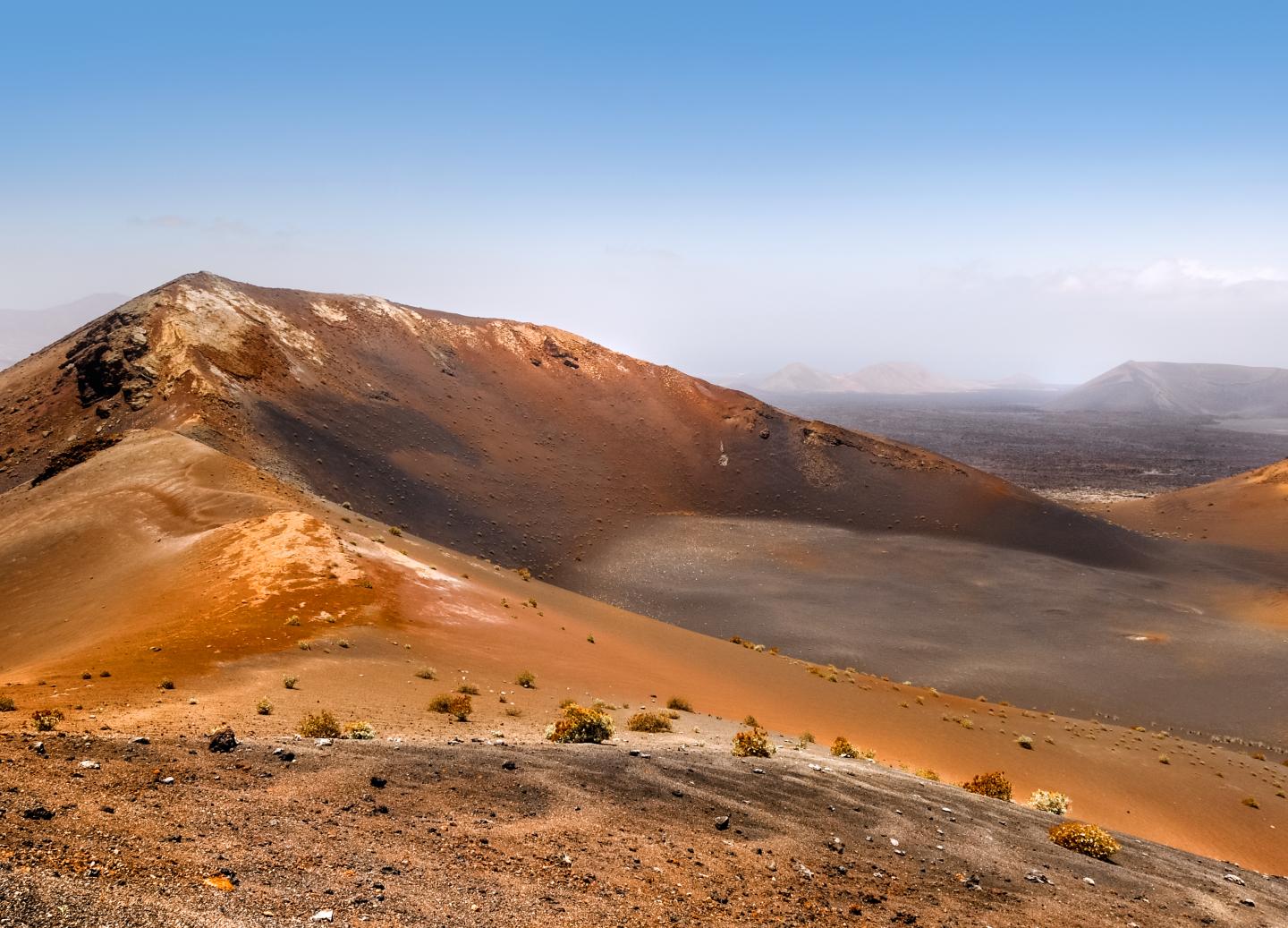
Covering around 51 square kilometres of Lanzarote's western interior, Timanfaya National Park was born from the volcanic eruptions of 1730–36 that buried dozens of villages under metres of lava. The park's most striking feature is the Montañas del Fuego (Fire Mountains), where geothermal activity persists just below the surface: rangers pour water into rock fissures and geyser jets of steam erupt within seconds. The entire core zone is explored via a guided bus tour weaving through solidified lava flows of every texture and colour. No private vehicles or pedestrian access is permitted inside, making the bus circuit the sole legal means of experiencing the landscape. The visual drama is extraordinary at any time of day, but morning light creates particularly vivid contrasts across the red, ochre, and black volcanic terrain.
Volcanic Landscape: A Lunar World Frozen in Time
Even beyond Timanfaya's boundaries, Lanzarote's volcanic character is inescapable. The island sits atop one of the most recently active volcanic zones in the Canary archipelago, and its surface reads like a geological record written in lava, cinder, and ash. Malpaís — rough, broken lava fields — spread across wide stretches of the interior and coast. Ancient lava tubes, some several kilometres long, run beneath the surface. The island's flat, open terrain allows uninterrupted views of the volcanic cones punctuating the skyline. This is not dramatic highland scenery but something more austere and primordial: the feeling of standing on land that was liquid rock within living memory, now permanently still. UNESCO recognised Lanzarote as a Biosphere Reserve in 1993.
Arrecife Port Town: Castles, Lagoon, and Daily Life
Often overlooked in favour of the island's natural attractions, Arrecife rewards an hour of relaxed wandering. The waterfront Charco de San Ginés — a tidal lagoon framed by low whitewashed buildings and fishing boats — gives the town a calm, unspoiled character distinct from commercialised resort areas. Two defensive castles guard the harbour: Castillo de San Gabriel (now a small archaeological museum) sits on an islet connected by a short drawbridge, while Castillo de San José to the north houses an international contemporary art collection. The main pedestrian shopping street, Calle León y Castillo, is lined with local shops, bakeries, and cafés — a good place to find papas arrugadas at a neighbourhood price.
Atlantic Beaches: Wind, Waves, and Volcanic Sand
Lanzarote's beaches vary from the famously pale, powdery sands of Playa Blanca and Playa de Papagayo in the south to darker volcanic-tinged strands near the northern coastline. Playa de Famara, on the northwest coast, is a broad, wild beach backed by dramatic 600-metre cliffs — beloved by surfers for its Atlantic swells. Most beaches require travel time from Arrecife, but the consistently clear, warm Atlantic water rewards the journey. The island's position off the coast of Africa means water temperatures are pleasant year-round, typically between 18°C in winter and 23°C in summer. The town beach, Playa del Reducto, is within walking distance of the cruise dock.
La Geria Wine Country: Vines in Volcanic Hollows
La Geria, in the island's interior between Arrecife and Timanfaya, is one of the world's most unusual wine-producing landscapes. Vintners hand-excavate individual semicircular hollows — called zocos — into the volcanic lapilli, planting a single vine at the base of each and encircling it with a low stone wall that channels moisture from night-time dew. From the road, the landscape appears as thousands of small craters across black terrain — entirely unlike any other vineyard on earth. The primary grape variety is Malvasia, producing a fresh, mineral white wine with a slightly volcanic character. Several bodegas along the road through La Geria welcome visitors for tastings and lie conveniently on the route toward Timanfaya.
César Manrique's Island Vision
Born in Arrecife in 1919, César Manrique left a mark on Lanzarote extending far beyond his career as a painter and sculptor. He successfully campaigned for strict planning regulations that prohibited high-rise construction across the island, preserved the traditional whitewashed building style, and embedded his artistic philosophy into public spaces and tourist infrastructure. His most celebrated works include Jameos del Agua — a concert hall and restaurant built inside a volcanic lava tube — and the Fundación César Manrique, his former home inside five volcanic bubbles. His influence is visible in everything from the island's road signage to its roundabout sculptures, explaining why Lanzarote has retained a visual coherence rare among heavily visited destinations.
Arrecife travel tips
Dress for Both Sun and Wind. Lanzarote's exposed lava landscapes offer virtually no shade, and the island's near-constant trade winds can mask how intensely the sun is working. High-factor sunscreen, a hat with a brim, and lightweight long sleeves are strongly advisable for any time spent outdoors — including at Timanfaya, where the bus circuit leaves passengers in direct sun. Wind levels at coastal viewpoints and hilltops can be significantly stronger than in town; a light layer is worth carrying even on warm days.
Timanfaya Entry Is Restricted — Plan the Visit Carefully. Independent access inside the core Fire Mountains zone of Timanfaya National Park is not permitted; entry requires a guided bus circuit departing from the Islote de Hilario visitor area. The visitor facilities here include a restaurant famously built over a geothermal vent. Allow time for both the bus circuit (approximately 40 minutes) and exploration around the entrance area — the geothermal demonstrations and viewpoints at Islote de Hilario alone justify extra time.
Carry Water — Particularly on Volcanic Excursions. The combination of Lanzarote's dry climate, trade winds that accelerate evaporation, and exposed terrain means dehydration can develop faster than expected. Bottled water is available at Timanfaya's visitor centre and in the main towns, but there are no refreshment facilities along remote stretches of road or coastal paths. A litre of water per person for a half-day excursion is a sensible minimum.
Eat Around the Charco for Authentic Local Prices. The restaurants around Arrecife's Charco de San Ginés tidal lagoon tend to offer more authentic cooking at lower prices than the tourist-facing establishments nearer the cruise pier. Look for blackboard menus listing the day's fish catch — vieja, sama, and cherne are local staples grilled simply and served with papas arrugadas and mojo. Menus del día (set lunch menus) typically offer excellent value and include wine or water.
The North and South of the Island Have Very Different Characters. Lanzarote's character changes noticeably between the leeward south (calmer, sunnier, more sheltered beaches) and the windward north (wilder, cooler, with bigger waves and dramatic cliffs at Famara). If the forecast shows strong northern trades, plan accordingly — some exposed coastal viewpoints become genuinely challenging in high wind. The south's Playa de Papagayo and Playa Blanca are the island's finest beaches for swimming and are best suited to calmer days.
Factor Travel Time When Planning Your Return to Port. Timanfaya is approximately 30 km from Arrecife port. Factor in outbound travel time, time at the park, and the return journey when planning the day. A stop through La Geria wine country adds further time. Cruise ship all-aboard times in smaller ports like Arrecife are rarely delayed; arriving late to port with no transport plan can result in a stressful final stretch with limited options.
Port Facts Every Cruiser Needs To Know
Arrecife shore excursion FAQs
Timanfaya National Park is approximately 30 kilometres from Arrecife port — typically 35–50 minutes by road. The journey passes through the La Geria wine region, making the drive itself scenic. Public buses connect Arrecife with the park entrance, but schedules are limited and the journey takes approximately 45–55 minutes with few departures daily.
No. The core Fire Mountains zone is accessible only via a guided bus tour departing from the Islote de Hilario visitor area. Independent walking or driving inside this zone is not permitted. There are short marked trails in other areas of the national park outside the restricted core zone, but the iconic volcanic landscapes and geothermal demonstrations are only accessible via the guided circuit.
Public buses (ARRECIFE BUS) serve routes across the island from the central bus station in Arrecife, a short walk from the cruise dock. For Timanfaya, the No. 9 bus via Yaiza connects to the park entrance, though departures are infrequent. For Arrecife town itself, the port is ideally placed for walking to the seafront, Castillo de San Gabriel, and the Charco de San Ginés lagoon.
Arrecife town centre is largely flat and manageable for visitors with limited mobility. Timanfaya's guided bus circuit is accessible without significant physical exertion, though boarding the bus requires a few steps. Open lava field areas outside the circuit are uneven and unsuitable for wheelchairs. Beaches vary — some have accessible facilities, others involve walking across soft sand or uneven volcanic rock.
Lanzarote uses the Euro (€) as part of Spain and the European Union. Card payments (Visa and Mastercard) are accepted at most restaurants, shops, and tourist sites. ATMs are available in central Arrecife near the port. Small local cafés, market stalls, and some rural bodegas may prefer or require cash, so carrying a small amount of euros is advisable.
Lanzarote enjoys a mild, dry climate year-round — often described as perpetual spring. Average temperatures range from around 18°C in December–January to 27°C in August. Rainfall is minimal; the island is one of Europe's driest. Trade winds bring pleasant breezes in summer but can be notably strong on northern and western coasts. Occasional calima events (Saharan dust on southerly winds) can reduce visibility and temporarily raise temperatures.
Yes, though the island's most celebrated beaches (Playa de Papagayo, Playa Blanca) are 30–40 km south of Arrecife. Playa del Reducto, a pleasant sandy beach, is within easy walking distance of the port — ideal for those combining town exploration with a swim. Playa Honda, a few kilometres south, is accessible by local bus and offers a longer stretch of sand.
Yes. The La Geria wine region — where vines grow in individual volcanic hollows — lies roughly between Arrecife and Timanfaya, making it a natural stop en route. Several bodegas along the La Geria road are open to visitors for tastings during the day, typically without prior reservation. The primary grape is Malvasia, used for dry and sweet white wines with a distinctive mineral character.
Yes. The Charco de San Ginés — a peaceful tidal lagoon ringed by cafés and fishing boats — is about a 10-minute walk from the port. Castillo de San Gabriel, the 16th-century seafront castle on a small islet connected by a drawbridge, is directly adjacent to the port area and houses a small archaeological museum. The main pedestrian shopping street is a five-minute walk, and the town beach, Playa del Reducto, is within comfortable walking distance.
Allow a minimum of four to five hours for a round trip from Arrecife port including the guided bus circuit. The circuit itself takes approximately 40 minutes; time at the Islote de Hilario visitor area (geothermal demonstrations, views, the geothermal restaurant) typically adds another 30–60 minutes. With 35–50 minutes travel each way, a four-hour window is the practical minimum; five to six hours allows a more relaxed visit with stops through La Geria.
Filters
Select a filter to refine results.
Tour Type
Tour Activity
 Cart
Cart
 USD
USD GBP
GBP AUD
AUD EUR
EUR CAD
CAD