



Tours in Corfu



Cruising to Corfu in a group?
Skip the crowded ship excursion bus. One dedicated planner will design a private shore experience around exactly what your group wants — coordinated from first enquiry to the moment you're back on board. More memorable, more flexible, and more affordable than you might expect. Spend less time organising, more time enjoying.
Explore Group Travel →Cruising to Corfu
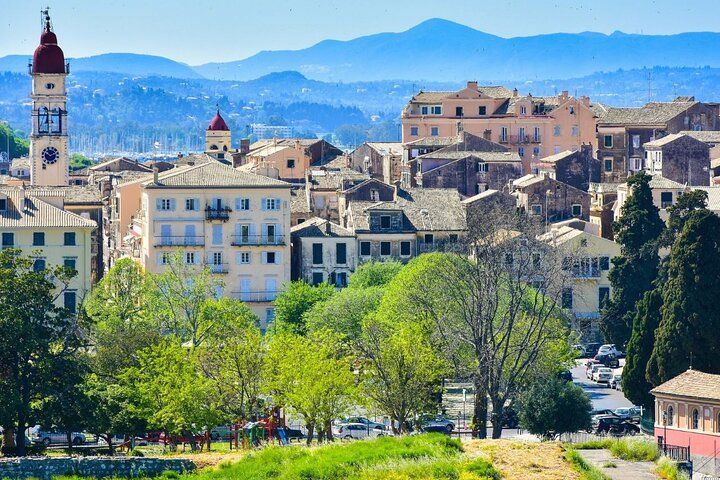
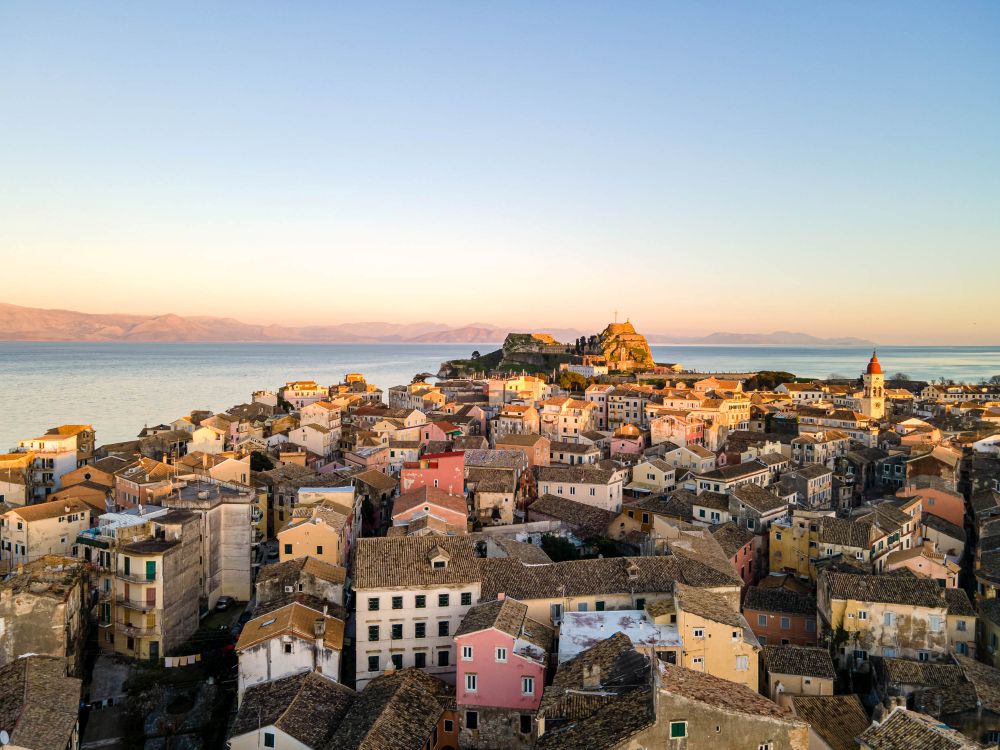
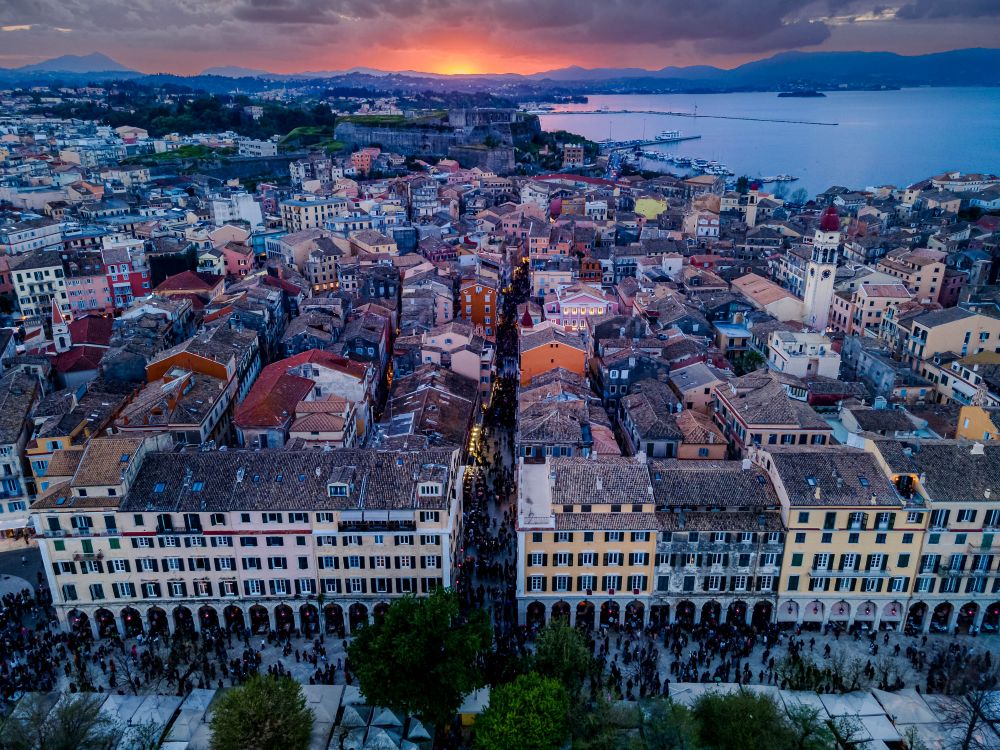
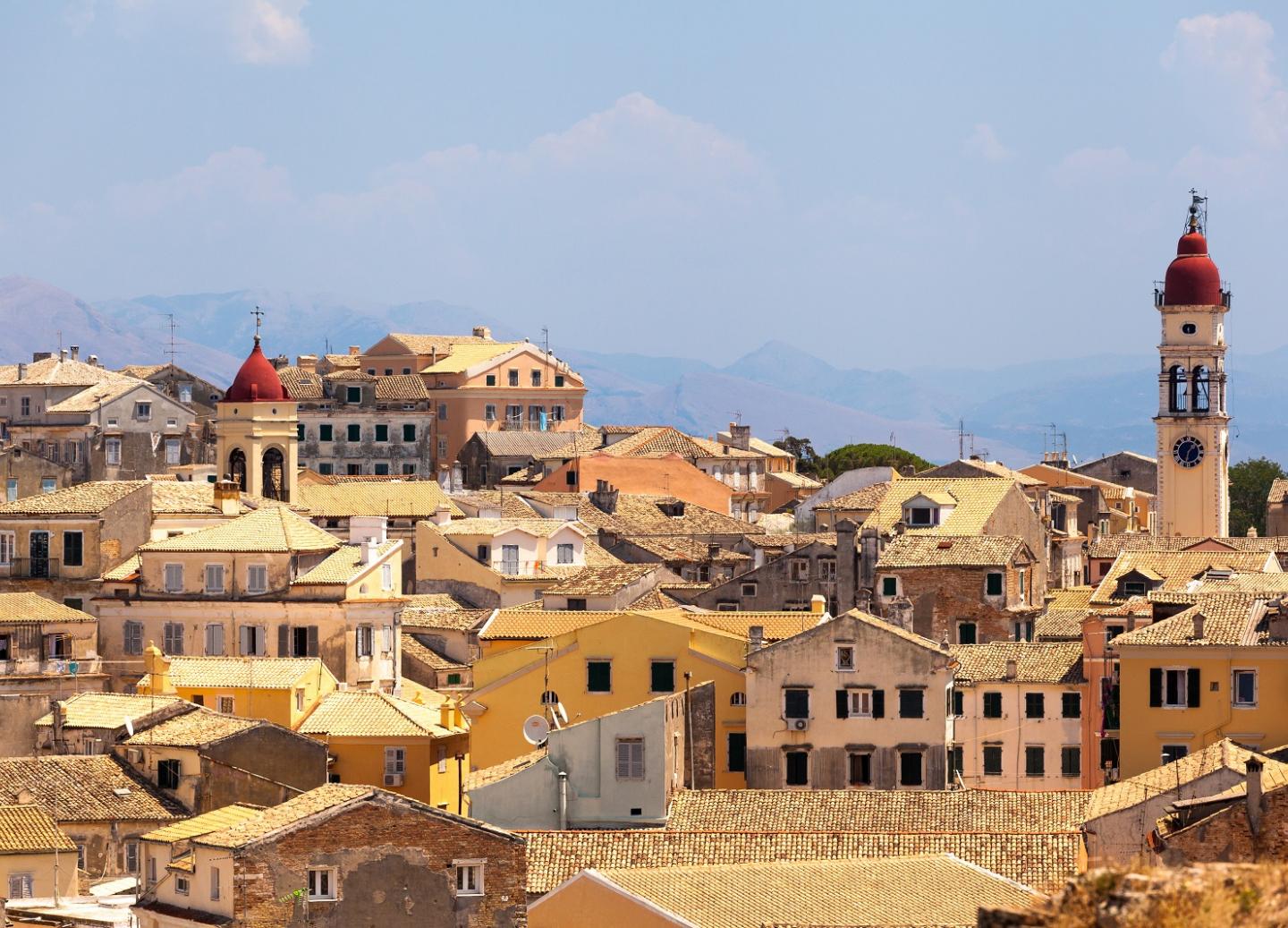
Corfu sits at the northern edge of the Ionian Sea, separated from the Greek mainland and Albania by a narrow channel of deep blue water. Of all the Greek islands, few carry as layered a history — Venetians ruled here for four centuries, leaving behind a town of arcaded piazzas, pastel-painted buildings and elaborate fortresses that earned the Old Town UNESCO World Heritage status in 2007. The French and British each left their mark too, most visibly in the Liston arcade, modelled on Paris's Rue de Rivoli, and in the sprawling cricket ground that still fronts the Esplanade.
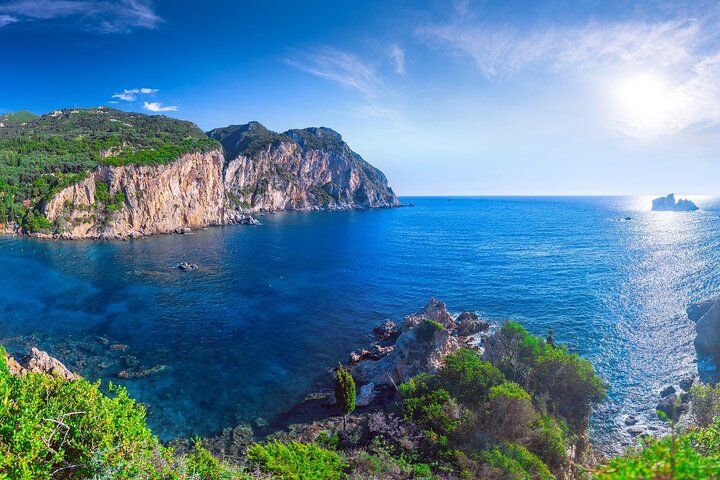
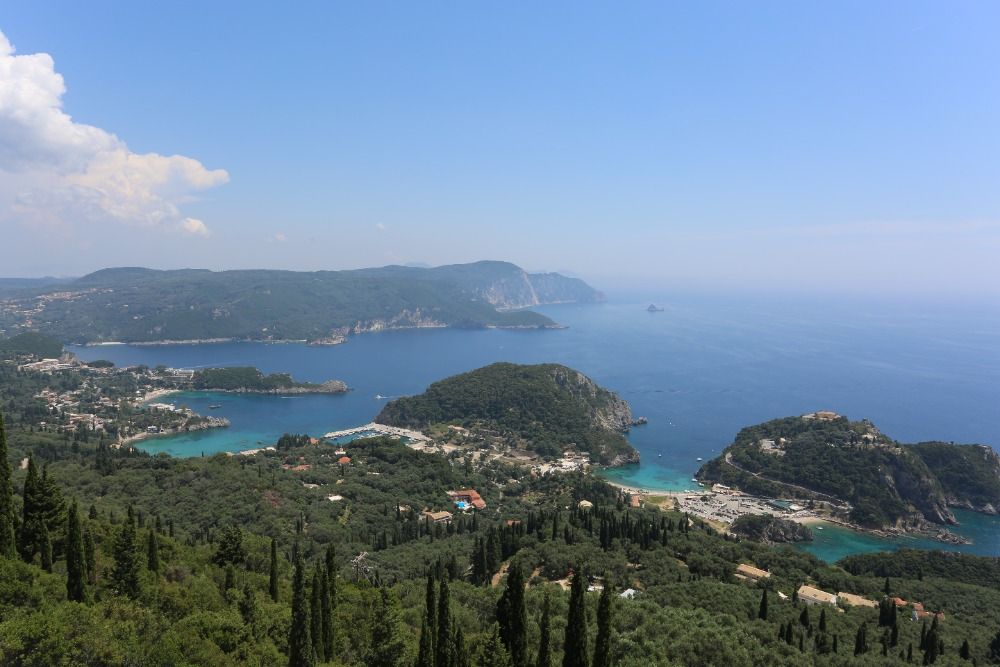
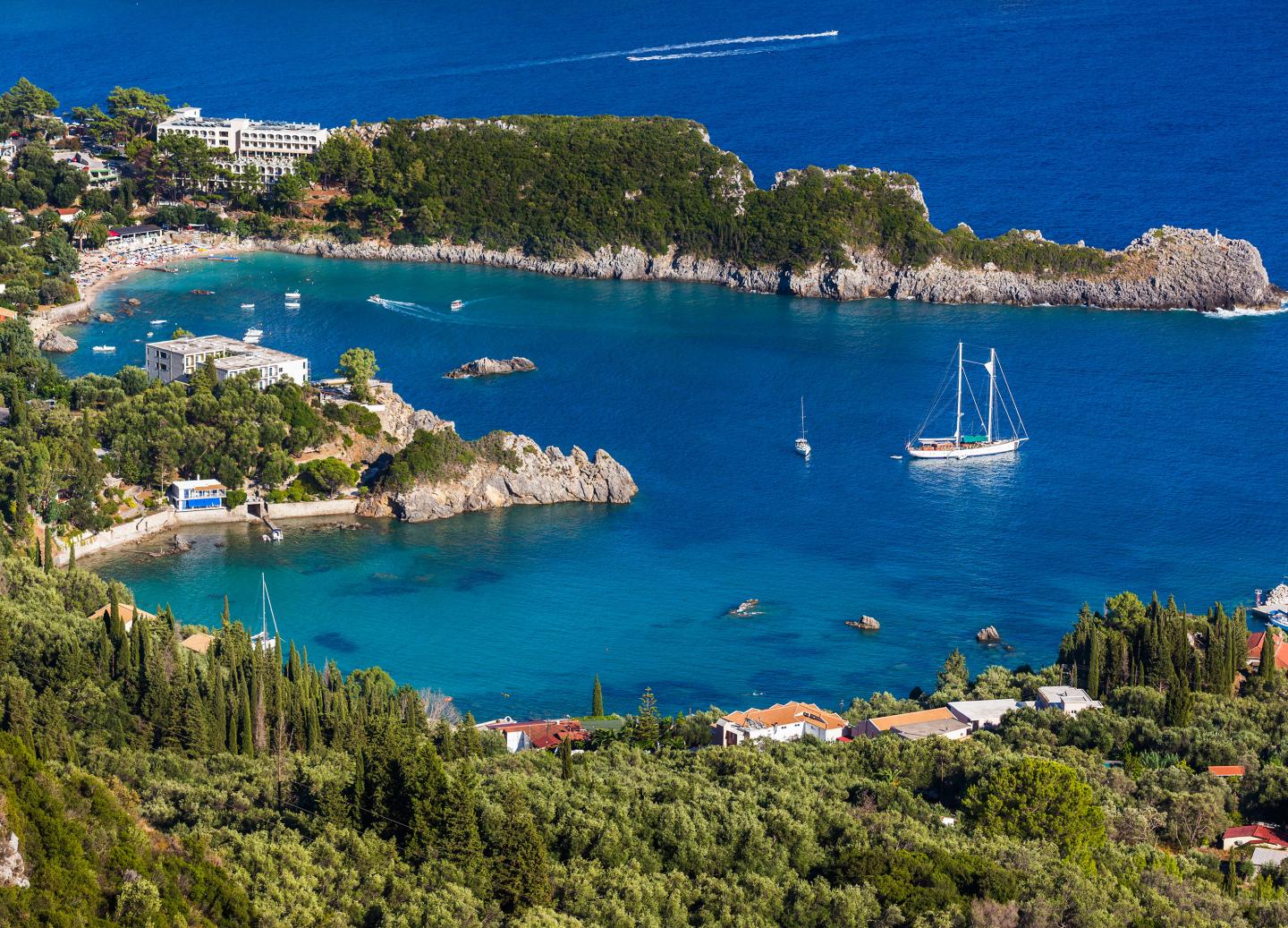
Beyond the town, the island unfolds in a patchwork of silver-green olive groves — Corfu claims some four million olive trees, many of them ancient — interrupted by beaches of striking variety. Paleokastritsa on the northwest coast combines turquoise coves, a clifftop monastery and boat trips into sea caves, while Glyfada and Myrtiotissa draw those seeking longer stretches of golden sand. Inland, hilltop villages like Pelekas and Lakones offer sweeping island views, and rural roads connect distilleries producing the island's distinctive kumquat liqueur, a product found nowhere else in Greece. A day ashore here rewards visitors who venture beyond the port gates.
Top things to do in Corfu on a cruise stopover
Corfu UNESCO Old Town: Fortresses, Arcades and Venetian Lanes
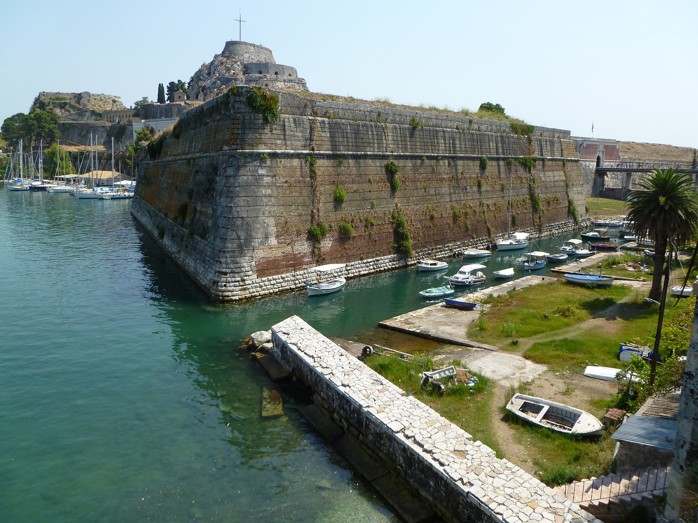
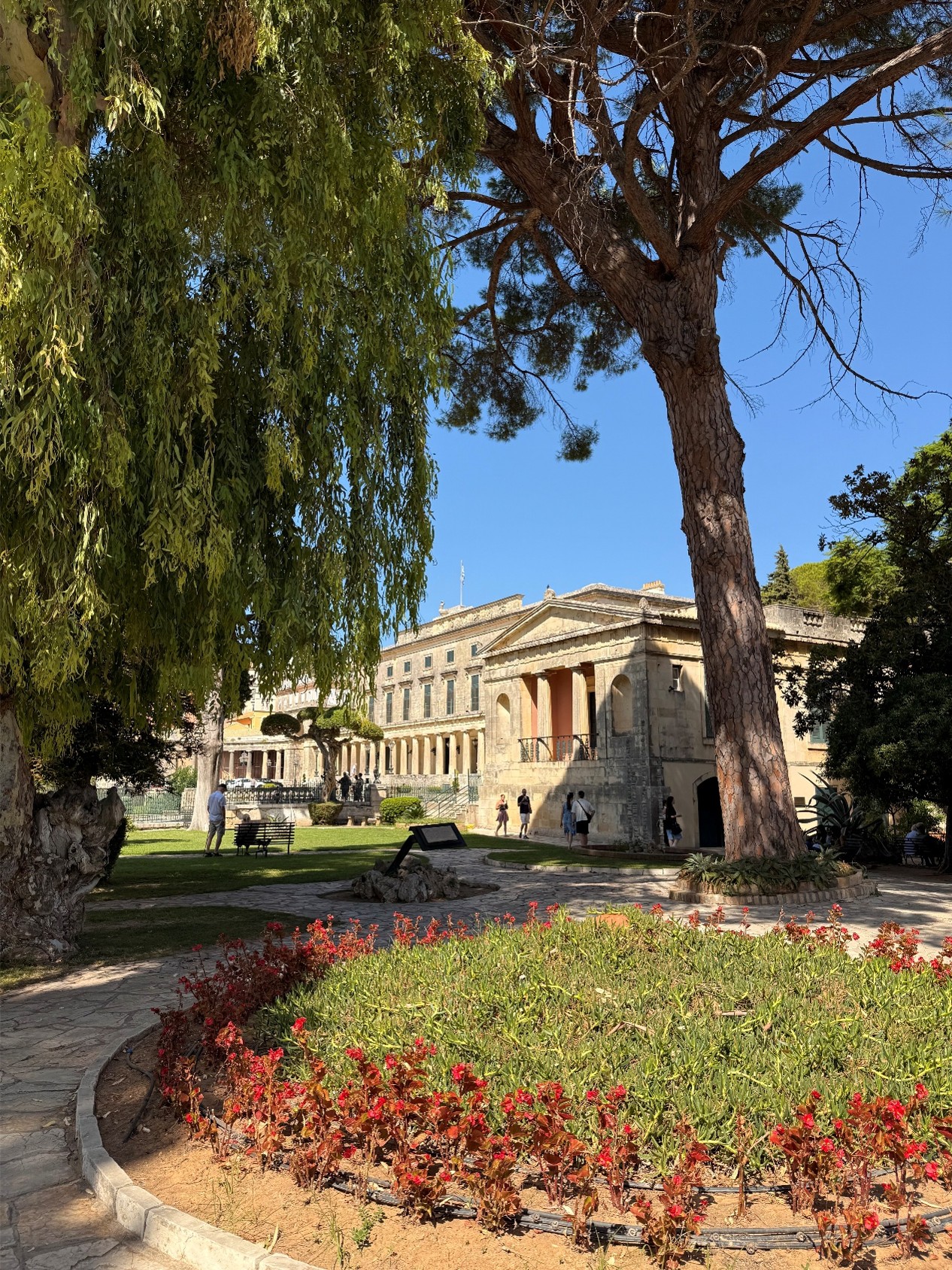
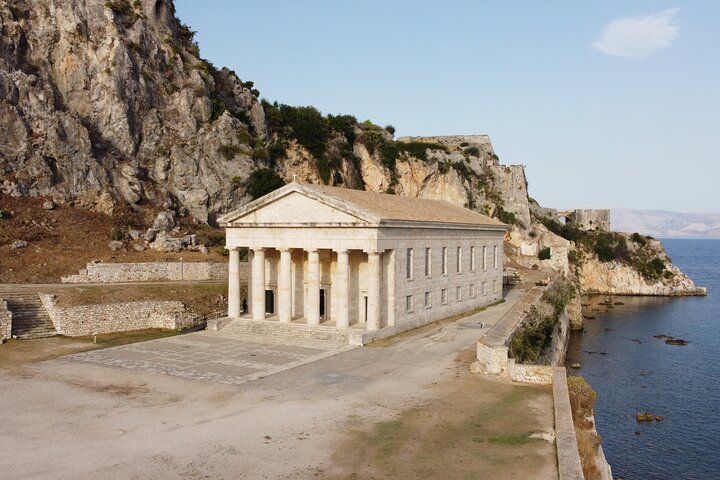
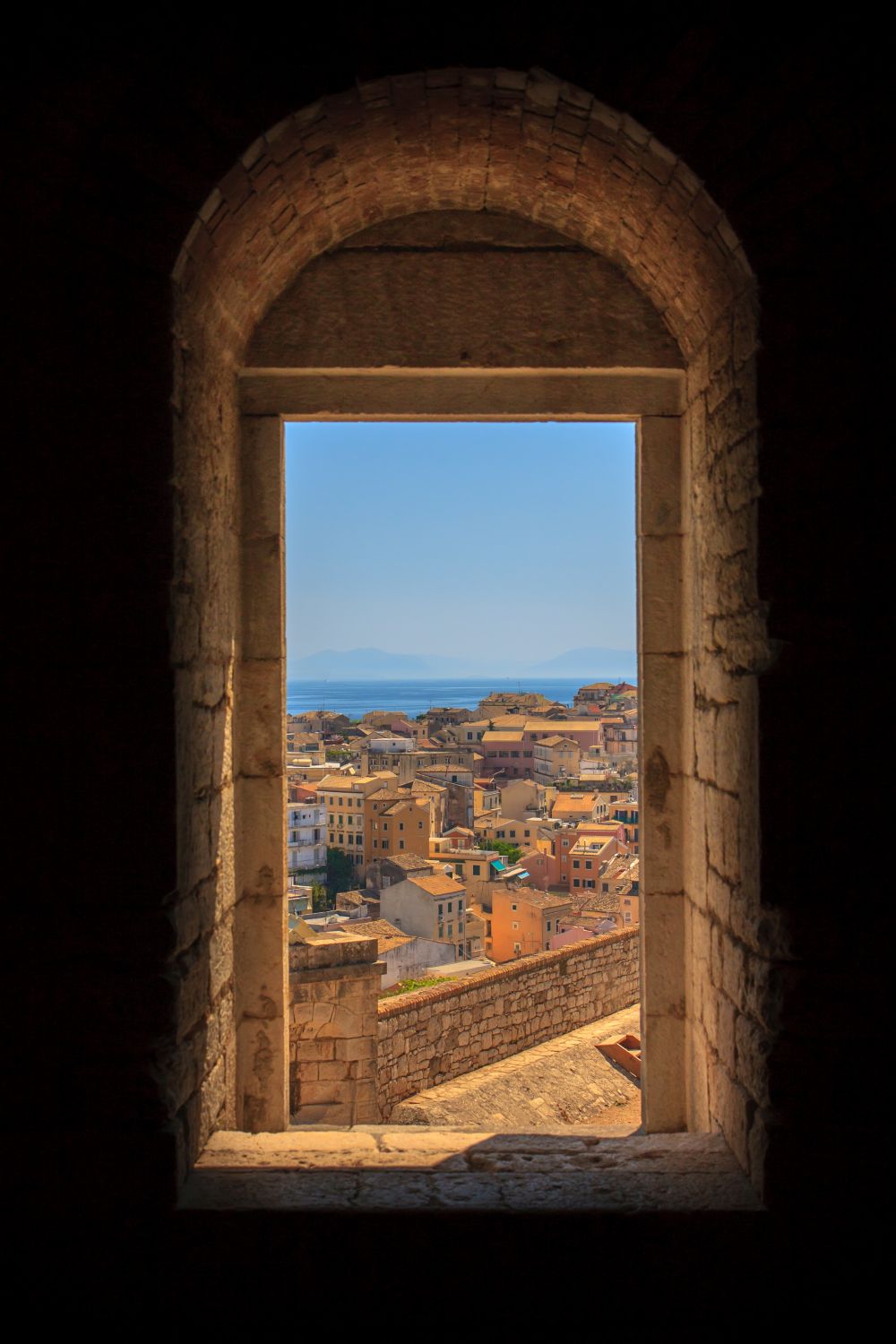
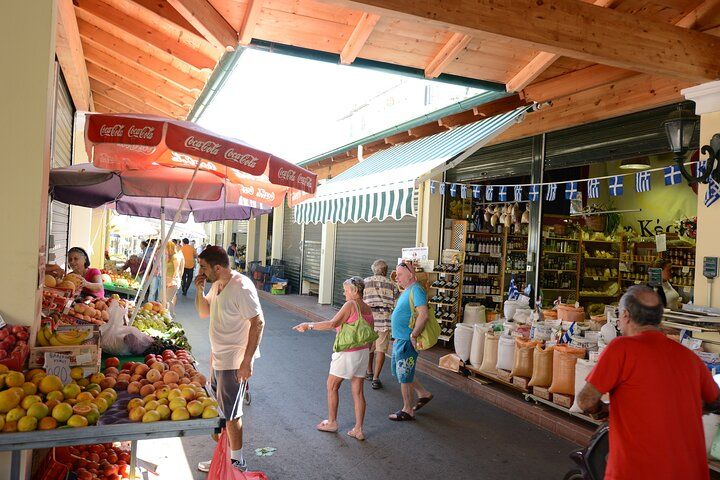
Corfu Town's historic centre is one of the best-preserved medieval towns in the Mediterranean, earning UNESCO World Heritage designation in 2007. Two massive Venetian fortresses bookend a maze of narrow lanes lined with buildings painted in fading ochres and terracottas. The Liston, a 19th-century arcade inspired by the Rue de Rivoli, faces the vast Esplanade — a space that functions as park, promenade and cricket ground, a British legacy still in use today. Walking food tours thread through the Old Town's market streets, pausing at bakeries and shops stocking the island's famous liqueurs and olive products. The town rewards slow exploration: a half-day on foot reveals layers of Venetian, French and British history at every turn.
Paleokastritsa: Turquoise Coves, Clifftop Monastery and Sea Caves
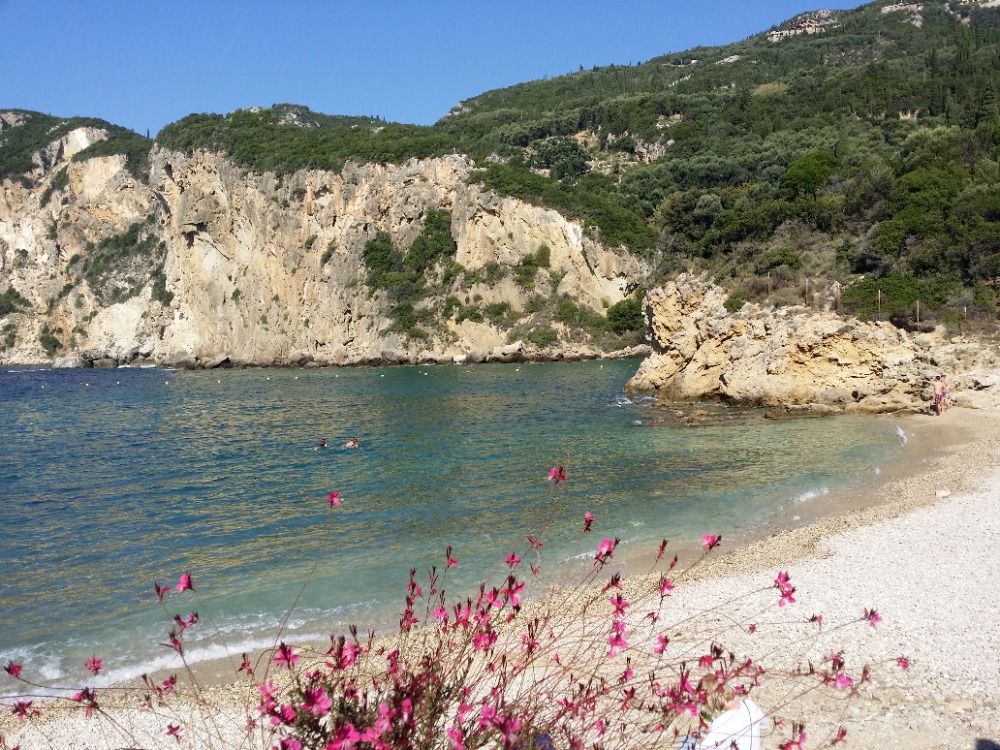
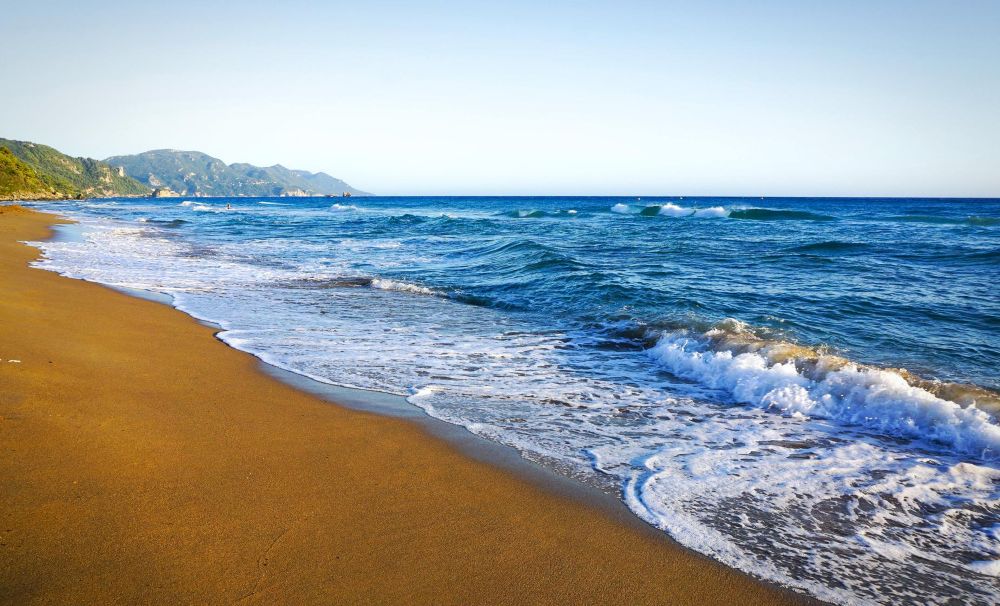
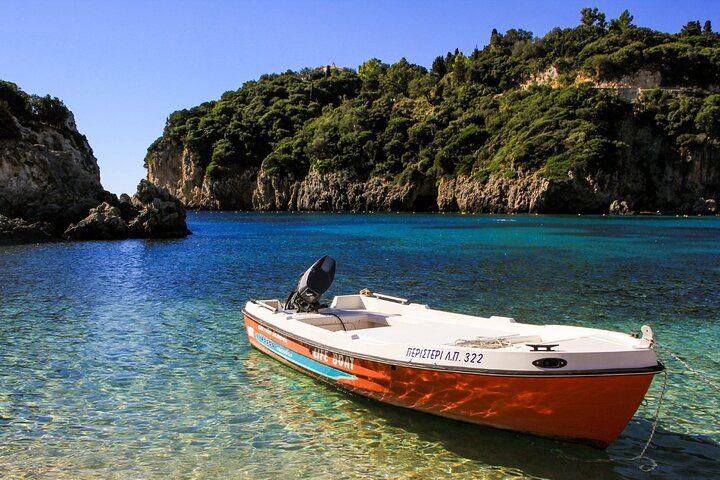
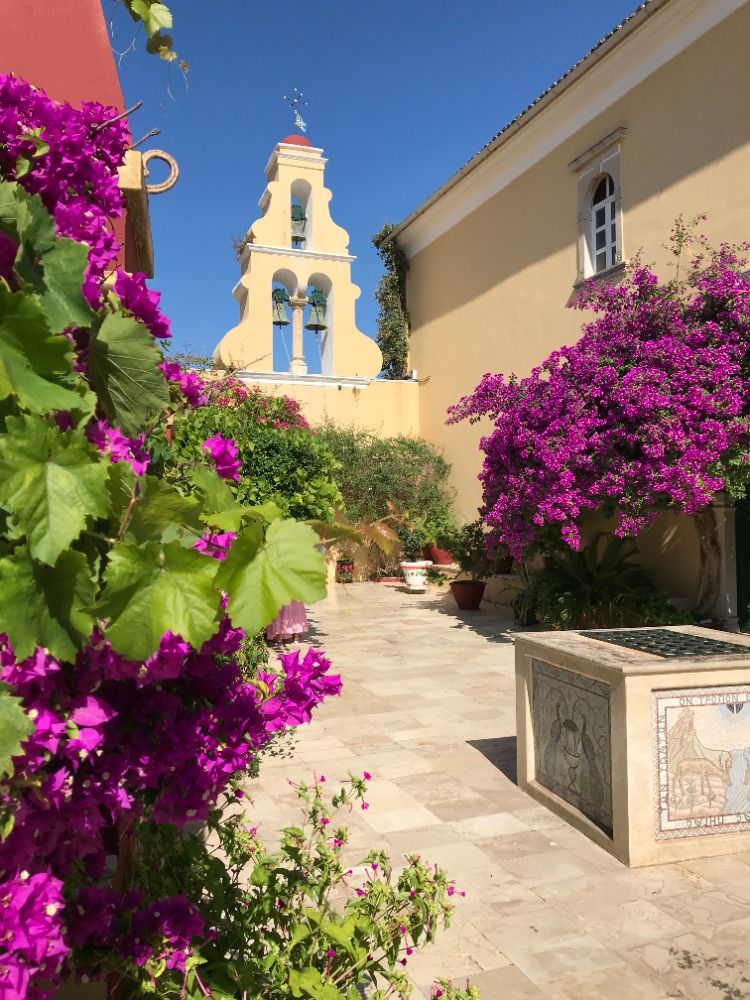
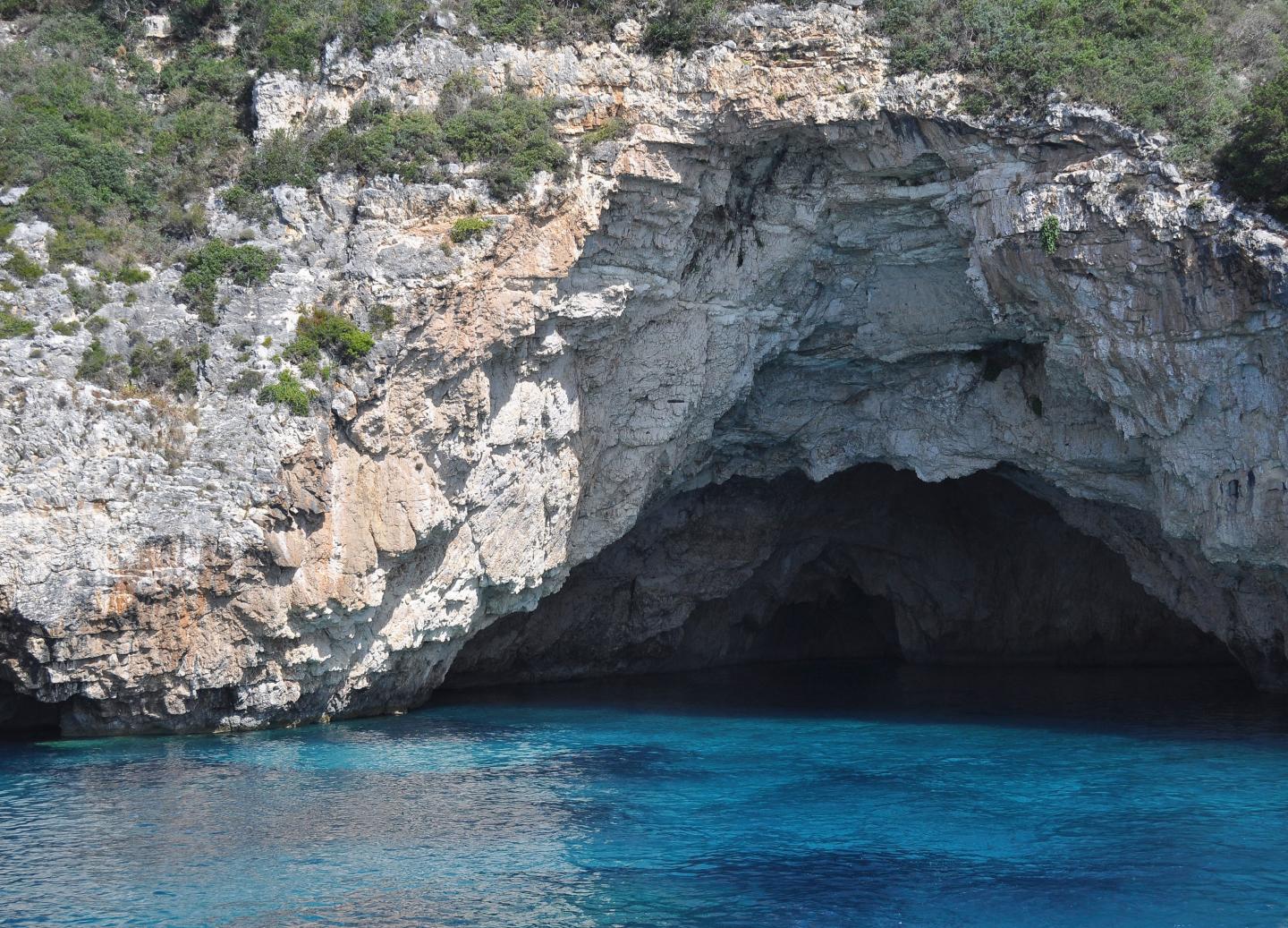
Paleokastritsa, on Corfu's northwest coast, is the island's most celebrated coastal destination — a series of turquoise coves framed by olive-covered hills and dramatic limestone cliffs. At the headland, the 13th-century Monastery of the Theotokos clings to the clifftop, its whitewashed walls and blue domes offering panoramic views across six interlocking bays. Below, small boats run trips into sea caves carved into the base of the cliffs, passing through arches of pale rock into chambers where the water glows electric blue. Excursions combining Paleokastritsa with Glyfada Beach on the southwest coast make an efficient coastal circuit, adding a longer sandy beach with calm swimming conditions to the day's itinerary.
Achillion Palace and Kanoni: Imperial Glamour and Iconic Views
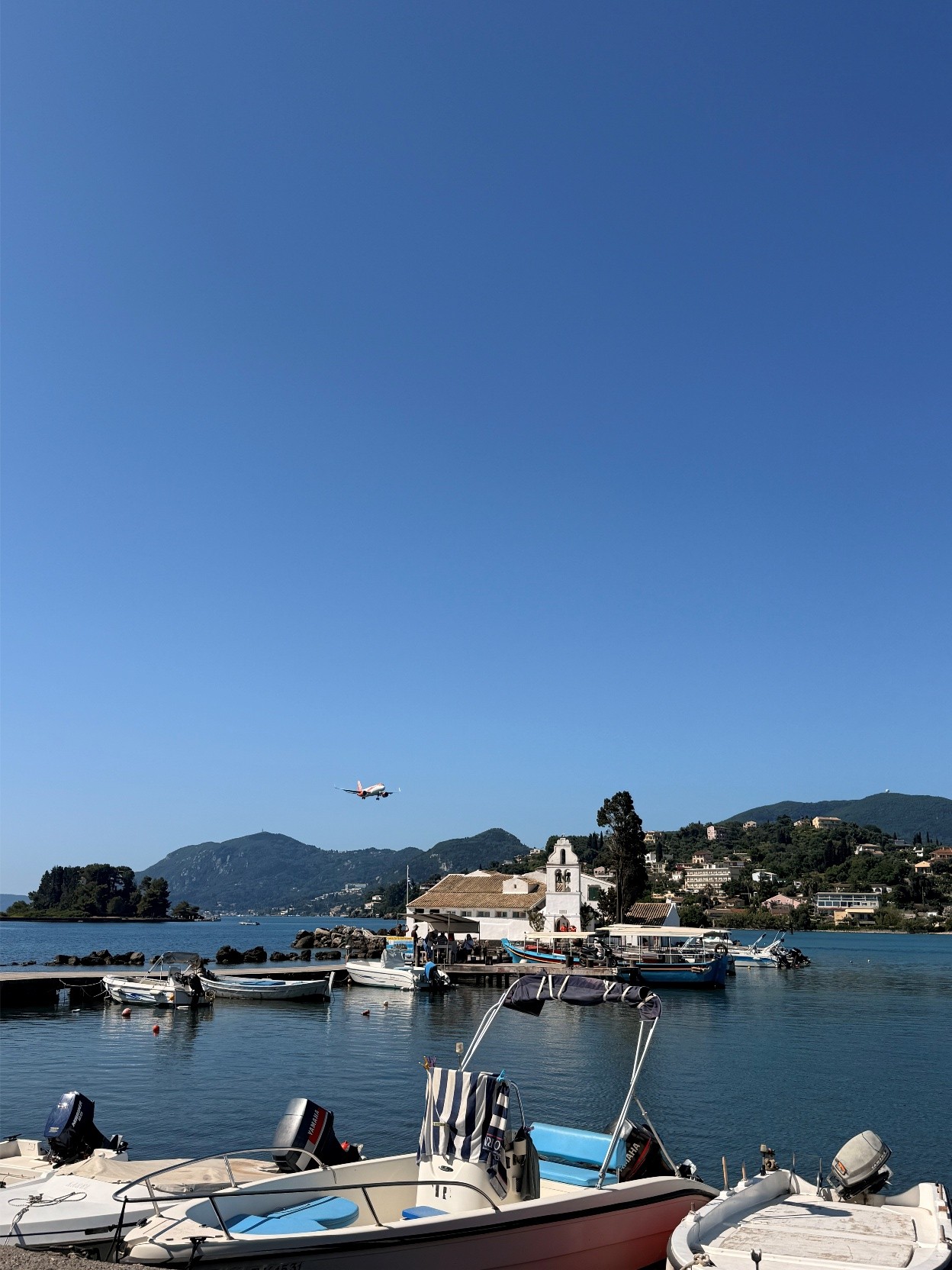
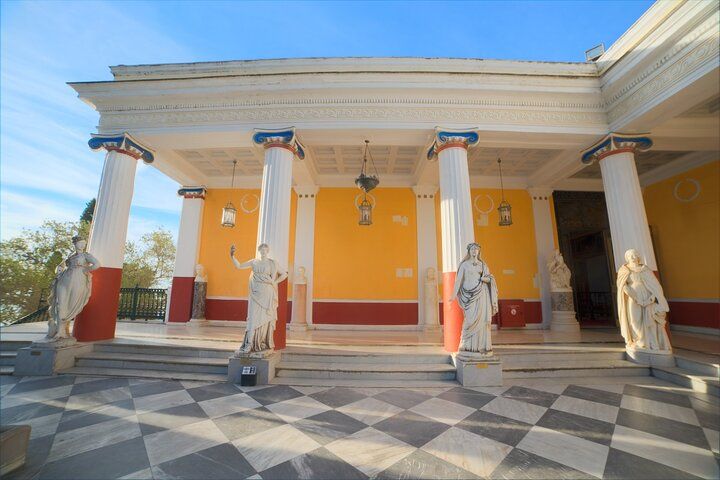
The Achillion Palace, built in 1890 for Empress Elisabeth of Austria and later purchased by Kaiser Wilhelm II, stands on a hillside above the village of Gastouri. Its neoclassical architecture and terraced gardens filled with statues of Achilles reflect the grandiose tastes of its royal owners. Today the palace operates as a museum; the gardens afford sweeping views across the island's southern tip. A short drive brings visitors to Kanoni, where the tiny islet of Pontikonisi (Mouse Island) sits in the lagoon below — one of Greece's most photographed scenes. These two sites combine naturally as a half-day private tour circuit from Corfu Town.
Kumquat Distillery Experience: Corfu's Unique Citrus Heritage
Kumquats were introduced to Corfu from China in the 19th century and have flourished here ever since — the island is the only place in Europe where they are commercially cultivated. Family-run distilleries in the north offer visits combining an explanation of the production process with tastings of kumquat liqueur, brandy, marmalade and spoon sweets. The fruit itself is small enough to eat whole, the skin sweet and the flesh tart. Distillery visits typically last 30 to 45 minutes and feature within broader island itineraries that also take in coastal viewpoints like Bella Vista. Bottles of liqueur make a distinctly Corfiot souvenir unavailable anywhere else in Greece.
Olive Oil Heritage at Governor Olive Mill: Tasting and Tradition
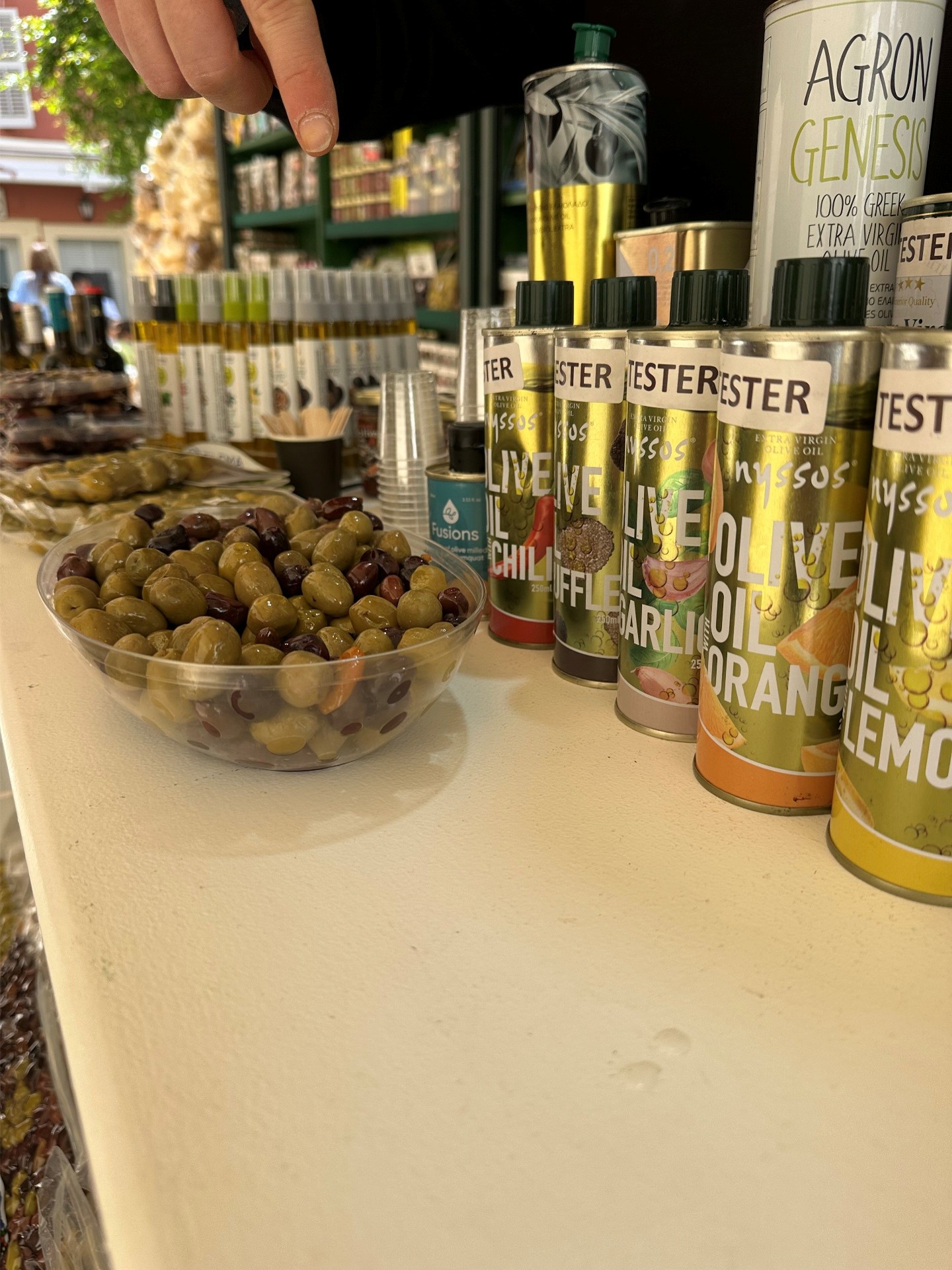
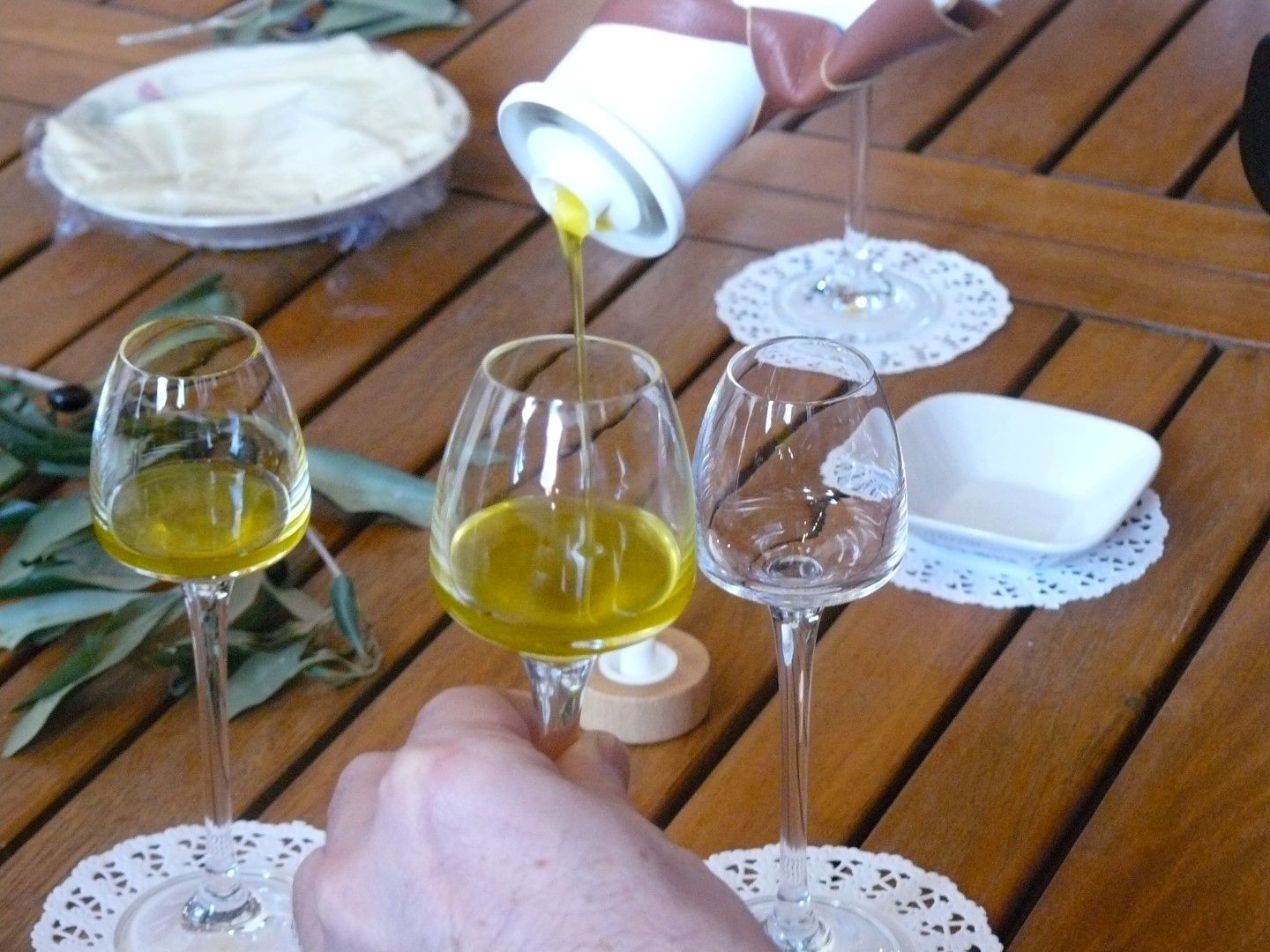
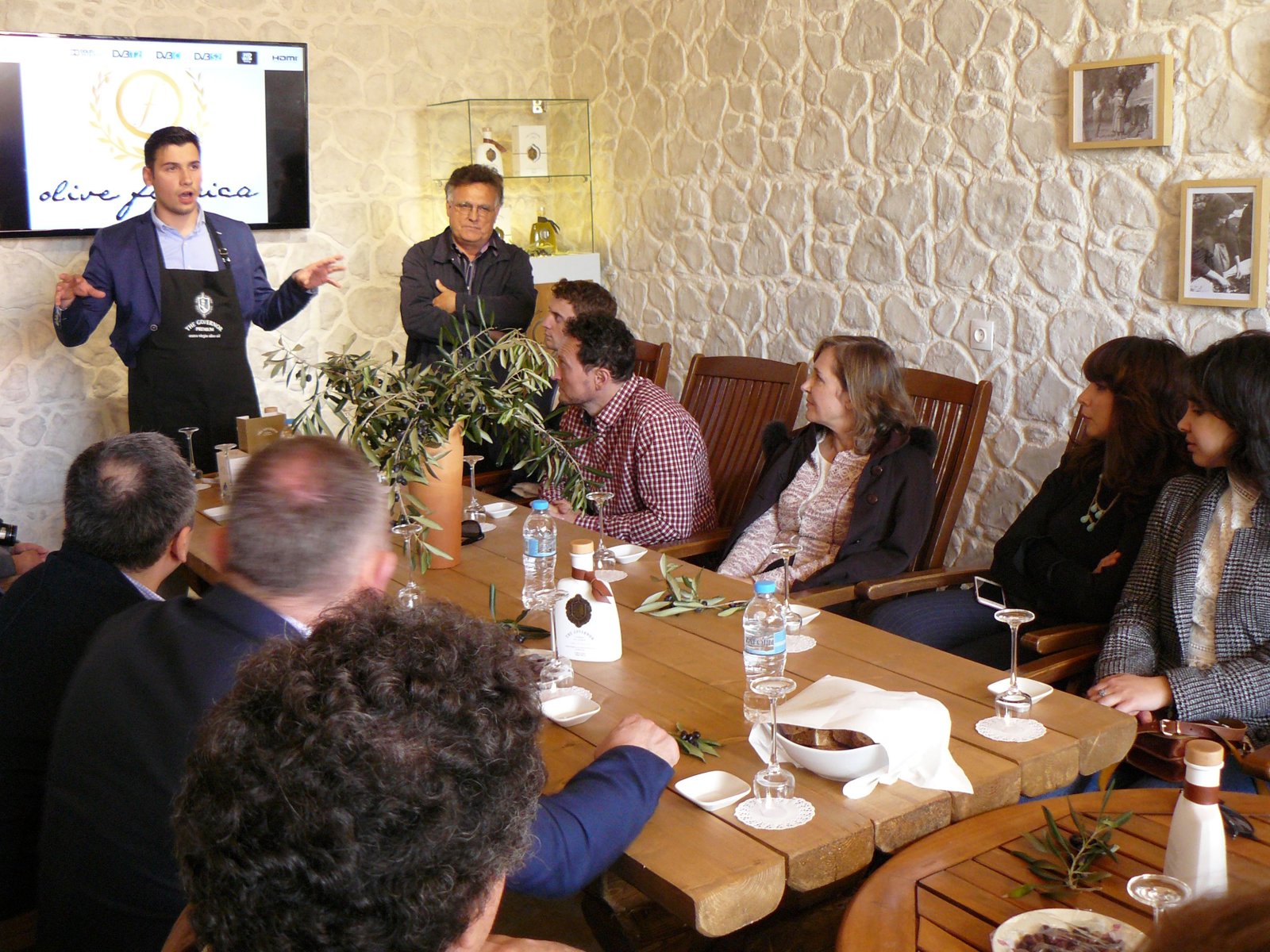
Olive cultivation has shaped Corfu's landscape and cuisine for millennia — the island's estimated four million olive trees outnumber its population many times over. The Governor Olive Mill offers one of the most considered olive oil experiences in the Ionian islands, combining an introduction to the cultivation cycle and cold-pressing process with structured tastings of single-estate oils. Workshops explore how to assess quality by colour, aroma and taste. The mill's setting among ancient groves provides context that no supermarket aisle can replicate. Excursions centred on this experience often also take in the UNESCO Old Town, pairing culinary and cultural heritage in a single cohesive day ashore.
Corfu's Villages and Rural Interior: Hilltop Views and Local Character
Beyond the coast and capital, Corfu's interior hides a network of traditional villages that see far fewer visitors than the beach resorts. Pelekas and Lakones sit high on ridgelines, their narrow lanes lined with stone houses and flower-filled balconies, both offering exceptional panoramic views across the island to the sea. The Durrell family — naturalist Gerald Durrell spent his childhood on Corfu — lived in several properties in the island's north, and the literary connection adds extra interest for some visitors. Village tours typically visit local tavernas serving traditional Corfiot dishes, artisan workshops and viewpoints revealing the island's agricultural patchwork of olives, cypresses and vineyards.
Corfu travel tips
Time Your Old Town Visit for the Morning. The UNESCO Old Town is busiest between 10am and 2pm when multiple cruise ships are in port simultaneously. Heading there early — before organised tour groups arrive in force — allows a more relaxed experience of the narrower lanes and quieter squares. The morning light is also more flattering for photography of the pastel-painted facades. Plan to move on to an out-of-town destination during the midday heat, and return for lunch or souvenir shopping once the crowds have thinned.
Dress Appropriately for Monasteries and Churches. The Monastery of Paleokastritsa and several churches within Corfu Town require covered shoulders and knees for entry — this applies to all genders. Lightweight scarves or wraps pack easily and solve the problem quickly. Some sites provide wraps to borrow at the entrance, but having your own is more reliable. Comfortable walking shoes with grip are important for the Old Town's cobblestones, which become slippery in spots, particularly around fountain areas and steps worn smooth over centuries.
Understand the Kumquat Before You Buy. Kumquat products vary widely in quality and price. At distilleries, tastings allow comparison before purchasing — the liqueur comes in a golden sweeter style and a clear drier brandy, so trying both is worthwhile. Pre-packaged kumquat products in the port area and Old Town tourist shops are considerably more expensive than at the distilleries themselves. If visiting a distillery as part of an excursion, purchasing there typically offers better value and a wider selection than any retail outlet in town.
Carry Cash for Village Stops and Smaller Establishments. Credit and debit cards are widely accepted in Corfu Town's restaurants, cafes and larger shops, but smaller village tavernas, roadside stalls and some attractions still prefer or require cash. ATMs in the Old Town — around the Esplanade and Liston — are reliably stocked, but machines in smaller villages can run low during peak season. Withdrawing a moderate amount of euros in town before heading inland is practical for any day involving rural stops or spontaneous purchases at local markets.
Plan Beach Time Around Midday. Corfu's beaches are most enjoyable between 11am and 3pm when the sun is strongest. SPF 50 sunscreen, good sunglasses and a hat are genuinely necessary rather than optional in July and August, when temperatures regularly exceed 35°C. Glyfada and Paleokastritsa beaches rent sun loungers and umbrellas at reasonable rates. The Ionian Sea is warm from June through October, making swimming a reliable pleasure throughout the cruise season. Afternoons at the beach transition naturally into a stop for fresh fish at a waterside taverna before returning to port.
The Hop-on Hop-off Bus Suits Limited Time Ashore. For those with fewer than six hours ashore or who prefer flexibility, Corfu's open-top hop-on hop-off bus covers many headline attractions with on-board commentary. It departs from near the New Port and connects major sites across the island. The format allows more time at stops that interest visitors most, and skipping others entirely. It is a practical option for independent travellers wanting broad coverage without committing to a fixed schedule, though road distances and winding routes mean journey times between stops can be longer than expected.
Port Facts Every Cruiser Needs To Know
Corfu shore excursion FAQs
The UNESCO Old Town is approximately a ten-minute walk from the New Port cruise terminal. The route is flat, well-signposted and pedestrian-friendly. Visitors can walk independently, or board transport at the port gates if heading further afield.
Corfu is considered one of Greece's most accessible and visitor-friendly islands. English is widely spoken, the infrastructure is well-developed for tourism, and the UNESCO Old Town is compact and easy to navigate on foot. The island's mix of history, beaches and food offers something for most interests within a single day ashore.
Yes. KTEL blue buses depart from San Rocco Square in Corfu Town with services to Paleokastritsa taking approximately 45 minutes. Timetables are available at the terminal. Note that return services can be infrequent in the afternoon — checking the return schedule before departing is essential to avoid missing the ship's all-aboard time.
The kumquat is a small citrus fruit eaten whole — the skin is sweet and the flesh is tart. Introduced to Corfu from China in the 19th century, it thrives in the island's climate. Corfu is the only place in Europe where kumquats are commercially grown, making the island's kumquat liqueur, marmalade and sweets genuinely unique products unavailable elsewhere in Greece.
The core of the UNESCO Old Town — including the Liston, the Esplanade and the Old Fortress entrance — is manageable on foot in two to three hours. The New Fortress and the old Jewish Quarter add more ground. Sites beyond the town (Achillion, Paleokastritsa, Glyfada) require public transport or a pre-arranged excursion.
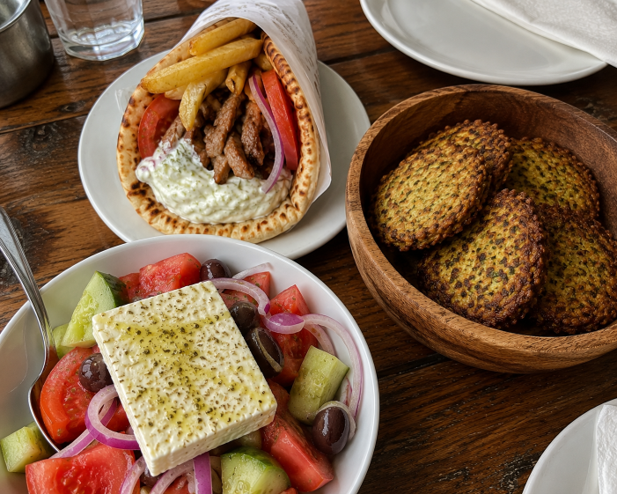
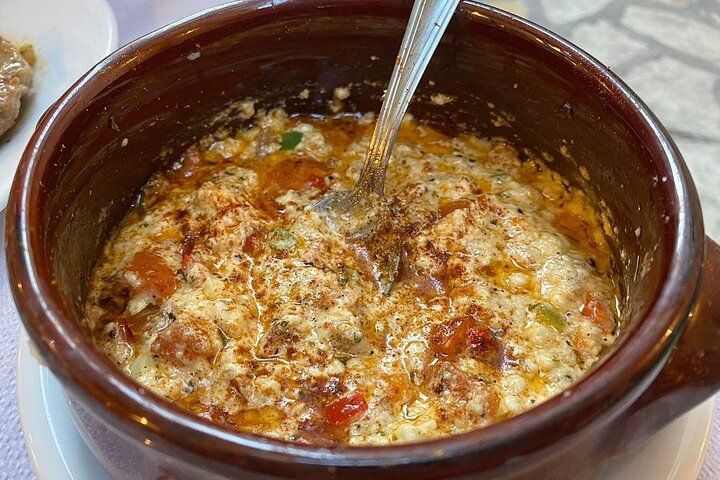
Corfu's cuisine shows strong Venetian influence and differs noticeably from mainland Greek food. Sofrito (veal in garlic-white wine sauce), pastitsada (spiced meat ragù with pasta) and bourdeto (fiery fish stew) are the island's signature dishes and rarely appear elsewhere in Greece. Kumquat liqueur and locally pressed olive oil are the standout drinks and condiments.
There are no beaches immediately adjacent to the port. Glyfada, on the southwest coast, is one of the island's best sandy beaches and is accessible by bus or organised excursion. Paleokastritsa to the northwest combines dramatic coves with excellent swimming. Both are approximately 30 to 45 minutes of travel each way from the port.
The Achillion Palace is located in the village of Gastouri, approximately 12 kilometres south of Corfu Town. Built in 1890 for Empress Elisabeth of Austria, it later served as Kaiser Wilhelm II's summer residence. Today it operates as a museum; admission is charged. The terraced gardens with their statue-lined paths and views across southern Corfu are the main attraction.
The port can receive several vessels simultaneously, particularly in summer, making the Old Town congested between 10am and 2pm. Starting the day early — heading to the Old Town or departing for outlying sites as soon as the ship docks — makes a noticeable difference. Sites like Paleokastritsa and rural villages absorb visitors more comfortably than the compact Old Town lanes.
Parts of Corfu Town are accessible, including the Esplanade and Liston, but the Old Town involves cobblestone lanes, steps and steep gradients. The Achillion Palace gardens have sloped paths. Paleokastritsa involves uneven surfaces and steps to viewpoints. The Hop-on Hop-off bus provides a way to see highlights with less walking. It is worth discussing specific requirements when selecting excursions.
Filters
Select a filter to refine results.
Tour Type
Tour Activity
 Cart
Cart
 USD
USD GBP
GBP AUD
AUD EUR
EUR CAD
CAD