



Tours in Dover


Cruising to Dover in a group?
Skip the crowded ship excursion bus. One dedicated planner will design a private shore experience around exactly what your group wants — coordinated from first enquiry to the moment you're back on board. More memorable, more flexible, and more affordable than you might expect. Spend less time organising, more time enjoying.
Explore Group Travel →Cruising to Dover
Dover sits at England's closest point to continental Europe, its famous White Cliffs rising dramatically above the English Channel. As one of the UK's principal cruise terminals, it welcomes hundreds of thousands of passengers each year, many using it as a starting or ending point for their voyage. For those with time to explore, Dover rewards with a medieval fortress that has guarded these shores for nearly a thousand years, a compact town with traditional pubs and independent shops, and excellent rail connections to Canterbury and London. The port's position makes it a practical base for combining cruise travel with broader English itineraries — whether that means a morning in the castle's wartime tunnels, an afternoon in a UNESCO World Heritage city, or a full day in the capital.
Top things to do in Dover on a cruise stopover
Dover Castle: A Millennium of English History
Rising above the port on its chalk promontory, Dover Castle has been England's frontline fortress for nearly a thousand years. Built by Henry II in the 12th century on the site of an Iron Age hillfort, the complex encompasses a great medieval tower, a network of tunnels carved into the cliffs, and a sprawling defensive circuit. The castle remains remarkably intact and is managed by English Heritage, whose exhibitions trace the site's evolution from Norman stronghold to Second World War command centre. Views across the English Channel from the ramparts are exceptional on clear days — France is visible just 21 miles away. Allow a minimum of two hours for the site, more if visiting the Secret Wartime Tunnels.
The White Cliffs: Dover's Defining Natural Landmark
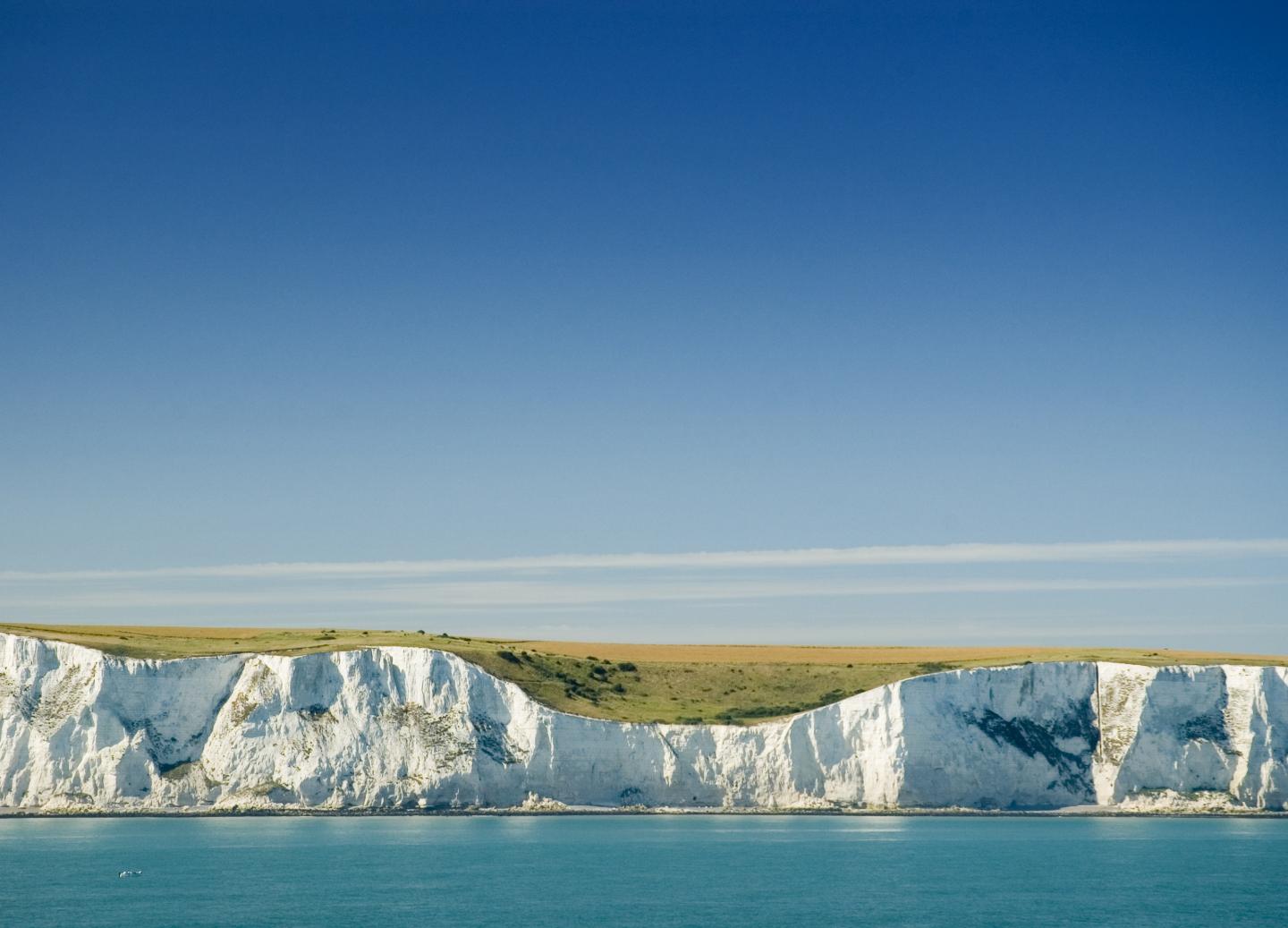
Few sights in England carry the emotional and historic weight of the White Cliffs of Dover. Formed from chalk laid down over 70 million years ago, the cliffs stretch eight miles along the coastline and rise to 110 metres at their highest point near Langdon Cliffs. Managed by the National Trust, the clifftop path offers some of the most dramatic coastal walking in southern England, with views across the Channel and back over the harbour. The cliffs are most spectacular in bright sunshine, when the white chalk contrasts sharply with the blue-green sea below. The National Trust visitor centre provides exhibits on the cliffs' geology and wartime significance, alongside a cafe and shop.
Canterbury: A UNESCO World Heritage City Within Easy Reach
Just 20 minutes by train from Dover Priory, Canterbury is one of England's most historically significant cities. At its heart stands Canterbury Cathedral, the mother church of the Anglican Communion and the site of Thomas Becket's martyrdom in 1170. The cathedral's soaring Gothic nave, medieval stained glass and Norman crypt reward close inspection. Beyond the cathedral, the compact walled city contains Roman ruins, medieval timber-framed buildings, independent shops and a lively food scene. The Beaney House of Art and Knowledge and the Roman Museum add further depth for those with extra time. The walk from Canterbury West station to the cathedral gate takes under ten minutes.
Dover's Maritime Heritage: Two Thousand Years at the Crossroads
Dover has served as England's principal connection with continental Europe for over two millennia. Romans established a port here; medieval pilgrims crossed from Calais; Napoleon's armies massed across the water; and in 1940, the Dunkirk evacuation saw hundreds of vessels return to this very harbour. The Bronze Age Boat displayed at Dover Museum — the world's oldest known seagoing vessel, recovered from the harbour in 1992 — encapsulates the extraordinary depth of the town's maritime history. The harbour remains one of the world's busiest ferry ports, with a constant procession of cross-Channel vessels visible from the seafront promenade throughout the day.
The Secret Wartime Tunnels: Churchill's Underground Headquarters
Beneath Dover Castle lies a labyrinthine network of tunnels that served as a top-secret military command centre during the Second World War. Originally excavated in the Napoleonic era, the tunnels were expanded dramatically in 1939–1940, ultimately housing Admiral Ramsay's headquarters from which Operation Dynamo — the Dunkirk evacuation — was coordinated. The complex later served as a regional government headquarters during the Cold War. English Heritage runs guided tours through the atmospheric passages, past period-furnished rooms and wartime communications equipment. The tunnels are included in the castle admission price and represent one of the most evocative Second World War sites accessible to the public in England.
London: A World-Class Capital Under 90 Minutes Away
For cruise passengers with a full day in Dover — particularly those embarking the following morning — London presents a compelling option just 1 hour 22 minutes away by high-speed Southeastern train from Dover Priory. The city's concentrated core allows visitors to cover significant ground efficiently: the South Bank from Tate Modern to Tower Bridge, the British Museum's free permanent collection, Westminster's landmarks, or the markets and boutiques of Borough and Chelsea. Oyster cards or contactless bank cards work across all London Underground, bus and Overground services. London rewards an early start and a focused itinerary rather than an attempt to cover everything at once.
Dover travel tips
Arrive the Evening Before If Embarking. If Dover is your embarkation port, plan to arrive the evening before your cruise departs. Cruise check-in typically begins early in the morning, and last-minute travel from London or other cities carries timing risk — particularly if train services are disrupted. Dover has several hotels close to the port, and an evening arrival allows time to walk the seafront, visit the castle grounds at dusk, or find a good dinner without the pressure of an early-morning connection.
Wear Appropriate Footwear for the White Cliffs. The clifftop paths at Langdon Cliffs are well-marked but can be muddy and uneven after rain — walking shoes or light hiking boots are a sensible choice, particularly in spring and autumn. The best light for photographing the chalk faces is generally mid-morning, when the sun illuminates them from the south-east. The National Trust car park is east of the town centre; from the port, it is easiest reached by taxi (roughly 15 minutes) rather than on foot.
Time Your Canterbury Visit Carefully. Canterbury Cathedral closes to visitors during services, typically mid-morning on weekdays and for longer periods on Sundays. Check the cathedral website before travelling and plan your arrival accordingly. The city is significantly busier in July and August — arriving early in the morning makes a tangible difference. A 3-hour window in Canterbury comfortably covers the cathedral, a section of the Roman walls, and lunch at one of the independent restaurants nearby.
Dover Museum's Bronze Age Boat Is Worth 45 Minutes. Dover Museum in the Market Square houses the world's oldest known seagoing vessel — a 3,500-year-old Bronze Age boat recovered from the harbour in 1992 and preserved to a remarkable degree. The museum is compact and the boat gallery alone justifies a 45-minute visit. It is a genuinely extraordinary object given its antiquity, and the exhibits contextualising its discovery and the trade routes that crossed this stretch of the Channel add real depth.
Navigate London with Contactless Payment. If heading to London, use a contactless bank card or purchase an Oyster card at Dover Priory or on arrival at London St Pancras — both work seamlessly across all Underground, bus and Overground services. A Zone 1 day's travel covers central London comprehensively. Factor in the train journey both ways (approximately 2 hours 44 minutes total) when planning the day, and aim to leave London by mid-afternoon to return to Dover comfortably.
Cash Is Useful but Not Essential. Card payments work virtually everywhere in England, but some smaller cafes, market stalls and car parks in and around Dover still prefer cash. The ATMs at the port and inside Dover Priory station dispense sterling reliably — there is no need to pre-order pounds before arrival. If visiting traditional pubs or smaller farm shops in the countryside around Dover, having a small amount of cash on hand is sensible.
Port Facts Every Cruiser Needs To Know
Dover shore excursion FAQs
Dover functions primarily as a major embarkation and disembarkation port for cruises to northern Europe, the Mediterranean and transatlantic routes. Some itineraries do include Dover as a port-of-call, giving passengers a day to explore the town and surrounding area independently before the ship moves on.
Dover Priory station is served by high-speed Southeastern trains that reach London St Pancras International in approximately 1 hour 22 minutes. Standard services to London Charing Cross take around 2 hours. The M2 and A2 motorways connect Dover to London by road in roughly 1 hour 45 minutes under normal traffic conditions, though this varies significantly at busy times.
Dover Castle sits on a hill above the Eastern Docks terminal and is visible from much of the port, but the walk up is steep and takes 25–30 minutes. Many visitors take a taxi for the uphill journey and walk back down, or take a taxi both ways. The castle is clearly signposted from the town centre and well worth the effort regardless of how you choose to reach it.
Absolutely. Canterbury is 20 minutes by regular train from Dover Priory, with frequent services throughout the day. A 3–4 hour window in Canterbury allows time for the cathedral, a walk along the Roman walls and lunch. Check the cathedral's opening times in advance as closures during services can affect visit timing, particularly on Sundays.
The White Cliffs are managed by the National Trust and accessible via footpaths from the Langdon Cliffs area, east of the town centre. The clifftop walk offers dramatic Channel views. Paths can be muddy after rain; sturdy footwear is recommended. The National Trust visitor centre has a cafe, shop and exhibits on the cliffs' geology and wartime history. Entry to the clifftop paths themselves is free.
Dover has a modest but improving food scene. The town centre, about 15 minutes' walk from the Western Docks, has traditional pubs serving fish and chips and English pub food. Several cafes offer full English breakfasts and cream teas. Canterbury, 20 minutes by train, has a significantly wider and more diverse range of restaurants and is worth considering if a good lunch is a priority.
Most passport holders from the US, Canada, Australia, the EU and many other countries can enter England visa-free for short tourism visits. UK entry requirements apply — check the official UK Visas and Immigration guidance well in advance of travel, as requirements can change. Note that since Brexit, EU passport holders are no longer automatically entitled to enter the UK without checks.
The currency is the pound sterling (GBP). Card payments are accepted in the vast majority of places — restaurants, shops, tourist attractions and public transport. ATMs are available at the port and in the town centre. Euros are not accepted in England; exchange any remaining euros before or after visiting if arriving from a European cruise itinerary.
The Secret Wartime Tunnels are a network of underground passages beneath Dover Castle that served as Admiral Ramsay's headquarters during the Dunkirk evacuation in 1940. They are managed by English Heritage and accessed as part of the Dover Castle admission. Guided tours run throughout the day; check timings and availability on the English Heritage website before visiting, as tours can sell out in peak season.
Luggage handling on embarkation and disembarkation days is managed by the cruise line as part of the boarding process. For passengers exploring Dover before or after their cruise, some hotels in the town offer luggage storage for guests. If planning a day trip to London or Canterbury, travelling with minimal luggage is strongly advisable for ease of movement on trains and through attractions.
Filters
Select a filter to refine results.
Tour Type
Tour Activity
 Cart
Cart
 USD
USD GBP
GBP AUD
AUD EUR
EUR CAD
CAD