



Tours in Flam


Cruising to Flam in a group?
Skip the crowded ship excursion bus. One dedicated planner will design a private shore experience around exactly what your group wants — coordinated from first enquiry to the moment you're back on board. More memorable, more flexible, and more affordable than you might expect. Spend less time organising, more time enjoying.
Explore Group Travel →Cruising to Flam
Flam sits at the end of the Aurlandsfjord — a slender arm of the vast Sognefjord, Norway's longest and deepest fjord system. The village is tiny, its population barely reaching 500, yet it receives hundreds of thousands of visitors annually, drawn by scenery that seems almost engineered for wonder. Snow-streaked mountains plunge vertically into glassy water, waterfalls thread down cliff faces, and the air carries a particular stillness that feels rare in modern travel. From the pier, Borgund Stave Church and the Stegastein viewpoint are the headline excursion destinations — one a medieval masterpiece of wooden architecture, the other a steel-and-glass platform hovering 650 metres above the fjord. The Flam Railway, one of the steepest standard-gauge railways in the world, cuts through eighteen tunnels and past dramatic terrain on its way to the mountain station at Myrdal. For cruise passengers, Flam offers a day that feels genuinely remote and spectacular without requiring long travel times.
Top things to do in Flam on a cruise stopover
Stegastein Viewpoint: 650 Metres Above the Fjord
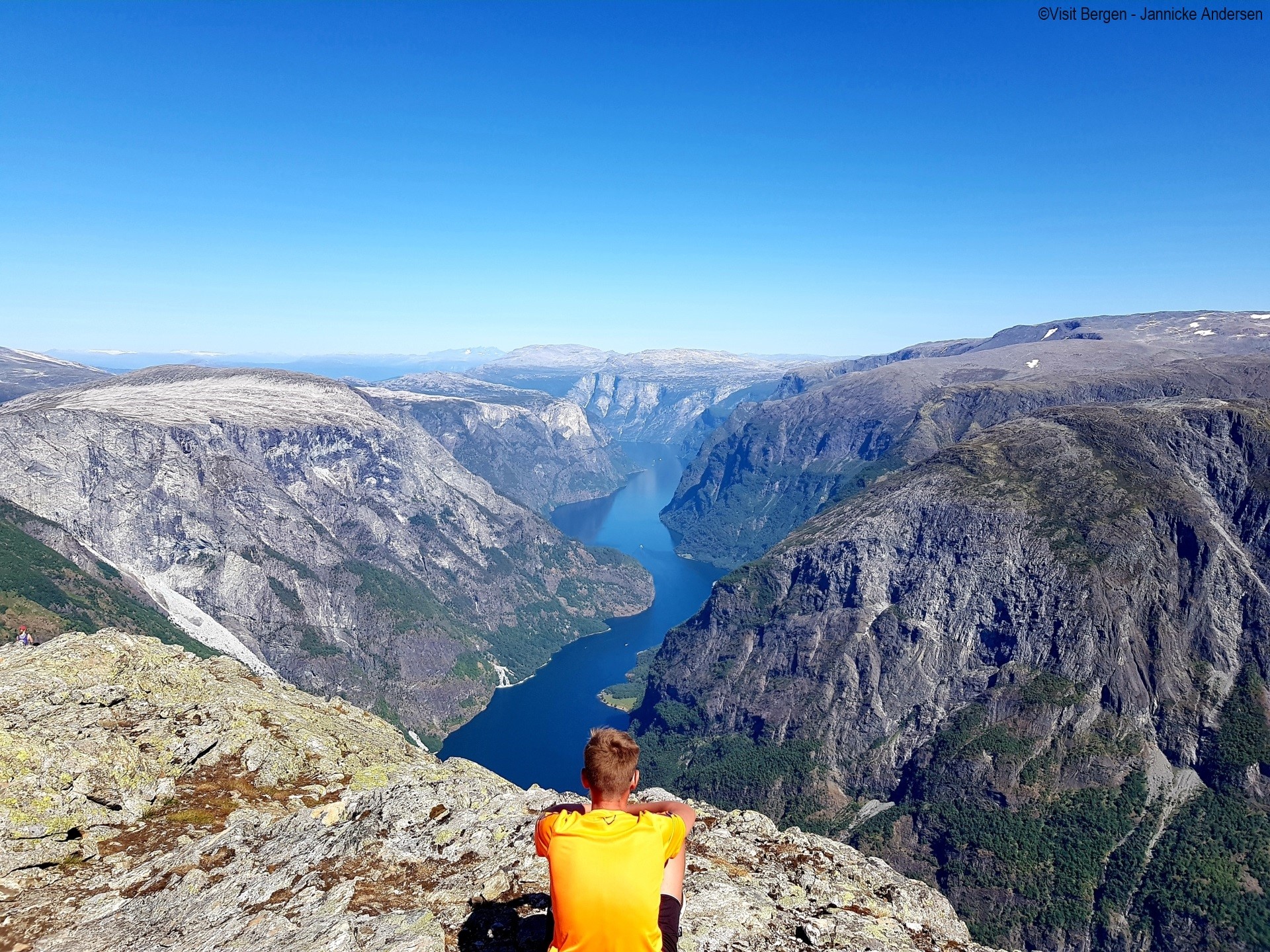
The Stegastein viewing platform is one of Norway's most photographed structures — a curved steel-and-glass cantilevered deck jutting 30 metres out from the mountainside above Aurlandsfjord. At 650 metres elevation, the platform delivers a panorama that frames the fjord, its surrounding mountains, and the village below in a single sweeping view. The approach road winds steeply through hairpin bends, with the drama building at each turn. Clouds often drift at platform level, creating moments where the fjord below disappears before revealing itself again. The viewpoint is exposed and breezy, so layers are advisable regardless of season — the microclimate up here differs noticeably from the village.
Borgund Stave Church: Medieval Architecture in the Mountains
Borgund Stave Church, built around 1180 AD, is widely considered the best-preserved stave church in Norway and one of the finest examples of medieval wooden architecture in Europe. The structure is built entirely without nails, using an interlocking timber frame technique that has endured nearly 850 years. Carved dragon heads crown the roof ridges — a detail fusing Christian and Viking symbolic traditions. The church sits surrounded by a wooden fence and small cemetery against a forested Norwegian hillside. A visitor centre explains the history of stave churches, of which only 28 survive in Norway. The journey from Flam follows the scenic Lærdal valley.
The Aurlandsfjord: Scenery That Defines Norway
The Aurlandsfjord is a branch of the Sognefjord — Norway's longest fjord at over 200km — and forms part of a UNESCO World Heritage Site. The landscape around Flam represents fjord Norway at its most dramatic: near-vertical cliff walls rising hundreds of metres from the waterline, mirror-flat water reflecting sky and rock, and waterfalls threading down almost every surface. Arriving by cruise ship through the fjord is considered one of the great scenic approaches in European travel. From the pier, this scenery is visible in every direction, and even a short walk along the fjord edge reveals constantly shifting perspectives.
The Flam Railway: One of the World's Most Scenic Rail Journeys
The Flamsbana climbs 863 metres in just 20km, making it one of the steepest standard-gauge railways in the world. The line passes through 18 tunnels and crosses bridges over surging rivers as it ascends to the mountain plateau at Myrdal. Waterfalls appear around almost every bend, with the Kjosfossen falls impressive enough that the train makes a dedicated photography stop here. The railway was originally built as a branch of the Bergen Railway and took 20 years to construct. It operates from the pier-side station throughout the day, making it the most accessible major experience available from Flam.
Flam Village: Small Scale, Large Character
Flam village is tiny but well-equipped for visitors. The main street runs parallel to the fjord and contains the railway station, several restaurants, a supermarket, craft shops, and the Aegir Brewery — a Viking longhouse-themed brewpub serving craft beer and Norwegian food. The Flam Museum, housed in the old stationmaster's building, tells the story of the line's construction. Local crafts lean toward Norse motifs: carved woodwork, knitwear, and amber jewellery. The village has retained a small-community atmosphere despite its tourist footfall — partly because most visitors move through rather than settle in.
Waterfalls and Mountain Light: Photography at Every Turn
Flam and the surrounding fjord landscape offer extraordinary photographic conditions throughout the day. The combination of high vertical relief, abundant water, and shifting Nordic light creates scenes that change significantly by the hour. Waterfalls are visible from the pier itself, with dozens more accessible along the roads and railway route. The narrow fjord channel means golden-hour light hits the cliff faces at dramatic angles in both morning and evening. The Stegastein viewpoint and the Kjosfossen waterfall stop on the Flam Railway are the two classic photography locations, but even the pier area and the walk along the fjord edge deliver strong images.
Flam travel tips
Layer Up Regardless of the Forecast. Fjord weather changes quickly and the temperature differential between the valley floor and elevated viewpoints like Stegastein can be 5–8 degrees Celsius. Mornings are often cooler than afternoons. Even in July, a light waterproof layer and a mid-layer are sensible to carry. The Stegastein platform is exposed and often breezy.
Head to the Train Station Early in the Day. The Flamsbana is one of Norway's most popular tourist experiences and fills quickly on cruise ship days. Tickets can be purchased at Flam station. If you plan to take the railway independently, heading to the station soon after disembarkation improves your chances of securing preferred departure times. The journey to Myrdal and back takes approximately 2.5 hours.
Borgund Takes Longer Than It Looks on the Map. Borgund Stave Church is approximately 60km from Flam, but the road follows valley curves and the journey typically takes 70–80 minutes each way. Budget a minimum of 3.5 to 4 hours for the round trip including time at the church and visitor centre. This makes it difficult to combine with the full Flam Railway experience in a standard port call.
Card Payments Work Everywhere. Norway is effectively a cashless society. Visa and Mastercard are accepted at restaurants, shops, ticket machines, and even small stalls. There is no practical need to carry Norwegian Krone, though having a small amount for emergencies is harmless. Be aware that some non-European cards attract foreign transaction fees — check with your bank before travel.
Visit Stegastein When Skies Are Clearest. Low cloud can obscure the fjord view from the Stegastein platform entirely. If cloud is sitting low on the mountains when you arrive, monitor conditions through the day — fjord cloud often clears by mid-morning as temperatures rise. Timing your visit to coincide with clearer skies makes a meaningful difference to the experience.
The Village Itself Rewards a Slower Pace. Many visitors rush through Flam towards the railway or viewpoint, missing what the village offers. The waterfront walk, the Aegir Brewery (which opens for lunch), the small museum, and simply sitting by the fjord are all worthwhile. If you have already seen Flam's headline attractions on a previous visit, spending time at the village level reveals a quieter, more local side of fjord Norway.
Port Facts Every Cruiser Needs To Know
Flam shore excursion FAQs
Cruise ships dock directly at the Flam pier in the village centre. No tendering is required. The pier places passengers within immediate walking distance of the train station, visitor facilities, and the main street.
The Flamsbana (Flam Railway) is a scenic mountain railway climbing 863 metres in 20km — one of the world's steepest standard-gauge lines. It runs from Flam station to the mountain plateau at Myrdal, passing through 18 tunnels and stopping at the Kjosfossen waterfall for photographs. The return journey takes approximately 2.5 hours total.
Borgund Stave Church is approximately 60km from Flam, following the Lærdal valley. The road journey typically takes 70–80 minutes each way due to the valley's winding route. Allow a minimum of 3.5 to 4 hours for the full round trip including time at the church.
Stegastein is a cantilevered viewing platform perched 650 metres above the Aurlandsfjord, offering panoramic views over the water and surrounding mountains. It is reached by road from Flam, approximately 15 minutes by vehicle via a series of steep hairpin bends. The platform is exposed and can be breezy.
Flam village is very compact and fully walkable from the pier within minutes. The main street, restaurants, railway station, brewery, and museum are all within easy level walking distance. Reaching Stegastein or Borgund, however, requires transport by road.
Norway uses the Norwegian Krone (NOK). Card payments — including contactless — are accepted essentially everywhere in Norway, including small shops, ticket machines, and restaurants. There is rarely any need to carry cash.
Cruise season (May–September) brings mild temperatures typically between 10–18°C at fjord level. Conditions can change quickly and elevated viewpoints are cooler and breezier than the village. Rain is possible in any month. Layers and a light waterproof are advisable.
Yes — combining Stegastein with the Flam Railway is manageable within a standard 6–8 hour port call. The railway round trip takes around 2.5 hours and the Stegastein visit adds 45–60 minutes. This leaves time for the village and a meal. Adding Borgund Stave Church to the same itinerary is not realistic given the distances.
Yes. The Aegir Brewery and Restaurant is the most notable — a Viking-longhouse-themed brewpub serving craft beer and Norwegian food. Additional cafes and restaurants line the main street, generally serving traditional Norwegian dishes as well as international options.
White-tailed eagles, cormorants, and various seabirds are visible from the waterfront. Red deer and reindeer inhabit the upland areas, occasionally visible from roads. The Aurlandsfjord contains Atlantic salmon and sea trout, and harbour porpoises are occasionally spotted in fjord waters.
Filters
Select a filter to refine results.
Tour Type
Tour Activity
 Cart
Cart
 USD
USD GBP
GBP AUD
AUD EUR
EUR CAD
CAD