



Tours in Greenock



Cruising to Greenock in a group?
Skip the crowded ship excursion bus. One dedicated planner will design a private shore experience around exactly what your group wants — coordinated from first enquiry to the moment you're back on board. More memorable, more flexible, and more affordable than you might expect. Spend less time organising, more time enjoying.
Explore Group Travel →Cruising to Greenock
Greenock sits on the southern bank of the Firth of Clyde, roughly 30 miles west of Glasgow, and has served as one of Scotland's most important deepwater ports for centuries. Today its Ocean Terminal welcomes cruise ships with direct rail connections into the heart of Glasgow, making it one of the most conveniently placed ports on any British Isles itinerary. The surrounding landscape — dramatic hills rolling down to wide sea lochs — hints at the extraordinary countryside that lies just beyond the city limits.
Glasgow itself is often the first destination on visitors' minds, and rightly so. Scotland's largest city is a revelation: a Victorian powerhouse reinvented as a contemporary cultural capital, with world-class museums, a thriving food scene, and some of the most ornate architecture in the United Kingdom. The Merchant City district, the Gothic cathedral, and the bohemian West End all reward unhurried exploration on foot.
Beyond the city, the day-trip possibilities are exceptional. Stirling Castle perches atop a volcanic crag at the gateway to the Highlands, commanding views that take in half of Scotland on a clear day. Loch Lomond — the largest loch in Britain — is less than an hour from Glasgow, its wooded shores and island-dotted waters forming the centrepiece of Scotland's first national park. Further into the Trossachs, the landscape becomes progressively wilder and more cinematic.
For those drawn to the aristocratic Scotland of grand estates and ancient clan history, Inveraray Castle on the shores of Loch Fyne is among the finest ancestral homes open to visitors in the country. With five meaningful experiences available through Venture Ashore, a day at Greenock can be shaped around almost any vision of Scotland — urban, historic, or utterly wild.
Top things to do in Greenock on a cruise stopover
Historic Glasgow: A Victorian City Reborn
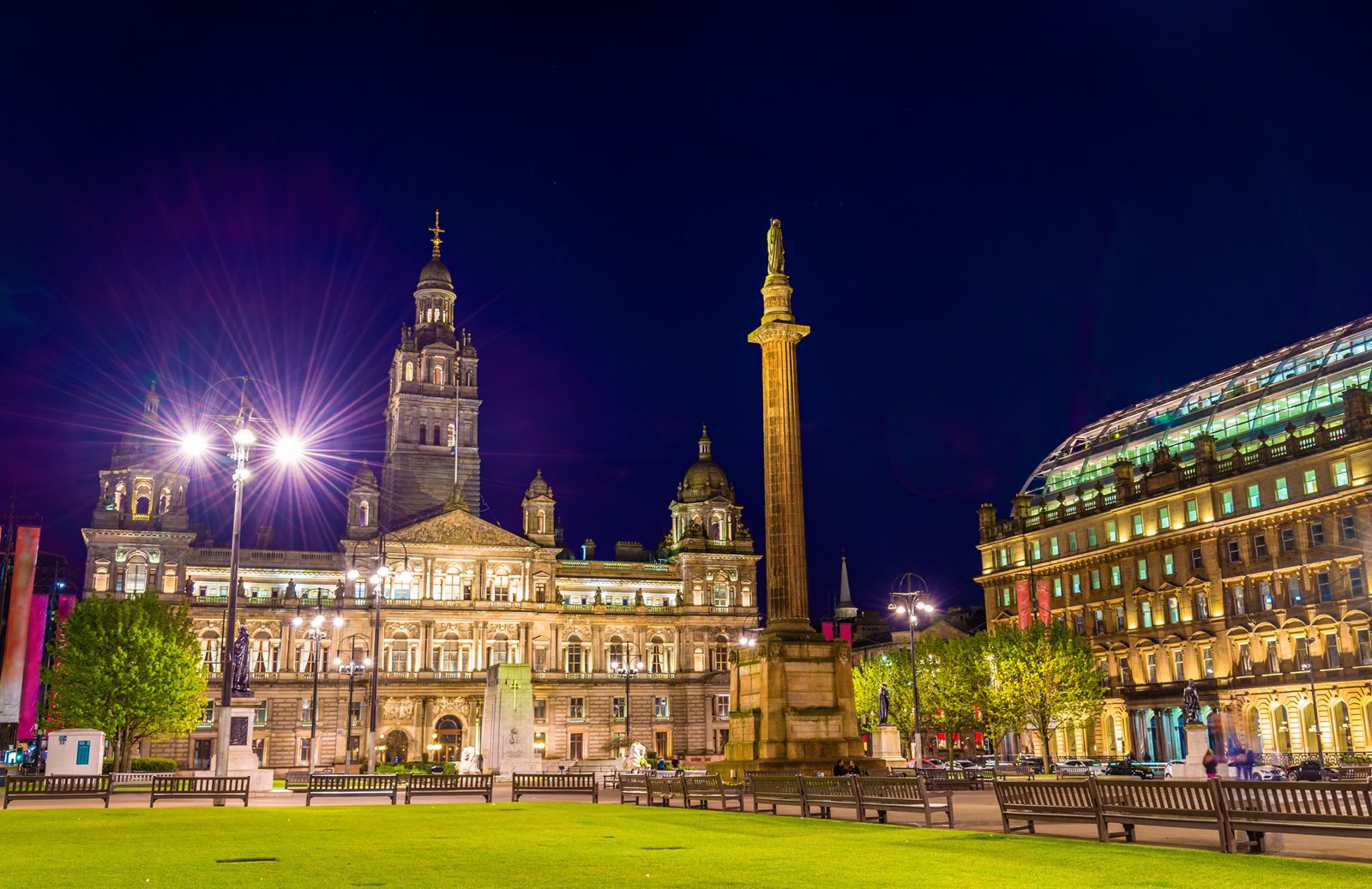
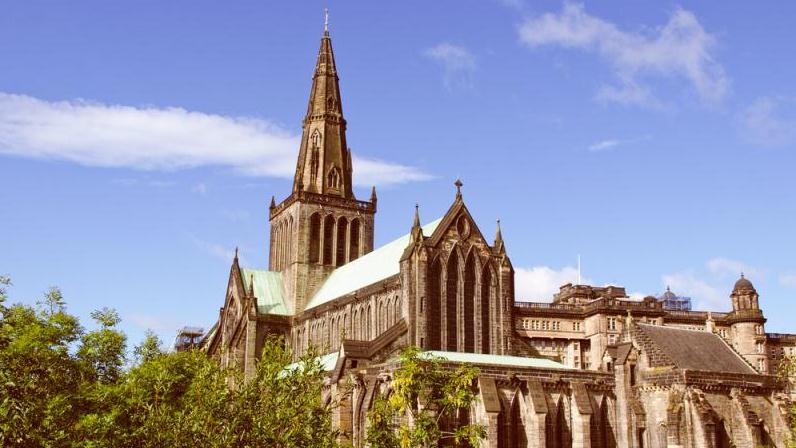
Glasgow is one of Britain's great urban surprises. Built on the wealth of trade and heavy industry, the city's Victorian architects left behind a streetscape of jaw-dropping ambition: elaborate sandstone facades, towering clock towers, and ornate civic buildings that speak of a city once at the centre of the world's economy. Today those same streets hum with independent coffee shops, contemporary art galleries, and some of the best restaurants in Scotland. A walking tour takes in the medieval Glasgow Cathedral — the only mainland Scottish cathedral to survive the Reformation intact — the bustling Merchant City, and elegant George Square. The Kelvingrove Art Gallery and Museum, a red sandstone palace in the West End, houses one of the finest civic collections in Europe entirely free of charge. Glasgow rewards those willing to look up and slow down.
Stirling Castle: Scotland's Most Commanding Fortress
If any single building encapsulates Scottish history, it is Stirling Castle. Rising from a volcanic crag at the point where the Highlands meet the Lowlands, the castle has been a royal residence, a military stronghold, and the scene of some of Scotland's most decisive moments. Mary Queen of Scots was crowned here as an infant; James V commissioned the stunning Renaissance Great Hall; and from the ramparts, on a clear day, you can see the Wallace Monument, the Ochil Hills, and the battlefield of Bannockburn all at once. The restored Royal Palace apartments, with their extraordinary carved oak Stirling Heads, are among the finest examples of Renaissance interiors in Britain. The nearby Old Town adds cobbled streets, the Church of the Holy Rude, and the Argyll's Lodging townhouse — Scotland's best-preserved Renaissance mansion — to a day that barely scratches the surface.
Loch Lomond and the Trossachs: Scotland's First National Park
Less than an hour from Glasgow, the landscape transforms with almost theatrical abruptness into the sweeping lochs and forested hills of Loch Lomond and The Trossachs National Park. Loch Lomond is Britain's largest loch by surface area: 24 miles long, studded with 30 islands, and backed by mountains that rise sharply from the water's edge. The southern shores are gentler and more accessible, with picturesque villages like Luss drawing visitors for their chocolate-box cottages and loch views. Push further north or east into the Trossachs and the scenery becomes increasingly wild — narrow glens, ancient oakwoods, and the brooding summit of Ben Lomond reflected in still water. This is the landscape that inspired Sir Walter Scott's romantic vision of Scotland and continues to captivate visitors from across the world.
Inveraray Castle: The Heart of Clan Campbell Country
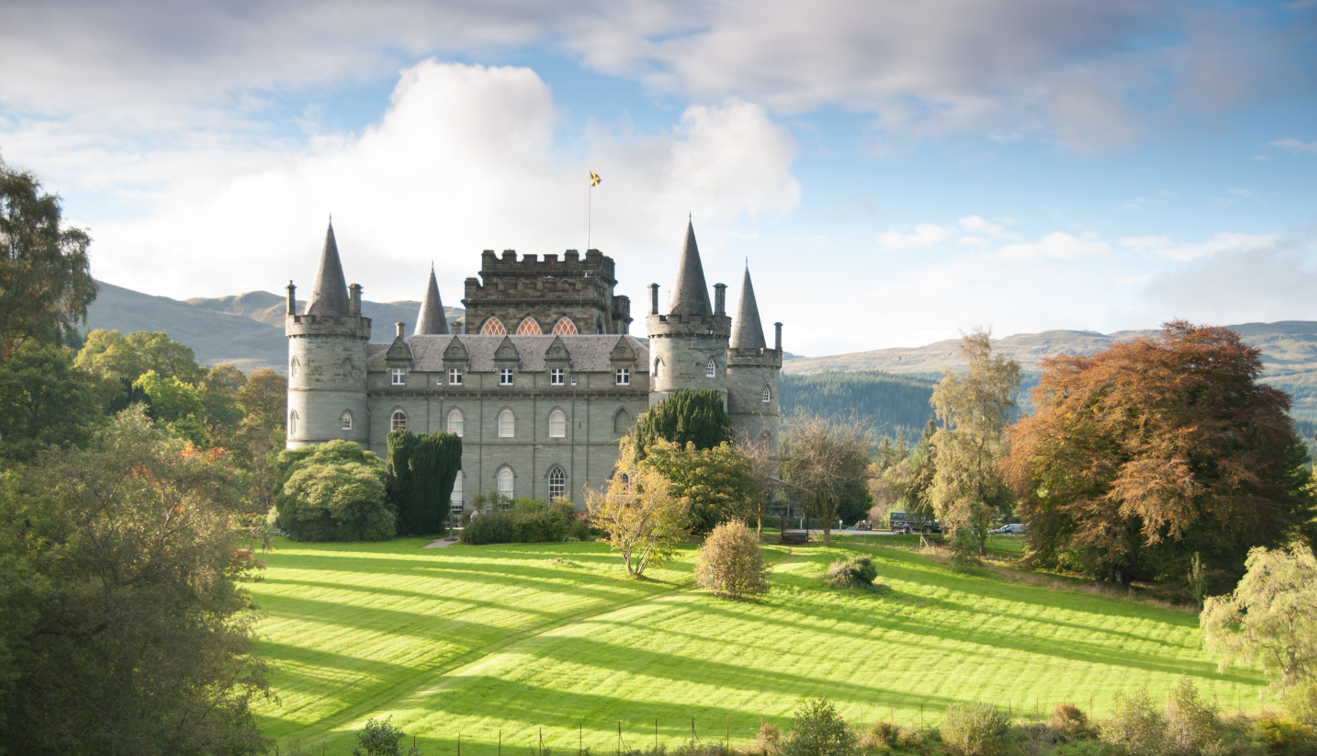
Standing on the northern shores of Loch Fyne, Inveraray Castle is one of the most photographed stately homes in Scotland, its fairytale turrets and grey-green stone perfectly reflected in the surrounding parkland. The ancestral home of the Dukes of Argyll and the seat of Clan Campbell, the castle has been rebuilt and refined over centuries into the elegant Gothic Revival structure that stands today. Inside, the State Rooms are remarkable: the Armoury Hall displays one of the finest collections of antique weaponry in Europe, arranged with geometric precision up two storeys of walls, while the formal dining room, drawing rooms, and private apartments reveal centuries of aristocratic life. The journey from Greenock winds through spectacular Argyll countryside, past sea lochs and forest-covered hillsides, making the drive itself a significant part of the experience.
Lochs, Glens and Castles: The Quintessential Highland Drive
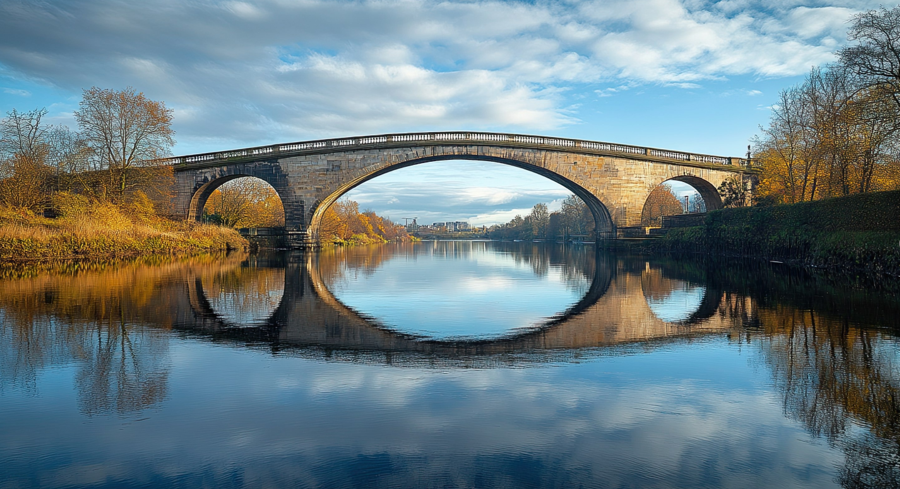
For those who want to absorb Scotland's grandeur rather than focus on a single site, a drive through the lochs, glens, and castle country northwest of Glasgow is unrivalled. The route passes through a succession of landscapes that shift from suburban to spectacular within minutes: the broad Firth of Clyde giving way to the narrow sea lochs of Argyll, then heather moorland and ancient pine forest, punctuated by the ruins of keeps and the reflections of mountains in dark water. Seasonal colours amplify everything — the brilliant greens of late spring, the purple heather bloom of August, the russet and gold of October. These landscapes carry the weight of Scottish history, from clan battles to Highland clearances, and travelling through them at a measured pace, with stops at viewpoints and village squares, is among the most rewarding ways to spend a Scottish day.
The Merchant City and Glasgow's Cultural Quarter
Glasgow's Merchant City district occupies the original commercial heart of the city, where 18th-century tobacco lords and sugar merchants built their townhouses and counting houses on the profits of Atlantic trade. Today the same streets are lined with galleries, design studios, independent restaurants, and some of the best bars in Scotland. The area sits adjacent to the Trongate arts corridor and within easy walking distance of the city's main shopping streets, the Gallery of Modern Art, and the stunning neo-Gothic City Chambers on George Square. For architecture enthusiasts, Charles Rennie Mackintosh's legacy is woven throughout the city — the Willow Tea Rooms and the Mackintosh at the Lighthouse offer accessible introductions to his extraordinary visual language. A morning or afternoon exploring this compact, walkable district delivers Glasgow's character in concentrated form.
Greenock travel tips
Layer Up: Scotland's Weather Has Its Own Agenda. Scottish weather is famously unpredictable and can deliver sunshine, rain, and wind within the same hour — even in July. Packing light, packable waterproof layers is essential, not optional. A compact rain jacket that fits in a daypack is the single most useful item you can carry ashore in Greenock. Good walking shoes matter too: Glasgow's streets are largely flat, but castle sites and loch viewpoints often involve uneven cobbles, gravel paths, or grassy hillsides. Check the Met Office forecast the morning of your port day, but don't trust it implicitly — conditions in the Highlands and Argyll can differ significantly from the city.
Decide Early: City or Countryside. The common mistake at Greenock is trying to do both Glasgow and the countryside in one day. Glasgow alone — cathedral, Kelvingrove, Merchant City, West End — is easily a full day without rushing. Stirling Castle, Loch Lomond, and Inveraray each take the better part of a day when you account for travel time from Greenock. Attempting to combine them almost always means rushing through everything and fully experiencing nothing. Pick your priority the evening before sailing, check what time your ship departs, and plan accordingly. The train to Glasgow is fast and reliable; rural excursions require more buffer time.
Time the Train Right. ScotRail services from Greenock Central to Glasgow Central run frequently, taking approximately 40 minutes. The station is a short walk from the cruise terminal. Trains run in both directions throughout the day, making it genuinely flexible. However, on busy summer days the services can fill quickly when multiple ships are in port simultaneously. Aim to catch an early train to maximise time in the city. Check the current timetable before your cruise — ScotRail schedules adjust seasonally, and engineering works occasionally affect services.
Carry Some Cash for Rural Stops. Glasgow is thoroughly card-friendly, and contactless payment works almost universally in the city. However, if your day takes you into rural Argyll, the Trossachs, or smaller Highland villages, some farm shops, heritage trust tea rooms, local markets, and car parks still operate on a cash-only basis. Withdrawing £20–30 in Sterling before heading out of the city is a sensible precaution that prevents minor inconveniences from disrupting an otherwise smooth day. ATMs are plentiful in Glasgow city centre and in larger towns such as Stirling and Inveraray.
Photography: The Light and the Timing. Scotland's high latitude means long summer days with golden-hour light that lasts well into the evening — a genuine gift for photography. The best light at Loch Lomond falls in early morning and late afternoon, when mist sits on the water and the surrounding hills glow. Stirling Castle's ramparts offer extraordinary panoramic views best photographed from the outer walls rather than the crowded central courtyard. In Glasgow, the Kelvingrove Museum photographs magnificently from the Kelvingrove Park lawn; the interior — especially the organ and the hanging Spitfire — rewards wide-angle shooting. Overcast days, far from being a disappointment, give Scottish landscapes a moody, saturated quality that flat sunshine often cannot match.
Respect the Quieter Scotland. Outside of Glasgow's city centre, Scottish culture tends toward the understated and the quietly welcoming. In rural pubs, small village shops, and castle tea rooms, taking a moment to acknowledge staff, avoid rushing, and engage briefly with locals goes a long way. Sunday trading hours vary: some rural attractions and smaller shops in towns like Inveraray keep reduced hours on Sundays, so it is worth checking opening times in advance if your cruise calls on a Sunday. Many Highland properties and castles are managed by Historic Environment Scotland or private families — entry fees support their ongoing preservation.
Port Facts Every Cruiser Needs To Know
Greenock shore excursion FAQs
Glasgow city centre is approximately 30 miles east of Greenock Ocean Terminal. By train — the most popular option — it takes about 40 minutes from Greenock Central station, which is a short walk from the terminal. The train runs frequently throughout the day.
Yes, Glasgow is highly accessible independently. The ScotRail train from Greenock Central to Glasgow Central is straightforward, affordable, and well-timed. Once in Glasgow, the city centre is walkable, the subway is simple to use, and almost all major attractions are sign-posted clearly. English is the first language, making navigation easy.
For first-timers, a combination of Glasgow city and one nearby highlight is ideal. If you prefer history and architecture, spend the morning in Glasgow (Cathedral, George Square, Kelvingrove) and consider Stirling Castle if time allows. If you prefer nature, Loch Lomond is accessible and spectacular. Venture Ashore offers guided options for Stirling, Loch Lomond, and Inveraray Castle that handle all transport logistics.
Yes. The Kelvingrove Art Gallery and Museum is one of Scotland's most visited attractions and is entirely free to enter. It houses an extraordinary permanent collection spanning fine art, natural history, and Scottish culture across 22 themed galleries. It is a short subway ride or a pleasant 20-minute walk through Kelvingrove Park from Glasgow Central station.
Stirling is approximately 50 miles from Greenock. Direct trains from Greenock require a change at Glasgow Central and take roughly 90 minutes in total. By road, the journey takes 50–70 minutes depending on traffic. Plan at least 2–3 hours at the castle itself to do it justice, plus travel time both ways.
The cruise season typically runs from late spring to early autumn. Expect temperatures of 12–20°C, with July and August the warmest months. Rain is possible at any time of year — sometimes several showers in a single day, sometimes none at all. Layering with a waterproof jacket is essential preparation regardless of the forecast.
It is possible independently, though logistics require careful planning. Trains run from Glasgow Queen Street to Balloch (at the southern end of Loch Lomond) in about 45 minutes. However, the most scenic areas — the western shore, the Trossachs, and the northern loch — require either a car or an organised excursion. An independent trip to Balloch works if you simply want to see the loch; for deeper exploration, pre-arranged transport is strongly recommended.
Glasgow has an excellent food scene. For traditional Scottish fare, look for haggis (in various forms — traditional with neeps and tatties, or as a starter haggis bon bon), Cullen skink (smoked haddock soup), and Scotch broth. The city's café culture is strong: a morning roll with square sausage from a local bakery is a Glasgow institution. For whisky, almost every bar stocks a good selection of single malts — ask the bartender for a recommendation based on your flavour preferences.
Most Scottish castles and historic sites have no formal dress code, though modest, comfortable clothing is appropriate. Sensible footwear matters more than attire — many castle sites involve uneven cobblestones, gravel paths, and exposed ramparts. Glasgow Cathedral is an active place of worship and requires respectful dress; bare shoulders and very short clothing are discouraged. In summer, a sun hat and sunscreen are useful for exposed castle battlements and loch viewpoints.
Allow at least 90 minutes from the time you plan to leave Glasgow city centre to your ship's all-aboard time. This accounts for the walk to Glasgow Central, a 40-minute train journey to Greenock Central, and the walk to the cruise terminal. Adding a 20–30 minute buffer beyond that is wise during busy summer months when trains can be busier and departure timing less predictable.
Filters
Select a filter to refine results.
Tour Type
Tour Activity
 Cart
Cart
 USD
USD GBP
GBP AUD
AUD EUR
EUR CAD
CAD