



Tours in Guernsey Channel Islands


Cruising to Guernsey Channel Islands in a group?
Skip the crowded ship excursion bus. One dedicated planner will design a private shore experience around exactly what your group wants — coordinated from first enquiry to the moment you're back on board. More memorable, more flexible, and more affordable than you might expect. Spend less time organising, more time enjoying.
Explore Group Travel →Cruising to Guernsey Channel Islands
Guernsey sits in the Gulf of St. Malo some 50 kilometres from the Normandy coast, yet it operates under the British Crown as a self-governing Bailiwick — neither part of the United Kingdom nor of the European Union. That unusual constitutional status has shaped an island with its own currency, its own laws, and a distinct Franco-Norman identity that makes it feel like nowhere else on a European cruise itinerary.
The island's most striking chapter for many visitors is the five-year German Occupation of World War Two, the only extended occupation of British territory during the conflict. Guernsey's fortifications, tunnels and dedicated museum bear vivid testimony to that period. Yet the island's story extends far deeper: Castle Cornet has guarded St. Peter Port harbour since the thirteenth century, Victor Hugo spent fifteen years in exile here producing his finest work, and the fishing villages and flower farms that define rural Guernsey have changed little in generations.
St. Peter Port itself is one of the most picturesque harbour towns in northern Europe — a cascade of Regency terraces, narrow lanes, and independent shops tumbling down to a working waterfront. The compact scale means that a determined visitor can take in the town, a museum or two, and still find time to sit with a coffee watching the ferries come and go across the Little Russel channel.
For cruise passengers, Guernsey offers an ideal combination of genuine historical depth and easy walkability. The island is small enough to feel manageable in a single day yet rich enough in character to leave you wishing the ship stayed longer.
Top things to do in Guernsey Channel Islands on a cruise stopover
German Occupation Museum: Guernsey's Most Compelling Historical Site
The German Occupation Museum at Forest stands as the most thorough record on British soil of what five years of Nazi occupation actually meant for ordinary people. Opened by a Guernsey resident who lived through the occupation, the collection is unusually personal: alongside military hardware, field equipment, and propaganda materials, you find the everyday objects — forged identity cards, clandestine radios, home-made shoes fashioned from car tyres — that tell the story of a civilian population doing what it took to survive. A full-scale reconstruction of a German command bunker and a replica wartime street bring the period viscerally to life. The museum pulls no punches about collaboration and resistance alike, making it one of the most honest and affecting WWII museums in Europe. Allow at least 90 minutes to do it justice.
St. Peter Port: One of the Finest Harbour Towns in Northern Europe
St. Peter Port rewards those who simply walk. The town rises steeply from the waterfront in layers of Regency and Georgian terraces built when Guernsey's privateering and trading wealth was at its height. Cobbled Market Street and the covered Victorian market hall are the commercial heart; the winding lanes behind them conceal independent bookshops, jewellers working in locally sourced gemstones, and cafes tucked into buildings that date back centuries. The harbour itself — with its mix of fishing boats, yachts, and inter-island ferries — is constantly animated. The church of St. Peter Port overlooks everything from a hilltop, and the views from the upper town across the harbour to the neighbouring islands of Herm and Jethou on a clear day are genuinely spectacular.
Castle Cornet: Eight Centuries of Island Defence
Perched on a tidal islet at the entrance to St. Peter Port harbour, Castle Cornet has been defending Guernsey since around 1206 — which means it has seen off French raids, English Civil War sieges, and eventually German occupation. The castle is now a museum complex housing several distinct collections including a maritime museum, an art gallery, and exhibitions on the Royal Guernsey Light Infantry. The daily noonday cannon firing is a theatrical highlight, and the views from the battlements across the harbour and out to the other Channel Islands are among the best on the island. At low tide you can walk across to the castle on the causeway; at high tide it becomes a true island. Allow 90 minutes to explore fully.
Hauteville House: Victor Hugo's Island Masterpiece
Victor Hugo arrived in Guernsey in 1855, banished by Napoleon III, and stayed for fifteen years. During that time he wrote Les Misérables and Toilers of the Sea — and decorated his home on Hauteville Street in one of the most eccentric and magnificent ways imaginable. Every room is a different artistic statement: walls covered in Delft tiles, ceilings constructed from carved Chinese furniture, a glass-walled look-out at the top where Hugo wrote standing up, facing the sea towards France. The house is owned by the City of Paris and has been meticulously preserved as Hugo left it. Guided tours (the only way to see the interior) are immersive and frequently sell out — booking ahead is strongly advised. Hauteville House is a five-minute walk uphill from the town centre.
The Little Chapel: An Outsider Art Wonder in a Garden Setting
Built by a Salesian brother beginning in 1914, the Little Chapel near Les Vauxbelets is one of the most idiosyncratic structures in the British Isles — a miniature basilica decorated entirely with broken crockery, sea shells, pebbles, and fragments of coloured glass pressed into cement. The interior is so small that only a handful of people can enter at a time, yet the detail is extraordinary. Three successive versions were built; the current chapel dates from 1923 and has been continuously embellished by devoted volunteers ever since. It sits in a quiet garden in the island's interior, far enough from the waterfront to see a different side of Guernsey entirely. Admission is free; a bus from St. Peter Port stops nearby.
Guernsey's South Coast Cliffs: Wild Scenery Close to Town
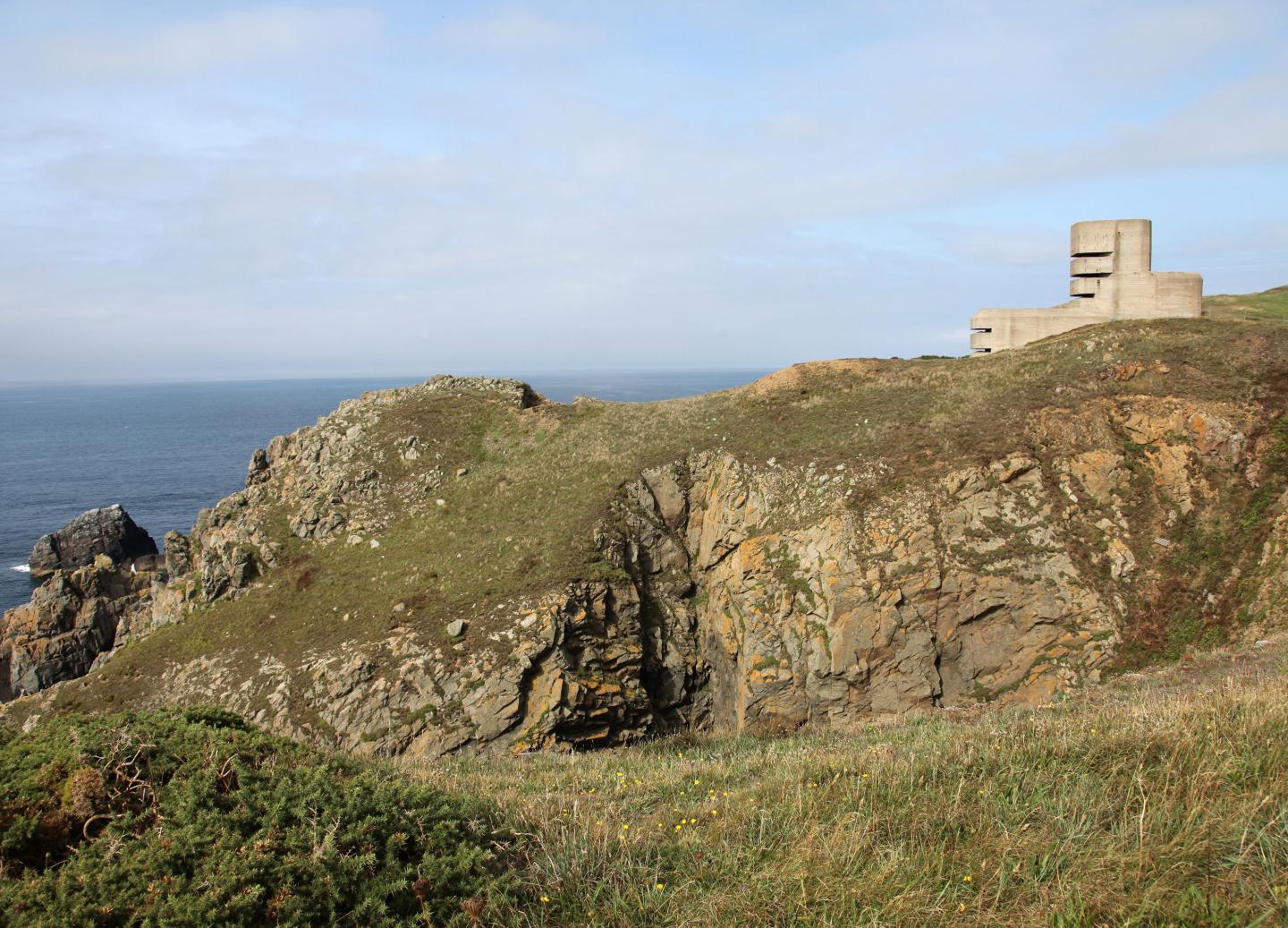
Guernsey's southern coastline is dramatically different from the gentle sandy bays of the north and west. The cliffs here drop steeply to the sea, with headlands, sea caves, and isolated rocky coves accessible only to those willing to scramble. The cliff path from St. Peter Port southward — signposted and well-maintained — passes through a sequence of wildflower meadows, granite outcrops, and viewpoints looking back towards the town and harbour. On a clear day, the Normandy coast is visible on the horizon. This is the Guernsey that visitors who never leave St. Peter Port miss entirely, and it takes only 30 minutes on foot from the pier to reach the first proper clifftop viewpoints.
Guernsey Channel Islands travel tips
Plan Your Tender Return Early. Tender queues at the end of the day can be considerable, particularly when multiple ships are anchored simultaneously or when afternoon weather deteriorates. Build in a minimum of 90 minutes between your last planned activity and the ship's all-aboard time. Check the tender schedule posted at the pier on arrival — the last tender often departs earlier than many passengers expect. If the ship signals an early recall due to weather, respond immediately: missing the final tender on a tendered port is a far more serious disruption than missing a gangway on a docked ship.
Spend or Exchange Guernsey Pounds Before You Leave. Guernsey issues its own banknotes and coins, which are accepted freely across the island alongside UK sterling. However, Guernsey notes are not accepted as legal tender in the United Kingdom, and most UK banks will refuse to exchange them. Before you reboard, make sure any Guernsey cash you have left is either spent in island shops or exchanged at a bureau on the waterfront. Coins in particular are often overlooked — they cannot be exchanged at all once you leave the island.
Book Hauteville House Tours in Advance. The guided tour of Victor Hugo's extraordinary home is the only way to see the interior, and numbers are strictly limited for conservation reasons. On busy summer cruise days — particularly when multiple ships call simultaneously — tours can be fully booked by mid-morning. Check the official Hauteville House website and reserve your slot before your cruise departs. The tour lasts approximately one hour and is conducted in English as well as French.
Dress in Layers for Unpredictable Atlantic Weather. Guernsey's position in the Gulf of St. Malo means weather can change quickly, even in summer. A morning that begins clear and warm can turn overcast and breezy by early afternoon. Light waterproofs and an extra layer are worth carrying even on apparently fine days, particularly if you plan to walk the cliff paths, where exposed headlands amplify any wind. Sunscreen is equally important on bright days — sea glare and open clifftops catch many visitors out.
The German Occupation Museum Requires Transport — Plan Accordingly. The German Occupation Museum is located at Forest, approximately 4 kilometres from the tender pier — far enough to make a spontaneous walk impractical if you have limited time ashore. Island buses serve the area, but services run on island time and may not align neatly with your schedule. If the museum is your primary goal, having your transport sorted before you step ashore will ensure you arrive when the museum opens rather than losing time working out connections at the pier.
Photograph from the Upper Town for Harbour Views. The most photogenic views of St. Peter Port harbour — with Castle Cornet in the foreground and the other Channel Islands visible on the horizon — are found not from the waterfront itself but from the upper lanes of the town, particularly around Hauteville and the church of St. Peter Port. The light is best in the morning when the sun is in the east behind the hills, illuminating the harbour and waterfront. The climb from the pier takes about 10 minutes and is worth every step.
Port Facts Every Cruiser Needs To Know
Guernsey Channel Islands shore excursion FAQs
Large cruise ships anchor offshore and passengers are ferried to Crown Pier in St. Peter Port by tender boats — a journey of approximately 10–15 minutes each way. There is no berthing facility capable of accommodating large cruise vessels. Tenders run continuously throughout the day. Check with your ship for the scheduled first and last tender times, and build in extra time for queues at both ends of the day.
Yes. UK banknotes and coins circulate freely alongside Guernsey's own currency and are accepted everywhere. However, the reverse is not true: Guernsey pounds (notes and coins) are not accepted in the United Kingdom. Make sure to spend any Guernsey cash you receive or exchange it at a waterfront bureau before you reboard your ship.
Guernsey is a Crown Dependency — it is a self-governing territory of the British Crown but is not part of the United Kingdom, and it was never a member of the European Union. It has its own parliament (the States of Guernsey), its own legal system, and its own tax regime. British and EU citizens can enter without a visa; other nationalities should check entry requirements before their cruise. There are no passport controls between Guernsey and the UK, but immigration rules apply for non-British and non-EU visitors.
The German Occupation Museum at Forest documents the five-year Nazi occupation of Guernsey (1940–1945) — the only extended occupation of British soil in the Second World War. The collection includes military equipment, everyday civilian objects, clandestine communications equipment, a reconstructed wartime street and a German bunker. The content is presented honestly, including difficult aspects of occupation life such as collaboration and deportations. It is suitable for older children and teenagers but some exhibits may be distressing for younger visitors. Allow 90 minutes minimum.
It is technically possible — ferries run from St. Peter Port to Herm (20 minutes) and Sark (one hour) — but it is rarely practical on a cruise day. Ferry schedules may not align with your available time ashore, and if you miss the return ferry you will miss your ship. Herm is a beautiful, car-free island worth a dedicated visit; Sark, with its horse-drawn carriages and medieval atmosphere, deserves a full day. For cruise passengers, both are best saved for a return visit on a longer stay.
The town beaches immediately adjacent to St. Peter Port are small and not especially inviting. Guernsey's finest beaches — Cobo Bay, Vazon Bay, Portelet, and the sweeping sands of L'Ancresse in the north — are on the western and northern coasts, roughly 5–10 kilometres from the pier. They are accessible by bus but require planning to fit into a port day alongside other activities. If beach time is your priority, consider it your main activity and plan the rest of the day around it.
The German Occupation Museum is generally open from 10am to 5pm (April to October) and 10am to 4pm in winter, though hours can vary — check the current season's schedule before your visit. Castle Cornet opens at 10am and closes at 5pm (last admission 4pm), with the noonday gun fired daily at 12pm. Hauteville House guided tours run throughout the day but must be pre-booked. The main shops in St. Peter Port typically open from 9am to 5:30pm Monday to Saturday. Confirm current hours in advance as they may vary by season.
Guernsey does not charge VAT (Value Added Tax) and has its own lower tax structure, which historically made it attractive for certain goods. However, duty-free allowances apply when you return to the UK or EU, and significant purchases may be subject to customs declaration. The practical price difference on most everyday items is modest. Jewellery incorporating locally sourced gemstones (particularly Guernsey's own variety of blue gemstone) makes a distinctive purchase that is genuinely local.
Guernsey's climate is maritime and mild, moderated by the Gulf Stream. Summer temperatures (June to August) typically range from 16°C to 22°C, making it pleasant rather than hot. Rain is possible at any time of year, and sea breezes can make exposed clifftops cooler than town. The island averages more sunshine hours than most of England, and the combination of cliff walks, sea views and harbour life is best enjoyed in fine weather. Pack a light waterproof and sunscreen regardless of the forecast.
A well-planned day of 6–8 hours ashore (net of tendering time) allows you to see the German Occupation Museum, explore St. Peter Port including Castle Cornet, and add one further stop such as Hauteville House or the Little Chapel. Trying to add the south coast cliffs, a beach, and several museums in a single day is ambitious. Prioritise according to your interests: history-focused visitors should centre the day on the Occupation Museum and Castle Cornet; those drawn to literary heritage should add Hauteville House as an early priority.
Filters
Select a filter to refine results.
Tour Type
Tour Activity
 Cart
Cart
 USD
USD GBP
GBP AUD
AUD EUR
EUR CAD
CAD