



Tours in Hellesylt


Cruising to Hellesylt in a group?
Skip the crowded ship excursion bus. One dedicated planner will design a private shore experience around exactly what your group wants — coordinated from first enquiry to the moment you're back on board. More memorable, more flexible, and more affordable than you might expect. Spend less time organising, more time enjoying.
Explore Group Travel →Cruising to Hellesylt
Hellesylt is one of Norway's smallest cruise ports — a village of just a few hundred residents tucked at the head of the Sunnylvsfjord where it meets the arm leading to the legendary Geirangerfjord. What it lacks in size it more than compensates for in sheer dramatic scenery. A powerful waterfall tumbles directly through the village, audible from the pier and visible within moments of stepping ashore, announcing immediately that this is a place defined by water and rock and vertical scale.
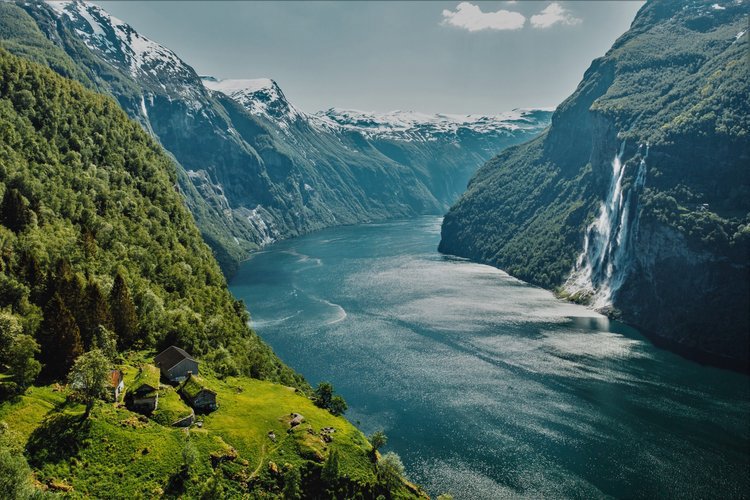
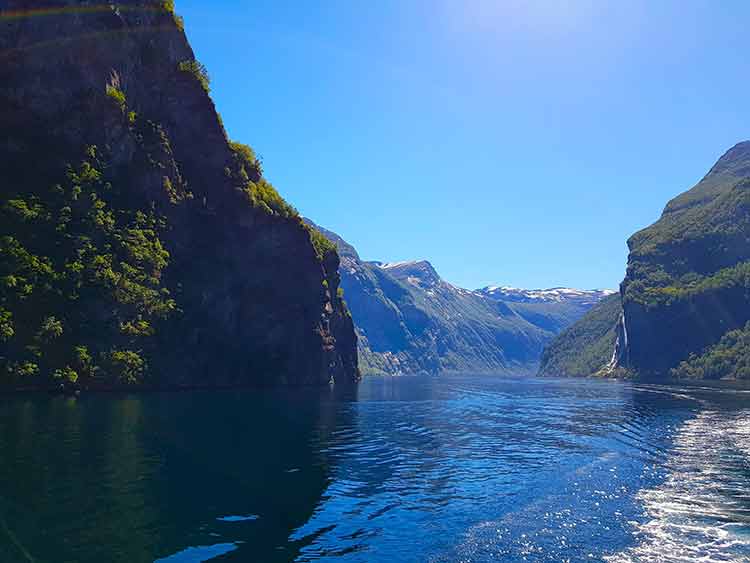
The reason ships call here is the access Hellesylt provides to Geirangerfjord, which UNESCO designated a World Heritage Site in 2005 alongside the Nærøyfjord as part of the West Norwegian Fjords inscription. The fjord is a masterpiece of geological drama: 15 kilometres of near-vertical walls rising up to 1,400 metres from water that plunges 500 metres deep, punctuated by some of the most photographed waterfalls in Europe. The Seven Sisters falls — seven separate streams tumbling side by side down a sheer rock face — and the Suitor waterfall opposite are among the most iconic natural spectacles on the continent.
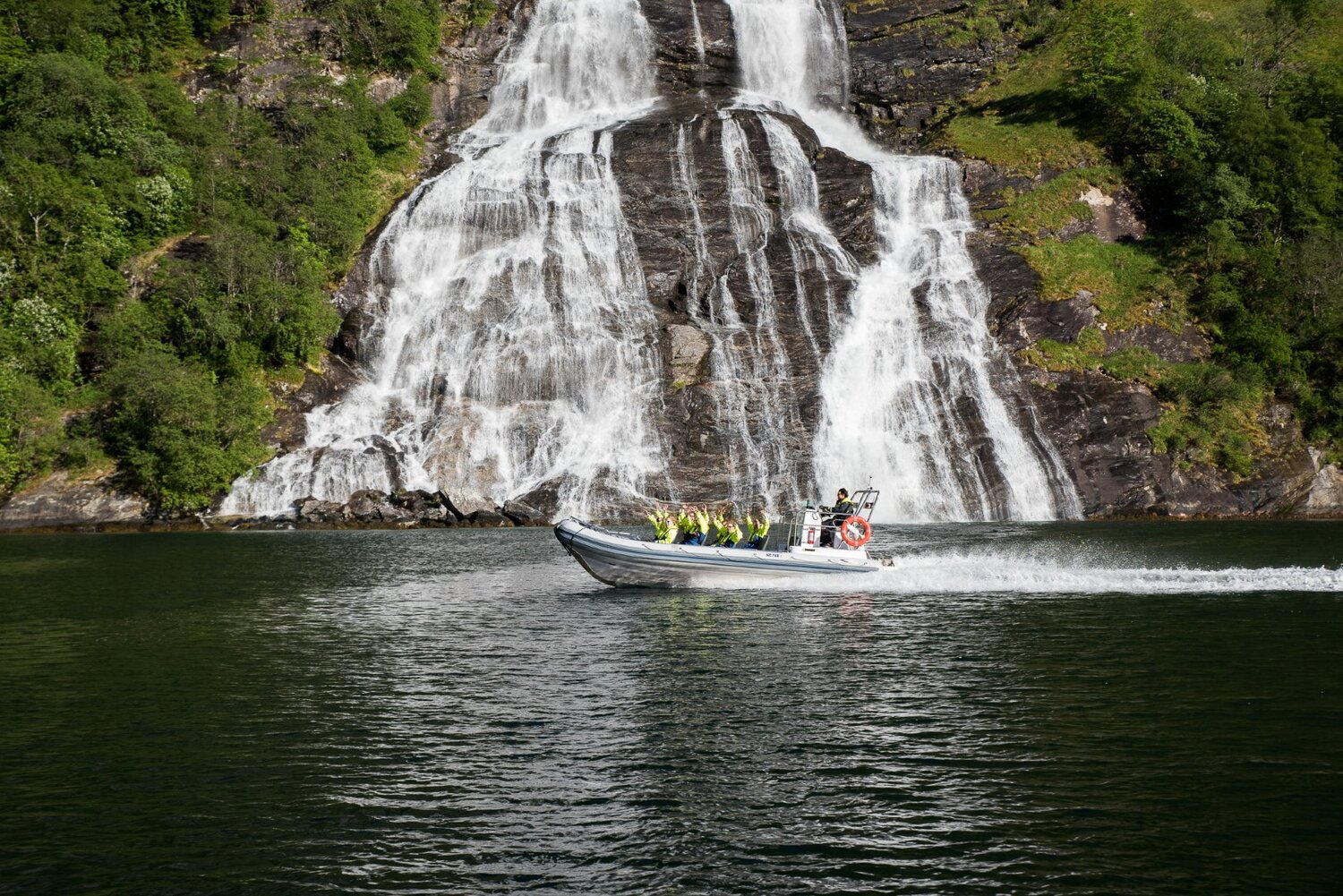
From Hellesylt, visitors can access this landscape in multiple ways. High-speed RIB speedboat safaris bring passengers directly beneath the falls and into the narrowest reaches of the fjord, delivering an exhilarating and immersive experience. Traditional sightseeing vessels make the same journey at a more contemplative pace. The ferry crossing from Hellesylt to Geiranger village takes around 65 minutes and is one of the world's great scenic boat journeys. And for those drawn to mountain landscapes, excursions into the Norangsdal valley and the village of Øye reveal a different face of inner Norway — a world of mirror-still lakes, forgotten valleys, and peaks that hold their snow well into summer.
Hellesylt itself is too small to occupy more than a few minutes of exploration. The village is the gateway, not the destination — and the destination, on every measure, is extraordinary.
Top things to do in Hellesylt on a cruise stopover
Fjordsafari by RIB: Beneath the Waterfalls at Speed
The RIB speedboat safari from Hellesylt into Geirangerfjord is one of the most viscerally thrilling ways to experience the fjord environment. Rigid inflatable boats — open to the elements and nimble enough to navigate into the narrowest inlets — power through the deep water at pace before slowing at key spots to allow passengers to feel the full drama of their surroundings. The scale becomes comprehensible in a way that photographs never convey: walls of rock rising vertically to more than a thousand metres, waterfalls launching themselves off clifftops and dispersing into mist before reaching the water, and the profound quiet of a fjord interior unreachable by road. The RIB gets passengers physically close to the Seven Sisters waterfall — close enough to feel the spray — and into sections of the fjord that larger vessels cannot access. It is an experience that remains with visitors long after the cruise ends.
Geirangerfjord Sightseeing Boat Tour: The Classic Fjord Journey
The sightseeing boat tour from Hellesylt through Geirangerfjord offers the iconic fjord experience at a pace that allows full appreciation of the scenery. The route takes passengers along 15 kilometres of UNESCO World Heritage landscape, past abandoned farmsteads clinging impossibly to cliff ledges, beneath the cascading Seven Sisters waterfall on one side and the solitary Suitor waterfall on the other, and through water so clear and deep it appears almost black. Informed commentary brings the landscape to life — explaining the geology, the history of the farms that once operated here, and the ecological significance of the environment. The journey ends at Geiranger village, where time ashore allows exploration before the return. This is the comprehensive, unhurried way to encounter one of Europe's great natural wonders.
The Best of Geiranger: Village, Viewpoints, and the Eagle Road
Combining the fjord crossing with exploration of Geiranger village and its viewpoints delivers the full picture of why this landscape is considered Norway's finest. Geiranger village sits at the very head of the fjord with water on one side and mountain walls on three others — a theatrical setting matched nowhere else in Norway. The Eagle Road (Ørnesvingen) winds up the mountainside to a viewpoint where the full length of the fjord stretches out below, cruise ships reduced to white specks on turquoise water. Waterfalls are visible from multiple angles at this elevation. Excursions combining the ferry crossing with mountain road exploration give visitors both the water-level drama of the fjord and the bird's-eye perspective that makes the scale fully comprehensible.
Norangsdal Valley and Øye: Norway's Hidden Interior
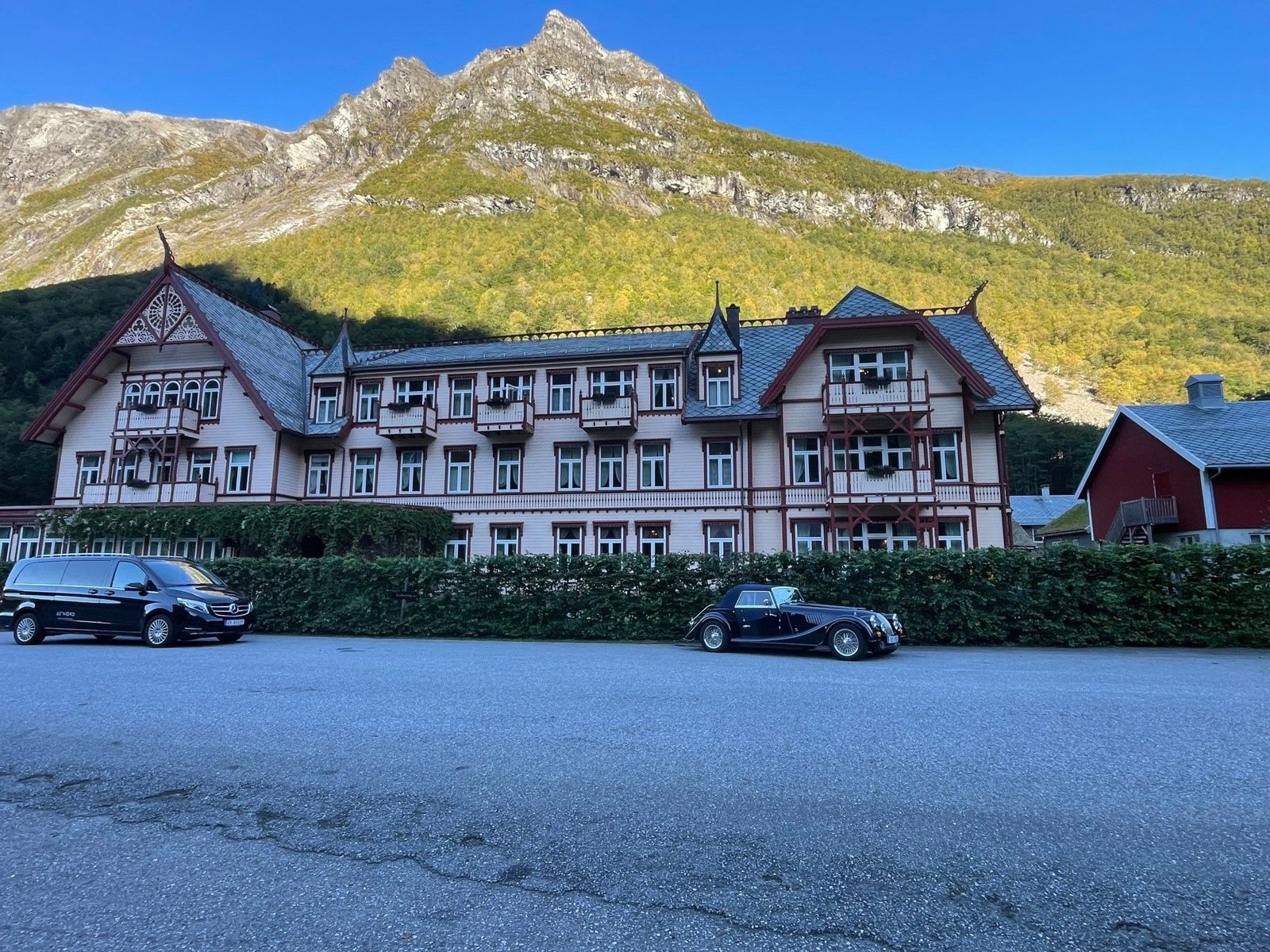
Away from the famous fjord, the Norangsdal valley represents a different and equally extraordinary face of western Norway. This narrow valley, accessible by road from the Hellesylt area, threads between snow-capped peaks, past a submerged village beneath a lake (flooded in 1908), and into the tiny settlement of Øye at its head. Øye is notable for its historic Union Øye Hotel — a Victorian-era building that once hosted royalty and luminaries from across Europe and remains in operation today. The valley is largely unchanged from photographs taken a century ago: the same mountains, the same mirror-still lake surfaces, the same dramatic compression of the landscape. A scenic fjord and valley panorama excursion combines Geirangerfjord views with deep exploration of this lesser-known but equally beautiful interior.
Hellesylt Waterfall: The Village's Living Centrepiece
The Hellesylt waterfall requires no effort to find — it runs directly through the village, spanned by a footbridge, and is audible from the tender pier before passengers step ashore. The falls descend steeply through a rocky channel cut into the hillside, the water white and powerful even in late summer when many Norwegian falls have diminished. In spring and early summer, the volume produces a constant fine mist across the lower village. The footbridge is the village's de facto meeting point and provides a superb vantage for photography. The waterfall is the most immediately striking natural feature of the stop, setting the visual tone for what lies beyond in the fjord.
The Seven Sisters and Suitor Waterfalls: Icons of Geirangerfjord
No feature of Geirangerfjord is more photographed than the Seven Sisters — seven distinct streams of varying width and force cascading side by side down a 250-metre rock face into the fjord below. On the south side directly opposite stands the Suitor waterfall, a single powerful column of water that Norwegian tradition holds was a rejected suitor attempting to drink enough to forget his heartbreak. The poetic geography of these two falls facing each other across the fjord has made them the defining image of Geirangerfjord. Both the RIB safari and the sightseeing boat tour from Hellesylt pass directly beneath them, and the scale when viewed at water level — rather than from a ship's deck — is genuinely staggering.
Hellesylt travel tips
Layer Up: The Fjord is Cold Even in Summer. Even on warm summer days, the air temperature drops noticeably when you are on the water and the boat is moving. RIB safari passengers should dress for conditions significantly colder than those on the tender pier — the boats move quickly and fjord air is cool. A windproof outer layer, warm mid-layer, and closed-toe shoes are sensible regardless of the air temperature ashore. Operators typically provide dry suits or protective outerwear for RIB passengers, but the base layers beneath them matter considerably for comfort.
Timing the Ferry: Plan Your Day Around the Crossing. The Hellesylt–Geiranger ferry takes approximately 65 minutes each way. If you are planning an independent crossing to Geiranger and back, build your day around those travel times — a return journey consumes over two hours before you spend any time in Geiranger itself. In peak season the ferry runs regularly, but it can be busy. Arriving at the ferry dock before the main rush of passengers from the ship significantly improves your chances of an uncrowded crossing with good deck space for photography.
Photograph from Water Level, Not the Ship's Deck. The fjord landscape looks remarkable from any vantage, but photographs that truly convey the scale of Geirangerfjord are taken at water level, where the relationship between the boat and the cliff walls above becomes clear. From a cruise ship's upper decks, the walls simply look like steep hillsides. From a sightseeing boat or RIB at water level, the true vertical scale — walls rising more than a kilometre above you — becomes physically apparent. The best light for fjord photography in summer comes during the long golden hours of late afternoon, though extended daylight means good conditions persist far longer than at lower latitudes.
Hellesylt Village is Small — Explore It Quickly, Then Move On. Hellesylt is a settlement of genuine charm but minimal scope for extended independent exploration. The waterfall, the footbridge, the quay area, and a small cluster of buildings comprise essentially the whole village. After seeing these in ten or fifteen minutes, the logical move is to get onto the water or into the surrounding landscape. Visitors who spend their entire port day in the village — which occasionally happens when excursion plans fall through — invariably wish they had planned differently. The fjord and valleys around Hellesylt are the actual attraction; the village is merely the beautiful threshold to them.
The Abandoned Farms: Ask About Them. One of the most poignant aspects of the Geirangerfjord landscape is the presence of abandoned farms — Skageflå, Knivsflå, and Blomberg — clinging to ledges on the fjord walls. Families farmed these impossibly remote plots until the early 20th century, when the requirement for children to attend school made the isolation untenable. Some farms have been restored and are accessible in summer; others remain as ruins. Boat tour commentary typically covers these farms, adding a human dimension to a landscape that might otherwise feel purely geological.
Weather Moves Fast in the Fjords — Dress for It. The Norwegian fjords create their own microclimates and conditions can shift rapidly regardless of the broader regional forecast. A sunny morning at anchor can become overcast and breezy within the fjord by mid-morning. Fog is possible even in summer. None of this should deter you — the fjord is magnificent in virtually all conditions, and mist adds atmosphere — but appropriate clothing is essential. Checking the on-board weather briefing before departure and dressing in layers rather than for the single best-case temperature is the sensible approach.
Port Facts Every Cruiser Needs To Know
Hellesylt shore excursion FAQs
Yes. Cruise ships anchor in Sunnylvsfjord and use tender boats to ferry passengers ashore at Hellesylt's small quay. Tender schedules are managed by the ship and communicated aboard. The tender landing is directly beside the waterfall and centre of the village, so no additional transfer is needed once ashore.
Both tours travel through Geirangerfjord to the same iconic landmarks, but the experience differs significantly. The RIB (rigid inflatable boat) safari is open-air, fast, and physically exhilarating — an adventurous experience close to the water surface. The sightseeing boat is larger, slower, and more comfortable, with an enclosed cabin and guided commentary. The RIB suits those seeking immersion and adventure; the sightseeing vessel suits those who prefer a more contemplative or sheltered experience.
The ferry from Hellesylt to Geiranger takes approximately 65 minutes and covers the full length of Geirangerfjord through the most spectacular section of the UNESCO World Heritage landscape. The return crossing adds another 65 minutes. Both legs are scenic and worth being on deck for, so plan your day accordingly — a return crossing takes over two hours before any time spent in Geiranger itself.
In many travellers' experience, photographs consistently understate the impact. The combination of scale — walls rising over 1,000 metres from water 500 metres deep — with the sound of cascading waterfalls and the stillness of deep fjord water creates an experience that is difficult to convey in two dimensions. The Seven Sisters waterfall in particular tends to produce genuine awe in first-time visitors. The UNESCO World Heritage designation is universally regarded as well-deserved.
The Norangsdal is a narrow valley running inland from the Hjørundfjord, accessible by road from the Hellesylt area. It is one of western Norway's most dramatic and least-visited landscapes — threading between high peaks, past a lake that submerged an entire village in 1908, ending at the remote settlement of Øye with its preserved Victorian hotel. The valley sees a fraction of the tourist traffic of Geirangerfjord despite scenery many regard as equally extraordinary. Scenic fjord and valley panorama excursions from Hellesylt typically include both Geirangerfjord views and Norangsdal exploration.
Hellesylt village has extremely limited food and drink — typically a small café near the quay offering basic refreshments. Geiranger village, reached by ferry or excursion, offers a broader selection of cafés and restaurants serving Norwegian classics including fresh salmon and traditional dishes. It is advisable to eat aboard before heading ashore if you have specific dietary requirements or need a full meal during the day.
Several farms — notably Skageflå, Knivsflå, and Blomberg — were built on narrow ledges on the steep walls of Geirangerfjord. Families farmed these remote plots until the early 20th century, when the requirement for children to attend school made the isolation untenable. Some farms have been restored and are accessible in summer; others remain as ruins. They appear on boat tours through the fjord and add a poignant human dimension to the geological spectacle.
Summer (June–August) typically brings mild temperatures of 12–18°C with long daylight hours and frequent sunshine. However, fjord microclimates mean conditions can shift quickly — mist, cloud, and brief showers are possible on otherwise fine days. Waterfall volume is highest in early summer when snowmelt is at its peak. A windproof waterproof layer is essential at any time of year when spending time on the water.
Yes. Geirangerfjord, together with the Nærøyfjord, was inscribed on the UNESCO World Heritage List in 2005 as part of the West Norwegian Fjords site. The designation recognises outstanding examples of fjord landscapes created by Quaternary glaciation. The listing has contributed to strict environmental protections that limit emissions from ships operating in the fjord — a context worth understanding for cruise visitors.
Very little — the village is genuinely tiny. The waterfall, the footbridge, the quay area, and a small cluster of buildings comprise essentially all of it. Independent exploration of Hellesylt village takes around 15 minutes. The real attractions lie on the water and in the surrounding landscape. Visitors not joining an organised excursion should strongly consider the independent ferry crossing to Geiranger as the minimum fjord experience; remaining in the village for the full port day leaves the most spectacular scenery entirely unseen.
Filters
Select a filter to refine results.
Tour Type
Tour Activity
 Cart
Cart
 USD
USD GBP
GBP AUD
AUD EUR
EUR CAD
CAD