



Tours in Hvar


Cruising to Hvar in a group?
Skip the crowded ship excursion bus. One dedicated planner will design a private shore experience around exactly what your group wants — coordinated from first enquiry to the moment you're back on board. More memorable, more flexible, and more affordable than you might expect. Spend less time organising, more time enjoying.
Explore Group Travel →Cruising to Hvar
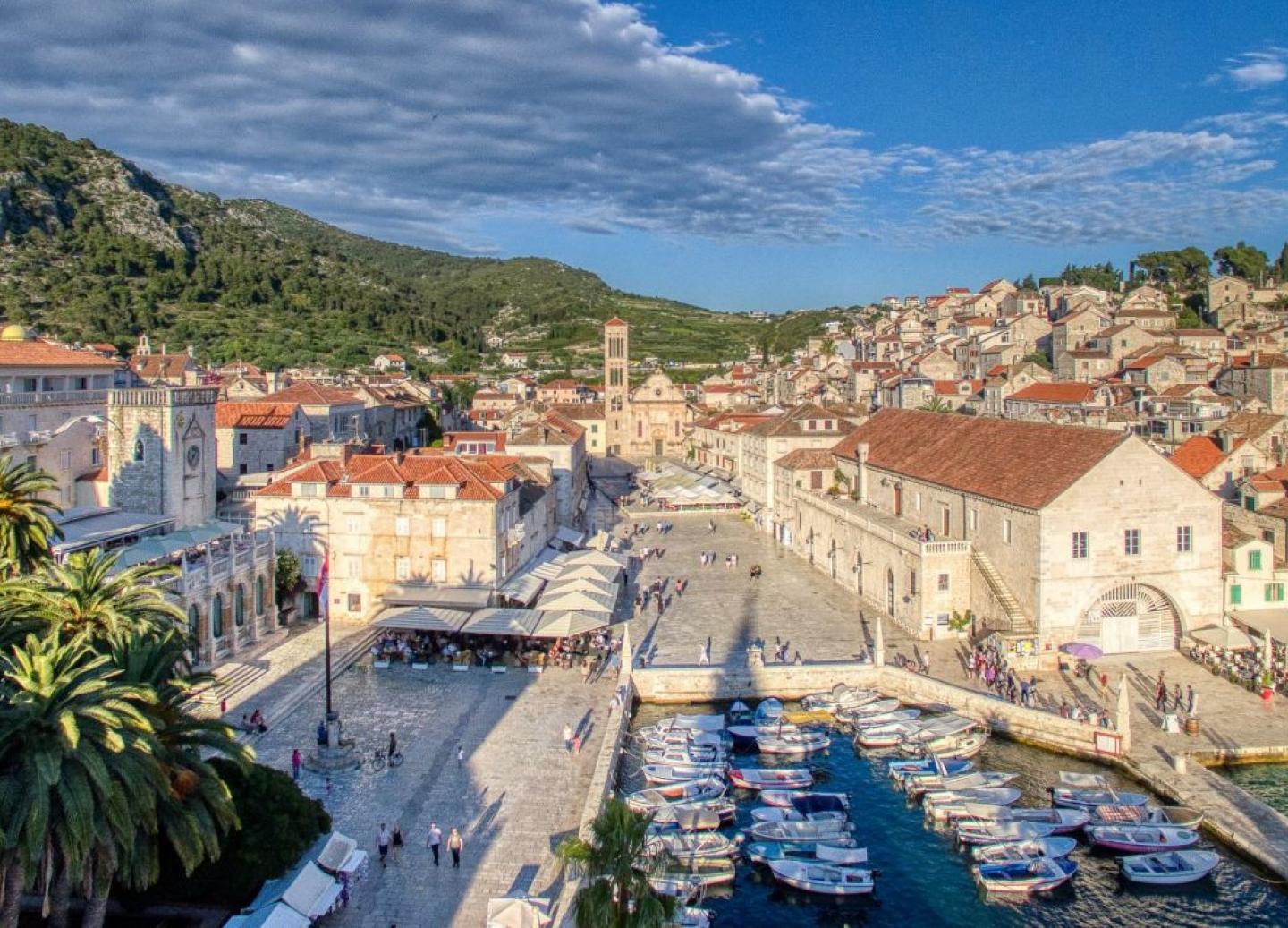
Hvar is one of the Adriatic's most celebrated islands — and for good reason. Set along the Dalmatian coast of Croatia, it combines a well-preserved medieval old town with some of the sunniest skies in Europe, a claim backed by more than 2,700 hours of sunshine per year. Ships dock or tender into Hvar Town, placing passengers almost immediately within reach of its labyrinthine stone lanes, a grand Renaissance cathedral, and Europe's oldest communal theatre, built in 1612.
The town unfolds from a generous harbourfront promenade up through steeply tiered streets to the Fortica fortress, whose ramparts offer sweeping panoramas across the rooftops and out to the scatter of green Pakleni Islands lying just offshore. Walking here is not merely the practical choice — it is the experience itself. The old town's pedestrianised core reveals baroque churches, hidden courtyards, and small wine bars tucked into centuries-old cellars at every turn.
Beyond the historic centre, Hvar is synonymous with two things: lavender and wine. The island's interior hillsides are blanketed with lavender fields that bloom brilliantly in June, and the Plavac Mali grape thrives in the stony soil to produce bold, character-filled red wines that are rarely found outside Croatia. Local markets and waterfront restaurants make it easy to taste the island's flavours without straying far from the port.
For cruise visitors, Hvar Town is an ideal compact destination. The major landmarks are all within a comfortable walk, the fortress hike is achievable for most fitness levels, and the unhurried pace of Dalmatian life makes even a few hours ashore feel genuinely restorative. It is, simply put, one of the most beautiful small towns in the Mediterranean.
Top things to do in Hvar on a cruise stopover
Hvar's Medieval Old Town
Hvar Town's historic centre is one of the best-preserved medieval towns on the entire Adriatic coast. Its pedestrianised streets are paved with gleaming white limestone, worn smooth by centuries of foot traffic, and lined with Gothic and Renaissance buildings that speak to the island's prosperity under Venetian rule. The town developed its distinctive character between the 13th and 17th centuries, when Hvar served as a key waypoint on the Venetian trade routes. Wandering through the tangle of narrow lanes, you encounter ornate window grilles, hidden loggias, the oldest communal theatre in Europe (1612), and unexpected piazzas where daily life plays out much as it has for generations. A walking tour through this compact historic core brings the layers of history alive, from the bishop's palace to the baroque waterfront arsenal.
St. Stephen's Cathedral and the Main Square
St. Stephen's Square (Trg Sv. Stjepana) is the largest piazza in Dalmatia and forms the social heart of Hvar Town. At one end stands the 16th-century Cathedral of St. Stephen, its unfinished Renaissance facade and elegant bell tower forming one of the most photographed scenes on the Dalmatian coast. The interior houses an impressive collection of religious art, including an early-15th-century Madonna considered among the most prized icons in Croatia. The square itself is a perpetual gathering point — morning coffee drinkers give way to afternoon tourists and evening locals in a rhythm that has defined Hvar for centuries. Its proportions are grand but the atmosphere is relaxed, and it serves as a perfect orientation point at the start of any walking exploration of the town.
Fortica Fortress: Hvar's Crown
Rising on a steep hill directly above the Old Town, the Fortica (also called Španjola Fortress) is Hvar's most dramatic landmark. Built in the 13th century and significantly expanded during the 16th century — partly in response to devastating Ottoman raids that razed much of the town in 1571 — the fortress offers one of the finest panoramic viewpoints on the entire Dalmatian coast. From its ramparts, the view sweeps across the Old Town's terracotta rooftops, the shimmering Adriatic, and the pine-forested Pakleni Islands spread like stepping stones in the distance. The climb takes approximately 15–20 minutes via a signposted path from the main square. Inside, the fortress contains a small museum and, in summer, a bar within the ancient walls — a setting that is hard to match anywhere in the region.
Lavender Fields and Island Fragrance
Hvar is often called the 'Lavender Island,' and the title is well earned. The island's interior hillsides have been cultivated with lavender for centuries, and the plant thrives in the stony, sun-baked soil with an intensity rarely found elsewhere in Europe. At peak bloom in June, the fields turn entire hillsides violet and release a scent that carries through the warm air. Local producers distill lavender into essential oils, soaps, sachets, and liqueur — all of which are sold at markets throughout Hvar Town. Even outside bloom season, the aromatic herbs are a constant presence in the island's landscapes and cooking. A walking tour that extends into the town's periphery or the nearby settlements of Stari Grad plain offers glimpses of this agricultural heritage that has shaped the island's identity for generations.
The Franciscan Monastery and Its Cypress Garden
Tucked at the eastern edge of Hvar Town's bay, the Franciscan Monastery dates to the late 15th century and stands in peaceful contrast to the bustle of the main square just a short walk away. Its cloister garden, shaded by a remarkable 300-year-old cypress tree, is one of the most tranquil spots on the island. The monastery museum houses a notable collection of Renaissance paintings — including a large Last Supper canvas attributed to Matteo Ingoli — as well as antique maps, navigational instruments, and rare liturgical objects. The setting, with the sea lapping at the monastery's garden walls, gives the whole place an almost contemplative quality. It is the kind of place that rewards those who venture slightly beyond the main piazza, offering genuine cultural depth in a beautiful waterside setting.
The Pakleni Islands and the Crystal Adriatic
Lying just a short ferry ride from Hvar Town's harbour, the Pakleni Islands (Paklinski otoci) are a small archipelago of pine-covered islets and hidden coves that offer some of the clearest water in the Adriatic. The name comes not from 'pakao' (hell) as often assumed, but from 'paklina,' the pine resin once harvested here to seal boat hulls. Today the islands are a natural playground of secluded beaches, underwater clarity, and shaded walking paths. Water taxis run regularly from the Hvar Town waterfront throughout the summer season. The closest island, Jerolim, is only minutes away; Palmižana, further along, has a small marina, restaurants, and beautiful botanical gardens. For cruise visitors with time to spare after exploring the Old Town, the Pakleni Islands offer a genuinely memorable extension to the day.
Hvar travel tips
Climb the Fortress Early. The path to Fortica Fortress is exposed to full sun for most of its route. Starting the climb before 10am in summer months not only avoids the worst heat but also means you will likely have the ramparts largely to yourself — peak cruise season can bring significant crowds to the fortress by mid-morning. The views at sunrise and in the softer morning light are also considerably more photogenic than those in the harsh midday glare.
Wear Comfortable Shoes — The Streets Demand It. Hvar's Old Town streets are paved with polished limestone that can be slippery even when dry, particularly on the steeper lanes leading toward the fortress. Sandals with grip or walking shoes are strongly recommended over flip-flops or smooth-soled footwear. The main square itself is flat and easy, but exploration beyond it quickly involves uneven terrain and steps.
The Quiet Side Streets Hold the Best Discoveries. The main waterfront promenade and St. Stephen's Square are the natural focal points for visitors, which means the residential lanes immediately behind them are often surprisingly quiet. Wandering uphill and inland from the square — even for just five minutes — reveals hidden courtyards, old stone water cisterns, small workshops, and neighbourhood chapels that most day visitors never see. Some of the most atmospheric photography of Hvar comes from these overlooked corners rather than the well-photographed waterfront.
Try the Local Wine — It is Genuinely Different. Plavac Mali, the grape variety dominant on Hvar and the wider Dalmatian coast, produces intense, tannic red wines with a character quite distinct from anything produced in western Europe. Several small wine bars in the Old Town serve it by the glass, often alongside local cheese and prosciutto. It is worth taking the time to try rather than defaulting to the more familiar international options on menus — the island's wines rarely travel far beyond Croatia and represent a genuinely regional experience.
Dress Appropriately for Religious Sites. The Cathedral of St. Stephen and the Franciscan Monastery are active places of worship and require modest dress — shoulders and knees covered for entry. Lightweight scarves or wraps are easy to carry and pack away immediately after visiting. The monastery in particular has a small museum inside that is well worth the entrance fee, but entry will be refused to visitors in beachwear or very short shorts.
Check Tender Schedules Before Venturing Far. When ships are at anchor rather than docked, passengers return to the ship by tender boat. Tender schedules have fixed final departure times, and missing the last tender is a serious matter. If your ship is anchoring offshore, note the last tender time prominently and build in at least 30 minutes of buffer — particularly if you plan to visit the Pakleni Islands, where the return ferry to Hvar Town plus the subsequent walk to the tender point adds meaningful travel time.
Port Facts Every Cruiser Needs To Know
Hvar shore excursion FAQs
This depends on the ship's size. Smaller vessels can dock at the town quay, placing passengers steps from the Old Town. Larger cruise ships typically anchor offshore and bring passengers ashore by tender boat. Check with your cruise line before arriving, and if tendering, factor in the boat schedule when planning your day.
Yes — Hvar Town's Old Town is compact, pedestrianised, and very walkable. The cathedral, main square, Franciscan Monastery, and the path to the Fortica Fortress are all within a short walk of the harbour. Street signage is reasonable, and the town is small enough that it is very difficult to become truly lost.
The path from St. Stephen's Square to the fortress entrance takes approximately 15–20 minutes at a steady pace. The route is signposted and not technically difficult, but it is steep in sections and the path is exposed to sun. Wear appropriate footwear and carry water, particularly in summer months.
It is possible if your ship is in port for a full day (8+ hours) and you explore Hvar Town first. Water taxis run frequently from the harbour to the nearest Pakleni Islands and the crossing takes 5–15 minutes depending on destination. However, allow ample time to return to Hvar Town before your ship's all-aboard time, especially if tendering back to the vessel.
Croatia uses the euro, having adopted the common currency in January 2023. Credit and debit cards are accepted at most restaurants, shops, and attractions in Hvar Town. However, smaller market stalls, water taxi operators, and some café bars prefer or require cash — carrying €30–50 in small denominations covers most needs comfortably.
The waterfront promenade and main square are largely flat and accessible. However, the streets leading into the upper Old Town and the path to the fortress involve significant slopes, steps, and uneven limestone paving. Visitors with limited mobility can still enjoy the waterfront, the lower square area, and several cafés and restaurants without difficulty, though full exploration of the town requires reasonable mobility.
Black risotto (crni rižoto) made with cuttlefish ink is the defining Dalmatian seafood dish and widely available in Hvar Town's restaurants. Fresh grilled fish, octopus salad, and peka (slow-cooked meat or seafood under an iron dome) are also staples. For drinks, try Plavac Mali red wine — a regional variety rarely found outside Croatia — and locally produced lavender liqueur as a digestif.
Lavender blooms at its most spectacular in June, when the island's hillside fields turn brilliant violet. The scent during this period is extraordinary. Fields can still be seen in bud in late May and in faded bloom into early July. Outside this window, lavender products — oils, sachets, soaps, and spirits — are sold year-round at local markets and shops throughout Hvar Town.
July and August are the busiest months, with multiple cruise ships sometimes in port simultaneously alongside the island's independent tourist traffic. The main square and fortress path can become very congested between 10am and 2pm. Arriving at the fortress early, visiting the Franciscan Monastery in the afternoon, and exploring side streets rather than the main thoroughfares all help avoid the worst of the crowds.
Yes. The Cathedral of St. Stephen and the Franciscan Monastery both require modest dress — shoulders and knees must be covered for entry. Entry is refused to visitors in swimwear, sleeveless tops, or very short shorts. A lightweight scarf or wrap is easy to carry and can be used to cover up at religious sites before being packed away again. The monastery museum is well worth seeing and the dress requirement should not deter a visit — simply come prepared.
Filters
Select a filter to refine results.
Tour Type
Tour Activity
 Cart
Cart
 USD
USD GBP
GBP AUD
AUD EUR
EUR CAD
CAD