



Tours in Kavala


Cruising to Kavala in a group?
Skip the crowded ship excursion bus. One dedicated planner will design a private shore experience around exactly what your group wants — coordinated from first enquiry to the moment you're back on board. More memorable, more flexible, and more affordable than you might expect. Spend less time organising, more time enjoying.
Explore Group Travel →Cruising to Kavala
Kavala is the kind of port city that makes an immediate impression. Built across a rocky promontory on the northern Aegean coast, its skyline is defined by a Byzantine citadel, a magnificent 16th-century Ottoman aqueduct, and a waterfront that opens onto a deep blue sea. This is the principal port of eastern Macedonia and Thrace — a region that has been successively inhabited by Thracians, Macedonians, Romans, Byzantines, and Ottomans, each leaving a distinct layer on the landscape.
The city's most famous historical connection is its role in early Christian history: the Apostle Paul landed here at Neapolis — the ancient name of Kavala — in 49 AD, making his first steps onto European soil. This singular event drew him inland to Philippi, roughly 15 kilometres away, where the ruins of the Roman colony and early Christian basilicas now form one of northern Greece's most important archaeological sites. A visit to Philippi and its excellent on-site museum is the natural anchor of any Kavala shore day.
But Kavala's hinterland offers surprises that stretch well beyond ancient history. To the east, the Porto Lagos lagoon complex — a protected wetland straddling the boundary of Macedonia and Thrace — is home to vast colonies of flamingos, pelicans, cormorants, and migrating wildfowl, as well as the serene 14th-century Monastery of Agios Nikolaos rising improbably from the water's edge. To the north and west, the Pangaion mountain range shelters valleys of vineyards, traditional stone villages, and a cuisine rooted in the produce of forest and field.
Kavala itself is worth an hour or two of exploration. The Old Town (Panagia quarter) perched beneath the castle walls is one of the best-preserved Ottoman residential quarters in Greece, its narrow lanes threading past timber-framed houses draped with bougainvillea. The harbour waterfront is modern and animated, with good seafood restaurants and the kind of unpretentious local energy that distinguishes Kavala from more tourist-saturated Greek destinations.
Top things to do in Kavala on a cruise stopover
Ancient Philippi: Where Rome Met the Ancient World
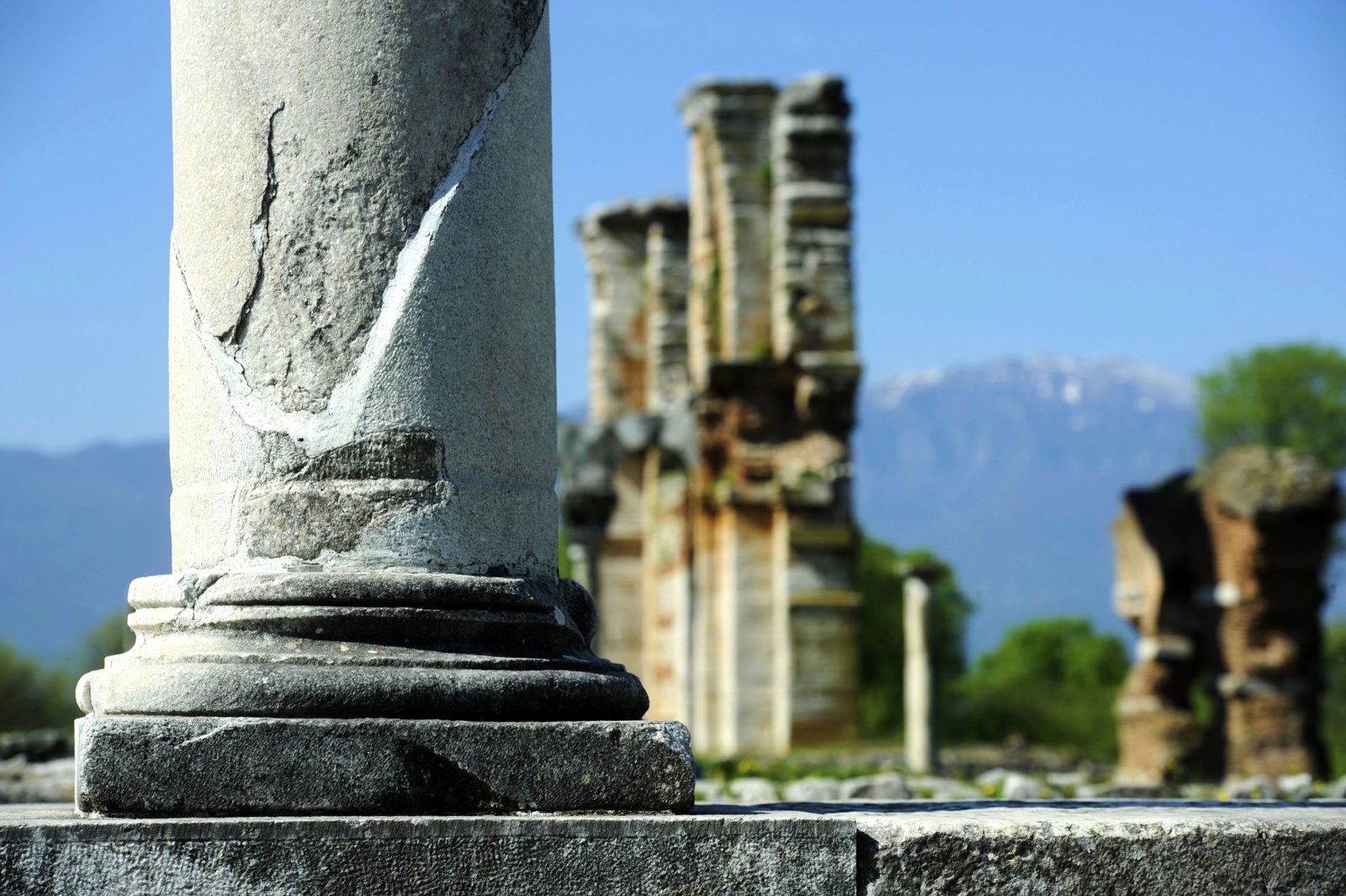
Founded by Philip II of Macedon in 356 BC and later refounded as a Roman colony, Philippi is one of the most historically layered archaeological sites in northern Greece. The site gained Christian significance when the Apostle Paul arrived here around 49 AD to establish the first Christian community on European soil — events described in the Acts of the Apostles and Paul's Letter to the Philippians. Walking the site today, visitors pass the ancient forum, a remarkably intact Roman theatre still used for performances, early Christian basilicas of extraordinary scale, and the small prison tradition identifies as Paul's place of incarceration. The atmosphere is unhurried; the ruins are substantial; and the setting — beneath the acropolis hill with agricultural plain stretching to the horizon — is quietly magnificent.
Philippi Archaeological Museum: Treasures of Ancient Macedonia
Adjacent to the ancient site, the Philippi Archaeological Museum houses a well-curated collection that gives essential context to the ruins outside. Highlights include gold and bronze artefacts from the Macedonian period, sculptures and architectural fragments from the Roman colony, early Christian mosaic floors and liturgical objects, and a series of portrait busts that bring the human population of ancient Philippi into vivid focus. The museum is modern, well-lit, and accessible — a valuable complement to the open-air site that rewards those who invest time in both. Together, the site and museum present one of the most complete pictures of Roman provincial life available anywhere in the Balkans.
Porto Lagos: Flamingos, Lagoons, and Byzantine Stillness
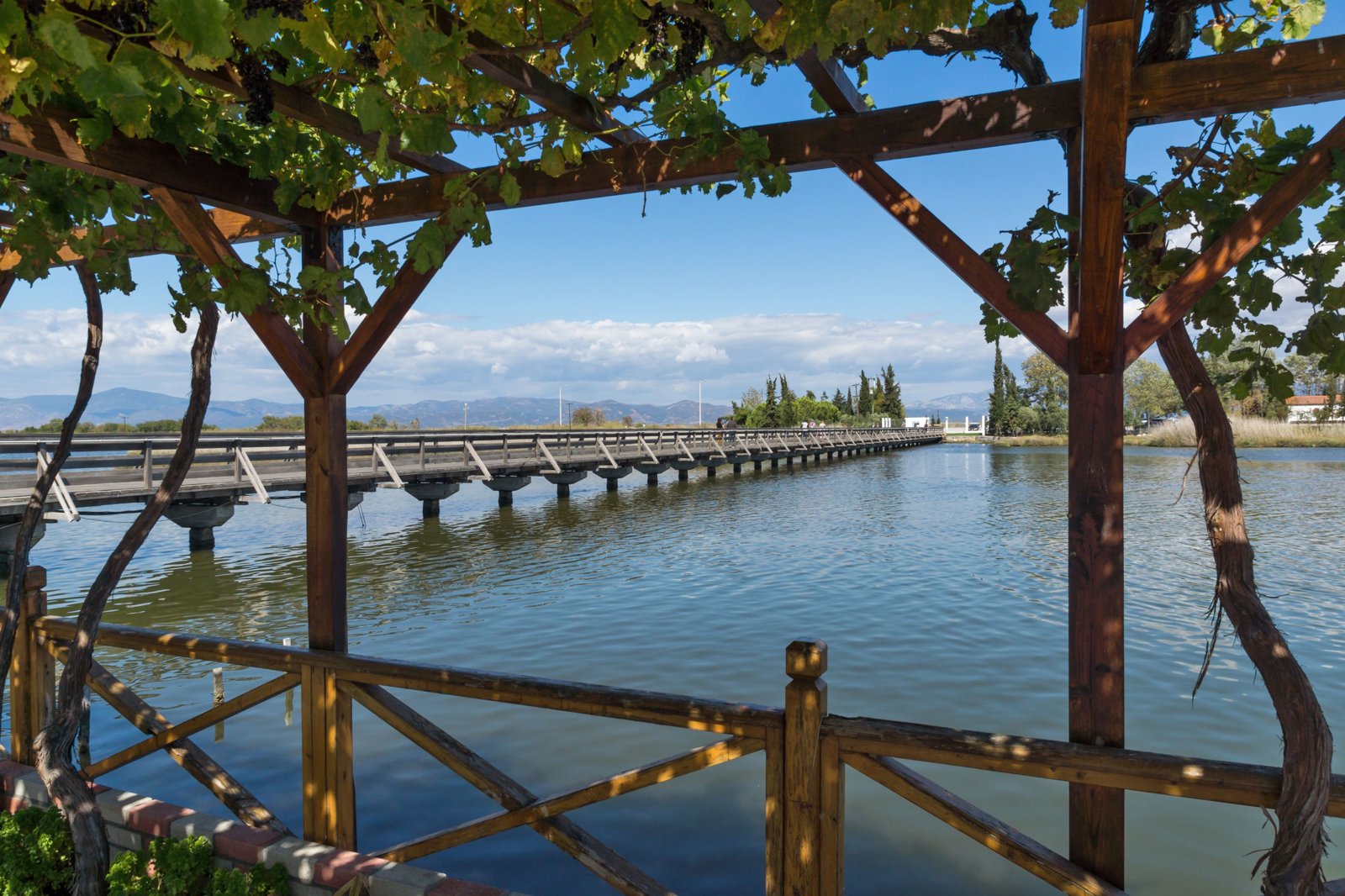
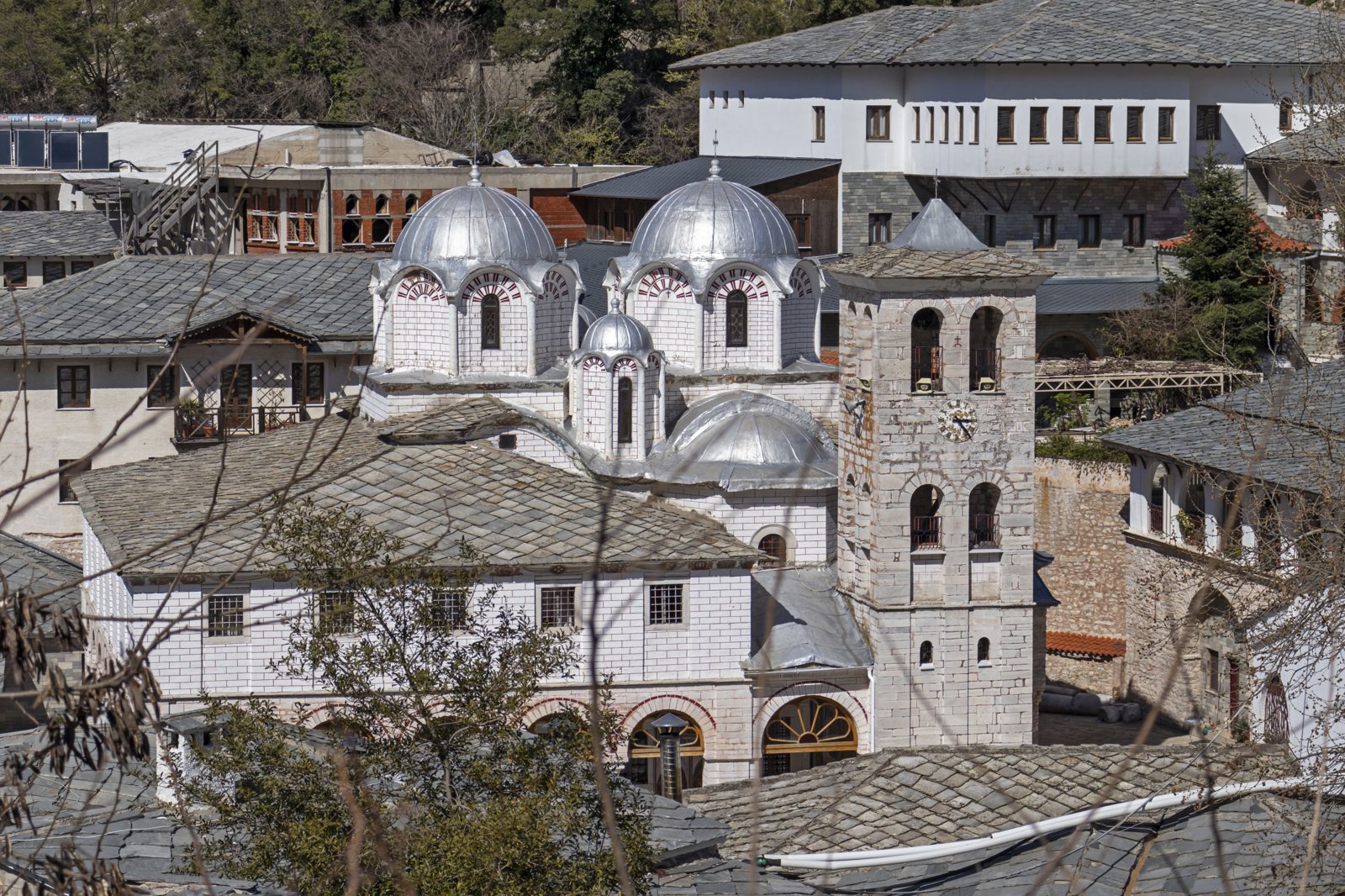
Porto Lagos is one of the most quietly spectacular natural and spiritual landscapes in northern Greece. The lagoon complex — part of the Nestos Delta and Lake Vistonida protected area — shelters tens of thousands of waterbirds: greater flamingos wade in pink formations through shallow water, Dalmatian pelicans drift on the surface, and cormorants crowd every available perch. Rising from the centre of the lagoon on a narrow causeway is the Monastery of Agios Nikolaos, a 14th-century Byzantine foundation whose white walls and red-tiled dome are reflected in the still water. It is a scene of extraordinary visual beauty, especially in the soft light of morning or late afternoon, and the sense of remote serenity — combined with the spectacle of the birds — makes Porto Lagos unlike anything else on the northern Aegean cruise circuit.
Birds and Byzantine Beauty at the Porto Lagos Wetlands
The wetland system surrounding Porto Lagos is one of the most important migratory bird staging grounds in Europe. Spring (April–May) and autumn (September–October) bring the greatest variety of species, but even in summer the resident populations are remarkable: flamingos are present throughout the warmer months, while herons, spoonbills, avocets, and glossy ibis work the shallows. The surrounding reed beds and coastal scrub harbour warblers, harriers, and raptors. For birdwatchers, this is a legitimately world-class destination — but even casual visitors find the sheer spectacle of thousands of flamingos on a Greek lagoon one of the most memorable sights of any Mediterranean cruise.
Pangaion: Culture and Countryside Above Kavala
The Pangaion mountain range rises north and west of Kavala, its slopes cloaked in forest, vineyards, and traditional stone villages that seem to have changed little in centuries. This is a landscape saturated in history — Philip II of Macedon mined its gold to fund his military campaigns, and the mountain is mentioned by Herodotus and Thucydides. Today the Pangaion region is known for its wines (the local Drama and Kavala appellations produce some of Greece's finest whites and reds), its honeys, its wild mushrooms, and the warm hospitality of communities that see few foreign visitors. A journey into the Pangaion hills offers a genuine immersion in Macedonian rural culture, far from the bustle of the cruise port.
Taste of Pangaion: Cuisine, Craft, and Mountain Tradition
Eating in the Pangaion region is a revelation for anyone accustomed to the standardised taverna menus of tourist Greece. Village kitchens here draw on a larder shaped by altitude, climate, and Ottoman and Macedonian culinary history: slow-cooked mountain lamb with local herbs, hand-rolled pasta, forest mushroom dishes, charcuterie made from village-raised pigs, and cheeses aged in conditions that coastal areas cannot replicate. Local wine producers — many working with varieties rarely seen elsewhere — offer tastings of robust reds and aromatic whites that pair naturally with the mountain food. A lunch in a Pangaion village, beneath a vine-covered terrace with views across the Kavala plain to the Aegean, is one of those travel experiences that stays with you long after the ship has sailed.
Kavala travel tips
Walk the Old Town (Panagia Quarter). If time permits before or after your main excursion, spend 45 minutes exploring Kavala's Panagia quarter — the Ottoman-era residential neighbourhood clustered beneath the Byzantine castle. It is one of the best-preserved historic urban quarters in northern Greece, with timber-framed houses, cobbled lanes, and occasional sea views that appear between the buildings. The neighbourhood has avoided heavy commercialisation and retains genuine local character.
Porto Lagos is a Long Distance from Kavala. Porto Lagos is approximately 85 kilometres east of Kavala, making it a significant journey. The destination is worth it — particularly for the flamingos and the Byzantine monastery on the lagoon — but budget at least 90 minutes of driving each way. This means a Porto Lagos excursion typically fills the entire day, leaving no time for Philippi or Kavala's old town on the same visit.
Spring and Autumn are Best for Birdwatching at Porto Lagos. Flamingos are present at Porto Lagos throughout the warm season, but the greatest variety of species occurs during migration — April to May and September to October. If your cruise calls in spring, the lagoons are at their most spectacular, with vast numbers of waders, wildfowl, and raptors passing through. Bring binoculars if birdwatching is on your agenda; the distances across open lagoon make close-up views difficult without optics.
Dress Modestly for the Monastery at Porto Lagos. The Monastery of Agios Nikolaos at Porto Lagos is an active place of worship. Visitors should cover their shoulders and knees before entering. A light scarf or sarong carried in a bag is sufficient for most visitors. The monastery is open to respectful visitors and the interior, though modest in scale, contains genuinely beautiful Byzantine iconography.
Philippi is Best Visited in the Morning. The archaeological site at Philippi faces full sun by midday and offers limited shade. An early start — arriving by 9am — gives you cooler temperatures and fewer visitors, particularly if other ships are also in port. The site is substantial: allow at least two hours for the ruins and a further 45 to 60 minutes for the adjacent museum.
Northern Greek Cuisine is Distinct From the Rest of Greece. Visitors accustomed to the food of the Greek islands or Athens may be pleasantly surprised by the cuisine of Macedonia and Thrace. Ottoman, Slavic, and indigenous Macedonian influences create dishes — slow-cooked meats, layered pastries, smoked lake fish, and robust mountain cheeses — that are rarely found further south. The local wines from the Drama and Kavala regions are also worth seeking out, as they are produced in very small quantities and exported almost not at all.
Port Facts Every Cruiser Needs To Know
Kavala shore excursion FAQs
Ancient Philippi is the closest and most significant archaeological site, located approximately 15 kilometres northwest of Kavala — around 20 to 25 minutes by road. Founded by Philip II of Macedon in 356 BC, later a major Roman colony, and the site of the Apostle Paul's first European Christian community, Philippi is one of the most historically significant sites in northern Greece and is well worth the short journey from the port.
Yes, but it requires careful planning given the distance involved — Porto Lagos is approximately 85 kilometres east of Kavala. Flamingos are present throughout the summer season, with peak variety during spring and autumn migrations. A dedicated Porto Lagos excursion, including travel time and time at the lagoon and monastery, fills most of a standard cruise day. It is not realistically combinable with a full Philippi visit on the same day.
Absolutely. Kavala is one of the most attractive and underrated port cities on the northern Aegean circuit. The Ottoman aqueduct (Kamares) which strides across the lower city, the Byzantine castle on the promontory, and the old Panagia quarter with its Ottoman-era houses and winding lanes are all within walking distance of the port. Allow 1.5 to 2 hours for a thorough exploration of the city, or 45 minutes for a focused walk through the Panagia quarter.
Kavala — known in ancient times as Neapolis — is where the Apostle Paul first set foot on European soil, around 49 AD. He arrived here after receiving a vision calling him to Macedonia, and then travelled inland to Philippi, where he founded the first Christian congregation in Europe. The events are described in Acts 16 and the Letter to the Philippians. Both Kavala and Philippi are significant pilgrimage destinations for Christian travellers.
Allow a minimum of 2.5 to 3 hours for a thorough visit to Philippi, including the archaeological site and the on-site museum. The ruins are extensive — the Roman forum, theatre, early Christian basilicas, and the traditional site of Paul's prison are spread across a large area. The Archaeological Museum, housed in a modern building adjacent to the site, is well worth an additional hour.
The broader region around Kavala — particularly the Drama wine appellation just north of the city and the Pangaion hills — produces some of northern Greece's most acclaimed wines. White wines from Assyrtiko, Sauvignon Blanc, and indigenous Athiri grapes are particularly well-regarded, as are full-bodied reds from Cabernet Sauvignon and Merlot grown at altitude. These wines are produced in small quantities and rarely exported, making a tasting in the region a genuinely special experience.
The Pangaion range is the mountain massif north and west of Kavala, historically known for its ancient gold mines (which funded Philip II of Macedon's military campaigns) and today valued for its wines, local cuisine, traditional villages, and stunning natural scenery. A visit to the Pangaion region offers a very different experience from the archaeological focus of Philippi — it is quieter, more rural, and centred on food, landscape, and local culture rather than ancient monuments.
The modern Kavala waterfront is flat and accessible. However, the old Panagia quarter climbs steeply up to the Byzantine castle and involves cobblestone lanes and steps — challenging for visitors with significant mobility limitations. Philippi's outdoor site is moderately uneven. The Porto Lagos lagoon and monastery are accessible from a level causeway. The Philippi museum and Porto Lagos offer the most accessible options for visitors who find rough terrain difficult.
Greece uses the Euro (€). ATMs are readily available in central Kavala and accept international cards. Credit cards are accepted at restaurants, shops, and tourist sites in the city and at Philippi. In more rural areas — particularly small villages in the Pangaion hills and at roadside stops along the route to Porto Lagos — cash is preferred or may be the only option. Carrying €40 to €60 in cash is a practical precaution.
Kavala offers something genuinely different from the island ports and Athenian gateway stops that dominate most Greek itineraries. It sits in a region — northern Macedonia and Thrace — with its own distinct identity, cuisine, history, and landscape. The combination of an attractive port city, one of Greece's most historically resonant archaeological sites, a world-class natural spectacle at Porto Lagos, and mountain countryside rarely visited by international tourists makes Kavala an exceptionally well-rounded destination for curious travellers.
Filters
Select a filter to refine results.
Tour Type
Tour Activity
 Cart
Cart
 USD
USD GBP
GBP AUD
AUD EUR
EUR CAD
CAD