



Tours in Korcula


Cruising to Korcula in a group?
Skip the crowded ship excursion bus. One dedicated planner will design a private shore experience around exactly what your group wants — coordinated from first enquiry to the moment you're back on board. More memorable, more flexible, and more affordable than you might expect. Spend less time organising, more time enjoying.
Explore Group Travel →Cruising to Korcula
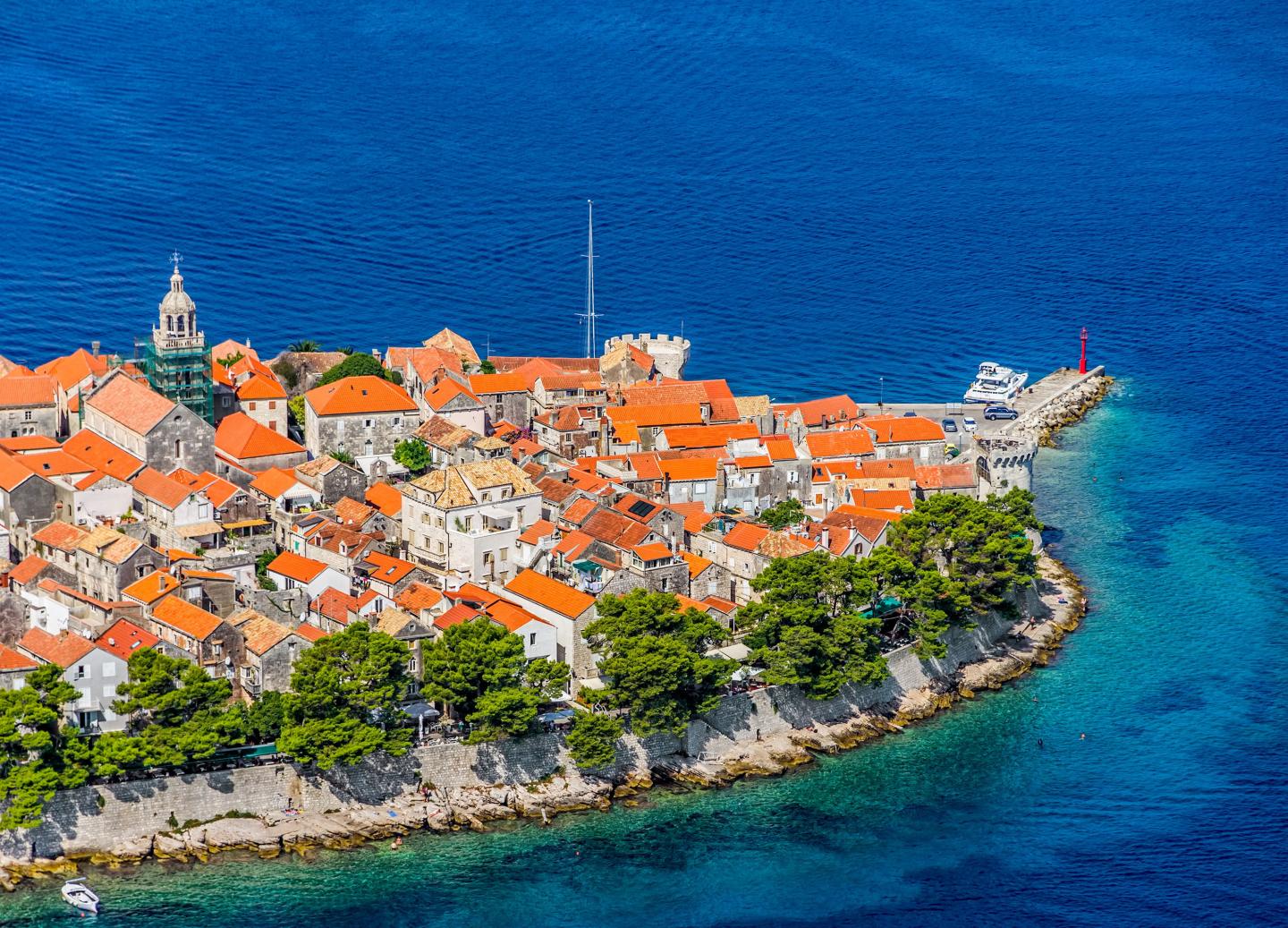
Korcula is one of the Adriatic's best-kept secrets — a medieval island town so perfectly preserved that its stone-paved alleys, Venetian loggia, and Gothic cathedral seem lifted intact from the 15th century. The compact Old Town occupies a small peninsula jutting into the Peljesac Channel, its herringbone street pattern designed to channel sea breezes and confound potential invaders. City walls, watchtowers, and ornate limestone architecture speak to centuries of Venetian rule and the prosperity that maritime trade once brought to this Dalmatian outpost.
The island stakes a spirited claim as the birthplace of Marco Polo, and a tower in the Old Town is said to mark the spot. Whatever the historical truth, the connection adds a romantic layer of curiosity to wandering these lanes — you are, at least in legend, treading the same stones as one of history's great explorers. St. Mark's Cathedral is the architectural centrepiece, its Renaissance rose window and sculptural detail rivalling far larger Croatian cities.
Beyond the walls, Korcula island produces two of Croatia's finest white wines: the crisp Posip and the rare, amber-hued Grk grape grown only on sandy soils near the village of Lumbarda. The local cuisine leans into the Dalmatian pantry — fresh seafood, prsut (air-dried ham), lamb from the hillsides, and olive oil pressed from groves that have stood for centuries.
For cruise visitors, the Old Town is entirely walkable from the pier and rewards slow, unhurried exploration. The combination of heritage, gastronomy, and island atmosphere makes Korcula an ideal port for those who appreciate depth over distance — a place where one winding street can deliver a cathedral, a palace courtyard, a wine bar, and a harbour view all within a five-minute stroll.
Top things to do in Korcula on a cruise stopover
Korcula Old Town: A Living Medieval City
The Old Town of Korcula is one of the finest examples of a planned medieval settlement in the entire Adriatic. Built on a small oval peninsula, it follows a distinctive fishbone street layout — a central spine with curving side lanes designed to minimise wind exposure while maximising sea views. Every turn reveals another carved stone doorway, a Venetian coat of arms above an archway, or a perfectly framed glimpse of turquoise water at the end of a lane. The 13th-century city walls, largely intact, circle the promontory and connect a series of round defensive towers that once guarded against Ottoman raids. Entering through the monumental Land Gate — decorated with a relief of St. Mark's lion, symbol of Venice — instantly transports visitors into another century. A guided walking tour of the Old Town brings this layered history to life, connecting the architecture, the street plan, and the human stories embedded in the stone.
St. Mark's Cathedral: Gothic Splendour at the Island's Heart
Dominating Korcula's main square, the Cathedral of St. Mark is the island's most important architectural monument and one of the most beautiful Gothic-Renaissance buildings in Dalmatia. Construction spanned from the 15th to the 17th century, and the cathedral's facade rewards close examination — the central portal is decorated with an intricate sculptural programme including a pair of curious stone figures that locals call Adam and Eve, while the rose window above casts dappled light into the interior during morning hours. Inside, a canvas attributed to Tintoretto and a striking polyptych altarpiece catch the eye. The bell tower can be climbed for sweeping views over the Old Town rooftops and across the channel to the Peljesac peninsula. A walking tour of the Old Town typically includes dedicated time at the cathedral, allowing proper context for what you are seeing.
The Marco Polo Legend: Explorer, Islander, Icon
Korcula's most celebrated claim — that Marco Polo was born here around 1254 — remains historically debated but culturally alive in every corner of the Old Town. A medieval tower in the southeastern quarter is identified as the house of the Polo family, and a small museum inside tells the story of the explorer's travels to China and his transformative account of the Mongol Empire. Whether or not the birthplace claim is literally accurate, it reflects the genuine Venetian Dalmatian heritage that produced the maritime merchant culture Polo embodied. The tower itself is worth climbing for the views alone, and the exhibits offer a thoughtful introduction to the Silk Road world Polo described. A walking tour provides the full local narrative — including the counterarguments — and places the legend in the broader context of medieval Adriatic trade.
Korcula's Wine Culture: Posip, Grk, and the Island Konoba
Korcula island is among Croatia's most serious wine-producing territories, with a tradition stretching back to the ancient Greeks who colonised the Peljesac region. The flagship white variety is Posip, a full-bodied, aromatic grape native to Korcula that produces wines with stone fruit character and pleasing salinity. Even rarer is Grk, grown exclusively on the sandy soils around the village of Lumbarda at the island's eastern end — a grape so unusual it bears seeds only on one gender of vine, requiring careful mixed planting. Both wines appear on menus throughout the Old Town, and a stop at a local konoba (family-run tavern) to taste them alongside island food is one of the day's great pleasures. The wine culture here is unpretentious and generous — a carafe of house white with grilled fish and a harbour view is among the Adriatic's definitive experiences.
The City Walls and Towers: Walking Korcula's Defences
The medieval fortifications encircling Korcula Old Town represent a remarkably complete example of 14th- and 15th-century Venetian defensive engineering. The walls follow the natural contours of the peninsula and connect a series of round flanking towers — each positioned to cover adjacent sections of wall with crossbow or cannon fire. The largest surviving tower, the Revelin, guards the landward approach alongside the Land Gate and offers a sense of the formidable barrier the town once presented to potential attackers. Sections of the walls can be walked, delivering elevated views over both the channel and the Old Town's rooftops. The interplay between the robust military architecture and the elegant civic buildings within is one of the defining visual qualities of Korcula — a town that was simultaneously fortified and beautiful, built by people who saw no contradiction between defence and refinement.
The Moreska Sword Dance: Living Tradition on the Waterfront
Korcula is home to the Moreska, a dramatic costumed sword-fighting dance that has been performed on the island for over four centuries. The performance depicts a battle between two kings — one in red, one in black — for the hand of a captive maiden, with elaborate choreographed sword combat at its centre. Traditionally performed on the feast of St. Theodora (29 July), the Moreska now takes place regularly throughout the summer tourist season, typically staged near the Land Gate in the early evening. The clanging of steel swords, vivid costumes, and the athleticism of the performers make this one of Croatia's most compelling folk traditions. Visitors who time their arrival right — or whose ship is in port for an evening performance — witness something genuinely rooted in place, not a manufactured tourist spectacle but a ritual the town has kept alive across generations.
Korcula travel tips
Enter Through the Land Gate for the Full Arrival Effect. Resist the temptation to duck into the Old Town at the nearest gap in the walls. Walk along the waterfront promenade to the monumental Land Gate and enter through the main archway as visitors have for seven centuries. The transition from the bright harbour to the cool, shadowed staircase and then into the sunlit main square is one of the port's great theatrical moments — and it orients you immediately to the town's layout. From the gate, head right for the cathedral square, left for the Marco Polo Tower, or straight through to the far tip for harbour views on the other side.
Time Your Cathedral Visit for the Morning Light. The rose window on the west facade of St. Mark's Cathedral faces the main square, meaning the interior catches the best light during morning hours. If your ship arrives in the morning, prioritise the cathedral visit early — the dappled light through the rose window onto the stone floor is a photographic highlight. The cathedral is also significantly cooler than the sun-struck lanes during the heat of the day, making it a natural refuge during the midday hours of summer calls.
Dress Modestly for Religious Sites. St. Mark's Cathedral and other churches in Korcula require covered shoulders and knees for entry. Carry a light scarf or wrap in your bag — the Old Town's narrow lanes offer no shade shopping in a hurry. This is standard across Dalmatian churches and will serve you well throughout any Croatian itinerary. The dress requirement is enforced; a few minutes of preparation avoids being turned away at the door of the town's finest building.
Seek Out a Konoba Away from the Main Square. The most atmospheric konobas in Korcula are not on the main square but tucked into side lanes or just outside the Old Town walls along the waterfront. Look for hand-written daily menus, plastic chairs, and fishing nets as decor — these are the places where locals eat and where prices reflect actual island economics rather than tourist premiums. Ask for the daily fish, order a carafe of local Posip white wine, and allow considerably more time than you think you need. Lunch in a good Dalmatian konoba is not a quick affair, and rushing it would be a mistake.
The Best Photographs Are From the Water, Not the Walls. Korcula Old Town's most iconic image — the walled peninsula rising from the Adriatic with its cluster of terracotta rooflines and the cathedral tower at the centre — can only be seen from the water. The view from the harbour promenade is good, but the full panorama requires distance. If you are taking a boat excursion from the port, position yourself on the departing boat for the reverse view of the town as you pull away. Early morning, before the light climbs too high, produces the most dramatic results for this shot.
Allow Time for the Eastern Harbour Promenade. Most cruise visitors funnel directly from the tender/pier into the Old Town and stay within the walls. For a more complete picture of island life, walk the eastern waterfront promenade outside the walls — a shaded path lined with pine trees, local fishing boats, small beach bars, and views across the channel. This is where Korcula residents actually spend their afternoons, and the contrast with the tourist intensity inside the walls is striking. The walk takes 20 minutes to the turnaround point and back, and it is one of the port's genuine pleasures for those who find it.
Port Facts Every Cruiser Needs To Know
Korcula shore excursion FAQs
The cruise pier — whether ships dock or passengers tender ashore — is immediately adjacent to the Old Town. The Land Gate, the main entrance to the medieval city, is within a two-minute walk of the landing point along the waterfront promenade. No transport is needed to reach the main sights.
The Old Town has some challenges for passengers with limited mobility. The streets are paved with limestone cobblestones that can be uneven, and there are steps throughout the medieval lanes. The main square and lower sections of the Old Town are more accessible, but the upper areas and tower climbs involve stairs. The waterfront promenade outside the walls is flat and easy to navigate. We recommend contacting Venture Ashore ahead of time to discuss options suitable for your needs.
The claim is debated by historians. Korcula makes a serious case based on documentary evidence suggesting the Polo family had Dalmatian roots, and the name 'Depolo' (De Polo) appears in 13th-century Korcula parish records. The competing claim from Venice rests on different archival evidence. Most scholars regard the question as genuinely unresolved rather than settled in Venice's favour. The Marco Polo Tower in Korcula presents the evidence honestly, and the connection — however uncertain — is woven authentically into the town's identity.
Both are indigenous white wine varieties from Korcula island. Posip is aromatic and full-bodied, grown across the island, and is Croatia's most celebrated white wine internationally. Grk is rarer — grown only on the sandy soils around Lumbarda village at the island's eastern end and rarely found outside Korcula. Both are available by the glass at most restaurants and wine bars in the Old Town. Ask specifically for Korcula-produced examples to get the authentic island version.
Croatia adopted the Euro (EUR) in January 2023. Card payments are widely accepted in Old Town restaurants, shops, and tourist businesses. However, smaller vendors, market stalls, and some konobas may prefer cash. ATMs are available near the Land Gate area. It is worth carrying €20–40 in small notes for incidental purchases.
The Moreska is Korcula's traditional costumed sword dance, performed for over 400 years on the island. It depicts a battle between two kings for a captive maiden, with elaborate steel-sword choreography. It is traditionally performed on 29 July (St. Theodora's feast day), but in summer, performances are staged regularly for visitors — typically Thursday evenings near the Land Gate. Check local schedules on arrival; timing varies by season and cruise schedule.
Two to three hours covers the essential sights at a relaxed pace: the Land Gate and walls, St. Mark's Cathedral, the Marco Polo Tower and House, and the full perimeter of the peninsula. This leaves time for a coffee or wine stop. Adding a proper sit-down lunch at a konoba extends the day comfortably. The Old Town is small enough that getting lost is more feature than problem — you are never far from a harbour view to reorient yourself.
Yes — Korcula Old Town is a compact space and multiple cruise ships can be in port simultaneously during July and August. The narrowest lanes and the main square around the cathedral become congested during midday. Early morning exploration (if your ship arrives early) and late afternoon (when day-trippers from the mainland have departed) are notably quieter and more atmospheric. The eastern waterfront promenade outside the walls is rarely crowded regardless of the time of day.
Yes — there are small pebble and rock beaches within walking distance of the Old Town, including Banje Beach just east of the walls and small coves accessible along the western promenade. For sandy beaches, the village of Lumbarda (about 7 km east) has the island's best sandy shores. Local buses connect the town to Lumbarda, but factor in the journey time against your port hours before committing.
A bottle of Posip or Grk wine from a local producer makes an excellent and genuinely place-specific souvenir. Local olive oil, produced from island groves, is another quality option. Lavender products from the Dalmatian islands are widely available and authentic to the region. Hand-embroidered lace and lacework — a tradition across the Dalmatian islands — are available from local artisans. Avoid mass-produced items identical to those found across Croatia; the best souvenirs from Korcula are the ones specific to the island.
Filters
Select a filter to refine results.
Tour Type
Tour Activity
 Cart
Cart
 USD
USD GBP
GBP AUD
AUD EUR
EUR CAD
CAD