



Tours in Milan


Cruising to Milan in a group?
Skip the crowded ship excursion bus. One dedicated planner will design a private shore experience around exactly what your group wants — coordinated from first enquiry to the moment you're back on board. More memorable, more flexible, and more affordable than you might expect. Spend less time organising, more time enjoying.
Explore Group Travel →Cruising to Milan
Milan is the city through which many Mediterranean voyages begin and end, and it rewards the traveller willing to give it more than a transit glance. Italy's most international metropolis occupies a different register from Rome or Florence — less ancient, more kinetic, its energy powered by design, finance, fashion and a cultural confidence rooted in centuries of civic ambition. The Duomo alone, six centuries in the making and clad in more than three thousand statues, would anchor the identity of most cities; in Milan it is simply the starting point, the great stone anchor around which the rest of the story unfolds.
Top things to do in Milan on a cruise stopover
Leonardo's Last Supper: An After-Hours Encounter
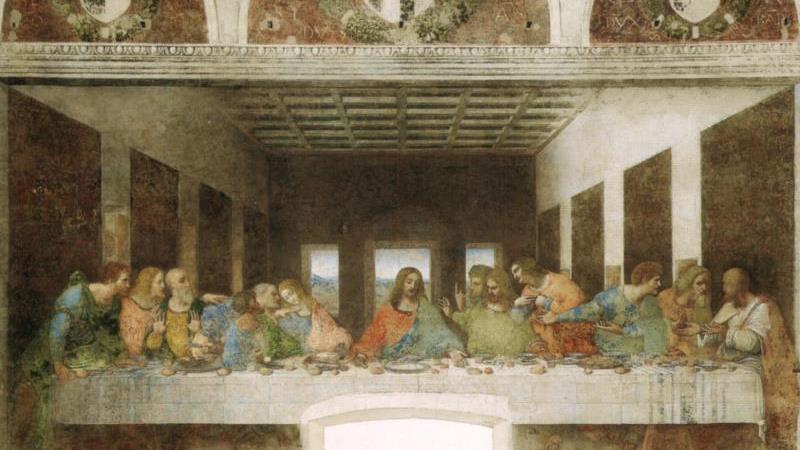
Leonardo da Vinci's Last Supper — painted onto the wall of the refectory of Santa Maria delle Grazie between 1495 and 1498 — is one of the most significant works of art ever created, and one of the most challenging to experience well. Entry is strictly controlled, limited to small groups for precisely timed 15-minute windows, making access during normal visiting hours highly competitive and often rushed. An exclusive after-hours viewing transforms this entirely: the room is quieter, the lighting considered, and the extraordinary scale and detail of the composition — the expressions of the twelve apostles, the architectural illusion Leonardo created to extend the actual room into the painted space — can be absorbed at something approaching its creator's own pace. Venture Ashore's exclusive after-hours Last Supper experience pairs this rare cultural encounter with a traditional Italian dinner, creating a genuinely memorable way to begin or conclude a Mediterranean voyage.
The Duomo di Milano: A Gothic Monument of Extraordinary Scale
Milan's cathedral is one of the largest Gothic churches in the world and took nearly six centuries to complete, from its foundation in 1386 to the final details added under Napoleon. Its white marble facade is encrusted with more than 3,400 statues, and its forest of 135 spires culminates in the gilded figure of the Madonnina, visible from much of the city. Access to the cathedral rooftop — by stairs or lift — rewards visitors with an intimate encounter with the spire bases and statues at close range, and views stretching to the Alps on clear days. The interior, with its vast nave, soaring columns and remarkable medieval stained glass, creates an atmosphere of genuinely overwhelming scale. The piazza in front of the Duomo remains Milan's most iconic gathering place.
Brera: Milan's Bohemian Cultural Quarter
The Brera district — centred on the Via Brera and anchored by the Pinacoteca di Brera art gallery — is Milan's most characterful neighbourhood for unhurried exploration. The gallery itself holds one of Italy's finest collections of northern Italian Renaissance painting, including Mantegna's extraordinary Dead Christ and major works by Raphael, Caravaggio, Bellini and Piero della Francesca. Beyond the gallery, Brera's streets are lined with independent boutiques, antique dealers, art studios, cafés and trattorias that give it an atmosphere distinct from the fashion-driven glamour of the rest of central Milan. The neighbourhood is at its most pleasant in the late afternoon, when the day-trippers have thinned and locals fill the outdoor tables — a genuinely Milanese scene.
Galleria Vittorio Emanuele II: Europe's Most Elegant Arcade
Connecting the Piazza del Duomo to La Scala opera house, the Galleria Vittorio Emanuele II is one of the world's oldest and most beautiful shopping arcades. Completed in 1877, its barrel-vaulted iron-and-glass galleries and soaring central octagonal dome create an interior of luminous, theatrical elegance. The Galleria houses internationally recognised luxury brands alongside long-established Milanese institutions including the historic Campari Bar and Savini restaurant, which have served the city's social life for well over a century. Even for those with no intention of shopping, a walk through the Galleria is an essential Milan experience — and look for the floor mosaic of a bull, whose heel Milanese tradition holds that spinning on three times brings good luck.
Castello Sforzesco: Five Centuries of Power and Art
The Castello Sforzesco, built by Milan's ruling Sforza dynasty in the 15th century and later redesigned with contributions from Leonardo da Vinci, is one of the largest medieval citadels in Europe and a defining element of the city's skyline. Today it houses a remarkable complex of civic museums covering sculpture, decorative arts, musical instruments, prehistoric finds and Egyptian antiquities. Most movingly, the castle contains Michelangelo's final sculpture — the Rondanini Pietà, displayed in the original hospital hall, an unfinished and intensely personal work that he was still working on six days before his death. The surrounding Sempione Park offers welcome green space in the heart of the city, with the Arco della Pace visible at its far end.
The Navigli: Canal-Side Culture and Authentic Milanese Life
Milan's canal district — the Navigli — offers a side of the city quite different from its fashion-focused centre. The Naviglio Grande and Naviglio Pavese were once vital commercial waterways connecting Milan to the wider Po Valley; today they are lined with independent restaurants, aperitivo bars, vintage shops, galleries and studios. The atmosphere in the late afternoon and evening is genuinely local in character, with Milanese residents of all ages gathering for the aperitivo ritual that the city effectively invented. For cruise passengers with an evening ashore in Milan before embarkation, or time the day after disembarkation, the Navigli district delivers an unpretentious, vivid and deeply enjoyable encounter with how Milan actually lives — and is typically remembered as one of the most authentic experiences of the trip.
Milan travel tips
Plan Last Supper Access Well in Advance. Leonardo's Last Supper is among the most sought-after cultural experiences in Italy, and standard entry tickets are typically sold out months ahead. The painting's extreme fragility — it has been deteriorating for centuries due to Leonardo's experimental technique — means that visitor numbers are rigorously limited, with groups of no more than 30 admitted for 15-minute windows at a time. If standard tickets are unavailable, after-hours viewing options offer a more immersive and unhurried experience that many visitors consider superior to the daytime visit regardless of availability. Check access options as early as possible when planning your time in Milan.
The Duomo Rooftop Is a Separate and Unmissable Experience. Many visitors enter the Duomo's interior but skip the rooftop, which is a significant missed opportunity. Ascending among the marble spires gives an entirely different perspective on the cathedral's extraordinary Gothic architecture — standing level with the hundreds of statues that line the pinnacles, with the Madonnina above and the city spread below. On clear days the Alps are visible on the northern horizon. A lift makes the rooftop accessible to most visitors; the stair route is more physically demanding but gives a fuller sense of the building's vertical scale. Separate tickets are required for the rooftop and the interior.
Visit Museums During the Hottest Part of the Day. Milan in July and August can be intensely hot and humid — significantly more so than coastal Mediterranean destinations, as the city lacks sea breezes. The wide stone piazzas and marble facades retain heat throughout the afternoon. A practical approach is to plan outdoor exploration for the cooler morning hours and late afternoon, and reserve museum and gallery visits for the midday period when the sun is at its most intense. Every major museum and gallery in Milan is well air-conditioned, making cultural visits genuinely comfortable during the height of summer — and rewarding at any time of year.
Validate Your Transport Ticket Every Time. Milan's public transport system requires ticket validation before each journey without exception. Metro tickets must be validated at the turnstile when entering; on trams and buses, validation machines are located onboard near the doors. Inspectors check tickets regularly on all forms of transport and issue fines on the spot — there are no warnings for visitors or first-time travellers. Day passes are available at metro stations and typically offer good value for those planning multiple journeys across the city. Keep your ticket until the end of each journey in case of inspection.
Embrace the Aperitivo Hour as a Cultural Experience. The aperitivo tradition — a pre-dinner drink accompanied by complimentary snacks — was effectively invented in Milan and remains a genuine institution that connects visitors to authentic daily life in the city. Most bars in the Navigli, Brera and Isola districts serve an aperitivo spread from around 6pm: small sandwiches, bruschetta, olives, warm dishes. The food is included with the price of a drink and is often substantial enough to constitute a light dinner in itself. A Campari Spritz, Negroni or Aperol Spritz are the classic choices; finding a bar with outdoor seating on a warm evening and watching Milan go about its evening ritual is one of the city's most pleasurable experiences.
Allow a Full Morning for the Pinacoteca di Brera. The Pinacoteca di Brera is consistently underestimated by first-time visitors who expect a smaller regional collection. In fact it ranks among the finest art museums in Italy, with holdings of northern Italian Renaissance painting that are extraordinary in both quality and range. Mantegna's Dead Christ is one of the most powerful works in Italian art; the gallery also holds major works by Raphael, Caravaggio, Bellini and Piero della Francesca in a beautiful 18th-century palazzo arranged around a courtyard. Allow at least two hours for a considered visit, and combine it with lunch in the Brera neighbourhood itself — this combination makes for one of Milan's most complete and satisfying half-days.
Port Facts Every Cruiser Needs To Know
Milan shore excursion FAQs
Milan is not a coastal city, so cruises using Milan as an embarkation or disembarkation base operate from nearby seaports — most commonly Genoa (approximately 140 kilometres west, around 1.5 hours by train or road) or Civitavecchia near Rome (approximately 570 kilometres south). Some itineraries also use Savona or La Spezia. Confirming your specific embarkation port and the transfer arrangements between Milan and that port is an important early step in planning your cruise.
The Malpensa Express train runs directly between Malpensa Airport and both Milano Centrale (the main railway hub) and Milano Cadorna, with journey times of approximately 50 minutes to Centrale. Trains run frequently throughout the day and evening and are the fastest, most straightforward connection between the airport and the city. From either terminal station, the metro network connects to all areas of the city centre and beyond.
The Last Supper is painted directly onto the plaster wall of what was originally a dining hall, using Leonardo's experimental tempera technique rather than traditional fresco. This method, while giving him unprecedented control over detail and colour, proved far less durable than standard fresco — the work began deteriorating within decades of completion and has required ongoing conservation ever since. To protect it, strict environmental controls are maintained in the room and visitor numbers are limited to a maximum of 30 per 15-minute session. With millions of potential visitors annually, this tiny capacity means standard tickets are typically exhausted months in advance.
The historic centre between the Duomo and the Castello Sforzesco is compact and highly rewarding to walk, taking in the Galleria Vittorio Emanuele II, the area around La Scala opera house and the Via Dante along the way. The Brera district, just north of La Scala, is particularly pleasant for relaxed exploration, with its gallery, boutiques and outdoor cafés. For a more local atmosphere away from the tourist centre, the Navigli canal district offers a very different and equally authentic character, especially in the late afternoon and evening.
Milan's cultural identity is considerably deeper than its fashion prominence suggests. The city is home to Leonardo da Vinci's Last Supper, the world-renowned La Scala opera house, the Pinacoteca di Brera (one of Italy's finest art galleries), the extraordinary Duomo cathedral, and Michelangelo's final sculpture, the Rondanini Pietà, in the Castello Sforzesco. Milan also has a strong industrial and product design heritage — many of the world's most celebrated household objects and furniture pieces originated here — and a food culture rooted in the rich traditions of northern Italy.
Milan is generally the most expensive city in Italy for accommodation, dining and some cultural experiences. However, the cost of museum entry, public transport and café culture is broadly comparable to other major Italian cities. The aperitivo tradition — where a drink purchase typically includes generous complimentary food — offers particularly good value as a light evening meal. Eating at a neighbourhood trattoria rather than a tourist-facing restaurant in the immediate vicinity of the Duomo is both significantly cheaper and usually produces a more authentic and satisfying experience.
The Duomo is among the most visited monuments in Europe and can be very crowded, particularly in summer and at weekends. Separate tickets are required for the cathedral interior, the rooftop (accessible by lift or stairs), and the archaeological area beneath the church — a combined ticket is available and often the best value. Modest dress covering shoulders and knees is required to enter the interior; security staff enforce this and disposable cover-ups can sometimes be purchased or borrowed at the entrance. Visiting early in the morning or in the late afternoon reduces queuing considerably.
Milan's central position in northern Italy makes it an excellent base for day excursions. Lake Como and Lake Maggiore are reachable within one to two hours by train or road, while Bergamo's beautiful medieval upper city is just 45 minutes by train. Verona is approximately one hour by fast train, and the Cinque Terre coast is around two hours. For cruise passengers spending time in Milan specifically before or after their voyage, however, the city itself offers enough cultural depth to fill one or two complete days without any need to travel further.
The Pinacoteca di Brera is Milan's foremost public art museum, housed in a grand 18th-century palazzo in the heart of the Brera neighbourhood. Its collection focuses on Italian painting from the 13th to the 20th century, with exceptional strength in the northern Italian Renaissance. Works by Mantegna, Raphael, Caravaggio, Bellini, Piero della Francesca and Lotto are among its highlights. The gallery is consistently less crowded than equivalent institutions in Rome or Florence, making it possible to spend genuine time with extraordinary works of art rather than navigating around tour groups. For any visitor with an interest in European art, it is one of the most rewarding museums in Italy.
The aperitivo hour — typically from around 6pm in the Navigli or Brera districts — is the experience most often overlooked by visitors focused on daytime sightseeing, and it may be the most genuinely local. A coffee taken standing at the bar counter, as Milanese do every morning, costs a fraction of seated café prices and is a ritual that defines daily life across the city. The Mercato Metropolitano and neighbourhood food markets offer a vivid insight into how Milan eats. And simply walking through the Brera streets or along the Naviglio Grande in the early evening, when the day's heat eases and the city comes back to life, gives a sense of Milan that no museum or cathedral can fully provide.
Filters
Select a filter to refine results.
Tour Type
Tour Activity
 Cart
Cart
 USD
USD GBP
GBP AUD
AUD EUR
EUR CAD
CAD