



Tours in Monemvasia


Cruising to Monemvasia in a group?
Skip the crowded ship excursion bus. One dedicated planner will design a private shore experience around exactly what your group wants — coordinated from first enquiry to the moment you're back on board. More memorable, more flexible, and more affordable than you might expect. Spend less time organising, more time enjoying.
Explore Group Travel →Cruising to Monemvasia
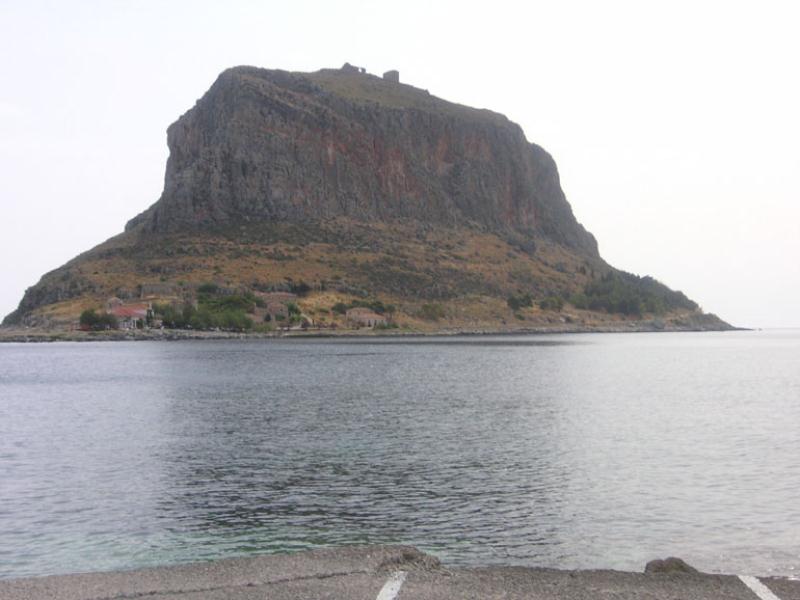
There are places in the Mediterranean that have been waiting for you, though you may not know it yet. Monemvasia is one of them. This great limestone monolith — rising sheer from the waters of the Myrtoan Sea, connected to the Greek mainland by a single slender causeway — has been commanding the approaches to the eastern Peloponnese since the Byzantine era, and it does so still with the same unhurried authority. The very name means 'single entrance,' and that solitary gate has, for centuries, been the only way in.
Step through it and the twenty-first century retreats. Within the walls, a labyrinth of cobbled lanes threads between Byzantine churches and Venetian mansions draped in bougainvillea, all of it built directly into the living rock of the cliff. There are no cars, no mopeds, no intrusions of the modern world that are not deliberately chosen. The Cathedral of Christ in Chains has been serving its congregation without interruption for over 700 years; the frescoes in the smaller chapels are older still. Monemvasia is less a museum piece than a place that simply never stopped.
For passengers with the energy to climb, the upper town rewards the effort extravagantly. The ruined Church of Agia Sofia balances at the clifftop edge as though placed there by a theatrical set designer, and from the castle heights the whole sweep of the Laconian Sea opens in every direction. The mainland coast curves away to the north; on clear days, islands appear at the limit of vision. The geology of the site — the sheer verticality of it, the sense of fortress and harbor combined — becomes fully legible only from up here.
Beyond the rock itself, the wider landscape of the southern Peloponnese adds another layer of possibility. The ruined Byzantine city of Mystras, roughly a hundred kilometers to the northwest, represents one of the finest archaeological experiences available from any Greek cruise port — a ghost town on a mountain spur where frescoes, palaces, and the memory of an entire civilization's final chapter are waiting for those willing to make the journey. Together, Monemvasia and Mystras offer a port day of extraordinary historical density.
Top things to do in Monemvasia on a cruise stopover
Monemvasia's Medieval Lower Town
Step through the single gate and the modern world disappears. The lower town is a labyrinth of stone-paved lanes, Byzantine church ruins, restored Venetian mansions, and walls draped in bougainvillea. The Cathedral of Christ in Chains (Elkomenos Christos), a 13th-century Byzantine basilica at the town's heart, has served Orthodox worshippers for over 700 years. Few medieval towns in Europe are this complete, this quiet, and this immediate in their historical impact.
The Byzantine Ruins of Mystras
Perched on a spur of the Taygetos mountains near Sparta, Mystras is a ghost city frozen in time — the last great Byzantine capital before the fall of Constantinople. Its hillside ruins include palaces, churches rich with frescoes, and monasteries still active today. A UNESCO World Heritage Site of the first order, Mystras offers one of the most dramatic and intellectually rich archaeological experiences available from any Greek cruise port — a place where late Byzantine civilization is tangible at every step.
Panoramic Views from the Upper Town
The climb from the lower town to Monemvasia's ruined castle summit is steep and demanding, but the reward is panoramic: the Myrtoan Sea stretches in every direction, the Peloponnese coastline curves away to the north, and the extraordinary isolation of this rock fortress becomes viscerally clear. The ruined Church of Agia Sofia perches at the edge of a clifftop along the route — one of the most dramatically sited churches in all of southern Greece.
The Causeway and Rock Approach
Arriving at Monemvasia by water provides one of the most striking port approaches in the Mediterranean. The great limestone monolith rises sheer from the sea, the lone causeway threading across from the mainland — 'monemvasia' means 'single entrance' in Greek. The approach and sense of arrival are architectural experiences in themselves, before a single cobblestone has been walked. The view from the tender back toward the rock is a defining image of the eastern Mediterranean.
The Byzantine Churches of the Lower Town
Scattered across the lower town are more than 40 Byzantine churches and chapels in varying states of preservation. Many are small, dark, and decorated with faded frescoes that predate the Venetian period. The Church of Panagia Myrtidiotissa and the tiny Church of Agios Pavlos are among the most evocative. These sacred spaces, embedded in the stone fabric of the town, offer intimate encounters with medieval Greek religious life that no museum exhibit can replicate.
The Waterfront of Gefyra
Just across the causeway, the modern mainland village of Gefyra provides a contrasting backdrop — a working Greek fishing town with a pebble beach, waterfront cafes, and views back toward the great rock of Monemvasia. It is an ideal spot for a coffee or a cold drink before or after exploring the old town, and offers a grounded sense of the living community that has grown up alongside this ancient site across the generations.
Monemvasia travel tips
Wear Proper Footwear — This Is Non-Negotiable. Monemvasia's cobbled lanes are steep, uneven, and often slick in damp conditions. Solid walking shoes with firm grip and ankle support are essential. Sandals and smooth-soled shoes make the climbs genuinely hazardous. The lower town is manageable for most fitness levels; the ascent to the upper town is a sustained uphill effort. No other single preparation has as much impact on your day as the right footwear.
Climb First, Explore Below Later. If visiting both the upper and lower town, tackle the climb to the castle and clifftop church of Agia Sofia first, while energy levels are highest. The descent rewards you with more leisurely exploration of the lower town's lanes, cafes, and shops — so you finish the day relaxing rather than arriving exhausted at the top. This sequencing makes the entire visit more comfortable and more enjoyable.
Carry Water and Sun Protection. The walled town has limited shade at midday, and the climb to the upper town is largely exposed. Water is available at cafes within the lower town, but upper areas have no facilities. Carry your own bottle and apply sunscreen before entering the gates — the stone walls radiate heat in summer months and the climbing routes offer little respite from direct sun.
Read Up on Mystras Before You Go. The ruins of Mystras reward preparation. Its full significance — as the seat of the last Byzantine Despot, birthplace of philosopher Gemistos Plethon, and cultural bridge between Byzantine and Renaissance thought — transforms the experience from impressive ruins to a genuine encounter with history. A brief review of Byzantine history or the site's layout before the visit makes the frescoes, palaces, and churches dramatically more meaningful.
Seek Out the Local Mostra Wine. The wine of Monemvasia has a history stretching back to the medieval period, when 'Malvasia' wine was traded across the Mediterranean and prized in the courts of Europe. The modern revival of local production is small but genuine. Trying a glass at one of the old-town restaurants is both a pleasure and a direct connection to the remarkable trading history that once made this small rock port famous across the known world.
Time Your Visit for the Best Light. Monemvasia's stone lanes and Byzantine architecture are most photogenic in morning light or late afternoon, when shadows are long and warm stone glows. Midday sun flattens the textures of rock and walls. If your ship's schedule allows flexibility, arriving early or staying into late afternoon maximizes the visual drama of this already extraordinary place — and makes the upper town ascent considerably more manageable.
Port Facts Every Cruiser Needs To Know
Monemvasia shore excursion FAQs
The old town is accessed via a single causeway from the mainland village of Gefyra, followed by a walk to the only entrance gate — giving the town its name ('single entrance' in Greek). Once inside, all movement is on foot. No vehicles are permitted within the walls.
Mystras is approximately 100 kilometers from Monemvasia, near the city of Sparta — roughly 90 minutes each way by road. A visit to the archaeological site requires two to three hours on the ground. This is an ambitious itinerary for a standard cruise port day, and organized excursions are the most reliable way to include it.
Mystras is a medieval Byzantine city built on the slopes of Mount Taygetos, inhabited from the 13th to the 19th centuries. It served as the capital of the Byzantine Despotate of Morea and was a major center of late Byzantine art, religion, and philosophy. It is a UNESCO World Heritage Site and one of the best-preserved Byzantine urban settlements in the world.
The lower town is partially accessible, though cobbled lanes are uneven and some areas have steps. The upper town involves a significant sustained climb and is not appropriate for visitors with mobility difficulties. The lower town alone — with its churches, architecture, and narrow lanes — offers substantial historical and visual reward without any ascent.
Fresh seafood is excellent throughout the Peloponnese coast. The old town's restaurants serve classic Greek mezes — taramasalata, tzatziki, grilled octopus — alongside exceptional local olive oil. Mostra, the revived local wine with medieval Malvasia heritage, is worth seeking at any restaurant in the walled town. Loukoumades (honey-fried dough balls) make a sweet finish.
Card payments are accepted in most restaurants and shops in the walled old town. However, smaller vendors, market stalls, and some church donation boxes are cash-only. Having some euros in small denominations provides flexibility and is practical for smaller purchases throughout the day.
Spring (April–June) and autumn (September–October) offer the most comfortable conditions — pleasant temperatures, manageable crowds, and beautiful light on the stone architecture. Summer is peak season and the enclosed town walls can feel very warm by midday. Winter brings atmospheric quiet and mild temperatures but some sites have reduced opening hours.
Yes. The mainland area around Gefyra has pebble beaches, and the broader Laconian coast has sandy beaches within a short drive. However, most cruise passengers find the historical sightseeing at Monemvasia and the potential excursion to Mystras more than sufficient for a port day.
Within the walled old town, which has a well-established hospitality and tourism industry, English is spoken at most restaurants, shops, and guesthouses. In the broader mainland area and on the road toward Mystras, English is less reliable. A few Greek phrases are always appreciated.
Wear proper footwear. The cobbled, often steep and slick lanes of the old town — especially the ascent to the upper town and castle — require shoes with solid grip and ankle support. This is the most practically impactful preparation any visitor can make, and it shapes the entire day's comfort and safety.
Filters
Select a filter to refine results.
Tour Type
Tour Activity
 Cart
Cart
 USD
USD GBP
GBP AUD
AUD EUR
EUR CAD
CAD