



Tours in Oslo


Cruising to Oslo in a group?
Skip the crowded ship excursion bus. One dedicated planner will design a private shore experience around exactly what your group wants — coordinated from first enquiry to the moment you're back on board. More memorable, more flexible, and more affordable than you might expect. Spend less time organising, more time enjoying.
Explore Group Travel →Cruising to Oslo
Oslo sits at the innermost reach of the Oslofjord, cradled by forested hills on three sides and open water on the fourth — a natural setting that has shaped the city's character as much as its history. As Norway's capital and largest city, it manages a rare balancing act: culturally rich and architecturally ambitious yet surprisingly unhurried, with a human scale that makes it one of the most rewarding one-day cruise destinations in northern Europe.
The city's story stretches back to the Viking Age, when Norse seafarers launched their longships from these very shores. Today those ships — genuinely preserved originals — sit in the Viking Ship Museum on the Bygdøy Peninsula, a short bus ride from the cruise terminal. Alongside them, the Fram Museum honors the polar expeditions of Amundsen and Nansen, while the Norwegian Folk Museum assembles more than 150 historic buildings from across the country on a single open-air site. Bygdøy alone could absorb an entire morning.
The city center offers a very different energy. Akershus Fortress, the medieval castle overlooking the harbor, anchors the waterfront's historic identity, while the gleaming Oslo Opera House — whose marble roof slopes into the fjord and begs to be walked — signals the city's appetite for bold contemporary architecture. Between them, the revitalized Aker Brygge and Tjuvholmen districts have transformed former industrial docklands into a lively strip of galleries, restaurants, and public art.
Further inland, Frogner Park houses Vigeland Sculpture Park, the life's work of sculptor Gustav Vigeland: 212 bronze, granite, and wrought-iron figures arranged across 80 landscaped acres in an exploration of the human condition that is simultaneously monumental and intimate. Entry is free, the park is vast enough to absorb crowds gracefully, and it rewards those who take the time to wander rather than rush.
Top things to do in Oslo on a cruise stopover
Vigeland Sculpture Park
Set within the larger Frogner Park, Vigeland Sculpture Park is among the most extraordinary public art spaces in the world — and one of the few that is entirely free to enter. Norwegian sculptor Gustav Vigeland dedicated more than 40 years to populating this 80-acre expanse with 212 sculptures in bronze, granite, and wrought iron, all depicting the human life cycle from birth to death. The centerpiece is the Monolith: a 14-metre column of writhing figures carved from a single granite block, surrounded by 36 groups of sculptures arranged in a spiral. The park is never crowded to the point of losing its sense of space, and it rewards leisurely exploration far more than a hurried circuit.
Viking Ship Museum (Bygdøy)
For many visitors, the Viking Ship Museum on the Bygdøy Peninsula is the defining Oslo experience — and with good reason. Three original Viking longships, recovered from burial mounds along the Oslofjord in the late 19th century and dating to around 850–900 AD, are displayed in purpose-built halls that allow an almost uncomfortably close encounter with these extraordinary vessels. The Oseberg ship, in particular, is so well-preserved that its intricate carved prow still carries its original detail. Alongside the ships, burial artefacts, sledges, and everyday objects from the Viking Age fill out a picture of Norse society that no textbook quite captures. Note that the museum is undergoing phased renovation — check opening status before visiting.
Akershus Fortress
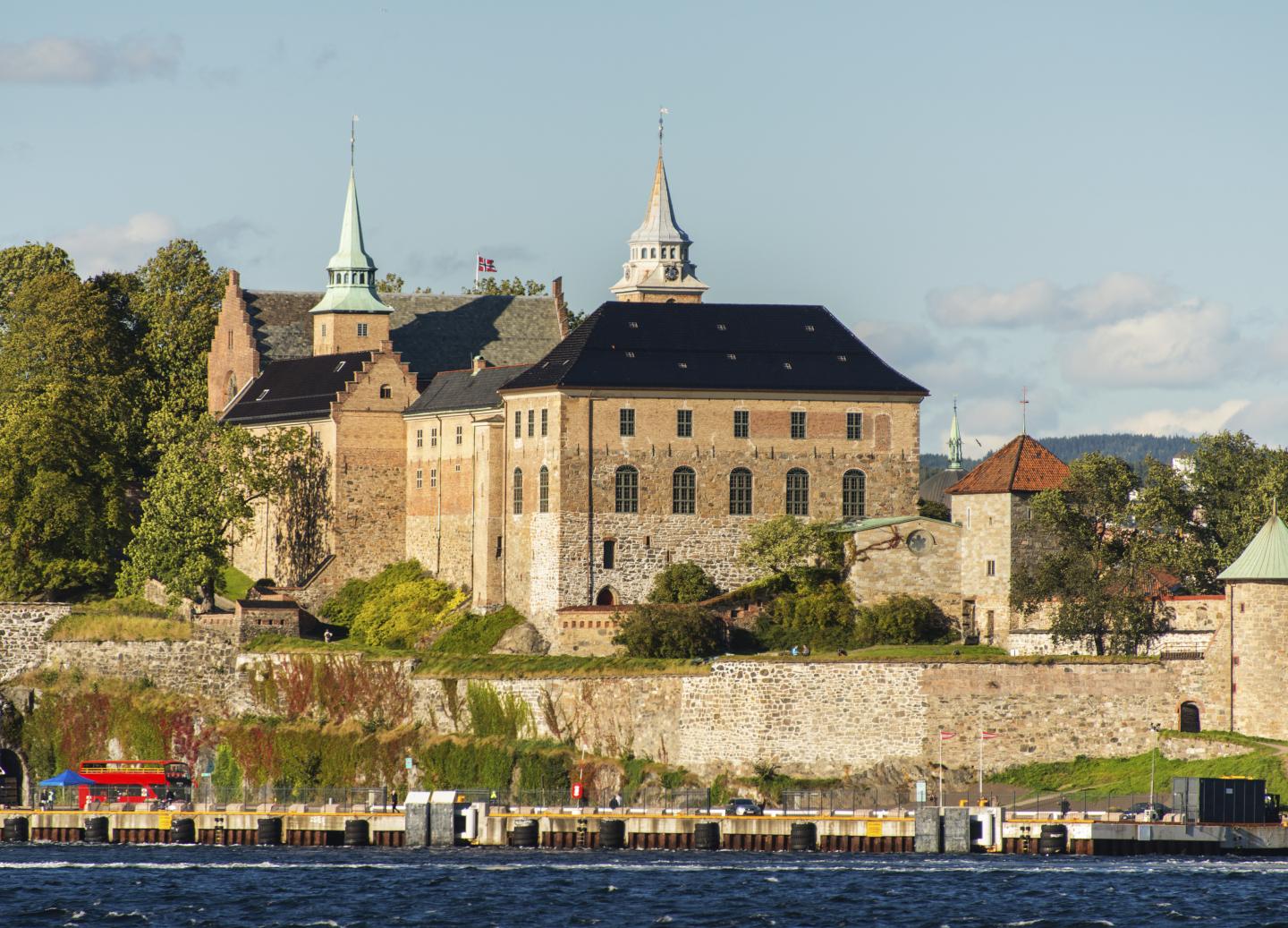
Commanding the harbourfront from a rocky promontory at the heart of the port area, Akershus Fortress has stood watch over Oslo since around 1299. What began as a medieval castle evolved through the centuries into a Renaissance palace and later a military installation, and its grounds now encompass museums, a medieval hall, and the Royal Mausoleum. The fortress grounds are freely accessible and offer some of the best panoramic views of the Oslofjord and the city skyline available without a ticket. A guided tour of the castle interior adds historical depth; the Norwegian Resistance Museum, housed within the complex, provides a moving account of the country's occupation during the Second World War.
The Oslo Opera House
Opened in 2008 and designed by the Norwegian architecture firm Snøhetta, the Oslo Opera House has become one of the defining buildings of 21st-century European architecture. Its most remarkable feature is the roof: a sweeping expanse of white Carrara marble and granite that slopes from the rear of the building down to the waterline of the Oslofjord, designed to be walked on by the general public. The views from the roof take in the fjord, the city, and the Ekebergåsen hills beyond. Admission to the building's public areas and roof is free; performances require tickets. Located just east of the main cruise terminal area, it is an easy walk from most berths.
Aker Brygge & Tjuvholmen Waterfront
Where Oslo's shipyards once stood, a vibrant urban waterfront now stretches along the inner harbour between the fortress and the residential peninsula of Tjuvholmen. Aker Brygge is the older and livelier section — a continuous run of restaurants, cafés, and boutiques facing the fjord, at its most animated on summer evenings when Norwegians gather to eat outdoors well into the night. Tjuvholmen, its newer neighbor, takes a more architectural approach: the Astrup Fearnley Museum of Modern Art, designed by Renzo Piano, sits at the tip of the peninsula surrounded by sculptures, a sandy beach, and waterfront promenades. Together they represent contemporary Oslo at its most appealing.
The Royal Palace & Karl Johans Gate
Oslo's main boulevard, Karl Johans Gate, runs from the central railway station westward through the heart of the city to the neoclassical Royal Palace at its upper end. Lined with shops, cafés, the Storting (parliament building), and the National Theatre, it functions as Oslo's civic spine — busy, walkable, and revealing of everyday Norwegian urban life. The palace itself dates from 1849 and is surrounded by landscaped gardens open to the public. The daily changing of the guard takes place at 1:30 pm and draws a modest crowd. In summer, guided palace tours offer a rare glimpse of the interior; in winter, the grounds become an ice-skating venue.
Oslo travel tips
Prioritise Bygdøy in the Morning. The Bygdøy museums — Viking Ship, Fram, and Norwegian Folk Museum — are the day's most time-sensitive attractions. They become crowded by late morning on busy cruise days. Take Bus 30 from Nationaltheatret as soon as you're ashore and aim to arrive at the Viking Ship Museum close to opening time. This leaves the afternoon free for the city center and Vigeland Park, both of which absorb arrivals more gracefully at any hour.
The Oslo Pass Pays for Itself. The Oslo Pass grants free entry to over 30 museums and attractions, including the Viking Ship Museum, Fram Museum, Norwegian Folk Museum, and Akershus Fortress, plus unlimited use of all public transport. For a full day of sightseeing, the 24-hour pass typically covers its cost with just two or three museum entries. Purchase it at the cruise terminal information point or online before arrival.
Walk the Opera House Roof — It's Free. One of Oslo's most memorable experiences costs nothing. The sloping marble roof of the Opera House is publicly accessible and offers an elevated perspective over the Oslofjord and city skyline. It takes only 20–30 minutes to walk up and across, making it an ideal inclusion at the start or end of the day when passing through the eastern harbourfront. Wear shoes with adequate grip, as the marble surface can be slippery when wet.
Try Harbourside Shrimp. Among Oslo's most beloved local rituals is buying freshly cooked shrimp directly from fishing boats moored at Aker Brygge, then eating them with bread and mayonnaise while sitting on the dock looking out over the fjord. It is affordable, authentic, and uniquely Norwegian. The shrimp boats typically appear from late morning and sell out quickly — arrive early if this is a priority.
Pack a Light Waterproof Layer. Oslo's summer weather is generally pleasant but famously changeable. Even on days that begin with clear blue skies, an afternoon shower is a real possibility. A compact waterproof jacket takes up minimal space and prevents a damp afternoon from derailing what would otherwise be an excellent day ashore. Temperatures in the evening can also drop more quickly than expected after a warm afternoon.
Book Museum Entry in Advance. Oslo's most popular museums — particularly the Viking Ship Museum and the Fram Museum — can sell out on busy summer cruise days when multiple ships are in port simultaneously. Booking tickets online before your cruise departs is strongly recommended. The Norwegian Folk Museum, while spacious enough to handle larger groups, also benefits from pre-booking during peak season to guarantee a specific entry slot.
Port Facts Every Cruiser Needs To Know
Oslo shore excursion FAQs
Oslo's cruise terminal at Akershusstranda sits immediately alongside the city centre — unusually close by any standard. Akershus Fortress is a 5-minute walk, the Aker Brygge waterfront is 10 minutes, and Karl Johans Gate (the main boulevard) is reachable in around 15 minutes on foot. The Opera House is about 20 minutes' walk to the east. Oslo is one of the most conveniently located cruise ports in Europe.
No — Oslo is one of the world's most cashless cities. Card payment, including contactless and mobile payments, is accepted almost universally, including at street food kiosks, museum gift shops, and public transport ticket machines. Some of the very smallest market vendors may prefer cash, but this is increasingly rare. It is worth carrying a small amount of Norwegian Krone (NOK) as a backup, but most visitors complete a full day ashore without using it.
This depends on the visitor's interests, but the Viking Ship Museum on Bygdøy Peninsula and Vigeland Sculpture Park in Frogner Park are consistently ranked Oslo's top draws. The Viking Ship Museum houses three original 9th-century longships recovered from burial mounds — genuinely awe-inspiring artefacts that no photograph quite prepares you for. Vigeland Sculpture Park is the world's largest sculpture installation by a single artist, entirely free to enter, and remarkable for its ambition and human scale.
The most practical option is Bus 30, which runs from Nationaltheatret (a 15-minute walk from the main cruise quay, or one T-bane stop) directly to the Bygdøy museums, stopping at the Viking Ship Museum, Norwegian Folk Museum, and Fram Museum. The journey takes around 10–15 minutes and is covered by a standard transit ticket or Oslo Pass. In summer, a seasonal ferry also runs from Aker Brygge to the Bygdøy waterfront, offering a scenic alternative.
Oslo consistently ranks among Europe's more expensive cities. Museum entrance fees, restaurant meals, and café drinks reflect Norway's high cost of living. However, several of the best experiences are free — Vigeland Sculpture Park, the Opera House roof walk, Akershus Fortress grounds, and the harbourfront itself cost nothing to enjoy. The Oslo Pass provides excellent value for those planning multiple museum visits, effectively reducing the per-attraction cost significantly.
Brunost (literally 'brown cheese') is a uniquely Norwegian dairy product made from whey, milk, and cream that is cooked until the sugars caramelize, giving it a distinctive brown color and a sweet, slightly fudgy, mildly tangy flavour. It bears no resemblance to conventional cheese and is one of the most polarizing — and intriguing — food souvenirs Norway offers. It is served sliced thin on crispbread or knekkebrød and is available in any Norwegian supermarket, many cafés, and food stalls around the city center.
It is possible to walk, but the distance is approximately 3.5–4 kilometres from the main cruise quay, which takes around 45–50 minutes at a comfortable pace through pleasant city streets. Most visitors prefer to take Tram 12 from the center (alight at Vigelandsparken), which covers the journey in about 15 minutes. If using the Oslo Pass, all public transport is included.
Yes — Vigeland Sculpture Park is completely free to enter and open every day of the year, 24 hours a day. There are no gates, no admission booths, and no tickets to purchase. The park sits within the larger Frogner Park, which is also free. The only costs you might incur are at the park's café or if you visit the Vigeland Museum (which houses the artist's studio and drawings), which charges a small admission fee.
The Norwegian Royal Guard (Den Kongelige Garde) performs a changing of the guard ceremony at the Royal Palace each day at 1:30 pm. The ceremony takes place in front of the palace at the top of Karl Johans Gate and lasts approximately 30 minutes. It is free to watch and requires no tickets. The guard parades from the barracks on Akershus through the city center — an added spectacle if you happen to be on the route. The ceremony takes place year-round regardless of weather.
Venture Ashore offers a City Sightseeing Hop On Hop Off tour in Oslo, providing a flexible and convenient way to cover the city's major highlights including the Opera House, Akershus Fortress, Vigeland Sculpture Park, and the Bygdøy museum district. The hop-on hop-off format allows you to tailor your day, spending more time at the attractions that interest you most and rejoining the bus when ready. This is an excellent option for first-time visitors or those who prefer a structured framework to independent navigation.
Filters
Select a filter to refine results.
Tour Type
Tour Activity
 Cart
Cart
 USD
USD GBP
GBP AUD
AUD EUR
EUR CAD
CAD