



Tours in Rijeka


Cruising to Rijeka in a group?
Skip the crowded ship excursion bus. One dedicated planner will design a private shore experience around exactly what your group wants — coordinated from first enquiry to the moment you're back on board. More memorable, more flexible, and more affordable than you might expect. Spend less time organising, more time enjoying.
Explore Group Travel →Cruising to Rijeka
Rijeka occupies one of Croatia's most historically complex corners. Perched at the head of Kvarner Bay in the country's north, it was for centuries one of the most contested cities in Europe — claimed at various points by Hungary, Austria, Italy, and an eccentric post-World War One independent city-state declared by the poet-adventurer Gabriele d'Annunzio. The result of all this turbulent history is a city of layered architectural character: grand neoclassical and Art Nouveau facades line the Korzo, the broad central boulevard that forms the city's social spine, while Roman arches, Baroque towers, and ornate Secessionist buildings crowd the lanes of the old town below Trsat Hill.
Rijeka is Croatia's principal seaport and third-largest city, yet it receives a fraction of the visitor attention that flows to Dubrovnik or Split. This relative obscurity is, for many travellers, its principal appeal. The city has genuine cultural weight — it was designated a European Capital of Culture in 2020 — alongside a lively café and market culture that remains largely oriented toward local life rather than tourism. Cruise passengers arriving here encounter a city still recognisably living in its own rhythms, which makes for a more authentic experience than many better-known Adriatic ports.
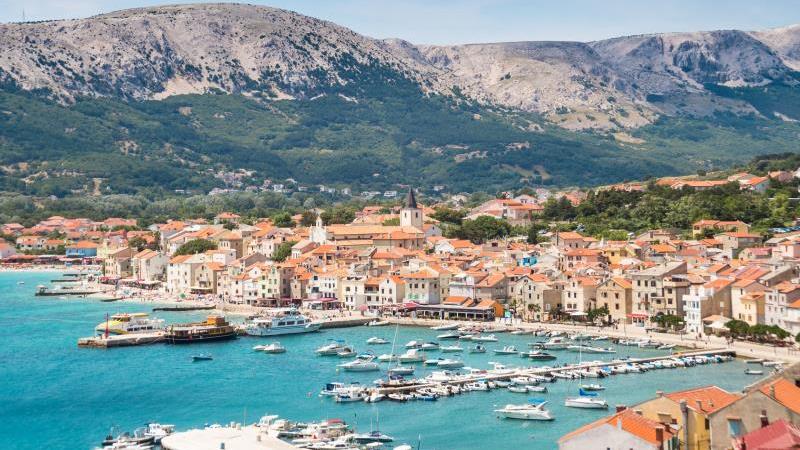
The city's position makes it an exceptional base for excursions into two of northern Croatia's most distinctive landscapes. The island of Krk — the largest in the Adriatic and connected to the mainland by bridge — offers medieval fortified towns, Benedictine monasteries, olive groves, and Adriatic swimming. To the southwest, the Istrian Peninsula constitutes one of Europe's most rewarding short-trip destinations: hilltop towns with Venetian-era loggia, Roman amphitheatres, truffle country, and a food culture that rivals anything on the Italian side of the Adriatic.
For cruise passengers, Rijeka offers a choice: a compact and genuinely interesting city experience focused on the Korzo, the old town, and the Trsat climb, or a full-day excursion that uses the city purely as a staging point for the wider region. Both approaches have considerable merit, and VA offers options that serve each orientation well.
Top things to do in Rijeka on a cruise stopover
The Korzo — Rijeka's Grand Boulevard and Social Heart
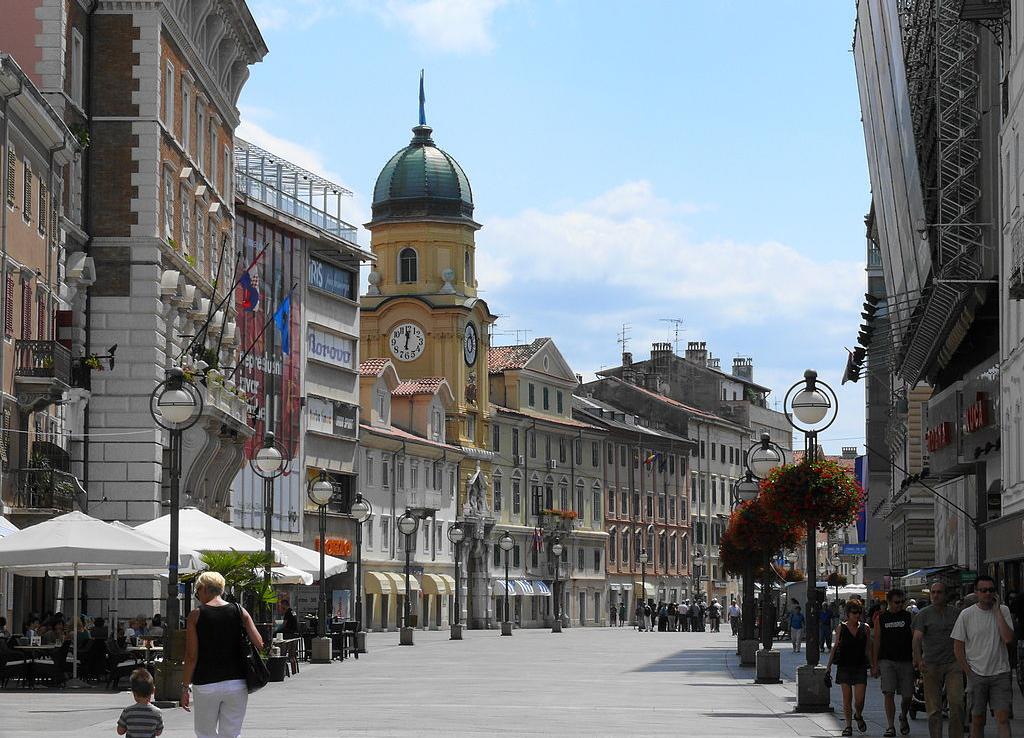
The Korzo is the axis around which Rijeka's daily life revolves. This broad, largely pedestrianised boulevard runs through the centre of the city and is lined with Austro-Hungarian-era buildings housing cafés, restaurants, bookshops, and boutiques. In the morning it belongs to commuters and coffee drinkers; by afternoon it fills with students and locals conducting the unhurried promenading that is central to Adriatic city culture. The street's architectural character reflects Rijeka's complex imperial history — neoclassical facades, Secessionist ornamentation, and Baroque detailing sit side by side. VA's private walking tour of the Korzo and old town explores this urban fabric in depth, providing historical and cultural context that transforms a pleasant street into a genuinely legible record of the city's identity.
Trsat Castle — Medieval Fortress With Panoramic Views Over the Bay
Perched dramatically on a 138-metre cliff above the city, Trsat Castle commands extraordinary views over Kvarner Bay, the surrounding hills, and, on clear days, the islands beyond. The fortress has Roman foundations and medieval construction, and was reconstructed in the 19th century by the Irish-born Austrian general Laval Nugent, who turned it into an aristocratic pleasure garden and mausoleum. Today it operates as a cultural venue hosting exhibitions and events. The traditional approach is via the Stairway of Petar Kružić — 538 stone steps built in the 17th century — though road access is also available. VA offers a private tour that combines Trsat Castle with a guided walk through Rijeka's ornate architectural heritage.
The Island of Krk — Medieval Towns and Adriatic Shores
Connected to the mainland by a bridge, Krk is the largest island in the Adriatic and one of the most historically rich. The town of Krk itself is encircled by Roman and medieval walls and contains a Romanesque cathedral that has been in continuous use since the 12th century. The island's interior is covered in olive groves, vineyards, and dry-stone terraces that give it a character quite different from the beach-resort developments that line parts of the coast. Vrbnik, a fortified village on the eastern cliff edge, is the home of Žlahtina wine — a local white variety produced only on Krk. VA's Golden Island of Krk tour offers a 7.5-hour shared exploration of the island's highlights, making it an excellent full-day option for those who want to venture beyond the city.
Istria — Hilltop Towns, Truffles, and Roman Ruins
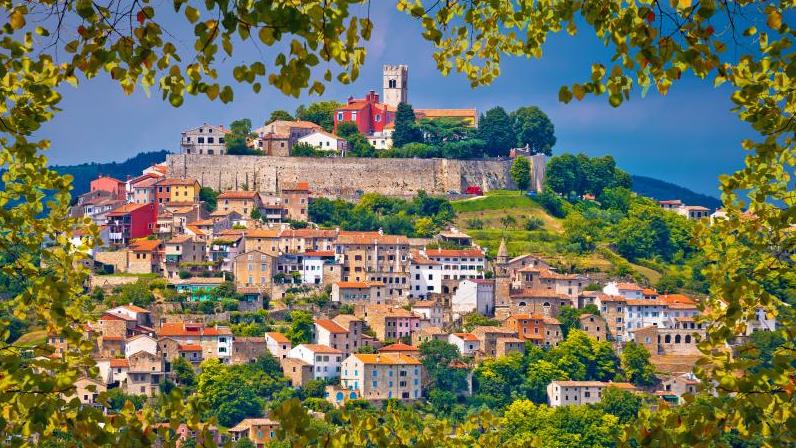
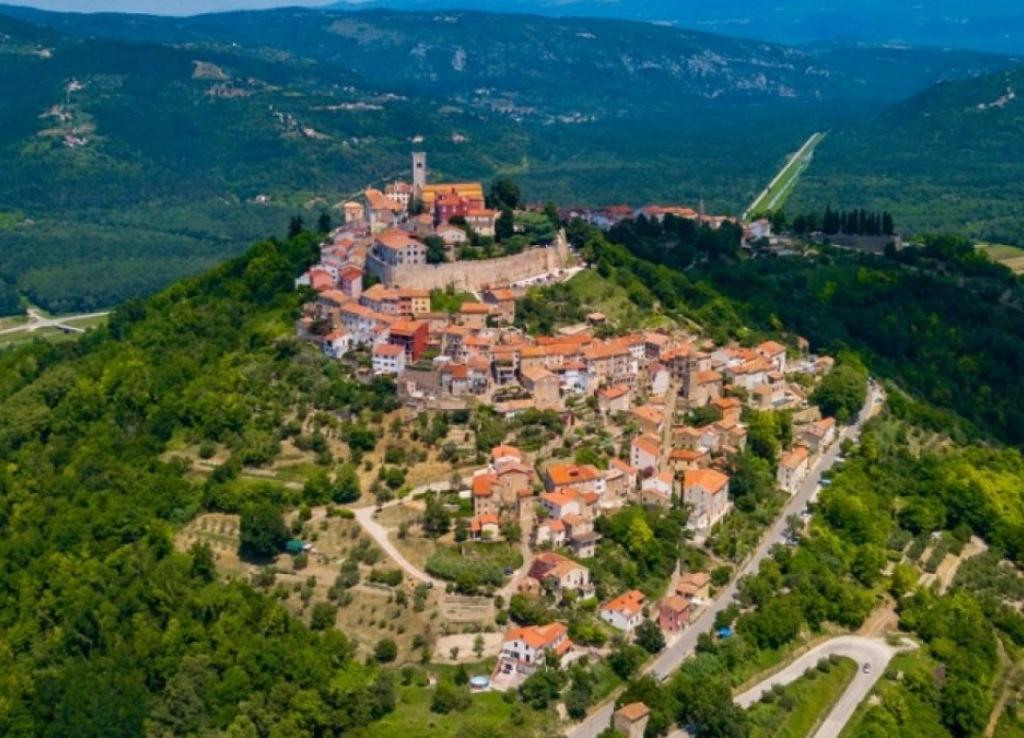
The Istrian Peninsula, a short drive south of Rijeka, is one of Europe's most rewarding short-excursion destinations. Its interior is scattered with medieval hilltop towns — Motovun, Grožnjan, Oprtalj — offering Venetian-era loggia, Romanesque bell towers, and sweeping views over vine and truffle-covered hills. On the coast, the Roman amphitheatre at Pula rivals anything in Italy for scale and preservation, while the Venetian old town of Rovinj is among the Adriatic's most photographed streetscapes. The region produces white truffles of international renown, excellent Malvazija and Teran wines, world-class prosciutto, and some of Croatia's finest restaurants. VA's Highlights of Istria tour runs 7.5 hours through three of the peninsula's most characteristic towns.
Roman Arch and the City Tower — Ancient History at Street Level
Rijeka's historical depth is visible at pavement level in two remarkable survivals. The Roman Arch (Stara Vrata), embedded in the streetscape of the old town, is a triumphal arch from the 3rd century AD that once marked the boundary of the ancient city of Tarsatica — remarkable not just for its age but for the way it sits organically within the living city rather than in an archaeological preserve. Nearby, the ornate City Tower (Gradski toranj) is a 17th-century Baroque clocktower that served as the main gate to the sea. Its façade carries relief portraits of Habsburg emperors and a clock mechanism that still marks the hours. These two structures, separated by centuries, give Rijeka its longest historical perspectives and are both included in VA's Korzo walking tour.
Kvarner Bay — Regional Culture and Coastal Character
The wider Kvarner Bay area surrounding Rijeka has a character unlike either the Dalmatian coast to the south or the Istrian interior to the west. The Opatija Riviera — a string of Belle Époque villas and garden promenades that stretch along the bay west of Rijeka — was one of the Austro-Hungarian Empire's most fashionable resorts and retains a dignified architectural elegance. The bay's seafood — particularly its scampi, widely regarded as among the finest in Croatia — has given the region a culinary identity that draws food-focused travellers from across Europe. The combination of accessible coastline, historical resort culture, and an inland hinterland of remarkable variety makes the Kvarner region one of the most multidimensional port-call areas in the northern Adriatic.
Rijeka travel tips
The Trsat Climb Rewards the Effort — But Plan Accordingly. The traditional approach to Trsat Castle involves ascending 538 stone steps via the Stairway of Petar Kružić, a 17th-century pilgrimage staircase that climbs steeply from the old town below. The climb takes 15–20 minutes at a moderate pace and requires reasonable fitness. The views from the top over Kvarner Bay justify every step. Those who prefer not to walk the staircase can access the castle by road. Factor the Trsat visit into your plan from the beginning rather than attempting it as a last-minute addition — the climb and castle visit together take 1–1.5 hours.
Spend Time on the Korzo Rather Than Just Passing Through. The Korzo is easy to walk end to end in 10 minutes, but doing so misses the point entirely. The value of this boulevard is in sitting at one of its café terraces and absorbing the quality of daily urban life in a city that hasn't been reshaped for tourist consumption. Order a coffee, watch the promenading, and notice the architectural detail at first-floor level — the Secessionist ironwork, the tile patterns, the civic confidence embedded in the building facades. The Korzo reveals Rijeka's character more clearly than any monument does.
Rijeka's Markets Are Worth an Early Visit. The Gradska Tržnica — Rijeka's covered city market, located near the waterfront — is among the most visually striking covered markets on the Adriatic coast. The 1880 building has three halls covering fish, meat, and produce, and the morning hours (before noon) see it at its busiest and most photogenic. Fresh Kvarner scampi, local cheeses, seasonal produce, and regional cured meats are all present in quantity. The market gives an immediate and unfiltered sense of the city's food culture and is within easy walking distance of the port.
Understand the Region's Culinary Geography Before Eating. The area around Rijeka sits at the intersection of three distinct food cultures: Croatian coastal cooking (fresh seafood, olive oil, grilled fish), Istrian cuisine (truffles, prosciutto, pasta, Malvazija wine), and influences from the Austro-Hungarian culinary tradition (strudel, goulash, wiener schnitzel). This layering makes Rijeka and its surrounding region genuinely interesting from a food perspective. Restaurants in the city centre and along the Korzo tend to reflect this mixed heritage. If eating in the city, look for šurlice (local hand-rolled pasta) and anything featuring Kvarner scampi.
The Island of Krk Is Closer Than It Looks on the Map. Krk is connected to the mainland by the Krk Bridge and is accessible by road without a ferry crossing. The bridge crossing itself is a brief but scenic experience with panoramic views over the bay. The island's main town and the village of Vrbnik — perched on a cliff above the eastern coast — are both reachable within 30–45 minutes from Rijeka. For those on a full-day excursion, Krk offers a well-paced combination of medieval town walking, olive and vine landscapes, and coastal scenery that fills the available time efficiently.
Rijeka Rewarded Slow Travel — Don't Rush the Old Town. Unlike some port cities where the heritage is concentrated in a few obvious monuments, Rijeka's character emerges gradually from the accumulation of detail: the Roman Arch tucked between modern buildings, the Habsburg relief on the City Tower, the Secessionist doorways along the backstreets of the Korzo, the view of the bay that opens unexpectedly at the end of a narrow lane. VA's private walking tours are specifically designed to reveal these layers — a self-guided walk, while possible, will inevitably miss the historical context that transforms a pleasant city stroll into a genuinely illuminating experience.
Port Facts Every Cruiser Needs To Know
Rijeka shore excursion FAQs
Rijeka's passenger terminal (Putnička luka) is centrally located on the waterfront, placing the ship within easy walking distance of the city centre. The Korzo, Rijeka's main boulevard, begins within a few minutes' walk of the port exit. The City Tower, the Roman Arch, and the entrance to the old town are all reachable on foot in under 10 minutes from the pier. Rijeka is one of the most conveniently positioned port calls in the northern Adriatic for independent walkers.
The Korzo is Rijeka's central pedestrianised boulevard and the social and commercial heart of the city. Lined with Austro-Hungarian-era buildings housing cafés, restaurants, and shops, it is where the city's daily life visibly unfolds. Its name simply means 'the promenade' in Croatian — reflecting the Adriatic tradition of the evening passeggiata that the street was designed to facilitate. The Korzo also serves as a legible architectural history of Rijeka's complex identity: neoclassical, Secessionist, and Baroque facades reflect the competing imperial and national influences that shaped the city over two centuries.
Yes — Krk is connected to the mainland by the Krk Bridge and is one of the most accessible island excursions from any Adriatic cruise port. The drive from Rijeka to the town of Krk takes approximately 30–45 minutes. VA's Golden Island of Krk tour is a 7.5-hour shared excursion that provides a structured full-day exploration of the island, including its medieval fortified town, coastal scenery, and regional food culture. For those with a full day ashore, Krk makes an excellent alternative to spending the entire day in the city.
Istria is a large triangular peninsula southwest of Rijeka, shared between Croatia, Slovenia, and Italy. It is celebrated for its hilltop medieval towns, Roman archaeological sites (including the amphitheatre at Pula), white truffles, Malvazija wine, and some of Croatia's finest cuisine. Driving from Rijeka into the heart of Istria takes approximately 45–90 minutes depending on the destination. VA's Highlights of Istria tour runs 7.5 hours and visits three key Istrian towns, making it a comprehensive full-day excursion for cruise passengers wanting to explore beyond the city.
Trsat Castle is a medieval fortress perched 138 metres above Rijeka on the cliff overlooking Kvarner Bay. It has Roman foundations and medieval construction dating to the 13th century, and was extensively restored in the 19th century by the Austrian general Laval Nugent as a private estate. Today it operates as a cultural and events venue with panoramic views over the bay and surrounding islands. The traditional approach is via the 538-step Stairway of Petar Kružić from the old town below, though road access is also available. It is one of Rijeka's most photographed landmarks and included in VA's private city tour.
Croatia adopted the Euro (EUR) in January 2023, replacing the kuna. Euros are accepted everywhere, and ATMs dispensing Euros are widely available throughout Rijeka city centre. Card payments (Visa, Mastercard) are accepted at restaurants, hotels, larger shops, and most tourist-facing businesses. Smaller market vendors and some historic town shops may prefer cash. There is no need to arrange any currency exchange before visiting Croatia.
The Kvarner Bay is most celebrated for its scampi (škampi), considered among the finest in Croatia and typically prepared buzara-style — simmered in white wine, garlic, olive oil, and breadcrumbs. Rijeka's own local pasta, šurlice (hand-rolled pasta similar to thick spaghetti), is served with lamb ragù or truffle sauce. Regional cured meats, particularly pršut from the Istrian side, are excellent. Malvazija is the dominant white wine of the wider region. The city market near the waterfront is the best place to encounter these products in their fresh, unprocessed form.
Rijeka is genuinely worth time in its own right — it is an authentic, architecturally interesting city that has not been hollowed out by mass tourism. The combination of the Korzo, the old town, the Roman Arch, the City Tower, and the Trsat Castle climb provides a rewarding 4–5 hour city programme. For visitors who have already seen the city on a previous call, or who simply prefer landscape and regional culture over urban exploration, the excursions to Krk or Istria represent excellent full-day alternatives. Both the city and the surrounding region are compelling; the choice depends on what kind of experience you are looking for.
The Korzo and city centre are largely flat and manageable for visitors using wheelchairs or with reduced mobility — the pedestrianised streets are reasonably well-surfaced. The Trsat Castle ascent via the staircase is not accessible, though road access to the castle is available as an alternative. The old town backstreets involve some uneven cobblestone surfaces. VA's private Wonders of Korzo Walking Tour is adaptable for visitors who need a route that avoids the most challenging terrain; enquiring about accessibility requirements when booking allows the tour to be tailored accordingly.
Rijeka held the title of European Capital of Culture in 2020 — shared with Galway (Ireland) and Novi Sad (Serbia). The designation was awarded in recognition of the city's complex multicultural heritage and its programme of cultural events, public art installations, and community-driven initiatives across the year. The programme's legacy includes regenerated cultural venues, public artworks, and a reinvigorated sense of the city's creative identity. Some of the infrastructure and programming generated by the Capital of Culture year continues to operate, giving Rijeka a cultural offering that extends well beyond its medieval monuments.
Filters
Select a filter to refine results.
Tour Type
Tour Activity
 Cart
Cart
 USD
USD GBP
GBP AUD
AUD EUR
EUR CAD
CAD