



Tours in Rotterdam


Cruising to Rotterdam in a group?
Skip the crowded ship excursion bus. One dedicated planner will design a private shore experience around exactly what your group wants — coordinated from first enquiry to the moment you're back on board. More memorable, more flexible, and more affordable than you might expect. Spend less time organising, more time enjoying.
Explore Group Travel →Cruising to Rotterdam
Rotterdam is a city that had no choice but to reinvent itself. Levelled by German bombing in May 1940, it rose from the rubble as a laboratory for contemporary architecture, and the result is a skyline unlike anything else in the Netherlands — or much of Europe. The Erasmus Bridge arcs elegantly over the Maas; the tilted yellow Cube Houses defy gravity above the Blaak market; the Markthal's vast vaulted interior is a market hall and residential building rolled into one flamboyant gesture. What Rotterdam lacks in preserved medieval streetscapes it more than compensates for with sheer architectural drama.
Yet within easy reach of this forward-looking city lies some of the Netherlands' most quintessentially Dutch scenery. Kinderdijk, a UNESCO World Heritage site approximately thirty minutes from the city, preserves nineteen working windmills in a landscape of polders and water channels that represents everything the world imagines when it thinks of Holland. The sight of the mills in motion — which happens on designated days — is genuinely stirring. A day that combines Rotterdam's modernity with Kinderdijk's timeless rural character captures the full breadth of what the Netherlands offers.
The Hague, the country's seat of government and home to the Dutch royal family, lies just twenty-five minutes southwest of Rotterdam by train. The Binnenhof complex, where parliament has sat since the thirteenth century, anchors a city of grand museums, graceful architecture, and international institutions — the International Court of Justice and the International Criminal Court both have their home here. The nearby beach resort of Scheveningen extends The Hague's appeal further still.
For cruise passengers with 6–10 hours ashore, the choice is genuinely rich: a deep dive into Rotterdam itself, a windmill pilgrimage to Kinderdijk, an excursion to The Hague, or a carefully constructed tour that weaves multiple destinations together. The compact geography of the Netherlands makes all of these options realistically achievable in a single port day, provided logistics are sensibly arranged in advance.
Top things to do in Rotterdam on a cruise stopover
Kinderdijk: Nineteen Windmills and a UNESCO Landscape
Kinderdijk is one of the Netherlands' most iconic and most justifiably celebrated UNESCO World Heritage sites. Nineteen windmills, built between 1722 and 1761 to drain the surrounding polders, stand in near-perfect rows beside water channels that reflect their silhouettes on still days. The site manages the tension between tourism and authenticity better than most: the mills still function, the landscape still breathes, and the polder system they were built to manage still operates. Arriving as part of a private Dutch Icons tour means skipping the logistical complexity of the waterbus and public connections, and spending maximum time in the landscape itself rather than navigating between it.
The Hague: Royal Capital, Global Justice, and Grand Museums
The Hague carries a weight of history and international significance disproportionate to its size. The Binnenhof, a medieval castle complex at the city's heart, has housed Dutch parliament since 1248 and remains the political centre of the Netherlands. The Mauritshuis museum, housed in a seventeenth-century mansion beside the Hofvijver lake, contains Vermeer's Girl with a Pearl Earring and Rembrandt's The Anatomy Lesson of Dr. Nicolaes Tulp — two of the most celebrated paintings in Northern European art. The Peace Palace, built with funding from Andrew Carnegie in 1913, still houses the International Court of Justice. A private excursion combining The Hague with Kinderdijk and other Dutch icons makes an exceptionally full and satisfying port day.
Historic Towns, a Medieval Castle, and Windmill Country
The Dutch countryside between Rotterdam and its neighbouring towns holds layers of history that reward exploration on a guided day tour. Medieval castle complexes, beautifully preserved town centres with gabled merchant houses lining quiet canals, and working windmill landscapes sit within easy reach of the port. A private tour combining walking exploration of two historic towns with a visit to a windmill site and a traditional Dutch lunch represents the kind of immersive regional experience that turns a port stop into a genuine encounter with Dutch heritage. The unhurried pace of the Dutch countryside contrasts pleasantly with Rotterdam's urban energy.
Rotterdam's Extraordinary Modern Architecture
Rotterdam's decision to rebuild boldly after wartime destruction has resulted in an urban environment that reads as a permanent architecture festival. The Cube Houses (Kubuswoningen), designed by Piet Blom in 1984, are tilted forty-five degrees on their points — one is open to the public as a show house. The Markthal, completed in 2014, is a residential arch above a covered market decorated with an enormous digital artwork depicting Dutch produce. The Erasmus Bridge, its elegant asymmetric form earning it the nickname De Zwaan (The Swan), defines the contemporary waterfront. The vertical Blaaktoren, the glass OVG office towers, and the Central Station's dramatic canopy complete a skyline of remarkable ambition.
Europe's Largest Port: Rotterdam's Maritime Identity
Rotterdam handles more cargo than any other port in Europe, and the maritime heritage that underpins this modern industrial giant permeates the city's character. The Hotel New York, built in 1917 as the headquarters of Holland America Line and the departure point for millions of emigrants to the United States, stands at the Wilhelminakade as a living museum of this history. The Maritime Museum Rotterdam, founded in 1874, traces the relationship between the Netherlands and the sea through a collection of ship models, navigational instruments, and historical artefacts. The Kop van Zuid waterfront district, where the cruise terminal sits, was itself a derelict dock area transformed into a showcase for contemporary urban design.
Dutch Markets and the Art of Everyday Life
The Netherlands has elevated the market to an art form, and Rotterdam's Markthal and surrounding street markets offer one of the most vivid immersions in Dutch food culture available to a visitor. Fresh herring, aged Gouda, stroopwafels, Indonesian-influenced street food (a legacy of Dutch colonial history), and the full spectrum of seasonal Dutch produce fill stalls that serve locals as much as tourists. The Binnenrotte outdoor market, one of the largest in the country, operates on Tuesdays and Saturdays near Blaak station. Even outside market days, the city's food halls and independent shops around the Witte de Withstraat arts district provide a vivid sense of contemporary Dutch urban culture.
Rotterdam travel tips
Decide Between City and Countryside Before You Arrive. Rotterdam rewards a different kind of visitor than Kinderdijk or The Hague. Those drawn to architecture, contemporary culture, and urban energy will find Rotterdam itself absorbing for a full port day. Those seeking quintessential Dutch scenery and historic towns will want to head out. The best port days often combine both — a tour that visits Kinderdijk in the morning and Rotterdam's waterfront in the afternoon covers the range efficiently. Decide on priorities in advance to avoid the frustration of trying to do everything and doing nothing well.
Windmill Days at Kinderdijk. Kinderdijk's windmills operate (i.e., their sails turn) on specified days during the season, typically Saturdays in summer and some additional days during annual windmill events. Visiting on a mill operation day transforms the experience significantly — nineteen moving windmills in a flat polder landscape is an extraordinary sight. If your port day coincides with an operation day, prioritise Kinderdijk accordingly. Check the Kinderdijk website or ask your tour operator for current schedules.
The Cube Houses Deserve a Stop. Rotterdam's Cube Houses are one of those rare architectural landmarks that exceed expectations in person. The Kijk-Kubus show house at Overblaak 70 admits visitors for a small entrance fee and gives access to the tilted interior — a genuinely disorienting and enjoyable experience. The surrounding Blaak area also contains the old Blaak harbour post (now a café), the Markthal directly across the road, and a concentration of independent food stalls and shops that make it one of the most rewarding neighbourhoods for a short wander.
The Hague's Mauritshuis Needs Advance Planning. The Mauritshuis museum is small, beautiful, and enormously popular. Timed entry tickets are required and can sell out days in advance, especially for visitors wanting to see Girl with a Pearl Earring. If seeing the Vermeer is a priority on a port day visit to The Hague, ensuring your excursion includes pre-arranged museum access avoids the disappointment of arriving to find entry unavailable. The Peace Palace visitor centre and the Binnenhof exterior are accessible without advance booking.
Rotterdam Is Built for Walking. The flat terrain and relatively compact central area of Rotterdam make it genuinely pleasant to explore on foot. From the cruise terminal at Wilhelminakade, the walk across the Erasmus Bridge to the city centre takes around 20 minutes and passes through some of the most visually striking urban scenery in the Netherlands. Comfortable, flat shoes are sufficient — there are no hills and the cycle paths are well-separated from pedestrian routes, though do watch for cyclists, who have priority on their lanes.
Try Raw Herring at a Haringhandel Stall. Eating raw herring (nieuwe haring, when in season from May) from a street stall is one of the most genuinely Dutch experiences available to a port-day visitor. The Dutch method — holding the fish by the tail, tilting the head back, and lowering the fish into the mouth — is optionally theatrical; you can also request it chopped and served with onion and gherkin in a small roll (broodje haring). Look for a haringhandel cart near the waterfront or market. It is an inexpensive, authentic, and memorable taste of Dutch everyday culture.
Port Facts Every Cruiser Needs To Know
Rotterdam shore excursion FAQs
Kinderdijk is approximately 15 kilometres east of Rotterdam, around 30 minutes by road or waterbus. The waterbus (Waterbus line 20) departs from the Erasmusbrug stop in central Rotterdam and drops passengers near the windmill site. By car or coach the journey is similar in duration. Pre-arranged tours handle all logistics and typically allow 2 hours or more at the windmill site.
The Hague (Den Haag) is approximately 25 kilometres southwest of Rotterdam. Intercity trains run frequently between Rotterdam Centraal and Den Haag Centraal in approximately 25 minutes. By road the journey is similar. A guided Dutch Icons tour combining Kinderdijk and The Hague in a single day is an efficient way to cover both within a port day.
Rotterdam was almost entirely destroyed by German bombing in May 1940 and rebuilt without the historic streetscapes that constrain development elsewhere. The city became a testing ground for ambitious contemporary architecture. Key landmarks include the Cube Houses (tilted 45-degree residential units from 1984), the Markthal (a vast residential arch over a covered food market, completed 2014), the Erasmus Bridge, and Rotterdam Centraal station's dramatic contemporary canopy.
Yes. Cruiseterminal Rotterdam on the Wilhelminakade is in the Kop van Zuid district, approximately 15–20 minutes' walk from the city centre across the Erasmus Bridge. The walk itself passes through architecturally interesting territory. A water taxi also connects Wilhelminakade to central Rotterdam more quickly. The walk is flat and straightforward.
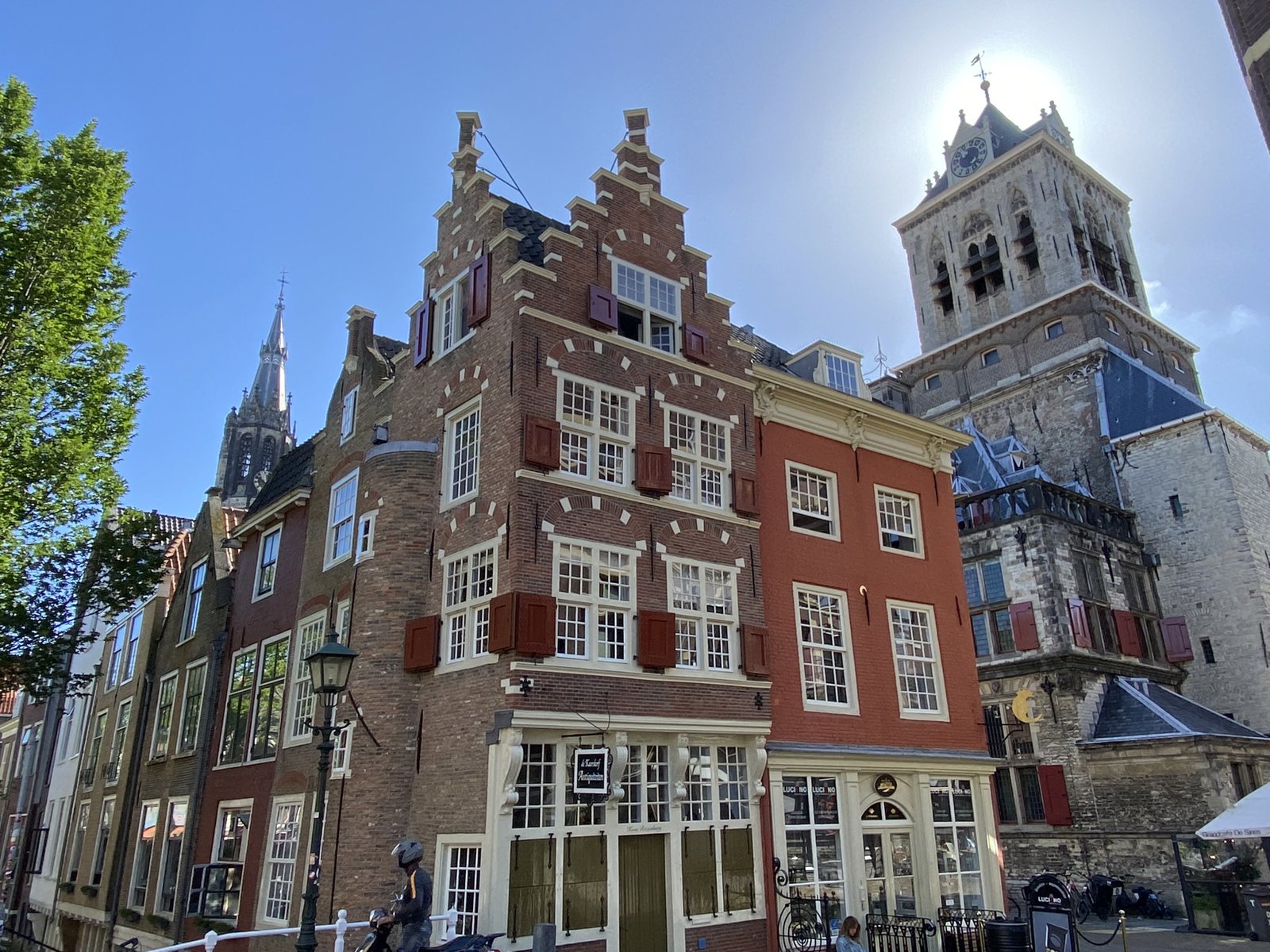
Several beautifully preserved Dutch historic towns are within easy day-trip range of Rotterdam. Delft, famous for its blue pottery and home to the Vermeer Centre, is 15 minutes by train. Dordrecht, the oldest city in Holland, is 20 minutes southeast and has a fine medieval centre. Gouda, renowned for its cheese market and Gothic town hall, is 25 minutes northeast. Guided tours combine these destinations efficiently within a port day.
The Markthal (Market Hall) is a horseshoe-shaped residential building arching over a vast covered food market, completed in 2014 to designs by MVRDV architects. Its interior ceiling is covered with a digital artwork by Arno Coenen called The Horn of Plenty, depicting oversized Dutch produce motifs in vivid colour. Below, market stalls sell fresh produce, street food, and Dutch specialties. It is both a functioning market and an architectural spectacle, and admission to the market area is free.
Kinderdijk's nineteen windmills were built between 1722 and 1761 to pump water from the surrounding polders (low-lying reclaimed land) into higher waterways, preventing flooding. The system represents the ingenuity of Dutch water management that has kept much of the Netherlands dry for centuries. The site was designated a UNESCO World Heritage site in 1997. The mills are preserved and maintained; several are open to the public, and all operate on designated windmill days.
The Netherlands uses the Euro (€). Card payments are accepted almost universally — the Dutch are among Europe's most cashless populations, and many smaller vendors now prefer card over cash. Major credit and debit cards work widely. Some traditional market stalls may still operate cash-only, so carrying a small amount of euros as backup is sensible.
Dutch is the official language. English is almost universally spoken throughout the Netherlands, including in Rotterdam, The Hague, and at tourist sites such as Kinderdijk. The Netherlands consistently ranks among the highest non-native English-speaking countries in the world. Signage at major attractions is typically bilingual, and communication with locals in English presents no difficulties.
Amsterdam is approximately 75 kilometres north of Rotterdam, reachable by intercity train in around 40 minutes from Rotterdam Centraal. While technically possible on a long port day, visiting Amsterdam from Rotterdam leaves limited time in the city and requires careful management of return timing. Rotterdam, Kinderdijk, and The Hague offer equally compelling experiences with far simpler logistics and less travel time, making them a better use of the available hours ashore.
Filters
Select a filter to refine results.
Tour Type
Tour Activity
 Cart
Cart
 USD
USD GBP
GBP AUD
AUD EUR
EUR CAD
CAD