



Tours in Stavanger


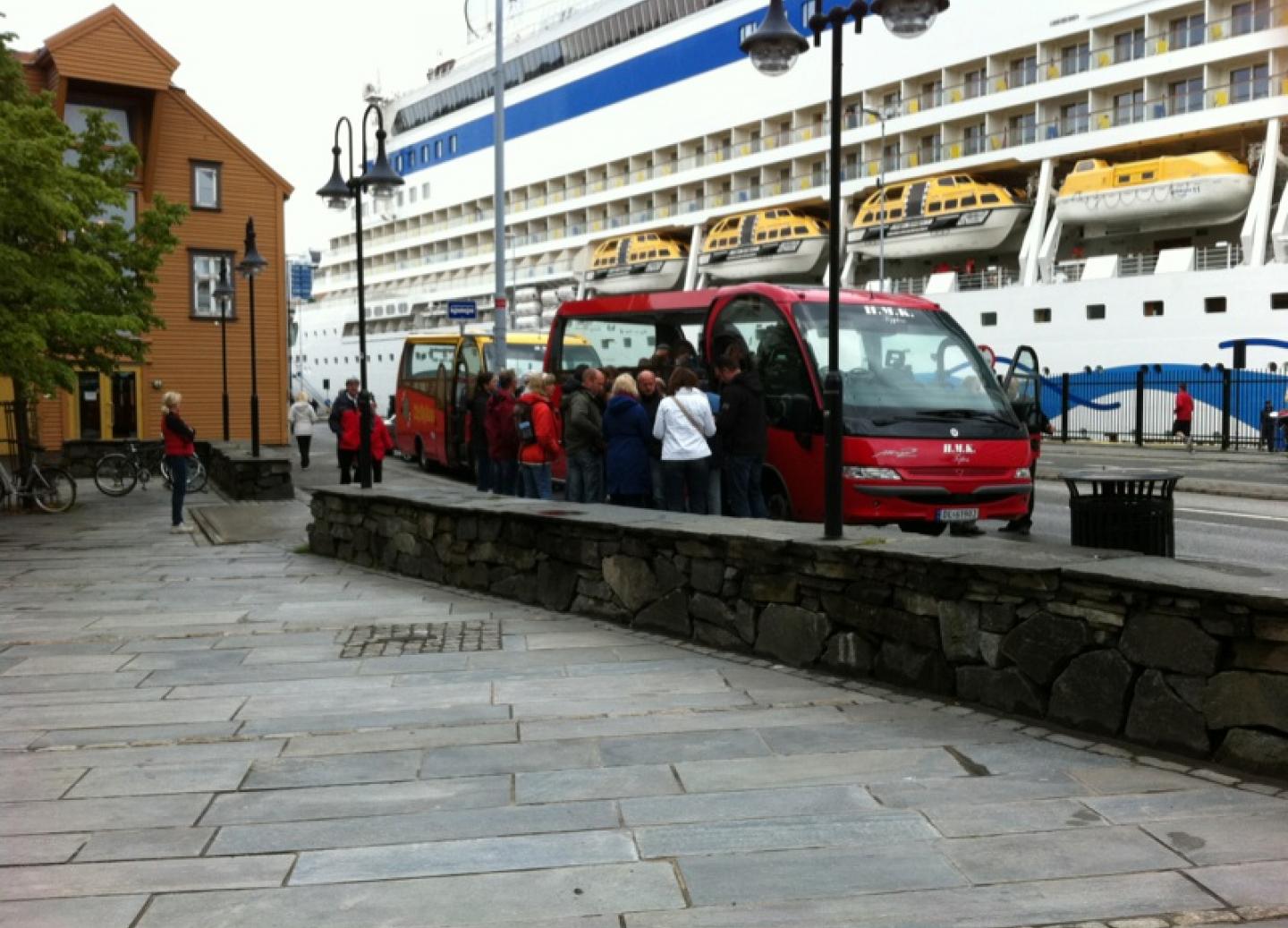
Cruising to Stavanger in a group?
Skip the crowded ship excursion bus. One dedicated planner will design a private shore experience around exactly what your group wants — coordinated from first enquiry to the moment you're back on board. More memorable, more flexible, and more affordable than you might expect. Spend less time organising, more time enjoying.
Explore Group Travel →Cruising to Stavanger
Stavanger sits at the southwestern edge of Norway's fjordland, a compact harbor city that has worn several identities with equal distinction. It began as a fishing and herring-trade town, became one of Scandinavia's most prosperous medieval centers, and was transformed once more when North Sea oil was discovered in the late 1960s, bringing an international energy to what had been a quiet regional port. For cruise passengers, the approach by sea sets the tone: the Norwegian coastline here is low and dramatic, the harbor framed by low hills and the promise of fjord country beyond.
The most immediately striking district for visitors stepping ashore is Gamle Stavanger — Old Stavanger — a lovingly preserved enclave of 173 white-painted wooden houses that line cobblestone streets above the harbor. This is one of the finest collections of historic wooden urban architecture in all of Scandinavia, and wandering its quiet lanes gives an intimate sense of what life looked like during the herring boom of the eighteenth and nineteenth centuries. The district is compact, close to the cruise terminal, and best explored on foot at an unhurried pace.
Beyond the old town, Stavanger's cultural identity deepens at every turn. The Norwegian Petroleum Museum, set on its own harbor peninsula, examines the story of offshore oil with genuine sophistication — this is not a corporate showpiece but a serious institution that engages with environmental questions alongside economic history. The city's Viking past is equally present: Stavanger Cathedral, the oldest in Norway, dates to around 1100 AD and stands at the heart of the city center, while the Swords in Rock monument on the shores of Hafrsfjord commemorates the 872 AD battle that first unified Norway as a single kingdom.
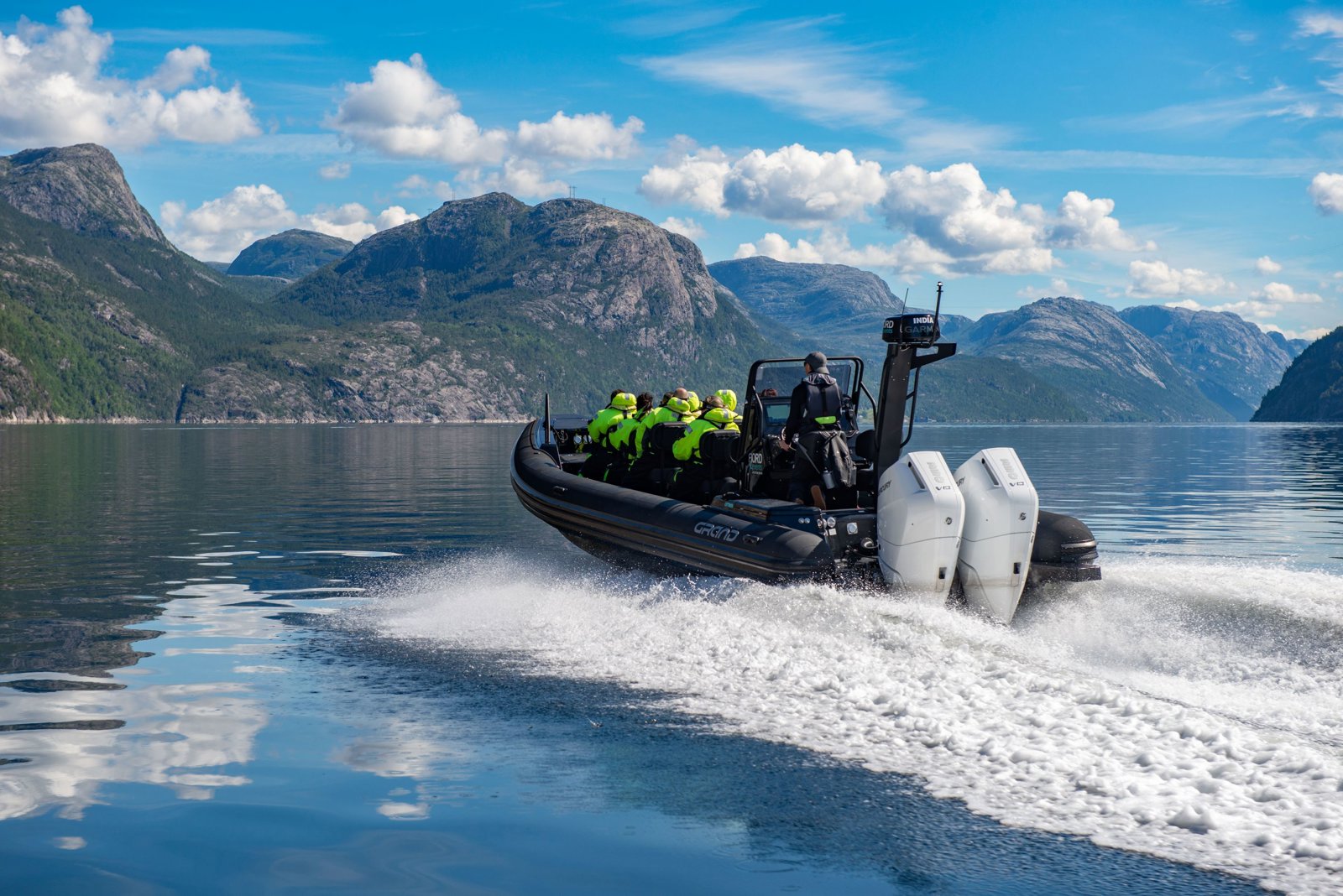
Then there is the Lysefjord. Stretching forty-two kilometers into the Norwegian interior southeast of the city, with granite walls rising nearly six hundred meters from the still water, this is among the defining natural spectacles of the entire Norwegian coast. Whether experienced by RIB boat at exhilarating speed or observed from the water's surface beneath overhanging cliffs, the Lysefjord delivers the raw, elemental Norway that draws travelers to this part of the world. A day in Stavanger can encompass medieval architecture, modern cultural inquiry, and ancient natural drama — few ports offer such a breadth of experience in so compact a setting.
Top things to do in Stavanger on a cruise stopover
The Lysefjord: Norway's Most Dramatic Coastal Wilderness
Stretching forty-two kilometers into the Norwegian interior southeast of Stavanger, the Lysefjord is a spectacle of raw geological power. Sheer granite walls rise nearly six hundred meters from the dark, still water, broken by hanging waterfalls and the famous silhouette of Preikestolen — Pulpit Rock — cantilevered 604 meters above the surface. Experiencing the fjord from water level transforms the sense of scale entirely: cliffs that appear impressive from a distance become overwhelming when passed by boat beneath them. The fjord is also home to goats, seals, and porpoises, visible to attentive travelers. Access requires boat transport — there is no road — and the Lysefjord RIB Safari adventure covers the fjord at exhilarating speed, bringing travelers close to waterfalls and wildlife in a way that a larger vessel cannot match.
Swords in Rock: A Viking Nation's Birth Marked in Bronze
On the shore of Hafrsfjord, a few kilometers southwest of the city center, three enormous bronze swords stand embedded in a granite outcrop overlooking the water. Created by sculptor Fritz Røed and unveiled by King Olav V in 1983, the Sverd i Fjell monument commemorates the Battle of Hafrsfjord in 872 AD — the battle in which King Harald Fairhair unified Norway as a single kingdom for the first time. The largest sword represents Harald; the two smaller ones symbolize the defeated kings. The monument is stark and deliberately powerful, and the surrounding shoreline park offers sweeping views across the fjord. It is one of Norway's most visited landmarks and a named focal point of the Private 3 Swords Stavanger Highlights excursion.
Stavanger Cathedral: Norway's Oldest Standing House of Worship
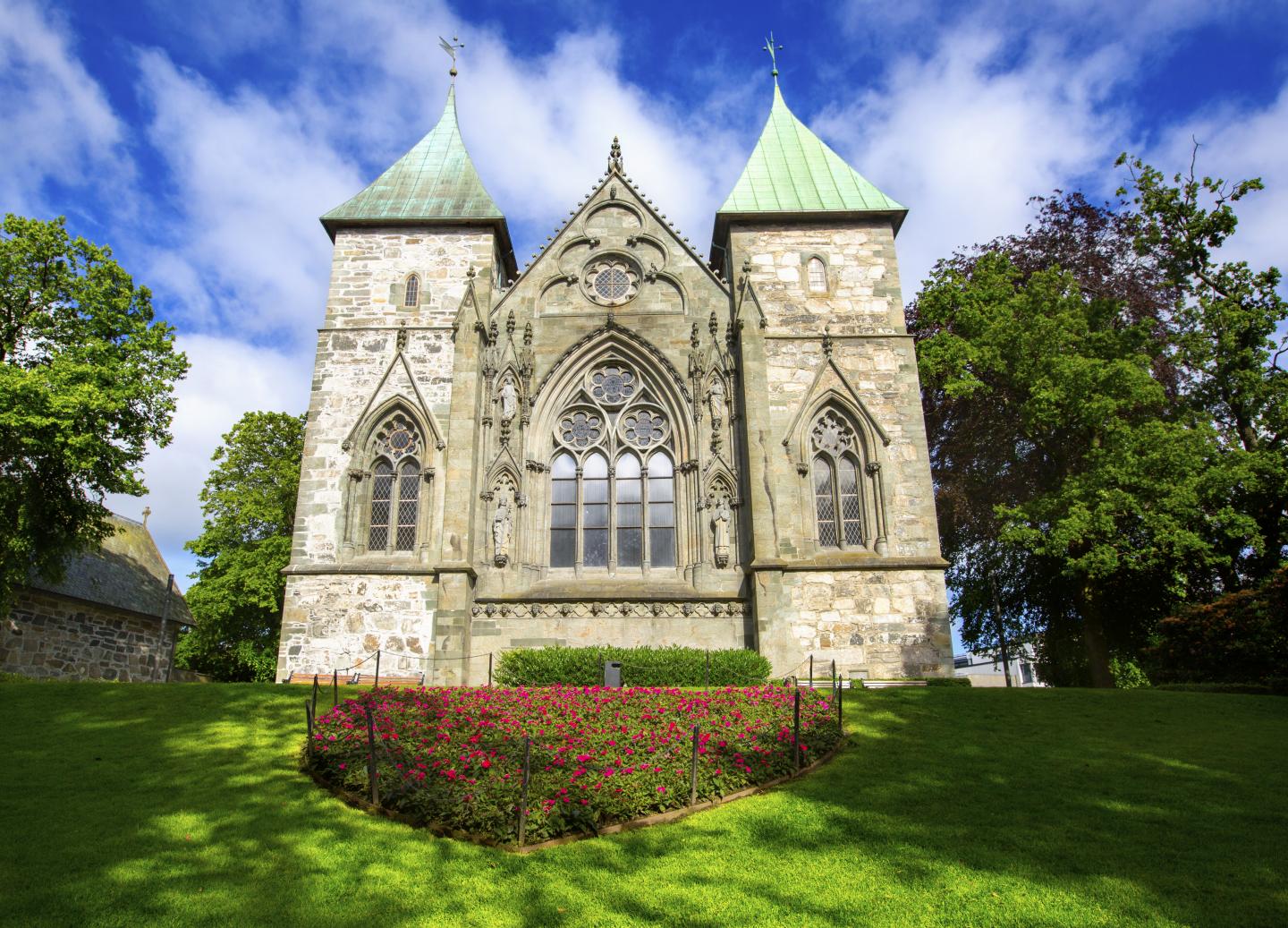
Consecrated in 1125 and built around 1100 AD, Stavanger Cathedral is the oldest standing cathedral in Norway and a cornerstone of the city's medieval identity. Its exterior blends Romanesque and Gothic elements — the latter added after a thirteenth-century fire — while the interior contains elaborately carved wooden panels and a richly detailed Baroque altarpiece from 1738. The cathedral stands at the center of a pleasant square surrounded by outdoor café seating and the old town's approach streets. For visitors on the Private 3 Swords Stavanger Highlights tour, the cathedral represents the city's first chapter — from Viking-era Christianity to the present — and sets the tone for a day that moves thoughtfully through nearly a thousand years of Norwegian history.
Ullandhaug: Iron Age Settlement and Panoramic City Views
On the Ullandhaug hill on the western edge of Stavanger, a reconstructed Iron Age farm occupies the site of an excavated settlement dating to around 350–550 AD. Archaeological investigations in the 1960s revealed the foundations of farmstead buildings, and the reconstructed longhouses, outbuildings, and surrounding field boundaries make that distant era tangible and immediate. The adjacent Ullandhaug Tower provides panoramic views across the city and surrounding fjord landscape, making the visit both historically enriching and visually rewarding. The combination of elevated perspective and ancient human settlement makes Ullandhaug one of the most quietly compelling stops on any Stavanger itinerary and a key element of the Private 3 Swords Stavanger Highlights tour.
Gamle Stavanger: White Wooden Houses and Cobblestone Lanes
Stretching up the hillside above the western harbor, Gamle Stavanger is one of the best-preserved historic urban districts in Scandinavia. Approximately 173 white-painted wooden houses dating from the late eighteenth and early nineteenth centuries line narrow cobblestone streets, their window boxes, painted doors, and meticulous maintenance speaking to an extraordinary local commitment to preservation. The area developed during the peak of the Norwegian herring trade, when Stavanger was a major fishing and canning port, and the old sardine canning museums along the harbor edge tell that story vividly. The City Sightseeing Hop On Hop Off tour stops nearby, and the district is compact enough to explore independently in an hour or two on foot.
Norwegian Petroleum Museum: Norway's Transformative Industry Examined
No single force shaped modern Stavanger more profoundly than the discovery of North Sea oil in 1969, and the Norwegian Petroleum Museum — Norsk Oljemuseum — examines that transformation with intellectual honesty and genuine depth. Designed by architects Lunde and Løvseth and opened in 1999, the museum sits on its own harbor peninsula and contains interactive installations, full-scale platform sections, and thoughtful exhibits on drilling technology, offshore life, environmental challenges, and the sovereign wealth fund that manages Norway's oil revenues for future generations. The exhibits engage honestly with environmental questions alongside the industry's economic legacy. The museum is accessible on the City Sightseeing Hop On Hop Off route and represents a fascinating counterpoint to the medieval district a short walk away.
Stavanger travel tips
Wear Comfortable Shoes for Cobblestone Streets. Gamle Stavanger's historic lanes are charming but uneven — the narrow cobblestone streets that wind through the old wooden house district can be slippery when wet. Flat-soled, supportive footwear makes exploration far more enjoyable. Given how walkable the city center is, you will almost certainly cover more ground on foot than you anticipate, so comfort matters more than style for a Stavanger day ashore.
Pack a Waterproof Layer Regardless of the Forecast. Stavanger sits in one of Norway's rainier coastal climates, and summer days can deliver brief showers even on otherwise fine mornings. A lightweight waterproof jacket that packs flat takes almost no space in a day bag but can make the difference between an enjoyable afternoon and an uncomfortable one. The open-water Lysefjord experience in particular benefits from being properly prepared for wind and spray.
The City Center Is Genuinely Walkable from the Cruise Terminal. Cruise passengers in Stavanger have a genuine advantage: the terminal is close to the main attractions. Gamle Stavanger, the Cathedral, Torget market square, and the Norwegian Petroleum Museum are all within comfortable walking distance for most visitors. Allow time simply to wander without a fixed agenda — the area between the harbor and the old town rewards slow, unhurried exploration more than it rewards a checklist approach.
Visit the Cathedral Early Before Crowds Arrive. Stavanger Cathedral sees a steady stream of visitors and becomes congested as the morning progresses, particularly on summer days when multiple ships are in port simultaneously. Heading there as one of your first stops of the day means quieter interior spaces and the best natural light through the windows. The market square outside also hosts occasional stalls that are worth checking early in the morning.
The Lysefjord Requires a Dedicated Day — Do Not Combine with Full City Sightseeing. If the Lysefjord is a priority, plan your entire day around it. A RIB safari into the fjord takes several hours and must be arranged in advance. Travel time, the fjord experience itself, and the return journey leave limited opportunity to also explore the city thoroughly. Attempting to fit both into a single day ashore will result in doing neither justice. Choose your primary experience and commit to it fully.
Norway Is Expensive — Set Realistic Budget Expectations. Norway consistently ranks among Europe's most expensive countries, and Stavanger — as an oil city — is not inexpensive even by Norwegian standards. Restaurant meals, café coffee, and souvenir shopping will all cost noticeably more than most European destinations. Card payments are universal; carrying large amounts of cash is unnecessary. A rough familiarity with current NOK exchange rates avoids any unpleasant surprises at the register.
Port Facts Every Cruiser Needs To Know
Stavanger shore excursion FAQs
Stavanger's cruise terminal is positioned close to the city center. Most major attractions — Gamle Stavanger, the Cathedral, Torget market square, and the Norwegian Petroleum Museum — are within easy walking distance from the pier. This is one of the more conveniently located Norwegian cruise ports for independent exploration on foot.
The Lysefjord is a forty-two-kilometer fjord southeast of Stavanger, famous for its sheer granite walls, hanging waterfalls, and the iconic Pulpit Rock (Preikestolen) that stands 604 meters above the water. There is no road access to the fjord from Stavanger — it can only be reached by boat. Organized excursions including the Lysefjord RIB Safari depart from the Stavanger harbor area.
Completing the Pulpit Rock hike on a cruise day stop is very challenging and carries a real risk of missing your ship's departure. The hike from the ferry landing is approximately 3.8 kilometers each way and takes most walkers 2–3 hours return, plus a ferry crossing from Stavanger before the trailhead is reached. Unless your ship allows substantial time ashore, experiencing the Lysefjord by boat is a more reliable option.
Sverd i Fjell — Swords in Rock — is a landmark monument on the shore of Hafrsfjord, a few kilometers from Stavanger city center. Three large bronze swords stand embedded in granite, commemorating the Battle of Hafrsfjord in 872 AD when King Harald Fairhair defeated rival kings to unify Norway as a single nation. The monument was created by sculptor Fritz Røed and unveiled in 1983. It is a key stop on the Private 3 Swords Stavanger Highlights tour.
For visitors with limited time, the combination of Gamle Stavanger (old wooden house district) and Stavanger Cathedral covers the most historically rich part of the city in a compact area. Adding the Norwegian Petroleum Museum extends the day with a contrasting modern narrative. The City Sightseeing Hop On Hop Off bus is also a practical option for covering multiple neighborhoods without committing to a fixed route.
Gamle Stavanger is the historic old town district of Stavanger, consisting of approximately 173 white-painted wooden houses built in the late eighteenth and early nineteenth centuries. The district developed during Norway's herring and sardine canning boom and is one of the best-preserved historic wooden urban districts in Scandinavia. Narrow cobblestone lanes, window boxes, and carefully maintained exteriors create a striking contrast to the modern harbor immediately below.
The Norwegian Krone (NOK) is the official currency. Card payments are accepted almost universally in Stavanger — restaurants, shops, museums, and cafés routinely accept international cards. ATMs are available near the harbor if you prefer cash. Note that Norway is among Europe's most expensive destinations, so checking current exchange rates before your visit helps with realistic budget planning.
The Norwegian Petroleum Museum (Norsk Oljemuseum) is an interactive museum on the Stavanger harbor that traces the story of Norway's offshore oil industry since its discovery in 1969. It covers drilling technology, platform life, environmental challenges, and Norway's sovereign wealth fund in depth. The museum sits in a distinctive purpose-built building on its own harbor peninsula and is accessible on the City Sightseeing Hop On Hop Off route. It is widely regarded as one of the best industrial history museums in Europe.
Yes. Stavanger provides an excellent introduction to Norway, combining historic urban interest — the wooden old town, the medieval cathedral — with immediate access to the fjord landscape that defines the country's international image. The city is compact and walkable, English is universally spoken, and the transition from harbor streets to the natural drama of the Lysefjord is short. It offers the Norwegian experience in an accessible, manageable package.
Summer (June–August) in Stavanger typically brings mild temperatures of 15–22°C with long daylight hours and a reasonable chance of sunshine. However, Stavanger receives significant rainfall year-round, and brief showers can arrive on otherwise pleasant days. A lightweight waterproof jacket is always advisable. Spring and early autumn sailings typically bring cooler temperatures but can offer beautiful clear skies and markedly fewer visitors at popular sites.
Filters
Select a filter to refine results.
Tour Type
Tour Activity
 Cart
Cart
 USD
USD GBP
GBP AUD
AUD EUR
EUR CAD
CAD