



Tours in Tarragona


Cruising to Tarragona in a group?
Skip the crowded ship excursion bus. One dedicated planner will design a private shore experience around exactly what your group wants — coordinated from first enquiry to the moment you're back on board. More memorable, more flexible, and more affordable than you might expect. Spend less time organising, more time enjoying.
Explore Group Travel →Cruising to Tarragona
Tarragona occupies a privileged position on Catalonia's Costa Daurada, its hilltop old city gazing down over a sparkling sweep of Mediterranean coastline. This was once Tarraco, the most powerful Roman city on the Iberian Peninsula — provincial capital, military headquarters, and winter residence of Emperor Augustus himself. Today those two thousand years of layered history are visible at almost every turn, earning the city's Roman archaeological ensemble a place on the UNESCO World Heritage list.
The old town is remarkably walkable, its ancient Roman street grid still legible beneath medieval lanes and baroque plazas. The amphitheatre stands dramatically at the cliff's edge, its crumbling tiers of stone framing a panorama of open sea that has changed little since gladiators performed here in the second century. Nearby, the circus where chariots once raced runs beneath the city's modern fabric, its vaulted chambers still accessible from street level. A Roman forum, necropolis, and aqueduct complete one of the most intact Roman ensembles outside of Rome itself.
Beyond the ancient stones, Tarragona is a proudly Catalan city with a vibrant everyday character. The Cathedral, begun in the twelfth century on the site of a Roman temple and completed over several hundred years, blends Romanesque solidity with Gothic lightness in a way that rewards unhurried exploration. Below its walls, the Rambla Nova — a broad, palm-lined promenade — pulses with café life and leads to the Balcó del Mediterrani, the city's celebrated sea-view terrace.
Food matters enormously here. Tarragona is the birthplace of romesco, the smoky, nut-thickened sauce that appears alongside grilled fish, calçots, and almost everything else on the local table. The city sits at the gateway to some of Catalonia's finest wine country — Priorat and the Terra Alta are both within reach — and the market stalls are well stocked with local olive oils, hazelnuts, and seasonal produce. A few hours ashore here offers a genuinely rounded encounter with Catalonia at its most historic.
Top things to do in Tarragona on a cruise stopover
Roman Amphitheatre — Gladiatorial Drama at the Sea's Edge
Few ancient monuments anywhere in Europe enjoy so theatrical a setting. Tarragona's Roman Amphitheatre was built into the natural slope of a hill in the second century AD, its tiered seating cantilevering out over a direct drop to the Mediterranean below. At its peak it held around 14,000 spectators for gladiatorial contests and wild animal hunts. The arena is remarkably well preserved — you can walk the floor of the fighting oval, trace the outline of the underground passages where animals and condemned prisoners waited, and imagine the roar of a provincial Roman crowd. In the middle of the arena stand the remains of a sixth-century Visigothic church, built on the site where Christian martyrs were reportedly executed — a reminder that the amphitheatre's long story didn't end with Rome. The combination of historic drama and sweeping sea views makes this the single most photogenic spot in the city.
Tarragona Cathedral — Gothic Grandeur in the Heart of the Old City
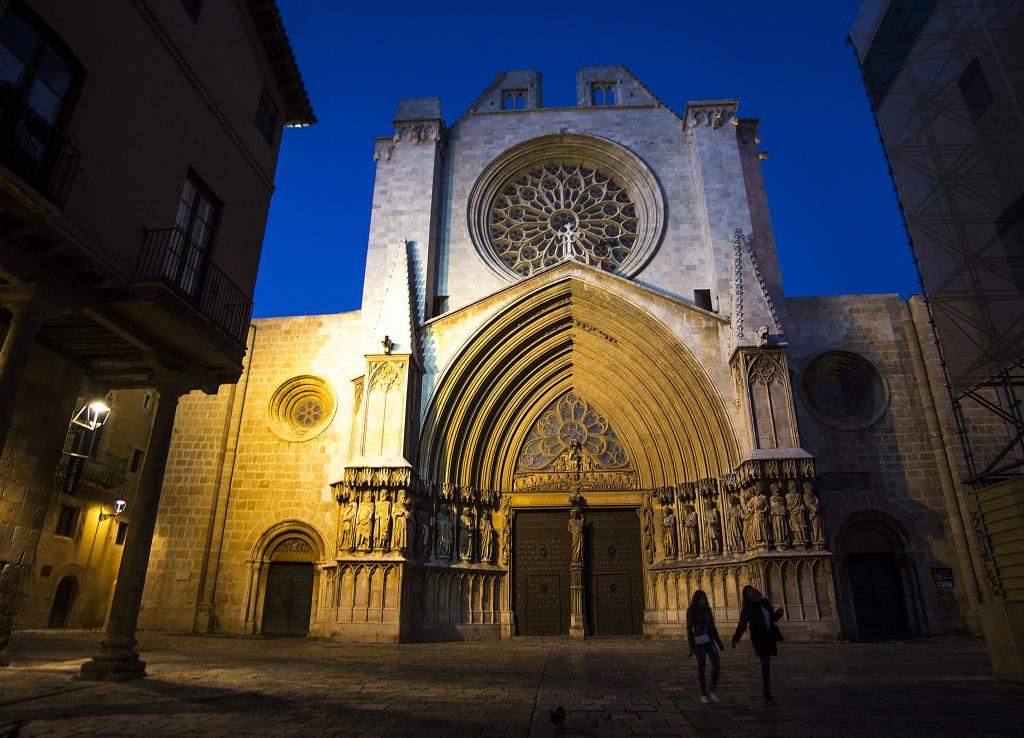
Tarragona's Cathedral is one of the finest examples of the transitional Romanesque-Gothic style in all of Spain. Construction began in 1171 on the site of a Roman temple — itself later used as a mosque during the Moorish period — and continued for three centuries, which is why the building effortlessly combines the massive solidity of Romanesque apses with the soaring lightness of Gothic nave vaulting. The cloister is exceptional: a serene arcaded garden of pointed arches carved with extraordinary detail, including a frieze of cats conducting a mock funeral for a rat — a medieval joke that has endured for eight hundred years. The attached diocesan museum houses one of Catalonia's richest collections of Romanesque art, tapestries, and episcopal treasures. Standing in the main square outside, looking up at the great rose window and the unfinished façade, it's easy to lose track of time entirely.
Roman Circus and Praetorium Tower — Chariots Beneath the City
Tarragona's Roman Circus was one of the largest in the western Roman Empire — at 325 metres long it would have comfortably accommodated chariot races watched by tens of thousands. The extraordinary thing is that much of it still exists, built into the foundations of the medieval city above. A network of vaulted corridors and chambers runs beneath the streets of the old town, accessible through several entry points and connected to the Praetorium Tower — the tall Roman tower that later served as a medieval castle and then as a prison. The Praetorium houses a small museum and affords panoramic views from its upper terrace. Walking through the dimly lit circus vaults, with the weight of two thousand years of city life above you, is one of those genuinely unusual travel experiences that Tarragona alone can offer.
The Rambla Nova and Balcó del Mediterrani
Every great Spanish city has its rambla — the palm-lined promenade designed for the ritual of the paseo — and Tarragona's Rambla Nova is one of the most gracious. Running from the centre of town to the cliff-top Balcó del Mediterrani (Mediterranean Balcony), it is lined with café terraces, flower sellers, and the bronze statue of a local hero, and flanked by the elegant nineteenth-century facades of the prosperous provincial town Tarragona once was. The Balcó itself is a broad terrace at the cliff's edge where the full sweep of the coast opens before you — to the left the amphitheatre below, to the right the working port and long sandy beaches, ahead nothing but sea. It is where locals come to catch the sea breeze in the evening, and it is one of those views that makes the whole journey worthwhile. The Rambla is also the natural hub for a coffee stop between monument visits.
The Walled City and Carrer Major — Medieval Layers Over Roman Bones
Much of Tarragona's unique character comes from the way its medieval city was built directly on, into, and around the Roman infrastructure that preceded it. The city walls that ring the old town incorporate massive Roman blocks at their base — some of the largest Roman stones in Iberia — topped with medieval fortifications added over subsequent centuries. Walking the Passeig Arqueològic, the tree-shaded path that runs along the outer face of these walls, gives a vivid sense of this layering. Within the walls, Carrer Major and the surrounding lanes of the medieval quarter reward slow exploration: Romanesque doorways tucked between modern shopfronts, Roman column drums repurposed as step blocks, and the occasional excavation pit revealing yet another mosaic or foundation below street level. A private guided tour is particularly valuable here for decoding the centuries at your feet.
Catalan Cuisine and the Mercado Central
Tarragona's covered market, the Mercat Central, is one of those beautifully functional spaces that anchors everyday Catalan life. Stalls pile high with sun-ripened tomatoes, locally pressed olive oil, dried peppers and hazelnuts — the raw ingredients of romesco sauce, which was invented here and is available in artisanal jars to take home. Surrounding the market, the lanes of the lower town host an unpretentious restaurant culture that puts the emphasis firmly on product rather than presentation: fresh fish from the day's catch, grilled lamb chops with alioli, and platters of local charcuterie. The city's proximity to the Priorat and Montsant wine regions means the house wine at even an unremarkable café is likely to be something worth paying attention to. For cruise passengers with half a day ashore, a market browse followed by lunch at a terrace restaurant on or near the Rambla makes for a deeply satisfying Catalan experience.
Tarragona travel tips
Start at the Amphitheatre, Then Work Uphill. The Roman Amphitheatre sits at the base of the old town, closest to the waterfront, making it the logical first stop before you climb up through the medieval streets to the Cathedral and Roman Circus. This uphill sequence means you do the steepest walking when you are freshest. In summer, aim to be at the amphitheatre when it opens in the morning, before the sun bears down on the exposed stone seating. The entire circuit of the main Roman monuments and Cathedral can be completed in around three to four hours at a comfortable pace.
Buy a Combined Ticket for the Roman Sites. Tarragona's major Roman monuments — the Amphitheatre, Roman Circus and Praetorium Tower, and the Roman Forum — are managed together and offer a combined ticket that saves money and includes the Passeig Arqueològic wall walk. This is the most economical way to visit all the key UNESCO sites. Tickets can be purchased at any of the entry points. The Cathedral has a separate admission charge and its own opening hours, which are worth checking before your visit as they vary by season.
Wear Proper Footwear for the Old City. The old town of Tarragona is built on a hill and its streets are surfaced with uneven cobblestones and worn stone steps. Comfortable, closed-toe walking shoes with some grip are strongly recommended — sandals or smooth-soled shoes become uncomfortable quickly and can be hazardous on polished stone in the heat. The Passeig Arqueològic wall walk is unpaved in stretches. Anyone with mobility considerations should note that some of the underground Roman circus chambers involve low ceilings and narrow passages.
Save the Balcó del Mediterrani for Late Morning. The Mediterranean Balcony viewpoint at the end of the Rambla Nova faces south and west, which means the light is at its most photogenic in the later part of the morning when the sun has moved off a direct glare. It also gives you a natural midpoint for a coffee break at one of the Rambla's café terraces before deciding how to spend your remaining time. From the Balcó you can survey the whole layout of the port and waterfront below, which helps orient your return walk to the ship.
Try Romesco Sauce at Lunch — and Take Some Home. Romesco is Tarragona's greatest culinary contribution and it appears on menus here in its authentic form: a complex, smoky emulsion of charred tomatoes, ñora peppers, toasted almonds and hazelnuts, with a depth of flavour quite different from the pale commercial versions found elsewhere. Order it alongside grilled fish or as a dipping sauce with bread. Several shops in and around the Mercat Central sell excellent artisanal versions in jars — a compact and entirely worthwhile souvenir. The market is also a good place to pick up local hazelnuts, olive oil, and dried peppers to recreate the sauce at home.
Allow Time for the Cathedral Cloister. Visitors who rush through the Cathedral interior often miss what is arguably its finest element: the twelfth-century Romanesque cloister. A quiet, shaded garden surrounded by double arches of extraordinary carved stonework, it is one of the most beautiful spaces in Catalonia and deserves at least twenty minutes of unhurried attention. The famous carved capital showing cats holding a mock funeral for a rat — a piece of medieval satirical art that has survived eight centuries — is on the north side of the arcade and easy to miss if you are moving quickly. The attached museum is worth a brief visit for its collection of early medieval textiles and Romanesque sculpture.
Port Facts Every Cruiser Needs To Know
Tarragona shore excursion FAQs
The cruise terminal at the Port of Tarragona is approximately 1.5 kilometres from the edge of the old city — around a 20-minute flat walk along the waterfront, following clearly signed pedestrian routes. The main Roman sites begin a further short uphill walk into the old town. Local buses also connect the port area with the city centre for those who prefer not to walk in the heat.
Yes — the Archaeological Ensemble of Tarraco was inscribed on the UNESCO World Heritage list in 2000. The main sites included in the designation are the Roman Amphitheatre, the Roman Circus with the Praetorium Tower, the Roman Forum, the city walls (Passeig Arqueològic), and the Roman Necropolis located a short distance from the old town. Together they represent one of the most complete Roman provincial capitals surviving anywhere in Europe.
The city is very walkable for the most part. The walk from the port to the old city is flat and pleasant. Once in the old town, the main sights are tightly clustered — the amphitheatre, Roman Circus, forum, and Cathedral all sit within ten minutes' walk of each other. The old town itself involves some uphill walking on cobblestone streets, so comfortable shoes are important. Visitors with significant mobility limitations may find certain sites — particularly the underground circus chambers — challenging.
Barcelona is approximately one hour away by regional train and about an hour and a quarter by road. It is technically possible to reach Barcelona from Tarragona on a port call, but doing so meaningfully requires a very long port day — typically eight hours or more — and careful attention to return timings. For most cruise passengers with six to eight hours ashore, spending the time in Tarragona itself will be more rewarding, given the city's remarkable concentration of UNESCO-listed monuments and its excellent food culture.
Tarragona has a classic western Mediterranean climate with long, hot, dry summers and mild winters. Summer (July–August) temperatures regularly reach 35–38°C with intense midday sun, making early-morning sightseeing and shade-seeking essential. Spring (April–June) and autumn (September–October) are ideal, with temperatures between 20–26°C and generally clear skies. Mediterranean breezes from the sea moderate the coastal heat slightly. Rainfall is uncommon from June through September.
Tarragona is the birthplace of romesco sauce — a roasted tomato and nut-based condiment that is central to Catalan coastal cooking. The city is also associated with calçotada, the Catalan tradition of grilling spring onions over open fire and dipping them in romesco (typically a winter and spring event). Fresh seafood dominates restaurant menus, and the surrounding region produces some of Spain's most distinguished red wines from Priorat and Montsant, available in restaurants throughout the old town.
Yes — Tarragona has several beaches within easy reach of both the port and the old city. The Platja del Miracle sits directly below the Roman Amphitheatre cliffs and is the most centrally located. The broader Platja Arrabassada and Platja Llarga extend further along the coast and are accessible by local bus. These are sandy Mediterranean beaches with calm, warm water in summer, making them a convenient option for passengers who want to combine sightseeing with time by the sea.
The core UNESCO Roman sites — Amphitheatre, Roman Circus, Praetorium Tower, and forum — can be visited in approximately two to three hours at a comfortable pace. Adding the Cathedral and its cloister brings the total to around four hours. A full experience including lunch, a stroll along the Rambla Nova, and time to explore the medieval old town lanes typically fills six to seven hours, which aligns well with a typical port day.
For most of the year, tickets to the Roman Amphitheatre, Circus, and other archaeological sites can be purchased on the day at the entry points without advance booking. During peak summer months (July–August) popular time slots can become crowded mid-morning, so arriving early or having a guided excursion with pre-arranged access is advantageous. The Cathedral has its own separate ticketing and slightly variable opening hours depending on the season, so checking ahead is worthwhile.
Tarragona is bilingual: Spanish (Castilian) and Catalan are both widely used in everyday life, and you will encounter both on signage, menus, and in conversation. English is spoken at tourist sites, larger restaurants, and hotels, and to a reasonable extent in shops in the old city. Some smaller local restaurants and market stalls may have limited English, but pointing and basic Spanish phrases go a long way. French and German are also understood in tourist-facing establishments.
Filters
Select a filter to refine results.
Tour Type
Tour Activity
 Cart
Cart
 USD
USD GBP
GBP AUD
AUD EUR
EUR CAD
CAD