



Tours in Trapani


Cruising to Trapani in a group?
Skip the crowded ship excursion bus. One dedicated planner will design a private shore experience around exactly what your group wants — coordinated from first enquiry to the moment you're back on board. More memorable, more flexible, and more affordable than you might expect. Spend less time organising, more time enjoying.
Explore Group Travel →Cruising to Trapani
Trapani occupies a narrow promontory on Sicily's westernmost extremity, pointing toward the horizon like the blade of a sickle — a shape that gave the city its ancient Greek name, Drepanon, and which remains visible in the curve of its harbour today. For cruise passengers, Trapani offers immediate reward: the terminal sits within easy walking distance of a pedestrianised historic centre layered with Baroque churches, Norman towers, and the vivid everyday life of a working Sicilian port. Beyond the town itself, the surrounding landscape opens into some of the most extraordinary scenery in the western Mediterranean.
The sea around Trapani has defined its identity for three thousand years. Phoenicians, Greeks, Romans, Vandals, Arabs, Normans, and Spanish have each left their cultural sediment in the architecture, language, and food of this corner of Sicily. Most distinctively, centuries of Arab rule introduced couscous to the local kitchen, making western Sicily one of the few places in Italy where the dish is not a recent import but a deeply embedded tradition. The couscous served in Trapani — with fish broth and freshly caught seafood — is unlike anything served under the same name anywhere else in Europe.
The ancient saltpans stretching south from Trapani toward Marsala are among Sicily's most recognisable images. The Stagnone di Marsala nature reserve's restored windmills, shallow brine ponds, and white salt mounds have been photographed by every travel magazine in existence, and at sunset the light transforms the water into a sequence of extraordinary pinks, ambers, and golds. The offshore Egadi Islands, reachable by hydrofoil in minutes, offer crystal-clear water, Bronze Age cave paintings, and the submerged wreckage of one of antiquity's greatest naval battles.
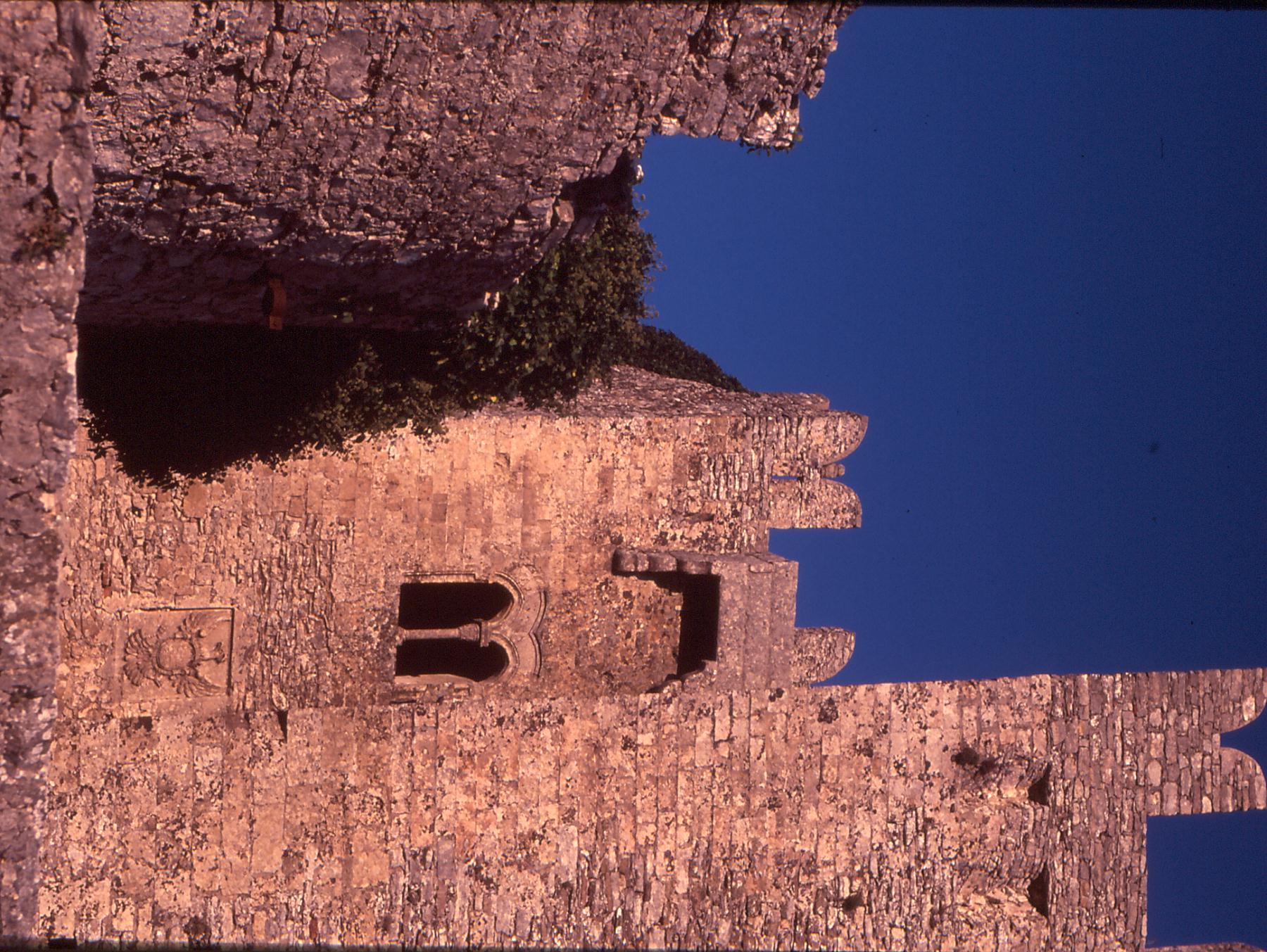
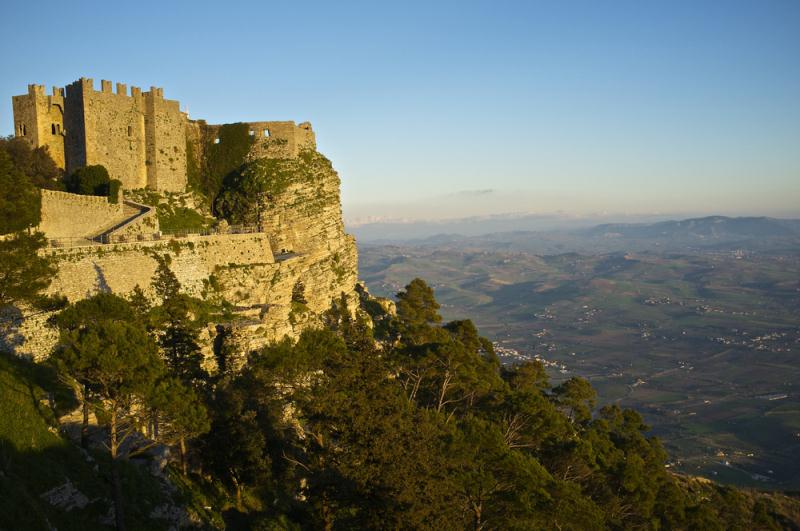
A short ascent above the port — by bus, cable car, or private transport — leads to Erice, one of Sicily's most compelling medieval hill towns. At nearly 750 metres, Erice surveys the Sicilian coast and, on clear days, the coast of Tunisia across the water. Its medieval walls, cobbled lanes, Norman castle, and celebrated pastry tradition have made it one of western Sicily's most distinctive destinations. Combined with the serene grandeur of Segesta's Doric temple across the valley, the area around Trapani offers some of the most memorable excursions available from any Sicilian cruise port.
Top things to do in Trapani on a cruise stopover
Medieval Erice: The Mountain Town Above the Sea
Perched at 751 metres on Monte San Giuliano, Erice is one of Sicily's most atmospheric medieval hill towns and one of the most compelling reasons to call at Trapani. Founded by the ancient Elymians — a pre-Greek Sicilian people of uncertain origin — and subsequently venerated by Phoenicians, Carthaginians, Greeks, and Romans for a celebrated hilltop temple to the goddess of love, the town carries its layers of history with remarkable coherence. Its medieval walls, intact over much of their circuit, enclose a labyrinth of cobbled lanes, Baroque churches, small piazze, and stone houses whose construction has barely changed in centuries. The Norman castle at the summit offers views extending across the salt flats below, the Egadi Islands on the horizon, and on exceptionally clear days the coastline of Tunisia across the Strait of Sicily. The town's traditional pastry shops — producing almond-based sweets, frutta di martorana marzipan, and cassatelle — are among the finest in western Sicily, and a morning spent in Erice before the day-trip coaches arrive from Palermo is one of the quietest and most rewarding experiences this part of the island offers. Venture Ashore's private half-day excursion makes the most of the timing advantage.
Segesta: Ancient Greek Temple in a Timeless Valley
The Doric temple at Segesta rises from a hillside above a wide, dry valley in the heart of western Sicily with an austerity that many visitors find more affecting than grander, more famous ancient sites. Built around 420–416 BC by the Elymians, who adopted Greek architectural forms while maintaining their distinct culture, the temple was never completed — the column drums retain their lifting bosses, the floor was never laid, the cella was never built. This incompleteness is oddly moving; it is a monument frozen in the act of becoming. Structurally, however, it has survived over two thousand years in extraordinary condition, its thirty-six columns still standing around a roofless inner void that frames the sky. On the adjacent hilltop, a Greek theatre carved into the rock in the 3rd century BC looks out across a valley of olive groves and limestone hills with views that have changed little since antiquity; in summer the theatre hosts classical performances. Segesta lies approximately 40 kilometres east of Trapani and pairs naturally with Erice in a full-day private excursion offered by Venture Ashore, with a traditional lunch included between the two sites.
Trapani's Historic Centre and Fish Market
Trapani's old town occupies the narrow peninsula projecting west into the Tyrrhenian Sea and delivers the layered architectural richness that characterises the best-preserved Sicilian city centres. The Corso Vittorio Emanuele — the main pedestrian artery — leads past Baroque palazzi, the 17th-century Cattedrale di San Lorenzo, and a series of side streets revealing Norman archways, Spanish-era loggie, and Arab-influenced urban geometry. The Torre di Ligny at the peninsula's westernmost tip, built by the Spanish in 1671, frames the sea view that has welcomed sailors into this harbour for three millennia. The fish market operating each morning beside the harbour is one of the most atmospheric in Sicily: swordfish, tuna, dentice, and mountains of shellfish are displayed amid a din of vendors' calls and the salt smell of the sea. It is at its peak between 7 and 10am and essentially winds down by midday — arriving early from the ship secures the full spectacle.
The Trapani Salt Flats and Stagnone Nature Reserve
The saltpans stretching south from Trapani along the coast toward Marsala are among the most distinctive and photogenic landscapes in all of Sicily. Worked continuously since Phoenician times, the shallow brine ponds divided by narrow paths and ancient clay channels are managed within the Stagnone di Marsala nature reserve — a protected wetland that serves as a vital staging post for flamingos, stilts, avocets, and other migratory birds on the Africa-Europe flyway. The restored stone windmills, once used to power the pumps that moved salt water between pans, are the reserve's most visible symbols and among the most photographed elements of the Sicilian landscape. The Ettore e Infersa salt museum at the reserve's edge documents the traditional production methods still practiced here, including hand harvesting with rakes and the seasonal flooding and draining of pans. The combination of still water, white salt mounds, and ancient windmills at golden hour produces extraordinary colour — the late afternoon light turns the ponds shades of pink, amber, and deep red that no photograph fully captures.
The Egadi Islands
The three islands of the Egadi archipelago — Favignana, Levanzo, and the more remote Marettimo — lie within 15 kilometres of Trapani's port and are served by regular hydrofoil services departing from the harbour. Favignana, the largest and closest, is famous as the historic centre of Sicily's tuna fishing industry; the annual mattanza — a ritualistic tuna hunt of Phoenician origin — is now largely discontinued, but the island's extraordinary tuna museum in the former Florio cannery documents its centuries of practice. The sea around all three islands is celebrated even by Sicilian standards for its clarity and colour, and the waters here hold one of the Mediterranean's most significant underwater archaeological sites: the battle wreck field from the 241 BC Battle of the Egadi Islands, where the Roman fleet decisively defeated Carthage to end the First Punic War, yielding warship rams and hundreds of amphorae still being excavated by marine archaeologists. Levanzo's Grotta del Genovese contains Palaeolithic and Neolithic cave paintings among the most important in the western Mediterranean.
Trapani's Arab-Influenced Culinary Tradition
Western Sicily's food culture is unlike anything else in Italy, and Trapani is the epicentre of a culinary tradition that traces a direct and unbroken line to the Arab settlers who ruled this part of the island between the 9th and 11th centuries. Couscous alla trapanese — made with semolina, served with a slow-cooked fish broth of mixed Mediterranean seafood, and topped with almonds — is not an adaptation or fusion experiment but the authentic local tradition of a city whose geography has always pointed toward North Africa as much as toward the Italian mainland. Busiate pasta with pesto trapanese (raw tomato, basil, almond, and pecorino) is the city's other emblematic dish. The almond tree, introduced by Arab agronomists centuries ago, runs through the entire pastry tradition from marzipan fruits to the cassatelle of Erice. A meal in a traditional Trapanese trattoria — particularly one in the old town's back streets rather than on the tourist-facing waterfront — provides one of the most distinctive and culturally specific culinary experiences available at any Sicilian cruise port.
Trapani travel tips
Time the salt flats for the late afternoon. The Trapani salt flats along the Stagnone coast are most visually extraordinary in the hour or two before sunset, when low-angled light transforms the shallow brine ponds into mirrors of gold and pink. If your ship's schedule allows, reserving this walk or drive for the final hours ashore maximises the photographic and atmospheric reward. The path along the pans is flat, straightforward, and easily combined with a stop at the Ettore e Infersa windmill and salt museum.
Pack a layer for Erice regardless of the season. Despite Trapani's warm coastal climate, Erice at nearly 750 metres sits in a frequently different micro-climate. The hilltop is often cooler by 5-10 degrees compared to the port below, and cloud and mist can settle over the town even when the coast is sunny and clear. A light jacket or layer is advisable at any time of year. In autumn and winter, conditions on the mountain can be dramatically colder than expected by visitors arriving from a warm ship.
Carry small Euro notes for local purchases. While restaurants and shops in Trapani's historic centre generally accept cards, many of the traditional food stalls, market vendors, small bars, and pasticcerie operate on a cash-preferred or cash-only basis. Having small Euro notes (€5-€20) means being able to stop spontaneously at a street food counter or buy pastries from a traditional shop without inconvenience. Market prices are almost always cash transactions.
Arrive at the fish market early. Trapani's daily fish market — one of the most atmospheric in Sicily — operates beside the harbour from early morning and is at its most vibrant and fully stocked between 7am and 10am. It winds down significantly by midday. Passengers on ships with an early arrival have a genuine advantage here: the spectacle of fresh swordfish, tuna, and shellfish being sold in the noise and colour of the morning port is one of the most authentic experiences the city offers, and largely invisible to those who arrive mid-morning.
Order the couscous with fish, not pasta. Trapani is one of the very few places in Italy where couscous is genuinely traditional rather than a recent import, and eating it here in a local trattoria is a direct encounter with the city's Arab culinary history. Ask specifically for cous cous alla trapanese (with fish broth and mixed seafood), served warm, rather than the pasta options that dominate most Italian menus. The best versions are slow-cooked and deeply flavoured — it is worth seeking a traditional trattoria in the back streets of the old town over restaurants facing the tourist waterfront.
Confirm cable car operation before planning around it. The cable car (funivia) connecting the southern edge of Trapani with Erice has historically been subject to closures for maintenance and technical reasons. Before structuring a self-guided day around it as the primary means of ascent, confirm that it is operating on your port day — the local tourist office or a quick check of current information sources will confirm status. The alternative bus service from Trapani's main bus station is reliable but takes longer and operates to a fixed schedule. Organised excursions typically use road transport and are unaffected by cable car availability.
Port Facts Every Cruiser Needs To Know
Trapani shore excursion FAQs
Trapani's cruise terminal is immediately adjacent to the historic centre. The main pedestrian street, Corso Vittorio Emanuele, is within a 10-15 minute walk of the port gates. The city's compact shape means most sights in the old town are reachable entirely on foot from the ship.
The two most popular excursions from Trapani are Erice — the medieval hill town approximately 15 km away at nearly 750 metres altitude — and Segesta, home to one of the best-preserved ancient Greek temples in the world, around 40 km to the east. Both can be combined in a full-day private tour with lunch. Closer to port, the Stagnone salt flats and the Egadi Islands (by hydrofoil) are accessible within shorter timeframes. Venture Ashore offers private excursions to Erice and to the combined Erice-Segesta itinerary.
Couscous is genuinely traditional in western Sicily — not a recent import — as a direct legacy of Arab rule over this part of the island between the 9th and 11th centuries. Arab settlers introduced the dish, the semolina preparation techniques, and many of the spice and almond traditions that still characterise western Sicilian cooking. The Trapanese version, served with a rich fish and shellfish broth, is quite distinct from North African preparations and is considered one of the defining dishes of the local culinary identity. A couscous festival in nearby San Vito lo Capo in September celebrates this heritage annually.
Erice is a remarkably well-preserved medieval hill town with a history stretching back to the ancient Elymians, occupied and venerated successively by Phoenicians, Greeks, Romans, Arabs, Normans, and Spanish. Its medieval walls, cobbled lanes, Norman castle, and small piazze create an atmosphere unlike the typical Sicilian city. Views from the battlements extend across the salt flats, the Egadi Islands, and toward Tunisia. The town's traditional pastry shops — known particularly for almond-based sweets — are among the finest in Sicily. The combination of history, atmosphere, and extraordinary views makes it consistently one of western Sicily's most memorable destinations.
The Egadi Islands are reachable by hydrofoil from Trapani in 20-30 minutes (to Favignana, the nearest island). A focused visit to Favignana — exploring the tuna museum, beaches, and village — is feasible as a half-day excursion. However, combining an island visit with inland excursions such as Erice or Segesta on the same day is generally not practical within a standard port window. If the islands are the priority, plan accordingly and forgo the inland options for that day.
The Doric temple at Segesta, built around 420-416 BC by the Elymians, is one of the best-preserved ancient Greek temples anywhere in the Mediterranean world — remarkable for its structural completeness despite having been deliberately left unfinished. Its isolated setting in a wide valley of olive trees and limestone hills, with no other modern development visible, creates a dramatic and contemplative encounter with antiquity. The adjacent Greek theatre carved into the hilltop offers panoramic views across the valley and hosts occasional summer performances.
The saltpans of the Stagnone di Marsala nature reserve are among the most distinctive and photographed landscapes in Sicily. Managed as a protected wetland, the ancient brine ponds and restored windmills have been working continuously since Phoenician times. The area is particularly beautiful in the late afternoon and at sunset, when low light turns the shallow water extraordinary colours. It is also an important habitat for flamingos and migratory birds. The Ettore e Infersa salt museum at the reserve's edge offers context for the traditional production methods still practiced here.
Erice is accessible from Trapani by cable car (funivia) from a station south of the city centre, by local bus from Trapani's main bus terminal, or by road. The cable car offers spectacular views on the ascent and is the most enjoyable option when operating, but it has experienced intermittent closures for maintenance — confirming operation before your visit is recommended. Organised excursions from Venture Ashore use road transport directly to Erice and are unaffected by cable car availability.
Yes. Trapani's pedestrianised historic centre is compact, flat, and well-suited to independent exploration on foot. The main Corso Vittorio Emanuele and its surrounding streets are walkable from the port within 15 minutes, and most of the historic churches, the market area, and the Torre di Ligny at the western tip of the peninsula are within a comfortable strolling distance of each other. Language is the main practical challenge for independent visitors, as English is less widely spoken outside tourist-facing businesses than in some other Italian ports.
April to June and September to October are the most universally recommended seasons — warm, clear, and with comfortable conditions for walking and outdoor sightseeing. July and August bring intense heat and higher visitor numbers at popular sites, though the sea is at its most inviting for swimming around the Egadi Islands. Winter months (November to March) are quiet, mild, and often offer exceptional atmospheric light for photography at the salt flats, with far fewer crowds at Erice and Segesta.
Filters
Select a filter to refine results.
Tour Type
Tour Activity
 Cart
Cart
 USD
USD GBP
GBP AUD
AUD EUR
EUR CAD
CAD