



Tours in Vigo


Cruising to Vigo in a group?
Skip the crowded ship excursion bus. One dedicated planner will design a private shore experience around exactly what your group wants — coordinated from first enquiry to the moment you're back on board. More memorable, more flexible, and more affordable than you might expect. Spend less time organising, more time enjoying.
Explore Group Travel →Cruising to Vigo
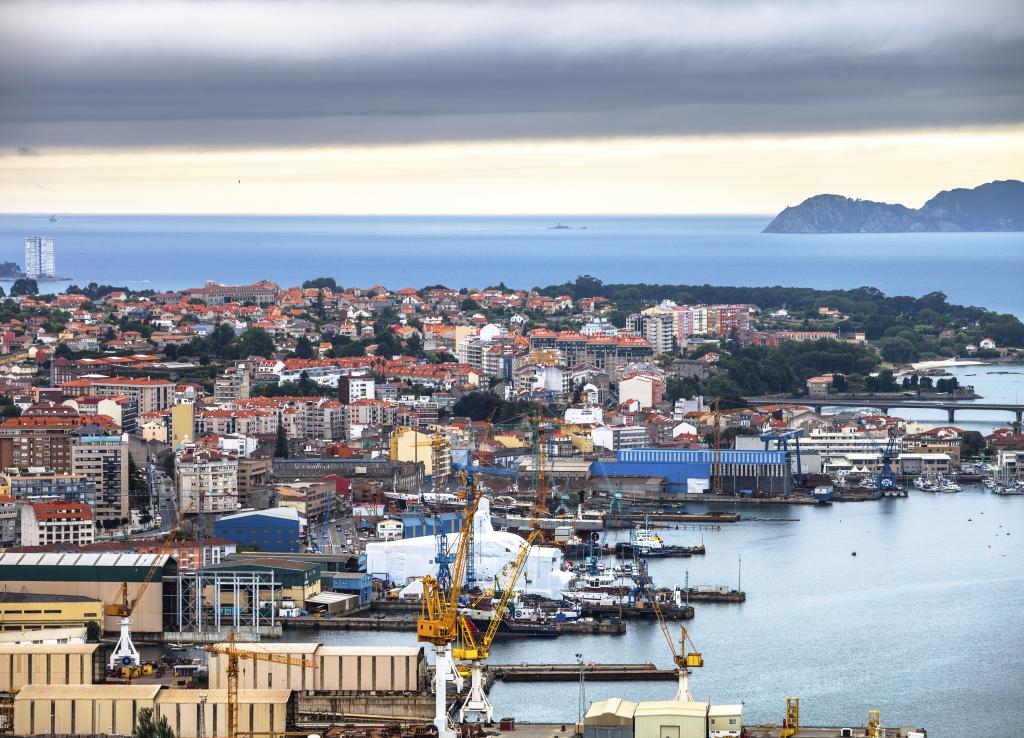
Vigo occupies a dramatic position on the southern shore of the Ria de Vigo, one of the Rias Baixas — four great coastal inlets that define the Atlantic face of Galicia in northwestern Spain. With a population approaching 300,000, it is Galicia's largest city, a fact that surprises visitors expecting a modest fishing port. What they find instead is a dense, confident urban centre with exceptional restaurants, a fully functioning commercial port, and a city that has evolved on its own terms rather than for the convenience of visitors.
The fishing industry remains central to Vigo's identity even as the city has diversified. Its fish auction handles more tonnage than almost any other port in Europe, and the connection between the sea and the table is visceral and immediate. The outdoor seafood market known as the Mercado da Pedra — sometimes called the oyster women's market after the mariscadoras who have sold shellfish there for generations — sits on the city waterfront and operates most mornings. Eating fresh oysters and percebes (goose barnacles) here, with a glass of local Albariño wine, is one of the genuinely distinctive pleasures of any European port call.
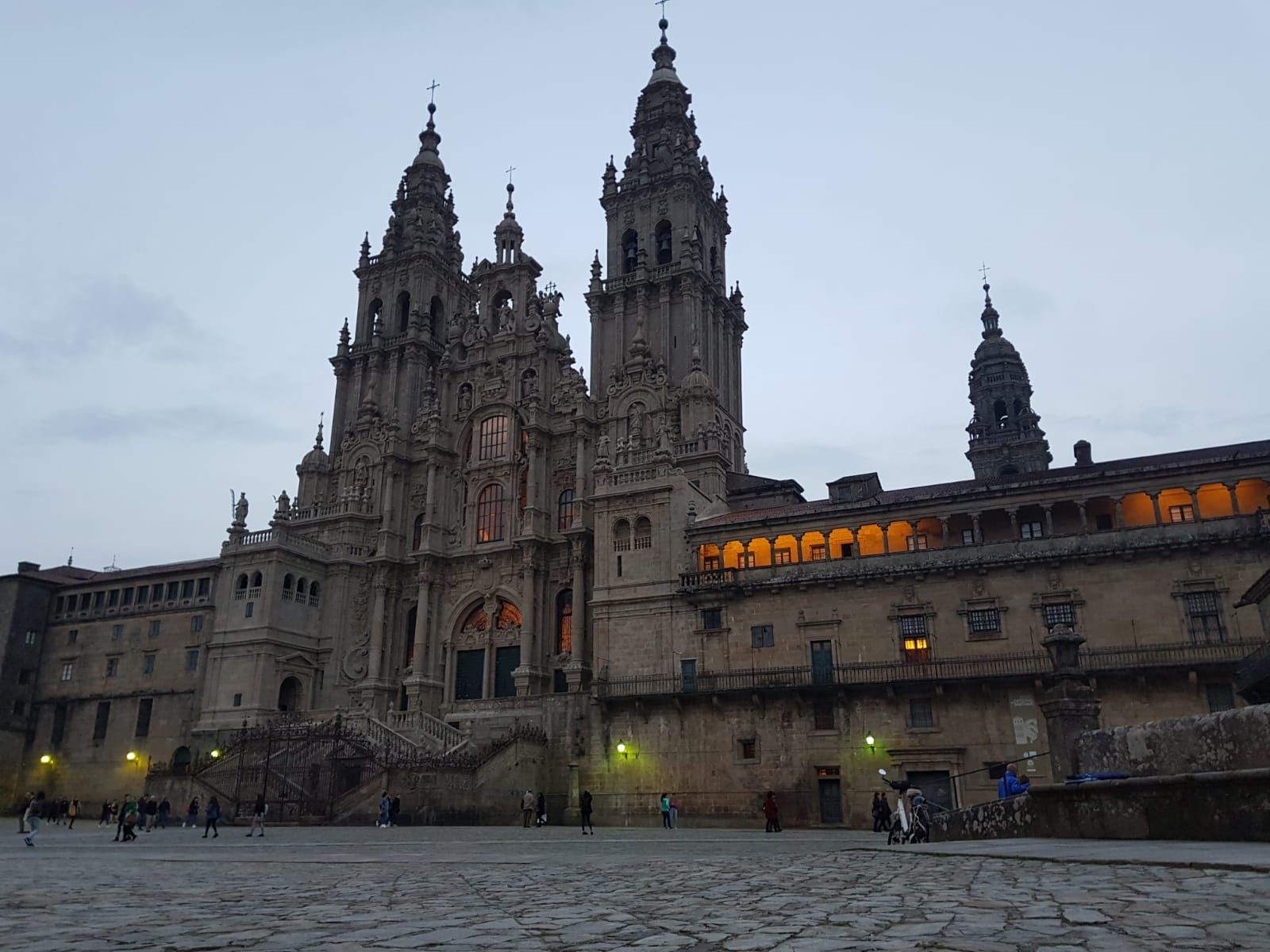
Vigo's most significant advantage for cruise passengers is its proximity to Santiago de Compostela, one of the most important pilgrimage destinations in the Christian world and one of the great cities of medieval architecture. The cathedral at Santiago — terminus of the Camino de Santiago pilgrimage routes that crisscross Europe — dominates the Praza do Obradoiro, a baroque square of breathtaking scale. The journey from Vigo takes approximately one hour through the green hills of Galicia. The nearby coastal town of Bayona, where the caravel Pinta arrived in 1493 to bring Europe its first news of Columbus's discovery, adds further historical depth to an already rich regional picture.
Galicia's culture sits at an angle to mainstream Spanish identity — closer in language to Portugal, strongly Celtic in musical heritage with the gaita bagpipe heard at festivals year-round, and defined by a fierce regional pride that extends to food, wine, and the weather. The Albariño white wine from the Rias Baixas denomination is produced across the hills surrounding Vigo, and the region's seafood — percebes, navajas (razor clams), and centolla (spider crab) — represents a compelling argument that Galicia rivals anywhere in the world for the quality of what comes from its waters.
Top things to do in Vigo on a cruise stopover
Santiago de Compostela
One hour from Vigo by road lies one of Europe's most spiritually charged destinations. Santiago de Compostela is the cathedral city and terminus of the Camino pilgrimage routes that have drawn travellers from across the continent since the medieval period. The cathedral, built over the supposed tomb of St. James, is a masterwork of Romanesque architecture with a Baroque facade of extraordinary drama, framing the Praza do Obradoiro — a square widely considered among the finest in Europe. Pilgrims completing the Camino arrive daily, and the atmosphere carries a weight that few purely tourist destinations can match. Venture Ashore offers both a shared cultural journey and a private excursion to Santiago from Vigo.
Bayona and the Monterreal Castle
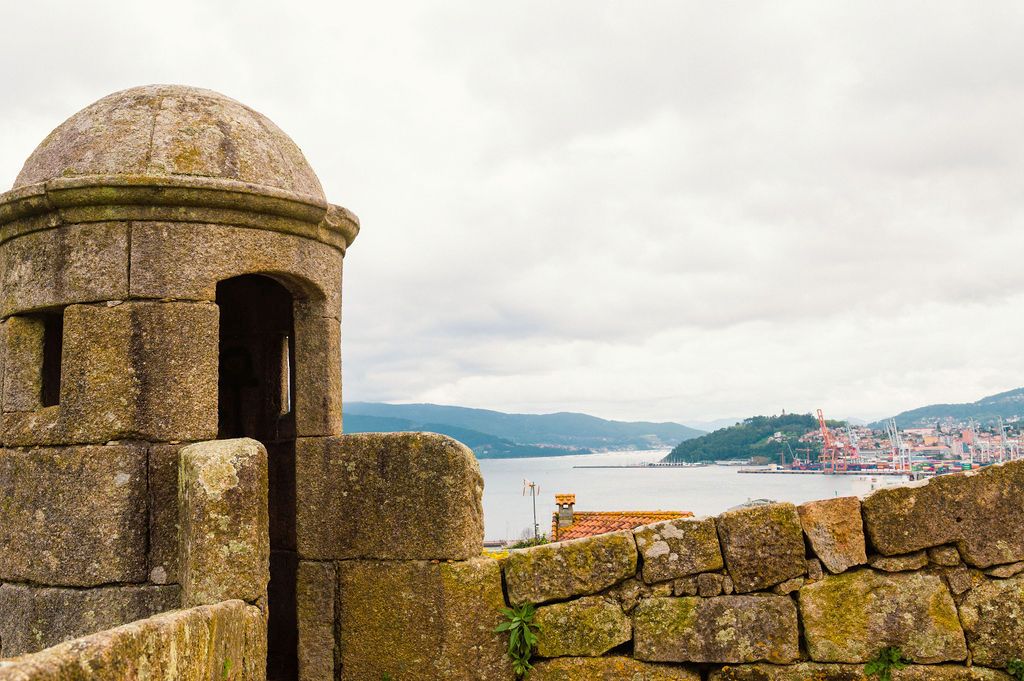
Thirty kilometres south of Vigo, the medieval port of Bayona carries a remarkable distinction: on 1 March 1493, the caravel Pinta sailed into this harbour with the crew members who would bring Europe its first news of Columbus's discovery of the Americas. The Monterreal Castle, a medieval fortress connected to the mainland by a narrow causeway and now housing a state parador hotel, sits at the entrance to the bay with panoramic views over the Atlantic and the Cies Islands. The old town is small, genuinely charming, and largely untouched by mass tourism — a place of considerable historical gravity that rewards relaxed exploration.
The Mercado da Pedra and Waterfront Seafood
Vigo's outdoor seafood market is one of the most authentic market experiences in Spain. Operated by the city's mariscadoras — female shellfish vendors whose presence spans generations — the Mercado da Pedra sells oysters, mussels, percebes, and various shellfish directly from waterfront stalls, with outdoor tables available for eating what you buy alongside bread and local white wine. This is not a tourist construction; it is a working market that has operated continuously for generations, and eating here over a glass of Albariño represents one of the genuinely distinctive pleasures of calling at Vigo.
Vigo's Maritime Soul and Heritage
Venture Ashore's maritime walking tour explores Vigo's deep connection to the Atlantic — from the fishing fleets that make it one of Europe's most significant fishing ports to the cultural memory embedded in the waterfront neighbourhoods. The Berbes district, historically the fishermen's quarter, retains a working-port character that sets it apart from more polished seafront destinations elsewhere on the Iberian coast. The city's identity has been shaped by the sea in every sense: its economy, its cuisine, its architecture, and the particular resilience of its people. This two-hour tour provides an ideal introduction to a city rarely fully appreciated from the quayside alone.
The Casco Vello (Old Quarter)
Vigo's historic old quarter climbs the hillside above the port in a tangle of narrow streets, stone stairways, and small squares that preserve the essential character of a pre-industrial city. The Rua das Ostras (Oyster Street), the church of Santa Maria, and the Praza da Constitucion anchor the neighbourhood, which has undergone gradual renovation without losing its authenticity. Traditional tapas bars occupy ground floors alongside independent shops and the remains of old city walls. The Casco Vello is best explored on foot at a leisurely pace — allow at least an hour to absorb its particular atmosphere.
The Rias Baixas, Cies Islands, and Albariño Country
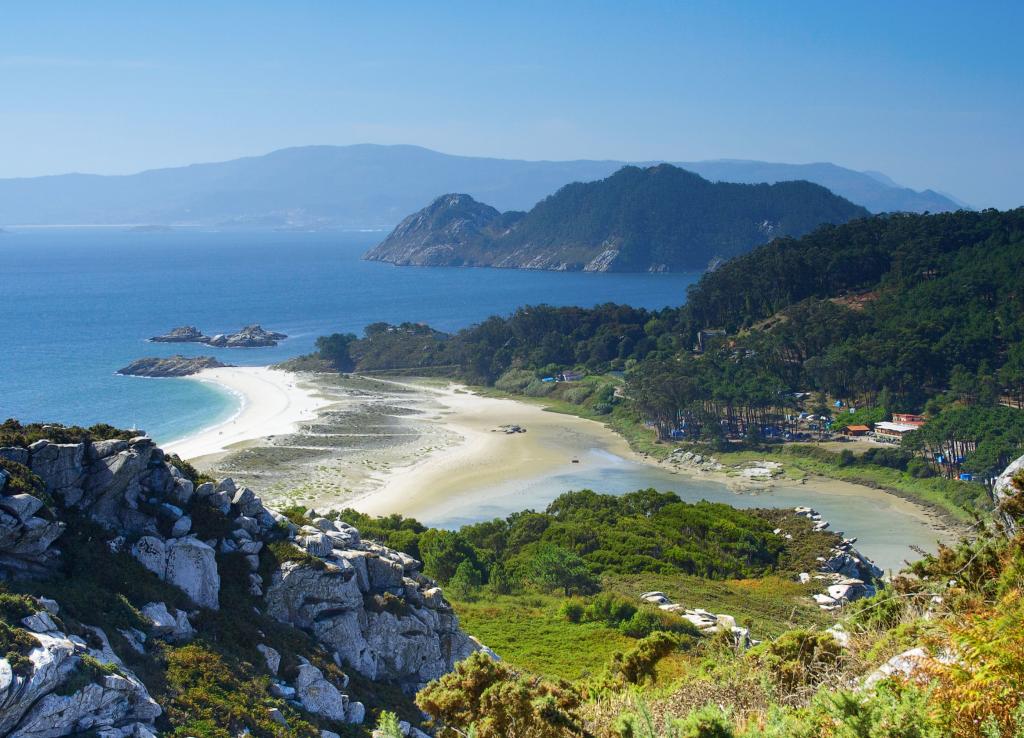
The Ria de Vigo opens onto the Atlantic through a gap guarded by the Cies Islands — a protected natural park of exceptional beach environment, often cited as among the most beautiful in Europe. From the city waterfront, the silhouette of the Cies is always visible on the horizon. The surrounding Rias Baixas region produces the Albariño white wine in vineyards spread across granite hillsides — Atlantic air, thin soils, and generous rainfall creating conditions for one of Spain's most distinctive white varieties. The combination of extraordinary seafood, excellent wine, and dramatic coastal scenery makes Galicia a destination that rewards those who look beyond the immediate city.
Vigo travel tips
Head Directly to the Seafood Market. The Mercado da Pedra operates from early morning and the freshest shellfish is available in the first hours. This is one of the most authentic and affordable food experiences at any European cruise port — arrive before noon to get the best selection. Eating shellfish at the outdoor stalls with a glass of Albariño requires minimal Spanish and no advance booking. The mariscadoras understand pointing, and selecting a combination of oysters and percebes to share is part of the experience.
Allow a Full Day for Santiago de Compostela. Santiago de Compostela is approximately one hour each way from Vigo, meaning a minimum of two hours of travel is required before allowing meaningful time in the city. The cathedral interior, the Praza do Obradoiro, and the surrounding old town all deserve unhurried exploration — plan for at least 2–3 hours in Santiago itself. Note that the cathedral interior may be closed during services at certain hours, and the famous Botafumeiro incense ceremony only takes place during designated pilgrim Masses rather than on a fixed public schedule.
Pack for Atlantic Weather. Galicia's weather is famously changeable. Even a warm, sunny morning in Vigo can turn breezy and overcast by afternoon, and rain is genuinely possible at any time of year. A packable waterproof jacket adds virtually nothing to what you carry and removes the risk of a shower affecting your experience on the waterfront, in Bayona, or at the outdoor market. Locals dress in layers as a matter of habit rather than pessimism — following their lead is sound advice at any time of year.
Try a Few Words of Galician. Galician (Galego) is a co-official language in Galicia and is distinct from Castilian Spanish — closer, in fact, to Portuguese. Locals appreciate the distinction and respond warmly to visitors who acknowledge it. 'Bos dias' (good morning) and 'Grazas' (thank you) in Galician will be appreciated and mark you immediately as someone who has paid attention. In traditional bars and at the seafood market, some vendors communicate primarily in Galician rather than Spanish.
Plan Around the Midday Break. Like most Spanish cities, Vigo observes a midday break with smaller shops closing from around 2pm to 5pm. The seafood market winds down around noon. Plan waterfront and market exploration for the morning, and use early afternoon for lunch at one of the old quarter's restaurants — traditional Galician establishments typically serve through the afternoon and offer excellent-value set menus (menu del dia) featuring seafood dishes that would cost significantly more when ordered a la carte.
Wander the Casco Vello Without a Fixed Route. Vigo's old quarter is small enough that getting temporarily lost in it is no problem — the waterfront is always findable within a few minutes regardless of direction. The pleasure of the Casco Vello lies in unplanned encounters: a bar that has occupied the same corner for decades, a bakery producing local pastries, a viewpoint over the ria that appears without warning. Allocate at least an hour of genuinely unstructured walking and treat any discovery as a bonus rather than a target to be reached.
Port Facts Every Cruiser Needs To Know
Vigo shore excursion FAQs
The cruise terminal in Vigo sits directly on the city waterfront in the heart of the centre. The main seafood market, the beginning of the old quarter, and the central commercial district are all within 5–10 minutes' walk of the terminal exit. Vigo is one of the few European cruise ports where passengers can step off the ship and be in the middle of a genuinely functioning city almost immediately, with no transport required to reach the main attractions.
Yes — Santiago de Compostela is approximately one hour from Vigo by road and is an extremely achievable day excursion. Venture Ashore offers both a shared group cultural journey and a private dedicated tour to Santiago, both designed to make excellent use of the available time. The journey passes through the green hills of Galicia, and the arrival at the Praza do Obradoiro creates a real impression regardless of whether visitors approach it with any particular religious interest. Allow at least 2–3 hours in the city to experience it properly.
Bayona (Baiona in Galician) holds a unique place in European history: on 1 March 1493, the caravel Pinta sailed into this harbour carrying the first crew members to bring Europe news of Columbus's discovery of the Americas. The Monterreal Castle on the headland, now housing a state parador hotel, is medieval in origin and offers extraordinary views over the Atlantic from its walkable walls. The town itself is small and charming, largely uncommercialised compared to better-known Spanish coastal destinations, and historically significant far beyond its modest size.
Vigo is one of the finest places in Europe to eat fresh shellfish. Percebes (goose barnacles, boiled in seawater) are Galicia's most prized and unusual delicacy — unique to the Galician and northern Portuguese coast and a genuine local speciality. Fresh oysters and navajas (razor clams) are served at the Mercado da Pedra waterfront market. Pulpo a feira — Galician octopus with olive oil and paprika, served on a wooden plate — is the definitive regional dish and is best eaten in a traditional pulperia (octopus restaurant).
Albariño is the signature white wine of the Rias Baixas denomination, produced in vineyards that surround Vigo and extend across the neighbouring Galician countryside. It is crisp, aromatic, and slightly mineral, with a natural affinity for the region's seafood — one of the great food-and-wine combinations in Spanish cuisine. Albariño is served at virtually every restaurant and bar in Vigo. Look for 'Rias Baixas' on the label to ensure you are drinking the genuinely local product rather than a blended wine from elsewhere in Spain.
English is spoken in hotels, at the cruise terminal, and in tourism-facing businesses throughout Vigo. In traditional markets, smaller tapas bars, and local eateries, it is less commonly available. The seafood market operates primarily in Galician and Spanish. Basic phrases in Spanish — or even a few words of Galician — go a long way and are received warmly. Pointing at items in the market or at neighbouring diners' dishes remains a universally understood and entirely practical communication method.
The Cies Islands form a protected natural park at the mouth of the Ria de Vigo, famous for pristine white-sand beaches and outstanding marine biodiversity — sometimes described as among the most beautiful beaches in Europe. Access is by ferry from Vigo's port, but the islands are subject to a strict daily visitor limit to protect the environment. A visit requires a minimum of 4–5 hours including the ferry crossing and time ashore, making it a full excursion commitment. Check ferry schedules and daily entry authorisation availability well in advance, as allocation can be limited particularly in summer.
Vigo is excellent for independent walking. The terminal's central location means the waterfront, seafood market, old quarter, and shopping district are all accessible on foot within 10–15 minutes of disembarkation. The Casco Vello climbs a hillside with some steep sections, but gradients are manageable for most visitors. A self-guided morning covering the waterfront, the Mercado da Pedra, the Casco Vello, and a long seafood lunch covers Vigo's main highlights completely without any transport needed.
The Camino de Santiago — the ancient network of pilgrimage routes leading to the cathedral at Santiago de Compostela — has branches that pass through the Vigo region. The Camino Portugues, which begins in Lisbon and travels north through Portugal and Galicia, crosses the Ria de Vigo near the town of Redondela. Sections of the coastal branch pass through countryside accessible from Vigo. For visitors curious about the pilgrimage experience, Santiago de Compostela itself — the endpoint of all Camino routes — is readily accessible as a day excursion, and arriving at the cathedral gives a vivid sense of what pilgrims complete there daily.
The cathedral at Santiago de Compostela is free to enter; specific areas including the museum, roof terrace, and crypt carry separate admission charges. The Monterreal Castle grounds in Bayona are freely accessible — the walls can be walked without charge. Vigo's city attractions including the Mercado da Pedra, the waterfront, and the Casco Vello are all free to explore. The Cies Islands require a ferry ticket and a pre-booked visitor authorisation permit during peak season, with limited daily allocations available.
Filters
Select a filter to refine results.
Tour Type
Tour Activity
 Cart
Cart
 USD
USD GBP
GBP AUD
AUD EUR
EUR CAD
CAD