



Tours in Visby


Cruising to Visby in a group?
Skip the crowded ship excursion bus. One dedicated planner will design a private shore experience around exactly what your group wants — coordinated from first enquiry to the moment you're back on board. More memorable, more flexible, and more affordable than you might expect. Spend less time organising, more time enjoying.
Explore Group Travel →Cruising to Visby
Few cities in Northern Europe stop visitors in their tracks quite like Visby. The capital of Gotland — a large Swedish island sitting in the middle of the Baltic Sea — it is enclosed by a ring of thirteenth-century limestone walls so remarkably preserved that walking their circuit feels less like visiting a heritage site and more like stepping inside one. More than three kilometers of curtain wall, punctuated by 44 towers, surround a town of cobbled lanes, medieval merchant houses, and the hauntingly beautiful ruins of twelve Romanesque and Gothic churches, most left as open-air shells after a fire in the sixteenth century.
Visby's story is one of extraordinary commercial ambition. During the twelfth and thirteenth centuries, this unlikely island outpost was among the most powerful trading cities in northern Europe — a key node in the Hanseatic League's network that linked Scandinavia, Germany, Russia, and the Baltic states in a web of wool, fur, amber, and silver. The wealth of that era built the walls, the churches, and the elaborately carved merchant halls whose foundations still shape the street plan. The city's decline was as swift as its rise, but it left behind an urban fabric of rare completeness.
Beyond the walls, the island of Gotland has its own distinct character — a flat limestone plateau fringed with sea stacks called raukar, wildflower meadows, and a coastline of secluded coves. The west coast carries the island's oldest history, with Bronze Age burial sites, medieval churches in almost every village, and a raw Baltic light that photographers find irresistible. The island has been a Swedish summer destination for generations, which means the infrastructure for visitors is excellent while the authentic character remains intact.
For cruise passengers, Visby is the rare combination of a port where the destination begins the moment the gangway lands and where the most rewarding experiences require nothing more than a comfortable pair of shoes and a willingness to wander. VA's guided walking tours and west coast excursion add local knowledge and historical depth to what is already one of the most photogenic townscapes in Scandinavia.
Top things to do in Visby on a cruise stopover
The Medieval City Walls: A Ring of Limestone Grandeur
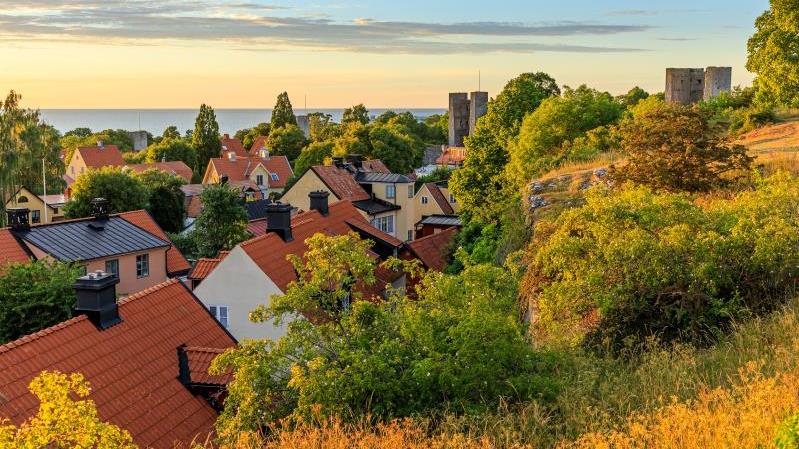
Visby's defining physical feature is its thirteenth-century defensive wall — 3.6 kilometers of limestone curtain punctuated by 44 towers and three original gates, encircling the medieval town in a state of preservation that has no peer in Scandinavia and few rivals in northern Europe. The walls were built between 1200 and 1280 at the height of Visby's Hanseatic trading power, and their completeness reflects both the quality of the original construction and the remarkable stability of Gotland's limestone geology. Walking the wall circuit reveals ever-changing perspectives — across the Baltic to the east, over the red-roofed town to the west — and brings you past towers of differing periods and architectural ambitions. VA's walking tours use the walls as an organizing narrative for understanding Visby's medieval history.
The Church Ruins: Roofless Cathedrals Open to the Baltic Sky
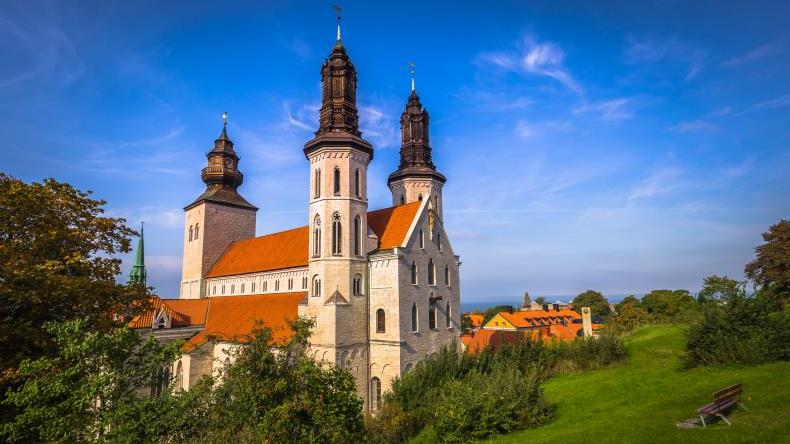
Twelve medieval churches stand in various states of ruin within Visby's walls — a density of ecclesiastical ambition that speaks to the city's extraordinary wealth during the Hanseatic period. Most were destroyed or gutted in a catastrophic fire in 1525 and subsequently left as managed ruins rather than demolished, creating a series of atmospheric open-air spaces where Gothic arches frame sky instead of vaulted ceilings. The ruins of Saint Karin (Sankta Katerina) are among the most beautiful, their red sandstone columns rising from a garden setting used for summer concerts. Saint Nikolai hosts the island's celebrated Strandriddarnas medieval pageant during August. Only the Cathedral of Saint Mary (Domkyrkan) remains fully intact and in active use.
The Gotland Museum: Baltic History in Remarkable Depth
The Gotlands Museum — also known as Fornsal — houses one of Sweden's most significant regional collections in a rambling complex of medieval warehouses near the botanical garden. Its particular strengths are extraordinary: the largest collection of Viking Age silver hoards found anywhere in the world (Gotland's limestone soil has preserved hundreds of buried treasure caches), an exceptional display of picture stones — carved limestone slabs depicting Norse mythology and maritime scenes unique to Gotland — and reconstructed interiors of medieval merchant houses that convey daily life in the Hanseatic city with unusual vividness. The museum requires two to three hours for a proper visit and rewards the investment with a depth of understanding that transforms subsequent exploration of the town.
The Old Town Streetscape: Roses, Cobblestones, and Medieval Timber
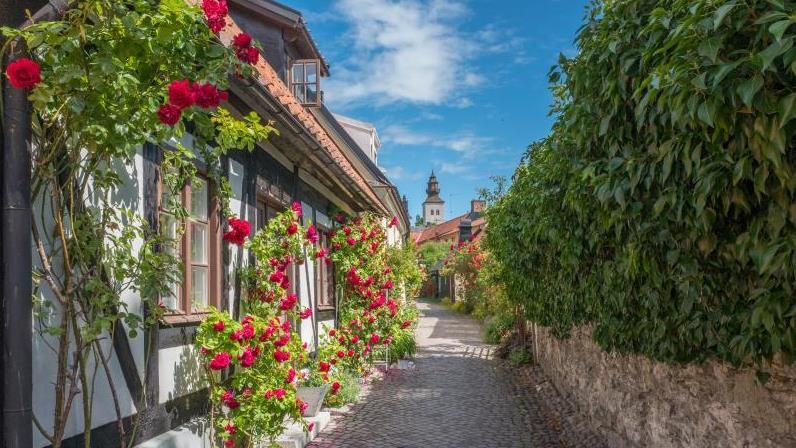
Visby earned its informal title of the City of Roses not through any official designation but through the simple abundance of climbing roses that drape medieval stone walls, lean over garden gates, and tumble across arched doorways throughout the old town. Combined with the cobbled lanes, the carefully preserved merchant houses with their distinctive stair-stepped gables, and the absence of any modern intrusion within the walls, the effect is one of the most consistently beautiful urban environments in Scandinavia. The Strandgatan along the eastern waterfront and the Adelsgatan running through the center of town are the main pedestrian arteries, but the most memorable moments come from turning into unnamed lanes between them and following instinct. VA's walking tour reveals the stories behind the facades that independent wandering can only hint at.
Gotland's West Coast: Raukar, Coves, and Hidden History
Beyond Visby, the island of Gotland rewards those who venture beyond the city walls. The west coast carries the island's most dramatic coastal geology — the raukar, limestone sea stacks sculpted by glacial meltwater and subsequent erosion into strange tapering columns that stand in surf-lapped rows along the shoreline. Medieval churches in almost every village preserve floor-to-ceiling painted interiors of remarkable quality, built during the same period of prosperity that raised Visby's walls. Bronze Age cairns and Iron Age hill forts dot the interior plateau. VA's Visby and Gotland West Coast Highlights excursion traces this landscape over four hours, accessing sites and historical context that independent exploration would require a full day to assemble.
Hanseatic Heritage: The Merchant City's Enduring Character
Visby's identity was forged in commerce. Between approximately 1150 and 1350, it was one of the most important trading cities in the Baltic — a place where German merchants, Norse farmers, Russian traders, and Flemish cloth merchants converged in a market economy of remarkable sophistication. The legacy is written into the urban fabric: the merchant halls whose stone ground floors held goods and whose upper timber floors housed the traders; the church ruins built with proceeds from the amber, fur, and silver trade; the fortifications that projected confidence and invited attack in equal measure. Walking Visby with an understanding of its Hanseatic past transforms what appears to be a picturesque medieval town into a legible commercial metropolis whose ambitions exceeded those of most contemporaries.
Visby travel tips
Wear Comfortable Shoes — The Cobblestones Are Beautiful But Uneven. Visby's medieval street surface is authentic and magnificent and demanding on feet. The cobblestones are uneven, the gradients within the walled city are steeper than they appear on a flat map, and the walls circuit involves some rough-paved sections. Comfortable walking shoes with proper support make an enormous difference to the experience — sandals and flat-soled shoes become uncomfortable within an hour. If visiting the ruins and the museum in the same day, expect to cover five to eight kilometers on varied surfaces.
The Wall Circuit Is Worth Doing, But Plan the Direction. Walking the full circuit of Visby's medieval walls takes approximately 90 minutes at a comfortable pace and provides the best overview of the town's scale and topography. The stretch along the eastern waterfront is the most dramatically photogenic — the towers rise directly from the limestone foreshore with open Baltic views. Starting from Österport (East Gate, nearest the cruise port) and walking clockwise allows you to complete the most scenic section early and return through the town's interior lanes on the return leg, covering the key church ruins and market square in a logical sequence.
Medieval Week Transforms Visby — Check Your Cruise Dates. Visby's Medieval Week, held annually in the first week of August, is one of Scandinavia's most atmospheric cultural events — a week of costumed jousting, archery, craft markets, theatrical performances, and period-accurate feasting that fills every cobblestone with participants who take the anachronism seriously. If your cruise coincides with Medieval Week, the town is extraordinary but crowds are significant and accommodation (relevant for those extending stays) is booked months in advance. If you prefer a quieter visit, late June or September offers the same beauty with a fraction of the visitor pressure.
Try the Saffron Pancake Before Leaving. Saffranspannkaka — Gotland's saffron-scented oven pancake — is one of the most distinctive regional foods in Sweden and something you are very unlikely to encounter elsewhere. Served warm, dense, and fragrant from bakeries and cafes throughout the old town, it is typically accompanied by cloudberry or lingonberry jam and lightly whipped cream. It functions as dessert, afternoon snack, or informal lunch depending on appetite and hour. Look for it in the cafes around Adelsgatan and the botanical garden area — most serve it throughout the day.
The Botanical Garden Is a Quiet Reward. Visby's medieval Botanical Garden — established in the late eighteenth century on the grounds of an old Franciscan monastery — is one of the oldest public gardens in Sweden and provides a moment of considerable tranquility within the busy old town circuit. The ruins of the monastery church of the Grey Brothers (Gråbrödraklostret) provide a photogenic backdrop, rose beds bloom abundantly in summer, and the shaded benches offer a welcome rest point midway through a day of walking. Entry is free; the garden connects naturally with the Gotland Museum and the Sankta Katerina ruins nearby.
Cash Is Rarely Needed — Sweden Is Highly Card-Friendly. Sweden has moved further toward a cashless economy than almost any country in Europe, and Visby reflects this — restaurants, cafes, market stalls, museum shops, and most other retailers accept card payments, often preferring them to cash. Many establishments display signs indicating they do not accept cash at all. A contactless-enabled card or mobile payment setup will cover virtually every transaction you need to make in Visby. This is one port where drawing local currency in advance is genuinely unnecessary for most visitors.
Port Facts Every Cruiser Needs To Know
Visby shore excursion FAQs
Cruise ships dock at Visby's commercial ferry port on the eastern waterfront. The medieval city walls begin approximately five to ten minutes on foot from the quayside, with the main Österport (East Gate) clearly visible from the dock area. There is no significant barrier between ship and town — you walk off the gangway and into one of northern Europe's great medieval cityscapes within minutes. For ships that anchor and tender, the tender landing point is similarly close to the walls.
Visby's UNESCO-listed old town is thoroughly walkable — in fact, walking is the only meaningful way to experience it, as no motor vehicles operate within the walls and the distances between key sites are small. The full wall circuit, the major church ruins, the Gotland Museum, and the main market square can all be covered on foot without difficulty in three to four hours. If you wish to visit the west coast of Gotland, the coastal raukar formations, or the island's medieval village churches, transport is needed and VA's west coast tour provides the most efficient and informative access.
The Hanseatic Town of Visby was inscribed on UNESCO's World Heritage List in 1995. The designation covers the exceptionally well-preserved medieval urban landscape as a whole — specifically the defensive walls, the dense concentration of merchant houses and ecclesiastical ruins, and the remarkably intact street plan that together represent the most complete example of a northern European walled trading city from the twelfth to fourteenth centuries. UNESCO's assessment noted that Visby provides a comprehensive picture of a medieval northern European trading city, and that the integrity of the site is unusually high.
Medieval Week (Medeltidsveckan) takes place annually during the first week of August, typically running over eight days centered on the first full week of the month. The event recreates Hanseatic Visby of the 1360s with costumed participants, theatrical recreations of the Danish siege of 1361, archery and jousting tournaments, craft markets selling period-appropriate goods, medieval food and drink, and evening concerts in the church ruins. It is the largest medieval festival in Scandinavia and one of the most immersive historical events in northern Europe. Cruise passengers visiting during this period will find the experience remarkable but expect significant crowds.
A focused three-hour walking tour covers Visby's essential highlights — the wall circuit overview, the major church ruins, the Strandgatan waterfront, and the main market square — comfortably. Adding the Gotland Museum requires an additional two to three hours for a worthwhile visit. A full six to seven hours allows for the walled city, the museum, a proper sit-down lunch, and time to lose yourself in the residential lanes. VA's three-hour walking tour and city highlights excursion are calibrated to provide the essential experience within the standard length of a cruise port call.
Raukar are limestone sea stacks — tall, thin columns of rock sculpted over thousands of years by glacial meltwater erosion and subsequent wave action — that stand in clusters along Gotland's coastline, particularly on the west coast. They are unique geological formations found in few places outside Gotland and the neighboring island of Fårö, and their strange tapering shapes have inspired comparison with sculpture, standing stones, and natural cathedrals. The most accessible raukar formations for cruise passengers are on the west coast, covered in VA's Visby and Gotland West Coast Highlights tour.
Yes — Visby's Botanical Garden is one of the oldest public gardens in Sweden, established in the late eighteenth century on the grounds of a medieval Franciscan monastery. The ruins of the monastery church provide a beautiful backdrop, rose beds bloom from June through August, and the garden provides a tranquil contrast to the busier tourist circuits. Entry is free. The garden sits in the center of the old town close to the Gotland Museum and the Sankta Katerina church ruins, making it a natural addition to any walking itinerary.
Swedish is the official language of Gotland and Visby. English proficiency in Sweden is among the highest in the world outside English-speaking countries — virtually all tourism, hospitality, and retail staff speak English fluently, and many Swedes are comfortable switching to English in everyday conversation. You are unlikely to encounter any language barrier as a visitor in Visby. Signage at the port, the museum, and major attractions is typically bilingual in Swedish and English.
Visby's old town offers shopping that is notably more characterful than the souvenir standard. The town has a concentration of design studios, artisan jewelers working in Baltic amber and silver, ceramics workshops, handmade textiles, and food shops specializing in Gotlandic products including saffron-based goods, local honey, island cheeses, and preserved fish. The main shopping streets run along Adelsgatan and the lanes connecting it to the market square. Amber — found along Baltic shores including Gotland's — is the most distinctive regional purchase, and several goldsmiths in the old town work it into contemporary jewelry.
Gotland enjoys one of Sweden's sunniest and warmest climates, moderated by its island position in the Baltic. Summer cruise season (June through August) brings temperatures typically ranging from 18 to 24 degrees Celsius with long daylight hours — up to 17 hours of light in midsummer. Rain is possible at any time and the Baltic wind can make temperatures feel cooler than they are, particularly on the walls and the exposed coastline. A light jacket or windproof layer is worth packing regardless of the forecast. September calls bring cooler, crisper conditions with beautiful autumn light and noticeably fewer visitors.
Filters
Select a filter to refine results.
Tour Type
Tour Activity
 Cart
Cart
 USD
USD GBP
GBP AUD
AUD EUR
EUR CAD
CAD