



Tours in Warnemunde (Berlin)


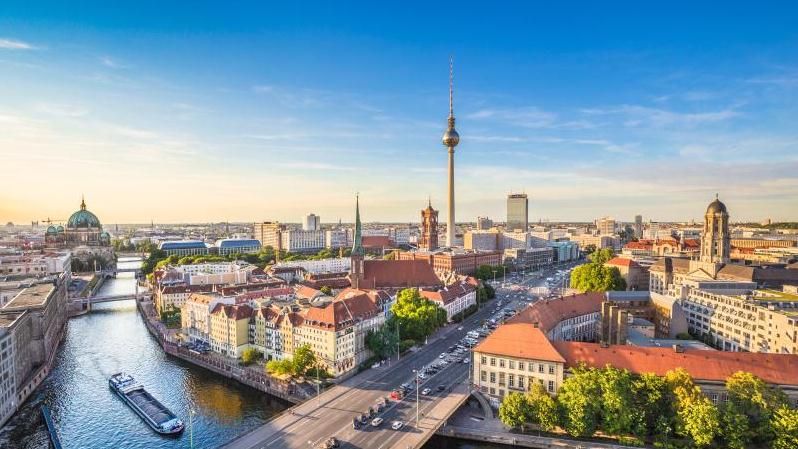
Cruising to Warnemunde (Berlin) in a group?
Skip the crowded ship excursion bus. One dedicated planner will design a private shore experience around exactly what your group wants — coordinated from first enquiry to the moment you're back on board. More memorable, more flexible, and more affordable than you might expect. Spend less time organising, more time enjoying.
Explore Group Travel →Cruising to Warnemunde (Berlin)
Warnemünde is a classic Baltic seaside resort — lighthouse, fishermen's cottages painted in bold colours, a wide sandy beach stretching along the coast, and the easy pace of a town that has welcomed visitors for generations. Sitting at the mouth of the Warnow River in the German state of Mecklenburg-Vorpommern, the port is pleasant in its own right, with a pedestrian waterfront lined with restaurants serving Baltic fish and a charming old quarter around the historic church. For passengers with limited mobility or those who simply want a quiet day by the sea, Warnemünde provides a genuinely agreeable alternative to a long excursion. The beach is among the finest on Germany's Baltic coast.
However, Warnemünde's enduring significance as a cruise port rests almost entirely on what lies roughly 230 kilometres to the south: Berlin, one of the great cities of the world and one of the most historically compelling destinations accessible from any European itinerary. The road and rail journey to the German capital takes approximately 2.5 to 3 hours each way, which means passengers who commit to Berlin are committing to virtually the entirety of their port day. That commitment is, for many, among the most rewarding decisions they will make on the entire voyage.
Berlin's 20th-century history is without parallel in Europe for its intensity, its horror, and its ultimate arc toward renewal. The city was the centre of the Nazi regime that launched the most destructive war in history and industrialised murder on a continental scale. It was divided by the Berlin Wall for 28 years, cleaved into two ideologically opposed halves in the heart of a continent. And it was reunited in 1989 in scenes of extraordinary emotion, becoming the unified capital of a democratic Germany that has spent the decades since confronting its past with remarkable honesty. Walking Berlin's streets with a knowledgeable guide — past the Brandenburg Gate, the Holocaust Memorial, the Topography of Terror, the remnants of the Wall — is an experience that changes how passengers understand not only Germany but the entire 20th century.
VA's tours from Warnemünde focus precisely on this historical depth: the architecture and ambition of Nazi Germania, the Cold War division and its human cost, the Sachsenhausen concentration camp memorial north of the city. These are not light itineraries, and they are not intended to be. They represent some of the most serious and meaningful shore excursion experiences available on any European cruise itinerary.
Top things to do in Warnemunde (Berlin) on a cruise stopover
The Third Reich and the Architecture of Nazi Germania
Hitler's plans to rebuild Berlin as 'Germania' — a monumental capital befitting what the Nazi regime imagined as a thousand-year empire — left traces across the city that remain visible today despite the destruction of war and subsequent decades of deliberate erasure. VA's private Third Reich and Germania tour traces the physical evidence of this megalomaniacal project: surviving buildings designed by Albert Speer, the former Reichstag, the Air Ministry (now a federal ministry), the Olympic Stadium built for the 1936 Games, and the sites of buildings and institutions that defined the Nazi state. The tour contextualises these physical remnants within the political and ideological history of the period, creating an understanding of how a modern, cultured city became the headquarters of the worst regime in modern history — and why that story must be kept visible.
Cold War Berlin: The Iron Curtain at its Most Visible
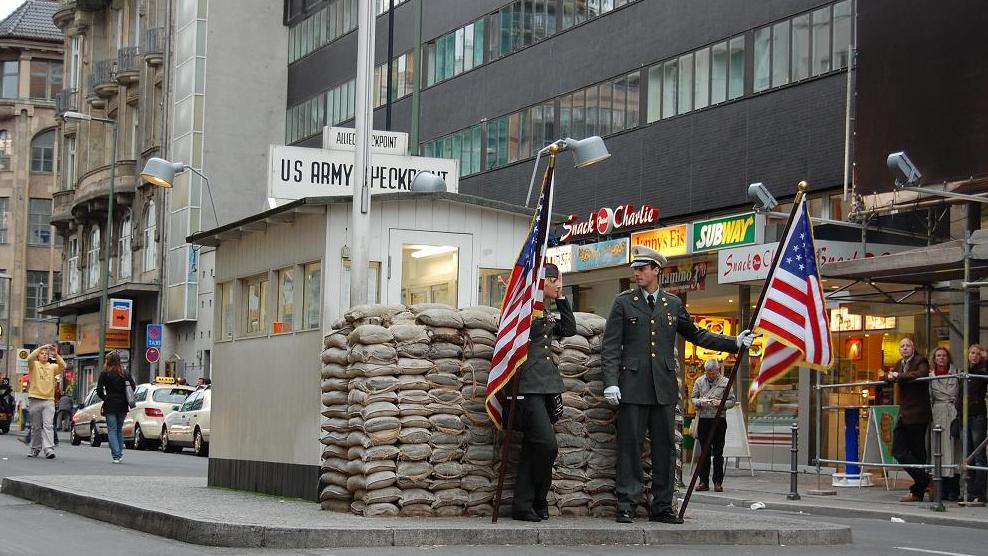
No city in the world makes the Cold War more tangible than Berlin, where the division between East and West was literally carved through streets, neighbourhoods, and families by the Berlin Wall. VA's Iron Curtain and Cold War tours follow the history from the post-war division of the city through the construction of the Wall in 1961, the years of separation, and the extraordinary November 1989 when the Wall fell. Key sites include Checkpoint Charlie, the East Side Gallery — where a surviving section of the Wall has been turned into an outdoor gallery of political art — the former Stasi headquarters, and the Brandenburg Gate, which stood in no-man's land throughout the division and became the symbol of reunification. The history is immediately accessible through the physical landscape of the city.
Sachsenhausen: Confronting the History of the Concentration Camps
Located 35 kilometres north of central Berlin near the town of Oranienburg, Sachsenhausen was one of the first purpose-built Nazi concentration camps, opened in 1936 and used until liberation in 1945. It held political prisoners, Jews, Soviet prisoners of war, and many other persecuted groups. Today it operates as a Memorial and Museum, one of Germany's most important sites of Holocaust remembrance, with surviving buildings, prisoner barracks, the punishment cell block, and the execution area preserved and interpreted with care and moral seriousness. VA's private Berlin tour including Sachsenhausen is the most emotionally demanding itinerary available from Warnemünde, and also among the most important. It is not suitable for those seeking a lighter excursion, but for passengers wishing to bear witness to this history, it is unforgettable.
The Brandenburg Gate and Central Berlin's Historical Core
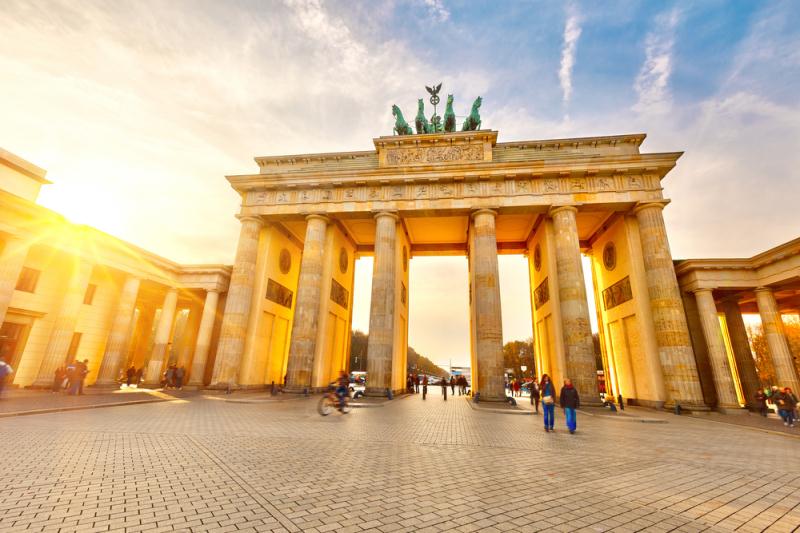
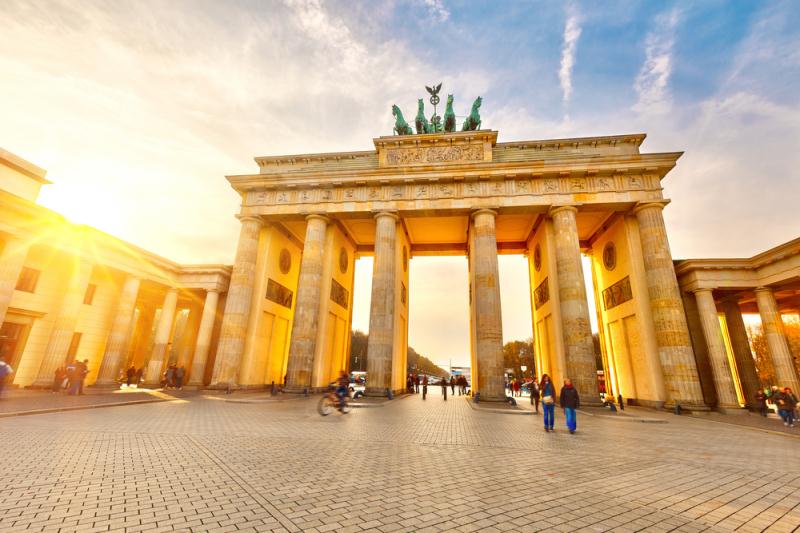
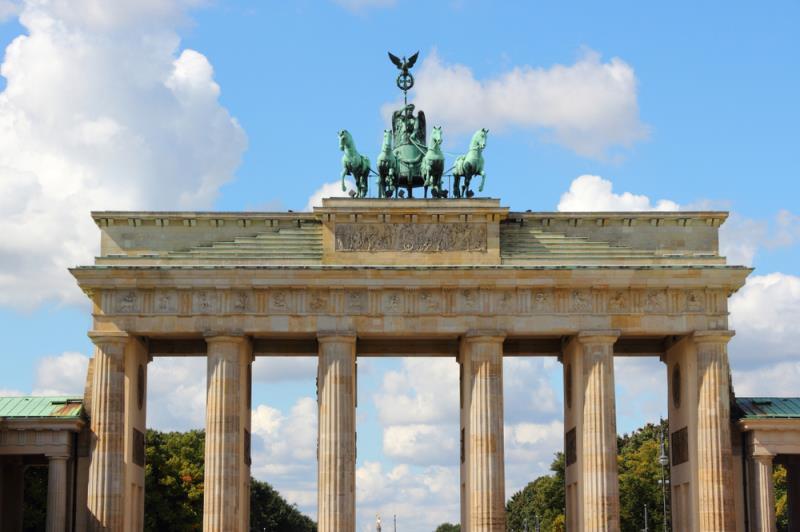
The Brandenburg Gate is Berlin's defining symbol — an 18th-century neoclassical triumphal arch that has served as backdrop to virtually every significant moment in the city's modern history, from Napoleon's entry to Hitler's torchlight processions, from Cold War division to the crowds celebrating reunification on 9 November 1989. The gate stands at the western end of Unter den Linden, the grand central boulevard, and is surrounded by a remarkable concentration of historically significant buildings and memorials within walking distance: the Holocaust Memorial (Memorial to the Murdered Jews of Europe), the Reichstag with its Norman Foster glass dome, and Potsdamer Platz — once the busiest square in pre-war Europe, flattened by bombs, bisected by the Wall, and now rebuilt as a district of contemporary architecture.
Jewish Heritage Past and Present in Berlin
Berlin had one of the largest and most culturally significant Jewish communities in Europe before the Nazi period, and the city's Jewish history — its pre-war flourishing, the devastation of the Holocaust, and the remarkable contemporary revival — is woven through the entire urban fabric. VA's private Jewish life tour explores this complete arc: the neighbourhoods where Jewish Berliners lived, worked, and worshipped; the memorials and traces of what was destroyed; and the living Jewish community that has re-established itself in the city in the decades since reunification. The Jewish Museum Berlin, designed by Daniel Libeskind in a building whose architecture literally embodies displacement and loss, is among the most architecturally and conceptually powerful museums in the world.
Warnemünde: Lighthouse, Beach, and Baltic Waterfront
Warnemünde itself rewards those who choose to remain at the port rather than making the Berlin journey. The town's historic lighthouse, built in 1898, stands at the harbour mouth and is open to visitors for panoramic views over the Baltic Sea and the river mouth. The old fishermen's quarter — Am Strom, the main canal-side street — retains its traditional architecture of brightly coloured low-rise houses converted into restaurants, cafés, and craft shops. The beach, stretching east from the pier along the Baltic shore, is wide, sandy, and backed by the traditional wicker beach chairs (Strandkörbe) that are the defining image of German seaside culture. In summer, the combination of beach, fresh fish stalls, and easy waterfront walking makes for a perfectly agreeable port day without any transport required.
Warnemunde (Berlin) travel tips
Commit to the Full Day if You Are Going to Berlin. There is no middle-ground version of a Berlin day from Warnemünde. The distance means passengers either commit to the full port day in the city or remain in Warnemünde — an attempt to do a quick half-day Berlin excursion produces neither a meaningful Berlin experience nor a relaxed Warnemünde day. VA's Berlin tours are designed around this reality and structure the itinerary to make the best possible use of the available time in the city. If the historical focus of the tours aligns with your interests, it is a day well spent despite the long drive.
Wear Comfortable Walking Shoes for Berlin. All of Berlin's significant historical sites involve substantial walking on pavement, cobblestones, and occasionally grass or gravel. The distances between key sites on a guided tour — from Checkpoint Charlie to the Brandenburg Gate to the Holocaust Memorial, for example — can add up to several kilometres over the course of the day. Comfortable, broken-in walking shoes are essential. Berlin's pavements are generally well-maintained, but the cobblestone sections around historic sites can be uneven.
Prepare Emotionally for the Historical Content. VA's Berlin tours from Warnemünde focus specifically on the Third Reich, the Holocaust, and the Cold War — this is not incidental background but the central purpose of the itineraries. Sachsenhausen in particular is a site of profound gravity. Visitors should be prepared for content that is disturbing, moving, and morally demanding in ways that straightforward sightseeing is not. This preparation makes the experience more meaningful, not less. Those who prefer lighter touring should choose to explore Warnemünde town and beach, which offer a completely different but equally valid day.
Keep Your Return Schedule Front of Mind Throughout the Day. Berlin traffic can be unpredictable, particularly on motorways during the afternoon return leg. VA tours are planned with conservative buffer time to ensure passengers return to the ship before departure, but the long distance means there is less margin than in ports where the city is immediately adjacent. Passengers should avoid extending any element of the tour independently — do not wander off to explore a neighbourhood or linger over lunch beyond the scheduled time, as the consequences of a delayed return are significant in a port that is 230 kilometres from the main attraction.
Fresh Smoked Fish at the Warnemünde Port is Worth Seeking Out. The smoked fish stalls near the Warnemünde harbour are a genuinely excellent and very inexpensive food experience — Baltic herring and mackerel smoked on site and sold from market stalls, eaten at outdoor tables or from paper wrapping by the water. This is a local food tradition rather than a tourist product, and the quality is excellent. Even passengers embarking on a Berlin day should plan a few minutes at the port on return for a smoked fish snack before re-boarding — it is one of the small pleasures that makes a Warnemünde call memorable in a completely different register from the historical intensity of Berlin.
The Warnemünde Beach is Excellent for Those Choosing to Stay. If Berlin's long journey and intense historical content is not what you are seeking, Warnemünde's beach is a genuinely good reason to stay. The wide sandy shore is clean, well-maintained, and typically uncrowded early in the morning before day-trippers arrive from nearby Rostock. The traditional wicker Strandkörb beach chairs can be rented by the hour. The waterfront promenade along Am Strom — with its seafood restaurants, ice cream stalls, and antique shops — provides pleasant strolling for those who prefer a gentle, scenic day at a classic German seaside resort.
Port Facts Every Cruiser Needs To Know
Warnemunde (Berlin) shore excursion FAQs
Warnemünde is approximately 230 kilometres north of Berlin by road. The drive typically takes between 2.5 and 3 hours each way, depending on traffic conditions, which are generally most favourable in the morning on the outbound journey. The round trip therefore consumes approximately 5 to 6 hours of driving time, leaving between 4 and 5 hours in Berlin itself on a standard port day. VA's tours are structured to maximise useful time in the city within this constraint.
VA's Berlin tours from Warnemünde are specifically focused on the city's 20th-century political and historical narrative: the rise of the Nazi regime and the physical legacy of the Third Reich, World War II and the Holocaust, the Cold War division of Berlin by the Wall, and the Iron Curtain era. Options include tours focused on the Nazi period and Germania, the Cold War and Iron Curtain, a combined overview from the Third Reich through to the fall of the Wall, and a tour that includes a visit to the Sachsenhausen concentration camp memorial.
Sachsenhausen was one of the first purpose-built Nazi concentration camps, located near Oranienburg approximately 35 kilometres north of central Berlin. It opened in 1936 and held political prisoners, Jews, Soviet POWs, and others until liberation in April 1945. Today it is preserved as a Memorial and Museum, with original buildings, prisoner barracks, and execution areas open to visitors with detailed interpretation. It is one of Germany's most significant sites of Holocaust remembrance. Visitors should be prepared for a deeply sobering experience. The VA tour including Sachsenhausen is the most emotionally demanding itinerary available from Warnemünde and is appropriate for adults and mature teenagers.
Yes, and it makes for a perfectly enjoyable port day. Warnemünde has a historic lighthouse, a charming old fishermen's quarter along Am Strom canal street, smoked fish stalls at the harbour, and an excellent wide sandy beach backed by traditional German wicker beach chairs. The town is compact and entirely walkable from the pier. Seafood restaurants along the waterfront serve good-quality Baltic fish. For passengers who have already visited Berlin, or who prefer a relaxed seaside day over a long historical excursion, Warnemünde itself is a pleasant and unhurried destination.
The Berlin Wall was a fortified barrier constructed by East Germany in August 1961, encircling West Berlin and physically dividing the city for 28 years until its fall on 9 November 1989. At its peak, the Wall ran for 155 kilometres and was enforced by watchtowers, death strips, and armed guards. Today, most of the Wall has been removed, but significant sections survive. The East Side Gallery is the longest remaining section — over a kilometre of Wall painted with murals by international artists in 1990. Checkpoint Charlie, the former crossing point between East and West, marks another key site. The Berlin Wall Memorial on Bernauer Strasse preserves a section of the original Wall with documentation of its history.
Germania was the name Albert Speer — Hitler's chief architect — gave to the planned rebuilt capital of the Nazi 'Thousand Year Reich'. The plans called for demolishing large sections of Berlin and replacing them with monumental avenues, a triumphal arch larger than the Arc de Triomphe, and a domed Great Hall intended to hold 180,000 people. World War II prevented most of these plans from being realised, but some elements were built or partially completed, and their physical traces remain in Berlin today. VA's Third Reich and Germania tour traces these surviving remnants while explaining the ideological ambitions behind them.
Yes. Warnemünde's beach is one of the better Baltic resort beaches, with clean sand and good water quality. The Baltic Sea is generally calmer and less saline than the North Sea or Atlantic, making it suitable for swimming. Water temperatures peak in July and August, reaching around 18 to 22 degrees Celsius. The beach has facilities including changing areas and rental beach chairs. Early morning arrivals at the port will often find the beach relatively quiet before the local day-tripper crowds arrive from Rostock.
This depends significantly on the age of the children and parental judgement about appropriate historical content. Tours focused on the Third Reich, Cold War, and particularly the Sachsenhausen concentration camp visit involve material that requires maturity to process — the history of the Nazi state, the Holocaust, and political imprisonment is not abstract in Berlin, where it is visible and specifically documented. Most travel professionals suggest the Sachsenhausen tour is suitable for teenagers aged 14 and above. The broader Berlin tours covering the Cold War and the Wall are generally accessible to children aged 10 and above. Parents should review the specific tour content before booking for families with younger children.
Rostock is a substantial Hanseatic port city approximately 15 kilometres south of Warnemünde, with a historic old town featuring Gothic brick churches, a medieval city gate, and a lively market square. It has a different character from Warnemünde — urban rather than resort-like — and would make a reasonable alternative for passengers who want to explore a German city without committing to the Berlin journey. However, VA's excursion offering from Warnemünde is focused on Berlin, so passengers interested in Rostock would be exploring it independently.
The Memorial to the Murdered Jews of Europe, commonly known as the Holocaust Memorial, occupies a 19,000 square metre site adjacent to the Brandenburg Gate and was inaugurated in 2005. It consists of 2,711 concrete slabs of varying heights arranged in a grid pattern on undulating ground — a deliberately disorienting space that resists simple interpretation. Beneath the memorial, an information centre documents the stories of specific Jewish families and communities destroyed during the Holocaust. The memorial is one of the most powerful and architecturally original sites of remembrance in Europe, and it appears on most VA Berlin tour itineraries.
Filters
Select a filter to refine results.
Tour Type
Tour Activity
 Cart
Cart
 USD
USD GBP
GBP AUD
AUD EUR
EUR CAD
CAD