



Tours in Zadar


Cruising to Zadar in a group?
Skip the crowded ship excursion bus. One dedicated planner will design a private shore experience around exactly what your group wants — coordinated from first enquiry to the moment you're back on board. More memorable, more flexible, and more affordable than you might expect. Spend less time organising, more time enjoying.
Explore Group Travel →Cruising to Zadar
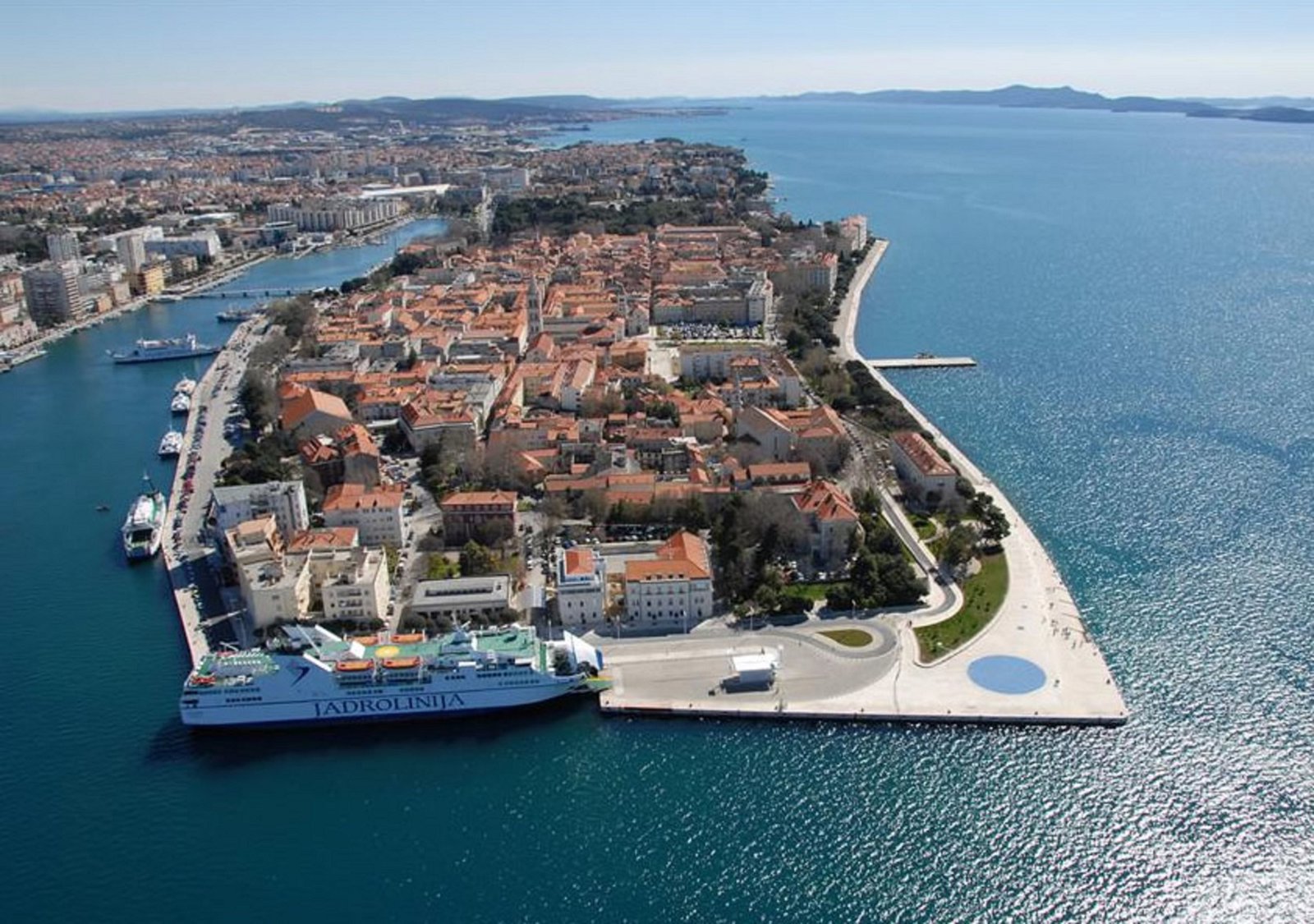
Zadar sits on a narrow peninsula that has been continuously inhabited for more than three thousand years, and the layers of that long occupation are written into every street corner of the old town. Roman forum stones sit beside a pre-Romanesque rotunda, Venetian gates open onto baroque churches, and a line of contemporary sea-facing steps breathes and hums with the tides. It is one of Dalmatia's most complete historic cities, yet it attracts far fewer crowds than Dubrovnik, giving visitors the rare luxury of wandering UNESCO-level streets without feeling crushed.
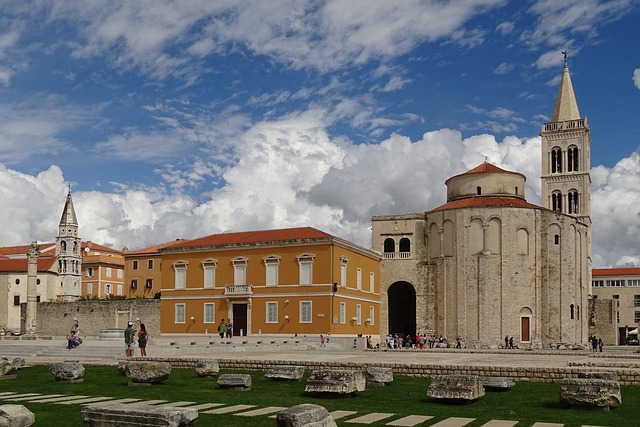
The old town is compact enough to cover on foot in a morning, yet rich enough in texture to fill an entire day. The Church of St Donat — a circular, ninth-century pre-Romanesque marvel built partly from Forum stones — is Croatia's most-photographed early medieval building. The nearby Cathedral of St Anastasia is considered the finest Romanesque cathedral on the Adriatic coast. Stroll the Forum itself and Roman column stumps stand at eye level, unremarked amid café terraces and market stalls, exactly as they have for centuries.
Zadar's modern identity is inseparable from its seafront. Architect Nikola Bašić designed the Sea Organ — a series of marble steps honeycombed with pipes and resonating chambers — so that waves and wind produce an endlessly shifting chord. A few metres away, his Greeting to the Sun installation transforms solar energy into a light show after dark. Alfred Hitchcock, visiting Zadar in the late 1960s, declared the sunset from this stretch of quay the most beautiful in the world; the combination of the two installations turns the claim into something almost literal.
Beyond the peninsula, the region opens up considerably. Krka National Park, with its cascading travertine waterfalls and emerald swimming pools, lies roughly an hour to the south. Pag Island, separated from the mainland by a narrow channel, offers a moonscape limestone interior that produces some of Croatia's finest sheep's milk cheese and an ancient tradition of needle lace recognised by UNESCO. For cruise passengers, the combination of old-town history, natural spectacle, and island character makes Zadar one of the most versatile ports on the Dalmatian itinerary.
Top things to do in Zadar on a cruise stopover
The Roman Forum and the Heart of the Old Town
Zadar's Roman Forum is one of the largest and best-preserved on the eastern Adriatic — and one of the most casually encountered, sitting in the open air at the centre of a living city rather than behind museum fences. Dating from the 1st century BC to the 3rd century AD, the Forum once held temples, a portico, and civic buildings; today its carved limestone slabs serve as a pedestrian square, with a single column still standing and traces of the original layout clearly legible underfoot. The surrounding streets compress centuries into a few hundred metres: Venetian towers rise beside Habsburg-era buildings, and the morning fish market spills out just inside the medieval city gate. Walking this area with a knowledgeable guide reveals layers of occupation that are easy to miss without context — the Church of St Donat alone incorporates Roman stonework, Roman columns, and an early Christian basilica footprint into its circular walls.
Church of St Donat: Dalmatia's Pre-Romanesque Masterpiece
Built in the early 9th century on the foundations of a Roman temple dedicated to Jupiter, the Church of St Donat is Croatia's defining example of pre-Romanesque architecture. Its cylindrical form — unusual for ecclesiastical buildings of any era — rises three storeys above the Forum stones it incorporated as building material, and the interior, stripped of furnishings and ornament over the centuries, has extraordinary acoustic properties that make it one of the finest concert venues in the region during summer. The church is no longer used for liturgical services, which gives it a contemplative stillness that contrasts sharply with the living city around it. The combination of the Forum ruins outside and this perfectly preserved rotunda inside makes the square one of the most photogenic and historically layered spaces on the entire Dalmatian coast.
The Sea Organ and Greeting to the Sun
Zadar's seafront promenade is home to two contemporary installations that have made the city famous beyond its ancient heritage. The Sea Organ, designed by architect Nikola Bašić and completed in 2005, consists of marble steps descending into the Adriatic, beneath which 35 pipes of varying lengths create resonant chambers tuned to harmonic intervals. As waves push air through the pipes, an endlessly shifting, tidal chord rises from the stone — ethereal on calm days, more dramatic when wind and swell increase. A short walk along the same promenade, the Greeting to the Sun is a circular installation of 300 glass panels set flush in the pavement, which collect solar energy during daylight and produce a light display after dark. Together they make Zadar's waterfront one of the most memorable stretches of Mediterranean seafront — and sunset here, as Hitchcock once observed, is genuinely extraordinary.
Cathedral of St Anastasia: The Finest Romanesque Facade on the Adriatic
Standing at the northern edge of the Forum, the Cathedral of St Anastasia is considered the most significant Romanesque cathedral on the eastern Adriatic coast. Construction began in the 12th century and continued across several phases into the 13th century, producing a facade of exquisitely carved blind arcading, decorative rosettes, and twin-portalled entrance that showcases the finest stonework traditions of medieval Dalmatia. The interior holds the relics of the 4th-century martyr Anastasia, for whom the church is named, in a marble ciborium of considerable beauty. Climbing the adjacent bell tower rewards visitors with panoramic views across the old-town rooftops, the harbour, and on clear days, the distant islands of the Zadar archipelago.
Krka National Park: Waterfalls and Swimming in the Dalmatian Hinterland
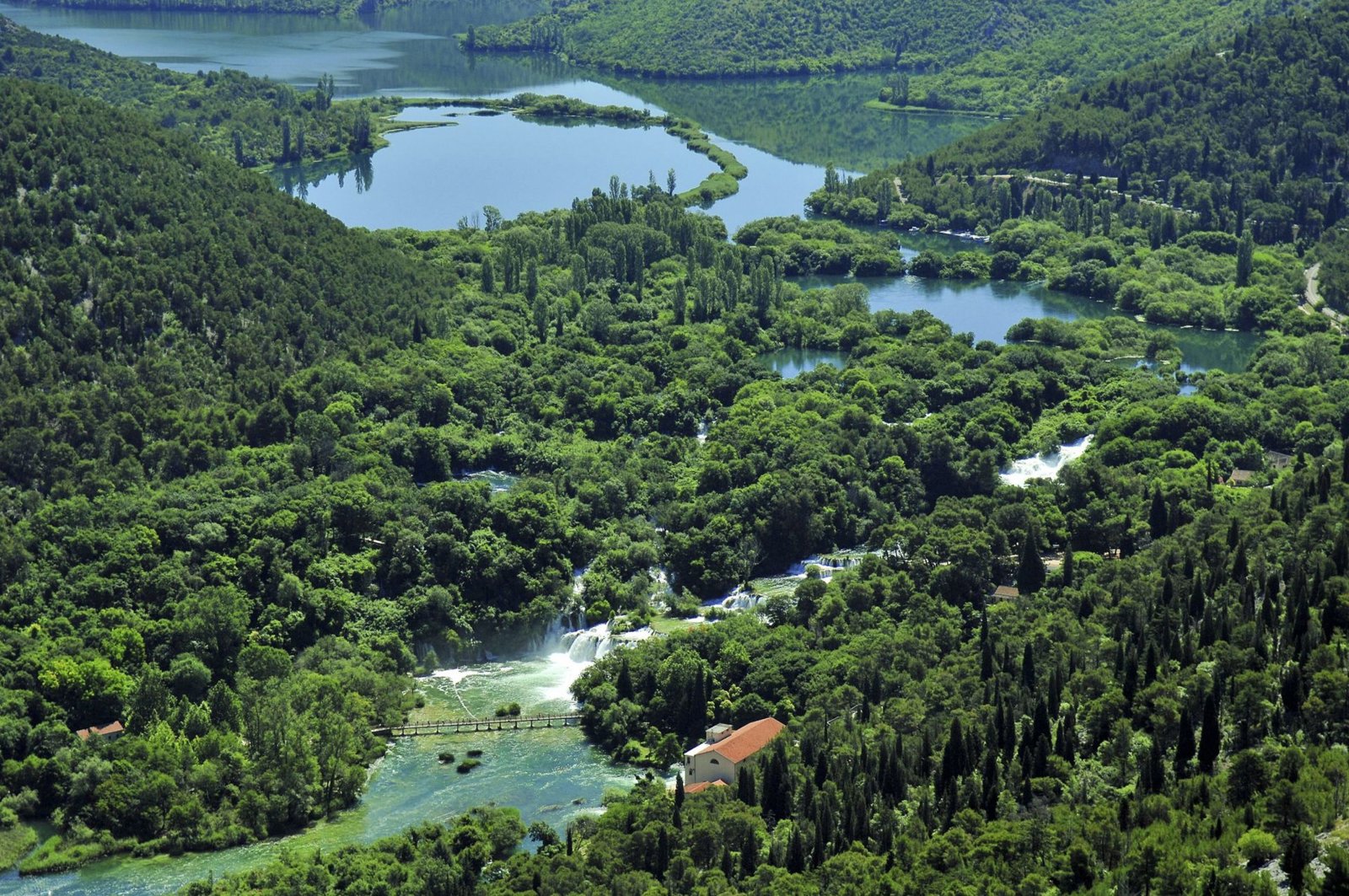
About 50 kilometres southeast of Zadar, the Krka River descends through a series of travertine barriers to form one of Croatia's most spectacular natural landscapes. Krka National Park protects 73 kilometres of the river, but the focal point for most visitors is the Skradinski Buk cascade: a multi-tiered waterfall spread across 17 individual drops, fringed by tufa islets and woodland, with vivid green pools between each barrier. The park combines natural scenery with cultural heritage — Franciscan monastery islands, a mill complex, and traditional watermill buildings contribute to a setting that feels genuinely layered. Getting here requires approximately 50 minutes by road from Zadar, making it an ideal half-day extension; the combination of the park and an old-town walk fits comfortably within a full port day.
Pag Island and the Ancient Town of Nin
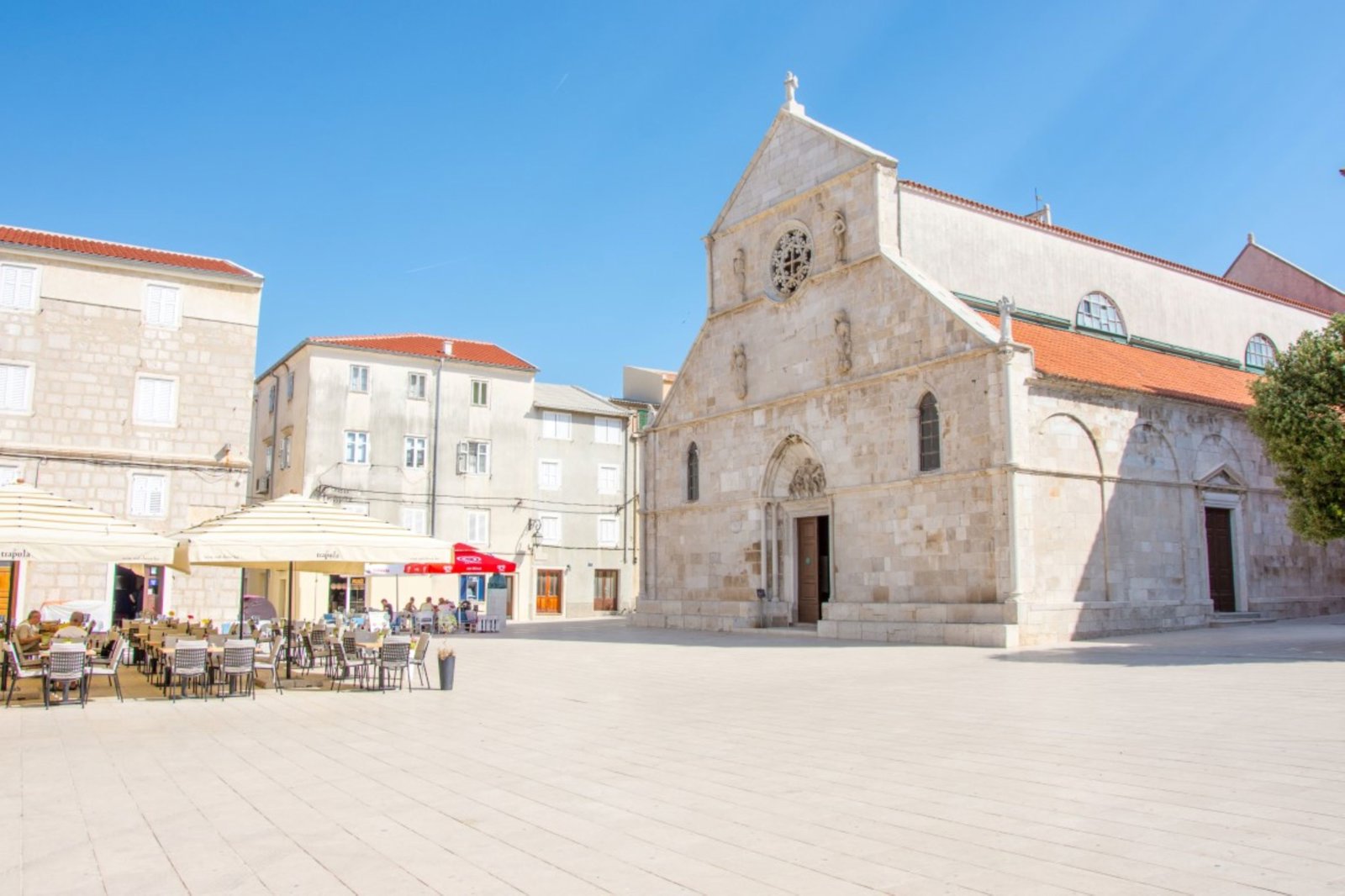
Pag Island lies just north of Zadar, connected to the mainland by a short bridge crossing a narrow channel. The island's interior is a strikingly lunar landscape of white karst limestone, sculpted by the bora wind into smooth ridges that support the particular vegetation on which Pag's famous sheep graze — giving Paški sir its intensely saline, herbaceous flavour. The island's salt pans have been worked since Roman times, and the compact medieval town of Pag has a planned Renaissance street grid remarkably intact. Tours combining Pag Island with Zadar also typically include Nin, a tiny walled town on a tidal island that was once the first Croatian capital and holds the smallest cathedral in the world still in regular liturgical use — a perfectly formed, 9th-century gem barely larger than a living room.
Zadar travel tips
Time Your Visit to the Sea Organ Carefully. The Sea Organ is most impressive when there is some wave action — on flat, windless days the sound can be very subtle. Mornings tend to be quieter in terms of visitors, and the light on the Adriatic is softer, making it a good time to linger on the promenade. If your ship stays into the early evening, the combination of the Greeting to the Sun light display activating at dusk and the bora-enhanced Sea Organ makes for an exceptional close to the day.
Krka National Park Tickets and Timing. Krka National Park has introduced timed-entry ticketing in peak season (July–August) to manage crowds at Skradinski Buk. Tickets can be purchased online in advance through the park's official website, which is strongly advisable if visiting in summer. Entry prices vary by season. Arriving at the park in the morning, before the main visitor rush arrives mid-morning, makes a significant difference to the experience at the main waterfall area.
Seek Out Paški Sir at the Morning Market. Zadar's indoor and outdoor market, just inside the Land Gate, is one of the best places on the Dalmatian coast to buy authentic Pag cheese directly from producers. Quality varies considerably in tourist shops; the market vendors are typically farmers and small producers who age their cheese in traditional ways. Maraschino liqueur — Zadar's historic cherry spirit — is also available at specialist shops in the old town and makes an excellent, genuinely local gift.
Wear Comfortable Shoes for the Old Town's Stone Streets. Zadar's old town is paved with polished limestone that becomes slippery when wet and can be uneven underfoot in places. Flat, comfortable shoes with good grip are strongly advisable. The main pedestrian thoroughfare, Kalelarga (Široka ulica), is smooth, but exploring the side alleys and the Forum area involves uneven stone surfaces. The old town is entirely flat at street level, which makes it accessible for most mobility levels, but the Cathedral bell tower involves a steep, narrow staircase.
Explore Beyond the Main Sights on a Walking Tour. Zadar's old town rewards those who venture beyond the Forum, St Donat, and the waterfront. The narrow alleys between the Cathedral and the Varoš quarter contain some of the city's oldest vernacular architecture, and several churches contain important medieval stonework that receives almost no visitor traffic. A guided walking tour is particularly valuable in Zadar because much of the historical layering — Roman walls incorporated into medieval houses, for instance — is invisible without explanation.
Check Ship Departure Times Before Planning Krka or Pag. Both Krka National Park and Pag Island involve substantial travel time from the port; each excursion requires a minimum of five to six hours to do comfortably. Confirm your ship's all-aboard time before committing to either destination, and factor in the return leg generously. Road traffic around Zadar and near Krka can be significant in peak summer months, and the Gazenica terminal is a 15-minute drive from the town centre — meaning the buffer before final departure is shorter than it might appear on a map.
Port Facts Every Cruiser Needs To Know
Zadar shore excursion FAQs
Most cruise ships use the Gazenica terminal, which is approximately 3 to 4 kilometres south of the old town peninsula. The journey by bus or pre-arranged transport takes around 10 to 15 minutes depending on traffic. Smaller vessels occasionally berth at the historic quay on Liburnska obala, which places passengers within a short walk of the Roman Forum and the main sights.
The Sea Organ is a public art installation built into the marble steps of Zadar's seafront promenade. Designed by architect Nikola Bašić, it consists of 35 organ pipes beneath the stone that are powered by wave action, producing an ever-changing harmonic chord. It is genuinely unlike anything else in Europe — not a tourist gimmick but a serious work of architectural and musical art. It is absolutely worth visiting, particularly when there is some wind or wave action to animate the sound.
Krka National Park is one of Croatia's finest natural attractions and is entirely feasible as a half-day excursion from Zadar, given the approximately 50-minute drive each way. The main waterfall area, Skradinski Buk, is visually spectacular and offers swimming in designated areas during the main season. For passengers with a full port day of seven hours or more, combining a Krka visit with a walk through Zadar's old town is an excellent use of the time. Timed-entry tickets in peak season are advisable to book in advance.
Croatia adopted the euro on 1 January 2023, replacing the kuna. Euros are the standard currency for all transactions. ATMs are widely available in Zadar's old town. Card payments are accepted in most restaurants, larger shops, and hotel facilities; cash remains useful for market stalls, smaller cafés, and public transport.
Pag Island lies just north of Zadar, connected by a short bridge. It is best known for Paški sir — an aged sheep's milk cheese with a sharp, salty, intensely savoury flavour produced by sheep that graze on sparse, salt-wind-seasoned herbs unique to the island's karst landscape. The island also has ancient salt pans, a well-preserved Renaissance town grid, and lace-making traditions recognised by UNESCO's Intangible Cultural Heritage list. A combined tour taking in Pag and Zadar's old town makes for a day that covers both natural curiosity and urban history.
Nin is a tiny walled town on a small tidal island, connected to the mainland by two bridges, located approximately 15 kilometres north of Zadar. It was the first royal seat of medieval Croatia and holds the Church of the Holy Cross — built in the 9th century and often described as the smallest cathedral in the world still in regular liturgical use. The church is architecturally extraordinary: a simple cross plan, perfectly proportioned, functioning as a sundial. Nin is typically included in tour itineraries that also cover Zadar's old town and Pag Island.
Zadar's old town is compact and entirely flat, making it very manageable to explore on foot once you are on the peninsula. The main attractions — Roman Forum, Church of St Donat, Cathedral of St Anastasia, Sea Organ, and the market — are all within comfortable walking distance of one another. Getting from the Gazenica cruise terminal to the old town does require transport, as the distance of 3–4 kilometres is too far for a comfortable walk in summer heat with limited time.
Maraschino is a dry, clear liqueur distilled from Marasca cherries — a sour variety native to the Dalmatian coast — and has been produced in Zadar since the 16th century. The Luxardo family, originally from Zadar, later moved production to Italy, where the name became internationally known, but the original Zadar tradition continues with local producers. It has a complex, dry, slightly bitter-sweet cherry flavour quite unlike sweet cocktail cherries; it is served as a digestif, in coffee, or as the base of classic cocktails.
English is widely spoken in Zadar's tourist areas, restaurants, shops, and tour operations. Croatia's coastal tourism industry is well-developed and English is the standard second language for service roles. Italian is also commonly understood along the Dalmatian coast, reflecting historical Venetian influence. Signs in the old town are typically in Croatian, but navigating with English alone presents no practical difficulty.
Zadar offers a similar quality of Dalmatian old-town architecture and Adriatic coastal atmosphere to Dubrovnik but with significantly fewer visitors, meaning a much more relaxed experience. Dubrovnik's city walls and setting are visually more dramatic; Zadar counters with richer Roman and early medieval archaeology, a more genuinely lived-in old town (residents still outnumber tourists in many streets), and better access to regional excursions such as Krka National Park. For passengers who prioritise authenticity and space over spectacle, Zadar is frequently the preferred stop.
Filters
Select a filter to refine results.
Tour Type
Tour Activity
 Cart
Cart
 USD
USD GBP
GBP AUD
AUD EUR
EUR CAD
CAD