



Tours in Haifa


Cruising to Haifa in a group?
Skip the crowded ship excursion bus. One dedicated planner will design a private shore experience around exactly what your group wants — coordinated from first enquiry to the moment you're back on board. More memorable, more flexible, and more affordable than you might expect. Spend less time organising, more time enjoying.
Explore Group Travel →Cruising to Haifa
Haifa is Israel's largest port city and its principal maritime gateway, built across the slopes of Mount Carmel where the mountain meets the Mediterranean. The city itself is a study in coexistence — Jewish, Arab, Christian, and Bahá'í communities have long lived side by side here, giving Haifa a reputation for pluralism unusual in the region. Its most iconic sight, the golden-domed Bahá'í Shrine and its immaculate terraced gardens, cascades down the mountainside in a spectacle visible from the sea long before the ship docks.
For cruise passengers, however, Haifa's greatest significance is often as a launchpad. The port sits within feasible reach of Jerusalem, one of the most layered and contested cities on the planet, and of Bethlehem across the border in the Palestinian West Bank — the traditional birthplace of Jesus and home to the magnificent Church of the Nativity. These are destinations of extraordinary historical, religious, and cultural weight that draw visitors from every tradition and none.
Haifa itself rewards those who allow time for it. The German Colony district — laid out by nineteenth-century German Templar settlers at the foot of the Bahá'í Gardens — has been transformed into a boulevard of excellent restaurants and cafes. The Wadi Nisnas neighbourhood offers an authentic Arab souk atmosphere with street art, local produce, and the kind of unhurried café culture found nowhere else in Israel. The Carmelit, a curious funicular metro buried under Mount Carmel, connects the lower city to the upper in minutes.
Visiting Haifa means engaging with a country of deep complexity and intense spiritual significance. Come with curiosity, patience at security checkpoints, and a willingness to encounter a place unlike anywhere else your cruise will take you.
Top things to do in Haifa on a cruise stopover
Jerusalem's Old City: Four Quarters, Three Faiths, Three Millennia
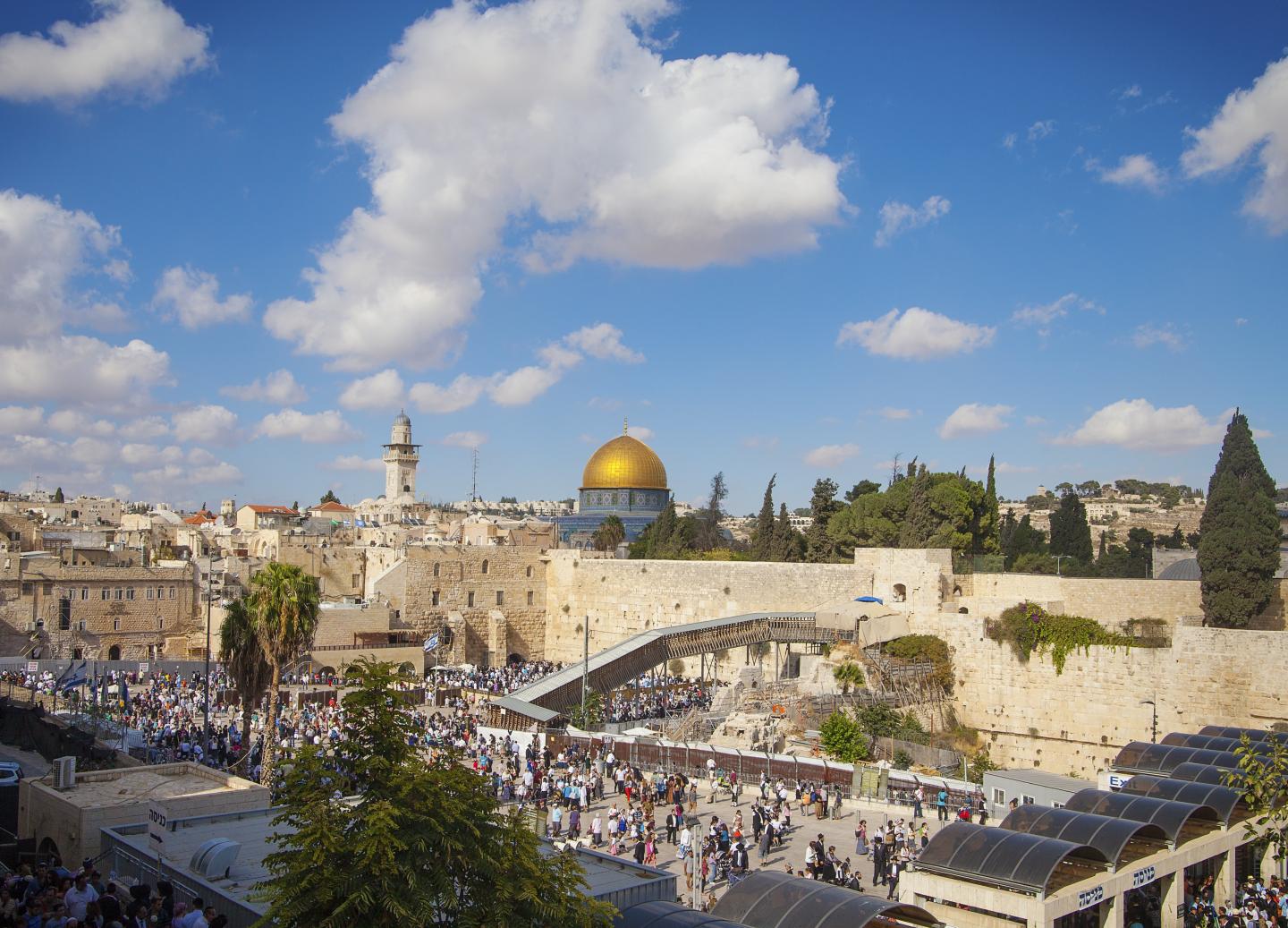
Jerusalem's Old City is enclosed within Ottoman walls that date from the sixteenth century, but the stones beneath tell a story that stretches back three thousand years. The Old City is divided into four quarters — Jewish, Muslim, Christian, and Armenian — each with its own distinct character, cuisine, and sacred geography. The Western Wall, holiest accessible site in Judaism, faces the Temple Mount, from which the golden Dome of the Rock rises above the skyline in one of the world's most recognisable images. The Via Dolorosa — the route Jesus walked to his crucifixion — winds through the Muslim and Christian quarters to the Church of the Holy Sepulchre, built over the site of both the crucifixion and the tomb. Even for visitors without religious motivation, the density of history layered into these few square kilometres is staggering. Allow at minimum three hours to begin to absorb it.
Bethlehem and the Church of the Nativity: Christianity's Most Sacred Birthplace
Bethlehem sits just 10 kilometres south of Jerusalem in the Palestinian West Bank, and the journey between them — crossing the separation barrier through a designated checkpoint — is itself a sobering experience. The Church of the Nativity, built over the traditional site of Christ's birth, is one of the oldest continuously operating churches in the world: the original structure was commissioned by Emperor Constantine in the fourth century, and parts of the Byzantine mosaic floor are still visible through hatches in the current floor. The Grotto of the Nativity beneath the church marks the specific spot with a fourteen-pointed silver star. Manger Square outside the church is the heart of Bethlehem's public life, surrounded by Palestinian shops and restaurants offering a different perspective from Israel proper. Queues at the grotto can be long; arrive early if possible.
Bahá'í World Centre: Haifa's Most Spectacular Sight
The Bahá'í Faith was founded in nineteenth-century Persia, and its spiritual and administrative heart is now established on the slopes of Mount Carmel in Haifa. The centrepiece is the golden-domed Shrine of the Báb — resting place of the Faith's forerunner prophet — set at the centre of nineteen terraces of immaculate formal gardens that cascade from the top of the mountain to the German Colony below. The gardens are open to the public daily (except Wednesdays) for self-guided walks on the lower terraces, with guided tours available for the upper section. The view from the upper terraces across the bay to Akko is among the finest in northern Israel. Photography within the shrine itself is not permitted, and modest dress is required. The scale and symmetry of the gardens, maintained entirely by volunteers, is genuinely breathtaking.
German Colony: Haifa's Most Atmospheric Neighbourhood
In the mid-nineteenth century, a devout Christian sect from Württemberg — the Templers — emigrated to Palestine in the belief that their presence would hasten the Second Coming. They built tidy, stone-built settlements, the finest of which survives as Haifa's German Colony. Ben Gurion Boulevard, the district's spine, is lined with restored Templer houses bearing German inscriptions above their doors, now occupied by restaurants, cafes, and boutique shops. The street runs directly from the foot of the Bahá'í Gardens to the waterfront, making it the natural route between the two. In the evening it becomes one of Haifa's most lively social spaces, though cruise passengers will typically be there during the day. The juxtaposition of Prussian architecture, Arabic signage, and the golden Bahá'í dome above creates one of the most visually layered urban streetscapes in Israel.
Wadi Nisnas: Haifa's Arab Quarter and Its Hidden Street Art
Wadi Nisnas is the Arab neighbourhood at the heart of lower Haifa — a compact area of narrow streets, stone houses, food stalls, and a small but excellent souk. It is the most authentically urban part of the city: vegetable sellers, spice merchants, and butchers operate alongside family-run coffee shops where backgammon games run from morning to late afternoon. The neighbourhood is also home to an ongoing community art project, with murals and sculptures by local Arab and Jewish artists covering walls throughout the quarter. It is the kind of neighbourhood that rewards slow walking and conversation rather than checked-off sights. The Wadi is 15–20 minutes on foot from the cruise terminal and provides a genuine counterpoint to the manicured formality of the Bahá'í Gardens nearby.
The Carmelit and Mount Carmel: Riding the World's Shortest Metro
Haifa's Carmelit is a genuine curiosity — a six-station funicular metro system bored through the bedrock of Mount Carmel, connecting the lower city near the port to the upper residential and commercial district of Carmel Centre. It is the shortest metro system in the world by number of stations, takes about eight minutes end to end, and offers a practical short-cut up the mountain that saves a steep climb. The Carmel Centre at the top provides panoramic views across the bay and city. The Louis Promenade along the ridge offers perhaps the best elevated perspective over the port, the bay, and on clear days as far as the Lebanese coast to the north.
Haifa travel tips
Allow Extra Time for Security Checks Throughout the Day. Security is taken extremely seriously across Israel and in many locations in the Palestinian territories. Entry to the port terminal, major attractions, shopping centres, and tourist sites frequently involves bag scans and security screening. At popular religious sites in Jerusalem — particularly the Western Wall and the Church of the Holy Sepulchre — queues for entry can add 20–40 minutes to your arrival time. At the Bethlehem checkpoint, crossing times vary significantly by time of day. Build generous buffers into your schedule rather than assuming you can move quickly between sites.
Dress Modestly for Every Religious Site You Plan to Visit. Dress requirements at religious sites in Israel and the Palestinian territories are strict and non-negotiable. For the Church of the Holy Sepulchre, the Church of the Nativity, and all mosques: shoulders and knees must be covered for both men and women; women must cover their hair in some sections. At the Western Wall, men require a head covering (kippot are provided free of charge at the entrance) and women must use the separate designated section. At the Bahá'í Shrine in Haifa, shoes must be removed. Carrying a light scarf or sarong solves most situations. Wearing shorts and sleeveless tops to these sites will result in being turned away.
Understand the Sabbath and How It Affects Your Day. The Jewish Sabbath begins at sundown on Friday and ends after dark on Saturday. During this period, most Jewish-owned businesses, restaurants, and many attractions in Israel are closed, public transport in many areas operates on a reduced or suspended schedule, and the atmosphere in Jewish neighbourhoods changes dramatically. If your ship calls on a Friday afternoon or Saturday, plan accordingly: Arab and Christian-owned businesses in areas like Wadi Nisnas or Bethlehem remain open. Most major tourist sites remain accessible, but some services, shops, and restaurants in modern Haifa and Jerusalem's Jewish areas will be shut.
Stay Hydrated — Heat and Sightseeing Are a Demanding Combination. Visiting Haifa and Jerusalem in summer months means dealing with significant heat, particularly in Jerusalem's exposed stone streets and plazas. Carry a refillable water bottle — potable water is available throughout Israel — and drink more than you think you need. Jerusalem sits at 750 metres elevation, which moderates temperatures slightly but does not eliminate the risk of heat exhaustion during long walking days. The Western Wall Plaza and the Via Dolorosa are fully exposed to the sun for much of the day; plan intensive walking for morning hours and take midday breaks in shaded or air-conditioned spaces.
Use ATMs Rather Than Pier-Side Currency Exchange. Currency exchange desks at or immediately adjacent to cruise terminals typically offer the least favourable rates. Israeli ATMs connected to international networks (Visa/Mastercard/Cirrus) are widely available throughout Haifa and Jerusalem city centres and dispense New Israeli Shekels at the interbank rate minus your bank's standard foreign transaction fee — almost always a better deal than any cash exchange desk. Let your bank know you are travelling to Israel before your cruise to avoid cards being blocked on transaction.
Photography at Religious Sites Requires Sensitivity and Awareness. Photography rules vary significantly between sites. Inside the Church of the Holy Sepulchre, photography is permitted in most areas but flash and tripods are prohibited near the tomb; some chapels maintained by specific Christian denominations prohibit all photography. At the Western Wall, photography is prohibited on the Sabbath and Jewish holidays. Inside mosques on the Temple Mount, non-Muslim visitors face access restrictions that vary by time of day and political situation. At the Bahá'í Shrine, photography inside is not permitted. Ask before photographing people — in conservative religious neighbourhoods, photographing individuals without permission is considered disrespectful.
Port Facts Every Cruiser Needs To Know
Haifa shore excursion FAQs
Haifa is a full dock port — cruise ships berth directly at the dedicated cruise terminal in Haifa Port. There is no tendering required. The terminal has facilities including tourist information, and the city centre is a short distance from the pier. Immigration and passport control are conducted on the pier on arrival, so have your travel documents accessible as you disembark.
Yes, but it requires a full commitment of your time ashore. Jerusalem is approximately 150 kilometres from Haifa; by road the journey takes 1.5–2 hours each way depending on traffic, leaving 4–5 hours in Jerusalem and Bethlehem combined if you need to return to the ship by late afternoon. The experience is intense and rewarding, but it is not a relaxed day trip — you will be moving continuously. Train services also connect Haifa and Jerusalem, though journey times and schedules should be checked carefully against your all-aboard time.
Bethlehem is located in the Palestinian West Bank and is administered by the Palestinian Authority, not Israel. Most cruise passengers do not require a separate visa to enter — transit for tourism is generally permitted with your standard Israeli entry stamp. However, you will pass through an Israeli military checkpoint at the separation barrier, which involves a passport check and security screening. Conditions at the checkpoint can vary; allow additional time and remain calm and cooperative with officials. Your cruise excursion provider will manage the crossing logistics.
The Bahá'í Faith is a monotheistic religion founded in nineteenth-century Persia, teaching the unity of all major religions and the oneness of humanity. Its global administrative and spiritual centre is established in Haifa and Akko. The Bahá'í gardens on Mount Carmel are open to the public regardless of religious affiliation — the Faith actively welcomes visitors. The lower terraces are accessible for self-guided visits; the upper terraces are reached by free guided tours (pre-registration required, departing at noon from the lower entrance). Modest dress and respectful behaviour are expected throughout.
A valid passport is required. Citizens of many countries including the USA, UK, EU member states, Canada, and Australia can enter Israel without a pre-arranged visa for tourism purposes. Israel no longer stamps passports on arrival for most nationalities — instead, a separate entry card is issued (important for travellers concerned about subsequent visits to certain other countries). Check the current visa requirements for your specific nationality before your cruise departs, as rules do change. Your cruise line will provide guidance for the specific passport check process at Haifa Port.
The Temple Mount (known to Muslims as Haram al-Sharif) is administered by the Jordanian Islamic Waqf, and access for non-Muslim visitors is subject to time restrictions that change frequently based on religious calendars and security conditions. Non-Muslims typically enter through the Mughrabi Gate and are restricted to certain areas; entry to the Al-Aqsa Mosque and Dome of the Rock interiors is generally not permitted to non-Muslims. Access may be suspended entirely on Muslim prayer days, during Ramadan, and during periods of heightened tension. Confirm current access conditions as close to your visit as possible.
The Western Wall (HaKotel) is the last remaining retaining wall of the Second Temple complex, destroyed by the Romans in 70 CE, and is the holiest site at which Jews are permitted to pray. The plaza in front of it is divided into separate men's and women's sections. Men must wear a head covering at the wall — kippot (skullcaps) are provided free at the entrance. Women should have arms and legs covered. The practice of writing prayers on slips of paper and pressing them into the cracks of the wall is ancient and universal — visitors of any faith are welcome to participate. Photography is prohibited on the Sabbath and Jewish holy days.
The lower entrance to the Bahá'í Gardens in the German Colony is approximately 1.5 kilometres from the cruise terminal — a 20-minute walk along the waterfront. The route passes through the port area and enters the German Colony at Ben Gurion Boulevard. From the lower garden entrance you can walk up the terraces (a steep climb of some 300 metres in elevation) or take the Carmelit funicular metro to the upper city and walk down. The full garden terrace experience is best approached with comfortable walking shoes and a reasonable level of fitness.
Haifa has a well-deserved reputation as one of Israel's most relaxed and cosmopolitan cities, and the areas cruise passengers typically visit — the German Colony, Wadi Nisnas, the Bahá'í Gardens, and the Carmel district — are safe and welcoming. Israel maintains very high levels of security throughout, and tourist areas benefit from visible security presence. Exercise the same common-sense awareness you would in any large Mediterranean city. The political situation in the broader region can change quickly; monitor your cruise line's communications and follow any guidance from ship's officers regarding shore conditions on your specific call day.
Haifa's culinary scene reflects its mixed population and is one of the most rewarding in Israel. For an upscale lunch, the restaurants of Ben Gurion Boulevard in the German Colony — many with outdoor seating below the Bahá'í Gardens — offer modern Israeli cooking at its best. For something more local and spontaneous, walk into Wadi Nisnas for falafel and hummus at street stalls, strong Arab coffee, and fresh-baked pastries. The Hadar neighbourhood is less visited by tourists and offers a more local café culture. Kosher dietary laws mean that meat and dairy are not served together in most Israeli Jewish restaurants; Arab-owned establishments do not observe these rules.
Filters
Select a filter to refine results.
Tour Type
Tour Activity
 Cart
Cart
 USD
USD GBP
GBP AUD
AUD EUR
EUR CAD
CAD