



Tours in Denali


Cruising to Denali in a group?
Skip the crowded ship excursion bus. One dedicated planner will design a private shore experience around exactly what your group wants — coordinated from first enquiry to the moment you're back on board. More memorable, more flexible, and more affordable than you might expect. Spend less time organising, more time enjoying.
Explore Group Travel →Cruising to Denali
There are national parks, and then there is Denali. Encompassing six million acres of sub-arctic wilderness — larger than the entire state of Massachusetts — Denali National Park is defined by a scale so vast it reshapes how you understand the word wild. At its center stands Denali itself, the highest peak in North America at 20,310 feet, a mountain so massive it creates its own weather systems and remains hidden behind clouds roughly 70 percent of the time. Yet even when the summit disappears into the grey, the park delivers beyond expectation: grizzly bears digging for ground squirrels on open tundra, caribou herds threading valley floors, Dall sheep navigating vertical rock faces, and wolves — actual wolves — hunting the river braids below Polychrome Pass. This is wilderness on a scale that few travelers anywhere on Earth ever truly encounter, and the single road that threads its interior is one of the great wildlife corridors of the continent.
Top things to do in Denali on a cruise stopover
The Park Road: A 92-Mile Rolling Wildlife Safari
The single unpaved road threading 92 miles into Denali's interior is one of the greatest wildlife corridors accessible to ordinary travelers anywhere in the world. Restricted beyond Mile 15 to park-operated buses, the road traverses open tundra, crosses braided glacial rivers, and climbs over mountain passes with views that photographers spend careers chasing. Wildlife density along the road is extraordinary — grizzlies are spotted on the majority of full-day bus journeys, and sightings of caribou, moose, Dall sheep, wolves, fox, and golden eagles are common. Bus drivers stop for every significant animal encounter, turning the journey into a genuine rolling safari unlike anything available in the contiguous United States.
Denali Summit: When the Mountain Reveals Itself
At 20,310 feet, Denali rises nearly 18,000 feet above the surrounding lowlands — a vertical relief greater than Everest measured from its Tibetan plateau base. When the mountain reveals itself on a clear day, the effect is physically arresting: an impossibly massive wall of snow and ice dominating the horizon in a way that defies comprehension from any photograph. The finest roadside viewpoints include Stony Hill (Mile 62) and the meadows near Eielson Visitor Center (Mile 66), where on cloudless days the peak fills an extraordinary arc of sky. Statistically, roughly 30 percent of summer visitors see the summit clearly — but even partial glimpses through shifting cloud are dramatic and worth the journey.
Grizzly Bears on Open Tundra: Wildlife at Its Most Wild
Denali's open tundra landscape — so different from the dense forests of most national parks — means that wildlife sightings unfold at distances where you can observe completely natural behavior without intrusion, and without trees blocking your view. Grizzly bears are the park's iconic encounter: sows digging for ground squirrels with cubs tumbling nearby, boars loping across ridgelines, and bears gorging on berries before autumn hibernation. Because these bears are completely wild and unhabituated to human feeding, the behavior here is as authentic as it gets anywhere in the world. Bus drivers position passengers expertly while maintaining safe distances that protect both visitors and animals.
Eielson Visitor Center: Deep in the Heart of the Wilderness
Perched on a tundra ridge at Mile 66 of the park road, Eielson Visitor Center sits in the beating heart of Denali's wilderness, with the Alaska Range sprawling in every direction and Denali itself dominating the southern skyline on clear days. Rangers lead interpretive programs exploring glaciology, tundra ecology, and the deep human history of this remote landscape. Short tundra walks from the center — crossing terrain carpeted with dwarf birch, crowberry, and Labrador tea — deliver the full sensory experience of sub-arctic wilderness that no bus window can replicate. It is the natural destination point for most full-day bus journeys and worth every hour of road required to reach it.
Flightseeing: The Alaska Range from Above
For travelers wanting to transcend the park road experience entirely, flightseeing from the small airstrip near the park entrance opens access to a dimension of Denali that almost no one witnesses. Small aircraft and helicopters carry passengers over the Alaska Range's glaciated ramparts, past the Ruth Glacier's amphitheater — a cathedral of ice enclosed by granite walls rising 5,000 feet — and on some routes, above Denali's upper slopes where mountaineering expeditions can sometimes be spotted at elevation. Landing on a glacier and stepping onto ancient ice beneath these peaks is an experience that cannot be approximated from the ground, and it is available to any traveler in reasonable health.
Off-Trail Tundra Hiking: True Wilderness Exploration
Unlike virtually every other major national park in the United States, Denali has no formal trail system beyond the park entrance area. Hikers are encouraged to venture cross-country on open tundra, navigating by map and terrain — a management approach that creates an experience of genuine wilderness exploration unique in the American park system. Day hikers can exit the transit bus at any point along the road, explore surrounding terrain, and flag down a later bus for the return journey. The tussock tundra requires careful footing and sturdy footwear, but the reward — solitude, close wildlife encounters, and the sensation of being truly alone in a landscape unchanged for millennia — is something that words and photographs cannot adequately prepare you for.
Denali travel tips
Book Park Buses the Moment Reservations Open — They Sell Out Fast. Denali's transit bus reservations — particularly for the Eielson and Wonder Lake routes — sell out within hours of the reservation window opening each year, typically in December for the following summer season. If you are planning an independent visit, mark the exact opening date and time on your calendar and be ready at recreation.gov the moment the system goes live. Travelers joining organized cruise land packages typically have bus access included and pre-arranged, which is one of the most significant practical advantages of the packaged approach for this destination specifically.
Sit on the Left Side of the Bus Heading into the Park. It is a small detail with outsized rewards: when boarding a westbound bus into the park, claim a seat on the left side of the vehicle. The left side offers the primary views toward Denali on the inbound journey and faces the outer road edge — where most wildlife appears on the tundra below — on key sections of the route including Polychrome Pass. On the return trip, the right side becomes the preferred position. This is widely known among Denali regulars but rarely communicated to first-time visitors. Arrive at the boarding area early enough to have your pick of seats.
Pack More Food Than You Think You'll Need. A full-day bus journey to Eielson Visitor Center and back covers 132 miles of road over 8–9 hours including wildlife stops. The bus pauses at Eielson for approximately 30–60 minutes, but there is no food service inside the park beyond the entrance area. Bring a substantial lunch, generous snacks, and plenty of water — the tundra air is drying, and the energy expenditure from hours of alert wildlife watching adds up considerably. A well-stocked daypack with food, an extra insulating layer, binoculars, and a camera is everything you truly need for the journey.
Ask Your Bus Driver Constantly — They Know This Park Intimately. Denali's park bus drivers are selected through a competitive process and receive extensive natural history training before leading their first trip. Many have driven the road for multiple seasons and know individual animal home ranges, migration timing, and the specific terrain features that tend to produce sightings year after year. Do not hesitate to ask questions between stops — most drivers are passionate naturalists who welcome genuine curiosity. They also maintain radio contact with other drivers and can relay information ahead about wildlife spotted by buses traveling in the opposite direction.
Bring Binoculars — You Will Use Them Constantly. In a forested national park, binoculars are optional. In Denali, where wildlife appears across open tundra at distances of 100 to 500 meters, binoculars fundamentally transform the experience. A grizzly bear digging for ground squirrels, Dall sheep navigating a cliff face, or a wolf trotting along a river bar becomes an entirely different encounter when properly magnified. Compact 8x32 or 10x42 binoculars are ideal. Many visitors carry them around their neck for the entire duration of the bus journey and rarely set them down. It is the single piece of equipment most often regretted when left behind.
Polychrome Pass Is the Road's Most Dramatic — and Most Vertiginous — Section. Between Miles 45 and 48, the park road traverses Polychrome Pass, a narrow shelf carved into a mountainside above a deep glacially sculpted valley. The views are staggering — a 2,000-foot drop to a braided river below, Alaska Range peaks in multiple directions, and the road itself reduced to a thin line on ancient multi-colored volcanic rock. It is also the section that provokes the most anxiety in passengers unaccustomed to exposed mountain roads. The buses handle it safely and routinely without exception, but sitting toward the center of the vehicle rather than the outer window edge helps travelers with vertigo manage the crossing comfortably and still enjoy the scenery.
Port Facts Every Cruiser Needs To Know
Denali shore excursion FAQs
Denali is not a cruise port in the traditional sense — no ship can reach it, and it sits 240 miles north of Anchorage in Alaska's remote interior. However, it is the anchor destination of most Alaska cruise land packages, marketed by nearly every major cruise line as an add-on extension to an Inside Passage or Gulf of Alaska voyage. These land packages typically run 3–7 nights and combine rail travel aboard the Alaska Railroad, guided wildlife experiences in and around the park, and lodging in the Denali area. Independent travelers can also reach the park by rental car, Alaska Railroad Denali Star train from Anchorage or Fairbanks, or via coach tour. The cruise line land package remains the most seamlessly organized and logistically efficient option for most travelers.
Denali the mountain is visible from the park road on roughly 30 percent of summer days. The peak generates its own weather systems due to its extreme height and can remain hidden behind cloud and storm for consecutive days at a stretch, even when surrounding areas experience clear skies. This is entirely normal and expected — park staff will tell you so directly. The encouraging truth: the park experience is extraordinary regardless of whether the summit appears. Grizzly bears, wolves, caribou, and the sheer scale of the tundra landscape deliver on their own terms completely. Many visitors who arrive hoping for a mountain view end up citing the wildlife encounters as the defining experience of their trip. For those prioritizing clear summit views, early June and early September historically offer marginally better odds than the peak July period.
The park road runs 92 miles to Wonder Lake, with Eielson Visitor Center at Mile 66 being the recommended destination for first-time visitors. The Eielson journey takes approximately 4 to 4.5 hours each way by bus, for a round trip of 8 to 9 hours total. This is a genuine full day — plan accordingly and ensure any return connections to Anchorage or Fairbanks allow ample buffer time. The Wonder Lake route (Mile 85) adds another two hours round trip and is best suited for visitors spending multiple nights in the area who want the reflective lake views of Denali. If time is severely limited, the Natural History Tour reaching Mile 53 (roughly 6 hours round trip) still provides excellent wildlife access and is a thoroughly rewarding experience.
Denali is widely considered one of the premier wildlife viewing destinations in North America, and visitor expectations are largely met. Grizzly bears are spotted on the majority of full-day bus journeys to Eielson — sightings are common but never guaranteed. Caribou are present in significant numbers and frequently encountered near the road throughout the summer. Moose inhabit willow thickets throughout the park and are seen regularly. Dall sheep occupy the rocky ridgelines visible from the road and are usually identifiable with binoculars as white specks on distant cliff faces. Golden eagles nest in the park and are seen frequently. Arctic ground squirrels are ubiquitous and endlessly entertaining. Wolves are present throughout the park but sightings require luck — roughly 20 to 30 percent of full-day visitors spot them. Wolverines and lynx exist but are rarely encountered.
Denali offers two primary bus types, each serving different visitor needs. Transit (shuttle) buses are unnarrated transportation vehicles that stop for wildlife — passengers can exit at any point along the road and reboard a later bus, making them the preferred choice for hikers and independent explorers who want maximum flexibility. They are less expensive and reach all points including Wonder Lake. Guided Natural History Tour buses feature a trained naturalist providing continuous interpretation of wildlife, geology, and park ecology throughout the journey, typically reaching Mile 53. These buses do not allow exits — you ride the full route there and back — but provide rich educational context and an engaging narrative. For cruise travelers on their first Denali visit who are not planning to hike, the guided Natural History Tour generally delivers a more satisfying and informative experience.
Denali's weather can change dramatically within a single day — warm sunshine in the morning can become cold wind, rain, and brief snow flurries by afternoon, even in July. Dressing in layers is non-negotiable: a moisture-wicking base layer, a fleece or insulating mid-layer, and a waterproof shell jacket and pants. Warm gloves and a hat are worth carrying even in midsummer, particularly for the higher-elevation road sections and Eielson. Waterproof hiking boots are essential if you plan to walk on the tundra. For the bus journey, bring binoculars, a camera with extra batteries (cold drains them faster than expected), generous food and water for the full day, and a small daypack. Leave large luggage at your accommodation — it will not be needed or appreciated on the bus.
The two primary options are driving and the Alaska Railroad. By road, Denali is approximately 240 miles north of Anchorage via Parks Highway (Alaska Route 3), a journey of 4.5 to 5 hours under normal traffic conditions. The drive is scenic, passing through Wasilla, the Matanuska-Susitna Valley, and Talkeetna with Alaska Range views throughout. The Alaska Railroad's Denali Star train offers a more comfortable and atmospheric alternative — the journey takes approximately 7.5 hours northbound but passes through stunning wilderness inaccessible by road and allows passengers to walk between cars, dine onboard, and watch scenery from glass-domed observation cars. The train departs Anchorage at 8:15 a.m. and arrives at the Denali park depot in the early afternoon. Fairbanks is an additional 4 hours north. Most cruise-affiliated land packages utilize the railroad.
The park bus system is accessible to most travelers, including those who find extensive walking difficult or impossible. Buses are the primary means of experiencing Denali's interior, and no walking whatsoever is required for a wildlife-rich and scenically extraordinary bus journey — simply boarding and riding provides remarkable access to the wilderness. Eielson Visitor Center has accessible restroom facilities and a short paved viewing area near the building. The open tundra itself is uneven and requires careful footing for those venturing off the road. The National Park Service provides detailed accessibility information at nps.gov/dena, covering accessible parking, bus seating, and visitor center facilities. Travelers with specific mobility needs are encouraged to contact the park's Wilderness Access Center in advance of their visit to arrange appropriate accommodations.
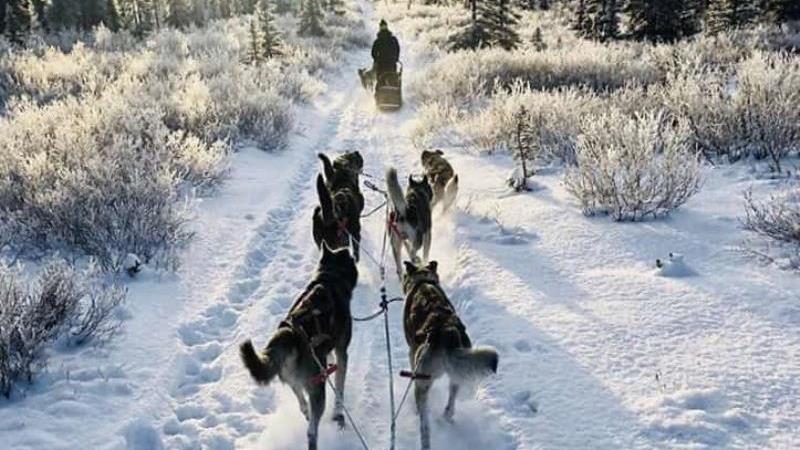
The broader Denali area offers several compelling activities worth incorporating if your schedule permits. Flightseeing operations near the park entrance provide glacier landings and Alaska Range overflights delivering a perspective on the landscape unavailable from any ground-based vantage point. White-water rafting on the Nenana River, which runs alongside the Parks Highway just outside the park entrance, ranges from gentle family-appropriate floats to serious Class IV rapids for more adventurous travelers. The village of Talkeetna, located about 100 miles south of the park entrance, serves as the base for Denali mountaineering expeditions and has an extraordinarily charming small-town character with excellent independent restaurants and access to the Susitna River. Sled dog kennel demonstrations near the park offer an engaging window into Alaska's working dog culture and the tradition of mushing.
Denali's weather is genuinely unpredictable and all reputable operators build contingency plans into their programs. If a specific bus route is canceled due to road conditions, mechanical issues, or extreme weather, the park typically offers rebooking on the next available departure — though this may not align with a tight cruise-connected schedule. Most cruise line land packages include built-in buffer time and have established relationships with park concessioners to manage weather disruptions as smoothly as possible for guests. For independently arranged visits, purchasing comprehensive travel protection insurance and allowing at least one additional buffer day in your Denali itinerary is strongly recommended. The park road can be temporarily closed by washouts, wildlife on the road, or severe weather at any time during the season, and maintaining schedule flexibility is the most effective tool for managing this reality gracefully.
Filters
Select a filter to refine results.
Tour Type
Tour Activity
 Cart
Cart
 USD
USD GBP
GBP AUD
AUD EUR
EUR CAD
CAD