



Tours in Seydisfjordur


Cruising to Seydisfjordur in a group?
Skip the crowded ship excursion bus. One dedicated planner will design a private shore experience around exactly what your group wants — coordinated from first enquiry to the moment you're back on board. More memorable, more flexible, and more affordable than you might expect. Spend less time organising, more time enjoying.
Explore Group Travel →Cruising to Seydisfjordur
Seydisfjordur sits at the innermost point of a narrow fjord in East Iceland, ringed on three sides by mountains that shed waterfalls from almost every crevice and cleft. The village of roughly 700 people occupies the flat delta at the fjord's head, its brightly painted wooden buildings — most of them Norwegian-era merchant houses from the late 19th and early 20th centuries — clustered along a river that bisects the settlement. From the water, the approach is one of the great arrivals in all of European cruising: the fjord narrows progressively as ships advance, the mountain walls rise higher, and the village resolves gradually from the mist like something from a Nordic fairy tale.
The village is compact enough to walk end to end in twenty minutes, but its architectural and cultural density rewards slower attention. The Bláa Kirkjan — the Blue Church — has become one of Iceland's most photographed buildings, its sky-blue facade and white trim mirrored in the river on calm mornings. Around it, the reconstructed wooden warehouses of the Technical Museum of East Iceland preserve the industrial heritage of the herring and fishing era that shaped this community. Street art has colonized the rainbow-painted bridge and several building facades, giving the village an unexpectedly contemporary creative identity alongside its historical character.
What truly distinguishes a day in Seydisfjordur is the landscape beyond the village. East Iceland is Iceland's least visited region, which means its natural wonders remain genuinely unspoiled. Studlagil Canyon — discovered by wider audiences only in 2017 when a hydroelectric diversion lowered river levels and revealed the extraordinary hexagonal basalt column formations below the waterline — ranks among Iceland's most spectacular geological sites. The Eastfjords highlands support a population of free-roaming reindeer, descended from animals introduced from Norway in the 18th century, and summer brings Atlantic puffins in their thousands to nest on the sea cliffs around the outer fjord.
The journey from the cruise anchorage into the wider East Iceland landscape is also the experience: mountain roads ascending from sea level to open heathland, the quality of light on water and rock, and the absence of tour-bus queues that characterizes the Golden Circle to the west. Those who explore beyond the village will find East Iceland rewards the effort with natural spectacle on a scale that even seasoned Iceland visitors find extraordinary.
Top things to do in Seydisfjordur on a cruise stopover
Studlagil Canyon: Iceland's Hidden Geological Marvel
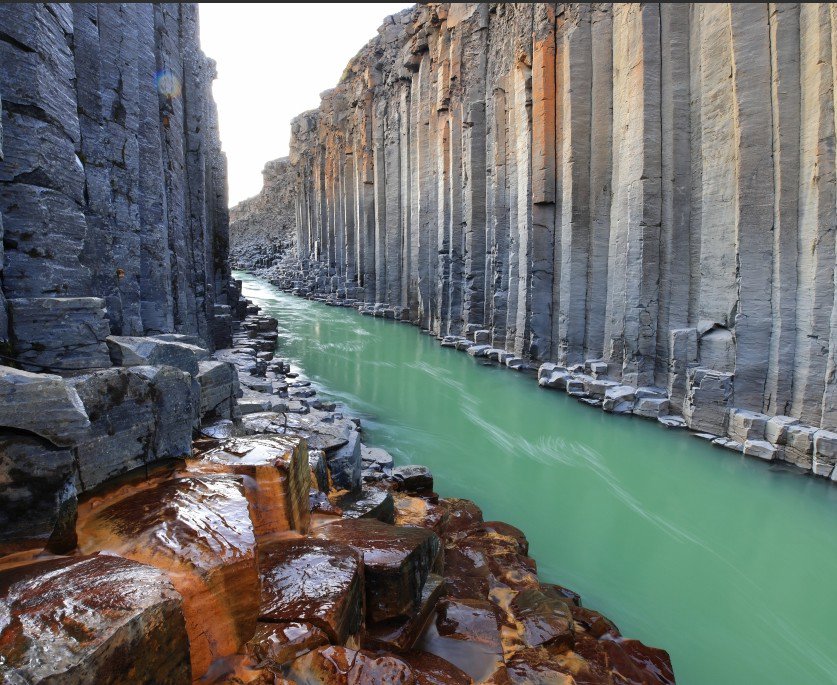
Studlagil Canyon remained largely unknown outside East Iceland until relatively recently, when a hydroelectric project lowered the water level of the Jokla river and exposed one of Iceland's most extraordinary geological formations below what had previously been a shallow riverbed. The canyon walls are composed of dense, closely packed hexagonal basalt columns — formations created by the slow, even cooling of volcanic rock — which rise from the glacial blue-green water in near-perfect geometric arrays of grey and black. The visual effect is unlike anything else in Iceland: a hidden slot canyon of mathematical precision cut through raw volcanic landscape. Reaching Studlagil requires crossing the highlands from Seydisfjordur, but the journey through the dramatic East Iceland interior is itself a significant part of the experience.
Seydisfjordur Village: Norwegian Heritage on an Icelandic Fjord
Seydisfjordur's historic center preserves one of Iceland's finest collections of 19th and early 20th-century timber architecture — a legacy of the Norwegian merchants, fishermen, and craftsmen who settled this remote fjord during the herring boom. The buildings have been restored and repainted in their original vivid colors: blues, greens, yellows, and reds that stand in extraordinary contrast to the grey mountain walls and silver waterfalls framing the scene. The Bláa Kirkjan (Blue Church) at the end of the rainbow-paved Norðurgata pedestrian path has become the village's defining image. The Technical Museum of East Iceland occupies several of the original warehouses and documents the fishing and telecommunications heritage that made Seydisfjordur one of the most connected communities in early 20th-century Iceland.
Puffin Watching: Atlantic Puffins in Their Natural Habitat
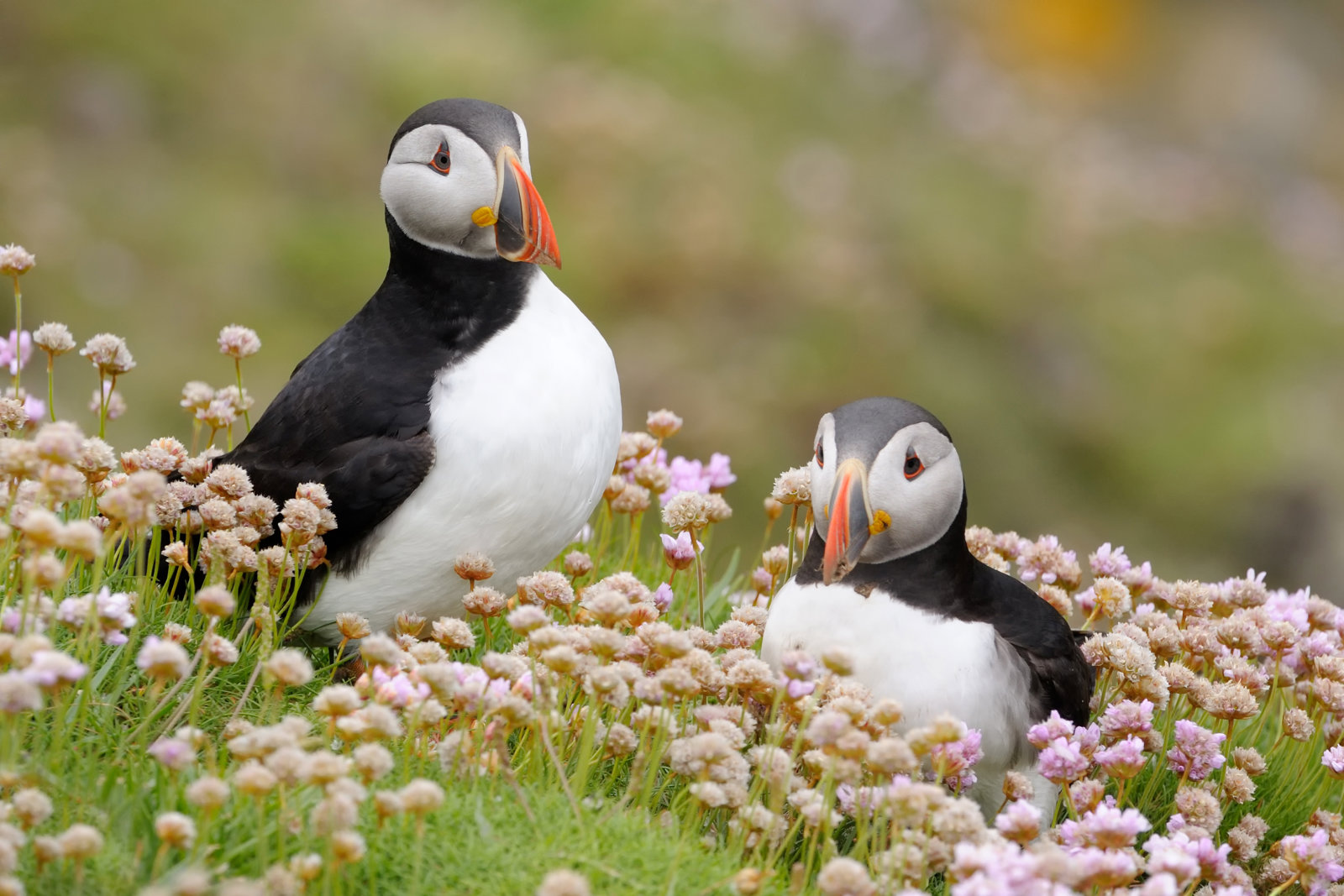
The outer Eastfjords coastline hosts one of Iceland's most accessible puffin-watching opportunities during the summer nesting season, which runs from mid-May through August. Atlantic puffins return annually to their clifftop burrow colonies, and the combination of their somewhat comical appearance — the oversized, colorful bill, the upright posture, the slightly surprised expression — with their acrobatic flight and diving behavior makes them endlessly entertaining subjects for observation and photography. Guided excursions from Seydisfjordur visit coastal vantage points where the birds nest in large numbers at close range. Binoculars significantly enhance the experience, and morning visits when the birds are most active tend to be most rewarding.
Reindeer Encounters: Iceland's Free-Roaming Highland Herds
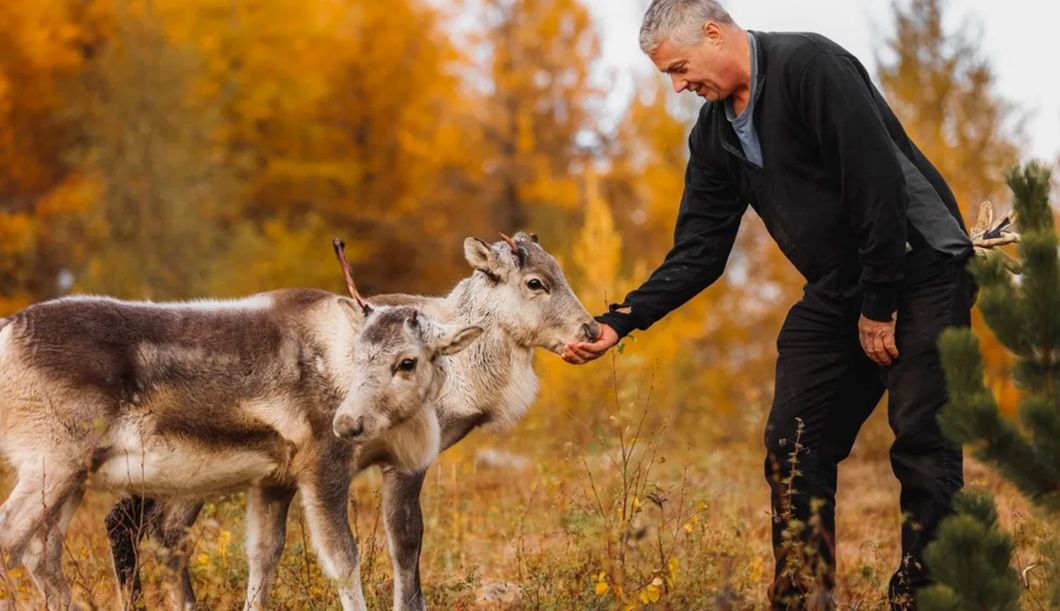
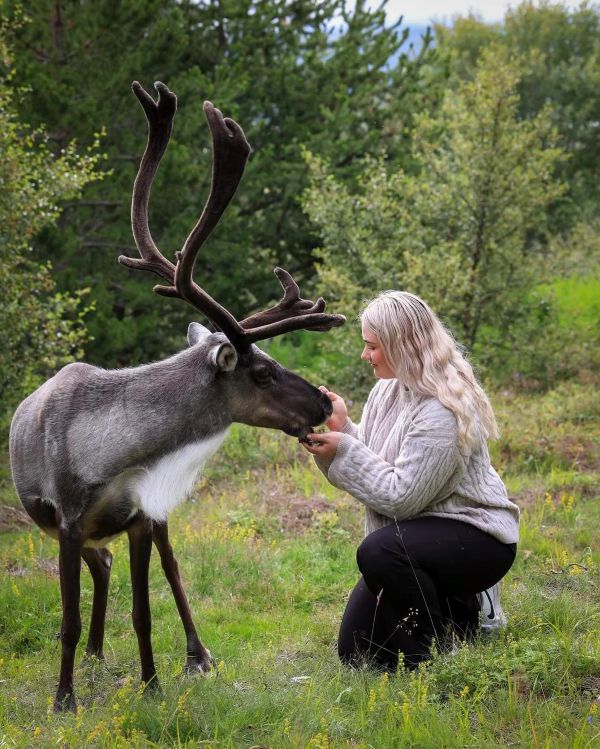
East Iceland is the only part of Iceland where reindeer roam freely in the wild — descendants of animals brought from northern Norway in 1771 as a food source that eventually ranged across the Eastfjords highlands and established self-sustaining herds. Today approximately 3,000 animals roam the highlands between the Eastfjords and the glacier Vatnajokull, descending to lower ground in summer to graze the meadows and river valleys accessible from Seydisfjordur. Encountering reindeer in their open highland setting — often in groups of several animals, unhurried and surprisingly tolerant of careful observers — is one of East Iceland's most distinctive wildlife experiences and one that no other part of Iceland offers.
Gufufoss and the Waterfalls of the Eastern Fjords
East Iceland's fjords are defined as much by water as by rock. The steep mountain walls surrounding Seydisfjordur shed numerous waterfalls visible directly from the village — the cascades of Fjardara and several unnamed falls tumbling from the plateau edge form a constantly shifting backdrop to the fjord. Gufufoss, a powerful waterfall on the Fjardara river accessible on guided excursions from the village, is one of the more dramatic falls in the east of the island, plunging into a narrow gorge surrounded by basalt formations. East Iceland's waterfall landscape lacks the single landmark status of Dettifoss or Skogafoss but compensates with an accumulation of falls throughout the landscape that creates an ambient sense of water and motion throughout any journey in the region.
The Eastfjords: Iceland's Quieter, Wilder Coast
The Eastfjords region represents Iceland at its most unfiltered — a succession of deep fjords incised into ancient rock where small fishing communities sit at the end of long drives along single-track roads, and the landscape changes character entirely from the volcanic drama of the south and the geothermal plateau of the north. The light here in summer has a particular quality: low-angled and golden even at midday, picking out the texture of moss-covered rock and the colors of the painted village facades with unusual clarity. Seabirds — Arctic terns, fulmars, kittiwakes, and the ubiquitous puffins — are constant companions along the coast, and the relative absence of tourist infrastructure means that encounters with wildlife and landscape feel genuinely unmediated.
Seydisfjordur travel tips
Dress for Arctic Weather Regardless of the Forecast. East Iceland weather is notoriously variable. A clear morning in the fjord can give way to cloud, wind, and cold rain within an hour as weather systems funnel along the mountain valleys. The temperature in summer typically ranges between 8 and 14 degrees Celsius, feeling considerably colder with wind chill on exposed highland roads and canyon viewpoints. Waterproof outerwear, a warm mid-layer, and sturdy footwear with grip are essential for any excursion beyond the village. Do not rely solely on the conditions visible from the tender.
Book Excursions Before You Board Your Ship. Seydisfjordur receives a limited number of cruise calls each season, and the local excursion capacity — particularly for Studlagil Canyon and wildlife-focused tours — is constrained by the small scale of the destination. The best excursions fill well in advance of arrival, and passengers who wait until the ship anchors often find themselves with limited options. Pre-booking through your cruise line's shore excursion program or an independent operator before departure ensures access to the most sought-after experiences.
Bring Binoculars for Wildlife Watching. A compact pair of binoculars transforms the wildlife experience in East Iceland. Puffins on cliff colonies are best observed at a respectful distance where they behave naturally, and binoculars allow genuine behavioral observation rather than just the presence of small birds on a distant ledge. Reindeer in the highlands are often spotted across open moorland where the ability to observe detail at range significantly enhances the encounter. Seabirds from the tender and from coastal viewpoints also reward closer attention. This single piece of kit adds more to the East Iceland wildlife experience than almost any other preparation.
Walk the Rainbow Street and Visit the Blue Church First. Seydisfjordur's most iconic sights — the rainbow-painted Norðurgata pedestrian path leading to the Blue Church — are best enjoyed in the first hour or two after arrival, before other passengers have fully dispersed through the village. The Blue Church interior is often open for visitors and the acoustics inside are extraordinary; the building regularly hosts chamber music concerts in summer. The short walk from the pier to the church, along the river and past the restored timber buildings, is the essential Seydisfjordur experience and requires no guide or preparation.
Budget Time for the Technical Museum of East Iceland. The Technical Museum of East Iceland, housed in several restored harbourside warehouses, is one of the more engaging regional museums in the country. Its collections cover the herring boom that transformed Seydisfjordur in the early 20th century, the establishment of one of Iceland's first telegraph cables, and the daily life of fjord communities before road connections made them less isolated. The museum is compact enough to explore in 45 minutes but contains context that makes the village architecture and setting considerably more comprehensible. Entry fees are modest.
Keep an Eye on Tender Timing Throughout the Day. As a tender port, Seydisfjordur requires passengers to return to the pier for the tender back to the ship rather than walking directly aboard. Tender schedules operate throughout the day but final tenders depart strictly on time — missing the last tender means missing the ship. Build a buffer of at least 30 to 45 minutes into any excursion return time, and check the ship's daily program for the exact last tender time rather than relying on memory. Excursion operators who work with cruise ships are generally attentive to tender deadlines, but independent explorers should be especially careful.
Port Facts Every Cruiser Needs To Know
Seydisfjordur shore excursion FAQs
Most cruise ships anchor in the fjord and tender passengers ashore to the small pier near the village center. The tender journey takes approximately 10 to 15 minutes and is itself a scenic approach through the narrow fjord with waterfalls visible on both sides. In rare instances, smaller vessels may be able to berth directly at the pier. Check your ship's daily program for the specific arrangements on your call.
Studlagil Canyon is a remarkable geological formation in East Iceland where the Jokla river flows through walls of densely packed hexagonal basalt columns. It is widely considered one of Iceland's most visually striking natural sites. The canyon is accessible from Seydisfjordur by guided excursion, with the journey taking approximately 90 minutes each way through the East Iceland highlands. The round trip requires most of a ship's day in port, but for passengers with an interest in Iceland's landscapes, it is one of the most distinctive excursions available anywhere on a northern European cruise itinerary.
Yes — Atlantic puffins are present in the Eastfjords region from approximately mid-May through August, nesting on coastal cliffs accessible by guided excursion from Seydisfjordur. The fjord walls immediately surrounding the village also host seabirds, though the best puffin-watching sites are on the outer coast. Guided wildlife excursions visit the most productive nesting locations. Puffins are typically most active and visible in morning hours.
East Iceland is the only part of Iceland with wild-roaming reindeer, and the highlands accessible from Seydisfjordur fall within their range. Sightings are not guaranteed — reindeer move freely across large areas of highland — but guided excursions specifically focused on wildlife watching in the Eastfjords have good encounter rates in summer when animals descend from the highest ground. Reindeer sightings can also occur along highland road sections during excursions to other destinations such as Studlagil Canyon.
The village is small — a thorough walk taking in the pier area, the river path, Norðurgata rainbow street, the Blue Church, the Technical Museum warehouses, and the main residential streets can be completed comfortably in 60 to 90 minutes. Visitors who stop for coffee at the local cafe, browse the small shops, or spend time in the Technical Museum should allow two to two and a half hours for the village itself. This leaves ample time for an excursion into the wider landscape if arriving early on the tender.
East Iceland in summer (June through August) is characterized by cool, variable conditions. Average temperatures range from approximately 8 to 14 degrees Celsius, with the fjord valley sometimes warmer on clear days when the sun reaches the valley floor. Rain is common and can arrive quickly with little warning as weather systems track along the fjords. Wind can make temperatures feel considerably colder, particularly on highland excursions above sea level. Layered, waterproof clothing is essential regardless of what the morning looks like.
Yes — English is universally spoken throughout Iceland, including in Seydisfjordur. All museum staff, cafe workers, excursion guides, and villagers encountered during a typical visit will speak fluent English. Icelandic is the national language but English-language signage, menus, and informational materials are standard throughout the country's tourism infrastructure. Communication presents no barrier for international visitors.
No — card payments are accepted in essentially every business in Seydisfjordur including the cafe, museum, and any small shops. Iceland is one of the most cashless societies in the world, and attempting to pay in Euros or other foreign currency will not be accepted. If you wish to make purchases, ensure your debit or credit card is set up for international transactions before travel. ATM availability in a village this small is limited, so relying on cards is the practical approach.
The Bláa Kirkjan (Blue Church) is Seydisfjordur's most recognizable landmark — a wooden church painted in a distinctive sky blue with white trim, situated at the end of the rainbow-painted Norðurgata pedestrian path. Built in 1922, the church represents the Norwegian-influenced timber architecture that characterizes much of the village. Its interior is elegant and modest, with excellent acoustics that make it a venue for the Seydisfjordur Music Festival held in summer. The church and the rainbow path leading to it are the village's most photographed subjects and the natural starting point for any village walk from the pier.
Venture Ashore offers several excursions from Seydisfjordur covering the highlights of East Iceland. Options include an East Iceland wilderness adventure visiting reindeer country, waterfalls, and Studlagil Canyon; a comprehensive Eastfjords highlights tour featuring puffins, reindeer, and fjord landscapes; a focused puffin watching and Gufufoss Waterfall excursion; and an Icelandic waterfalls and Studlagil Canyon tour. These range from half-day to nearly full-day experiences and collectively cover the major natural attractions of this extraordinary region.
Filters
Select a filter to refine results.
Tour Type
Tour Activity
 Cart
Cart
 USD
USD GBP
GBP AUD
AUD EUR
EUR CAD
CAD