



Tours in Ha Long Bay (Hanoi)


Cruising to Ha Long Bay (Hanoi) in a group?
Skip the crowded ship excursion bus. One dedicated planner will design a private shore experience around exactly what your group wants — coordinated from first enquiry to the moment you're back on board. More memorable, more flexible, and more affordable than you might expect. Spend less time organising, more time enjoying.
Explore Group Travel →Cruising to Ha Long Bay (Hanoi)
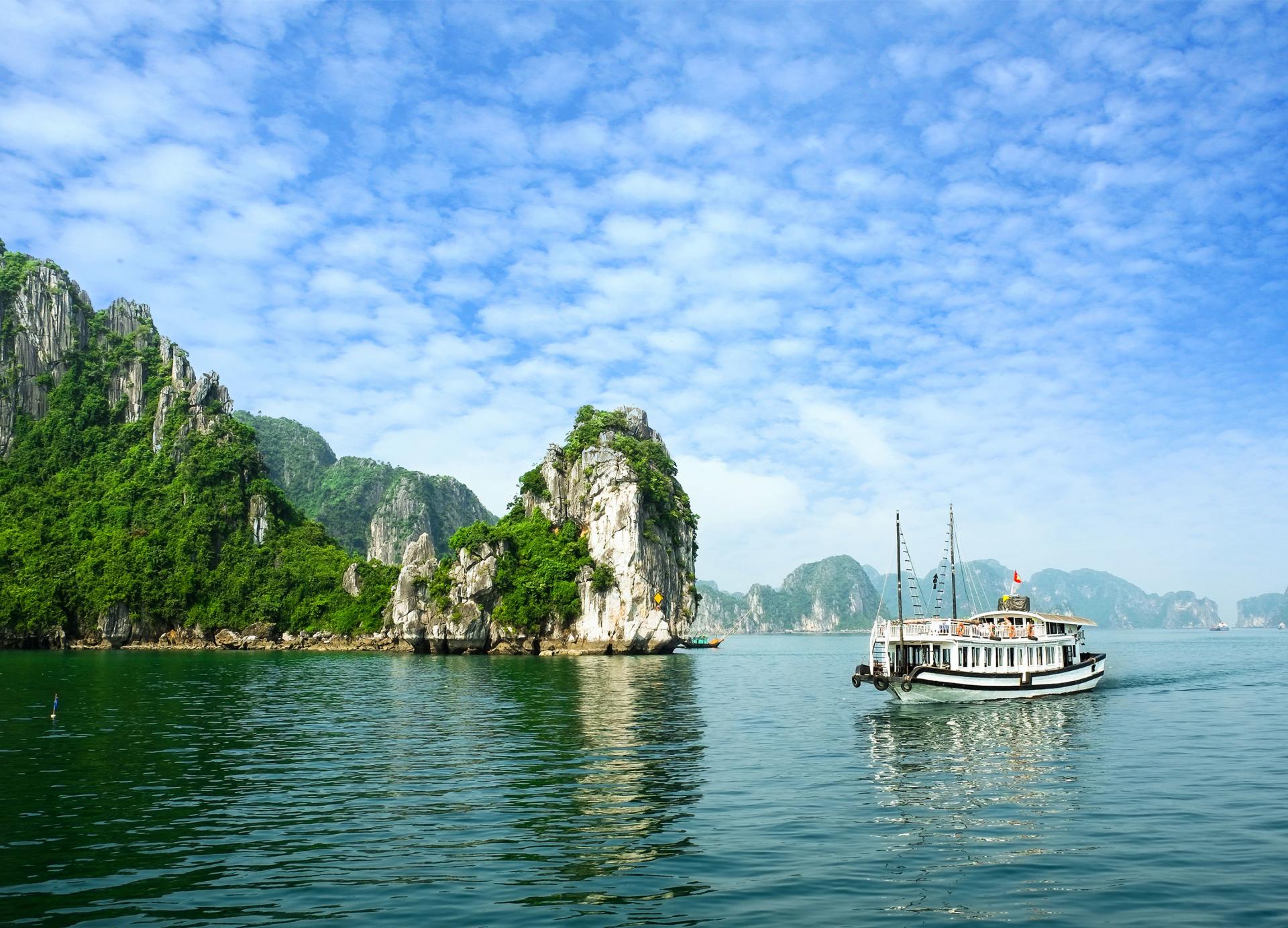
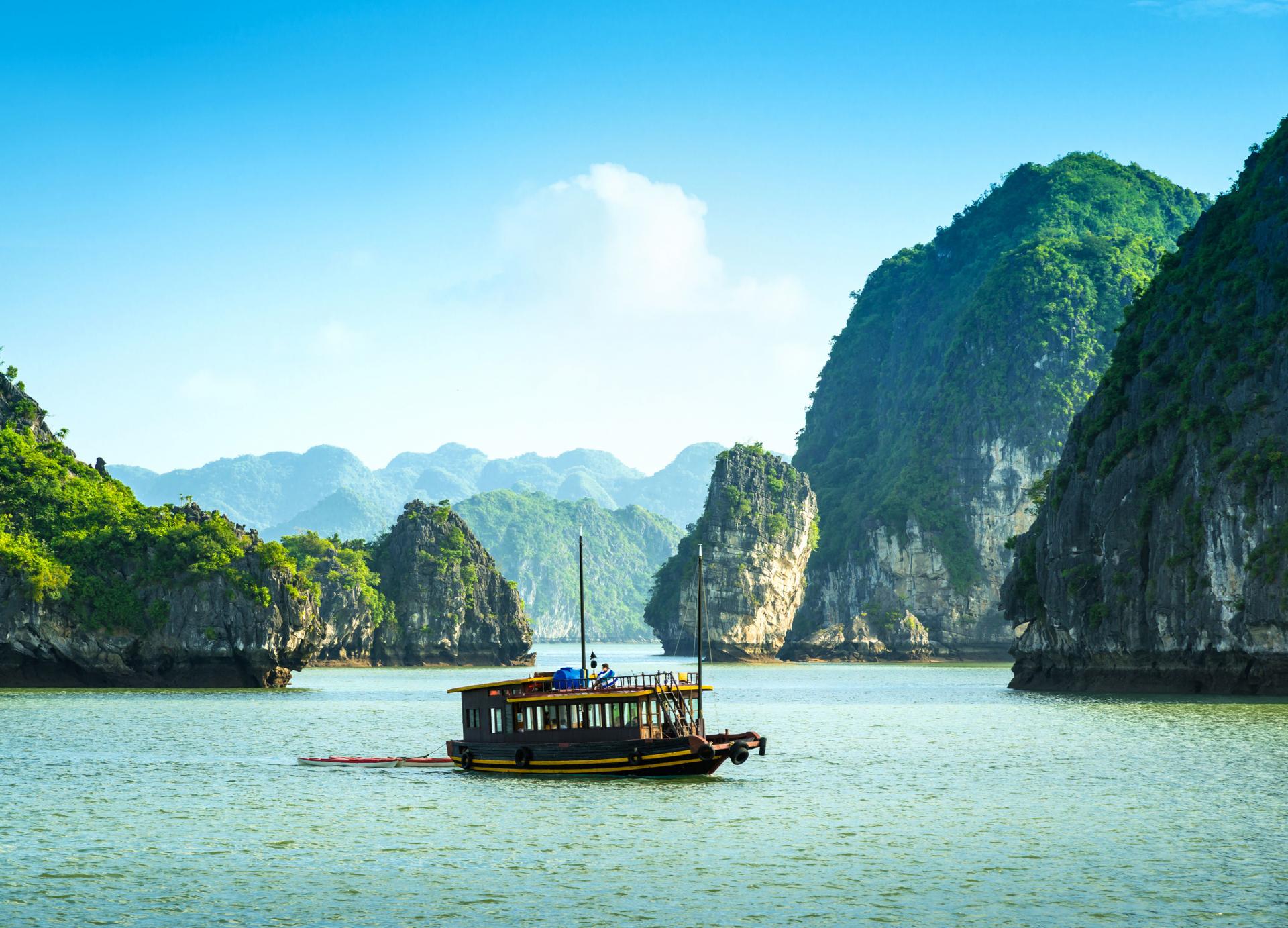
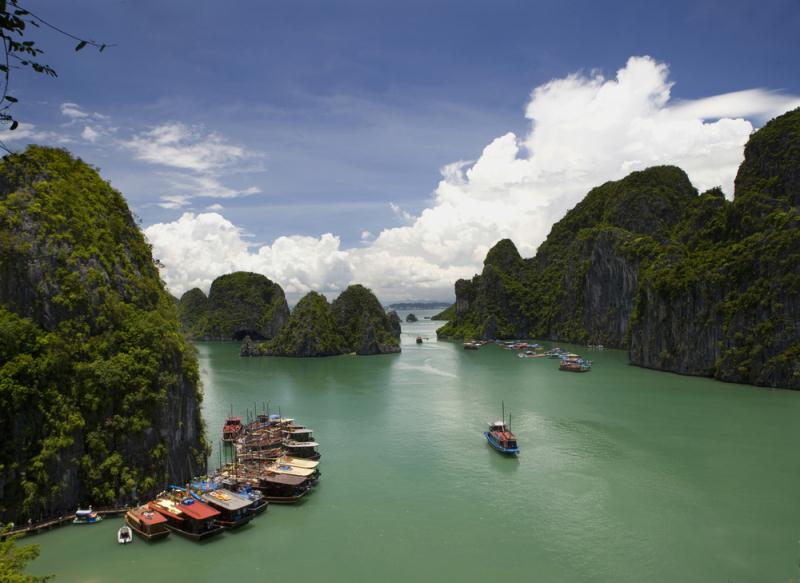
Ha Long Bay is one of those places that resists the temptation to be adequately described. Roughly 1,600 limestone islands and islets rise sharply from the Gulf of Tonkin, their flanks streaked with rainforest and sea caves worn smooth by millennia of tidal action. UNESCO recognised the bay's Outstanding Universal Value in 1994, and the designation has done little to dilute the experience of drifting among these formations at dawn, when low mist softens every edge and the water turns the colour of green jade.
For cruise passengers, Ha Long Bay is accessed by tender from a ship anchored in the bay itself — putting you immediately inside the spectacle rather than approaching it from shore. This intimacy is one of the port's great gifts. You are not travelling toward the landscape; you arrive already within it. Local junk-style day boats, operated by licensed operators from the pier at Bai Chay or through your ship, thread through the karsts to caves, hidden lagoons, and floating fishing villages that have existed here for generations.
The bay's headline attractions are the cave systems punched deep into the limestone. Hang Sung Sot (Surprise Cave) contains three chambers large enough to hold hundreds of people, its stalactites illuminated in theatrical fashion. Thien Cung Cave, closer to the anchoring zone, rewards those who push beyond the first chamber with formations of surprising delicacy. Kayaking through low arches into enclosed lagoons — particularly at Luon Cave — offers the kind of physical contact with the landscape that no boat deck can replicate.
Hanoi, Vietnam's capital, lies more than 170 kilometres to the west, making it a demanding day trip of three-plus hours each way by road. Most passengers wisely choose to spend their hours in the bay itself, where the rewards are immediate and the logistics are simple. Those determined to reach Hanoi should book a private transfer well in advance and accept that the round trip will consume most of the day, leaving only a few hours in the Old Quarter.
Top things to do in Ha Long Bay (Hanoi) on a cruise stopover
Kayaking Through Luon Cave Lagoon
The low arch at Luon Cave demands you lie flat in your kayak as the limestone roof grazes past — a moment of mild drama that opens into a circular lagoon completely enclosed by karst walls. Macaques pick along the cliff edges; the water is still enough to mirror the rock above. This is one of the few experiences in Ha Long Bay that genuinely rewards physical participation over passive observation. The lagoon sits roughly 14 kilometres from Bai Chay pier and is a standard stop on most licensed bay tours. Paddle at your own pace; the enclosed geography means you cannot stray far. Morning visits offer the calmest water and the best light on the north-facing walls.
Hang Sung Sot (Surprise Cave)
The name comes from the reaction of the first European explorers to enter — three successive chambers, each larger than the last, studded with formations that the imagination renders as animals, pagodas, and figures. The cave is heavily visited but genuinely impressive in scale; the second chamber alone is large enough to swallow a small cathedral. Arrive early in the tender cycle to walk through before the main crowd of tour boats arrives around midday. The path through is paved and well-lit; comfortable shoes suffice. Allow 45–60 minutes for a thorough exploration, including the viewpoint platform on the island's summit that looks back over the bay.
Ha Long Buddhist Heritage: Pagodas, Shrines and Sacred Islands
Ha Long Bay's karst islands hold Buddhist shrines and pagodas that predate the bay's emergence as a tourist destination by centuries. Stone steps carved into cliff faces lead to cave shrines where monks and lay worshippers still offer incense and prayers for safe passage on the water. A Buddhist heritage tour visits multiple sites across the bay — cave pagodas, island temples, and shrines that served the floating village communities for generations. The atmosphere at cave shrines — candlelit, fragrant with incense, alive with chanting on festival days — is a complete contrast to the geological spectacle of the show caves. These spaces connect the bay's striking landscape to a long human story: the limestone formations have been inhabited and venerated for thousands of years, and the religious geography of the bay reflects that relationship. Morning visits, before tourist boats arrive, are by far the most atmospheric.
Yen Tu Mountain: Vietnam's Sacred Buddhist Pilgrimage Peak
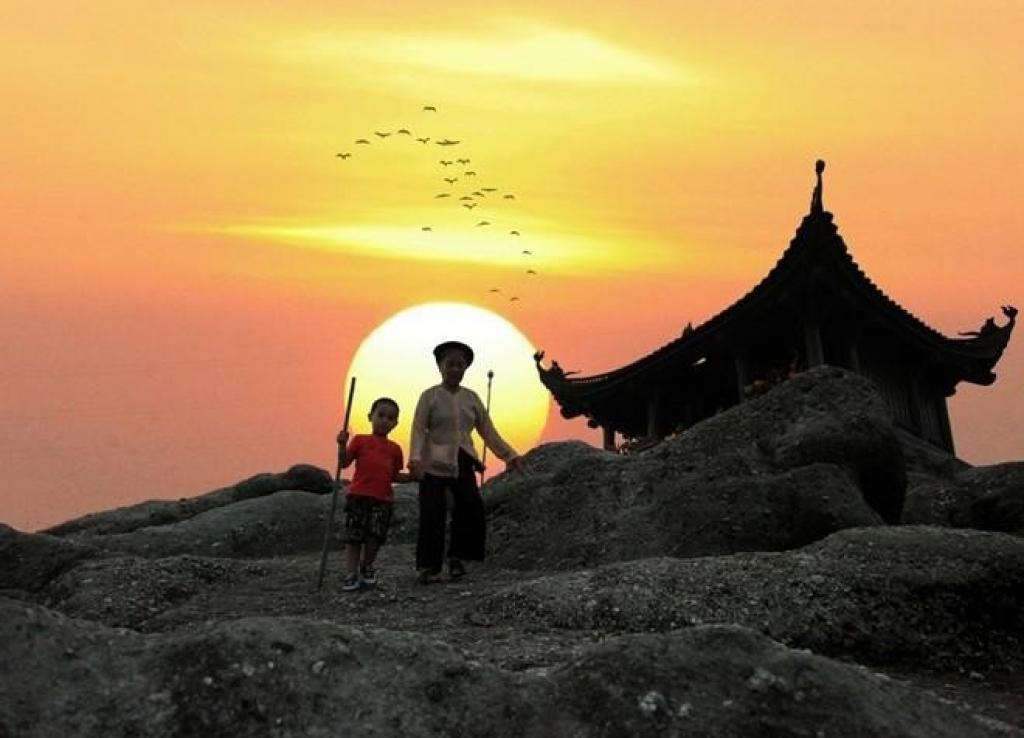
Rising from the forests of Quang Ninh province, Yen Tu Mountain is one of Vietnam's most important Buddhist sites — where King Tran Nhan Tong abdicated in 1299, took monastic vows, and founded the Truc Lam school of Vietnamese Zen Buddhism. The mountain is dotted with pagodas, stupas, and bronze statues along a trail ascending through ancient forest to a summit pagoda at 1,068 metres. A cable car reaches the upper sections, making the key shrines accessible without a full mountain trek. Vietnamese Buddhists climb year-round, particularly during the spring festival season, and the trail is genuinely a place of continuing pilgrimage rather than heritage tourism. The surrounding Yen Tu Nature Reserve protects primary forest covering the lower flanks — macaques and rare birds are visible from the cable car. The mountain is roughly two hours from Ha Long Bay, making it a full-day excursion from the port.
Hanoi's Old Quarter: 36 Streets and a Thousand Years of Trade
Hanoi's ancient trading district, the 36 Streets (Pho Co), takes its name from the guilds that organised commerce here — each street historically named for the commodity sold: Paper Street, Silver Street, Cotton Street, Tin Street. Today it survives as a dense, living urban fabric where shop-houses open directly to the street, motorcycles navigate lanes barely wide enough for a cart, and the intensity of Vietnamese urban life is fully on display. Hoan Kiem Lake — the Lake of the Restored Sword — at the Old Quarter's southern edge provides calm and historical orientation: the island pagoda of Ngoc Son, reached by a red-lacquered bridge, holds a preserved giant tortoise and a shrine to the general Tran Hung Dao. Together, Old Quarter lanes and the lake circuit make two to three hours of walking that reveals more about Hanoi than any other single area — architecture shifts from 19th-century tube houses to French colonial to socialist concrete within a few hundred metres.
Train Street Hanoi: Vietnam's Most Famous Railway Alley
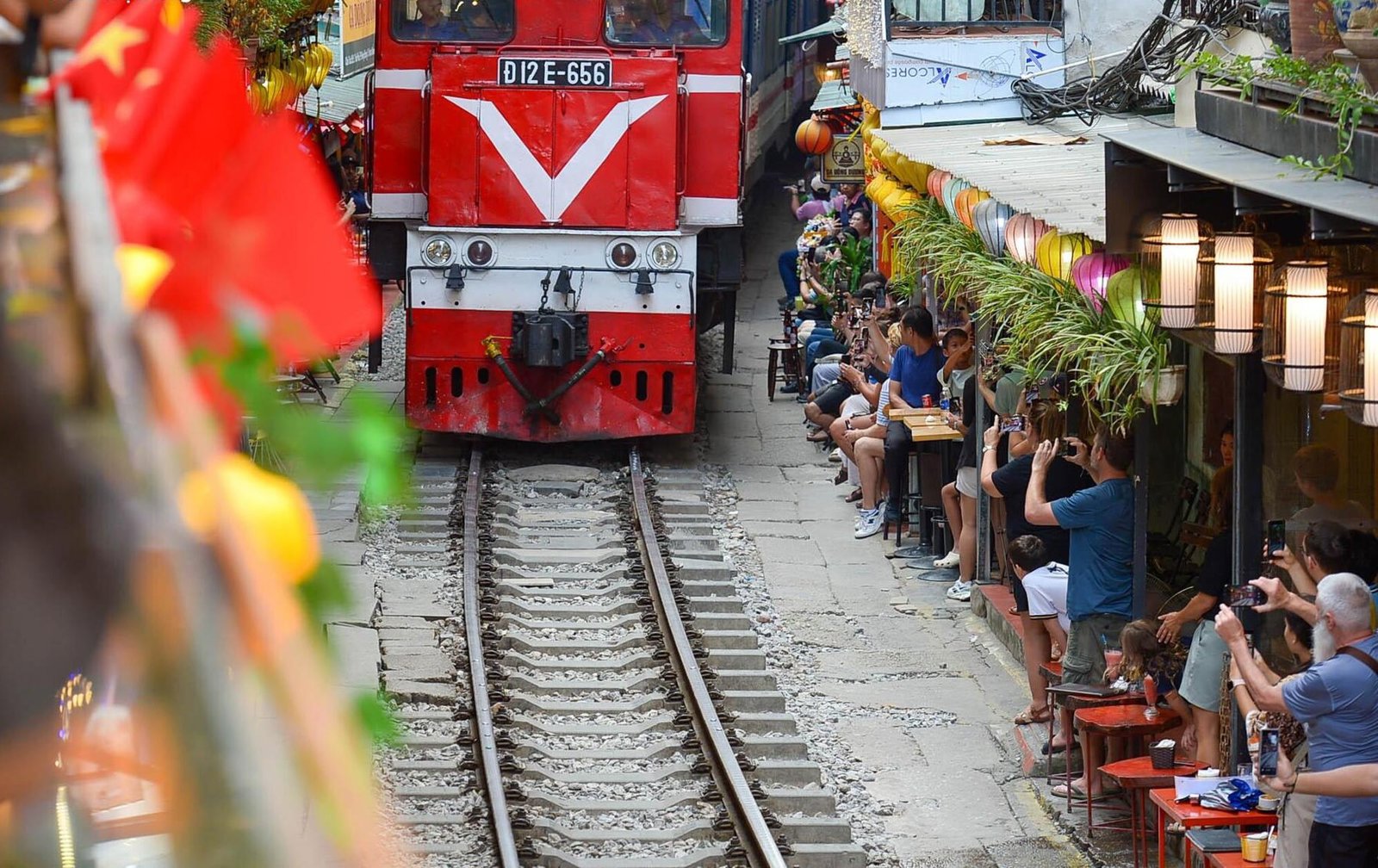
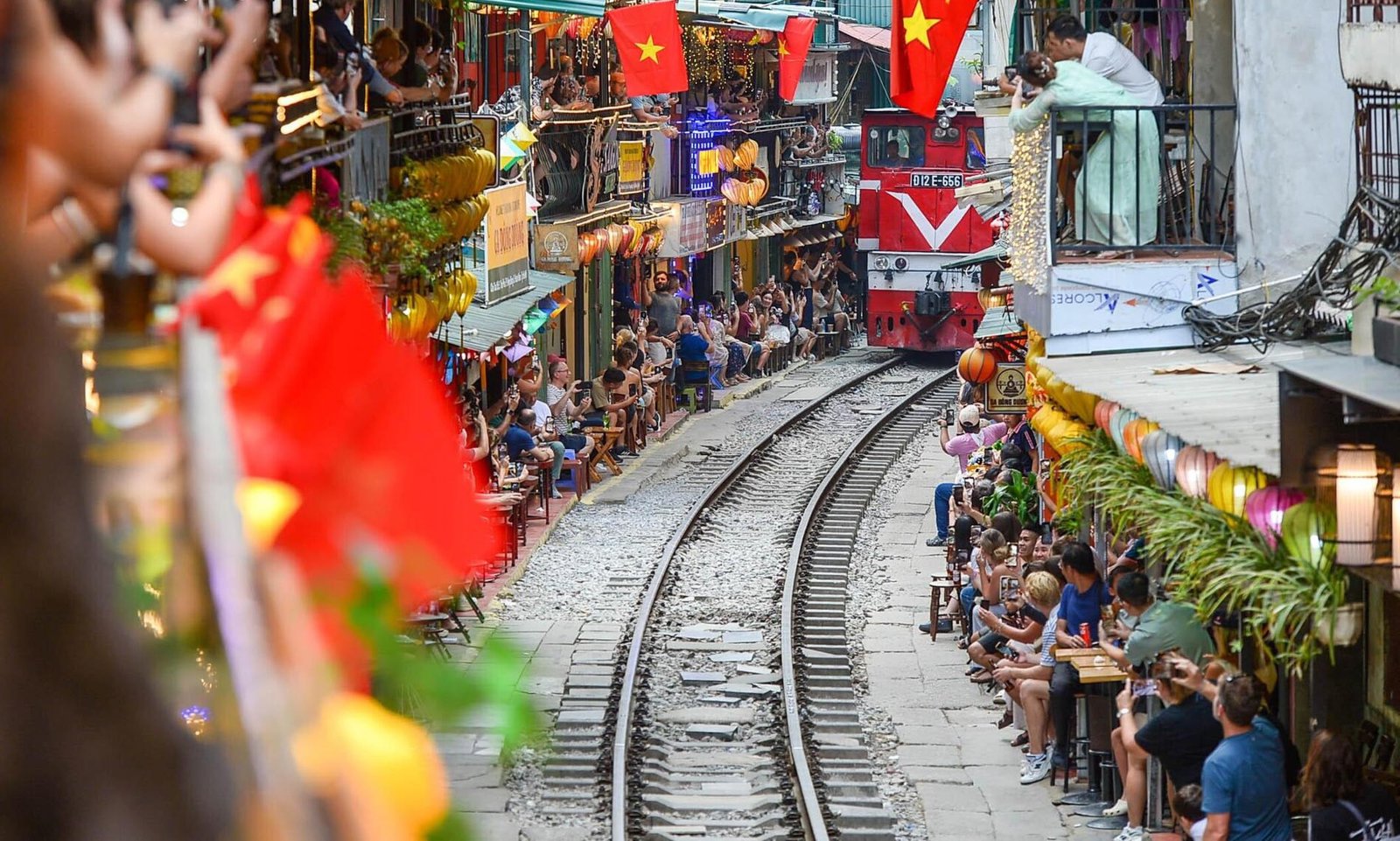
Twice a day, a passenger train passes through a residential alley in central Hanoi — a narrow lane of shop-houses, clotheslines, potted plants, and cafés where the tracks run so close to the buildings that residents pull chairs and shutters aside before each train passes. The alley became internationally known when photographs of the locomotive threading between house walls at arm's reach circulated widely — an image that compressed Vietnamese urban life into a single frame. The experience requires timing — trains follow a posted schedule — and the few minutes of a train's passage, with café customers pressed to walls and children watching from doorways, captures something genuine about how Hanoi occupies its own space. The surrounding Ba Dinh and Hoan Kiem streets offer French colonial architecture, tree-lined boulevards, and street food stalls that explain why Hanoi carries its 'Paris of the East' title — best appreciated on a slow walk between café stops.
Ha Long Bay (Hanoi) travel tips
Take the First Tender Ashore. Tender queues build quickly after 9 am as passengers converge simultaneously. Boarding the earliest available tender gets you to Bai Chay pier before the main wave of tour boats departs, meaning caves and kayaking spots are less crowded. It also gives you maximum time to reach further sites in the bay. The extra hour at the start of the day is almost always worth the early alarm.
Photograph Ha Long Bay from the Water, Not Just the Deck. Ha Long Bay's visual drama is best captured from water level. On kayaks and smaller day boats, the camera sits close to the surface and the true scale of the karst towers becomes apparent in a way a high ship's deck cannot convey. For photography, the hour after sunrise and the two hours before sunset produce the most interesting light; overcast days soften edges and turn the grey water reflective in their own way. A waterproof case or dry bag for your camera is essential — paddle spray and light rain are routine on the bay. Inside the caves, switch the flash off entirely: formations are more effectively rendered by the existing coloured ambient lighting, and most operators prohibit flash to protect sensitive cave ecosystems. If your phone or camera allows exposure bracketing, use it in the caves — the contrast between dark rock and lit stalactites typically requires two shots to capture the full tonal range.
Pack for the Bay, Not the City. Ha Long Bay's on-water environment calls for different preparation than a city excursion: reef-safe sunscreen (the bay ecosystem is sensitive), a hat with a full brim, water shoes for rocky cave entrances, a dry bag for phones and cameras in kayaks, and a light rain jacket that compresses small. Leave luggage and valuables on the ship. Quick-dry clothing is more practical than cotton in the humid bay environment.
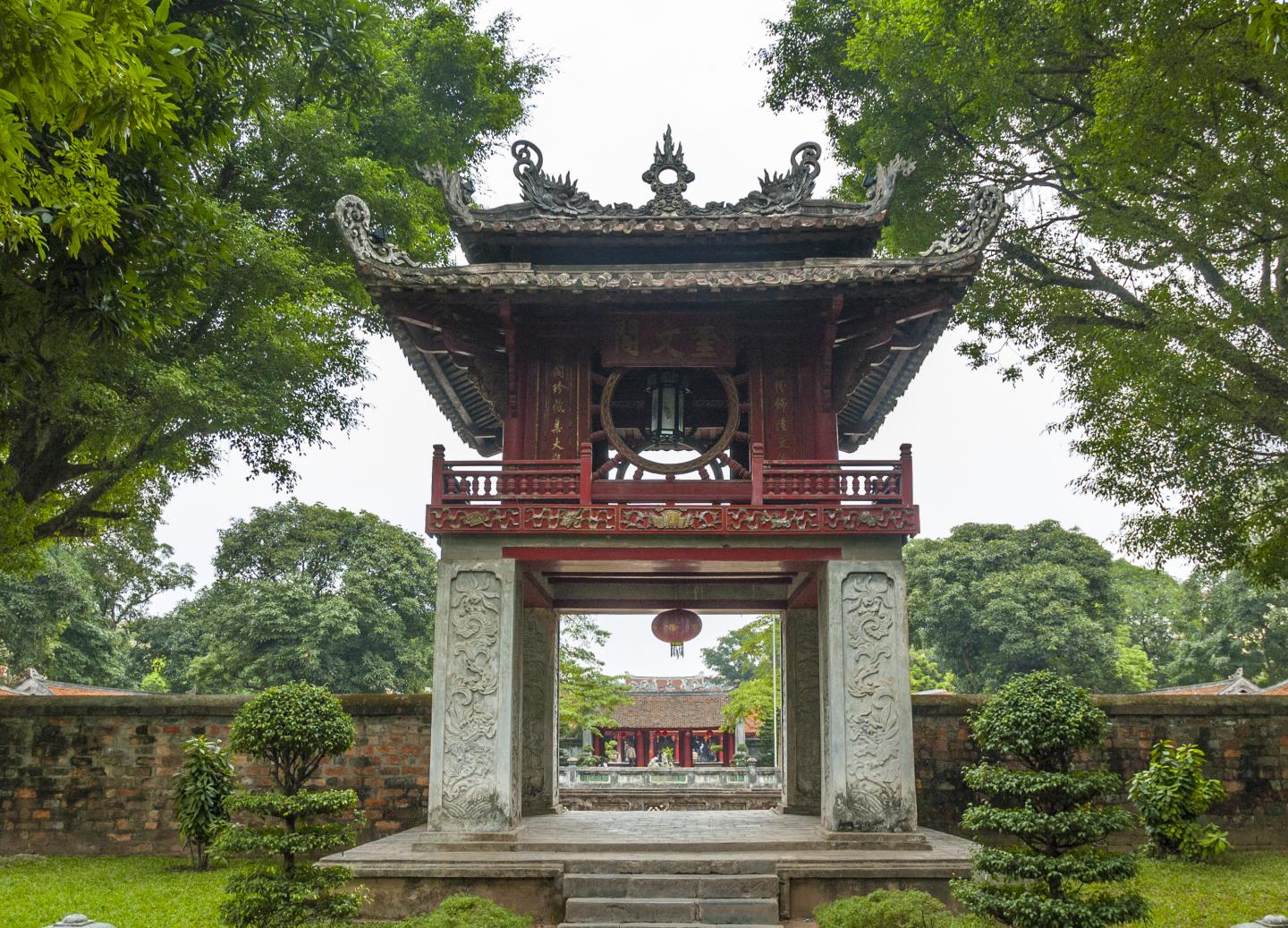
Reconsider the Hanoi Day Trip Unless It Is a Priority. Hanoi is a genuinely absorbing city — the Old Quarter, Hoan Kiem Lake, and the Temple of Literature reward a full day with ease. But the 3–4 hour road journey each way through Haiphong province leaves little time for meaningful exploration and significant time in a vehicle. If Hanoi is on your bucket list, consider whether a future trip dedicated to Vietnam would serve the city better. Passengers who stay in the bay consistently report greater satisfaction.
Motion Sickness Precautions for Tender and Bay Boats. Ha Long Bay is generally sheltered, but tender rides in cross-swells and the rolling motion of traditional junk boats can affect passengers who are sensitive to motion. Take any preventive medication at least an hour before the first tender departure. Sitting outside on the bow or stern of day boats reduces symptoms for most people; below-deck cabins on bay boats should be avoided if you have any history of seasickness.
Respect the Floating Village Communities. Ha Long Bay's floating villages are home to people navigating significant change — fishing quotas have tightened, children attend school on shore, and tourism income is supplementing traditional livelihoods. Approach with the same courtesy you would extend to any community hosting visitors. Ask before photographing individuals. Do not throw food to the macaques (it disrupts their diet and behaviour). Purchase anything sold by village residents directly rather than through intermediaries where possible.
Port Facts Every Cruiser Needs To Know
Ha Long Bay (Hanoi) shore excursion FAQs
Ships anchor in Ha Long Bay rather than docking at a pier, and passengers are ferried ashore by tender boats. The tender ride to Bai Chay pier typically takes between 15 and 30 minutes depending on where the ship is anchored within the bay. Tender schedules are managed by the cruise line; there is usually a designated return time well before the ship's all-aboard deadline. Check with your cruise director on arrival for the day's specific tender timetable and any weather-related adjustments.
The tender boarding process requires stepping between vessels and navigating a gangway, which presents challenges for passengers with significant mobility limitations. Once on a day-tour boat, movement around the deck is generally straightforward on calm days. Cave visits involve uneven stone paths and steps that are not wheelchair accessible. Kayaking requires upper body strength and the ability to transfer from a seated position into a low kayak hull. Passengers with limited mobility should speak with the cruise line in advance; some operators offer adapted boat excursions that allow scenic bay cruising without cave or kayak components.
Yes, but it requires careful planning and realistic expectations. Hanoi is approximately 170 kilometres from Ha Long Bay, and the road journey through Haiphong takes between three and four hours each way, depending on traffic — which can be heavy on the outskirts of both cities. A passenger leaving on the first tender at, say, 8 am could arrive in Hanoi by noon, have roughly two to three hours in the city, and begin the return journey by 3 pm to make a 7 pm all-aboard. Private car hire is the only practical option; public transport connections are not feasible for a day visit. Many passengers find the ratio of transit time to city time unsatisfying and choose to stay in the bay.
Ha Long Bay's water quality varies by location and season. Some areas near the floating villages and ferry routes carry visible surface debris or discolouration from boat traffic. Designated swimming beaches, including Ti Top Island, are generally cleaner and maintained by local authorities. Jellyfish are present seasonally, particularly from May to August; ask your boat crew about current conditions before entering the water. Swimming directly off day-tour boats is not standard practice on most licensed excursions. The bay's waters are not comparable to an open-ocean beach experience.
The Vietnamese Dong (VND) is the local currency. Exchange rates at the pier or on board the ship are generally less favourable than pre-arranged exchanges. For a typical bay day — cave entrance fees, a kayak rental, lunch, and a few small purchases — budget approximately 500,000–800,000 VND per person (roughly equivalent to USD 20–35, though this fluctuates). USD cash is accepted by most tourist-facing operators at roughly posted rates. Credit and debit cards are not reliably accepted at cave ticket booths, pier-side food stalls, or on smaller day boats. Bring small-denomination notes; large bills can be difficult to change.
With four to five hours in the bay, most passengers visit one or two cave systems. Hang Sung Sot (Surprise Cave) is the most impressive in terms of scale and is the standard choice for first-time visitors. Thien Cung Cave is considered more aesthetically refined and is less crowded than Sung Sot, making it a good alternative or addition if time allows. Hang Dau Go (Cave of Wooden Stakes) has historical associations with the 13th-century battle against Mongol invasion and suits passengers with an interest in Vietnamese history. Avoid trying to visit more than two caves in a single day; cave fatigue is real and the formations begin to look similar after a while.
Bai Chay pier area has a cluster of seafood restaurants catering primarily to domestic Vietnamese tourists and international cruise passengers. The quality varies; look for restaurants with visible fresh catch on display and filled with local diners rather than those with laminated menus in multiple languages positioned directly at the pier entrance. Grilled clams, fresh crab, and steamed shrimp are reliable orders. Most day-tour junk boats include a simple lunch of Vietnamese dishes prepared on board — often spring rolls, grilled fish, morning glory with garlic, and steamed rice — which is a convenient and often tasty option. Vegetarian dishes are available on request from most operators.
Ha Long Bay is genuinely atmospheric in overcast or misty conditions — the karsts disappear and reappear through cloud in ways that some travellers find more evocative than clear-day views. Light rain does not significantly affect the experience of being on a covered day boat. If conditions deteriorate significantly (strong winds, heavy sustained rain, or a typhoon advisory), the cruise line will advise on tender safety and may restrict or cancel shore access. In such cases, the ship itself often moves to a more sheltered anchorage. Keep your ship's daily programme and any announcements from the cruise director as your primary source of weather-related updates.
Ha Long Bay hosts a significant number of cruise ships, particularly during the October-to-April high season, and day-cruise operators from Haiphong and Hanoi bring additional visitors daily. The bay's size — roughly 1,500 square kilometres — means the crowds are spread across a large area, and individual sites can still feel relatively uncrowded if you visit outside peak times (before 10 am or after 3 pm for caves). The Vietnamese government has implemented visitor management policies including designated anchorage zones and controlled numbers at individual caves. Peak season weekends, particularly around Vietnamese national holidays, see the highest pressure.
Bai Chay pier and the surrounding market area sell a range of souvenirs typical of Vietnamese coastal tourist centres: lacquerware, embroidered textiles, pearl jewellery (the bay has a history of pearl cultivation), ceramic pieces, and conical hats. Quality varies considerably. Authentic Vietnamese lacquerware from established workshops is a meaningful purchase; mass-produced items with 'Ha Long Bay' printed on them are not. Pearl jewellery from the bay has a genuine heritage, but verify that pieces are from cultured freshwater or saltwater pearls rather than plastic imitations — a reputable vendor will be able to explain the origin. Budget an extra 30–45 minutes at the pier before your final tender if shopping is a priority.
Filters
Select a filter to refine results.
Tour Type
Tour Activity
 Cart
Cart
 USD
USD GBP
GBP AUD
AUD EUR
EUR CAD
CAD