



Tours in Kobe (Osaka)


Cruising to Kobe (Osaka) in a group?
Skip the crowded ship excursion bus. One dedicated planner will design a private shore experience around exactly what your group wants — coordinated from first enquiry to the moment you're back on board. More memorable, more flexible, and more affordable than you might expect. Spend less time organising, more time enjoying.
Explore Group Travel →Cruising to Kobe (Osaka)
Kobe looks out over Osaka Bay from a narrow corridor between sea and mountain, a city that has always defined itself by its relationship with the outside world. When Japan opened to foreign trade in 1868, Kobe became one of the first ports where Western merchants were permitted to live and work. They built their houses on the Kitano hillside above the commercial centre — a neighbourhood of Victorian and Meiji-era mansions that still stands today, its lamp-lit streets and rose gardens an unexpected piece of Europe grafted onto a Japanese port city.
The city was rebuilt after near-total destruction in the 1995 Great Hanshin Earthquake — a fact that both explains the modernity of much of its infrastructure and informs a particular civic pride in reconstruction. The waterfront Harborland district, with its brick-warehouse shopping complex and Ferris wheel, and the adjacent Meriken Park, where a preserved section of the collapsed port serves as a permanent earthquake memorial, frame the maritime identity of a city that has always earned its living from the sea.
Kobe beef requires brief explanation for those who have not encountered the genuine article: it comes from Tajima-strain Wagyu cattle raised in Hyogo Prefecture under strictly regulated conditions, graded to a standard that most cattle worldwide cannot meet. The marbling — fine threads of intramuscular fat distributed with extraordinary evenness — produces a texture and flavour unlike any other beef. Teppanyaki restaurants around Kitanozaka grill it tableside; the experience is worth budgeting for, even at prices that seem extravagant. A single portion changes one's understanding of what beef can be.
Cruise passengers in Kobe face an unusually rich choice: stay in the city itself and explore Kitano-cho, the waterfront, and the remarkable Arima Onsen hot spring valley in the hills behind, or commit the day to Kyoto (35 minutes by shinkansen) or Nara (one hour by train), two of Japan's most significant historic destinations. The decision is not simple — Kobe itself rewards a full day — but the proximity of world-class alternatives makes this one of the most logistically powerful ports in Asia.
Top things to do in Kobe (Osaka) on a cruise stopover
Kitano-cho: The Foreign Settlement Quarter
When foreign merchants arrived after Japan's 1868 opening, they built their homes on the Kitano hillside overlooking the harbour — a practical choice that placed them above the summer heat and gave them views of incoming ships. The resulting neighbourhood, known as Ijinkan-gai (foreigners' residences quarter), preserves around 30 of these Victorian and Meiji-era mansions, each representing the architectural preferences of its original inhabitants: an English half-timbered house, an American colonial-style villa, a French chateau-influenced residence. Several are open to visitors. The streets themselves — narrow, lamp-lit, lined with European-style gardens — create a genuinely curious atmosphere: unmistakably Japanese in texture and detail, yet European in form. The area sits a 15-20 minute walk uphill from Sannomiya station, or a short taxi ride. Morning visits, before tour groups arrive, allow a more reflective pace.
Kobe Beef: The Teppanyaki Experience
Kobe beef is a designation with legal definition: it must come from Tajima-strain Wagyu cattle born, raised, and processed in Hyogo Prefecture, graded A4 or A5, and registered with the Kobe Beef Marketing and Distribution Promotion Association. The marbling — the intricate web of intramuscular fat — determines the grade, and top-rated cuts have a fat distribution that looks almost like marble veining. The standard preparation in Kobe's teppanyaki restaurants involves a chef cooking thin slices on an iron griddle at the table, serving with ponzu, soy, and wasabi accompaniments. Portions are smaller than Western steak dinners — 100-150g is typical — and the experience is less about volume than intensity of flavour. Lunch sets in the Kitanozaka restaurant district offer the genuine article at lower prices than dinner; expect to pay 5,000-15,000 JPY per person depending on grade and cut.
Nada: Kobe's Sake-Brewing Capital
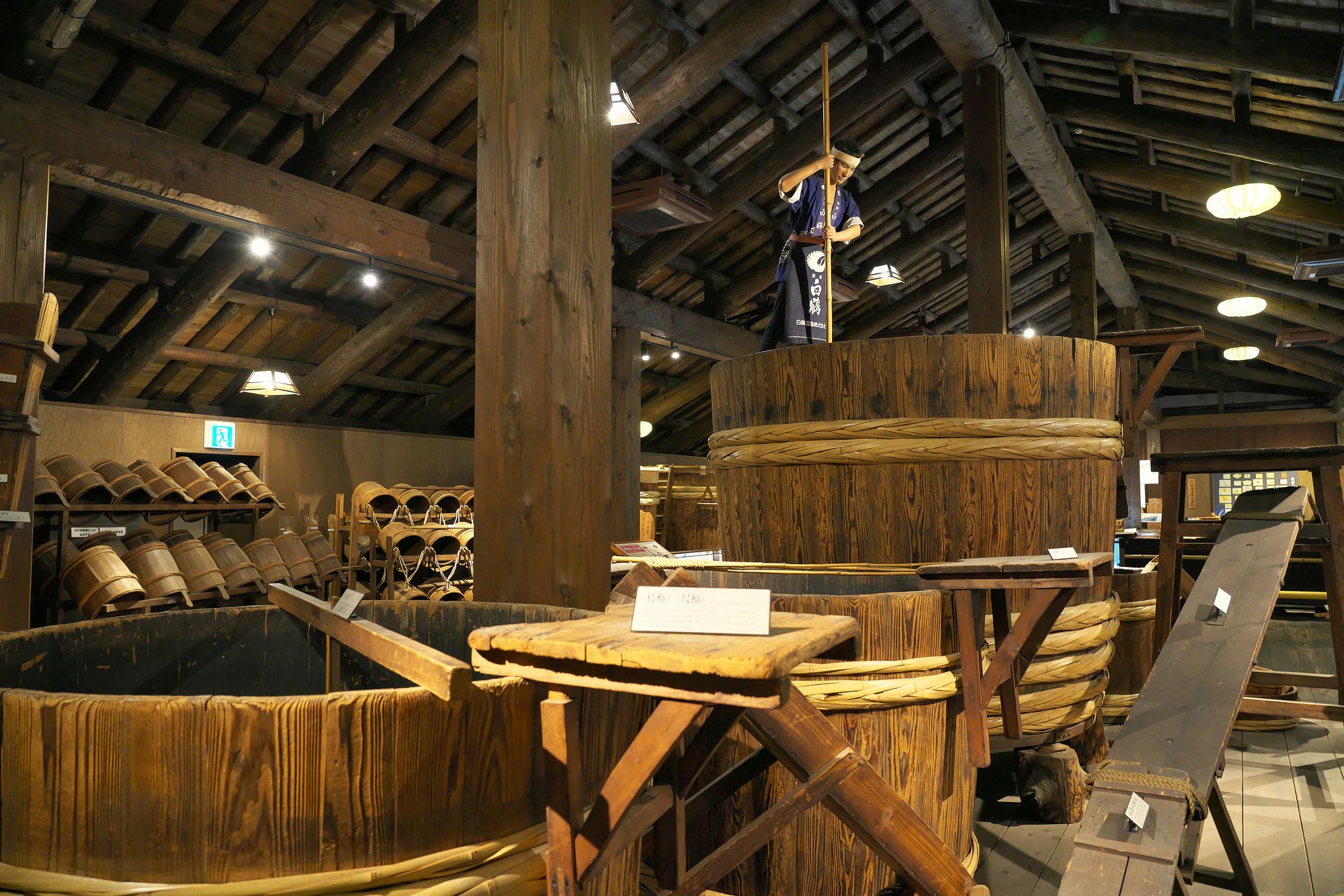
The Nada district, stretching along Kobe's eastern waterfront, produces more sake than any other region in Japan — roughly 25 percent of the country's total output. The secret is miyamizu, a naturally mineral-rich groundwater filtered through the Rokko Mountains that yields fermentations of exceptional clarity and depth. The area's large sakagura (breweries), including Hakutsuru, Kiku-Masamune, Sawanotsuru, and Hamafukutsuru, maintain visitor centres where the full brewing process is explained alongside generous tasting sessions. The terminology — junmai daiginjo, nigori, nama — becomes comprehensible with a small amount of context, transforming sake from an undifferentiated category into a nuanced appreciation. The Nada breweries also illuminate a side of Kobe not visible in its cosmopolitan waterfront identity: a deep industrial heritage expressed through the ancient craft of fermentation.
Arima Onsen: Mountain Hot Springs Above the City
In the forested hills directly behind Kobe, a 30-minute bus or taxi journey from the city centre, Arima Onsen is one of Japan's oldest hot spring resorts — documented in records going back to the 7th century. The waters emerge in two distinct varieties: tansan (carbon dioxide) springs, which are clear and effervescent, and kinsen (gold springs), which are iron-rich and turn the skin and bathing pools a striking reddish-brown. Several ryokan and public bath facilities offer day bathing without accommodation. The surrounding village, with its narrow stone lanes, sake shops, and craft stores, can be explored in an hour or two. This is a genuinely Japanese experience — mountain air, ancient ritual, complete contrast to the port city below — and within easy reach for cruise passengers with a full day ashore.
Nankinmachi: Kobe's Compact and Spirited Chinatown
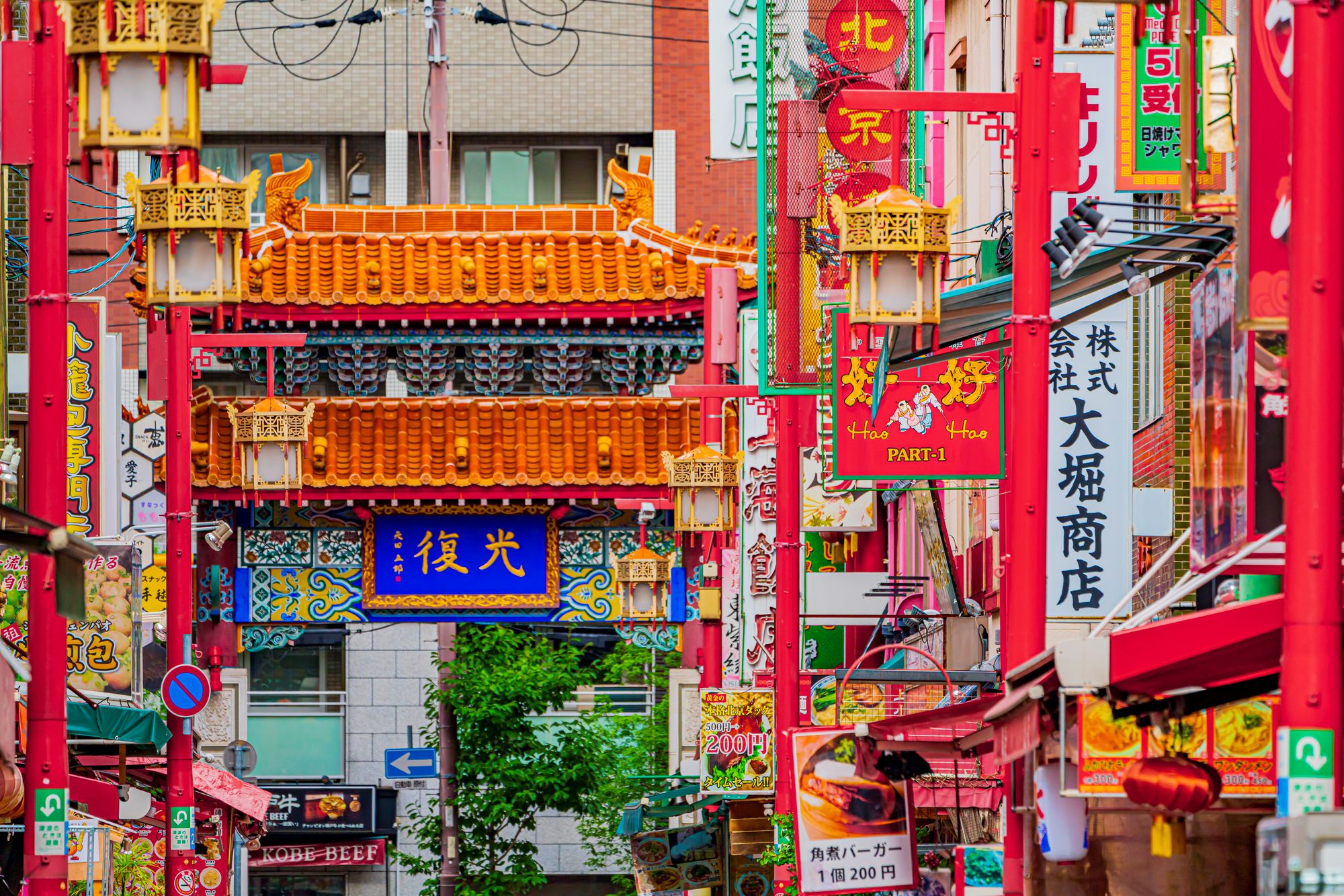
Japan has only three Chinatowns — Yokohama, Nagasaki, and Kobe's Nankinmachi — and Kobe's is the smallest and arguably the liveliest in proportion to its size. Three short blocks of lantern-strung alleys concentrate dozens of restaurants alongside street food stalls specialising in butaman (Kobe's signature pork buns), gyoza, and custard cream sesame balls. The community traces its roots to Chinese merchants who arrived during Kobe's 1868 opening, settling alongside Western traders in the foreign settlement. Nankinmachi's two ornamental gates — Choanmon and Seianmon — mark the quarter's boundaries, and the central square fills with vendors and visitors at almost any hour. It sits only a few minutes' walk from Kitano-cho, making the two districts a natural pairing: Western and Chinese foreign-settlement communities, both shaped by the same historical moment of Japan's opening to the outside world.
Meriken Park & the Earthquake Memorial
Kobe's waterfront Meriken Park — the name a Japanese rendering of 'American', reflecting the former location of the US consulate — combines a pleasant harbour promenade with one of Japan's most affecting memorials. A section of the original port infrastructure, twisted and buckled by the 1995 Great Hanshin Earthquake (magnitude 7.2, over 6,000 deaths), has been preserved exactly as it was left: broken concrete, tilted lampposts, collapsed sections of quay. The adjacent Kobe Maritime Museum and the striking red-steel Kobe Port Tower complete a waterfront that manages to be both beautiful and sobering. The area is a 10-minute walk from Minatomotomachi station or a short taxi from Sannomiya.
Kobe (Osaka) travel tips
Decide Early: Kobe vs. Kyoto vs. Osaka. The biggest decision of your Kobe port day is whether to stay in the city or make the short journey to Kyoto or Osaka. Kobe itself — Kitano-cho, Kobe beef lunch, Arima Onsen, the waterfront — fills a full day easily. Kyoto (35 min by shinkansen) requires committing 2-3 hours to travel and offers perhaps 4-5 hours on the ground. Osaka (25 min by JR) is closer and more manageable for a half-day. Make this decision before you board the tender and buy shinkansen tickets in advance if Kyoto is the plan.
IC Cards for Seamless Transit. Buy or load an ICOCA IC card at Sannomiya station on arrival. These rechargeable smart cards work on every train, subway, and bus in the Kobe-Osaka-Kyoto region, eliminating the need to queue for individual tickets. They also work at convenience stores, many vending machines, and some restaurant chains. Load at least 3,000-5,000 JPY for a day's travel. Suica cards from Tokyo work equally well in the Kansai region.
Shinkansen Tickets for Kyoto. The shinkansen from Shin-Kobe to Kyoto takes 35 minutes. Shin-Kobe station is connected to Sannomiya by subway (two stops, about 8 minutes). Reserve seats online via the JR West website or at the station — unreserved carriages are available but can be full during peak season. Return tickets should be purchased before you depart for Kyoto to avoid queues at the end of the day when time pressure is highest.
Cash Management. Japan's cash dependency catches many international visitors off-guard. Smaller restaurants, temple entry fees, local buses, and most street-food vendors operate cash only. 7-Eleven ATMs are the most reliable option for international card withdrawals — they accept Visa, Mastercard, and most international networks, with instructions available in multiple languages. Withdraw enough in the morning to cover the full day rather than searching for a compatible ATM mid-afternoon.
Temple and Shrine Etiquette. At Shinto shrines, bow twice, clap twice, make a silent wish or prayer, and bow once more at the main torii and prayer hall. At Buddhist temples, a simple respectful bow suffices. Photography is usually permitted in temple gardens and precincts but often prohibited inside main halls — look for signs or follow the behaviour of other visitors. Remove hats when entering any place of worship. Quieter behaviour than you might practice at other tourist sites is appropriate and appreciated.
Return to the Ship with Time to Spare. Japanese trains are punctual to a degree that rewards planning, but a missed connection — especially on a busy day at Kyoto or Osaka — can cascade quickly. Build a 60-minute buffer into your return journey. If the ship berths at Port Island, the Port Liner monorail runs frequently but can be slow during peak hours. Taxis from Sannomiya to the cruise terminal take 10-15 minutes and are metered and reliable. Have the terminal name written in Japanese characters to show the driver.
Port Facts Every Cruiser Needs To Know
Kobe (Osaka) shore excursion FAQs
Kobe has two main cruise berths: Port Island Terminal and Maya Berth. Port Island is the more common of the two and is connected to Sannomiya — Kobe's main commercial and transport hub — by the Port Liner monorail (approximately 18 minutes, departing from the terminal building). Maya Berth is closer to the city and reachable by taxi in 10 minutes or approximately 25 minutes on foot along the waterfront. Your ship will advise which berth is in use. Taxis are available at both berths; metered fares are honest and set by law.
Yes, with caveats. The shinkansen from Shin-Kobe (connected to Sannomiya by 2-stop subway) reaches Kyoto in 35 minutes. Allow 30 minutes from the cruise terminal to Shin-Kobe, 35 minutes to Kyoto, and build in time to navigate the city. With 10 hours ashore, you can have 5-6 hours in Kyoto. With 8 hours, it becomes tight. With 6 hours, consider Osaka instead. Purchase return shinkansen tickets before you leave for Kyoto to avoid queuing at the end of the day. Missing the last feasible train back puts your boarding at risk.
Kobe beef is a protected designation applied to Wagyu beef from Tajima-strain cattle born and raised in Hyogo Prefecture, graded A4 or A5 for marbling. The flavour — rich, buttery, with a low melting point that means the fat dissolves on the tongue — is unlike any other beef. Teppanyaki restaurants in the Kitanozaka and Nakayamate-dori areas are the standard setting; lunch sets (typically 11:30am-2pm) offer the authentic product at lower prices than dinner. Confirm the restaurant is certified by the Kobe Beef Marketing and Distribution Promotion Association, which publishes a list of certified restaurants online. Budget 5,000-15,000 JPY per person for a proper meal.
Osaka is 25-30 minutes from Kobe Sannomiya by JR Kobe Line or Hankyu Kobe Line, making it easily manageable for a half-day visit. Key areas within compact reach of Osaka station: Dotonbori, the canal-side entertainment district known for its food stalls (takoyaki, okonomiyaki, kushikatsu) and enormous neon signs; Shinsekai, the retro working-class neighbourhood with its own tower and kushikatsu tradition; and Kuromon Ichiba Market, a covered market used by professional chefs that is equally compelling for food-curious visitors. Osaka Castle and its park are a 15-minute subway ride from the station and worth an hour of your time.
Arima Onsen is one of Japan's oldest hot spring resorts, located in the mountains 30 minutes by bus or taxi directly behind Kobe. Its waters are renowned for two types: silver (tansan) springs that are clear and mildly carbonated, and gold (kinsen) springs that are iron-rich and a distinctive reddish-brown colour. Several public bathing facilities offer day entry without accommodation, typically for 650-1,500 JPY. The surrounding village has traditional craft shops and quiet lanes. The experience is culturally Japanese in a way that popular tourist sites can struggle to be, and the mountain setting provides a complete contrast to the port city. Allow 2.5-3 hours for travel and bathing.
English signage in Kobe's city centre, Sannomiya station, and major tourist areas is good. Kyoto and Osaka's key tourist sites are similarly well-signed in English. Train information boards display in both Japanese and English, and often Chinese and Korean. Communication with taxi drivers can be managed by showing the destination written in Japanese characters — Google Maps screenshots or printed addresses work reliably. Google Translate's camera function handles menus and signage in real time and is genuinely useful throughout the Kansai region.
The Kansai region has an excellent, frequent, and punctual rail network. For Kobe city, the subway and Port Liner monorail cover key areas. For Osaka: JR Kobe Line or Hankyu Kobe Line from Sannomiya (both about 25-30 minutes, slightly different endpoints in Osaka). For Kyoto: shinkansen from Shin-Kobe is fastest (35 minutes); JR trains are slower (75-90 minutes) but cheaper. IC cards (ICOCA or Suica) work on all lines and are the easiest payment method. Validate your card by touching the sensor at the turnstile gates on both entry and exit.
Nara is feasible from Kobe but requires careful time management. Total travel time from Sannomiya to Nara is 70-80 minutes each way via Osaka. With 10 or more hours ashore, you can spend 3-4 hours in Nara — enough to walk Nara Park, see the Great Buddha at Todai-ji, and visit Kasuga Taisha shrine. With fewer than 9 hours, the ratio of travel to time on the ground becomes unfavourable. Nara's deer park and monuments are remarkable, but if time is limited, Osaka offers more variety for the same or shorter travel time.
Japanese Yen (JPY) is essential to have in cash — many restaurants, temple admission desks, buses, and market stalls accept cash only, even in major cities. For a full day covering transport, entry fees, lunch, and any shopping, a budget of 10,000-20,000 JPY per person is reasonable depending on where you eat. 7-Eleven and Japan Post ATMs are the most reliable for international card withdrawals. Exchange rates at the ATM are typically better than currency exchange counters. Withdraw in the morning before you board any trains.
Remove shoes when entering any private home and most traditional ryokan — look for the raised entry floor as the indicator. Do not tip under any circumstances. Eat and drink while stationary rather than walking — consuming food while moving through public spaces is considered poor form. Queues are orderly and cutting is not acceptable. Mobile phone conversations on trains are discouraged; keep calls brief and quiet or step between carriages. When visiting shrines and temples, follow the cleansing ritual at the temizuya (water basin) before approaching the main hall: ladle water over each hand. Modest behaviour and quieter voices than you might use elsewhere are always appropriate in these settings.
Filters
Select a filter to refine results.
Tour Type
Tour Activity
 Cart
Cart
 USD
USD GBP
GBP AUD
AUD EUR
EUR CAD
CAD