



Tours in Bay Of Islands


Cruising to Bay Of Islands in a group?
Skip the crowded ship excursion bus. One dedicated planner will design a private shore experience around exactly what your group wants — coordinated from first enquiry to the moment you're back on board. More memorable, more flexible, and more affordable than you might expect. Spend less time organising, more time enjoying.
Explore Group Travel →Cruising to Bay Of Islands
The Bay of Islands occupies a privileged corner of New Zealand's North Island, where 144 scattered islands define a harbor that witnessed the country's earliest colonial encounters. Cruise ships dock at Opua, a small marina community, with the region's main attractions radiating outward by road and water. Kerikeri, New Zealand's oldest township, preserves the Stone Store — the country's oldest surviving stone building — alongside the colonial-era Kemp House and the cascade of Rainbow Falls. Minutes from Paihia by ferry, the Waitangi Treaty Grounds mark where Māori rangatira and the British Crown signed the document that shaped modern New Zealand. Inland, toward Kawakawa, the Kawiti Glow-Worm Caves offer a less-crowded alternative to Waitomo, with genuine limestone formations and softly glowing ceilings. A small wine industry has taken hold in Northland's subtropical warmth. The region asks visitors to choose a focus — distances are real, and time ashore is finite.
Top things to do in Bay Of Islands on a cruise stopover
Historic Kerikeri — New Zealand's Oldest Township and Stone Buildings
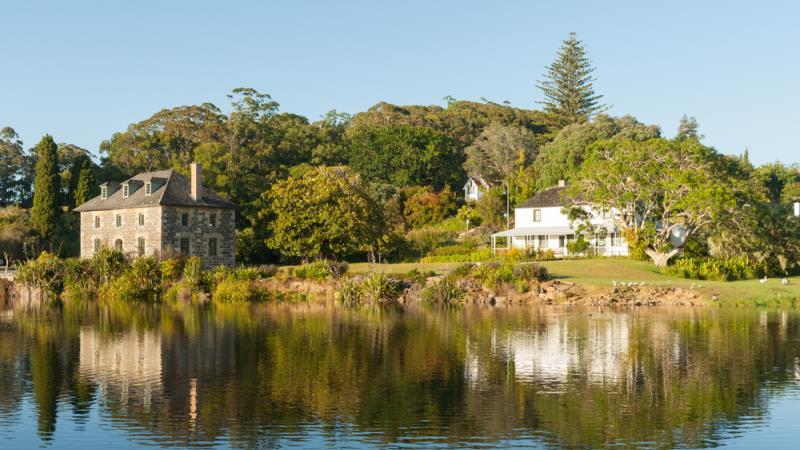
Kerikeri holds a remarkable concentration of New Zealand's earliest European history within a compact area. The Stone Store, completed in 1836, is the country's oldest surviving stone building, originally used to store mission supplies and trade goods. Beside it stands Kemp House, an 1822 timber dwelling occupied continuously for over a century. The surrounding precinct includes Rewa's Village — a reconstructed pre-European Māori settlement — and the cascade of Rainbow Falls a short walk through native bush. The township itself has evolved into a craft and produce hub, with local artisans, galleries, and a farmers' market scene alongside the heritage sites. A half-day here covers significant ground without feeling rushed.
Kawiti Glow-Worm Caves — Northland's Underground Natural Wonder
Located near Kawakawa, the Kawiti Caves are among New Zealand's least-visited major glow-worm cave systems — a meaningful contrast to the more commercialised Waitomo experience further south. The caves are set within a working farm and guided by local Māori families, lending the visit a personal quality rarely found at larger tourist sites. Inside, stalactites and stalagmites frame ceilings thick with the blue-green bioluminescence of Arachnocampa luminosa, the native glow-worm found only in New Zealand. The cave passages are well-maintained and accessible, with guided tours covering the geological and cultural significance of the site. Even visitors who have toured other glow-worm caves tend to find the intimacy of the Kawiti experience genuinely worthwhile.
Northland Wine Country — Subtropical Vines and Bay Views
Northland occupies an unusual position in New Zealand's wine landscape — further north than any other major region and warmer for it. The area's small collection of boutique wineries produces distinctive wines in a climate more reminiscent of southern France than the cool-climate regions New Zealand is typically associated with. Varietals like Syrah, Viognier, and Chardonnay thrive in the subtropical warmth, often alongside olive groves and stone fruit orchards. Cellar doors tend toward the relaxed and informal, with vineyard lunches offered among vines with views toward the bay or surrounding farmland. Visiting one or two wineries makes for an unhurried day ashore that leans into landscape rather than landmarks.
Waitangi Treaty Grounds — Where Modern New Zealand Was Shaped
The Waitangi Treaty Grounds sit on a peninsula overlooking the Bay of Islands, marking the spot where, on 6 February 1840, Māori rangatira and representatives of the British Crown signed the Treaty of Waitangi — New Zealand's founding document. The site today is a thoughtfully maintained cultural and historic reserve with a museum, the ornately carved meeting house Te Whare Rūnanga, and the largest waka taua (war canoe) in New Zealand. Cultural performances are held regularly and provide genuine context for the significance of what happened here. The treaty remains a living document at the centre of New Zealand's political and cultural conversation. Allow at least two hours to do the grounds justice.
Bay of Islands Marine Life — Dolphins, Reefs, and Open Water
The Bay of Islands supports a year-round resident population of bottlenose dolphins, with regular sightings throughout the harbour and open water beyond the islands. Dolphin-watching cruises typically cover the outer reaches of the bay, often passing the dramatic Cape Brett headland and the famous Hole in the Rock — a sea arch large enough for boats to transit at most tides. The calm, sheltered nature of the harbour keeps rough conditions relatively rare. Snorkelling and diving opportunities exist around the islands' reefs, with crayfish, kingfish, and subtropical species reflecting the region's position at the junction of temperate and warm currents.
Paihia and the Russell Waterfront — The Bay's Historic Villages
Paihia functions as the visitor hub of the Bay of Islands — a compact waterfront strip of cafes and boat departures sitting at the end of the Opua ferry route. From Paihia, a short passenger ferry crosses to Russell, New Zealand's first permanent European settlement, now a quiet village of heritage buildings, a small museum, and waterfront cafes. Russell's Christ Church, dating from 1836, still bears musket-ball holes from a 19th-century raid — the kind of living history that makes the Bay of Islands region unusual. Paihia beach itself is a sheltered, family-friendly strip of sand with the anchored fleet as backdrop. Together the two villages make a manageable half-day without requiring a vehicle.
Bay Of Islands travel tips
Allow for the Opua–Paihia Ferry When Planning Your Return. The passenger ferry between Opua wharf and Paihia runs regularly and takes around five minutes, but most tours and independently accessed attractions operate from Paihia rather than the cruise dock itself. Check ferry timings carefully when planning your return to ensure enough buffer before all-aboard. Missing the last convenient sailing adds delay when you can least afford it.
Pack Layers — Northland's Weather Can Shift Quickly. Even in summer, Northland afternoons can bring sudden showers or sea breezes that feel cooler than expected. A light waterproof jacket and a layer underneath covers most conditions comfortably. If visiting the Kawiti Caves, note that the interior temperature remains consistently cool regardless of how warm the day is above ground.
Apply Sunscreen Before Any Time on the Water. New Zealand's UV index is among the highest in the world — extreme readings occur even on partly cloudy days at northern latitudes. Apply broad-spectrum sunscreen before leaving the ship and bring a hat and UV-protective clothing for any water-based activity. Reflection from the bay's surface amplifies exposure significantly throughout the day.
Kerikeri's Heritage Sites Have Set Opening Hours. The Stone Store and Kemp House are managed by Heritage New Zealand and operate on specific seasonal opening hours that do not always align with cruise schedules. Check current hours before making them the centrepiece of your day, and arrive with enough time to tour both sites rather than simply viewing exteriors. The nearby Rainbow Falls walk is accessible at any hour.
Carry Some Cash for Markets and Smaller Vendors. While cards are accepted at most established attractions and restaurants, smaller farmgate stalls, market vendors, and roadside produce stands in the Kerikeri area often prefer cash. A modest amount of NZD from an ATM in Paihia or Kerikeri covers most incidental purchases without difficulty.
The Kawiti Caves Require a Drive — Build in Realistic Time. The Kawiti Glow-Worm Caves near Kawakawa sit roughly 55 minutes by road from Opua. Factor in two to three hours for the return journey plus the guided tour, which typically runs 45 minutes to an hour. Combining the stop with Kawakawa's notable Hundertwasser-designed public toilets — a genuine piece of architecture — makes the drive more efficient.
Port Facts Every Cruiser Needs To Know
Bay Of Islands shore excursion FAQs
Cruise ships dock at Opua Wharf, a small marina township on the southern end of the bay. Opua itself has limited visitor facilities, but a passenger ferry connects to Paihia — the main visitor hub — in approximately five minutes. Most tours and independently accessed attractions depart from Paihia or the broader Kerikeri area.
Yes. The Waitangi Treaty Grounds are New Zealand's most significant historic site, and the on-site museum and cultural performances provide excellent context even for visitors arriving with no prior knowledge. Allow at least two hours to explore the grounds, museum, and any scheduled cultural programme. The site's significance extends well beyond colonial history into present-day New Zealand society.
The Kawiti Caves are smaller and more intimate than Waitomo, guided by local Māori families with a personal approach many visitors prefer. Both feature the same species — Arachnocampa luminosa, found only in New Zealand — but Kawiti lacks Waitomo's crowd sizes and commercial infrastructure. For those who value a quieter, more personal cave experience, Kawiti is often the stronger choice.
Paihia Beach is a sheltered stretch of sand directly at the waterfront, reachable via the five-minute Opua ferry and a short walk. The historic township of Russell, accessible by passenger ferry from Paihia, also has a quiet beach. Swimming is generally safe in the bay's sheltered waters throughout summer months.
A small passenger ferry runs between Paihia and Russell throughout the day, taking around ten minutes. Russell was New Zealand's first permanent European settlement and today is a calm village with 19th-century buildings, a small museum, Christ Church (with visible musket-ball damage from an 1845 raid), and waterfront cafes. It is a worthwhile short excursion for those interested in early colonial history.
Northland's wine industry is small but distinctive, producing in a subtropical climate that yields Syrah, Viognier, and Chardonnay styles different from New Zealand's more famous cool-climate regions. A handful of boutique cellar doors are accessible by road from the port, and several offer vineyard lunches. For wine-interested visitors, it is a genuine experience rather than a token one.
Light layers are practical — summer days are warm but afternoon breezes and passing showers can cool things quickly. Comfortable walking shoes handle most heritage sites and bush paths. For any time on the water, add a hat, sunglasses, and high-SPF sunscreen; New Zealand's UV index is particularly intense, and water reflection compounds exposure.
Yes. The Waitangi Treaty Grounds, Paihia waterfront, Russell, and Kerikeri's heritage area are all straightforward to reach independently using the ferry from Opua and local bus connections. The Kawiti Caves require a longer drive and a scheduled guided tour, making them better suited to pre-arranged excursions rather than independent exploration.
The region works well for families — dolphin watching, the Waitangi cultural performances, the Rainbow Falls walk near Kerikeri, and the glow-worm caves all appeal across age groups. Most paths and heritage sites are accessible, and the region's relaxed pace suits families who prefer unhurried exploration over tightly packed itineraries.
The Waitangi Treaty Grounds provide the strongest combination of history, culture, landscape, and significance in the least amount of travel time from the port — reachable via the Opua ferry to Paihia and a short walk or ride. For a more nature-focused priority, a dolphin and island cruise from Paihia covers the bay's iconic waters within a compact half-day window.
Filters
Select a filter to refine results.
Tour Type
Tour Activity
 Cart
Cart
 USD
USD GBP
GBP AUD
AUD EUR
EUR CAD
CAD