



Tours in Panama City


Cruising to Panama City in a group?
Skip the crowded ship excursion bus. One dedicated planner will design a private shore experience around exactly what your group wants — coordinated from first enquiry to the moment you're back on board. More memorable, more flexible, and more affordable than you might expect. Spend less time organising, more time enjoying.
Explore Group Travel →Cruising to Panama City
Panama City is unlike any other capital in Central America. It wears its contradictions beautifully — a glittering financial skyline that rivals Miami rises just minutes from crumbling colonial churches and vine-draped plazas that have stood for centuries. For cruise travelers arriving on the Pacific side, this is a city that rewards curiosity at every turn, whether you spend your hours wandering the narrow streets of Casco Viejo or watching fully loaded container ships navigate one of humanity's greatest engineering achievements at the Panama Canal.
Casco Viejo, the historic quarter declared a UNESCO World Heritage Site, is the emotional heart of any visit. Once neglected, this peninsula of pastel-painted facades, ornate churches, and bougainvillea-draped balconies has undergone a remarkable renaissance. Today it hums with rooftop bars, farm-to-table restaurants, and boutique hotels that sit comfortably alongside still-crumbling ruins — an honest, living neighborhood rather than a polished theme park. Wandering its grid of streets with the Pacific glittering at the end of every avenue is a genuinely memorable experience.
Beyond the old town, the Miraflores Locks visitor center makes for an essential excursion — just twenty minutes from the city center, its multi-level viewing platform puts you close enough to watch colossal ships inch through chambers with only inches to spare. Frank Gehry's titanium-scaled Biomuseo, built on the causeway that created the very isthmus you're visiting, offers a world-class introduction to Panama's extraordinary biodiversity and geological history. With 6 to 10 hours ashore, there's genuine depth to explore here.
Top things to do in Panama City on a cruise stopover
Casco Viejo: Panama's UNESCO-Listed Historic Soul
Panama's old quarter is one of the Americas' great urban revival stories. Founded in 1673 after pirates destroyed the original Panama City, Casco Viejo sits on a small peninsula at the edge of the Pacific, its streets a layered archive of Spanish colonial, French Baroque, and early 20th-century Republican architecture. Today it's both a living neighborhood and a destination unto itself — where crumbling facades draped in flowering vines stand next to immaculately restored mansions turned boutique hotels. The Plaza de la Independencia (Plaza Mayor) anchors the historic center, flanked by the Metropolitan Cathedral and the former Canal Zone headquarters building. Wander freely: every block brings a new courtyard, a rooftop view of the glittering bay, or a café where Panama's geisha coffee is served with ceremony. Don't miss the evocative ruins of the Old Santo Domingo Church, where a legendary flat arch stood for centuries as proof — or so Panamanian engineers claimed — that the isthmus was earthquake-free.
Miraflores Locks: Face to Face with the Panama Canal
No visit to Panama City is complete without witnessing the Panama Canal in action. The Miraflores Locks, located just 20 minutes from Casco Viejo, offer the most accessible and dramatic viewpoint on the entire waterway. The four-story visitor center houses a well-designed museum tracing the Canal's tortured construction history — the French failure, the yellow fever catastrophe, the American triumph — along with exhibits on the 2016 expansion that added a third lane capable of handling the world's largest container ships. But the real spectacle is the viewing platform. Here, massive Panamax and New Panamax vessels pass within arm's reach, guided by electric mules along rails, raised or lowered by 85 feet of water. Watching a ship the size of a city block move through with centimeters to spare, entirely by gravity-fed water, is quietly astonishing. Time your visit when transits are scheduled — the center's website lists expected passages, and the staff on site can advise on timing.
Biomuseo: Frank Gehry's Ode to Panama's Natural Miracle
Designed by Frank Gehry — his only project in Latin America — the Biomuseo sits at the foot of the Amador Causeway on land that was literally created by Canal excavation spoil. Its exterior is unmistakable: a riot of titanium panels in tropical colors, angular and joyful in the fierce Pacific sun. Inside, eight permanent galleries tell the story of how the emergence of the Isthmus of Panama roughly three million years ago triggered one of the most dramatic ecological events in the planet's history — the Great American Biotic Interchange, when North and South American species crossed for the first time, reshaping global biodiversity and redirecting ocean currents. It's a sophisticated, beautifully executed natural history museum that makes a compelling argument for why Panama is one of the most biologically significant places on Earth. The causeway itself is worth exploring: a breezy, palm-lined road connecting three small islands with views back to the city skyline and the Canal entrance.
The Panama City Skyline: Central America's Most Dramatic Urban Horizon
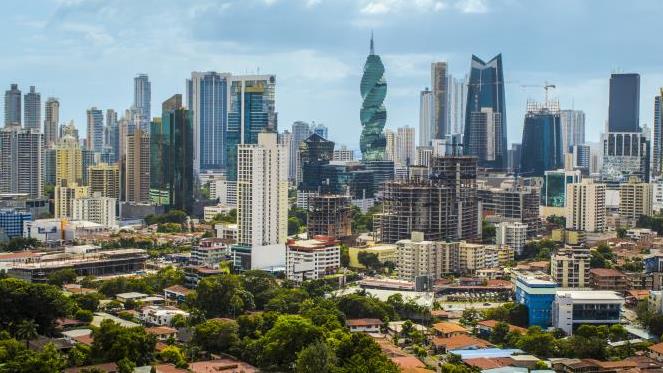
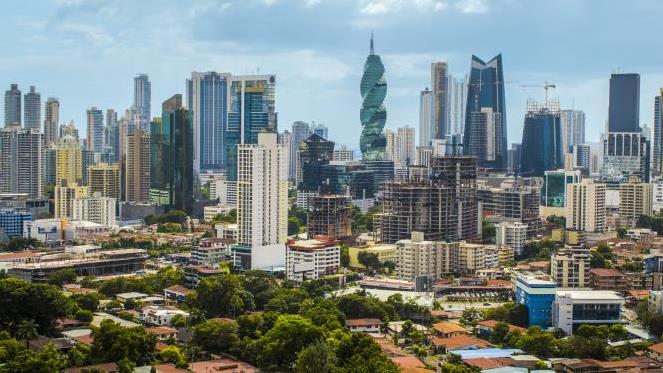
Panama City's modern downtown — the Punta Pacífica and Marbella districts — presents a skyline that consistently surprises first-time visitors who expect a modest Central American capital. Dozens of glass towers crowd the Pacific shore, their reflections fracturing in the bay. This financial hub, born from the Canal's commerce and decades of offshore banking, has created a cosmopolitan city with excellent dining, sophisticated shopping, and a pace that feels distinctly global. For port visitors, the skyline is best appreciated from Casco Viejo's seawall, where the contrast between 17th-century stone and 21st-century glass creates one of the region's most photographed juxtapositions. A short drive through the financial district on the way between attractions gives a sense of the city's ambition and energy — a reminder that Panama is not just a transit point but a genuinely consequential place.
Rooftop Bars and Culinary Panama in Casco Viejo
The food and drink scene in Casco Viejo has evolved dramatically over the past decade into something genuinely exciting. Rooftop bars with sweeping views of the bay and the modern skyline make for memorable afternoon stops — the combination of sea breeze, a cold local beer (Atlas or Balboa are the standards), and that improbable view is hard to beat. Panama's cuisine draws from an extraordinary mix of influences: Indigenous, Spanish colonial, Afro-Caribbean, Chinese (Panama has one of the largest Chinese-Panamanian communities in the world), and North American. Look for restaurants serving ropa vieja, ceviche with ají chombo peppers, or the ubiquitous arroz con pollo elevated by local chefs into something refined. Coffee lovers should seek out any café serving Panama's famed Boquete geisha beans — some of the most expensive and celebrated coffee in the world, grown in the highlands just a few hours away.
Plaza Herrera and the Quiet Corners of the Old Quarter
Beyond the main plazas and well-trodden tourist routes, Casco Viejo rewards those who simply wander. Plaza Herrera, slightly removed from the main tourist corridor, has a more authentic, neighborhood feel — locals sitting in the shade of tropical trees, children playing, elderly residents watching the day unfold from iron balconies above. The area around Avenida B offers some of the district's most arresting architectural contrasts: a lovingly restored pastel mansion beside a collapsed ruin open to the sky, trees growing through former living rooms. The French Embassy, housed in a stunning Belle Époque building, speaks to the canal's complicated construction history. Small artisan shops sell molas — the intricate textile panels made by the Guna indigenous people — alongside Panama hats (which, despite the name, are actually woven in Ecuador but sold here beautifully). These quieter streets are where Casco Viejo's genuine character lives.
Panama City travel tips
Prioritize Miraflores Early. The Panama Canal visitor center at Miraflores is most rewarding when ships are actively transiting. Canal traffic is heaviest in the morning hours, so aim to arrive by 9 or 10 AM if possible. Check the Panama Canal Authority's website or ask at the visitor center upon arrival for the day's expected transit schedule. Afternoon visits are still worthwhile for the museum exhibits and viewing platform, but morning gives the best chance of watching vessels in motion.
Use Uber Over Street Taxis for Peace of Mind. Uber operates throughout Panama City and is generally more reliable, safer, and easier than negotiating with street taxis — particularly useful when you don't know the local fare norms. Download the app before departure and confirm service availability. If using street taxis, always agree on the price before getting in. Licensed taxis (yellow plates) are preferable. Your ship's port agent desk can also advise on current standard fares to major attractions.
Dress for Heat and Walking. Casco Viejo's cobblestone streets are beautiful but uneven, and Panama City's tropical heat can be intense, especially between 11 AM and 3 PM. Lightweight, breathable clothing, comfortable walking shoes with grip, sunscreen, and a hat are essential. Stay hydrated — bottled water is available everywhere and inexpensive. If the midday heat peaks, the Biomuseo or Canal visitor center provide excellent air-conditioned respite.
Leave Room for a Long Lunch. Casco Viejo's restaurant scene is genuinely excellent, and a leisurely lunch is one of the great pleasures of a Panama City port day. Many of the best spots have outdoor terraces or rooftops with bay views. Reservations are not typically necessary for lunch at most establishments, but if you have a specific rooftop restaurant in mind, checking ahead is worthwhile. Budget $15–$30 USD per person for a satisfying meal with a drink at a mid-range restaurant.
The Amador Causeway for Views and a Breeze. If time allows, the Amador Causeway — the palm-lined road connecting the Flamenco, Perico, and Naos islands — offers spectacular views of the city skyline, the Canal entrance, and ships anchored waiting for transit. It's also where the Biomuseo is located. The causeway is flat, breezy, and easily walkable or navigable by bicycle (rentals available). In the late afternoon, it's one of the best spots in the city to watch the light change over the Pacific.
Budget Time for Getting Around — Traffic is Real. Panama City has significant traffic, particularly during midday hours. When planning your itinerary, add 15–20 minutes of buffer time to all transit estimates between attractions. A sensible port day loop might be: Canal first thing in the morning (before traffic peaks), then Casco Viejo for the middle of the day, with the Biomuseo/Causeway as a late-afternoon option on the way back toward the port. Avoid trying to squeeze in too many distant attractions — depth beats breadth here.
Port Facts Every Cruiser Needs To Know
Panama City shore excursion FAQs
No currency exchange is necessary. Panama uses the US dollar as its official currency (called the balboa, though US bills and coins circulate freely). Credit cards are widely accepted at restaurants, shops, and major attractions in tourist areas. It's worth having some small-denomination cash ($1, $5, $10 bills) for street food vendors, tips, and smaller purchases.
The Miraflores Locks visitor center is approximately 20 minutes from Casco Viejo by taxi, and the answer is an unambiguous yes — it's worth it. The four-level viewing platform puts you within arm's reach of enormous ships being raised and lowered through the locks, and the on-site museum provides excellent historical context. Allow 1.5 to 2 hours for a proper visit. Combined with Casco Viejo, this makes for a full and deeply satisfying port day.
Yes, Casco Viejo is considered one of Panama City's safer neighborhoods and is well-patrolled by tourist police during the day. Exercise the same common-sense precautions you would in any urban environment: keep valuables secure, be aware of your surroundings, and avoid flashing expensive electronics or jewelry conspicuously. The main tourist corridor around the central plazas and along the seawall is busy with other visitors and locals throughout the day.
The Biomuseo is a world-class natural history museum designed by architect Frank Gehry — his only Latin American project — located on the Amador Causeway near the Canal entrance. Its eight galleries explore how the emergence of the Isthmus of Panama reshaped global biodiversity and ocean circulation. Walk-in tickets are generally available, but purchasing online in advance is recommended during peak season to guarantee entry. Allow 1.5 to 2 hours for a thorough visit.
Absolutely — this combination is the classic Panama City port day itinerary and works very well. Most travelers visit Miraflores first (morning, when Canal traffic is busiest), then head to Casco Viejo for a late morning walk and lunch, with free time in the afternoon before returning to the ship. With 6–8 hours ashore, you can do both without feeling rushed. Add the Biomuseo only if you have a longer day or want to skip one of the other two.
Panama punches well above its size in terms of natural and cultural riches. It has extraordinary biodiversity — over 900 bird species, accessible rainforests, and some of the world's best sport fishing. The country also produced Frank Gehry's Biomuseo, has a thriving culinary scene in Panama City, and is home to remarkable indigenous cultures including the Guna people, known for their intricate mola textile art. Panama's geisha coffee beans are among the world's most prized and expensive.
Casco Viejo has moved well beyond souvenir tchotchkes. Look for molas — the layered, hand-stitched textile panels made by the Guna indigenous people, which are among Panama's most distinctive and authentic crafts. Panama hats (actually woven in Ecuador but beautifully presented here), handmade jewelry, and locally produced rum are popular purchases. Several galleries sell quality Panamanian art. Bargaining is not standard practice in most established shops, though friendly negotiation is sometimes accepted at market stalls.
Yes — this is one of the highlights of a Miraflores Locks visit. The Canal operates 24 hours a day, and on most mornings there will be vessels transiting the Pacific locks. The visitor center website and on-site staff can advise on the day's expected schedule. Vessels range from smaller cargo ships to enormous container ships and cruise liners. Watching an object the size of a skyscraper laid on its side move silently through a channel with just centimeters to spare is genuinely remarkable.
Panama City's food scene, particularly in Casco Viejo, is sophisticated and diverse. Must-try dishes include ceviche made with fresh corvina (sea bass) marinated in lime and ají chombo peppers, sancocho (a rich chicken and root vegetable soup considered Panama's national dish), and patacones (twice-fried green plantains). Panama's geisha coffee — grown in the cool highlands of Boquete — is available at several cafés and is among the world's finest. International cuisine is also excellent, reflecting the city's cosmopolitan character.
Panama City is genuinely distinctive among the ports typically visited on Central American or Canal itineraries. It offers an unusually layered combination of UNESCO-listed colonial history (Casco Viejo), a world-class engineering spectacle (the Canal), serious architecture (Biomuseo), and a sophisticated, rapidly evolving culinary scene — all in a city with first-world infrastructure and the ease of using US dollars. It rewards independent exploration more than most ports and offers intellectual depth alongside the visual drama.
Filters
Select a filter to refine results.
Tour Type
Tour Activity
 Cart
Cart
 USD
USD GBP
GBP AUD
AUD EUR
EUR CAD
CAD